Posts tonen met het label drama. Alle posts tonen

vrijdag 9 juni 2017

Today's Review: Howards End


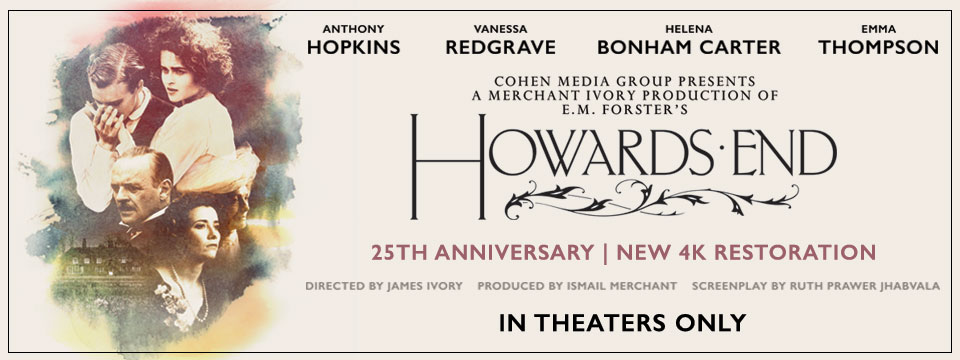
Tussen alle ophef die momenteel heerst in het EYE Filmmuseum rond het Scorsese-retrospectief en het Cinema Erotica-evenement zou je het bijna over het hoofd zien, maar er verschijnt deze maand ook een 'reguliere' klassieker in een glanzend nieuw jasje. Howards End verjaart anno 2017 voor alweer de 25ste keer, wat reden genoeg is voor EYE om een fraai gerestaureerde kopie in roulatie te brengen. Geen slechte keus, want de door James Ivory weelderig geregisseerde registratie van een bikkelharde klassenstrijd die sluimert onder typisch Engelse deftigheid mag zich nog steeds scharen onder de fraaiste Britse kostuumdrama's.

Liefhebbers zullen Ivory herkennen als de man die in de jaren tachtig en negentig van de vorige eeuw een specialisatie voor het kostuumdrama ontwikkelde en de ene na de andere geslaagde toevoeging aan het genre regisseerde. Het werk van schrijver en landgenoot E.M. Forster vormde daarbij een dankbare bron, die met Howards End leidde tot Ivory's beste werk. Het meeslepende romantische drama bleek goed voor negen Oscarnominaties, waarvan er drie verzilverd werden. Desondanks is de algemene kennis over Ivory's klassieker, zo niet zijn hele oeuvre, sterk naar de achtergrond verplaatst. Tijd om Ivory's goede oude tijd weer eens te doen herleven, dachten ze bij EYE ongetwijfeld.

In Howards End neemt Ivory ons mee terug naar het Edwardiaanse tijdperk, zo rond de eeuwwisseling. Een tijdperk vol verandering en sociale onrust, waar de regisseur meermaals dankbaar gebruik van maakte in zijn werk, waarin de standenstrijd een doorlopend thema vormt. Dat geschil wordt in deze film belicht vanuit het standpunt van twee families, de welgestelde Wilcoxes en de ruimdenkende Schlegels uit de middenklasse. Inzet is het Howards End uit de titel, een schitterend landhuis dat toebehoort aan de stervende Ruth Wilcox. De oude vrouw sluit in haar laatste maanden een onwaarschijnlijke vriendschap met de vrijgevochten Margaret Schlegel (de rol waarvoor Emma Thompson terecht haar Oscar verdiende) en schenkt haar op haar doodsbed het huis. Dit tot woede van haar familie, die al het bewijs van de overdracht vernietigt. Maar het lot neemt een frappante wending als de weduwnaar Henry Wilcox Margaret tot ieders verrassing ten huwelijk vraagt. Een onwaarschijnlijk verbond tussen een conservatieve oudere zakenman en een intellectuele jongere dame, goed voor dramatische dynamiek en sociaal vuurwerk tussen de diverse maatschappelijke standen.


EYE heeft puik werk verricht met het oppoetsen van Howards End, want de wereld van de overdadig formele Britse high society spettert als nooit tevoren van het scherm. Toch is de beeldkwaliteit niet zo gladjes scherp als bij sommige digitale verfraaiingsbeurten in 4K. De soms wat merkwaardige scèneovergangen zijn gebleven en de film heeft visueel de onmiskenbare esthetiek van de vroege jaren negentig behouden. Howards End mag gerust zijn leeftijd verraden. Dat was hoe dan ook onvermijdelijk als we de jongere versies van de crème de la crème van de Britse acteerwereld met groot genoegen terugzien. De jeugdige Emma Thompson en Helena Bonham Carter schitteren wederom als de vooruitstrevende zusters Schlegel, die zich in een haat-liefdeverhouding geplaatst zien met de onwrikbare zakenman Henry, waarvoor Anthony Hopkins heerlijk heen en weer schmiert tussen vilein en sympathiek. Dat alles in een onweerstaanbare setting vol bruisende jurken en stijlvolle maatpakken, weelderige sets en de mooiste vroege automobielen ooit op het witte doek. Maar feitelijk slechts allemaal decor in Ivory's vertelling van een conflict tussen de lagere standen en de rijke klasse, die van geen wijken wil weten ondanks de voortschrijdende modernisering. Zelfs niet in een letterlijk verstandshuwelijk.

Zo theatraal als Howards End worden kostuumdrama's vandaag de dag amper nog gemaakt. Of het moet voor de televisie zijn, met vergelijkbare waar als Downton Abbey, dat Ivory's werk meer dan waarschijnlijk als inspiratiebron benutte. Maar in de bioscoop lijken 'period films' die in vrijwel elke zin een 'heavens' of een 'jolly' laten vallen helaas hoe langer hoe meer een uitstervende soort. Dat is jammer in een wereld waarin de verschillen tussen arm en rijk, tussen progressief en conservatief en tussen ruimdenkende en beperkte wereldbeelden met de dag weer meer aan de orde lijken te zijn. Hoewel een zekere mate van oubolligheid Howards End niet ontzegd kan worden, blijkt maar weer dat Ivory's standenstrijd nog lang niet tot een einde is gekomen. Een Ivory-retrospectief is misschien ook niet zo'n slecht idee.

donderdag 13 april 2017

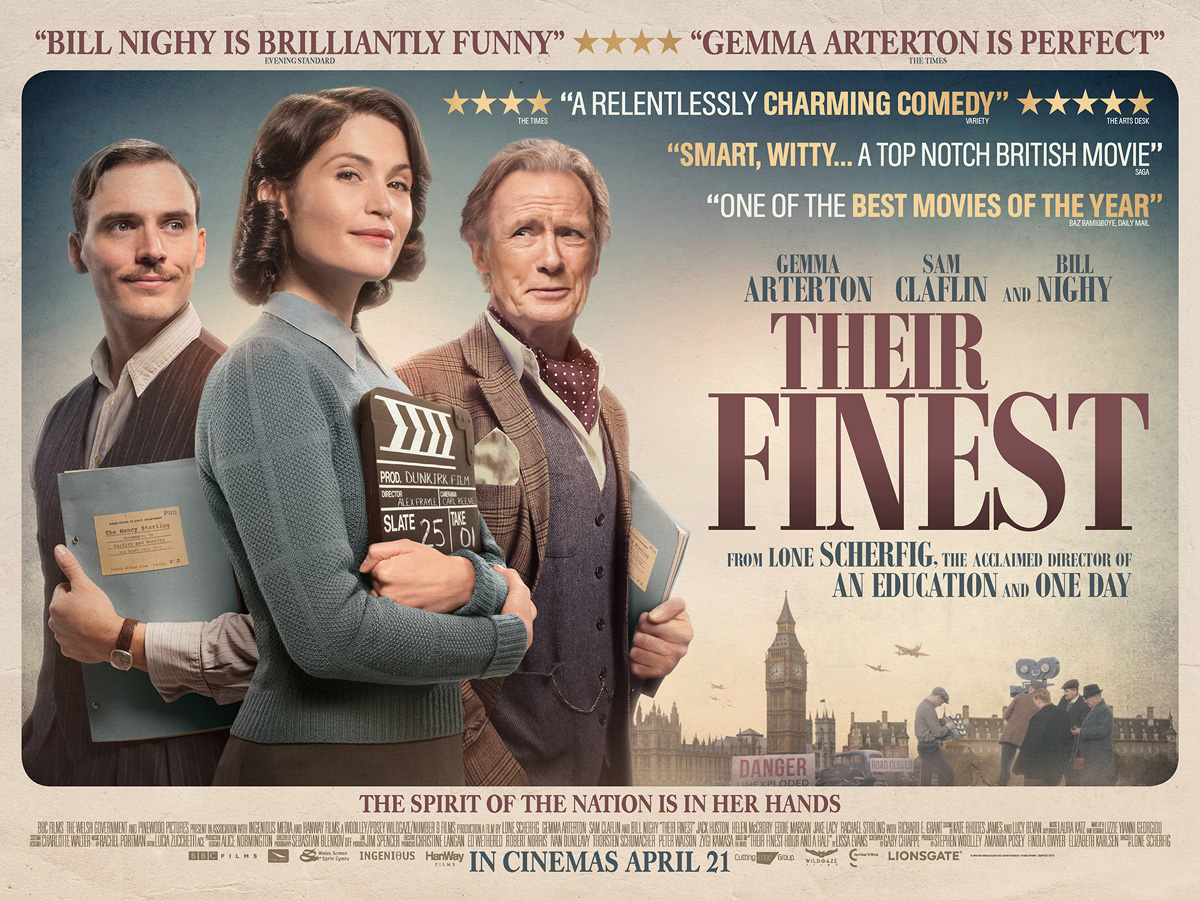
Today's Review: Their Finest


Terwijl Christopher Nolan voortploetert aan het werk voor zijn epische oorlogsfilm Dunkirk, brengt het bescheidener Their Finest die veldslag maanden eerder ter herinnering in de bioscoop. Het romantische drama heeft echter noch het budget, noch de pretenties van Nolans monumentale klus. Their Finest is bovenal een eerbetoon aan de vrouwen die achter de schermen het moreel van de belegerde Britten hooghielden, maar daar amper waardering voor kregen. Die krijgen ze nu alsnog in een lichtzinnig drama waarin romantiek en humor geslaagd hand in hand gaan met oneerlijkheid en oorlogsgruwel, zonder het laatste te bagatelliseren. Met dank aan een Britse topcast die alle inhoudelijke twijfel moeiteloos wegneemt.

Als het moreel van de Britse bevolking tijdens de Blitz beneden alle peil zakt, is het aan het medium film om de gemoederen weer op te peppen. Dat is niet makkelijk, want de meeste mannen vechten voor het vaderland terwijl de vrouwen hun positie in de industrie hebben overgenomen. En schrijven voor een overwegend vrouwelijk publiek blijkt niet iets waartoe Britse scenaristen overtuigend in staat zijn. De muizige Catrin Cole wordt ingehuurd om het vrouwelijke perspectief te belichten. Al snel blijkt die klus grootser dan verwacht, als haar idee voor een dramatische propagandafilm goedkeuring krijgt van het ministerie. Terwijl ze zich staande moet zien te houden in een onverbiddelijke mannenwereld, groeit haar project over de heroïsche evacuatie bij Duinkerken al gauw voorbij alle verwachte proporties. Met de film moet ze niet alleen de Britse strijdbaarheid opkrikken, maar ook de Amerikanen tot de geallieerde zaak verleiden. Tussendoor moet ze leren omgaan met ijdele acteurs, jaloerse scenaristen en wispelturige producenten. Om nog maar te zwijgen van een romantische driehoeksverhouding. Want ook Their Finest zelf is vanuit een overwegend vrouwelijk perspectief gemaakt.


Romantiek, humor, oorlogsdrama, propaganda, vrouwenrechten... Their Finest neemt een hoop hooi op haar vork. De Deense cineaste Lone Scherfig weet het echter tot een sympathiek geheel te breien. De film vertelt immers niet over de ellende in het platgebombardeerde Londen of Duinkerken, maar over de mentale strijd via de kracht van het medium film om het nationale defaitisme een halt toe te roepen. Om ons scepticisme omtrent humor tegen een oorlogsachtergrond te sussen, verzamelde Scherfig een indrukwekkende verzameling Britse acteurs. Jong talent als Sam Claflin en Jack Huston wordt aangevuld met veteranen als Bill Nighy en Helen McCrory, waardoor de kwaliteit van het acteerwerk verzekerd is. Spil in het verhaal is Gemma Artertons Catrin, een aanvankelijk naïeve jongedame die zich als ridder van de Britse zaak moet opwerpen en daarbij vooral mannelijke tegenwerking tegemoet ziet. Is het niet het onrecht van haar lagere salaris, dan wel de strijd met haar man om het recht van kostwinner. Arterton is altijd een genot om naar te kijken en haar ontwikkeling van overdonderde copywriter naar vastberaden producente in Their Finest vormt geen uitzondering op die regel.

Arterton krijgt effectief hulp bij haar lovenswaardige prestatie van haar tegenspelers, waarbij vooral Nighy de show steelt als een voormalig steracteur die zich door zijn leeftijd geconfronteerd ziet met een gebrek aan respectabele rollen. Zijn verontwaardiging over het vertolken van een aan lager wal geraakte zeeman zorgt voor hilarische momenten, evenals diens coachen van een talentloze Amerikaan in een essentiële rol. Het rijke acteursensemble neemt de clichés over de zelfingenomen filmwereld met zichtbaar plezier op de hak. Their Finest vormt een liefdevol eerbetoon aan de aloude kunst van het filmmaken. Bijzonder charmant is de scène waarin een grootse troepenmacht op het Franse strand onthuld wordt als schildering, waar een acteur in close-up doorheen banjert en de illusie verstoort. Feitelijk weinig verschillend van Nolans Dunkirk, waarin bordkartonnen troepen de figuranten moesten aanvullen. Zoveel is er sindsdien niet veranderd in de filmindustrie, bewijst Scherfig op aanstekelijke wijze.

Gelukkig geldt hetzelfde niet voor de positie van de vrouw. Their Finest kent vrouwelijke aanwezigheid in alle sleutelrollen. Hoewel de film niet gebaseerd is op een daadwerkelijk propagandaproject, doet dat geen afbreuk aan de voorgangers van de huidige generaties filmvrouwen, die zich omringd zagen door hun jaloerse en vijandige mannelijke tegenhangers. De angst voor het groeiende feminisme dat de industriële aanwezigheid van vrouwen in de hand werkte, wordt helaas slechts en passant aangestipt in Their Finest. De film trekt liever tijd uit voor een geforceerde driehoeksverhouding tussen Catrin, haar echtgenoot en haar naaste collega, waarin haar eigen wensen niet voorop staan. Hoewel dit subplot afleidt van het hoofdverhaal, kent het toch een verrassende wending die illustreert hoeveel vrouwen opgaven voor het landsbelang, ook nadat de strijd was gestreden. Dat vrouwen niet actief waren aan het front wil niet zeggen dat ook zij niet alles opofferden voor de goede zaak. Een vlugge blik op de castlijst van Dunkirk verraadt de vrouwelijke afwezigheid in Nolans film, waarmee het belang van die boodschap van Their Finest treffend onderstreept wordt.

zaterdag 11 februari 2017

Today's Review: Paterson


"Ik maak liever een film over een man die zijn hond uitlaat dan over de keizer van China", sprak indie-regisseur Jim Jarmusch ooit. Met Paterson heeft hij nu woord gehouden. De nieuwste film van de minimalistische regisseur moet het inderdaad niet van markante, kleurrijke personen hebben, maar juist van de alledaagse realiteit die de meesten van ons ondergaan. De herkenbare werkelijkheid van normale mensen die een dagelijkse routine leven en daar voldoening in vinden. Jarmusch zou Jarmusch niet zijn als hij daar geen poëzie in zag. Paterson is het eerbetoon aan de doorsneemens, een welkome afwisseling van al die films over bijzondere individuen die we gewend zijn.

Die man die in Paterson elke avond de hond uitlaat, draagt dezelfde naam als de film en woont bovendien in de gelijknamige stad in New Jersey. Jarmusch volgt hem gedurende één week van zijn leven. De week begint op maandag, als hij 's ochtends opstaat, ontbijt en naar zijn werk gaat. Als buschauffeur vervoert hij normale mensen die over ordinaire dingen praten. Tussendoor wijdt hij zich aan zijn hobby, de dichtkunst. 's Avonds keert Paterson huiswaarts richting zijn ondernemende vriendin, die in tegenstelling tot hem diverse toekomstplannen koestert. Na het avondmaal gaat hij op stap met de hond en bezoekt hij de plaatselijke bar waar hij zich laaft aan één biertje, alvorens weer vroeg naar bed te gaan. Zie daar een dag uit Patersons leven, die Jarmusch aan aantal keer herhaalt, met slechts minieme variaties op de sleur van alledag. Saai? Feitelijk wel, maar om die saaiheid terug te zien op het witte doek is verfrissend, zeker als het ook nog weet te boeien.


Die fascinatie is hoofdzakelijk de verdienste van de hoofdrolspelers. Adam Driver mag dan recentelijk nog de rol van een grote schurk in de laatste Star Wars hebben vertolkt, hier is hij een doodgewoon mens met alledaagse beslommeringen, net als zijn publiek. Driver weet ons prima mee te sleuren in Patersons doen en laten door hem van een puike balans tussen burgerfatsoen, brave speelsheid en sympathie te voorzien. Er gebeurt weinig in zijn leven, maar daar zit hij ook helemaal niet op te wachten. Hij is gelukkig met zijn simpele bestaan. Daar tegenover plaatst Jarmusch zijn energieke vriendin Laura, die elke dag wel een nieuw plan bedenkt om haar stempel op de wereld te drukken. De ene dag wil ze een beroemde gitariste worden, de andere een gevierd kunstenares. Tegelijkertijd tracht ze Paterson, tegen diens zin in, te stimuleren zijn gedichten te publiceren, ook al schrijft hij ze puur voor zijn eigen vermaak. De Iraanse Golshifteh Farahani geeft Driver effectief tegengas in de rol van zijn kwieke wederhelft en de chemie tussen beiden zindert van de herkenbaarheid.

Van veel vaart of spanning moet Paterson het dus niet hebben. En daar is het Jarmusch nou precies om te doen. Er zijn immers al talloze films waarin zoveel gebeurt dat het mensen nodeloos opjaagt. Met Paterson bewerkstelligt hij juist het tegenovergestelde: fascinatie voor de dagelijks terugkerende nietszeggendheid die het leven van de meeste mensen typeert. En daardoor erkennen we dat de routine die Paterson zo dierbaar is (alsmede die van onszelf) eigenlijk voortdurend onder vuur ligt. Als Laura zijn sleur poogt te doorbreken door een experimenteel gerecht op te dienen, is hij zichtbaar onthutst. Een herkenbare situatie, maar vergelijkbaar met een plottwist in een thriller. En zo gaat het door. Dinsdag wordt Paterson op straat aangesproken door ongure sujetten. Woensdag wordt hij in de bar geconfronteerd door een verward persoon met een neppistool. Op vrijdag begeeft zijn bus het. En het dieptepunt van de week vormt uiteraard de emotionele climax van de film. Al heeft het hier geen grootscheepse consequenties, het dagelijkse leven is allerminst saai, maar doorspekt van kleine afwijkingen en toevalligheden die in de handen van Jarmusch tot een beklijvend geheel worden gedicht.

Want dichten, dat is wat Jarmusch voor ogen heeft met Paterson. Zoals de hoofdpersoon poëzie schrijft over alledaagse dingen als lucifers of regen, zo rijmt Jarmusch die dagelijkse gang van zaken aaneen tot een cinematische lofzang op de banaliteit van het bestaan. Daarbij bedient hij zich van de voor hem gebruikelijke minimalistische toon, met een rustige camera, zonder aandachttrekkerige of opzwepende stijlmiddelen. Samen met de gevatte dialogen, de dromerige montage en de schilderachtige weergave van de stad uit de titel - oud en vervallen, maar toch bruisend en vol karakter - levert dat een gedicht in beeldvorm op, een hommage aan al die mensen die simpelweg hun leven leven, maar zo zelden in films worden geportretteerd omdat er niets over ze te vertellen zou zijn. Met Paterson bewijst Jarmusch dat ook normale levens interessante films kunnen opleveren. Die Chinese keizers en vergelijkbare grootse figuren krijgen immers al genoeg aandacht op het witte doek.

zondag 4 december 2016

Today's Review: A Quiet Passion


Dat de Britse regisseur Terence Davies het leven van de Amerikaanse dichteres Emily Dickinson naar het witte doek vertaalde, zal geen toeval zijn. Dickinson is buiten Amerika vrij onbekend, ondanks haar nalatenschap van bijna tweeduizend gedichten. De poëte genoot tijdens haar eigen leven in de negentiende eeuw weinig erkenning voor haar werk. Van Davies kan hetzelfde gezegd worden, want hoewel zijn films altijd goed ontvangen zijn door de critici, is de omvang van zijn oeuvre bescheiden en is ook hij niet erg bekend bij het publiek. Davies geeft Dickinson alsnog een stem in het bescheiden kostuumdrama A Quiet Passion, en daarmee ook zichzelf.

Dat Dickinson (1830-1886) amper aandacht kreeg, is niet verwonderlijk, aangezien ze het grootste deel van haar leven in haar ouderlijk huis doorbracht en niet vaak onder de mensen kwam. Die beperkingen vloeiden voort uit het patriarchale, diepgelovige milieu dat haar voortbracht. Het was een verstikkende omgeving voor een rebelse, onafhankelijke dame als zijzelf, die vooral haar eigen meester wou zijn, en niet haar hele leven de wil van haar vader of echtgenoot wou volgen. Ze trouwde dan ook nooit. Ze gaf veel om haar familie en wilde niet riskeren weggetroond te worden door een man. Dit in tegenstelling tot haar vriendinnen, die ze langzaamaan uit het oog verloor vanwege zulke huwelijkse verplichtingen. Haar gedichten waren voor haar een vorm van ontsnapping uit deze mannenwereld, waarin de wens van de vrouw simpelweg nooit ter sprake kwam. Dat haar werk doorspekt was met aanklachten tegen religie en de gangbare rollenpatronen, moge duidelijk zijn.

Davies zal in Dickinson een zielsverwant herkend hebben. Zoals de dichteres slechts met de grootste moeite enkele stukken gepubliceerd kreeg - en dan ook nog in aangepaste vorm, tot haar grote woede - zo ziet ook de regisseur zich te vaak geconfronteerd met problemen rond de financiering van zijn films. Bovendien zag hij zijn moeder wegkwijnen in een huwelijk met een gewelddadige echtgenoot, een lot dat Dickinson wist te voorkomen, ook al leverde haar dat juist een leven vol eenzaamheid op. Het was een harde keuze, die veel van haar seksegenoten echter nooit kregen. Als haar schoonzus haar zegt te benijden vanwege haar schijnbare vrijheid, is dat gevoel van Dickinsons kant geheel wederzijds, want die vrijheid gaat ten koste van een gewoon leven. Toch schrijft Dickinson onverdroten voort, want het is letterlijk de enige passie die ze ooit zal kennen.


Het is ironisch dat juist Cynthia Nixon gecast werd in de rol van de alleenstaande schrijfster. Nixon is vooral bekend vanwege haar rol in Sex and the City, waarin haar personage zo'n beetje alles was wat Dickinson niet was. Davies waarschuwde Nixon vooraf dat hij een hekel had aan alles waar haar doorbraakrol voor stond, maar desondanks bleek haar casting een schot in de roos. Nixon speelt Dickinson gepast introvert, als een stille vrouw wier opstand tegen het systeem slechts tot uiting komt in haar werk. De enige stem die ze heeft en die er uiteindelijk toe doet, zit verscholen in haar poëzie. Dat weerhoudt haar er niet van om haar naasten toch stevig van repliek te dienen als de discussie over haar plaats in het leven weer oplaait. Want ze cijfert zichzelf niet weg, in tegenstelling tot haar moeder die slaafs haar man volgt. Dickinsons weigering om te trouwen en haar overgave aan haar dichtkunst vormen een persoonlijke overwinning, het doorbreken van het haar opgelegde leven. Om nog maar te zwijgen van haar weigering deel te nemen aan het heersende streng religieuze leven, in die tijd een flink schandaal. Nixon vat de persoon Dickinson en haar stille daden van feministisch verzet uitstekend en laat zo het stigma dat Sex and the City bij haar achterliet geslaagd vallen.

Het neemt niet weg dat A Quiet Passion toch de indruk van een wat stoffig kostuumdrama achterlaat. Gezien het leven dat Dickinson leidde is het niet vreemd dat de film zich hoofdzakelijk binnenshuis in donkere kamertjes afspeelt. Muziek is grotendeels afwezig, de cameravoering blijft verstild. Deze beperkte, theatrale opzet doet weliswaar recht aan Dickinsons leven, maar maakt de beleving toch wat flets. Op den duur kabbelt de film teveel voort richting melodrama, als Dickinsons moeder in een snikfestijn overlijdt, haar broer overspel pleegt met een jongere vrouw en zijzelf langzaamaan bezwijkt aan een pijnlijke nierziekte. De gevatte dialogen tussen de jongere Dickinson en haar scherp van de tongriem gesneden vriendinnen die de eerste helft van de film kenmerken, worden tegen die tijd node gemist. Die scherpzinnigheid blijft echter levend in haar gedichten die tussen de aktes door voorgedragen worden. Want ook al kabbelt Dickinsons tegendraadse leven langzaam voort naar een schijnbaar roemloos einde in dit rustige cinematische toneelstuk, onder het oppervlak van zowel de vrouw als de film bruist het van de rebelse, levenslustige energie.

zaterdag 26 november 2016

Today's Review: I, Daniel Blake


Het was even schrikken toen Ken Loach na Jimmy's Hall in 2014 zijn pensioen aankondigde. Welke regisseur moest het nu voor de hardwerkende, uitgebuite 'man in de straat' opnemen? Twee jaar later is de inmiddels tachtigjarige Loach toch weer terug met een aanklacht tegen sociaal onrecht. Gelukkig maar, want hoewel zijn vorige film een fijn luchtig drama was, is het niet de meest wenselijke laatste aria van de grootmeester. I, Daniel Blake, goed voor een Gouden Palm in Cannes, laat een krachtiger indruk achter. De film toont Loach opnieuw in topvorm als voorvechter voor de genegeerde massa, in een sociaal drama dat uitstekend de balans vindt tussen zwaar drama en zwarte komedie. 

De Daniel Blake uit de titel is een timmerman op leeftijd uit Newcastle, die moest stoppen met werken na een hartaanval. Sindsdien is hij aangewezen op een uitkering, maar het verzilveren hiervan gaat hem niet gemakkelijk af. De grootscheepse bureaucratie rond het Britse bijstandssysteem draait tegenwoordig niet meer om het financieel bijstaan van de zwakkeren in de samenleving, maar om het hen met allerlei Kafkaëske regels zo lastig mogelijk maken om hun geld te krijgen. Al snel gaat zelfs een doorzetter als Daniel kopje onder in het bijstandsdrijfzand, dat hem dwingt de hele dag te zoeken naar werk, dat hij van zijn arts niet mag aannemen omdat het zijn dood zou kunnen betekenen. Zelfs dan is hij nog beter af dan de jonge alleenstaande moeder Katie, die met haar twee kinderen gedwongen moest verhuizen vanuit Londen en eveneens slachtoffer dreigt te worden van de harteloze uitkeringsmachinerie. Onder het motto 'gedeelde smart is halve smart' sluit het tweetal vriendschap, om zich met niets dan wederzijdse hoop te handhaven in hun uitzichtloze situatie.

Het aankaarten van dergelijke wanpraktijken is een doorlopend thema in Loach' lange kruistocht voor sociale rechtvaardigheid. De regisseur brak precies vijftig jaar geleden door met de televisiefilm Cathy Come Home waarin hij eveneens een slachtoffer van het barmhartig geachte bijstandssysteem opvoerde. Die uitzending bracht de nodige publieke afschuw en de roep tot hervorming teweeg. Vijf decennia later lijkt het er niet op dat er veel verbetering heeft plaatsgevonden. Integendeel, meer mensen zijn slechter af dan destijds, terwijl de bureaucratie rond het uitkeringssysteem alleen maar omvangrijker vormen heeft aangenomen. Het is dus prijzenswaardig dat Loach zijn jubileum viert door nogmaals zijn kritische blik te werpen op deze mensonterende praktijken. Hoewel de film het niet moet hebben van nuance - het waarom achter het bizarre overheidsapparaat blijft achterwege - is het prettig dat Loach onze ontgoocheling niet slechts zoekt in tergend drama, maar evenzeer humor aandraagt om de absurditeit van dit systeem bloot te leggen. Dat maakt het geheel voor de toeschouwers wel zo dragelijk.


De troef van I, Daniel Blake is de keuze om de titelfiguur niet door een regulier acteur te laten vertolken, maar door een komediant. Hoofdrolspeler Dave Johns heeft een lange staat van dienst als stand-upcomedian, maar maakt hier zijn speelfilmdebuut. Zijn sublieme komische timing, gepaard met zijn innemende voorkomen, staat garant voor een uitstekende vertolking, een herkenbaar alledaagse verschijning en een oase van gezond verstand in een surrealistische wereld vol verwarrende regeltjes. Er kan en mag gerust gelachen worden dankzij de humor die Johns' personage typeert, maar elke lach wordt desondanks succesvol getemperd door het besef dat dit absurdisme op feiten gebaseerd is. De humor is wrang, want de ernst is nooit ver weg. Tegenover de aimabele Daniel plaatst Loach Katie's tragedie, allesbehalve lachwekkend. Ook actrice Hayley Squires blijkt een schot in de roos in de rol van de jonge moeder die ondanks alle tegenwerking van de staat twee koters moet opvoeden en hen probeert te hoeden voor alle leed. Tranentrekkend is haar bezoek aan een voedselbank, waarbij ze gedreven door honger zich stiekem op een blik groente stort, om vervolgens bevangen te worden door immense schaamte. Hoewel een voorspelbaar lot in haar afdaling in de wanhoop ons niet bespaard blijft, compenseert Squires' overtuigende spel die tekortkoming.

Het is die wisselwerking tussen Katies tenenkrommende drama en Daniels zwarte komedie die I, Daniel Blake tot een memorabele film maakt. Loach slaat ons niet murw met overdadig serieus opgediende onmenselijkheden, maar weet ondanks de rijkelijk vertegenwoordigde humor toch onze verontwaardiging op te wekken. Het is een hachelijke balans die alleen een vakman als hij gedegen weet aan te brengen. Cynisme sluit hij bovendien uit, want volgens hem is er altijd ruimte voor hoop zolang gewone mensen anderen in nood bijspringen. I, Daniel Blake maakt duidelijk dat pensioen voor sociale kruisridders als Loach niet weggelegd is. Want zelfs na vijftig jaar strijd blijft er nog genoeg onrecht over om de goede man nog vele films bezig te houden. Het heeft er alle schijn van dat Loach zal sterven in het harnas. Hij zou het niet anders willen.

woensdag 23 november 2016

Today's Review: Shadow World


De Belgische regisseur Johan Grimonprez zou zich best eens kunnen vinden in de verrassende Amerikaanse verkiezingsuitslag. Je kunt zeggen over vastgoedmagnaat Trump wat je wilt, maar zijn belangen zijn tenminste niet verstrengeld met de wereldwijde internationale wapenhandel. Uit Wikileaks-documenten blijkt dat Hillary Clinton daarentegen wel betrekkingen had met dat schimmige web des doods, dat Grimonprez in de documentaire Shadow World placht bloot te leggen. Een nobel streven van zijn kant, maar ondanks de vele onthutsende anekdotes die hij opvoert doet de kijker niet bijster veel nieuws op. Dat politici en wapenfabrikanten twee handen op één buik zijn, is immers al langer bekend. Maar daarom niet minder beangstigend.

De schaduwwereld uit de titel is de samenzwering tussen schimmige wapenconglomeraten (o.a. BAE en Lockheed) en politieke kopstukken om elkaar machtig en rijk te houden. Dit ten koste van het democratisch proces, dat uitgehold wordt door deze corruptie. Grimonprez, die zich baseert op het boek van de Zuid-Afrikaanse politicus Andrew Feinstein, interviewt diverse personen die lucht kregen van deze omvangrijke affaire, die al decennia aanhoudt en dusdanig verweven is met het politieke systeem dat hij niet meer te ontrafelen valt. De wapendealers hebben voldoende dekking vanuit de politiek om op de achtergrond hun smerige zaakjes op te bouwen. En als andersdenkende regeringen een nieuw bestel proberen op te bouwen, schakelen ze de (vooral westerse) mogendheden in om die regering met brute efficiëntie te saboteren, zoals het landen als El Salvador en Chili verging. Want wie de immens lucratieve wapenhandel dwarsboomt, moet het bezuren.

De personen die Grimonprez spreekt over dit diep verontrustende onderwerp zijn allemaal vanuit hun werkveld geconfronteerd met de schaduwmachthebbers. Het is een breed gezelschap, onder wie zich niet alleen journalisten en mensenrechtenactivisten bevinden, maar ook advocaten, filosofen en zelfs een enkele wapenhandelaar. Het siert Grimonprez dat hij een dergelijk bont gezelschap kon aansporen hun verhaal uit de doeken te doen. Hun onthullingen betreffen een omvangrijk netwerk van corrupte politici en de wapendealers die hen financieren, wat al in de zeventiger jaren aanving. Het is een bijzonder geraffineerde organisatie die veelvuldig de draaideurpolitiek hanteert: vertegenwoordigers van de wapenhandel gaan de politiek in, voeren een beleid uit dat hun doelstellingen behartigt en keren terug naar hun voormalige werkgever als hun politieke loopbaan tot een eind komt. Dick Cheney, Tony Blair, George W. Bush, de lijst is lang. De verrassing is echter niet groot, want van veel van de genoemde namen was hun deelname aan dit soort praktijken al langer bekend. Shadow World voelt daardoor vaak aan als een herhaling van oud nieuws.


Toch blijft het intrigeren, al die smeuïge verhalen (macht, wapens, seks!) over de omvang van dit verborgen apparaat, dat feitelijk onze democratie al decennia lamlegt. De grote hoeveelheid invalshoeken van de 'talking heads' (want die wat starre opzet weet hij helaas niet altijd te vermijden) belicht het onderwerp van alle kanten. De kant van de wapenhandelaar, die in dit geheel slechts de menselijke neiging tot geweld bevestigd ziet. Van de wetsexpert, die zijn zorgen uitspreekt over de totale inmenging van de fabrikanten in de democratie. Maar ook van minder voor de hand liggende personen, zoals de Arabische man die als simpele verzetsdaad een schoen naar Bush gooide en dat moest ontgelden met een enkeltje antiterroristenkamp. Ironisch is het gesprek met een journalist in Beiroet over hebzucht en moraliteit met hoorbaar wapengeknal op de achtergrond. Ook al blijft het een opsomming van al vaker belichte feiten, de reikwijdte van de zaak die Grimonprez in amper anderhalf uur schetst, is zowel indrukwekkend als zorgwekkend. Visueel zet hij kracht bij zijn betoog door de getuigenissen af te wisselen met radaropnamen en warmtebeelden van de directe doelwitten van het verderfelijke systeem. Kleine hittemassa's die door een drone tot gort geschoten worden. Bloedeloze beelden, maar ontegenzeggelijk effectief. Het kunnen terroristen zijn, maar evengoed onschuldige burgers, zelfs kinderen. Of gewoon tegenstanders van de wapenhandel.

Hoe boeiend Grimonprez' verzamelde verhalen ook zijn, de vraag hoe we uit deze verstikkende greep geraken dringt zich op. Helaas heeft hij geen antwoorden. Shadow World legt feiten op tafel, maar geen oplossingen. Dat frustreert, want de toeschouwer verlaat de zaal met het idee dat de politiek absoluut niet meer te vertrouwen is en het democratisch systeem onherroepelijk beschadigd is. Wat dat betreft wordt de film op een ironisch moment uitgebracht, nu het Amerikaanse volk juist vanuit die gedachte een outsider als president heeft verkozen die misschien, heel misschien, dit walgelijke systeem kan breken. Trump is en blijft echter een keiharde zakenman, dus of de schaduwwereld die Grimonprez aan de kaak stelt een tegen- of juist een medestander heeft gevonden, valt nog te bezien. Want in de VS is oorlog simpelweg geprivatiseerd.

zaterdag 16 juli 2016

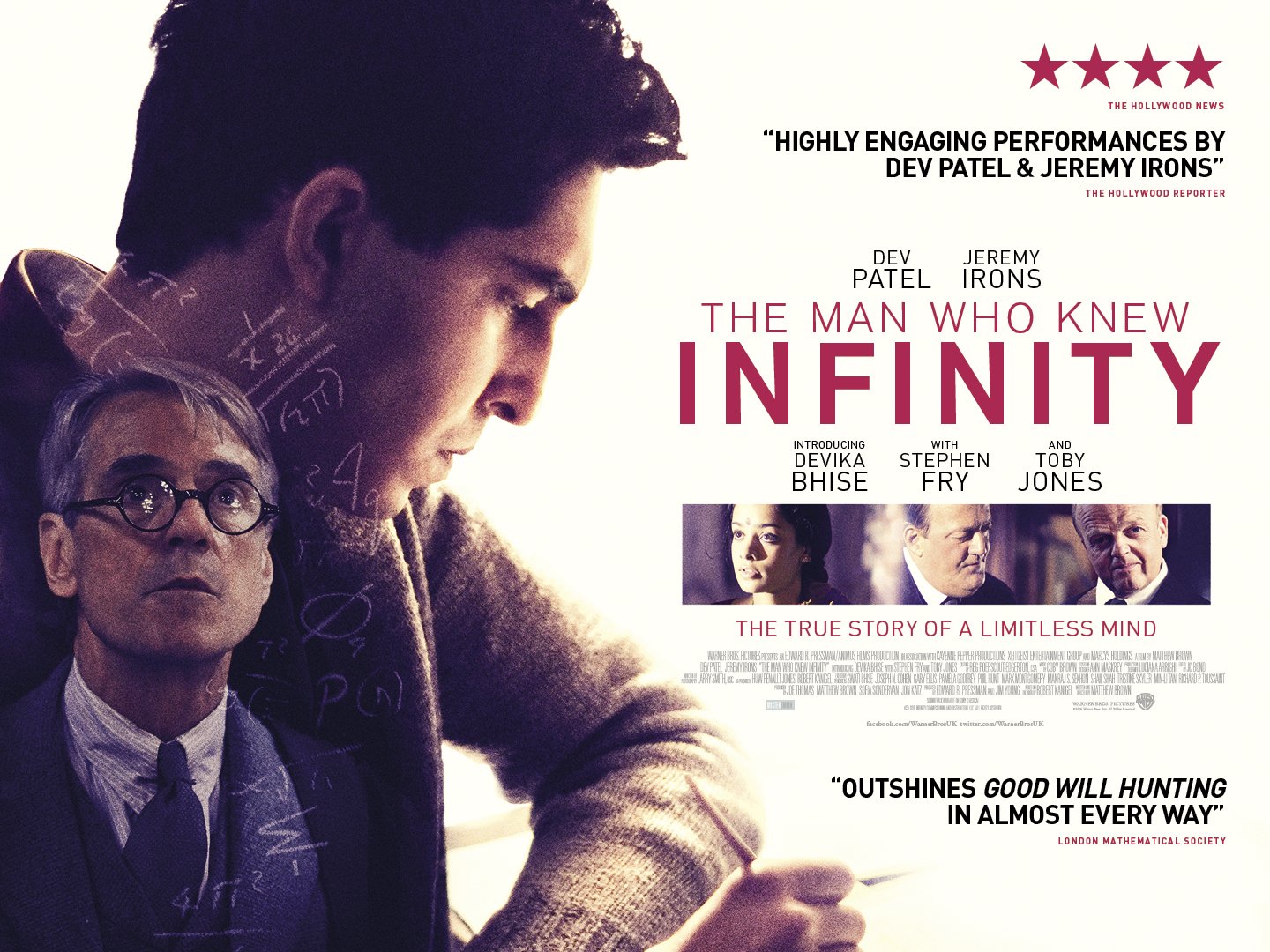
Today's Review: The Man Who Knew Infinity


Took a while (vacation will do that), but here's a long overdue review for your approval:

The Man Who Knew Infinity - recensie

Mathematics is generally considered by mainstream audiences as a rather dull topic, but movies about mathematicians often have little trouble finding an audience. There's an odd fascination with the socially awkward minds of geniuses who spend their entire live crunching numbers, or so the success of A Beautiful Mind or more recently The Theory of Everything and The Imitation Game has proven. However, with the success of such films, there's a risk of such biopics finding themselves limited to a specific formula. A misunderstood genius+a harsh, unaccepting society+British acting talent=boxoffice success, such a formula might state. Problem is, these geniuses in question were anything but formulaic people so there ought to be a little more to it than generic writing to make modern audiences fully appreciate their work. Case in point, the legendary Srinivasa Ramanujan and the feeble The Man Who Knew Infinity.

The mathematical wonder Ramanujan was born a poor Indian with an uncanny gift for understanding numbers and dreaming up formulas way beyond the comprehension of his social environment in the early 20th Century. It took a while for his talent to be recognized and even longer for it to be put to good academic use, when he finally moved to Cambridge. There he baffled the minds of his fellows in the short years that remained to him. What made this incredible mind tick? The Man Who Knew Infinity unfortunately is more concerned with focusing on the culture of discrimination Ramanujan faced at academia. In the movie, the misunderstood genius spends most of his time being subjected to racist exclusion rather than getting any work done. And so he stays mostly misunderstood to the audience, who can't begin to comprehend just how unusual his formulas were and what grand ramifications they had for the world of mathematics. Ramanujan is just repeatedly stated to be a genius, and that's that.


Dev Patel portrays this specific genius and does an adequate job carrying the movie as such, but his talent is basically wasted as the ongoing victim of racial slurs who just keeps looking miserable and unhappy. As the genre's conventions have it, it's up to the assembled British talent to keep the movie alive beyond that. With Jeremy Irons as Ramanujan's close friend Hardy, the film does have one great card to play in keeping us interested both in Ramanujan's plight and mathematics in general. The movie is as its most interesting when Irons graces the screen, guiding us and the protagonist through the academic world and mathematical lore of the early 1900s and sharing many an intriguing anecdote about both. These scenes make for the film's most interesting moments, which are constantly hindered by Ramanujan facing yet another insult regarding his cultural roots or skin colour. We get it, racism is bad. Unfortunately, more emphasis is put on this particular message than we would care to hear. Suffering is after all a trope of the genre and worked for its predecessors: as Turing struggled with his homosexuality in The Imitation Game and Hawking with his debilitating condition in The Theroy of Everything, so Ramanujan is subjected to the racism of the day.

Which is too bad, since an unusual mind like Ramanujan's didn't deserve to be explored in such a generic period piece as The Man Who Knew Infinity. The movie carefully stays within the boundaries of the genre rather than, like the man it honours, exceeding such boundaries. It drones on endlessly about the poor man's plight rather than making us fully appreciate his work, his field of expertise and his lasting legacy. The Man Who Knew Infinity, sadly, is rather a predictable and dull movie, which hinders general moviegoers to consider mathematics something other than just that exactly. Well, at least Jeremy Irons tried...

dinsdag 5 juli 2016

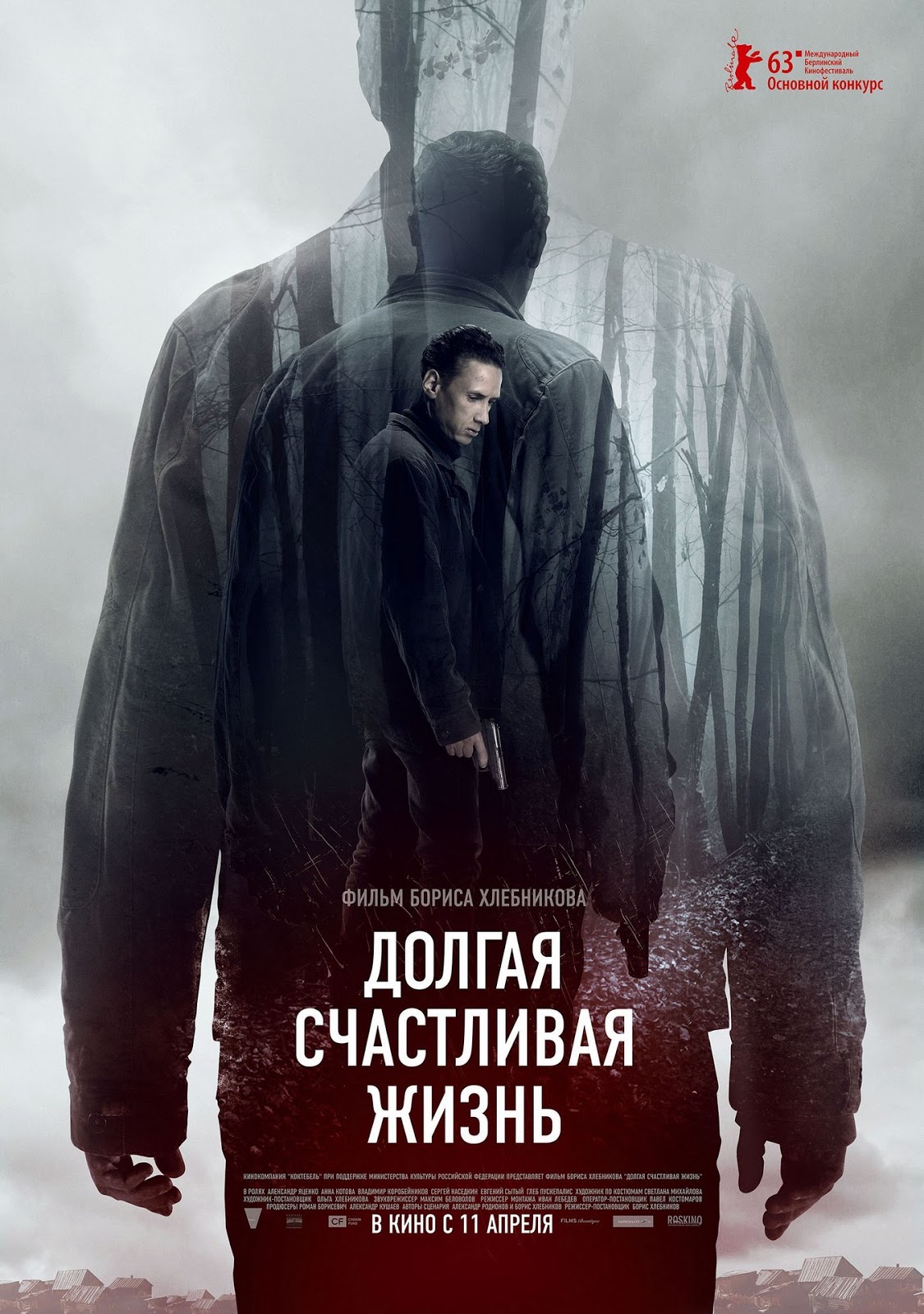
Today's Review: A Long and Happy Life


Another review up:

A Long and Happy Life - recensie

Director Boris Khlebnikov conceived of this film as a modern day Western set in Russia, inspired by the classic High Noon. With that knowledge in mind, you can easily recognize it as such, though for those with less prescience in regards to A Long and Happy Life, most of the ingredients are there for all to see. There's the lone hero, the rough but beautiful landscape, the love affair, the oppressed mob and of course the climactic shootout. All in just 77 minutes.

But the aspirations of an American Western aside, this is first and foremost a contemporary Russian social drama. So naturally, things don't proceed as they usually would. Unless you're versed in Russian arthouse, where the plethora of problems plaguing the nation, despite Putin's claims to the contrary, are placed front and center. Then you know full well what's in store. Corruption and the inevitability of its winning the day are the central themes of A Long and Happy Life, as they are in many similar films from Khlebnikovs peers. Sascha, who manages a small collective farm in the cold north of Russia, is all too eager to be bought by his superiors to split up the farm so the land can be used for something more productive. The dough gives him the opportunity to abandon this God forsaken place and move to the big city with his girlfriend. However, when the farmers under his command refuse to be moved as the state leaves them with next to nothing if it happens, Sascha's conscience gets in the way of the life from the title he envisioned for himself. Moved by their plight and their trust in him, he resists the officials, refuses the money and fights to keep his farm open. A hopeless battle, he knows, but as an honest man he must fight it anyway.


Now, honest men, those are hard to find, so says Khlebnikov in this fatalistic little film. The farmers sure don't turn out to be such men, as they quickly search for ways to get out, each man for himself, with as much money as he can make of it. And so Sascha soon finds himself fighting the good fight all by himself, betrayed by everybody. Tension mounts and it's obvious things cannot end on a happy note, but rather in a violent showdown only. Such is life is Russia these days, according to Khlebnikov. The point is well taken, but would have been better served by a different lead actor. Alexandr Yatsenko is well suited to play a corrupt underling, but makes a feeble impression as a lone hero. He simply lacks the necessary charisma for the part and so we're not sold on his switch from bored city boy wanting to leave the country to rebellious protector of the common folk. Which is also hindered by the small amount of time Khlebnikov puts into things, in obvious pun intended contrast to the title, since this film is naturally far from long and happy. But if you expected it to be, you are likely not familiar with Russian arthouse. Or Westerns for that matter.

zaterdag 28 mei 2016

Today's Review: The Sea of Trees


Another review belatedly posted here:

The Sea of Trees - recensie

If you thought Gus van Sant would be more suited to make an interesting picture about the phenomenon of the Japanese suicide forest Aokigahara than the creators of the recent bland horror movie The Forest would, you thought wrong. Say what you will about The Forest, it had no other pretentions than being an average spooky flick (except maybe for the 'average' part, but then they should have tried harder). The Sea of Trees, not so. It's a bold potpourri of supernatural thrills, Japanese versus Western belief systems, tearjerking drama and philosophical reflections on the nature of suicide. At least, it likes to be. It sadly fails in every respect, making this a prime candidate for the title of 'Worst Gus van Sant Movie'.

The ingredients for a terrific movie are all there. There's a haunting mystery (a forest where people voluntarily come to kill themselves), a shot at emotionally compelling drama (a husband and wife not getting along but coming together over the latter's impending demise), some damn fine actors (McConaughey, Watanabe, Watts, need I say more?) and lots of wonderful cinematography. The movie only succeeds in offering that last bit to our satisfaction. Whether it's the director or the screenwriter who couldn't be bothered with stringing it all together seamlessly into an intriguing whole is hard to tell. It's certainly not the actors, as all of them appear bored or distracted. In Watanabe's case, matters are made worse due to him apparently having been hired as Hollywood's token Japanese man for this occasion, making him rant on about Japanese superstition ad nauseam. We simply can't learn to care about either him or his American companion, who set out to kill himself but had a change of heart in his desire to help his new local friend get home alive. It's seemingly enough of a motivation after the devastating death of his wife to make him find new faith in life and forget all about his suicidal plans, but not for us to go along with his new lust for living.


We simply cannot care about it all, which also stems from Van Sant's odd choice of going nigh 'full Hollywood' in his dramatic scenes set in the States. Usually he opts for what many consider a more European style, but in this scenario, studio tearjerking methods got his preference. And so we have to sit through dull and ultimately predictable flashbacks explaining the protagonist's desire to end his life, even though, illogically, he and his wife never really got along anyway. The scenes in the forest, meanwhile, offer little more captivating moments or surprising twists. Admirably shot and lit as they may be (though much of it not actually filmed in Japan, but rather Stateside) and accompanied for the most part by decently melancholy music, we still grow restless over the lack of empathy triggered at our side of things. It's not so bad that it makes us want to kill ourselves, but it's still frighteningly frustrating to come to realize that a director who often has something worthwhile to share with his audience, really has absolutely nothing noteworthy to say about a fascinating topic of conversation as the so-called Sea of Trees.


zaterdag 21 mei 2016

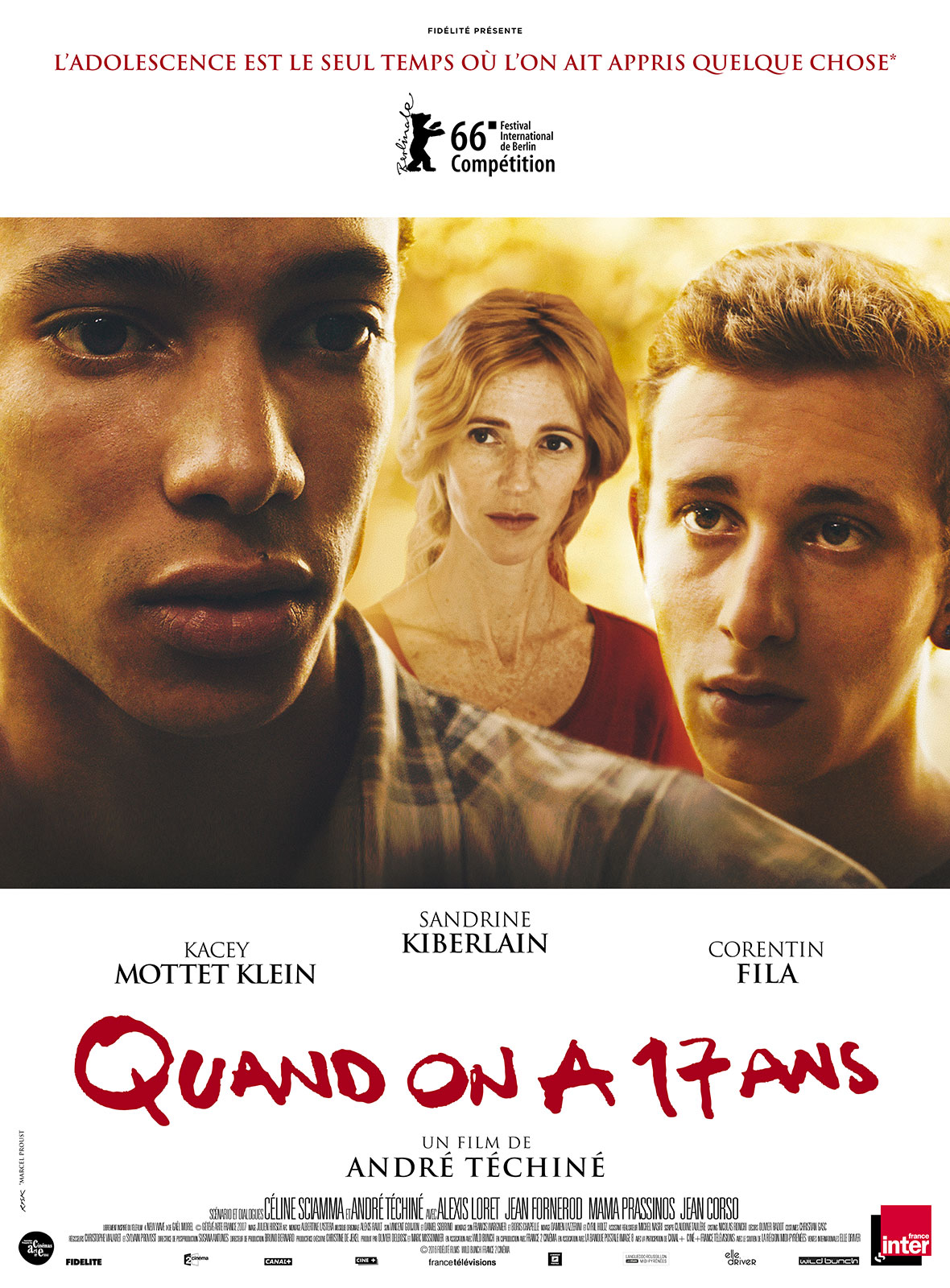
Today's Review: Quand on a 17 Ans


I've fallen a little bit behind on updating my blog with my latest reviews. Let's see whether I can undo some of the damage.

Quand on a 17 ans - recensie

This film, which in English speaking territories is released under the title Being 17, at first has all the hallmarks of your typical teenage drama. There's two seventeen year old boys and a fair bit of animosity between them. However, where usually there's girls or social status involved in explaining said strife, that is not the case here. In fact, there's no particular cause for their mutual dislike at all, it's just there. So we can imagine the horror on the one boy's face when his mother invites the other to come live with them. It's a generous but odd decision, considering their rivalry is there for everybody to see. It's not the oddest choice Quand on a 17 ans makes, since the intention of this film is showing the start of a homosexual relationship. You'll have a tough time believing this film, which takes place over a period of about 18 months, will see the relation between the boys change from mutual hatred and the occasional bit of violence to underscore that feeling, to genuine, physical affection between the pair.


Director André Téchiné - himself a gay man - is no stranger to both gay drama and teen angst. However, he felt the subject material needed the aid of writer Céline Sciamma to flesh the characters out to their best extent. Sciamma recently came off the teen drama Girlhood, which also showed rough relationships between youngsters (though all of them girls in that particular case), but despite the 37 year difference in age between herself and her director, she proves a right addition to make the teen dialogue that much more snappy and convincing. Aided by strong, not to mention daring, performances from both the young actors and their more experienced counterparts, the script goes a long way to make the unlikely transformation from one state of affairs to the other feel that much more real. Cinematography and editing do their bit as the movie moves from a snowy, cold opening to a warm and colourful close in summer, as a perfect (but rather obvious) metaphor for the change in teen moods.

Nevertheless, for the audience it's still a far cry from hate to love (especially a type of love this deeply felt) in just under two hours time. All the ingredients are there to make us convince this is transpiring, but it just moves too fast to make us feel it with the two main characters. It has the pretention, conscious or unconscious, of an emotional epic the likes of La Vie D'Adele (better known as Blue is the Warmest Colour in many regions), but unlike that wonderful film, it just cuts the time necessary to make it equally emotionally compelling for us by a third. We cannot help but feel things are rushed, even though the movie cannot be accused of being fast paced. A change in teen nature of this magnitude simply begs more illustration for full emotional immersion, it seems.


zaterdag 30 april 2016

Today's Review: Monsieur Chocolat


This one's near two weeks old now, but circumstances didn't allow me to repost it here until today:

Monsieur Chocolat - recensie

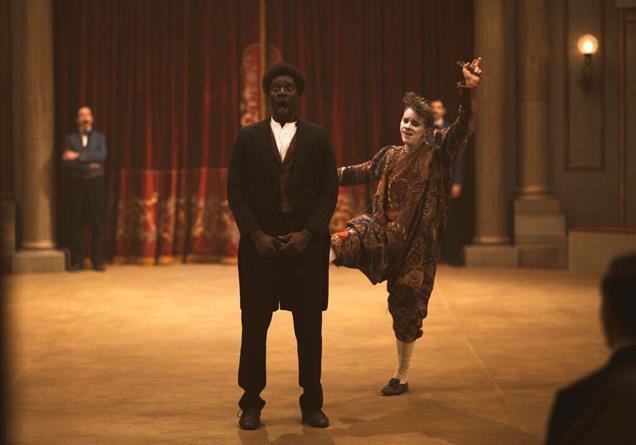
Monsieur Chocolat is one of those typical period dramas that tells a story of days of human degradation gone by more for the sake of the present day than for the desire to accurately reflect the times depicted. Though the director and writers proclaimed their intention of re-introducing a once famous French artist who by the dawn of the 21st Century had slipped into obscurity for a contemporary audience, the issues of race, though certainly a factor of Chocolat's life, are addressed far more strongly than they most likely were back in the days. Of course, Chocolat's entire career was based around his otherness and influenced more by the ignorant cultural notions of white audiences than they were by reality, but that didn't stop him from becoming one of the top theatrical artists of his day. And he was known to be proud of that achievement, even though much of his acts involved getting his arse kicked by a white clown.

But the blatant, painful melodrama of his life suggested by Monsieur Chocolat is more of an attempt to remind modern audiences of the insanity and humiliation on which his career was based rather than on actually reported events. Not to mention Chocolat's private demons involving women, booze, drugs and gambling, which add further obstacles to his career beyond simply attempting to add diversity to his stage acts. Basically, by adding all these other troubles, the writers make it clear that Chocolat is an artist like any other, dealing with the same pitfalls of fame that other artists experienced. It makes for rather generic situations beyond the ever degrading scenes of racial subjugation and does little to push Monsieur Chocolat above the myriad of similar films involving struggling performers of any ilk.


The performances, less so. Omar Sy may actually have hit a career high note in this one, delivering what certainly can be called his most convincing performance since Intouchables. He moves from merry clown entertaining women and children to broken, down-on-his-luck artist plagued by rampant racism seemingly effortlessly. Not to mention he and his co-star James Thierrée are equally matched, with the latter playing a perfect counterpart as the stage obsessed but otherwise grumpy and serious clown Footit, a total opposite to the light hearted Chocolat in many other respects beyond race. The duo makes for a strikingly different pair of personalities you could hardly imagine sharing the circus, though the ultimate break-up feels an inevitable event from the get-go. The circumstances involving their separation were not as 'black and white' as this film suggests though. Again, Monsieur Chocolat feels the need for distorting the truth to underscore the malign racism of the era. That message is well received, but the historical character of Chocolat is not aided by hammering home the message so harshly. However, thanks to this film, he is also not forgotten, so the makers succeeded in that regard as well.

zaterdag 16 april 2016

Today's Review: Mammal


Another review up, with more soon to follow:

Mammal - recensie

Why would a new mother abandon her child and husband? It's an intriguing question, usually surrounded with heavy social stigma, since any mother denying her maternal instincts is either downright abject or at the least a bad excuse for a person, or so society swiftly judges. Nevertheless, it happens and it begs an answer. Those looking for one will not find it in Mammal. In fact, though at first thought the movie seems to revolve around a mother who accepts a second chance for motherhood, that may be too much of a generalization. But some sort of connection, both emotional and physical, between two vastly different but equally lost souls, is certainly in order in this narrative.

Margaret abandoned her family soon after her son was born, and she now has been out of their lives for 18 years. When news about her son's disappearance reaches her, not much sorrow is demonstrated. Nevertheless, around the same time, she accepts a wild kid from the street, roughly the same age as her own child, to live with her. The big question obviously being why. A simple act of generosity? Or perhaps another shot at maternity, after foregoing that responsibility all those years ago? For a while, the latter option seems to be the case, but when things get overly physical between her and the boy, Joe, that theory doesn't hold up any more. If motherhood is indeed Margaret's objective, she has some odd notions of the concept at least.


Unfortunately, Mammal - the metaphoric title suggests a nurturing nature to their relationship based on maternal instincts, though there's also an undeniable social aspect to it as well, so one can look at it from both angles - is short on motivations. It's not Daly's intention to spoon feed us all the answers, which is fine, but there's simply too few of those concerning the various characters' actions to go around. Things happen as they do, while particular reasons are entirely up to the viewer to come up with. It makes Mammal a rather hollow film. Thankfully, there's strong performances throughout, which do make us care enough to stick with the protagonists rather than lose all interest entirely. We hardly get to know these people to the extent that we should for Mammal to deliver the gripping drama it feels like it wants to, but as fellow mammals we sympathize enough to feel some emotional connection to stick with them for a good hour and a half.

woensdag 25 november 2015

Today's Review: Virgin Mountain


This week's third and final review:

Virgin Mountain - recensie

Best of the three for sure. A laugh and a tear. A light drama with ample humour. But not a movie with a very innovative or inspired plot. Save for the ending which does break with the traditions of this type of film. Solitary fat man, a disappointment to his mother and the butt of jokes to his coworkers, lightens up when meeting a charming woman. Despite her mental problems, they are obviously made for each other. You get the gist of things.

It's not the plot that makes it a decent watch, it's the acting for one. Icelandic force of nature Gunnar Jonsson is literally made for this movie (or rather, the movie was tailored around him) and it shows. For another thing, it's the fine balance between being a funny piece and being a heavy drama that director Dagur Kari carefully treads, without slipping to one side to such an extent that it hurts the film as a whole. That's a tough call for a film like this, especially considering, again, the ending, which likely isn't what people would want to see, but feels like it fits regardless. And thus, Virgin Mountain gets away with it admirably.

zaterdag 21 november 2015

Today's Review: A Family Affair


Reviewing for FilmTotaal continues:

A Family Affair - recensie

This was one boring watch. I had a tough time sitting this one out. I can't imagine why this would be the opening documentary for the IDFA (International Documentary Festival Amsterdam). It was just stale in every way. Stilistically it was a dud, mostly consisting of archive footage and talking heads. Worse thing, I couldn't care less about the topic. Grandmother is a cold hearted bitch and the whole family hates her. So of course the director, her grandson, would want to know why. But that is exactly what we just can't put our finger on. It's just the way it is. Bringing her back from South Africa to confront the rest of the family is a bad idea for everybody. It's not helping anyone discovering new perspectives, it just confirms that grandma doesn't care and nobody cares about grandma. Even the director is eventually antagonized by her ongoing manipulations. Which get particularly awkward when she declares she's in love with him. Yeah, right...

A Family Affair's biggest problem is its subject just proves wholly annoying. This is one mean old woman. Not someone you want to watch for the better part of two hours. I did, and I didn't enjoy it. As far as I'm concerned, this affair had better be left to the family itself. Why bother audiences with it? Especially in theaters, when it lacks the punch to be big screen material. This sort of documentary is usually seen late at night on public television. Or on documentary festivals for a one time screening. But not as an opening feature for the world's most prestigious documentary festival.

zondag 19 juli 2015

Today's Review: Inside Out


Look at little me turning Pixar's Inside Out inside out! Or as much as you can in a general review of under a thousands words in length.

Inside Out - recensie

This may be a turning point for Pixar. The naysayers who wrote off the studio ever since Disney took over often seemed right in their sweeping generalizations that Pixar's truly creative days of imaginary wonder where done. Sequels, that's what was in store for the audience ad nauseam. It worked well on Toy Story 3, few will deny. Not so much on Cars 2 though, or even Monsters University. So a new original project was definitely desperately needed to show Pixar has lost none of its dreaming potency, and this is it. Inside Out is as emotional and beautiful, not to mention innovative and soulful an animated movie as they come, and especially as they used to come in this company's own case.

It's not as perfect as the likes of Wall-E or Toy Story 3, I'll have you know, since it has some little flaws. Like Monsters, Inc. and Up, that makes it a classic Peter Docter movie. Those films, too, featured the occasional emotional highs that went coupled with some whimsical additions that had a bit of a trouble fitting in the whole. It was especially vexing in the case of Up, where the movie just never got as powerful as it proved to be in its first act. Inside Out equally knows a few moments where the magic diminishes, most notably when it concerns the elaborate logistics of the brain (though personally I found the forgotten imaginary friend rather an obnoxious sort as well, though I appreciated the notion). Docter has learned something from Up's experience though, saving the emotional climax for the end of the film. And it packs quite a punch, as Docter delivers his message that it's okay to be sad. Quite a rebellious act, since the movie still flies the banner of the Mouse House which usually tells us the exact opposite. While still an undeniably happy end, it's unlikely anybody will restrain their tears. As Docter says they shouldn't.

So is this a definite comeback for Pixar? The list of upcoming projects still consists mostly of sequels, with the only original tale for the foreseeable future presented by The Good Dinosaur. I'm more than a bit skeptical about that one, judging from the first teaser and its overly retro dinosaurs parading through near photo-real landscapes. I doubt an Inside Out 2 is out of the question, considering the film is doing fine at the boxoffice. Still, I like to think the naysayers remain in the wrong, and there's still a few tears of joy to be spilled over Pixar's films in the next few years.

And otherwise we'll still have the shorts preceding the main events. Hopefully they'll be as delightful as Inside Out's Lava, which also gets those eyes wet and thus perfectly warms us up for the main course to follow.


zaterdag 6 juni 2015

Today's Review: Dancing Arabs


Finally another review up. Another one to come soon, I promise.

Dancing Arabs - recensie

Not the best way to tackle a topic about identity. The first act of the movie differs in huge ways from the last and despite a light touch of wry humour applied to the scenes between both, you cannot help but wonder how the one (d)evolved into the other so distinctly. Opening on a comedic tone bordering on the absurd, at the end of the film you're watching a heavy emotional drama about a young man's life altered forever. Of course people change over the years, especially under the less than perfect conditions the protagonist lives through, but the viewer has a hard time accepting the unfolding of events in the way told here, and ultimately feels like he/she is watching two separate movies slapped together. It's not wrong to apply some humour to a topic otherwise devoid of that sense, especially if it helps to underscore both parties have more in common than apart. But it must feel like a coherent whole to make it work for audiences. In some ways, the writer says that any sense of optimism  Israeli Arab youths harbour in their country will only be squashed by the rampant discrimination they undergo in their formative years, and thus they will inevitably end up as unhappy, pessimist young adults. Maybe that is exactly what the screenwriter wants us to think, considering it's the conclusion he himself drew eventually, which made him move to the USA for good. At the same time however, the plot tells us there is plenty of positive things that could have avoided the bleak outcome presented here. It's not like the protagonist didn't have any friends or couldn't find love. Eventually, it was his own choices that hindered his career as much, if not more so, as the social exclusion on which the film closes.

It's not the Arabs that are dancing in this film, it's the writing that makes the plot dance around various possible outcomes and makes it pick the bleakest where it need not have, and considering the tone of the opening, should not have. Case in point: the life of the writer himself, who did very well in his career despite very similar conditions. And it's the audience that suffers most, by being offered a rather unsettling and unsatisfying close.

zaterdag 2 mei 2015

Today's Review: Im Labyrinth des Schweigens


Finally another review up!

Im Labyrinth des Schweigens - Recensie

It's that time of the year again, where we all need to take a break from things and remember those who died in war. In the Netherlands, if not the majority of the European continent, it means mostly not forgetting the many tragedies of World War II, since few other wars have plagued those nations since (thankfully!). Of course, distributors are quick to jump on the public consciousness by releasing films adressing the thematics of war, and every year sees the release of one or two films referring to the horrors of the Second World war. This year is no different, with Im Labyrinth des Schweigens the default war remembrance picture released in Holland. It's made all the more topical because it addresses the issue of forgetting what happened in WW II, at least in the West-German scenario. The country was rising from its own ashes swifter than people would have thought possible, so who would want to open old wounds by investigating the past and risking dividing the nation? It sounds inconceivable to the contemporary generations, but the term 'Auschwitz' hadn't penetrated the collective consciousness: in fact, most wouldn't have a clue as to what it entailed. It would take an unprecedented trail, wherein a country would convict its own war criminals for the first time, to change these paradigms of 'ignorance is bliss' and force Germany to gain knowledge about its own atrocities. Could make for a smashing movie.


Unfortunately, Im Labyrinth des Schweigens doesn't prove the film the subject deserves. Though the notions remain intriguing, it chooses predictable drama and basic entertainment over the historical facts. It will be a frustrating watch for those with just a tad more knowledge of history than most, as the movie wastes much of its time sending its protagonist on a wild goose chase that they know will prove fruitless. While the intercutting of shocking testimonies from Holocaust survivors remains as powerful a scene as in many movies containing similar material, putting emphasis on the sensational stories of Nazi war crimes, thus for instance depicting Josef Mengele as a crazy monster rather than the disturbingly human character he undeniably was, hurts the film's efforts to remember the times when memory was overruled by the collective desire of forgetfulness. Though the principal cast deliver adequate performances, the script does make for an overly naive and irrationally obsessed protagonist. The historically grounded sides of his character as an investigator of the truth are undermined by his stereotypical reactions on the adversity he encounters, including turning to alcohol and losing the love of his life to his freakish persistence. It has to be admitted though that casting a charming blond haired, blue eyed German man as the one to investigate the crimes of the Aryan driven regime is a fine statement of the younger generation delving into the unholy matters of the old. But when you have that character running around the streets at night in a drunken fit, yelling 'you're all Nazis!' to random passersby, you're making it hard to come across as serious.

As a whole, Im Labyrinth des Schweigens explores interesting philosophical questions, but due to its desire to come across as exciting first and foremost, it fails to make the most out of its intriguing historical subject. A better movie might still be distilled from the topic, allowing us to remain silent about this one afterwards.

woensdag 24 december 2014

Today's News: It's the most boring time of the year


The Holidays are never a particularly hot time for movie news (unless your movie is called The Interview). This year proves no exception. I guess it's a good thing, as it gives me less work and more time to spend with my loved ones. Or stuff.

http://www.moviescene.nl/p/158436/justin_lin_nieuwe_regisseur_star_trek_3

This is basically bad news in the guise of good news. Of course, the real bad news I mentioned previously, which was Duncan Jones passing on Trek 3. I guess we have to make do with an action director then, which doesn't bode particularly well for the movie's plot. Justin Lin sure isn't the worst choice as action directors go, though. He successfully and rather unexpectedly turned a franchise in decline around and crafted Fast & Furious into the powerhouse blockbuster series it is today. Obviously, Paramount Pictures is hoping he can pull off the same scheme for their ailing Star Trek franchise, which has known nothing but woe since J.J. Abrams traded in Trek for Wars. I hope Lin realized what he was in for, basically assuming command of a previously sinking ship, with little to no input on the script, as there's no time for decent rewrites, now that the 2016 date, hailing the franchise's Fiftieth Anniversary, is definitive. An approach both fast and furious is sure required here. As if the script isn't enough of an issue, I genuinely doubt Lin's capability to handle Trek. He has proven good at what he does - against all odds, the F&F movies got better and better - but he does action movies and has no experience with the science fiction genre, intelligent or otherwise. Maybe his hiring is another clear sign that Paramount isn't at all interested in decent Sci-Fi, but just wants another Star Wars like action flick that once more proves the new Trek isn't anything like real Trek. The rumour that the studio is hoping to add Rocket & Groot type sidekicks is also getting more credible, as there's various of those to be found in Lin's oeuvre thus far (though they be human as opposed to antropomorphic plants and animals). I'm glad Paramount at least went with the most sensible bad choice, but I'm not applauding their choice as a bright future for the Star Trek franchise.


http://www.moviescene.nl/p/158419/nieuwe_trailer_in_the_heart_of_the_sea

I also don't applaud whaling (at all!), but I cannot deny this film looks fascinating. Of course, that cannot be credited to the overly digital stupendously large whale smashing the boat. It's the story of the perseverance of man in his struggle against nature's wrath that piques my interest here. Maritime stories of men at the mercy of the wide ocean have proven a popular trend of late (e.g. Kon-Tiki, Life of Pi, et al.) and In the Heart of the Sea might make a fine addition to that list, helped by a decent 1800s period look. A good cast is in effect, though a better choice for the leading man might have been found than Chris Hemsworth, but I suppose you got to put in one popular name for the general audience (or so studios often seem to think). I doubt the story will offer many surprises with the God of Thunder leading these desperate and starving men through their hopeless plight: besides, if they had all died, it seems highly doubtful the Essex story would have been historically documented at all. I just hope the ignorant audience won't consider whalers as brave and romantic men having chosen a courageous trade slaughtering large, dangerous creatures, though I could not believe any Western bred director would consider such an ideological message in this day and age. In the Heart of the Sea mostly isn't about whaling anyway, it's about survival against impossible odds first and foremost. And history has taught us that such a whale of a tale has always intrigued mankind.

zaterdag 22 november 2014

Today's Review: White Bird in a Blizzard


Wrote another review for MovieScene this week. After all, I had some catching up to do in that department:

http://www.moviescene.nl/p/157936/white_bird_in_a_blizzard_-_recensie

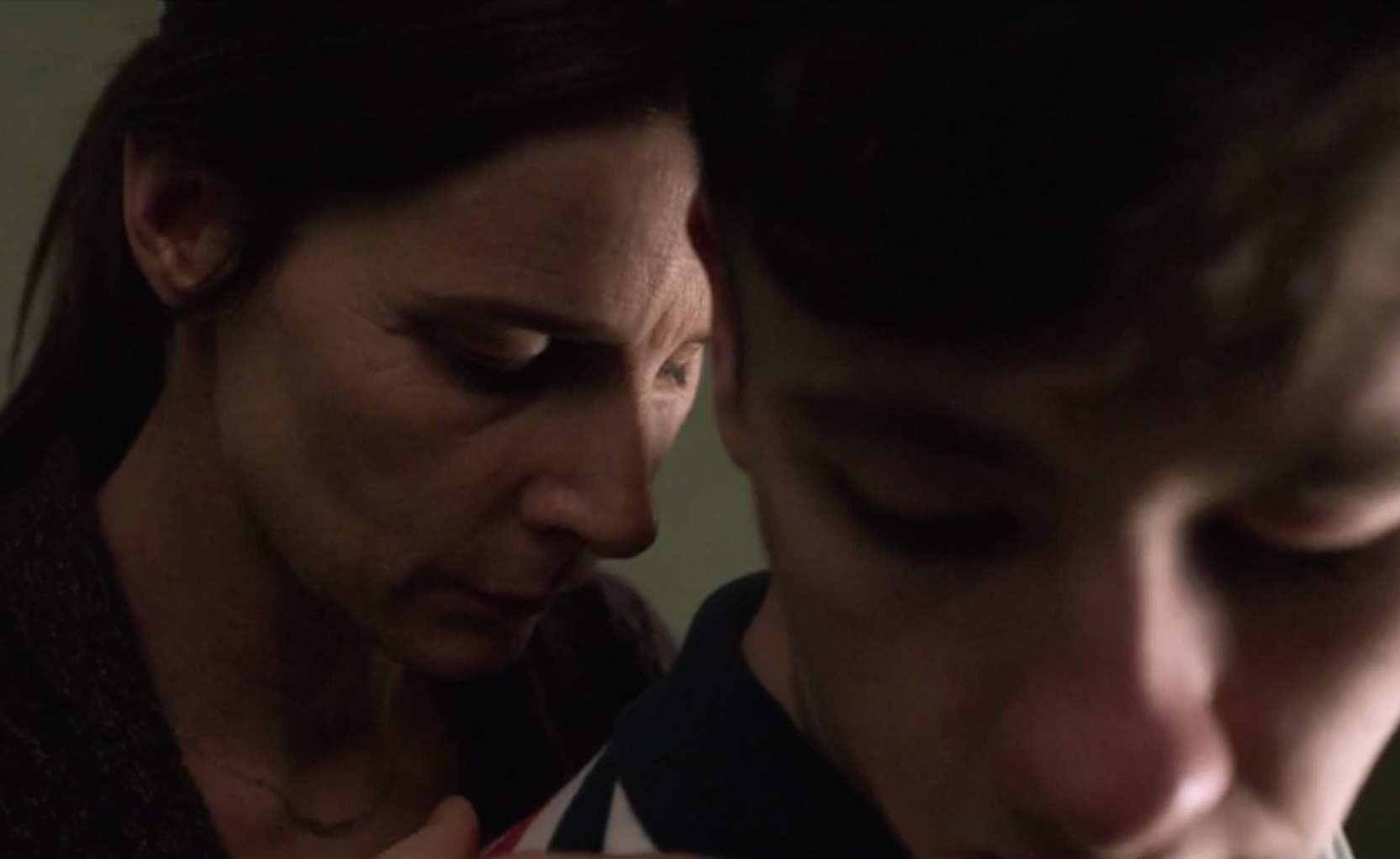
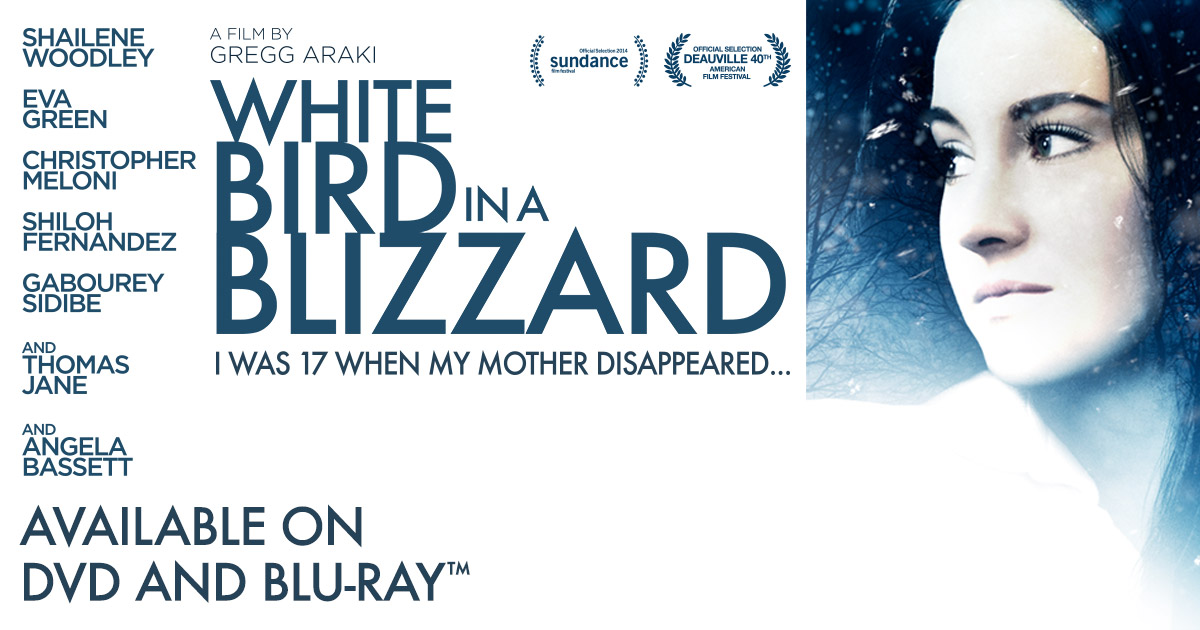
From director Gregg Araki, we both got what we expected and we didn't, in this film's case. White Bird in a Blizzard contained all his usual themes - surrealism, teenage social issues, sexuality, death - but it lacked his usual energetic visual style. It never got recognizably 'Arakiesque'. Usually it's a not a bad thing per se when you can't tell who the director is from looking at the picture, but in this case, it's no flattery at all. White Bird is a visually unimpressive, bland picture that in many ways feels like a missed oppurtunity on this director's part. You might say he preferred to stick to the source material, this being an adaptation of somebody else's novel, but considering he did change a fair amount of things already, it would also have suited him to get the film more in line with his signature style to feel less detached and make us care more about the characters.

At least performances are good throughout the piece. Shailene Woodley makes a better impression than usual. However, it's Eva Green who steals the show while playing her mother. That too, doesn't help the movie much, as it's not her show (hence the proverbial 'stealing'). In fact, it's much more about her absence than it is about her presence, but when she graces the screen, the movie lightens up considerably. Green does an excellent job portraying a seemingly perfect house wife, sizzling with the frustrations of a wasted life and unfulfilled desires just underneath the facade. Her unhealthy relationship with her daughter makes for the most emotional scenes, thoroughly uncomfortable yet mesmerizing to behold. However, the moment she's out of the picture, literally and figuratively,and  the story fully centers around Woodley's character just hanging out with her friends, having sex and going to college, our attention wanes. And then it uneasily evolves from a typical coming-of-age drama into a thirteen-a-dozen thriller in the second half and all the predictable dirty secrets come out. But we care too little, too late at that point.

White Bird in a Blizzard will always be compared unfavorably to that other adaptation of a literary work Araki directed, Mysterious Skin. That movie too featured all his themes (including a visually sober look), but fared a lot better combining teen angst, creepy sexual relations and a thriller component, as the movie unraveled in a way that did make us interested in the questions of what happened to whom. White Bird in a Blizzard sadly feels repetitive and redundant on Araki's resumé. But at least Green is not at fault.

zondag 31 augustus 2014

Today's Review: Boardwalk Empire Season 4


It sure has been a while, but I finally wrote another review, of a whole season of television no less:

http://www.moviescene.nl/p/156957/boardwalk_empire_seizoen_4_-_dvd_recensie

I have less and less time for fairly lengthy pieces like these. Considering I was on vacation I decided to take a crack at this one when it was offered to me. After all, you just have to find time every now and then for writing a piece that has the potential to be read by thousands. Sadly, the reviews on my blog don't count in that regard, as they're lucky to be read by more than three people (my mom doesn't even check them out, for heaven's sake!). Of course, recently I started aiming at writing reviews that I can post on IMDb in abbreviated form, but still, the use of taking the time and effort for such pieces is debatable considering my otherwise fairly busy existence. It kinda sucks for my blog, but it just doesn't have that much priority.

I had a blast watching this fourth season of the magnificent and hugely underrated HBO show Boardwalk Empire. Top-notch quality television like the previous seasons, despite a somewhat slow start (which is not unusual for HBO series). The only true downside of the thing is I received the DVD version rather than the requested Blu-Ray set, which means a breach in viewing style compared to the previous three seasons, which do grace my BD collection. Lesser video quality and a lower number of special features (saves time!) didn't hinder my appreciation of the show's fourth and penultimate season, as you'll find checking out the deservedly high rating I bestowed upon it. That said, I still have a tough time reviewing entire seasons of TV shows, considering there is so much to say about them. The piece already ended up longer than most similar reviews by the hand of my peers, but there's still plenty of material left unaddressed. I didn't even mention Michael Shannon's fabulous performance as former Prohee Nelson Van Alden in this run, which so poignantly mixes dark humour with social drama, as we follow the man's descent into a life of true crime which paradoxically finally makes him a likeable person. The show's tendency for wonderful team-ups of characters you would never see coming is also left largely unexplored, even though it formed one of the most enjoyable experiences this season. Reviewing seasons of television shows in an adequately limited number of words remains quite a challenge for me. I'm sure many readers won't be bothered by the frustrating results as much as I am myself though. Certainly not the small numbers who read it here.