Posts tonen met het label nazis. Alle posts tonen
donderdag 4 februari 2016
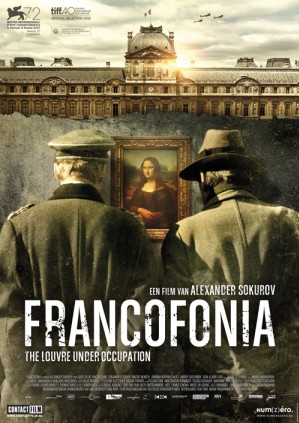
Today's Review: Francofonia
The second review by my hand posted on FilmTotaal this year (but more is well underway!):
Francofonia - recensie
This is an intriguing compendium piece to Sokurov's breakthrough film Russian Ark, though it lacks the stylistic punch of that particular film. Of course, doing another 100-minute one-take shot would have felt repetitive, as if the director attempted to capitalize on his own past glory. So there's none of that in Francofonia, but that's not to stop Sokurov from pulling a few more cinematographic tricks out of his hat. That, and the overall message, matters more to him than following conventional narrative expectations. Which is made clear a bit painfully, as Francofonia is literally all over the Louvre, rather than sticking to the single time frame that one would have expected to be the primary focus. Even though the museum's survival of the war years during WW II appears to be the subject at hand, Sokurov has a lot more to tell about the place's long history, not to mention sharing his personal thoughts on both the Louvre's background, its place in art history and the treatment of art in general. That's a lot to tackle for a 90-minute movie...
And of course, as a result, not every episode of the Louvre's story proves as interesting. In fact, all of the film suffers from Sokurovs tendency to change subjects, drone on about the abuse and capitalization of art works and sudden jumps to different time periods. Nevertheless, the message remains clear: museums should not be reduced to pawns of commerce, politics or dictators. They are time capsules that tell all of human history and should be carefully preserved, kept well away from the power hungry. The German occupation is just an example of and an hommage to a period in history where the joining of forces between two like minded men, who by all accounts ought to be diametrically opposed, preserved countless artifacts for posterity. Sokurov thanks both men for their assistance to cultural history. But he also isn't afraid to remind us that the origin of the Louvre itself is steeped in conquest and theft. After all, the emperor Napoleon captured many pieces of art on his campaigns abroad and had them shipped to the capital of his empire. Hitler simply attempted to do the same and failed in the Louvre's case, while succeeding in a lot of other cases. Art and politics certainly aren't mutually exclusive.
It's a point Sokurovs makes with the help of various stylistic choices, some proven in prior works, others applied for the first time in his case. Though there are no excessively long takes used as there were in Russian Ark, his introduction of historical characters sharing their insights and motivations with us is taken straight from that film. In this case restricted to only two characters (Marianne, the French Spirit of Freedom and Napoleon), rather than many. This is not a coincidence of course, as Francofonia's main tale also deals with two characters, the museum director (representing the side of French freedom) and the Nazi officer (the conquering party, the Napoleonic figure). Their story is intercut with historical footage, while it is itself disguised as historical footage by its old fashioned framing and the many print scratches applied. It would have worked even better if it was in black and white, but apparently Sokurov disagreed. He disagrees with a lot of things in Francofonia. Like art being shipped over seas as any other piece of cargo in containers on large freighters, its very existence threatened by a violent storm. Why does art suffer so much indignity and indifference today, he laments. No matter how fragmented his thoughts as shown in Francofonia, it's hard to disagree with him, when ancient buildings and statues are demolished left and right by zealous barbarians, who are also eager to simply sell such cultural heritage to the highest bidder to fund their cause. World War II may have ended seventy years ago, but art remains ever in danger at the hands of subversive ideologies. Francofonia serves as an cautionary reminder of what could be scrapped from the history pages forever if we are not careful and respectful of art's place in our cultural mind.
Labels:
alexander sokurov,
art,
art history,
france,
francofonia,
history,
louvre,
museum,
napoleon,
nazis,
russia,
world war II,
WW II
zaterdag 2 mei 2015
Today's Review: Im Labyrinth des Schweigens
Finally another review up!
Im Labyrinth des Schweigens - Recensie
It's that time of the year again, where we all need to take a break from things and remember those who died in war. In the Netherlands, if not the majority of the European continent, it means mostly not forgetting the many tragedies of World War II, since few other wars have plagued those nations since (thankfully!). Of course, distributors are quick to jump on the public consciousness by releasing films adressing the thematics of war, and every year sees the release of one or two films referring to the horrors of the Second World war. This year is no different, with Im Labyrinth des Schweigens the default war remembrance picture released in Holland. It's made all the more topical because it addresses the issue of forgetting what happened in WW II, at least in the West-German scenario. The country was rising from its own ashes swifter than people would have thought possible, so who would want to open old wounds by investigating the past and risking dividing the nation? It sounds inconceivable to the contemporary generations, but the term 'Auschwitz' hadn't penetrated the collective consciousness: in fact, most wouldn't have a clue as to what it entailed. It would take an unprecedented trail, wherein a country would convict its own war criminals for the first time, to change these paradigms of 'ignorance is bliss' and force Germany to gain knowledge about its own atrocities. Could make for a smashing movie.
Unfortunately, Im Labyrinth des Schweigens doesn't prove the film the subject deserves. Though the notions remain intriguing, it chooses predictable drama and basic entertainment over the historical facts. It will be a frustrating watch for those with just a tad more knowledge of history than most, as the movie wastes much of its time sending its protagonist on a wild goose chase that they know will prove fruitless. While the intercutting of shocking testimonies from Holocaust survivors remains as powerful a scene as in many movies containing similar material, putting emphasis on the sensational stories of Nazi war crimes, thus for instance depicting Josef Mengele as a crazy monster rather than the disturbingly human character he undeniably was, hurts the film's efforts to remember the times when memory was overruled by the collective desire of forgetfulness. Though the principal cast deliver adequate performances, the script does make for an overly naive and irrationally obsessed protagonist. The historically grounded sides of his character as an investigator of the truth are undermined by his stereotypical reactions on the adversity he encounters, including turning to alcohol and losing the love of his life to his freakish persistence. It has to be admitted though that casting a charming blond haired, blue eyed German man as the one to investigate the crimes of the Aryan driven regime is a fine statement of the younger generation delving into the unholy matters of the old. But when you have that character running around the streets at night in a drunken fit, yelling 'you're all Nazis!' to random passersby, you're making it hard to come across as serious.
As a whole, Im Labyrinth des Schweigens explores interesting philosophical questions, but due to its desire to come across as exciting first and foremost, it fails to make the most out of its intriguing historical subject. A better movie might still be distilled from the topic, allowing us to remain silent about this one afterwards.
maandag 18 maart 2013
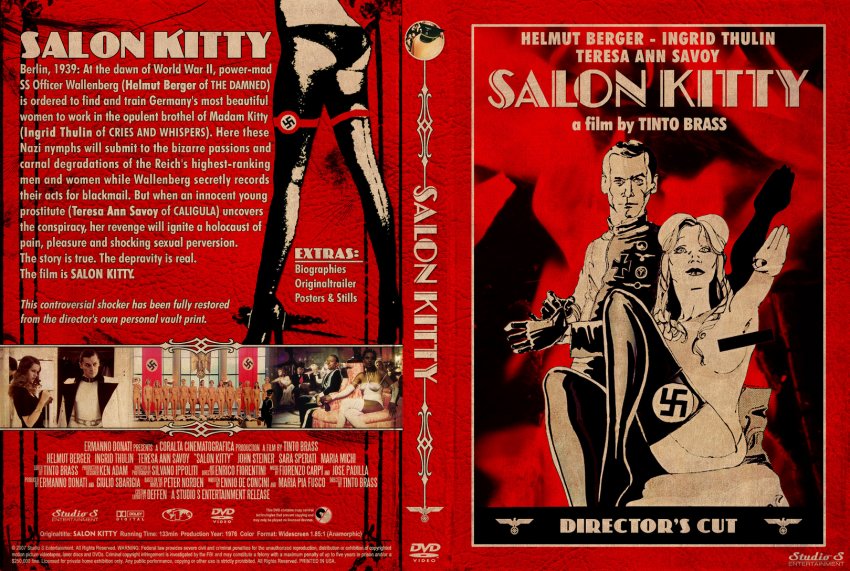
Today's Review: Salon Kitty
Here's a nice review of a not-so-nice movie for y'all:
http://www.moviescene.nl/p/145474/salon_kitty_-_dvd_recensie
A real piece of trash, that much is obvious. Though apparently the director has some fans, as indicated by the reader comments. But then, it's no secret this world knows many silly people.
I just hope this review will keep other people from having to endure this 127 minute extravaganza of bad taste. You have been warned!
http://www.moviescene.nl/p/145474/salon_kitty_-_dvd_recensie
A real piece of trash, that much is obvious. Though apparently the director has some fans, as indicated by the reader comments. But then, it's no secret this world knows many silly people.
I just hope this review will keep other people from having to endure this 127 minute extravaganza of bad taste. You have been warned!
maandag 7 mei 2012
Convoy of Girls
Rating:
**/*****, or 4/10
One of
six terrible films included in the Nazi Cult Collection.
Original French title: Convoi des Filles. Like any typical
'nazisploitation' flick (i.e., an exploitation film featuring
gratuitous sex and violence in a Nazi setting), Convoy of Girls
revolves around a group of girls being sent to German soldiers on the
front lines for their R&R, resulting in rather softcore nudity
and boring orgy scenes, unlike seen in their more hardcore
counterparts of the same subgenre, including the likes of the
infamous Ilsa: She Wolf of the SS, which feature more
expressive sexual activity and scenes of innocent girls being
humiliated and tortured by both men and other girls alike (since
these films don't discriminate in that regard). This is not the worst
film of the bunch, but still a movie that nobody would miss after all
copies were lost in a public movie burning rally.
Starring:
Brigitte Parmentier, Jean-Marie Lemaire, Henri Lambert
Directed
by Jesus Franco and Pierre Chevalier
France:
Eurociné, 1978
maandag 16 april 2012
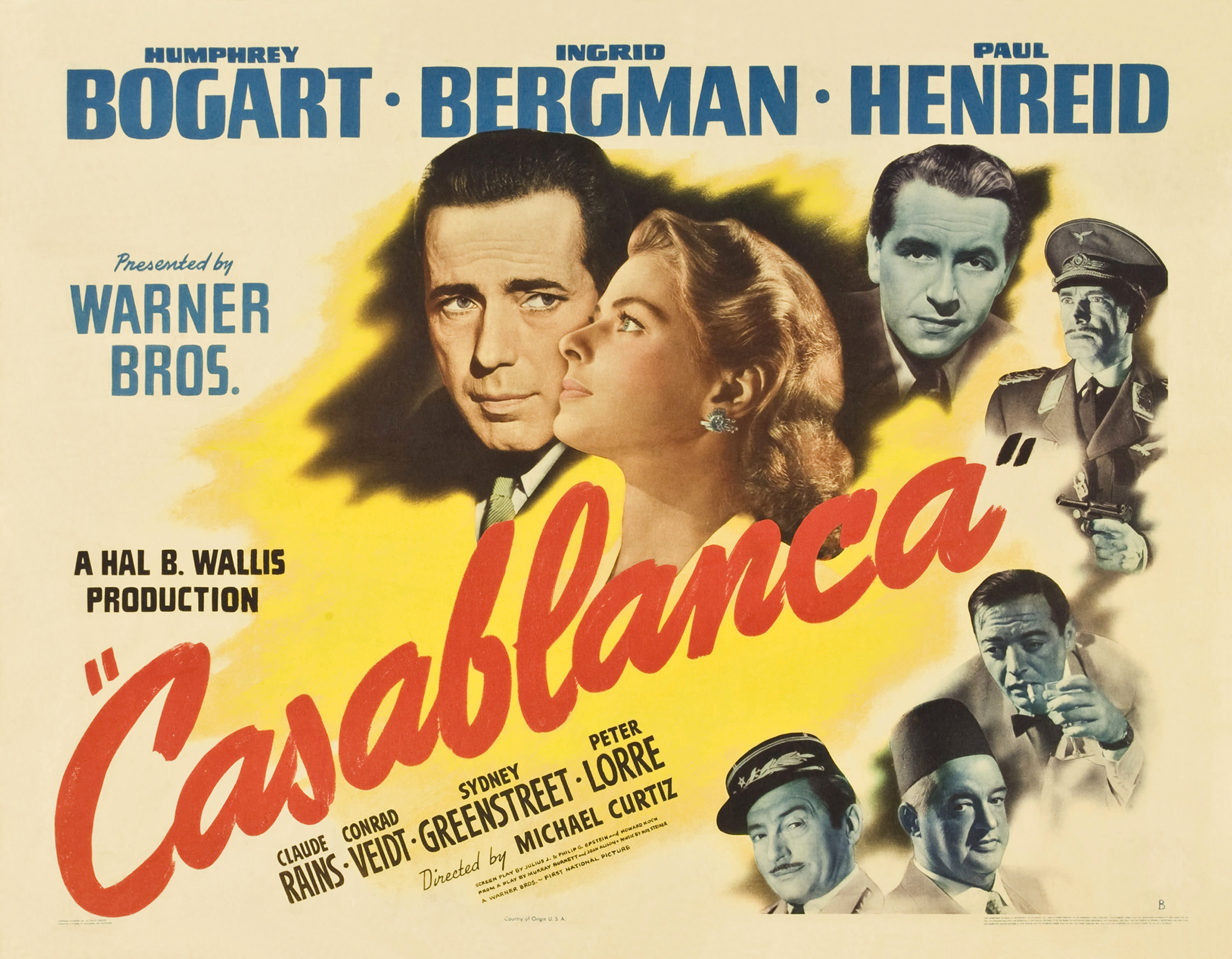
Casablanca
Rating:
****/*****, or 8/10
One of
the greatest classics to come out of the Golden Age of Hollywood,
though maybe not as brilliant as some would have you believe, and
just a little too melodramatic. However, still stands tall as one of
the most fondly remembered American movies of the WW II era. The nigh
immortal Humphrey Bogart stars as Rick, the owner of his own cafe in
WW II Casablanca, a city of scum and villainy balancing precariously
between lawlessness and brutal Nazi oppression, the port from where
many European refugees attempt to make the journey to the free United
States, if Casablanca doesn't kill them first. Rick means to stay out
of politics and make a decent buck out of his impartial liquor
business, but when he meets a prominent freedom fighter (Paul
Henreid) and his wife (the ever beautiful Ingrid Bergman), who
happens to be his old lover, Rick must decide to either help them
leave Casablanca, or stay huddled up in his own shady affairs and
risk having them arrested by Nazi commandant Strasser (Conrad Veidt,
ironically a German refugee himself). Tough call. A great ensemble
cast (also including Claude Rains as a wonderfully corrupt local
police captain and Peter Lorre as the usual creepy criminal
character), great visual direction, a solid plot and a great number
of unforgettable one-liners few people won't recognize, will have you
play this war thriller again. And you'll have a hard time getting its
main theme tune (based on the featured song 'As Time Goes By')
out of your head for days: probably the reason Warner Bros. made it
part of its present day logo tune.
Starring:
Humphrey Bogart, Ingrid Bergman, Claude Rains
Directed
by Michael Curtiz
USA:
Warner Bros, 1942
Labels:
casablanca,
classic,
claude rains,
conrad veidt,
golden age of hollywood,
humphrey bogart,
ingrid bergman,
michael curtiz,
nazis,
petter lorre,
politics,
romance,
thriller,
world war II
vrijdag 3 februari 2012
Rocketeer
Rating: ***/*****, or 6/10
Tweede
vlucht mist opnieuw net doel
Twee
jaar geleden regisseerde Joe Johnston de vermakelijke
sciencefiction-komedie Honey, I Shrunk the Kids, waarin een
warrige uitvinder een apparaat uitvindt waarmee objecten verkleind
kunnen worden dat vervolgens per ongeluk zijn gezinsleden tot
miniaturen reduceert. Het was een onderhoudende variatie op het
sciencefictiongenre dat hoofdzakelijk de hele familie ter vermaak
diende, en op dat niveau met vlag en wimpel slaagde. Inhoudelijk was
het weinig verbijsterend of innovatief, maar dat mocht de pret niet
drukken. Johnston herhaalt het kunstje nu met Rocketeer,
waarbij hij dezelfde formule toepast door sciencefiction, komedie en
avontuur te mengen tot een brouwsel dat alle leeftijdsgroepen zal
bekoren, maar niet beklijft en geen verrassingen levert.
Dit
keer richt Johnston zijn blik op de pulp-wortels van het
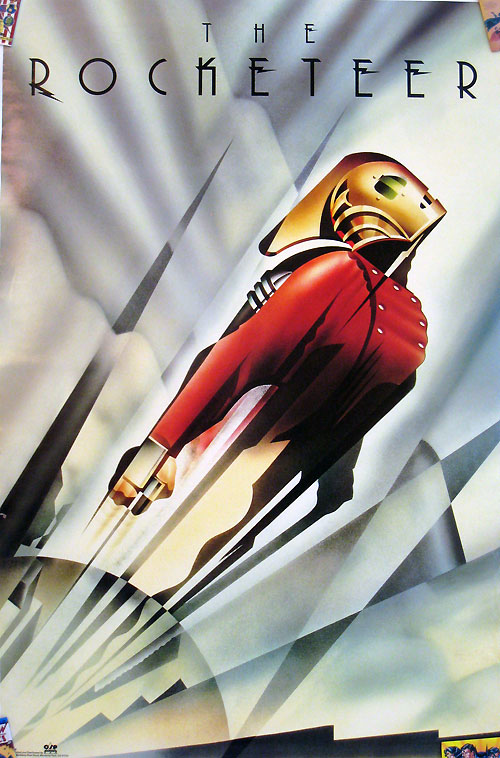
sciencefictiongenre, aan de hand van de strip 'The Rocketeer' van
schrijver en tekenaar Dave Stevens. Diens werk is één grote hommage
aan de serials van de dertiger jaren (specifiek King of the
Rocket Men), korte films vol avontuur en sensatie die destijds
aan reguliere bioscoopfilms gekoppeld werden. Al eerder vormden
dergelijke serials een rijke bron van inspiratie voor
hedendaagse films, waarbij Steven Spielbergs Raiders of the Lost
Ark het meest geslaagde voorbeeld vormt. Serials leverden
spanning, humor en romantiek ineen, en Rocketeer mixt dezelfde
elementen tot een rommelige potpourri van vertier. Johnston blijkt
echter geen tweede Spielberg en zijn poging komt dan ook minder goed
uit de verf dan diens Indiana
Jones trilogie, maar desondanks is zijn variatie op het
thema geen volledige mislukking.
Het is 1938, en piloot Cliff Secord (Billy Campbell, acteur in TV-series als Dynasty en Crime Story) heeft de pech dat zijn sportvliegtuig en bron van inkomsten bij een vuurgevecht tussen gangsters en de FBI aan flarden wordt geschoten. De reden voor deze confrontatie vindt hij vervolgens verstopt in zijn hangar: een draagbare raket die hem de vleugels geeft die hij zojuist verloor. De machine blijkt onweerstaanbaar voor de vliegenier die het vervolgens wil gebruiken als broodwinning. Echter, het mysterieuze apparaat blijkt fel begeerd door verschillende partijen, waarop Secord alles op alles moet zetten om zichzelf en zijn geliefde Jenny Blake (de bekoorlijke Jennifer Connelly van Some Girls en The Hot Spot) uit de handen van de megalomane filmster Neville Sinclair (een heerlijk schmierende en hufterige Timothy Dalton (de recente 007 van License to Kill)) moet houden, die zijn eigen schimmige agenda hanteert. Dit resulteert in een klopjacht vol gangsters, vuurgevechten, nazi's en dolle stunts van Secord die door de pers tot de 'Rocketeer' gebombardeerd wordt en vervolgens als een soort superheld de schurken moet verslaan.
De
kracht van Rocketeer ligt vooral in de liefdevolle wijze
waarop Johnston eer betoont aan de pulpseries waarop zijn film zich
baseert. Zijn visie op de dertiger jaren, gevuld met
Hollywoodglamour, zeppelins en maffia is zeer geslaagd en een lust
voor het oog. Ook de look van de raketman zelf, raketten op de
rug gebonden en bizarre helm op, is heerlijk nostalgisch. Johnston
verraadt zijn achtergrond in de special effects industrie –
hij werkte onder andere achter de schermen van de Star Wars
trilogie – in het visuele aspect van Rocketeer: Zowel de
uiterlijke stijl als de trucages zijn puik verzorgd en vormen de
grootste attractie van de film.
Helaas
is het acteerwerk van mindere kwaliteit, waarbij hoofdrolspeler Billy
Campbell de zwakste schakel vormt. Op de televisie heeft hij zich tot
dusverre prima staande weten te houden, maar als leading man
in een Hollywoodproductie blijkt hij geen hoogvlieger. Campbell laat
zich compleet overschaduwen door de visuele pracht om hem heen en
weet nergens een geloofwaardige superheld in spe neer te zetten. Hij
staat erbij en kijkt ernaar. Helaas voor Jennifer Connelly heeft het
duo Secord en Blake amper chemie, waardoor ook de romantiek tekort
schiet. Gelukkig weet Timothy Dalton, bijna als enige acteur in deze
film, beter uit de voeten te kunnen met zijn rol: als Neville
Sinclair, een verwende Hollywoodster met een opgeblazen ego die het
raketpak voor eigen doeleinden wil gebruiken, zet Dalton een
aalgladde narcist neer, een fijne schurk die vanaf de eerste seconde
zowel intrigerend als walgelijk is. Dankzij Daltons optreden blijkt
dat acteren en visuele effecten prima samen kunnen gaan met de juiste
casting: de Rocketeer zelf is helaas verkeerd gekozen.
Als
geheel is Rocketeer een vermakelijke maar imperfecte
avonturenfilm die de romantische sfeer en retro-stijl van het
sciencefictiongenre in de dertiger jaren anderhalf uur lang een
tweede leven gunt, maar de toeschouwer niet lang bijblijft. De
capriolen van de raketvlieger in diens strijd tegen de maffia en de
nazi's is hoogst onderhoudend, maar na afloop snel vergeten. De
acteurs schieten doorgaans tekort terwijl het visuele gehalte
uitstekend blijkt, iets waarvan Honey, I Shrunk the Kids ook
al last had. Hopelijk leert Johnston op den duur een betere balans te
slaan tussen acteerwerk en stijl in plaats van altijd de middenweg te
verkiezen en vermakelijke maar vergetelijke producten af te leveren.
Want ook zijn tweede vlucht als regisseur mist helaas net zijn doel.
Labels:
adventure,
Billy Campbell,
Cliff Secord,
Dave Stevens,
Jennifer Connelly,
Joe Johnston,
nazis,
rocketeer,
rockets,
science,
science fiction,
serial,
the rocketeer,
Timothy Dalton
Abonneren op:
Posts (Atom)