Posts tonen met het label politics. Alle posts tonen
donderdag 29 juni 2017
Today's Review: Buena Vista Social Club: Adios
Toen Wim Wenders in 1998 werkte aan zijn documentaire Buena Vista Social Club, zal hij niet vermoed hebben dat de muzikanten op leeftijd die het onderwerp van de film vormden korte tijd later wereldberoemd zouden zijn. Hun gelijknamige album brak records en zorgde voor een opleving in de Cubaanse muziekscène, die ook buiten de communistische eilandstaat populair werd. De oudere musici begroetten dit succes slechts met gracieuze ironie, want wat heb je aan faam op hoge leeftijd? Voor hen was het levend houden van hun geliefde Cubaanse klanken de hoofdzaak. Het vervolg én afscheid Buena Vista Social Club: Adios laat zien dat de groep daarin met verve geslaagd is, in een melancholieke terugblik op de laatste twintig jaar, waarin openhartig uit de doeken wordt gedaan welke successen en welk verlies deze uitstervende generatie muzikanten heeft doorstaan.
Voor de muziekliefhebbers zal het verhaal rond het album Buena Vista Social Club geen geheim zijn, maar Buena Vista Social Club: Adios neemt een groot deel van haar speelduur in beslag om de feiten nog even op tafel te leggen. Muziekproducenten Ry Cooder en Nick Gold scharrelden samen met bandleader Juan de Marcos een aantal vergeten veteranen uit het Cubaanse muziekcircuit bij elkaar, om een album op te nemen met de melodieën die in hun jonge jaren hun leven domineerden. Geen geringe opgave, want de oudjes, onderhand allemaal dik in de zeventig of ouder, waren uit het publieke oog verloren geraakt. Sommigen waren al lang met pensioen, anderen probeerden in armoede met baantjes als schoenenpoetser de eindjes aan elkaar te knopen. Geen van hen had de laatste decennia nog opgetreden. Toch lukte het de producenten om de flamboyante grijze persoonlijkheden bijeen te brengen en een weergaloos album uit hun ongeoefende talent te smeden, wat bovendien leidde tot een tweetal snel uitverkochte concerten. Het eerste vond plaats in Amsterdam in 1998, gevolgd door een optreden in de befaamde Amerikaanse Carnegie Hall. Vooral het laatste was een doorbraak, gezien de politieke spanningen tussen Cuba en de VS.
De resultaten mochten er zijn. Het album werd een enorm succes, evenals de documentaire die Wenders over het ontstaan ervan regisseerde. De sprankelende Cubaanse muziek maakte een comeback op het wereldtoneel en de performers werden allemaal alsnog beroemd, ondanks hun hoge leeftijd. Follow-up Buena Vista Social Club: Adios, met Wenders aangebleven als producent, laat zien hoe de groep omging met hun onverwachte sterrenstatus. Dat leidt gezien de feiten natuurlijk niet tot verrassende conclusies. De nuchtere oudjes bleven vooral zichzelf en lieten zich boven alles leiden door hun muziek. Op extravagante levensstijlen of de gebruikelijke excessen die sterrenlevens doorgaans typeren, hoeven we hier natuurlijk niet te rekenen. Wel op het onvermijdelijke heengaan van een aantal bandleden, de eerste al in 2003. Onderhand is al ruim de helft van de originele groep overleden, waarmee het perspectief van de overgebleven leden verschoven is van hun eigen deelname aan de huidige Cubaanse muziek naar het doorgeven van hun tradities en waarden aan de volgende generaties.
Daaraan besteedt Buena Vista Social Club: Adios echter opvallend weinig aandacht. Dat is ook geen al te grote verrassing. De titel maakt al duidelijk dat de nieuwe documentaire vooral een afscheid is. Het nieuwe wordt en passant aangestipt, maar het spotlicht is vooral gereserveerd voor het oude, voor de allerlaatste keer. Daarom is het toch een beetje jammer dat de film zo'n groot deel van haar tijd uittrekt voor het herhalen van het succesverhaal dat al in Wenders' eigen docu werd belicht. Hoewel nuttige kennis voor de leek, zal het voor kijkers met degelijke kennis toch als nodeloos veel herhaling overkomen. De sterkere momenten van Buena Vista Social Club: Adios liggen dan ook vooral in het terugblikken van de nog in leven zijnde groepsleden op hun succes na de uitbreng van het eerste album. Daarin wordt met respect gesproken over hun overleden kameraden, terwijl de vurige Cubaanse temperamenten toch ook ruimte overlaten voor eerlijke reflectie op hun menselijke gebreken. De zelfkennis die gepaard gaat met de ouderdom maakt dat ze ook zichzelf niet al te serieus nemen. Wat dat betreft heeft hun roem weinig teweeggebracht.
Buena Vista Social Club: Adios is echter op zijn intrigerendst wanneer het dieper ingaat op het culturele belang van deze renaissance in de Cubaanse muziek. Muziek verbroedert en overstijgt menselijke grenzen, zo gaf hun eerste concert in de VS destijds al aan. Met de dooi in de koele relatie tussen beide landen is die trend onverminderd voortgezet, met een concert in het Witte Huis voor president Obama als hoogtepunt. Terecht, want de vibrante muziek swingt nog steeds onverminderd voort. Uiteraard bruist de documentaire van de opzwepende tropische Cubaanse klanken, net zoals de oudjes dat zelf hun hele leven hebben gedaan. Ondanks de inhoudelijke tekortkomingen vormt Buena Vista Social Club: Adios daarmee een waardige laatste aria van deze verdwijnende muzieklegende.
woensdag 23 november 2016
Today's Review: Shadow World
De Belgische regisseur Johan Grimonprez zou zich best eens kunnen vinden in de verrassende Amerikaanse verkiezingsuitslag. Je kunt zeggen over vastgoedmagnaat Trump wat je wilt, maar zijn belangen zijn tenminste niet verstrengeld met de wereldwijde internationale wapenhandel. Uit Wikileaks-documenten blijkt dat Hillary Clinton daarentegen wel betrekkingen had met dat schimmige web des doods, dat Grimonprez in de documentaire Shadow World placht bloot te leggen. Een nobel streven van zijn kant, maar ondanks de vele onthutsende anekdotes die hij opvoert doet de kijker niet bijster veel nieuws op. Dat politici en wapenfabrikanten twee handen op één buik zijn, is immers al langer bekend. Maar daarom niet minder beangstigend.
De schaduwwereld uit de titel is de samenzwering tussen schimmige wapenconglomeraten (o.a. BAE en Lockheed) en politieke kopstukken om elkaar machtig en rijk te houden. Dit ten koste van het democratisch proces, dat uitgehold wordt door deze corruptie. Grimonprez, die zich baseert op het boek van de Zuid-Afrikaanse politicus Andrew Feinstein, interviewt diverse personen die lucht kregen van deze omvangrijke affaire, die al decennia aanhoudt en dusdanig verweven is met het politieke systeem dat hij niet meer te ontrafelen valt. De wapendealers hebben voldoende dekking vanuit de politiek om op de achtergrond hun smerige zaakjes op te bouwen. En als andersdenkende regeringen een nieuw bestel proberen op te bouwen, schakelen ze de (vooral westerse) mogendheden in om die regering met brute efficiëntie te saboteren, zoals het landen als El Salvador en Chili verging. Want wie de immens lucratieve wapenhandel dwarsboomt, moet het bezuren.
De personen die Grimonprez spreekt over dit diep verontrustende onderwerp zijn allemaal vanuit hun werkveld geconfronteerd met de schaduwmachthebbers. Het is een breed gezelschap, onder wie zich niet alleen journalisten en mensenrechtenactivisten bevinden, maar ook advocaten, filosofen en zelfs een enkele wapenhandelaar. Het siert Grimonprez dat hij een dergelijk bont gezelschap kon aansporen hun verhaal uit de doeken te doen. Hun onthullingen betreffen een omvangrijk netwerk van corrupte politici en de wapendealers die hen financieren, wat al in de zeventiger jaren aanving. Het is een bijzonder geraffineerde organisatie die veelvuldig de draaideurpolitiek hanteert: vertegenwoordigers van de wapenhandel gaan de politiek in, voeren een beleid uit dat hun doelstellingen behartigt en keren terug naar hun voormalige werkgever als hun politieke loopbaan tot een eind komt. Dick Cheney, Tony Blair, George W. Bush, de lijst is lang. De verrassing is echter niet groot, want van veel van de genoemde namen was hun deelname aan dit soort praktijken al langer bekend. Shadow World voelt daardoor vaak aan als een herhaling van oud nieuws.
Toch blijft het intrigeren, al die smeuïge verhalen (macht, wapens, seks!) over de omvang van dit verborgen apparaat, dat feitelijk onze democratie al decennia lamlegt. De grote hoeveelheid invalshoeken van de 'talking heads' (want die wat starre opzet weet hij helaas niet altijd te vermijden) belicht het onderwerp van alle kanten. De kant van de wapenhandelaar, die in dit geheel slechts de menselijke neiging tot geweld bevestigd ziet. Van de wetsexpert, die zijn zorgen uitspreekt over de totale inmenging van de fabrikanten in de democratie. Maar ook van minder voor de hand liggende personen, zoals de Arabische man die als simpele verzetsdaad een schoen naar Bush gooide en dat moest ontgelden met een enkeltje antiterroristenkamp. Ironisch is het gesprek met een journalist in Beiroet over hebzucht en moraliteit met hoorbaar wapengeknal op de achtergrond. Ook al blijft het een opsomming van al vaker belichte feiten, de reikwijdte van de zaak die Grimonprez in amper anderhalf uur schetst, is zowel indrukwekkend als zorgwekkend. Visueel zet hij kracht bij zijn betoog door de getuigenissen af te wisselen met radaropnamen en warmtebeelden van de directe doelwitten van het verderfelijke systeem. Kleine hittemassa's die door een drone tot gort geschoten worden. Bloedeloze beelden, maar ontegenzeggelijk effectief. Het kunnen terroristen zijn, maar evengoed onschuldige burgers, zelfs kinderen. Of gewoon tegenstanders van de wapenhandel.
Hoe boeiend Grimonprez' verzamelde verhalen ook zijn, de vraag hoe we uit deze verstikkende greep geraken dringt zich op. Helaas heeft hij geen antwoorden. Shadow World legt feiten op tafel, maar geen oplossingen. Dat frustreert, want de toeschouwer verlaat de zaal met het idee dat de politiek absoluut niet meer te vertrouwen is en het democratisch systeem onherroepelijk beschadigd is. Wat dat betreft wordt de film op een ironisch moment uitgebracht, nu het Amerikaanse volk juist vanuit die gedachte een outsider als president heeft verkozen die misschien, heel misschien, dit walgelijke systeem kan breken. Trump is en blijft echter een keiharde zakenman, dus of de schaduwwereld die Grimonprez aan de kaak stelt een tegen- of juist een medestander heeft gevonden, valt nog te bezien. Want in de VS is oorlog simpelweg geprivatiseerd.
maandag 14 november 2016
Today's Review: Arrival
Toen de Canadese cineast Denis Villeneuve tekende voor de regie van het langverwachte vervolg op de sciencefictionklassieker Blade Runner bracht dat nieuws toch een frons op het voorhoofd van vele genrefans teweeg. Villeneuve heeft weliswaar een aantal bijzonder geslaagde, grimmige thrillers op zijn naam staan, maar had nog geen ervaring met scifi. Het is nu aan Arrival om die aarzeling bij de genreliefhebbers weg te nemen. De film zal weinig moeite hebben daarin te slagen, want hij toont aan dat Villeneuve zeer goed in staat is een intelligent en enerverend staaltje wetenschapsfictie af te leveren. Arrival mag zonder schroom bijgezet worden in het rijtje beste sciencefictionfilms van de laatste tien jaar.
De 'aankomst' in kwestie behelst een twaalftal intimiderend grote ruimteschepen die zich volkomen onverwachts aandienen op schijnbaar lukrake locaties verspreid over de hele aardbol. De paniek is groots, want het buitenaardse bezoek plaatst de positie van de mens in het universum in een nieuw daglicht. Het is Villeneuve echter niet te doen om de Grote Vragen, hij zoekt antwoorden op kleinere schaal. Te beginnen met simpele vragen als 'wie zijn jullie?' en 'wat willen jullie hier?'. Het is aan linguïste Louise Banks om samen met een schietgraag militair apparaat en wantrouwende overheidsagenten, antwoorden uit de aliens te krijgen. Dat is een zware opgave, want de bezoekers hebben fysiek noch taalkundig iets met de mens gemeen. Bovendien kampt Louise met haar eigen sores, geplaagd door rouw over haar verloren dochter.
De kwestie omtrent communicatie met buitenaardse wezens is natuurlijk niet nieuw voor het genre, getuige titels als Close Encounters of the Third Kind en Contact. Arrival tilt het communicatiethema echter naar een hoger niveau door het volledig centraal te zetten. Villeneuve geeft een boeiend lesje taalkunde door diep in te gaan op de vraag wat communicatie nu precies inhoudt. Als de aliens een vraag gesteld wordt, zijn ze dan bijvoorbeeld überhaupt wel bekend met het concept 'vraag'? Louise moet bij de absolute basis beginnen om de bezoekers de grondbeginselen van de menselijke taal te onderwijzen, terwijl het haar in respons niet makkelijk gemaakt wordt met het buitenaardse schrift, dat bestaat uit in de lucht getekende cirkelvormige pictogrammen die even snel verschijnen als verdwijnen. Slechts een langzaam proces tot wederzijds begrip overbrugt beide partijen, maar uiteraard kan de gemiddelde mens, laat staan het leger, niet het benodigde geduld opbrengen in het aangezicht van het volslagen onbekende. Zoals meestal geldt in het genre is de angstige mensheid haar eigen ergste vijand.
Villeneuve weeft zo stof tot nadenken moeiteloos samen met de spanning van een tikkende klok. Wie vreest dat de ellenlange beslommeringen over communicatie leiden tot een saaie kijkervaring heeft het mis, want Louises race tegen de tijd, haar strijd tegen de vooroordelen van haar soortgenoten, doet nauwelijks onder voor Villeneuves vorige thrillers. Amy Adams draagt daar effectief haar steentje aan bij in de rol van Louise. Ze houdt uitstekend het midden tussen introvert en openstaand, tussen getekend door verlies en gedreven door hoop. Haar tegenspeler Jeremy Renner komt minder overtuigend uit de verf als natuurkundige, een rol die hem niet zo ligt als de actieheld die we van hem gewend zijn. Desondanks heeft het duo toch voldoende chemie om ons bij de taalles te houden. Gelukkig maar, want taal is hier alles voor Villeneuve, met vergaande gevolgen voor het verloop van de film. Taal is niet slechts communicatie tussen partijen, zo stelt Arrival. Ze is bovenal een uitwisseling van ideeën en verruiming van de geest om tot nieuw inzicht te komen. Dat kan de mensheid goed gebruiken, maar naast de wetenschappers staan weinig mensen in de film ervoor open. Miscommunicatie leidt tot misverstanden, en misverstanden lopen snel uit in gewapend conflict als diverse landen geweld tegen de bezoekers verkiezen boven verdere tijdrovende pogingen tot dialoog.
Want voor taalbegrip is tijd nodig, stelt de filosofie van Arrival. Die samenhang tussen het linguïstische en het temporele vormt de meest originele invalshoek van de film, die borg staat voor een immense plottwist die ongetwijfeld niet iedereen zal bekoren, maar door Villeneuve met voldoende overredingskracht wordt gebracht om ermee weg te komen. Een vergelijking met Interstellar, dat zich eveneens kenmerkte door het beschrijven van een vergelijkbare cirkel tussen het grootse universum en een kleinschalig mensenleven, dringt zich op, maar Arrival wordt niet getekend door overdreven bombast. Spektakel is hier sowieso opzettelijk ondervertegenwoordigd, want voor Villeneuve is sciencefiction nog steeds hoofdzakelijk het overbrengen van intelligente concepten die tot nadenken uitnodigen. Daarbij komt hij bovendien opmerkelijk hoopvoller uit de hoek dan in zijn vorige werk, ondanks een wat zoetsappige, te uitleggerige ontknoping. De meest optimistisch boodschap komt nog het duidelijkst over: hij weet van wanten in het sciencefictiongenre, dus dat vervolg op Blade Runner is heus in goede handen.
woensdag 3 augustus 2016
Today's Review: Madeliefjes (Sedmikrasky)
Another one up, this one an oldie:
Madeliefjes - recensie
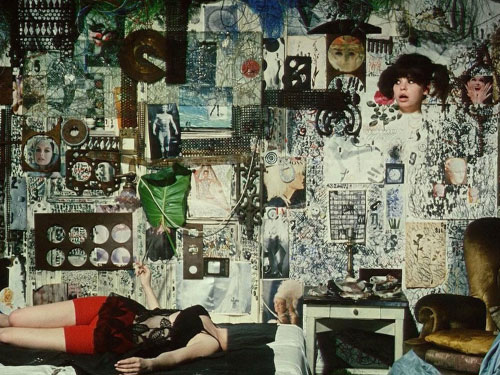
Ideologically, Sedmikrasky still makes sense. More so than ever, in fact. Designed as a feminist act of rebellion against patriarchal political systems, there's a lot to say for it when such systems are on the rise again. Now that so-called strong willed men are elected to office (or otherwise just grabbing such positions for themselves) around the globe, it's no surprise women's rights, hard fought and well earned, are slowly but surely diminished, even in democratic territories. So why not re-release a movie that fought for female independence fifty years back? Maybe because it is dated as heck in all other regards, for one thing.
Sedmikrasky deals with two young women tired of being told what to do by old men and turning the tables on them by questioning everything taken for granted and stopping to adhering to social rules. That sounds pretty hardcore, but the eventual acts of rebellion ultimately prove rather tame. They start by luring cuckolds into dates and humiliating them in public by acting like spoiled brats and messing with their food (a lot!). Soon, things get a bit more serious when they add burglary to their nefarious behavior. Still, that's about it. And all of it is executed in a subversively childish manner, which makes it hard to take seriously fifty years down the road, as we've seen much worse in cinema since. Though we can sympathize with rebels attacking an oppressive system, these two women are mostly just absurdly annoying, making for a good 73 minutes that prove hard to sit through.
What's worse, at least for general audiences, avant-gardist director Very Chytilova applies some mindbogglingly experimental cutting and photography, which makes for a wholly inaccessible movie. Everything is overly stylized, as if filming a dream. What's a modern audience to make of all this weirdness? Movie buffs and art lovers at least will appreciate the constant switching between colour palettes, the abrupt editing and the odd camera angles, not to mention the historical context which makes this film a classic in its own right, a prime example of its tempestuous zeitgeist. But without bearing all that in mind, little remains to provoke thoughts or aspire the latest generation of feminists, aside from good intentions.
dinsdag 5 juli 2016
Today's Review: A Long and Happy Life
Another review up:
A Long and Happy Life - recensie
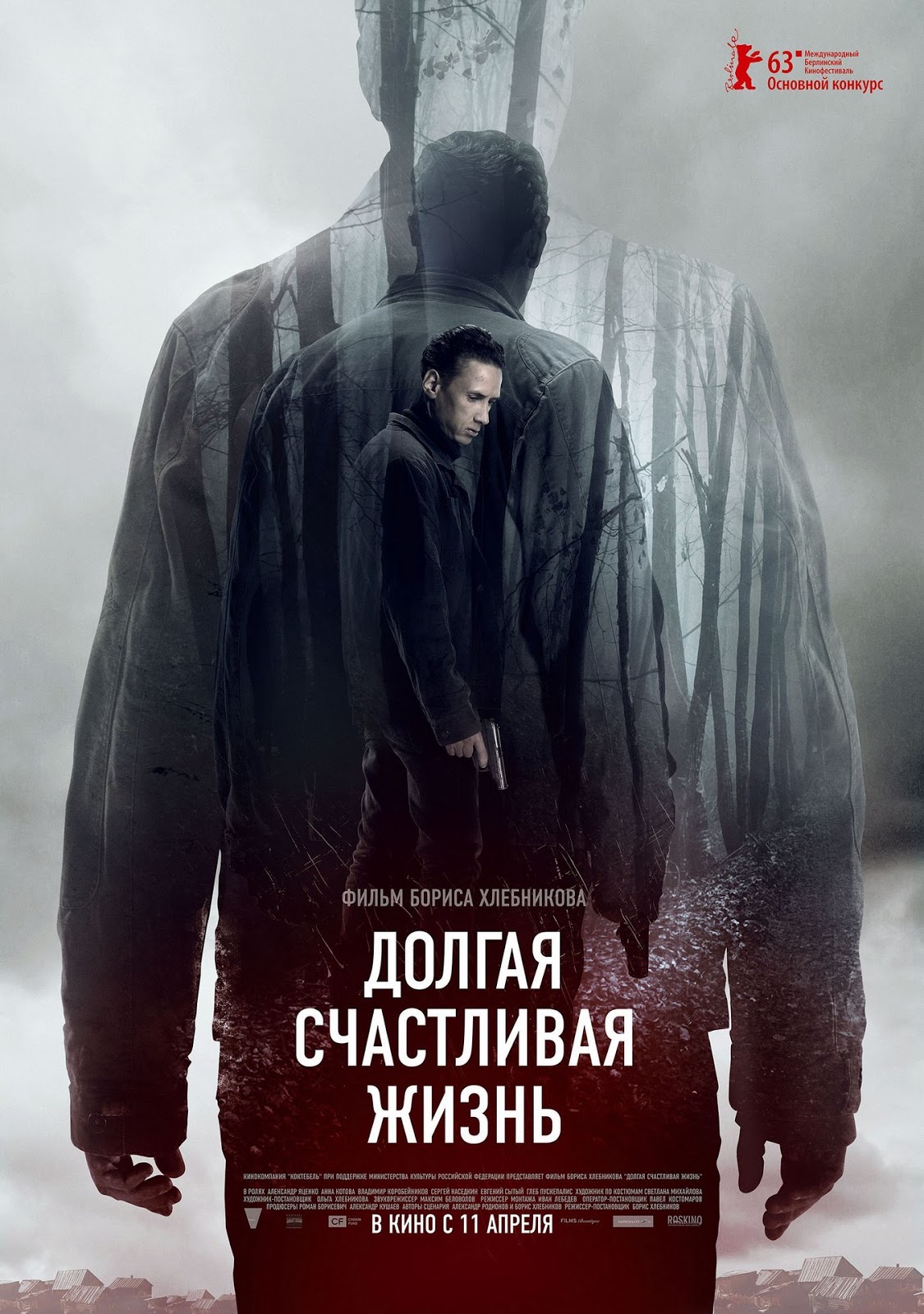
Director Boris Khlebnikov conceived of this film as a modern day Western set in Russia, inspired by the classic High Noon. With that knowledge in mind, you can easily recognize it as such, though for those with less prescience in regards to A Long and Happy Life, most of the ingredients are there for all to see. There's the lone hero, the rough but beautiful landscape, the love affair, the oppressed mob and of course the climactic shootout. All in just 77 minutes.
But the aspirations of an American Western aside, this is first and foremost a contemporary Russian social drama. So naturally, things don't proceed as they usually would. Unless you're versed in Russian arthouse, where the plethora of problems plaguing the nation, despite Putin's claims to the contrary, are placed front and center. Then you know full well what's in store. Corruption and the inevitability of its winning the day are the central themes of A Long and Happy Life, as they are in many similar films from Khlebnikovs peers. Sascha, who manages a small collective farm in the cold north of Russia, is all too eager to be bought by his superiors to split up the farm so the land can be used for something more productive. The dough gives him the opportunity to abandon this God forsaken place and move to the big city with his girlfriend. However, when the farmers under his command refuse to be moved as the state leaves them with next to nothing if it happens, Sascha's conscience gets in the way of the life from the title he envisioned for himself. Moved by their plight and their trust in him, he resists the officials, refuses the money and fights to keep his farm open. A hopeless battle, he knows, but as an honest man he must fight it anyway.
Now, honest men, those are hard to find, so says Khlebnikov in this fatalistic little film. The farmers sure don't turn out to be such men, as they quickly search for ways to get out, each man for himself, with as much money as he can make of it. And so Sascha soon finds himself fighting the good fight all by himself, betrayed by everybody. Tension mounts and it's obvious things cannot end on a happy note, but rather in a violent showdown only. Such is life is Russia these days, according to Khlebnikov. The point is well taken, but would have been better served by a different lead actor. Alexandr Yatsenko is well suited to play a corrupt underling, but makes a feeble impression as a lone hero. He simply lacks the necessary charisma for the part and so we're not sold on his switch from bored city boy wanting to leave the country to rebellious protector of the common folk. Which is also hindered by the small amount of time Khlebnikov puts into things, in obvious pun intended contrast to the title, since this film is naturally far from long and happy. But if you expected it to be, you are likely not familiar with Russian arthouse. Or Westerns for that matter.
dinsdag 18 maart 2014
Today's (Semi)Review: American Hustle
Wrote this one as an informative piece for Filmhuis Alkmaar, but since at this point it's the question whether this title will make it for release in that arthouse-theater for various reasons, I might as well post it here on my blog, and save me the effort of writing it again in English (though in that case it would have been longer and more detailed). Considering it's kind of a puff piece and there's no room for exploring the movie's downsides - you want to entice people to go see the movie by pretending there's nothing to hold against it after all; you're basically performing a con yourself, so to speak - I can't honestly describe it as the most balanced of reviews. That said, I found little to be wrong with this movie, save for the ending which, like most movies dealing with hustles and con artists, typically leaves something to be desired in terms of credibility. We're led to believe the situation is what it is, until it suddenly makes a 180 degree turn and things happen to fit together quite differently, stretching the limits of how much we're willing to swallow. However, the strong personalities and terrific performances of the cast, coupled with delicious production design and gorgeous costumes and make-up, make it all the more acceptable for us to be conned as hard as we turn out to be. American Hustle is worth checking out on those accounts alone.
American Hustle: ****/*****, or 8/10
'Sommige
van het volgende is echt gebeurd', is de boodschap waarmee American
Hustle opent. Het is zoveel eerlijkheid als je gaat krijgen van
regisseur David O'Russell (The Fighter, Silver Linings
Playbook), die geen overdreven historisch accurate pretenties
koestert in deze bewerking van de FBI's Abscam-operatie aan het einde
van de jaren zeventig. Voor dit luchtige misdaad-drama bewijst
O'Russell eens te meer een uiterst bekwaam acteursregisseur te zijn,
die het beste uit zijn hoofdrolspelers haalt om zijn verhaal over de
oplichterspraktijken van hun personages te vertellen. Zijn alle
acteurs immers niet bedriegers?
American
Hustle vertelt over het duo 'con artists' Irving Rosenfeld
(Christian Bale) en Sydney Prosser (Amy Adams) die na een mislukte
poging tot fraude door FBI-agent Richie DiMaso (Bradley Cooper)
ingezet worden in een heimelijke operatie om mogelijk corrupte
politici uit de tent te lokken. Een neppe zakendeal met een Arabische
sjeik die wil investeren in Amerikaanse projecten moet beelden
vastleggen van burgemeesters en senatoren die smeergeld aannemen en
zo als omkoopbaar aan de kaak gesteld kunnen worden. Het is een
gewaagd plan dat Irving en Sydney slechts onder dreiging met een
gevangenisstraf kunnen aannemen. Onder druk van het onvoorspelbare
gedrag van Irvings vrouw Rosalyn (Jennifer Lawrence) en zijn
onverwachte vriendschap met hun eerste slachtoffer, de energieke
burgemeester Polito (Jeremy Renner) van Atlantic City, wordt de
zwendel steeds uitgebreider en moeilijker in toom te houden. Als
vervolgens ook nog de maffia bij het stiekeme schandaal betrokken
raakt heeft de operatie zo'n grootscheepse omvang aangenomen dat het
onmogelijk lijkt het geheel nog tot een goed einde te brengen. Kunnen
Irving en Sydney zich het vege lijf nog redden in deze schijnbaar
totaal uit de hand gelopen situatie?
O'Russell
begreep wel dat hij een sterk staaltje geschiedenis in handen had dat
door zijn publiek met een flinke korrel zout genomen zou worden. Het
maakte hem er slechts vastberadener op American Hustle te
serveren als een sterk verhaal dat de kijker diverse keren op het
verkeerde been zet, met een juiste balans tussen drama en humor om de
bizarre aspecten van de Abscam-zeepbel te onderstrepen. Zijn grootste
troef blijkt echter zijn fabuleuze acteursensemble dat elkaar bijkans
van het scherm af probeert te spelen in veelal geïmproviseerde
scènes, waarin ze het meer van hun gevoel als begenadigde acteurs
moesten hebben dan van een script dat hun dialoog netjes op een
rijtje zette. De acteurs en hun personages vullen elkaar uitstekend
aan, met Bale als de ervaren maar voorzichtige oplichter met
overgewicht; Adams als zijn partner-in-crime en stiekeme liefde van
zijn leven; Lawrence als het secreet van een echtgenote, volstrekt
egocentrisch en onverantwoordelijk: Cooper als de gedreven maar
overambitieuze FBI-agent; en Renner als de sympathieke en
gepassioneerde burgemeester met maffiabanden. Dat Bale, Adams,
Lawrence en Cooper allen beloond werden met een Oscarnominatie blijkt
geheel terecht en bewijst dat ze O'Russells beproeving moeiteloos
doorstaan hebben. Het sublieme acteerwerk maakt de film een feest om
naar te kijken.
Het
sterke spel van zijn acteurs is niet het enige dat American Hustle
tot een valse maar toch geslaagde cinematische vertelling van het
Abscam-schandaal maakt. O'Russell doet de late jaren zeventig ook
voortreffelijk herleven dankzij het visueel schitterende
productiedesign. Ook hier vormen de acteurs het stralend middelpunt
dankzij de nauwgezette reconstructie van de uitgebreide mode en
weelderige haarstijl uit die periode. Maar ook de tijdsgeest waarin
zij vertoeven, de auto's en technologie van weleer, wordt met de
nodige flair nieuw leven ingeblazen, en weet zich daarbij gesteund
door een hippe soundtrack die met een vette knipoog naar het Amerika
van destijds refereert. Het geheel sleurt de kijker volledig mee in
de deceptie, maar de relativerende humor die het absurdistische van
het schandaal onderschrijft zorgt er doeltreffend voor dat de
toeschouwer gepaste afstand houdt met het wel en wee van de
oneerlijke personages als hun zwendel op een gevaarlijk kookpunt
dreigt af te stevenen. Hoe grotesker de uitkomst, hoe leuker voor
ons.
O'Russell
maakt er geen groot geheim van dat hij ons diverse keren op het
verkeerde spoor zet en ons bedriegt door het niet zo nauw te nemen
met de historische feiten. Zijn hervertelling van de Abscam-operatie
is letterlijk zowel te bizar als te mooi om waar te zijn, maar met
een prachtig eindresultaat als American Hustle maken we daar
geen enkel moment bezwaar tegen.
Labels:
american hustle,
amy adams,
bradley cooper,
Christian Bale,
con man,
david o'russell,
hustle,
Jennifer Lawrence,
Jeremy Renner,
maffia,
politics,
Robert de Niro,
seventies
vrijdag 30 augustus 2013
Today's Mini-review: Elysium
Elysium:
****/*****, or 8/10
A
fabulously dystopian science fiction flick in every sense of the
term, courtesy of the still fairly inexperienced South-African
director Neill Blomkamp, who continues treading the path he started
with the smash hit District 9 (2009). No extra-terrestrials
this time, as Elysium focuses on our own local troubles on Earth.
Overpopulation and pollution have taken their toll on our world by
the time the year 2154 arrives, but for those stemming from rich and
powerful families, life is a never ending vacation on the space
station Elysium, where the wealthy look down on their fellow man
below in excessive luxury. Alarmingly protective to make sure the
huge masses won't infect the beauty of their private Heaven, the
common man is not allowed to visit the station, and most travel
between locations is done exclusively by robots. There's no sickness
on these Elysian fields made reality, as each residence has its
private medical pod which immediately cures all ailments. The ex-con
Max (Matt Damon) is not so lucky, as he gets exposed to a lethal dose
of radiation at the shuttle factory – you'd think such dangerous
but important work was delegated to droids too, but humans are no
doubt cheaper and more expendable in this sorry state of affairs –
after which he is informed he's only got five days left to live. In
an effort to save his sad existence, but soon that of the daughter of
the love of his life (Alice Braga) too, he gets involved with a shady
criminal organization that seeks to infiltrate Elysium to hack its
systems and make illegal human trafficking easier. All Max needs to
do is kidnap a visiting station dignitary – the terrific and
terrifyingly rude and unsympathetic William Fichtner, who considers
his Earthly brethern little more than unhygienic cheap labour – and
break into his head via a comlink wedged in his brain to steal the
neccesary data. Unfortunately, things go wrong and the target dies
during the heist. What's worse, he happened to be involved in a
covert operation orchestrated by Elysium's Minister of Defense (Jodie
Foster with a funny accent) – who has no moral qualms in shooting
down refugee ships from earth to make sure no poor people invade her
homeland – to seize government control. Soon Max must run for his
life, both to reach Elysium before the countdown ends, and to evade a
particularly nasty and amoral band of ruthless mercenaries led by the
unstable, maniacal Kruger (Sharlto Copley, who starred in District
9).
Blomkamp
develops this disturbingly inhumane world with its outrageous divide
between the haves and the have-nots – a not all too inconceivable
and unbelievable scenario considering our present day social
situation – to a frightfully effective extent, hearkening back to
similar dystopian genre classics of the the notoriously gloomy
Seventies the likes of Soylent Green and Rollerball,
illustrating a future society where all our present day problems
continue to exist, except they've grown to seemingly unsolvable
proportions. The potential consequences of our everyday indifference
and our political inabilites to end such increasing social inequality
are amply showcased in Elysium,
but not in such a heavy-hearted manner they alienate the audience.
Similarly, Blomkamp has put his design team to incredibly good use,
creating a visually lavish world which does not seem so farfetched in
terms of technological capabilities and is clearly an extension of
today's tech, which makes for many a memorable, visually pleasing
shot and dynamic action scene. It looks and sounds amazing, yet
always serves both the story and this world's credibility.
Still,
despite its superior look, solid action and fascinating plot, Elysium
as a film is not as perfect and beautiful as the space station that
shares its name. The climax is rather a forced one, much more
cheerful than expected and warranted, wherein common criminals
inexplicably prove to be revolutionaries. Foster's conspiracy plot
line ends up underexposed and essentially unused in the last act,
while her character remains underdeveloped to be adequately menacing
and understandable. Both Foster and Copley are guilty of overacting,
the latter going a little bit off the deep end in his portrayal of a
bad guy that apparently does not have a shred of recognizable
humanity or redeeming qualities at all (though he does know his
South-African lullabies). Similarly, Damon proves a flawed casting
choice: true, Damon can act, but he's much too big a movie star to
convincingly play an everyday down-on-his-luck factory labourer with
a checkered past. A less known actor would have been preferable,
since all we can see now is Matt Damon looking goofy with a heavy
assortment of tattoos and all kinds of mechanical gizmos strapped to
his body. Despite these few shortcomings, Elysium is science
fiction filmmaking according to the finest traditions of the genre:
socially engaged, thematically rooted in the actuality of the day,
intricate and intriguing but grounded where reality is concerned in
terms of its futurist design, and simply never dull. Delivering a
worthy successor to District 9, Blomkamp is sure to become one
of the greats in contemporary science fiction cinema, deservedly so.
zondag 7 april 2013
Today's mini-reviews
Though
my posting of news and reviews originally meant for MovieScene
continues to advance my blog in terms of content, the posting of
mini-reviews of recently seen movies is still somewhat lagging
behind. I hope to catch up on it soon, so here's another batch of
short critiques to fill that gap. There isn't that much more of these
to come at the moment, but since I still watch new films every week,
that might change if I don't get them all up faster. So no time to
lose!
De
Wederopstanding van een Klootzak: ****/*****, or 7/10
Probably
one of the most originally titled Dutch films (official English
title: The Resurrection of a Bastard), this cinematic
adaptation of the graphic novel of the same name by original author
Guido van Driel is both a visual feast and a character study of a
small time crime boss (Yorick van Wageningen in one of his best roles
yet) whose life is changed after a failed assassination attempt. Van
Wageningen does an excellent job at playing both sides of Ronnie B.,
but the vile, 'bastard' side sticks with you the most. As violent and
despicable as Ronnie used to be before – aspects of his character
of which we get to see our fair share in flashbacks; we'll never
forget the disturbing connection between eye balls and vacuum
cleaners... – afterwards he's a peaceful, caring man, and has even
seemed to be given the ability to see danger coming when he saves
someone else's life. Tracking down his would-be killer (either for
forgiveness or retribution, the movie doesn't provide a clear answer
on that) to Dokkum, his destiny soon becomes intertwined with the
locals, including an elderly couple who was once wronged by him and
an African immigrant who means to make something of his life against
all odds. As befits a graphic novel adaptation, Van Driel does not
ignore the visual aspect, resulting in surprisingly impressive vistas
of Friesland and Dokkum, as well as poetic shots of semi-sacred trees
that play an integral part in the plot and the history of the town.
Another good Dutch movie in the same year as De Ontmaagding van
Eva van End, who would have guessed there is still so much talent
in the Dutch film industry?
Another
one of Steven Spielberg's historical dramas regarding American
history, this time centered around the person of Abraham Lincoln at
the time of the last year of the American Civil War, as he attempts
to have the Thirteenth Amendment, which would mean the abolition of
slavery, passed. Focusing less on the war and more on the
battleground that is politics, Lincoln is not at all portrayed in the
same saint like quality we have come to expect from Hollywood, but
more as an insidiously pragmatic politician who's not afraid to
engage in less cleaner tactics to achieve his goals. Wheeling and
dealing his way through the House of Representatives to secure enough
votes to make this historic change to the Consitution possible, the
audience has to stay sharp to follow all the political intrigue and
squabbling, which tends to dominate the picture a little too much at
times. Though not the centrepiece of the film, the tragedy of the
Civil War is not neglected, as we witness various dramatic scenes of
carnage and human suffering on both sides. The problem Lincoln faces
is whether to end this onslaught on his terms, freeing all the slaves
simultaneously, or accepting the Confederate terms instead which
would not reach that goal but would make for an easier restoration of
the country. Going to enormous lengths to hide the Confederate offer,
Lincoln and his closest advisors have to race against the clock to
get the Amendment passed and persuade (or in some cases downright
bribe) enough political adversaries to join their cause. At the same
time, Abe has to contend with problems at home, as his son (Joseph
Gordon-Levitt) rebels against him in an attempt to join the army,
much to his mother's (Sally Field) dismay. An excellent cast through
and through: even the less noteworthy parts seem to be occupied by
notable character actors only, but of course Daniel Day-Lewis utterly
dominates the film in his all too human portrayal of the ill-fated
American president. It got him another Oscar, well deserved as
always, but not much of a surprise to anyone. Of the total of twelve
Academy Award nominations, the film only took home one more statue
for Best Production design: also very much earned, considering the
fabulous, but raw and gritty, look of 1865 Washington and its
political arena.
Last
Stand, The: ***/*****, or 7/10
After
playing small parts in The Expendables (2010) and its sequel,
The Last Stand finally marks the definitive return of the
Austrian Oak in a starring role – his first since 2003's Terminator
3: Rise of the Machines – to the genre he helped define in
prior decades. Sherrif Owens leads a quiet life in the small backward
town of Sommerton Junction near the Mexican border, where not much
ever happens except for the mayor parking his car in all the wrong
places. Unfortunately for both the sherrif and his town, this
peaceful situation is about to change drastically when a ruthless
drug lord (delightfully wicked Eduardo Noriega) escapes police
custody after a carefully planned and elaborately staged bust-out,
racing to the Mexican border with a hostage with only Owens and his
small staff of inexperienced deputies (some only present for poorly
executed comic relief unfortunately) standing is his path. As we have
come to expect from Schwarzenegger in whatever role, he doesn't take
this kind of shit from anyone and prepares a warm welcome for the
gangster boss and his band of merciless minions, who are armed to the
teeth in an outrageous fashion and led by the maniacal Peter
Stormare. He has little choice, considering the bumbling FBI agents
(led by Forest Whitaker) are ever one step behind in catching up with
the crook, so Arnie might as well do things all by himself once more.
Korean director Jee-woon Kim shows he has an absolute blast with this
typical plot, featuring various high speed chases and completely
over-the-top action scenes, while also respecting Ahnuld's position
in the genre and acknowledging his age in tongue-in-cheek dialogue.
This movie is at no point meant to be taken too seriously, and people
who don't can expect a fun, adrenaline rushed action flick with lots
of big guns, fast cars and a few sexy dames thrown in. Schwarzenegger
may be old but he's still got it where it counts.
woensdag 23 mei 2012
A dictator late for his own funeral
The
Dictator: ***/*****, or 6/10
At least
there's one thing to be said for dictators: they make for bizarrely
colourful characters, and their regimes often feature such ludicrous
rules of conduct the rest of the world cannot do anything but wonder
just how seriously these tyrants should be taken. It seems like a
natural ingredient for a comedy, though given the subject matter most
people don't dare to make a feature film out of it. Charles Chaplin's
The Great Dictator, already 72 years old, still rules supreme
as the number one example as to how a brutal oppressive government
can successfully be made fun of, though after WW II Chaplin admitted
in hindsight he would not have made the movie had he known just how
atrocious Hitler's reign of terror had been, making the film taste
sour when watching certain scenes spoofing situations that in
reality would have cost hundreds of lives. It can be said The
Great Dictator was made too early, making it a light take on
history that had yet to occur. The opposite now happens with Sacha
Baron Cohen's latest raunchy comedy, simply called The Dictator,
which, when compared to recent history, feels it was released a
little too late to feel like it's truly up on current events.
The
dictator is question is Admiral-General Aladeen (of course performed
by Cohen), Supreme Leader of Wadiya (a fictional North-African
country), who was born in power thanks to his father who violently
seized control. Having ruled his nation since the age of seven,
Aladeen is a typical 'spoiled brat' type of overlord, who views his
country as his own private playground and has everybody who disagrees
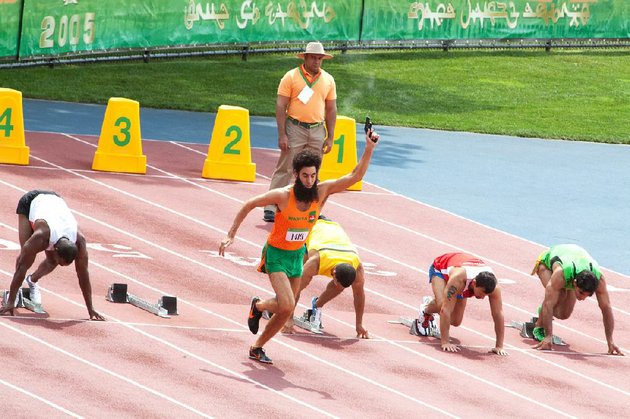
with him executed without mercy. Aladeen does whatever he feels like
doing, including hosting and competing in the Wadiyan Olympics, which
he wins by shooting his fellow contestants, as well as sleeping with
celebrities who prostitute themselves for substantial fees (and the
movie makes it clear there's a lot of those, which makes for the
funniest roles both Megan Fox and Edward Norton have ever played).
Like any rogue nation, Wadiya has its own nuclear programme, which
according to a loudly snickering Aladeen will only be used for
peaceful purposes. Of course, the UN won't fall for his not so
convincing performance, so he's requested to address its
representatives in New York or face air strikes. And thus, Aladeen
heads to the USA, the birthplace of AIDS as he calls it, to ease the
international community.
Warning!
Here be spoilers! So far The Dictator doesn't seem much
unlike Cohen's previous projects, Borat and Brüno,
both of which also opened with a string of fairly random scenes
applied to establish the film's main character and the bizarre world
he inhabited, leading to a trip to the States that made the
protagonist come into conflict with American extremities and himself,
in yet more loose scenes that felt mostly like separate sketches
instead of a progressive narrative. The Dictator however has a
more consistent storyline. Soon after arrival at his New York hotel –
where they charge an outrageous 20 dollars for Internet! – Aladeen
finds himself victim of a conspiracy and carried off for torture and
vicious death, only to be replaced by his most recently installed
doppelganger, a very simple minded goat herder whose only job it is
to be shot in the head. The plot against his life is planned by his
uncle Tamir, who means to use the decoy Aladeen to move Wadiya
towards a democracy only to sell off its oil reserves to foreign
contractors and get excessively rich in the process, over the backs
of the Wadiyan populace. Tamir is played by Ben Kingsley, a seemingly
surprising bit of casting considering his unwavering status as one of
the world's greatest actors, someone who most people would never
expect to see in a raunchy comedy like this. However, for every
masterpiece like Schindler's List or Gandhi, Kingsley
has done a Thunderbirds or Love Guru, revealing he's up
for anything if the money is right, not unlike the Megan Foxes of the
celebrity world this film also pokes at with hilarious results.
Due to
his experience in torture, Aladeen escapes his imprisonment only to
be left on the streets of New York to fend for himself. When trying
to get into the UN building he meets Zoey, a bisexual feminist
activist (played by Anna Faris made unrecognizably boyish) who offers
him a job at her eco-collective, where every employee is a political
refugee, offering Cohen the full potential to make politically
incorrect fun at every conceivable ethnic, gender or demographic
minority. In the New York neighbourhood of Little Wadiya, Aladeen
also meets Nadal (Jason Mantzoukas), the former chief of his nuclear
program who he thought he had executed for disagreeing over the shape
of Wadiya's first nuclear missile (Aladeen wanted it pointy, since a
rounded shape would make it look like a giant flying dildo). In
exchange for returning to his old job, Nadal agrees to help Aladeen
get back to power. Though it seems rather gullible of a scientist
sentenced to death to trust the one who gave the order, Nadal and
Aladeen work together more effectively for story purposes than
Aladeen does with Zoey, who's cooperation seems mostly an excuse for
dirty gags, many of them funny, all of them sexist, racist or
generally offensive (as we're used to from Cohen). However, in the
latter case, the comedic result is much more convincing, while
Mantzoukas unfortunately proves himself to be inexperienced when it
comes to the gift of timing, making many of the funny situations he
participates in sadly miss their mark.
Hilarity
aside, the audience expects Cohen to make at least some political
comments when it comes to dictatorships in an age where one after the
other bites the dust. In this regard, The Dictator seems to
have been produced a little too late to feel in any way relevant.
Many of the much despised people Cohen, either implicitly or explicitly,
refers to in this movie, have fallen victim to the results of their
own tyranny by now, including Osama Bin Laden, Khadaffi, Charles
Taylor and Berlusconi, yet the movie presents them, either in
character or only in dialogue, as still active, or even still alive.
Though the movie opens with an 'in memoriam' to Kim Jong-Il, this feels like a simple last-minute addition, done mostly to make the film appear to be more up
with the times than it eventually turns out to be. The Dictator,
alas, is revealed to be an already outdated project by the time it
hit movie screens. Of course, there's still plenty of dictators left presently, but
none of these remaining tyrants are either well known enough,
disturbing enough or simply funny enough to be made (ab)use of in The
Dictator, not even in late post-production additions like
Jong-Il. It seems all the cool dictators have already passed away, or
at least been forced to step down, just before Cohen could
effectively spoof them in his hommage to oppressive regimes.

And an
hommage it is, even if only for comedy's sake. In the end, Aladeen
succeeds in foiling uncle Tamir's evil schemes, publicly tearing
Wadiya's new constitution to pieces in front of the UN delegation,
resulting in a speech applauding the many virtues of dictatorships
over democracies, of course referring to America's insidious and
slow, but poignantly present move towards the former in the recent
decade, in which we again spot Cohen just missing the appropriate
time frame in which to state his 'j'accuse', considering the
level of repression in the USA has at least diminished under Obama
compared to the Bush doctrine. While the anti-Jewish, anti-Islamic
and anti-gay slurs Cohen revealed as ever present in American in his
previous projects, seem ever prevalent (this movie resorts to
exposing them too, to a minor extent), his views on America's level
of democratic decline seems at the least outdated, undermining the
point he makes on America appropriating anti-democratic behavior
which it critiques in other nations (that is, if you feel Cohen ever
bothers to make such points, which is also debatable). Like the way
Cohen praises the wonderful grotesqueries of tyranny a little behind
schedule, so to arrive his allegations towards the “American
regime” too late to make them feel all that relevant to audiences.
Oh well, at least we still have the jokes.
And at
least in terms of comedy The Dictator delivers some positive
results. Of course, many remarks and situations result in extremely
crude, deviant sexual gags, as we've come to expect from Cohen, nor
would we have it any other way by now. Some of them are genuinely
funny despite their obviously adult content – why this movie only
got a '12' certificate in the Netherlands is beyond me – while
others are glaringly embarrassing to watch, including a woman giving
birth and Aladeen coming to her aid by accidentally jamming his fist
up her butt. Fortunately the cringe-worthy moments form a minority,
while several instances of great humour undoubtedly will prove
memorably hilarious, and quotable for years to come. The greatest
gags involve Wadiyan life under Aladeen's rule, like many words
having been replaced by the term 'aladeen', including 'positive' and
'negative', resulting in confusion when a doctor informs his patient
of 'aladeen news' since he's 'HIV-aladeen'. Plus, we'll never forget
the sight of a wall adorned with thousands of photos of Aladeen
posing with a celebrity he has had sex with (including Oprah Winfrey
and Arnold Schwarzenegger). Whatever point The Dictator has
missed thematically, it compensates for the most part in terms of
humour.
Overall,
The Dictator will certainly never reach the status of an
undying classic like The Great Dictator did, despite both
films missing the mark historically. Even if the former had reached
theatres, say, a year earlier, it would still contain various
painfully unfunny gags taking the momentum out of the overall picture
(which is already running short with only 83 minutes). However, like
Borat and Brüno before
it, the film also contains enough good jokes to make it a decent
enough watch, and it proves that with every vile dictator gone, the
world of comedy remains a little less colourful.
And
watch the trailer here:
maandag 16 april 2012
Casablanca
Rating:
****/*****, or 8/10
One of
the greatest classics to come out of the Golden Age of Hollywood,
though maybe not as brilliant as some would have you believe, and
just a little too melodramatic. However, still stands tall as one of
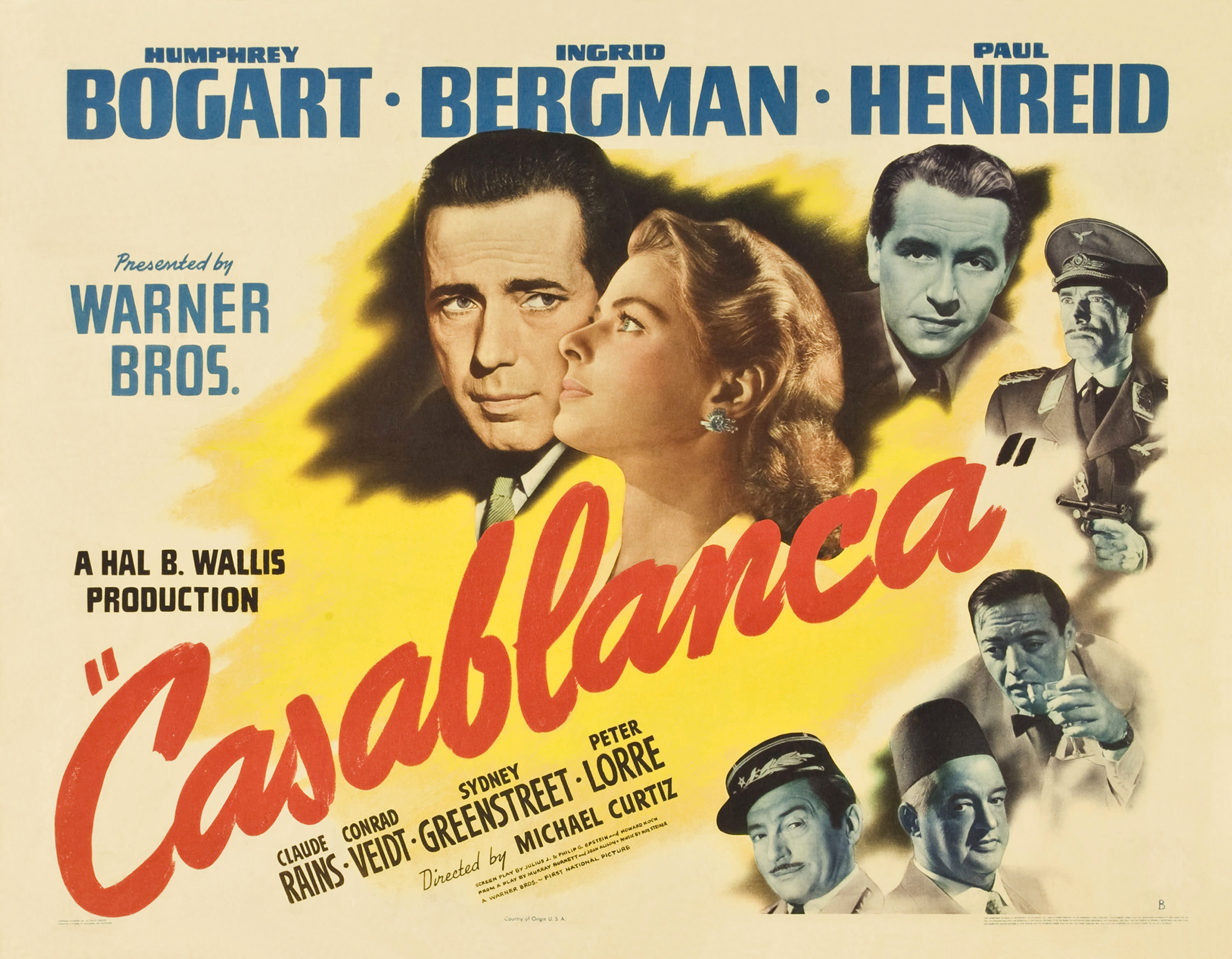
the most fondly remembered American movies of the WW II era. The nigh
immortal Humphrey Bogart stars as Rick, the owner of his own cafe in
WW II Casablanca, a city of scum and villainy balancing precariously
between lawlessness and brutal Nazi oppression, the port from where
many European refugees attempt to make the journey to the free United
States, if Casablanca doesn't kill them first. Rick means to stay out
of politics and make a decent buck out of his impartial liquor
business, but when he meets a prominent freedom fighter (Paul
Henreid) and his wife (the ever beautiful Ingrid Bergman), who
happens to be his old lover, Rick must decide to either help them
leave Casablanca, or stay huddled up in his own shady affairs and
risk having them arrested by Nazi commandant Strasser (Conrad Veidt,
ironically a German refugee himself). Tough call. A great ensemble
cast (also including Claude Rains as a wonderfully corrupt local
police captain and Peter Lorre as the usual creepy criminal
character), great visual direction, a solid plot and a great number
of unforgettable one-liners few people won't recognize, will have you
play this war thriller again. And you'll have a hard time getting its
main theme tune (based on the featured song 'As Time Goes By')
out of your head for days: probably the reason Warner Bros. made it
part of its present day logo tune.
Starring:
Humphrey Bogart, Ingrid Bergman, Claude Rains
Directed
by Michael Curtiz
USA:
Warner Bros, 1942
Labels:
casablanca,
classic,
claude rains,
conrad veidt,
golden age of hollywood,
humphrey bogart,
ingrid bergman,
michael curtiz,
nazis,
petter lorre,
politics,
romance,
thriller,
world war II
Capricorn One
Rating:
***/*****, or 7/10
Despite
one of the most intriguing premises in movie history, to my mind at
least, this science fiction thriller ultimately fails to deliver on
its promised goods. However, it's still a good flick with a fairly
solid plot. Still caught up in the space race, the planned NASA
landing on Mars turns out a doomed project due to technical errors
and financial problems, but to keep up national pride without making
America lose face with the rest of the world, the US government
secretly plays out and films the whole proposed landing in a studio
(a popular conspiracy theory concerning the actual lunar landing in
1969, which some consider to have been a hoax), while still sending a
rocket up into space and convincing the world it's manned. However,
the covert plot backfires completely when the rocket disintegrates
upon re-entry into the Earth atmosphere and everyone assumes the
astronauts (played by James Brolin, Sam Waterston and O.J. Simpson;
yes, that O.J.) have died with it. Soon, the three would-be space
explorers need to run for their lives, hunted down by their own
government who can't allow them to survive and thus expose the whole
conspiracy. A damn brilliant set-up for a movie, but it focuses too
much on the melodramatic family issues of the astronauts and a rather
dull investigation by journalist Elliott Gould, and thus never gets
going as the high adrenaline political thriller it could have been. A
remake has been suggested on multiple occasions: though I'm usually
opposed to the very notion, in this case I'll make an exception since
there's still plenty to improve upon this otherwise fascinating
premise.
Starring:
Elliott Gould, James Brolin, O.J. Simpson
Directed
by Peter Hyams
USA: ITC,
1978
Abonneren op:
Posts (Atom)