Posts tonen met het label music. Alle posts tonen
zaterdag 1 juli 2017
Today's Review: Baby Driver
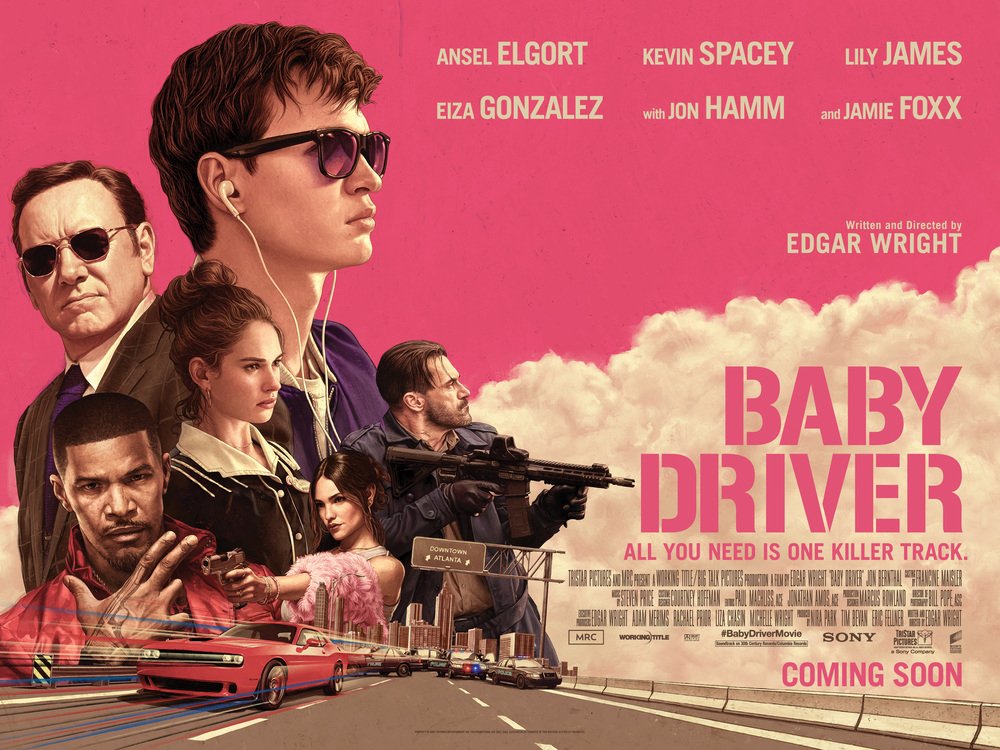
Hoewel zijn vorige Amerikaanse avontuur niet afliep zoals de Brit Edgar Wright zich had voorgesteld, weerhield dat hem er niet van het nogmaals te proberen in Hollywood. De regie over Ant-Man mocht hij verloren hebben, die over zijn eigen carrière allerminst. Waar Marvel hem teveel in haar eigen hokje probeerde op te sluiten, gaf studio Sony hem de vrije hand. Voor Baby Driver sloot hij geen compromissen qua stijlvoering, waardoor de film voor liefhebbers van zijn werk vertrouwd, maar naar Amerikaanse maatstaven juist onorthodox aanvoelt. Deze tegendraadse 'heist movie' is een heerlijke mix van spetterende muziek, kleurrijke personages en wervelende actie, waarin we snel de handtekening van Wright herkennen, maar die niet als een herhalingsoefening voelt.
De chauffeur uit de titel luistert inderdaad naar de schuilnaam Baby en vormt de spil in een gewiekste bende overvallers. Dankzij diens briljante stuurmanskunsten komen de criminelen telkens weg met hun buit. Toch houdt Baby zich op de achtergrond, want hij moet niets hebben van het geweld waarvan zijn collegae zich bedienen. Hij probeert slechts zijn schuld aan bendeleider Doc af te betalen. Bovendien geldt hij als excentriekeling tussen de rovers, allen toch al niet echt normaal. Baby is een apart joch, met zijn koptelefoon steevast op, elke move die hij maakt zorgvuldig georkestreerd door de song die hij op dat moment afspeelt. Noem het auditief autisme, voortvloeiend uit een pijnlijk verleden. De bende tolereert zijn karaktertrekjes, maar staat minder verdraagzaam tegenover zijn zelfverklaarde vertrek uit de criminaliteit als zijn schuld afbetaald is. Vervolgens moet Baby racen als nooit tevoren om aan de misdaad te ontsnappen en met zijn kersverse vriendin, serveerster Debora, een nieuw leven te beginnen.
Een film als Baby Driver staat of valt met het optreden van haar hoofdpersoon en gelukkig is Wrights nieuwste verzekerd van het benodigde jonge talent. Ansel Elgort kruipt met verve in de huid van de titelpersoon, aanvankelijk een ogenschijnlijk arrogante knul die met zijn eigenaardige gevoel voor ritme een beetje op de zenuwen werkt. Al snel verdwijnen zulke twijfels als regen op heet asfalt als we hem beter leren kennen. Het is simpelweg een sympathieke jongen in een slechte situatie, met het nodige trauma achter de rug om te verklaren hoe hij in dit misdadige milieu is beland. Het helpt ook dat Elgort uitstekende chemie kent met Debora's wonderschone Lily James. Of eigenlijk met iedereen, want Wright strikte opnieuw een wereldcast. Met Kevin Spacey als de vileine maar charmante Doc, Jamie Foxx als de sociopathische Bats en Jon Hamm als de arrogante Buddy is het makkelijk om ook voor de schurken te pleiten, zelfs als de kogels om de oren fluiten. Geen Simon Pegg of Nick Frost dit keer, maar zo'n fijn ensemble maakt dat gemis zelfs voor de verstokte Wright fans helemaal goed.
Diezelfde liefhebbers kunnen zich verheugen over het feit dat Wrights belangrijkste vaste personage wel ruimschoots aanwezig is in Baby Driver: de montage. Wright heeft zich altijd een waar virtuoos getoond waar het 't knippen en plakken van shots betreft, maar voor deze film neemt hij dat stempel heel letterlijk. Dit keer laat hij zich leiden door een bonte tracklist aan songs, bekend en minder bekend, waarop hij hele scènes heeft gebaseerd. Neem bijvoorbeeld het haast eindeloze shot waarmee de film opent, weergaloos gevormd door het op Baby's headset spelende Bellbottoms. Dat is nog maar het begin van een film die grotendeels haar soundtrack volgt, maar onder Wrights montage-meesterschap tot een grandioos geheel van muziek en enerverende auto-actie gesmeed wordt. De muzikaal begaafde Elgort danst vol overgave mee als door gehoorbeschadiging geplaagde crimi-coureur die zich evenzeer laat leiden door zijn muziek als de film die zijn naam draagt. Wright schiep met Baby Driver een enorme uitdaging voor zichzelf en zijn cast, maar het is te merken dat iedereen het ritme volledig aanvoelde.
Wright had voor zichzelf blijkbaar iets goed te maken na door Marvel bijna ingekapseld te zijn in andermans manier van werken. Wat dat betreft is Baby een puike metafoor voor Wright zelf. Wright swingt achter de camera zoals Baby achter het stuur. Toch voelt Baby Driver op sommige fronten als een breuk met 's mans eerdere werk. Het is geen volbloed-komedie, zoals praktisch al zijn vorige films. Hoewel er genoeg te lachen valt, zorgen de trubbels rond de getroebleerde hoofdpersoon toch voor zwaardere thematiek. Ook is de film bruter dan we van Wright gewend zijn: was de regisseur nooit vies van een beetje bloed, de kogelregens die deze film afsluiten zijn van een minder zorgeloos kaliber en geven de film toch een zeker 'Amerikaans karakter'. Toch gaat het te ver om te zeggen dat de koppige Brit zich heeft geconformeerd naar Amerika, want Baby Driver is onmiskenbaar een product van zijn eigen creatieve geest, een hoogst originele film zoals die in Hollywood te weinig gemaakt worden.
donderdag 29 juni 2017
Today's Review: Buena Vista Social Club: Adios
Toen Wim Wenders in 1998 werkte aan zijn documentaire Buena Vista Social Club, zal hij niet vermoed hebben dat de muzikanten op leeftijd die het onderwerp van de film vormden korte tijd later wereldberoemd zouden zijn. Hun gelijknamige album brak records en zorgde voor een opleving in de Cubaanse muziekscène, die ook buiten de communistische eilandstaat populair werd. De oudere musici begroetten dit succes slechts met gracieuze ironie, want wat heb je aan faam op hoge leeftijd? Voor hen was het levend houden van hun geliefde Cubaanse klanken de hoofdzaak. Het vervolg én afscheid Buena Vista Social Club: Adios laat zien dat de groep daarin met verve geslaagd is, in een melancholieke terugblik op de laatste twintig jaar, waarin openhartig uit de doeken wordt gedaan welke successen en welk verlies deze uitstervende generatie muzikanten heeft doorstaan.
Voor de muziekliefhebbers zal het verhaal rond het album Buena Vista Social Club geen geheim zijn, maar Buena Vista Social Club: Adios neemt een groot deel van haar speelduur in beslag om de feiten nog even op tafel te leggen. Muziekproducenten Ry Cooder en Nick Gold scharrelden samen met bandleader Juan de Marcos een aantal vergeten veteranen uit het Cubaanse muziekcircuit bij elkaar, om een album op te nemen met de melodieën die in hun jonge jaren hun leven domineerden. Geen geringe opgave, want de oudjes, onderhand allemaal dik in de zeventig of ouder, waren uit het publieke oog verloren geraakt. Sommigen waren al lang met pensioen, anderen probeerden in armoede met baantjes als schoenenpoetser de eindjes aan elkaar te knopen. Geen van hen had de laatste decennia nog opgetreden. Toch lukte het de producenten om de flamboyante grijze persoonlijkheden bijeen te brengen en een weergaloos album uit hun ongeoefende talent te smeden, wat bovendien leidde tot een tweetal snel uitverkochte concerten. Het eerste vond plaats in Amsterdam in 1998, gevolgd door een optreden in de befaamde Amerikaanse Carnegie Hall. Vooral het laatste was een doorbraak, gezien de politieke spanningen tussen Cuba en de VS.
De resultaten mochten er zijn. Het album werd een enorm succes, evenals de documentaire die Wenders over het ontstaan ervan regisseerde. De sprankelende Cubaanse muziek maakte een comeback op het wereldtoneel en de performers werden allemaal alsnog beroemd, ondanks hun hoge leeftijd. Follow-up Buena Vista Social Club: Adios, met Wenders aangebleven als producent, laat zien hoe de groep omging met hun onverwachte sterrenstatus. Dat leidt gezien de feiten natuurlijk niet tot verrassende conclusies. De nuchtere oudjes bleven vooral zichzelf en lieten zich boven alles leiden door hun muziek. Op extravagante levensstijlen of de gebruikelijke excessen die sterrenlevens doorgaans typeren, hoeven we hier natuurlijk niet te rekenen. Wel op het onvermijdelijke heengaan van een aantal bandleden, de eerste al in 2003. Onderhand is al ruim de helft van de originele groep overleden, waarmee het perspectief van de overgebleven leden verschoven is van hun eigen deelname aan de huidige Cubaanse muziek naar het doorgeven van hun tradities en waarden aan de volgende generaties.
Daaraan besteedt Buena Vista Social Club: Adios echter opvallend weinig aandacht. Dat is ook geen al te grote verrassing. De titel maakt al duidelijk dat de nieuwe documentaire vooral een afscheid is. Het nieuwe wordt en passant aangestipt, maar het spotlicht is vooral gereserveerd voor het oude, voor de allerlaatste keer. Daarom is het toch een beetje jammer dat de film zo'n groot deel van haar tijd uittrekt voor het herhalen van het succesverhaal dat al in Wenders' eigen docu werd belicht. Hoewel nuttige kennis voor de leek, zal het voor kijkers met degelijke kennis toch als nodeloos veel herhaling overkomen. De sterkere momenten van Buena Vista Social Club: Adios liggen dan ook vooral in het terugblikken van de nog in leven zijnde groepsleden op hun succes na de uitbreng van het eerste album. Daarin wordt met respect gesproken over hun overleden kameraden, terwijl de vurige Cubaanse temperamenten toch ook ruimte overlaten voor eerlijke reflectie op hun menselijke gebreken. De zelfkennis die gepaard gaat met de ouderdom maakt dat ze ook zichzelf niet al te serieus nemen. Wat dat betreft heeft hun roem weinig teweeggebracht.
Buena Vista Social Club: Adios is echter op zijn intrigerendst wanneer het dieper ingaat op het culturele belang van deze renaissance in de Cubaanse muziek. Muziek verbroedert en overstijgt menselijke grenzen, zo gaf hun eerste concert in de VS destijds al aan. Met de dooi in de koele relatie tussen beide landen is die trend onverminderd voortgezet, met een concert in het Witte Huis voor president Obama als hoogtepunt. Terecht, want de vibrante muziek swingt nog steeds onverminderd voort. Uiteraard bruist de documentaire van de opzwepende tropische Cubaanse klanken, net zoals de oudjes dat zelf hun hele leven hebben gedaan. Ondanks de inhoudelijke tekortkomingen vormt Buena Vista Social Club: Adios daarmee een waardige laatste aria van deze verdwijnende muzieklegende.
zondag 5 februari 2017
Today's Review: To Stay Alive - A Method
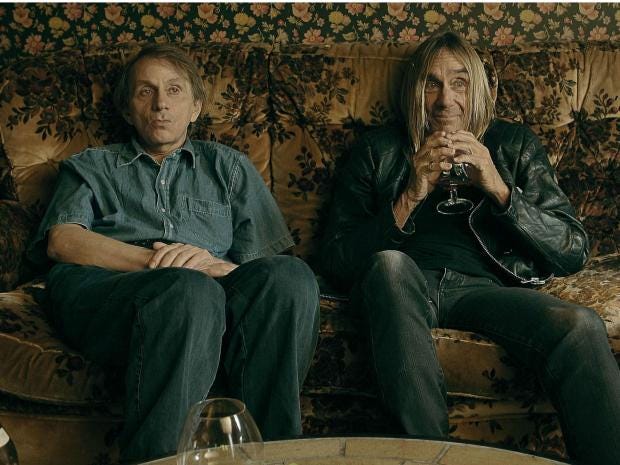
Bent u een kunstenaar en ziet u het allemaal niet meer zitten? Meent u dat de harde maatschappij uw creatief genie miskent en staat u op het punt er de brui aan te geven? Hou nog even vol, want uit zulke wanhoopsgevoelens komt de fraaiste kunst tot stand. Aldus menen Michel Houellebecq en Iggy Pop, die dit station van radeloosheid al gepasseerd zijn. Met de sympathiek optimistische semidocumentaire To Stay Alive - A Method steken zij hun collega-kunstenaars een hart onder de riem. Dat lijden, zo stelt het duo, is een essentieel onderdeel van de kunsten en drijft de vasthoudende artiest juist naar nieuwe hoogtes. "Lijden is goed, lijden is nuttig."
Het is een conclusie die schrijver Houellebecq al in 1991 trok in zijn essay Rester Vivant - Méthode. Ten tijde van schrijven werd hij evenzeer geplaagd door levensmoeheid als de beoogde lezersdoelgroep: de onbegrepen kunstenaars. Na het felle antimaatschappelijke stuk, waarin hij vooral ageerde op de zere wonden van de onbegripvolle samenleving te blijven drukken, brak Houellebecq alsnog door. Tegenwoordig wordt hij gezien als een creatieve duizendpoot, werkzaam als filosofisch auteur, dichter, toneelschrijver en cineast en populair onder een opvallend groot publiek. Dat was hij allemaal niet geweest als hij er destijds een einde aan had gemaakt. En als het hem lukte, waarom zou hetzelfde dan niet mogelijk zijn voor andere kunstenaars?
Muzieklegende Iggy Pop las diens essay en trok dezelfde conclusie, omdat hij in Houellebecqs relaas ook zijn eigen levenspad herkende. Ook Pop, nu gezien als de vader van de punkrock, dreigde er in een grijs verleden ooit mee te stoppen, maar bleef volharden te midden van alle waanzin, overtuigd van zijn muzikaal gelijk. Eveneens met groot succes. Pop en Houellebecq bleken geestverwanten en hun wederzijdse bewondering leidde al eerder tot een toenadering, toen Pop een aantal nummers schreef voor een documentaire over de schrijver. Die film werd geregisseerd door de Nederlander Erik Lieshout. Met diens pseudodocumentaire To Stay Alive - A Method is de cirkel nu rond en brengt Lieshout schrijver en zanger nog dichter bij elkaar. 'Pseudo', want de film is zowel een toneelstuk als een op feiten gebaseerd verhaal. Het is echter hoofdzakelijk een kunstzinnig pamflet.
Het gespeelde element van To Stay Alive - A Method bestaat uit de ontmoeting tussen de twee grootheden, waarin Pop zichzelf speelt maar Houellebecq de rol van de fictieve kunstenaar Vincent op zich neemt. Een schijnbaar mislukte artiest die in eenzaamheid aan zijn meesterstuk werkt in het huis van zijn grootouders en met een bezoek van Pop, die Houellebecqs boodschap ter harte neemt, wordt aangespoord om vooral door te zetten. Tussendoor leest Pop met zichtbaar enthousiasme voor uit het werk van de schrijver en richt hij zich bevlogen direct tot het publiek. Degenen die menen dat Pop en Houellebecq een uitzondering op de regel vormen in de annalen van de kunsten en het heus nog niet zo eenvoudig is als het essay verkondigde, komen bedrogen uit, want Lieshout heeft nog meer noten op zijn zang. Hij interviewt drie volslagen onbekende kunstenaars die een soortgelijke achtergrond van lijden kenden, maar uit het dal van de gekte zijn opgekrabbeld. Dichters met een psychiatrische achtergrond die niet opgaven en ondanks alles er bovenop kwamen, en daardoor hun beste werk naar boven brachten. Door de portrettering van dit drietal plaatst Lieshout de twee grootheden op gelijke voet met hun talloze onbekende collega's die net als zijzelf worstelden, of nog steeds worstelen, met de minachting van de maatschappij maar zich daardoor niet lieten tegenhouden. Daarmee illustreert hij uitstekend Houellebecqs punt. Hoewel bekende namen blijken de twee sterren immers eveneens verlegen, alledaagse mensen en dat maakt hen net zo aandoenlijk als hun roemloze tegenhangers.
Wat niet wegneemt dat ze wel degelijk charisma kennen. Zeker Pop weet onze aandacht er volledig bij te houden als hij het essay citeert, want zijn van levenservaring doorgroefde stem werkt betoverend. Daarmee helpt hij de 'tegeltjeswijsheid' die To Stay Alive - A Method soms dreigt te typeren op afstand te houden. Want voor elke fraaie uitspraak als "to learn to become a poet is to unlearn how to live" volgt er een fletser geval als "het universum is als een discotheek". Pop komt er wel mee weg. Toch is het jammer dat we vooral van zijn verleden als lijdend voorwerp amper achtergrond meekrijgen. Hoe zat het dan voorheen met diens creatieve smart? Voor een film van amper zeventig minuten maakt Lieshout er helaas weinig woorden aan vuil. Voorkennis lijkt vereist. Maar het draait voor Lieshout bovenal om Houellebecqs boodschap, en die wordt vanuit voldoende standpunten belicht, zonder enig cynisme. Een kunstenaar in de put heeft daar ongetwijfeld voldoende aan en kan na het zien van To Stay Alive - A Method met hernieuwde hoop aan de slag.
woensdag 26 oktober 2016
Today's Review: Hart Beat
Wie de doelgroep is van Hart Beat is vanaf de eerste seconde duidelijk. Met een opening die wordt ondersteund door uitzinnig schreeuwende tienermeisjes, zwijmelend bij een zingende hunk, is de toon gezet voor de rest van de film. De hunk in kwestie is Rein van Duivenboden, voorheen een lid van de boyband MainStreet. Deze Nederlandse Justin Bieber heeft met Hart Beat zijn eigen speelfilm gekregen waarin uit de doeken wordt gedaan hoe zwaar tienersterren het hebben als ze zowel een persoonlijk leven als een glansrijke carrière in de muziek ambiëren. Want net als gewone mensen willen ze het liefst Echte Liefde. Die harde strijd om de Ware te behouden wanneer ze gevonden is, vormt het 'hart' uit de titel, uiteraard ondersteund door een flinke dosis muziek, in een nogal voorspelbaar romantisch puberdrama dat alleen die doelgroep zal behagen.
Van Duivenboden gaat in Hart Beat als Mik door het leven. Met zijn zoetgevooisde keel en zijn weergaloze uiterlijk is hij het idool van een hele generatie meisjes, maar nou net niet van Zoë. Die moet niets hebben van zijn kazige muziek en diens aan waanzin grenzende aanhang. Zij prefereert een natuurlijker, gevoeliger soort muziek. En dus draait Hart Beat om de ironie dat nou net dit tweetal verliefd wordt. Hij rijdt haar aan met zijn tourbus, zij scheldt hem uit en eist een nieuwe fiets en ergens daartussen slaan vonken over. Vervolgens gooit het wrede leven alles in de strijd om het duo ervan te weerhouden elkaar te krijgen, maar niemand die gelooft dat ze zich laten tegenhouden in hun wederzijdse smachten. Prima, dit soort films moet het nou eenmaal niet hebben van een geraffineerd verhaal, maar van een aanstekelijke feelgood uitwerking die de beoogde jongere doelgroep aanspreekt. Die tienermeisjes zal het wel bekoren, maar het lijkt onwaarschijnlijk dat andere demografieën zich tot deze fletse jeugdige romantiek aangetrokken zullen voelen.
Een verhaal als Hart Beat valt of staat hoofdzakelijk met de chemie tussen beide partijen, en die laat in dit geval te wensen over. Aan de jonge actrice Vajèn van den Bosch ligt het niet. Zij heeft al de nodige theater- en televisieproducties op haar conto staan en houdt zich opvallend goed staande naast de ervaren acteurs. Helaas heeft het scenario van de film haar in de eerste helft voorzien van een nogal onsympathieke houding, waardoor ze dikwijls nors en bits uit de hoek moet komen. Dat Zoë gebukt gaat onder de relatieproblemen van haar ouders moet het verhaal een extra dimensie geven, maar het maakt haar karakter er aanvankelijk dusdanig onaantrekkelijk op dat we niet geloven dat Mik voor haar valt. Mik zelf is echter een groter probleem, want dat Van Duivenboden voor het eerst acteert, is iets te klaarblijkelijk. Hoe sexy hij er ook uitziet en hoe leuk hij ook kan zingen, feit blijft dat hij maar één gelaatsuitdrukking hanteert en daardoor raakt onze emotionele betrokkenheid al snel in het geding. Ook de sidekicks maken de situatie er niet beter op. Zoë's compagnon is een overdadig bijdehand wicht met een tenenkrommende lijst hartsvriendinnenregeltjes. Mik moet het doen met een door rap geobsedeerde vriend - om gelijk maar een zo breed mogelijk jongerenpubliek voor de film warm te maken - die door iedereen met de neus wordt aangekeken naast de ster om wie alles draait. De ingrediënten voor jaloezie en wraak die de affaire tussen de twee jonge harten moeten verstoren liggen zo al binnen vijf minuten open en bloot op tafel.
Naast de jonge castleden komen de oudgedienden helaas niet veel beter uit de verf. Ondanks de vele accolades in hun resumé worden de volwassen acteurs hier hoofdzakelijk gereduceerd tot eenzijdige typetjes, te vaak ingezet voor gemakzuchtig komische noten. Zelfs het tragische subplot omtrent Zoë's ouders wordt hier op den duur de dupe van, want Hart Beat moet vooral niet te serieus worden, zo lijkt de gedachtegang. De doelgroep wordt immers al te vaak gebombardeerd met zware thema's in Carry Slee-verfilmingen, dus luchtigheid is het devies. De impact van alle intrige en verstoorde verhoudingen rond de romantiek brokkelt zo snel af als de film naar een bruisend happy end holt. De potentiële zelfreflexieve diepgang omtrent de jonge ster, gespeeld door zichzelf, die achter de schermen als melkkoe voor managers en producenten wordt ingezet die niets om zijn persoonlijke leven geven, wordt verspild aan een magere puberromance. De slappe dialogen - "Oh mam, doe nou 'ns even relaxed!" en dergelijke taal - doen niet vermoeden dat de schrijvers het hedendaagse jongerenjargon doorgronden. Hart Beat is simpelweg net zo 'cheesy' als Zoë Miks muziek verwijt te zijn. De fans van de zanger zal het worst wezen, die komen wel opdagen. Het is echter onwaarschijnlijk dat veel anderen hart voor Hart Beat zullen tonen.
maandag 16 september 2013
Today's Mini-Review: Behind the Candelabra
Behind
the Candelabra: ***/*****, or 7/10
After
having immersed himself in one world of extreme showmanship and male
relations in Magic Mike, Steven Soderbergh tells another, not
quite so dissimilar version of the same topic when he tackles the
love life of Liberace in Behind the Candelabra. Based on the
autobiographical novel by Scott Thorson (played in this movie by Matt
Damon), Soderbergh explores the stormy six year relationship,
starting in 1977, between the famed pianist – already an older man
at that time – and the much younger man who he sweeps into his
world of excess. A naive boy uncomfortable with a life of glamour and
glitter, you'd think Thorson knows better than to simply accept
Liberace's invitation into his effusive lifestyle, but the call of
adventure and glory is too much for any young adult to ignore. What
starts as a seemingly genuine love affair between the flamboyant
musician and his younger bisexual paramour generally devolves into an
untenable situation as Thorson, victim to various cosmetic whims of
what is basically his benefactor, fears himself just a fling, easily
replaced if Liberace so desires. Eventually their relationship
unravels and tragedy ensues. Even more so in later years, long after
the legal dust has settled between them, as Liberace suffers from
AIDS and once again calls on his former romantic partner for reaching
an understanding. It may be Thorson's story, but thanks to a fabulous
performance by Michael Douglas (which has unmistakably written
'Academy Award' all over it), no quarter is given to the fact that
this is Liberace's movie. The historical character drives every scene
from the get-go, even when not physically present, while Douglas
dominates every sequence with his superb acting which all too
carefully balances character and caricaturism. Despite being an
insufferable, arrogant and commandeering presence, often driving
Thorson to extremes for his own pleasure, there's also a definite
poignancy and heart to Liberace as he searches for someone to hold on
to during all the madness of his life as a totally over-the-top
artist. Douglas successfully makes you love and hate Liberace. Damon,
though certainly not lacking the necessary chemistry duelling this
opponent and holding his own when it matters, is unsurprisingly
outstaged at all times, but this is naturally unavoidable as you
can't outshine the likes of Liberace and Soderbergh knows better than
to have his supporting cast try to do just that. Nevertheless, Damon
proves as brave as Douglas when it comes to making the expression in
the flesh of the love between Liberace and Thorson feel convincing.
Though dealing with heavy themes of lust, betrayal and passion gone
awry, Soderbergh isn't afraid to employ a lighter tone for much of
the film, making us enjoy Liberace's various campy acts as much as
his contemporary audience did, while also relaying the sheer
absurdity of a man who was so clearly gay, but who vividly denied his
nature at every turn to the point of suing people who openly
commented on his homosexuality: if you watch Douglas' playing the
part it seems incredulous people ever actually believed such
continuous denials. The greatest fun the movie provides comes with
courtesy from Rob Lowe playing Liberace's plastic surgeon, who is
commisioned to turn Thorson into a young duplicate of the celeb. Here
the joy gradually turns to disgust (and not just because of several
explicit surgery shots!) as Thorson all too easily drops his
resistance to please his lover who's asking things of him no sane
human being would allow, with detrimental results to his face and in
the longer run, his mental health. However, it was perfectly clear
from the start the relationship between the two was doomed to failure
and would only cause harm. In principle, Behind the Candelabra
is no different in any way from hundreds of other films dealing with
an inexperienced younger person who is drawn into a world of fame and
passion which turns out a web of lies in which he is devoured unless
he breaks free and returns to his roots: in fact, Magic Mike's
plot line was similar in all too many ways. However, neither Mike
nor all those other films in the same veign had the benefit from
Michael Douglas' delightful but ultimately heartbreaking performance,
which makes up for any of such narrative predictabilities. Douglas
delivers, as Liberace lives again.
dinsdag 10 september 2013
Today's Mini-Review: The Sapphires
The
Sapphires: ***/*****, or 7/10
One
of various movies to deal with Australia's painful past regarding its
treatments of its aborigine population, The Sapphires embraces
a lighter, oft comedic tone while focusing on that which unites
people of all creeds and races: music and love. Set in 1968 and
starring Chris O'Dowd (of Bridesmaids fame) as washed up,
constantly drunk musician and would-be talent manager Dave Lovelace,
who stumbles upon the discovery of his life when he meets a group of
young aboriginal girls determined to break through at the music
scene. Problem is, these young women, family too, have their own
emotional baggage, don't always get along and prefer to sing country
songs. Not to mention their ethnicity is not favoured on stage, as
they experience during a local talent contest where they are booed
and harrassed off stage despite being the only contestants with
actual talent. It's up to Dave, who admires their passion and
perseverance, to shape them into a worthy song group that will
capture the hearts of millions, admittedly also for his own
commercial benefit, as soon as he has convinced them to go with the
times and adopt soul as their style. They swiftly decide touring for
the American forces in Vietnam is their best bet to get noticed, the
dangers of war notwithstanding. A thrilling string of performances
throughout Nam follows, where the girls taste the joys of success and
love, but also the sorrows of loss and death. The movie employs an
overall feel-good approach, but obviously can't ignore the harrowing
past of social inequality and blatant racism aboriginal people had to
live through in the days, which is grippingly fleshed out in less
scenes than maybe should have been the case considering the heavy
subject matter of cultural genocide and overall alarming sights of
discrimination the movie also covers. Despite the delightful and
swinging tone that rules much of the film, it's the scenes of rampant
prejudice that stick with you the most, an inescapable fact that
sometimes makes the movie feel unbalanced. Fortunately there's also
plenty of sequences that cover the feeling that 'the times, they are
changing' for the better, slowly but surely, which allows the girl
band to rise to stardom under the stage name the Sapphires. The
foursome of singers makes for many a smashing musical scene, while
it's gratifying to see the lead actresses weren't cast solely for
their vocal talents, but also for their ability to carry emotional
scenes compellingly. It's O'Dowd (a white guy!) that steals the show
though, as a sleazy con musician ultimately revealed to have his
heart in the right place, which does make for a rather sappy,
cheerful ending. But after all the Sapphires have been through, you
feel they've earned it.
Labels:
aboriginals,
australia,
chris o'dowd,
comedy,
drama,
music,
the sapphires,
Vietnam,
war
zondag 28 juli 2013
Today's News: Williams still interested in the galaxy, far, far away
Hot off MovieScene:
http://www.moviescene.nl/p/148867/john_williams_terug_voor_star_wars_episode_vii
This is about as good as news around Episode VII can get at this stage. At least Williams never contributed to the increasing lack of quality in the Star Wars franchise, unlike some other people who were deeply involved. In fact, his scores for the prequel trilogy proved about as grand as the ones he composed for the original trilogy. Themes like Love Across the Stars (Episode II's sweeping love theme) and Battle of the Heroes (Episode III's epic Jedi duel theme) to my mind are as beautiful to listen to as the likes of the classic Princess Leia's Theme (Episode IV) or the bombastic Imperial March (Episode V), even though they may not be eligible to be considered as iconic because the movies they were made for are just not on the old levels in terms of quality. Williams has always delivered fabulous, rich scores for any film he's worked on, all the way from the Seventies straight until this day. There's no reason to fear he won't pull it off again. If there's someone who can successfully bridge the old trilogy, Lucas' prequel trilogy and now J.J. Abrams' new sequel trilogy, it's this guy, I have full faith in that. All other elements like plot, action and character development aside, in this regard Episode VII couldn't be in better hands. I don't need Kathleen Kennedy's or Abrams' own ass-kissing terminology to remind me of that. Williams' wonderful soundtracks have spoken for themselves throughout the years.
And just so you know, here's my top-5 of Williams' themes. Nobody should not be familiar with these awesome scores. Enjoy!
5: The Clash of Lightsabers
From: Star Wars Episode V: The Empire Strikes Back (1980)
4: The Lost World Main Theme
From: The Lost World: Jurassic Park (1997)
3: Raiders March
From: Raiders of the Lost Ark (1981)
2: The Throne Room/End Titles
From: Star Wars Episode IV: A New Hope (1977)
1: Welcome to Jurassic Park
From: Jurassic Park (1993)
donderdag 18 juli 2013
Today's Mini-reviews: feel-good and feel-bad
Quartet:
***/*****, or 7/10
Dustin
Hoffman's directorial debut brings together a top-notch cast of grand
British actors, all of old age but none of them showing any signs of
deterioration in terms of acting abilities. At Beecham House, a home
for retired musicians, the success of the annual concert in
celebration of Verdi's birthday is endangered by a new arrival. Jean
(Maggie Smith), a diva with a history, has no interest in returning
to the stage, but her former co-singers (Billy Connolly, Pauline
Collins) and her estranged ex-husband (Tom Courtenay) have to
convince her otherwise in order to save their home financially.
Trouble is, they too are hindered by the ups and downs of geriatrics,
making for many an endearing moment. A fine cast lifts this otherwise
mediocre feel-good film to greater heights, though the typical string
of 'old folks' jokes and the fairly predictable outcome of past
romantic entanglements never make for remarkably emotionally
compelling angles. Apart from the use of real (ex)musicians in the
supporting cast and their appropriation of the works of the grand
classic composers, it's the main quartet of actors that carries the
movie and provides most of the fun; Billy Connolly especially as a
rather eccentric and cheeky old man, filled with naughty charisma and
ever ready for witty, sexually charged repartee, who never stops to
hit on every female he encounters, no matter her age. Michael Gambon
also delivers some laughs in his role as an insufferable concert
planner plagued by short term memory loss and a general obnoxious and
insensible loudmouth attitude. Ironically, the final quartet the
title hints at, and the movie in fact builds up to, is left out, so
we never get to hear just how good of a singers the main characters
are, which is a bit of a downer considering the plot keeps boasting
their vocal prowess and their acting talent alone is considerate
enough to make you wonder just how talented they are in other
departments. However, it's clear this movie is not about the quartet
itself, but the long and difficult road towards it. And with a good
cast, all actors so clearly enjoying themselves to the fullest, plus
the plethora of vocal performances already present in the picture,
such closure isn't actually warranted.
After
Earth: **/*****, or 3/10
M.
Night Shyamalan's worst movie to date, but you can blame its failure
on the Smith family, since this is another attempt of Will Smith's to
launch his son into stardom. If the gods are just, it ought to
backfire seriously. Set in a distant future 1,000 years after
humanity has abandoned Earth for making it uninhabitable (as humanity
is currently doing), it centers on a father, a battle hardened
military officer called Cypher Raige, and his teenage son Kitai,
desperately attempting to follow into his father's footsteps (as
Jaden Smith is doing himself here, to no avail). Mankind has settled
on a different planet where it got into a conflict with an alien race
(briefly mentioned but otherwise not shown) who unleashed monsters
called Ursa, blind predatory creatures that hunt via the detection of
human fear. Cypher led the vanguard in defeating the creatures when
he found a way to shut out all sense of fear and became the ultimate
Ursa slayer. Unfortunately for his family, and the audience, he seems
to have destroyed all other human emotions too, as this is without a
doubt Smith's least compelling performance ever: all trace of the
charismatic Smith of old has gone, leaving him a sour, dull
character. Call him a poor man's Vulcan (he makes Zachary Quinto look
like Kolinahr material!). You would feel sorry for Kitai, were it not
that Jaden's acting is still humongously subpar as well, not likely
to get better any time soon. En route for some good father/son
bonding, the Raiges crashland on Earth, which is populated by strange
creatures and plagued by harsh geological and climatological
phenomena. As Cypher says, 'everything on this planet has evolved to
kill humans'. It seems the people that made this movie don't
understand just how evolution works and how long it takes. For one
thing, if there have been no more humans around for a milennium, how
come everything has evolved to kill them? It's just the first in a
long line of plot holes that riddle this movie like Swiss cheese. The
wounded Cypher – Will Smith spending the rest of the movie sitting
down and looking gloomy – sends his frightened son out to retrieve
a distress beacon from the ship's tail section, which crashed a 100
miles away. Fortunately for Kitai his father is able to watch and
comment on his progress the entire time, so he can endlessly point
out what he's doing wrong and what an idiot he is. If only Smith had
told his son he can't act for shit before making this movie,
it would have saved him a lot of money and spared us 100 minutes of
audiovisual agony. Might be Smith had an ulterior motive in making
this film though, since it seems laced with Scientology propaganda.
Smith's rumoured interest in that cult seems confirmed throughout the
movie when he gives long speeches on banning fear and keeping your
emotions in check for your own mental and physical health, meant to
inspire his whiny son but delivered while he's directly looking into
the camera as if he's indoctrinating the spectator. It doesn't work
though, since the viewer is too smart to take this bad film seriously, while his son has no time to take in all his lessons anyway as he's
continously running for his life from digital giant baboons, digital
giant eagles, digital giant cats and other terrors of poorly rendered
digital environments until he reaches the tail section – which
looks like a few pieces of plastic covered in toilet paper – where
he comes to the conclusion there's an Ursa stalking him. Will Kitai
defeat the monster, save himself and his father and become a true
space ranger? Will his father actually care? Will we? To save you
time and money you might otherwise have wasted on this so-called
movie, here's the answers: yes, no, no. A predictably happy end
cannot be avoided as father and son are reunited, but Cypher still
doesn't look like a proud father, and the viewer is simply too
concerned with locating the nearest exit to care. Despite the absence
of the dreaded plot twist, poor Shyamalan's career seems ever less
likely to recover. We can only hope our own future will look nothing
like this. That said, I know what the future will hold for this
movie: endless hating and being made fun of. But hey, Smith's
Afterbirth makes it so easy...
Labels:
after earth,
billy connolly,
dustin hoffman,
feel-good,
jaden smith,
M. Night Shyamalan,
maggie smith,
michael gambon,
music,
post-apocalyptic,
quartet,
science fiction,
Will Smith
Abonneren op:
Posts (Atom)