Posts tonen met het label historic. Alle posts tonen

zaterdag 30 april 2016

Today's Review: Monsieur Chocolat


This one's near two weeks old now, but circumstances didn't allow me to repost it here until today:

Monsieur Chocolat - recensie

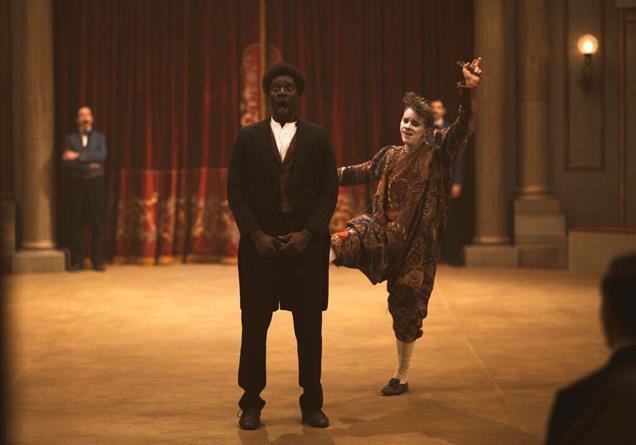
Monsieur Chocolat is one of those typical period dramas that tells a story of days of human degradation gone by more for the sake of the present day than for the desire to accurately reflect the times depicted. Though the director and writers proclaimed their intention of re-introducing a once famous French artist who by the dawn of the 21st Century had slipped into obscurity for a contemporary audience, the issues of race, though certainly a factor of Chocolat's life, are addressed far more strongly than they most likely were back in the days. Of course, Chocolat's entire career was based around his otherness and influenced more by the ignorant cultural notions of white audiences than they were by reality, but that didn't stop him from becoming one of the top theatrical artists of his day. And he was known to be proud of that achievement, even though much of his acts involved getting his arse kicked by a white clown.

But the blatant, painful melodrama of his life suggested by Monsieur Chocolat is more of an attempt to remind modern audiences of the insanity and humiliation on which his career was based rather than on actually reported events. Not to mention Chocolat's private demons involving women, booze, drugs and gambling, which add further obstacles to his career beyond simply attempting to add diversity to his stage acts. Basically, by adding all these other troubles, the writers make it clear that Chocolat is an artist like any other, dealing with the same pitfalls of fame that other artists experienced. It makes for rather generic situations beyond the ever degrading scenes of racial subjugation and does little to push Monsieur Chocolat above the myriad of similar films involving struggling performers of any ilk.


The performances, less so. Omar Sy may actually have hit a career high note in this one, delivering what certainly can be called his most convincing performance since Intouchables. He moves from merry clown entertaining women and children to broken, down-on-his-luck artist plagued by rampant racism seemingly effortlessly. Not to mention he and his co-star James Thierrée are equally matched, with the latter playing a perfect counterpart as the stage obsessed but otherwise grumpy and serious clown Footit, a total opposite to the light hearted Chocolat in many other respects beyond race. The duo makes for a strikingly different pair of personalities you could hardly imagine sharing the circus, though the ultimate break-up feels an inevitable event from the get-go. The circumstances involving their separation were not as 'black and white' as this film suggests though. Again, Monsieur Chocolat feels the need for distorting the truth to underscore the malign racism of the era. That message is well received, but the historical character of Chocolat is not aided by hammering home the message so harshly. However, thanks to this film, he is also not forgotten, so the makers succeeded in that regard as well.

zaterdag 16 januari 2016

Today's Review: The Danish Girl


Finally another review for FilmTotaal:

The Danish Girl - Recensie

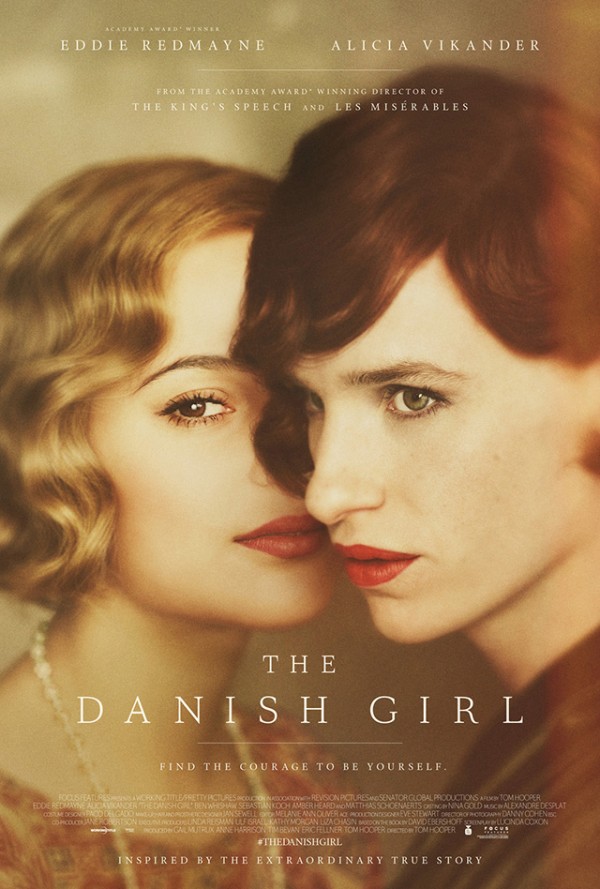
Basically this movie embodies wasted potential. There's a capable director and a number of wonderful actors, some with notable award winning accolades to their name, attached to this film, but it just doesn't manage toengage the audience. It looks great, but it doesn't feel so. If transgenders are looking for a movie that illustrates their long plight and continuing calls for understanding and acceptance for their cause, I fear this is not it.

The strongest reason of its failure as such, is that it's simply too clean, too good looking. Though Eddie Redmayne looks androgynous enough to get away with playing both sexes effectively, his Einar's/Lili's long road from man to woman, though destined to end in tragedy, simply is too easy, certainly for the times we are dealing with. Yes, he's forced to leave his own country in search for a more accepting environment and yes, he's looked upon by medical minds as a freak of nature, sick in spirit and in desperate need of a gruesome cure, but the progresion of the movie doesn't live up to the many decades of violent misunderstanding if not downright cruelty inflicted on transgenders. Lili is surrounded by caring people who all too easily accept her plight and encourage her to do what she feels she should do, despite the danger this will place her in and the hardship it causes those closed to her, especially her loving wife who never signed up for this when they got married and who is finally enjoying some professional success. The scene with the physicians looking to operate on Lili with force to "cure" her woes is played more for laughs, though historically there's nothing funny about this sort of medicine which could be described as blatant torture. The only time Lili is physically confronted with her otherness is when she's beaten up on the street by two random hoodlums. Other than that, as transgender drama goes, this one is surprisingly happy.


But despite these shortcomings, The Danish Girl has all the hallmarks of a solid period piece. It's capably directed, just not memorably so, unlike director Tom Hooper's own The King's Speech. Costume and set design is top notch, nobody will deny. The lead actors are at the top of their game and their Oscar nominations are well deserved (though I doubt they're good enough for a win), while the supporting cast is equally up to its task. But for all intents and purposes, it's not enough. Emotionally, The Danish Girl underwhelms, thanks to a script that plays it safe and doesn't feel like shocking the audience too strongly. Maybe it feels the notion of transgender struggles is risqué enough as it is for audiences? That would be rather offensive to the people it means to represent, who admittedly won't feel very much represented by it anyway.

dinsdag 30 december 2014

Today's News: thus, 2014 is concluded


The last bits of news for 2014 are in. Expect the flow of news to pick up once 2015 has entered our lives.

http://www.moviescene.nl/p/158447/nieuwe_trailer_michiel_de_ruyter

Looks like it aspires to be quite the cinematic spectacle. But will it be? I have severe doubts. The theatrically forced acting that has ever plagued the Dutch school of actors sure doesn't lend itself to this sort of film. The dialogue just feels as wooden as the ships the main characters are sailing on. Also, the FX are not on par with their British and American counterparts. They just don't seem real, but have an awkward level of artificiality to them. At the same time they recall a sense of stylized unreality, reminiscent of the paintings of the Dutch Golden Age, but I think that's just a result of the limitations of the budget rather than a conscious choice on the director's part. And speaking of director Roel Reiné, at least his acquantaince with helming action movies on a limited budget (though not with the finer entries of the genre, considering titles as Death Race 2 and 3 and The Scorpion King 3)) seems suited for the big battles taking place in the film. So far the same can't be said for his directing actors, which is not a good thing considering the stellar cast of this epic. At least they got Tywin Lannister Charles Dance in there, who can act his way out of any scrape. Hopefully the Dutch actors will take a note or two from him. I hope there is a national audience for this picture, even though there certainly didn't seem to be for a very similarly themed movie like Kenau, which flopped only last year. Like Michiel de Ruyter, it was released off-season, which makes me question why this expensive historical epic underwent the same fate. January just isn't a good time to release big productions like this one. I want to be enthusiastic about this movie, as I love historical drama and this particular period hasn't been covered as thoroughly as it should have, but so far my scepticism rules supreme.


http://www.moviescene.nl/p/158450/eerste_teaser_penny_dreadful_seizoen_2

I'm much more excited about this one though. The Brits get better production values and acting on the small screen out of a lower budget (per minute, that is) than the Dutch do in theaters. The first season of Penny Dreadful proved a delightfully eerie and subversive portrayal of the rich Victorian age and a fabulous new conceptualization of famous literary characters. Even though the pairing of the likes of Frankenstein, Dracula and Dorian Gray at first sounded like a poor repetition of The League of Extraordinary Gentlemen, this series proved a far superior narrative. So far at least, as the story is far from finished yet and they can still muck it up in many ways. Whether that will be the case is not something you can determine from this teaser, which shows far too little of the upcoming plot progression (dammit!). In fact, it hardly shows anything we didn't know already. Of course, that's the usual stuff of teasers, creating awareness with showing as little footage as possible, to make people hungry for the trailer, which in itself makes them want to watch the series itself. Considering I was already aching for more when the credits of Season 1's final episode rolled, the teaser's job was already done.


http://www.moviescene.nl/p/158479/nieuwe_trailer_everly_

This trailer, however, fails to get me excited for the final product. It feels like I have seen the whole film already. Of course, this fault is a result of the limitations of the movie's plot, as it doesn't seem to have much of that at all. Mobster boss' ex gets locked in her apartment and must fight off numerous assassins to stay alive, that's basically all she wrote. Unless there's some major plot twists at play that are not revealed in this trailer, this is one of those films you watch only for the action. It takes a pretty accomplished action director to get the most out of a small set like this though, and if the trailer is any indication, Everly's director may not be up to the task. I don't see any particularly innovative cinematography or editing here, just bland shots of people taking bullets. Nor are the characters colourful enough to keep the attention fixed. This film feels like a far cry from a similar vehicle like The Raid, though clearly inspired by that recent superior action film. Hopefully the trailer proves a misdirect and the final film has more to offer than suggested here, otherwise Everly might soon end up in the same bargain bin as Death Race 3 or The Scorpion King 3.

maandag 21 oktober 2013

Today's Mini-Review: Cleopatra


Starring: Elizabeth Taylor, Richard Burton, Rex Harrison

Directed by Joseph L. Mankiewicz

USA/UK: 20th Century-Fox, 1963


If 'lavish' is the singular term to bestow upon the historical epics of the Fifties and Sixties, Cleopatra exceeds the term in every way, making it clear from the get-go of its four-hour running time this, adjusted for inflation, is definitely one of the most excessive and expensive movies of them all. 20th Century-Fox sure wasn't thrilled by that fact at the time, as it nearly pushed the studio into bankruptcy. Nevertheless, it persisted in the project (since cancellation would have been its death sentence for sure) and today it remains a testament to just how staggeringly detailed and rich a movie can be made to look if enough money is thrown at it. In many ways, Cleopatra is not one, but two movies: director Joseph L. Mankiewicz always intended for it to be released in two parts (a decision the home cinema release has honoured by splitting the movie in half, spread over two discs). The first would have been called Caesar and Cleopatra, its sequel Antony and Cleopatra, as the movie conveniently cuts from one male protagonist to the other around the middle of the film, with the Queen of Egypt the constant that unites them both in a tale of passion, decadence, lust and glory.


Grand diva Elizabeth Taylor plays her most iconic role of all as the young queen that finds herself in the middle of the plots and intrigue at the Egyptian court of her brother who means to dispose of her, only to be saved by the older Roman general Caesar (a thoughtful and intelligent, but undeniably ruthless and pragmatic character portrayed by Rex Harrison) who, compelled by her wit and charm, instead forms an alliance with her and gets rid of her treacherous sibling. Said union spawns a son, Caesarion, which gives her an incentive to make a claim on the rule of Rome when his father is murdered in the Senate. Enter his boorish, no-nonsense second-in-command Mark Antony (the notorious Richard Burton) who has his own notions on the matter, but swiftly is suckered into Cleopatra's web of passion too, an affair destined to end in tragedy. Ironically, Taylor and Burton couldn't keep their hands off each other in reality as well, leading to one of the most scandalous and infamous love affairs in Hollywood history that made Brangelina look second rate. Keeping the affair in line as well as could be managed – basically, not at all, thanks to Burton's loudmouth persona – to avoid overly devastating public scrutiny, coupled with the ever rising production problems and outrageous costs (driving a movie originally budgeted at 2 million dollars to a whopping 44 million dollars), drove many a Fox executive close to madness, but over the years Cleopatra made a decent recuperation for the studio and even turned a bit of a profit. 

 
Audiences sure got what they payed for: an outrageous epic-to-end-all-epics with a scale and scope still unsurpassed, using some of the biggest sets ever created, populated by thousands of extras and a diverse range of wild beasts, all just as background material. And unlike the digitally saturated present day, it was all there in the flesh, making the sets look as spectacularly opulent in real life as they appear on film. Of course the fabulously rich enviroments where secondary only to Taylor's magnificent performance as the young monarch, at first relying on her sensual beauty and ever underestimated intelligence for her own basic survival, but soon applying both to make her country and herself a top player in Mediterranean politics by going head to head with the might of Rome in a love affair with one of its most powerful men that is bound to destroy an empire, and ultimately herself as tragedy ensues. Taylor definitely dominates each scene and won't allow the bombastic sights to take centre stage. She is aided by a grand cast which includes the likes of Roddy McDowall and Martin Landau, only tools for her to play off against as they can't compare with her majesty. Nevertheless, because of the endless show of grandiose sets, sexual plotting and Roman violence it cannot be denied Cleoptra feels like it's dragging on too long, which convinces the audience cutting it into two separate pieces would probably have been for the best. Even so, Cleopatra remains one of the most sensational movies ever produced, its history as wild and epic as the history that inspired it.


maandag 16 september 2013

Today's Mini-Review: Behind the Candelabra


Behind the Candelabra: ***/*****, or 7/10

After having immersed himself in one world of extreme showmanship and male relations in Magic Mike, Steven Soderbergh tells another, not quite so dissimilar version of the same topic when he tackles the love life of Liberace in Behind the Candelabra. Based on the autobiographical novel by Scott Thorson (played in this movie by Matt Damon), Soderbergh explores the stormy six year relationship, starting in 1977, between the famed pianist – already an older man at that time – and the much younger man who he sweeps into his world of excess. A naive boy uncomfortable with a life of glamour and glitter, you'd think Thorson knows better than to simply accept Liberace's invitation into his effusive lifestyle, but the call of adventure and glory is too much for any young adult to ignore. What starts as a seemingly genuine love affair between the flamboyant musician and his younger bisexual paramour generally devolves into an untenable situation as Thorson, victim to various cosmetic whims of what is basically his benefactor, fears himself just a fling, easily replaced if Liberace so desires. Eventually their relationship unravels and tragedy ensues. Even more so in later years, long after the legal dust has settled between them, as Liberace suffers from AIDS and once again calls on his former romantic partner for reaching an understanding. It may be Thorson's story, but thanks to a fabulous performance by Michael Douglas (which has unmistakably written 'Academy Award' all over it), no quarter is given to the fact that this is Liberace's movie. The historical character drives every scene from the get-go, even when not physically present, while Douglas dominates every sequence with his superb acting which all too carefully balances character and caricaturism. Despite being an insufferable, arrogant and commandeering presence, often driving Thorson to extremes for his own pleasure, there's also a definite poignancy and heart to Liberace as he searches for someone to hold on to during all the madness of his life as a totally over-the-top artist. Douglas successfully makes you love and hate Liberace. Damon, though certainly not lacking the necessary chemistry duelling this opponent and holding his own when it matters, is unsurprisingly outstaged at all times, but this is naturally unavoidable as you can't outshine the likes of Liberace and Soderbergh knows better than to have his supporting cast try to do just that. Nevertheless, Damon proves as brave as Douglas when it comes to making the expression in the flesh of the love between Liberace and Thorson feel convincing. Though dealing with heavy themes of lust, betrayal and passion gone awry, Soderbergh isn't afraid to employ a lighter tone for much of the film, making us enjoy Liberace's various campy acts as much as his contemporary audience did, while also relaying the sheer absurdity of a man who was so clearly gay, but who vividly denied his nature at every turn to the point of suing people who openly commented on his homosexuality: if you watch Douglas' playing the part it seems incredulous people ever actually believed such continuous denials. The greatest fun the movie provides comes with courtesy from Rob Lowe playing Liberace's plastic surgeon, who is commisioned to turn Thorson into a young duplicate of the celeb. Here the joy gradually turns to disgust (and not just because of several explicit surgery shots!) as Thorson all too easily drops his resistance to please his lover who's asking things of him no sane human being would allow, with detrimental results to his face and in the longer run, his mental health. However, it was perfectly clear from the start the relationship between the two was doomed to failure and would only cause harm. In principle, Behind the Candelabra is no different in any way from hundreds of other films dealing with an inexperienced younger person who is drawn into a world of fame and passion which turns out a web of lies in which he is devoured unless he breaks free and returns to his roots: in fact, Magic Mike's plot line was similar in all too many ways. However, neither Mike nor all those other films in the same veign had the benefit from Michael Douglas' delightful but ultimately heartbreaking performance, which makes up for any of such narrative predictabilities. Douglas delivers, as Liberace lives again.

dinsdag 3 september 2013

Today's Mini-Review: Black Hawk Down


Black Hawk Down

Rating: ****/*****, or 7/10

Ridley Scott's account of the U.S. Marine incident in Somalia of October 3, 1993. Scott provides the drama, producer Jerry Bruckheimer ensures the expected carnage and explosions (plus a bunch of actual Black Hawk helicopters!). A wonderfully diverse cast of both top actors (Tom Sizemore, Ewan McGregor, Sam Shepard) and former unknowns (among them, Eric Bana, William Fichtner, Tom Hardy, Nicolaj Coster-Waldau and Orlando Bloom) portrays the various Army Rangers and their commanding officers, who set out to perform a mission that soon spins out of everybody's control, resulting in a spectacular but horrific onslaught. Dispatched to arrest several high ranking officers of a vicious local warlord in Mogadishu, their objective swiftly turns into a basic fight to get out alive as the soldiers find themselves severely outnumbered when confronted with thousands of angry Somalis. All hell breaks loose on the city streets as a humongous firefight ensues that will witness several Americans gutted publicly and not one but two Black Hawk helicopters taken out. Not to mention the hundreds upon hundreds of Somali footsoldiers that got themselves killed in their attempt to simply overrun their highly trained opponents instead of going about their business with any tactical sense. Starting things at a surprisingly slow pace, an eerie calm before the storm you know will follow, Scott introduces the platoon of sympathetic young soldiers at his leisure, portraying them as fairly naive and rather bored by the lack of action, clearly not entirely grasping the gravity of the tense political situation they're in. But then, how could they predict things would get this bad, considering it wasn't supposed to go down the way it ended up doing? The moment they go in, there's no more time for levity and laughs since what follows is two hours of non-stop action where these boys have to deal with everything their military education had hoped them to avoid. Scott proves completely uncompromising, revealing the absolute brutality of the events in all its graphic horror, resulting in a harrowing viewing experience that's clearly not suited for everybody: if you're uncomfortable at the sight of bloody operations without sedatives or any type of gory dismemberment, you had better stay away from this film. As sudden as it started the fight is over and we're simply left numb and combat fatigued, wondering how things could have gotten so terribly out of hand so fast (even though the mission wasn't actually a failure by definition, as its goal was secured!). Despite its powerful punch, the movie tends to feel monotonous after 80 minutes of relentless gunfire, while it's a shame the Somali point of view is only briefly adressed (since 90% of the Somalis in this film end up as cannon fodder, it would have been nice to know what they thought they were fighting for). Nevertheless, Sir Ridley has clearly proven he's just as adapt at making daring, gripping war movies as he is at historical epics and science fiction pictures. Though there's little doubt audiences will prove as adapt at sitting through this cinematic battle from hell without any sense of shock and horror.

Starring: Eric Bana, Ewan McGregor, Josh Hartnett

Directed by Ridley Scott

USA/UK: Revolution Studios, 2001


donderdag 29 augustus 2013

Today's News: an Exodus of Thor posters


Here's a double bill for ya:

http://www.moviescene.nl/p/149631/nieuwe_posters_thor_the_dark_world

http://www.moviescene.nl/p/149632/nieuwe_cast_voor_ridley_scotts_exodus

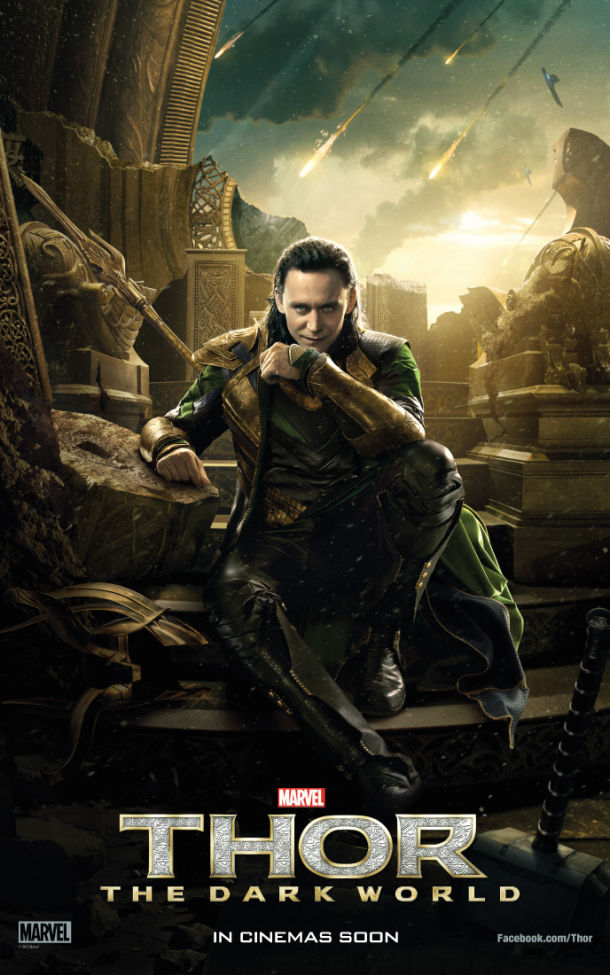
A pair of grand new posters, befitting the characters in question me thinks. Thor looks mighty and divine as a thunder god ought to, while Loki appears sinister and villainous as always. There's some subtle clues in the Loki poster concerning the fate of Asgard at the hands of the legion of the Dark World of Svartalfheim, possibly - and likely - with Loki's aid. There's little more to be said about these new one-sheets other than that they continue to foster hopes Thor: The Dark World will be an epic Marvel flick successfully succeeding its predecessor in terms of cosmic scope and marvelous mysticism.

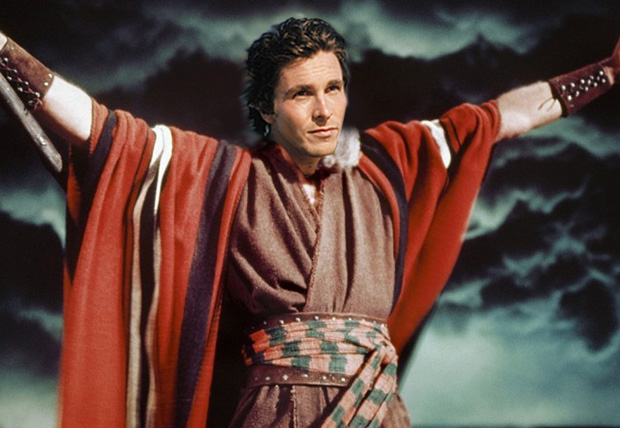
And speaking of epic - as subtle a segue as you're ever gonna get from me - there's Sir Ridley Scott's latest project which appears to be just that, but Biblical. It appears Exodus is his serious take on the Old Testament book of the same name, without going for a more cynical tone, as was at first the idea with his Robin Hood (which unfortunately didn't work out though, and it ended up a typical period film devoid of surprises accordingly). So far its increasingly impressive cast seems up to the task, though I do disagree with the casting choice for Christian Bale as Mozes; personally I wouldn't follow Bale to the Promised Land, though I concur there are plenty of others that would. I'm more intrigued by the casting of established character actors the likes of Ben Kingsley (also a Sir), John Turturro, Sigourney Weaver and Joel Edgerton (not Sirs). As for Aaron Paul, he seems the odd one out in this bunch. Unless he's supposed to deliver a lighter overall tone to the piece, something I trust Scott won't let get out of hand. That he can play the type of character he did in Breaking Bad is one thing, but now Paul must prove he's up to playing other types of roles as well. Under Scott's supervision, I say we need not fear for anything less than stellar performances of Bale's colleagues throughout. As for Bale himself, well... he's Batman... no more! Ben Affleck is Batman now, deal with it.


dinsdag 13 augustus 2013

Today's Mini-Review: Anonymous


Rating: ****/*****, or 7/10

Roland Emmerich, who usually spends his time directing epic disaster movies the likes of The Day After Tomorrow and 2012, apparently felt like a change of subject matter and directed this fine costume drama, which addresses the question as to the true identity of William Shakespeare. Emmerich shows himself to be a proponent of the Oxfordian theory that says the Bard's works were in fact written by the Earl of Oxford, Edward De Vere (Rhys Ifans), instead of by the commoner known as Will Shakespeare. That character (of which we admittedly do know less that we would like), Emmerich states, was just a frontman used to spread the Earl's plays and poems to an ever growing audience that loved them, partially because of the social commentary and incendiary situations they contained, something De Vere would not dare take credit for during the background of the Essex rebellion against the English Throne. Of course the Earl does have a hidden agenda of his own with his plays, namely the discrediting of his political rivals and winning the favour of the aging Queen Elizabeth (Vanessa Redgrave). Unfortunately for him, his tactic soon spirals out of his control as the loudmouth Shakespeare, played by a delightfully boisterous Rafe Spall, gets drunk on “his” success and threatens to undermine De Vere's efforts. Filled with political intrigue, a number of saucy plots and ploys and the rich history and fabulously grimy period look of the Elizabethan era, Anonymous admittedly is not on the level of actual Shakespeare plays, but a fairly smart and solid historical drama nonetheless, revealing that Emmerich can pull off other things besides destroying cities just as well. Needless to say, people who question the true identity of the author of this movie will be in for a bit of a surprise: it's really Emmerich.

Starring: Rhys Ifans, Vanessa Redgrave, Rafe Spall

Directed by Roland Emmerich

USA/UK: Columbia Pictures, 2011


zaterdag 20 juli 2013

Today's Mini-Reviews: Man of Steel goes on a Night Train to Lisbon


Night Train to Lisbon: ****/*****, or 7/10

Adaptation of the original novel of the same name by Pascal Mercier, chronicling the life and times of a young Portuguese doctor named Amadeu de Prado during the years of the oppressive Salazar regime. His political and philosophical trials are recounted through his journals as read long after his death by a Swiss professor played by Jeremy Irons. A timid and dull man, Irons one day saves the life of a woman attempting to commit suicide, who walks out on his life as sudden as she entered it, leaving him the diary and a train ticket to the Portuguese capital. Impulsively leaving his life behind, the professor takes his chances and travels to Lisbon in order to explore this life so different from his own. The vast dissimilarities in life style and character of the boring old professor compared to the adventurous, politically engaged young doctor are rather overstated to carry the point across that freedom and personal convictions are wasted if one does not make ample use of them during one's life, as Irons does not but Amadeu did: though it led him to an early death, he did live a wild and challenging life as the professor soon realizes when he seeks out those that knew him personally. Now all in their old age, his remaining family and friends enlighten the old man as to who Amadeu really was and what he accomplished. Many a great character actor is encountered as the movie progresses through the various view points of Amadeu's inner circle, including Charlotte Rampling, Christopher Lee, Bruno Ganz and Tom Courtenay. Interestingly enough (and potentially insulting towards the people of Portugal), none of them are Portuguese and nor is Jack Huston who plays the young Amadeu. However, their contribution as highly capable actors to informing us about the harsh and dangerous life of political dissidents under the brutal rule of Salazar and his secret police makes for a compelling glimpse of past Portuguese history, which isn't a subject of movies as often as it deserves to be. The movie also serves as a not so subtle tourist brochure to present day Lisbon, with its beautiful sunlit cityscapes and its treasure trove of historical architecture, ancient churches and appetizing dinner establishments. And unlike in Amadeu's time, there's no sinister right wing agents out to arrest you for disagreeing with the current political powers-that-be. No wonder Irons' character eventually opts to stay to escape his own dreary, disillusioned life in Switzerland, which is only shown as grey and rainy during the course of the film.


Man of Steel: ****/*****, or 7/10.

Under the producing talents of Christopher Nolan, Superman undergoes the same treatment to make him grittier – or more 'with the times' – as his fellow DC veteran Batman underwent for Nolan's Dark Knight trilogy. Director Zack Snyder has shown to be rather talented in adapting the works of more ingenious men into big blockbuster movies, e.g. 300 and Watchmen. As a result, Man of Steel proves a slick, dark and modern look at the iconic comic book character, the most 'super' of all superheroes. Nevertheless, the movie still leaves something to be desired, as illustrated by the fact the film works best during its quiet moments of comtemplation as to how a near omnipotent alien life form walking amongst us humans would live and act. Raised by human foster parents after his biological ones got blown to smithereens along with his home planet of Krypton, Clark Kent/Kal-El (Henry Cavill beefed up considerably) has carefully learned not to show off his awesome powers, as they would make him an outcast, a mutant destined to be hated and feared by the society he means to protect (if some of these thematic ingredients sound familiar, it's because Hollywood has jumped on this bandwagon before in other superhero franchises). Moving from one false identity to another in search of inner peace, Clark soon finds the exact opposite when firstly a sexually attractive female raporter named Lois Lane (Amy Adams) and secondly some of his fellow Kryptonian survivors pay him a visit, the former in seach of the truth about this mystery man, the latter desperately after a weird skull shaped MacGuffin that would give Krypton a second chance, but only at the expense of humanity. Clark soon has no choice but to reveal himself to everybody and fight for his surrogate fellow species against his own kind led by the ruthless General Zod (Michael Shannon having a ball playing a rather bad man who can't stop shouting), who has a personal score to settle with the last remaining member of the -El family. What started as a thoughtful and intriguingly calm, impressionistic superhero movie exploring the nature of superhuman powers in an all too human world (similar to the likes of smaller budget films á la Chronicle) soon erupts into a huge, undoubtedly super-expensive visual effects extravaganza as a big battle between Earth's armed forces against the vastly superior extraterrestrial legion commences, with Clark caught in the middle, forced to finally accept his otherness from both parties and donning the traditional red and blue garb we all know (sort of, as there's no underpants in Nolan's world). This time his father Jor-El (Russell Crowe) was kind enough to save the knitting patterns for the suit in his son's spaceship computer banks, probably anticipating a hugely muscled guy in a super tight suit would be just what Earth required to convince its inhabitants of the practicality of a 'Super-man'. Unfortunately the film is released mostly in 3D, while the movie is shot largely through handheld means, rendering the majority of the battle sequences' 3D effects a failure, if not excruciating on the eyes. And sadly those battle scenes make up nearly all of the film's final hour. Overall, Man of Steel is a crystal clear attempt to rejuvenate the Superman franchise applying the Dark Knight's formula, driven by its uncanny ability to bring in the biggest bucks, crafted in an all too similar style that leaves the titular character devoid of his usual comic book feel and charm (not to mention sense of humour), maybe for the better too considering the alternate approach attempted in Superman Returns didn't work out so well. This tactic doesn't prove to be as appropriate for Supes as it was for the Caped Crusader, but works well enough, though definitely more so in the bold first half of the film that relies more on the subtle exploration of a lonely Superman's place in the contemporary world than it does on the overabundance of loud digital action that follows it. One thing is for sure: with this particularly dark brand of superheroes, the upcoming Justice League movie is gonna be pitch-black.

woensdag 12 juni 2013

Today's News: Rasputin rises again

Just off the MovieScene hotline:

http://www.moviescene.nl/p/147842/leonardo_dicaprio_wordt_raspoetin

I wrote a paper on the infamous Mad Monk in high school, so I'm versed well enough in Rasputin's history to know there's plenty of material in there to make for a smashing movie. Intrigue, religion, social upheaval, class conflict, war and loads of saucy, steaming sex, Rasputin's life had it all. Not to mention a hint of the supernatural is available, if the people behind this movie choose to explore that particular aspect of his persona. The latter is doubtful, though his bizarre death certainly cannot be ignored: few people get poisoned, beaten, mutilated, shot, drowned and finally frozen without such a harrowing end being considered the stuff of movies after all. However, considering the names so far attached to this project, I'm convinced this movie will go for an intelligent, historically responsible approach to portraying the starets instead of overindulging in the sensationalism of his wild existence.


Speaking of names, Leonardo DiCaprio, really? Don't get me wrong, Leo has proven himself a formidable actor capable of handling any number of wholly different types of roles over the last decade. Still, a lot of movie magic is required to make him look and sound anything like the historical Rasputin. This one will take quite the metamorphosis, as it's unlike anything DiCaprio has ever done before. I always imagined Rasputin to be played by the likes of Benicio Del Toro, Mickey Rourke or even Jeremy Irons. Nevertheless, I know DiCaprio will succeed in making for a compelling Rasputin, and I look forward to seeing him die a violent, brutal, overly long and painful death.

donderdag 5 juli 2012

David Cronenberg's new frame of mind


Yesterday I worked my first shift as a volunteer running the film projector at the local arthouse theater Provadja, something I will now do each Wednesday evening. I had an easy start, playing only one film, whereas for the next two months it will be three a night. The film in question was David Cronenberg's second to most recent film, A Dangerous Method, a movie I had wanted to see in regular theaters upon its initial release in March, but I never got around to do so. That's the good thing about this new job, I get another chance to see arthouse, or generally good quality, films I missed the first time (I don't think I'll get another shot at Piranha 3DD though, which has now left movie theaters much to my chagrin), since Provadja gets a lot of these as their weekly movie a few months down the road. Projecting the film was a real piece of cake, thanks to the advantages of digital projection (that same progress got me kicked out of the operator's booth at Pathé though, so it's not all fun and laughs), and I had a fair sized audience of no less than fourteen people (the room the movie played at can hold about 45). If you're lucky, you can watch the whole film from the projector's booth, but sadly, I needed to occasionally focus on other chores, so I missed about 15 minutes, which included a few important scenes here and there. Having missed those, I can't honestly write a full review of this film (that would be a rather dangerous method for any critic), so I'll have to make due with some more general observations: after all, despite not having seen it in its entirety, I still have an opinion on the bits I did get to see, which lead me to believe that A Dangerous Method would be rated by me as about ****/*****, 7or 8 out of 10.


It's fascinating to see how much David Cronenberg has shifted towards other genres. He's still best known as the director of usually extremely graphic horror films, the foremost expert on 'bodily horror', i.e. playing with, deforming or metamorphizing the human body to often shocking effects, having created various grotesque body transformations in films such as The Fly (1986) – Jeff Goldblum's DNA mixed with that of a fly, thus making him devolve into a bizarre human/insect hybrid – or the even more disconcerting Videodrome (1983) – James Woods equipped with a huge orifice, quite explicitly resembling a female's naughty bits, in his abdomen so he can insert and “play” videotapes in his body – which for a long time was really Cronenberg's signature: if you saw the shit he pulled, you immediately realized beyond doubt you were watching a Cronenberg flick! However, in recent years he mellowed quite a bit, increasingly shying away from such gory effects. Though in his suspense thriller A History of Violence (2005) he still applied a few brief moments of universal disgust (hence the 'violence'), it otherwise hardly felt like a Cronenberg film. Eastern Promises (2007), a film in the same genre, even less so. With A Dangerous Method, a film containing virtually no gore at all, Cronenberg seems to have definitively broken with his status as a director once considered an auteur of horror. In fact, the body no longer seems to interest him, as he sets his sights completely on the human mind this time: though not exactly new to this subject matter – for example, Spider (2002) – compared to the wonders of the body it's still largely terra incognita for him. And what better place to start than with the founding fathers of psychoanalysis, Sigmund Freud and Carl Jung?

In examining these two noted historical characters, Cronenberg not only treads on different subject matter, but also explores a genre he has not worked in before, the period drama piece. This is his first motion picture set in past times, but you would hardly notice his inexperience since he proves all too capable of compellingly and accurately portraying the pre-WW I era of Vienna and Zürich, including excellent costume work and the occasional temporal signifiers as beautiful early cars and horse carriages. Of course, it's not all that impressive, since A Dangerous Method is hardly a full-on historical epic and focuses on characters much more than on their settings, but it's a good sign Cronenberg has no trouble expanding his existing oeuvre to include genres he's as yet unaccustomed to. A good start, and hopefully he won't be afraid to turn his scope on the past more often, now that we know he can pull it off seemingly without effort.


As mentioned above though, it's the characters that drive A Dangerous Method, and as such it's the actors portraying them making or breaking the piece. Cronenberg has often proved to get stellar performances out of the top actors in their field, and continues this trend here, reuniting with his present day muse Viggo Mortensen (their third collaboration in a row), as well as Vincent Cassel (second time working together), while adding Michael Fassbender and Keira Knightley to his already outstanding resumé of phenomenal actors he has directed. The latter pair has the hardest job in carrying the whole picture, but neither fails in this regard. In the case of Fassbender, who portrays Jung, this was to be expected, considering his status as one of the most sought after and popular actors of today. Knightley surprises much more in her role of his patient Sabina Spielrein, a young woman suffering from hysteria, who soon turns into something more than just another case for the good doctor as the two of them embark on a wild sexual affair. Knightley maneuvers shrewdly from an out of control and insane girl at one moment and a calm and perfectly rational woman the next, being both disturbingly repulsive and sexually intriguing at the same time, and thus an irresistable mark for Jung from a professional point of view, and soon after as a secret mistress. Plus, Knightley seems to have the perfect facial bone structure for this role, as demonstrated by the way in which she alarmingly protrudes her lower jaw in her many fits of rage. Fassbender and Knightley show to have ample chemistry in their roles, initially as doctor and patient, and soon after as lovers on more or less equal footing. Whereas Fassbender plays Jung with the necessary decorum and stoic restraint in the former relationship, he's seen as a more emotional and angry character in the latter, being able to blow off some steam in her company over his guilt ridden marriage with his bland wife Emma (Sarah Gadon), who has an awkward fixation over producing male offspring with him, and his ultimately tumultuous relation with his one time mentor Freud. Together, Spielrein and Jung can be themselves, as they don't need to ignore their sexual fantasies, such as Sabina's desire for spanking due to a childhood trauma. We root for them because of their genuine affections for each other, but certainly in Jung's case (he's a married man with kids after all), abhor them for having taken this inappropriate route.


No matter how good Fassbender and Knightley are on screen together, it's Mortensen who delivers the most impressive performance playing Sigmund Freud. Mortensen, by now fully versed in Cronenberg's routine, proves himself a genuine chameleon yet again, hardly resembling anything we've seen him look like before, older and fatter, smoking a huge cigar in every scene as if it's an actual body part. He portrays Freud as an old man emotionally detached from everyone, including his star student Jung, despite their shared beliefs concerning the benefits of psychoanalysis, while also wholesomely inflexible when the latter tries to convince him not everything can be reduced to subconscious sexual desires. At the same time we see a Freud who desperately means to cling to his acclaimed social status and tries to weed out subversive elements among his circle of (almost exclusively Jewish) associates in fear of all their work being undone by his many enemies in science and politics who are just eager for some controversy to take him out. Apart from the cigar and the talk about sex, Mortensen gives us a whole new Freud, refusing any relation with the usual cliché ridden versions of the character we are so often unfairly treated to. Also noteworthy is the fact Mortensen does not repeat his role from his earlier collaborations with Cronenberg, not taking center stage this time in favour of Fassbender. Undoubtedly the director and his favourite actor realize full well they will work together again many times God willing, and instead of pulling off a Burton/Depp on us, they know they should explore different set-ups if their professional relationship is to continue to prosper, instead of sinking into a dreary routine of overly repeating their previous work.

Aside from the acting and the look of A Dangerous Method, as well as its place in Cronenberg's repertoire, I dare not say anything conclusively about the movie, especially about its overall story, considering I missed several sequences that seemed of great importance plot wise. For instance, at one moment Freud and Jung arrived in New York in good spirits, but when I returned five minutes later they were back home and detesting one another vigorously. I have no idea what went on there, but it was obviously a vital scene. Overall I can say for sure that A Dangerous Method covers an intriguing subject from an equally intriguing director who is not afraid to try and reinvent himself, making the film look gorgeous, and squeezing top performances out of his main cast. However, I did get the feeling the film's plot was fairly predictable (and not just because it's historic subject matter) and delivered in an overly straightforward way, thus not the most exciting stuff imaginable or presented to us in a really gripping, thought provoking manner; but hey, psychoanalysis isn't for everybody. At least the fourteen people in the room all responded in a mildly enthusiastic mood. Given the average age of this audience, I'm sure this would not have been the case if I had projected some of Cronenberg's earlier, more “visually rebellious” (to put it mildly!) work.

And watch the trailer here:


maandag 2 april 2012

Braveheart


Rating: *****/*****, or 10/10


Excellent historical epic regarding the 13th century Scottish rebellion against England led by William Wallace. When his beloved wife is brutally sexually assualted and executed by English soldiers, Wallace goes berserk against his cruel overlords and starts a full scale war, driving the English armies of the merciless king Edward I (Patrick McGoohan) from Scottish lands in several epic battles (the production of which included some of the first cases of CGI used for massive battle scenes), though he finds himself hindered by uncooperative backstabbing Scottish noblemen who care more about their own stature and wealth than about the fate of their oppressed people. Warning! Spoilers! Fortunately Wallace has a secret admirer in the wife of the English crown prince, princess Isabelle (Sophie Marceau), which soon turns into a very romantic and genuinely heartfelt doomed love affair. Mel Gibson both directs and stars in this motion picture, and does an exceptional job at both, winning the film five Academy Awards. His disturbing interest later in life for overly long torture scenes (resulting in torture porn movie The Passion of the Christ) is already evident in Wallace's gruesome death scene. Though Gibson isn't particularly nuanced when it comes to his portrayal of the English (all creepy, violent butchers) and takes some poetic license with recorded history, he makes up for it with a truly gripping and ultimately tragic story of a man who lost everything and turned that loss into a quest for vengeance and a desire for freedom, inspiring his people to fight for theirs. Accompanied by one of the most beautiful (and ever popular) musical scores in film history, this is quite simply one of the great masterpieces of the nineties and a precursor to the return of the popularity of historical epics (setting the stage for Gladiator to fully break out the genre again).


Starring: Mel Gibson, Sophie Marceau, Brendan Gleeson


Directed by Mel Gibson


USA: Icon Productions, 1995


maandag 19 maart 2012

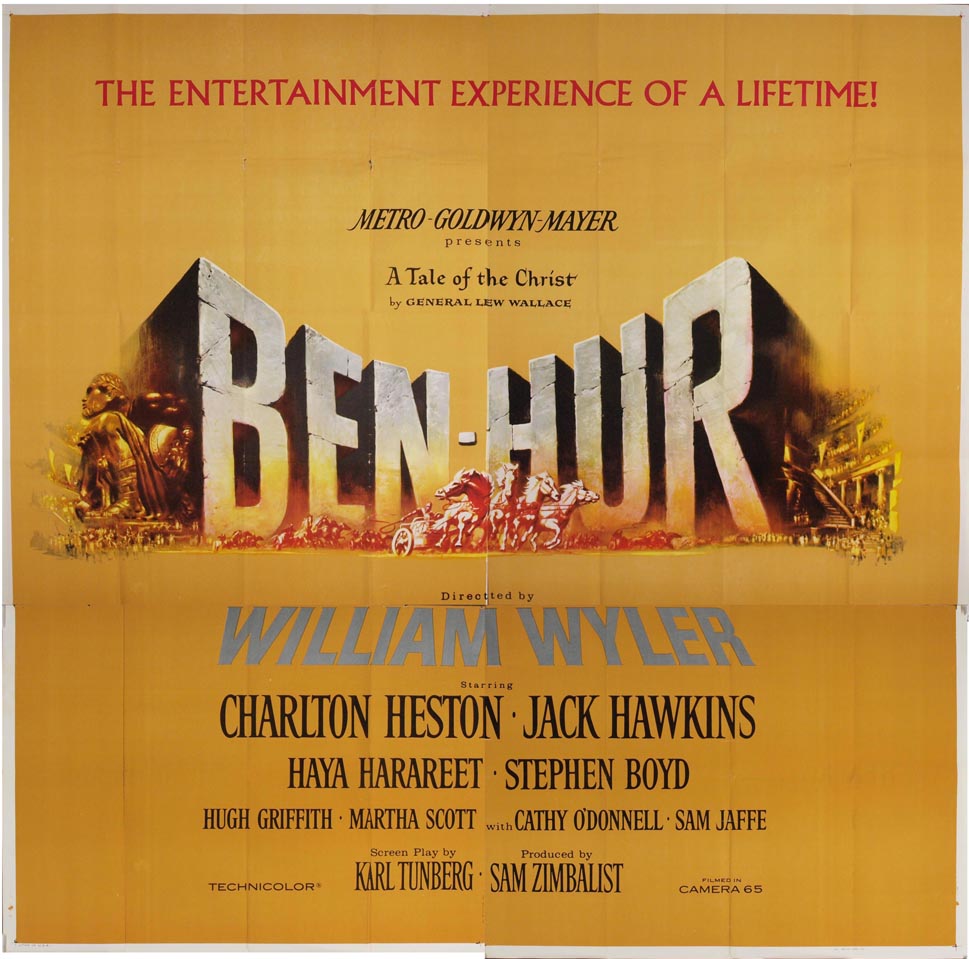
Ben-Hur


Rating: ****/*****, or 8/10


One of the greatest Hollywood epics of all time, the first film ever to win the record amount of 11 Academy Awards, most of them well deserved. Charlton Heston stars as the Jewish nobleman Juda Ben-Hur, who finds out his once close friendship with the young Roman aristocrat Messala (Stephen Boyd) has succumbed to his strict duties as a Roman officer. This new distrust between them soon turns to hatred when, after an accident that leaves the new Roman governor of Judea wounded, Messala condemns Juda to the galleys as a slave and sends his family to the dungeons. However, Juda survives his ordeal, fueled by his hate, and in a grandiose naval battle between the Roman fleet and pirates, rescues the life of Roman Consul Arrius (Jack Hawkins), after which he is redeemed by the Emperor, adopted by Arrius and embarks on a star career as a charioteer before returning to Judea to seek vengeance on Messala in the sands of the most famous chariot race in film history. However, winning the race and fatally crippling his adversary in the process does not return his family or his happiness, things only Christ can give him on the Cross. For the majority of modern day viewers, the overt Christian overtones in the final third of the movie – the film is subtitled 'a Tale of the Christ after all – are hard to bear in their cheesiness, but this movie remains a solid undying classic in every other respect (with extra credit going to the great CinemaScope cinematography, the wonderful, catchy music and the excellent production design): the fabulous naval battle and the highly exciting chariot race remain unsurpassed.


Starring: Charlton Heston, Stephen Boyd, Jack Hawkins


Directed by William Wyler


USA: MGM, 1959