Posts tonen met het label french film. Alle posts tonen

vrijdag 4 november 2016

Today's Review: Je me tue a le dire


Het is een bekend fenomeen in de filmgeschiedenis: de man die niet op kan groeien en een jongetje lijkt te willen blijven. Het type dat eeuwig bij zijn moeder woont en zijn draai in de maatschappij maar niet kan vinden. Al decennialang is het een dankbaar onderwerp voor drama en komedie, dus probeer met dat gegeven nog maar eens origineel uit de hoek te komen. De Belgische debuterend regisseur Xavier Seron zoekt het in absurdistische toon en stijlvolle vormgeving. Het resultaat Je Me Tue à le Dire steekt ondanks, of vreemd genoeg vooral vanwege die onmiskenbaar eigenzinnige aanpak niet boven thematisch verwante films uit.

De Waalse Michel is zo'n typisch moederskind, een man van in de dertig die nog bij zijn overdadig liefkozende mama inwoont. Hij is blijven steken in een hopeloze bijbaan in een elektronicazaak en houdt zich meer bezig met strips en speelgoed dan met zijn vriendin, die het begrijpelijkerwijs niet bij hem uithoudt. Seron voegt er nog een element met komisch potentieel aan toe door zijn protagonist een onverbeterlijke hypochonder te maken, waardoor Michel voortdurend meent de ene na de andere kwaal te hebben opgelopen. Borstkanker is zijn grootste angst, want nadat die ziekte bij zijn moeder werd geconstateerd en even snel en mysterieus weer verdwenen leek, treft hij een verontrustend knobbeltje aan in eigen borst. Michel heeft toch al een merkwaardige fascinatie met borsten, naar verluidt doordat zijn moeder destijds te lang doorging met borstvoeding. Je Me Tue à le Dire is niet voor niets gevuld met verwijzingen naar borsten, van voedsel tot architectuur, als een koortsdroom van een prepuberaal joch dat maar niet over die puberteitsgrens heen stapt. Die beeldtaal wordt snel onleuk.

Seron vertelt Michels relaas in zijn opvallend gestileerde debuutfilm in vijf hoofdstukken, waarin niet bepaald grappige thema's als angst voor eenzaamheid en de onvermijdelijke dood de hoofdingrediënten vormen voor humoristische situaties. Humoristisch bedoeld althans, want door de ongebruikelijke vormgeving is het moeilijk relateren aan Michels bizarre belevenissen. Aan de acteur achter dit mankind ligt dat niet, want hoofdrolspeler Jean-Jacques Rausin laat zien wel degelijk behept te zijn met het nodige komische talent voor een rol als deze. Zijn Michel is aanvankelijk een sympathieke loser, maar diens waanideeën maken hem hoe langer hoe meer een onvriendelijke verschijning. De kerel en zijn bestaan doen direct denken aan Gijs Naber in het recente, inhoudelijk sterke gelijkenissen vertonende Aanmodderfakker van Michiel ten Horn, die echter juist een omgekeerde omwenteling doormaakte en steeds meer onze sympathie verdiende. De overeenkomsten tussen beide films en filmmakers zijn frappant, want ook Ten Horn bedient zich van een geheel eigen stijl om zowel drama als komedie op te wekken. Bij Seron trekken die stijlmiddelen echter te veel aandacht naar zichzelf toe om daarin te slagen.


Het korrelige zwart-wit waarin de film is geschoten, is vanuit stilistisch oogpunt de meest voor de hand liggende blikvanger. Waar Ten Horn juist gebruikmaakt van overdadig kleurgebruik, kenmerkt Seron zich door een precies tegenovergestelde strategie, met toch hetzelfde doel: het vervormen van de realiteit om het surrealistische gehalte van zijn zwarte komedie te onderstrepen. Het maakt zijn film afstandelijker dan waarschijnlijk de bedoeling was, en het werd ons vanuit dat oogpunt toch al niet makkelijk gemaakt met de statische cameravoering en pretentieuze hoofdstukindeling. Serons voorkeur voor christelijke symboliek zorgt nog even voor een overtreffende trap. Als het beter gaat met zijn moeder denkt Michel haar ziekte te hebben overgenomen en lijdt hij dus voor een ander. Zelfs de aureool blijft hem niet bespaard om de metafoor extra te benadrukken. We mogen echter hopen dat de Christus van weleer niet zo'n rare obsessie met borsten had.

In het dagelijks leven is er niets amusant aan borstkanker en ondanks Serons verwoede pogingen om in Je Me Tue à le Dire een komisch verhaal over een mogelijke kankerpatiënt te vertellen blijft dat beeld gehandhaafd. De irrationeel angstige en steeds onaardigere Michel denkt dat hij spoedig zal sterven. Niet voor niets opent de film met een scène waarin hij een doodskist uitprobeert, om aan het idee te wennen. Niet bijzonder geestig of inventief, geen enkel stijlmiddel verandert die tekortkomingen. Michels botte houding tegenover de vrouw die hem het leven schonk en volgens hem nu ook de dood, is eveneens niet zozeer grappig als wel irritant. Serons neiging om de tekortschietende komedie extra sjoege te geven met een overdaad aan religieuze symboliek en verwijzingen naar de kunstgeschiedenis werkt averechts. Het reduceert de film tot een curiositeit. Jammer, want hij heeft genoeg collega's in eigen land die wel opvallend bedreven zijn in het mengen van zwaarmoedige thema's met gitzwarte, surrealistische en bovenal geslaagde humor. Hopelijk leert hij voor zijn volgende project van hun voorbeeld.

zaterdag 4 juni 2016

Today's Review: Elle


Picking up some speed at last.

Elle - recensie

It's an odd thing, but the press seems to almost unilaterally adore this latest film by Paul Verhoeven, with myself being an exclusion to that fact. Even though I love most of Paul Verhoeven's work - even going so far as to publicly consider the much maligned Showgirls a very fun film - I had a hard time appreciating this film. Even though I admit there's a number of things to appreciate about it.

First thing, it's a superb piece of acting by the lead, the fabulous French actress Isabelle Huppert. She delivers a grand performance as the protagonist, Michele, a powerful director of a videogame company who one day unexpectedly finds herself the victim of a brutal rape by an unknown assailant. She effortlessly navigates the part of rape victim and dominant, matriarchal presence at her job and as head of her family of miscreants. Better yet, the dormant demons of her shady past awake to stir things up even more, which soon makes for an intense psychological game between herself and those around her. Nobody is a match for her, both in terms of character and in terms of acting. Sadly, the rest of the cast is nowhere near as exciting to watch and mostly consists of sleazy personas out to make her life more miserable. It's a shame less effort was put into making Michele's surroundings a bit more interesting, but with such a powerful performance as her own, it's hard to keep up.

Second, Verhoeven basically does what he has always done: not give a damn about cinematic conventions and do as he like without taking what many people would consider 'good taste' into account. His continuation of exploring the underbelly of man proves devoid of adhering to the usual norms of narrative progression. Whoever thinks the rape dictates the rest of Michele's actions is wrong, as she doesn't end up a victim of the act, but rather her environment becomes a victim of herself. There's no tear jerking drama here wherein the violated female must come to terms with the traumatic event, nor is there your typical Hollywood style thriller plot which sees the aggressor hunted down by a revenge driven survivor. Yes, Michele does take matters into her own hands and aims to find her rapist, but this detective story thread suddenly comes to a dead stop as the identity of the culprit is revealed earlier than expected, to unforeseen and rather incredulous results. Wherever you think the story is going, Verhoeven doesn't care about your expectations.


Such stubbornness I generally approve of, since there's enough predictable studio drivel going around already. Nevertheless, despite Verhoeven clearly putting his own stamp on Elle which makes it a rather unique final result, I still found it far from a satisfying movie. It's simply too rebellious for the sake of being rebellious. It's a strange and uncomfortable mix of a thriller, family drama and dark comedy, filled with wholly unsympathetic characters. It echoes Verhoeven's scandalous Dutch film Spetters, which saw the auteur heavily criticized and proved one of the prime reasons for him to switch from Holland to Hollywood (and a good choice that was!). However, that film was torn to shreds by critics, while 35 years later Elle is unanimously embraced. The times apparently have changed, but Verhoeven has not changed with them and continues to be an eternal provocateur. In the current political milieu, such an attitude is apparently rewarded. Just not by me. I appreciate Verhoevens refusal to change his style and stick to his (lack of) principles, but I much lament his cynicism. And though it seems the press doesn't share that perspective, I have a feeling many a regular audience member will agree with me upon seeing the strange shock that is Elle.

zaterdag 21 mei 2016

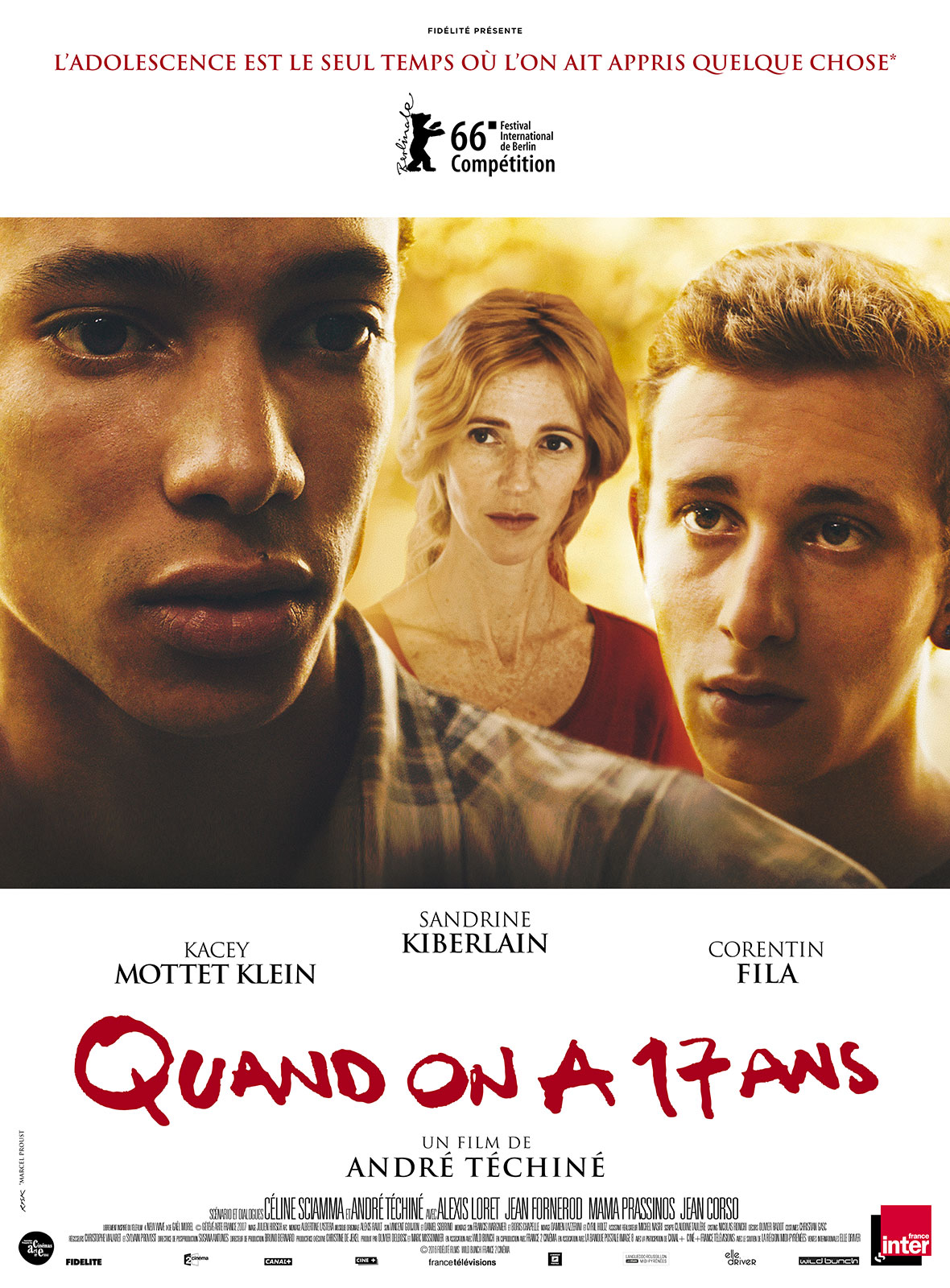
Today's Review: Quand on a 17 Ans


I've fallen a little bit behind on updating my blog with my latest reviews. Let's see whether I can undo some of the damage.

Quand on a 17 ans - recensie

This film, which in English speaking territories is released under the title Being 17, at first has all the hallmarks of your typical teenage drama. There's two seventeen year old boys and a fair bit of animosity between them. However, where usually there's girls or social status involved in explaining said strife, that is not the case here. In fact, there's no particular cause for their mutual dislike at all, it's just there. So we can imagine the horror on the one boy's face when his mother invites the other to come live with them. It's a generous but odd decision, considering their rivalry is there for everybody to see. It's not the oddest choice Quand on a 17 ans makes, since the intention of this film is showing the start of a homosexual relationship. You'll have a tough time believing this film, which takes place over a period of about 18 months, will see the relation between the boys change from mutual hatred and the occasional bit of violence to underscore that feeling, to genuine, physical affection between the pair.


Director André Téchiné - himself a gay man - is no stranger to both gay drama and teen angst. However, he felt the subject material needed the aid of writer Céline Sciamma to flesh the characters out to their best extent. Sciamma recently came off the teen drama Girlhood, which also showed rough relationships between youngsters (though all of them girls in that particular case), but despite the 37 year difference in age between herself and her director, she proves a right addition to make the teen dialogue that much more snappy and convincing. Aided by strong, not to mention daring, performances from both the young actors and their more experienced counterparts, the script goes a long way to make the unlikely transformation from one state of affairs to the other feel that much more real. Cinematography and editing do their bit as the movie moves from a snowy, cold opening to a warm and colourful close in summer, as a perfect (but rather obvious) metaphor for the change in teen moods.

Nevertheless, for the audience it's still a far cry from hate to love (especially a type of love this deeply felt) in just under two hours time. All the ingredients are there to make us convince this is transpiring, but it just moves too fast to make us feel it with the two main characters. It has the pretention, conscious or unconscious, of an emotional epic the likes of La Vie D'Adele (better known as Blue is the Warmest Colour in many regions), but unlike that wonderful film, it just cuts the time necessary to make it equally emotionally compelling for us by a third. We cannot help but feel things are rushed, even though the movie cannot be accused of being fast paced. A change in teen nature of this magnitude simply begs more illustration for full emotional immersion, it seems.


zaterdag 30 april 2016

Today's Review: Monsieur Chocolat


This one's near two weeks old now, but circumstances didn't allow me to repost it here until today:

Monsieur Chocolat - recensie

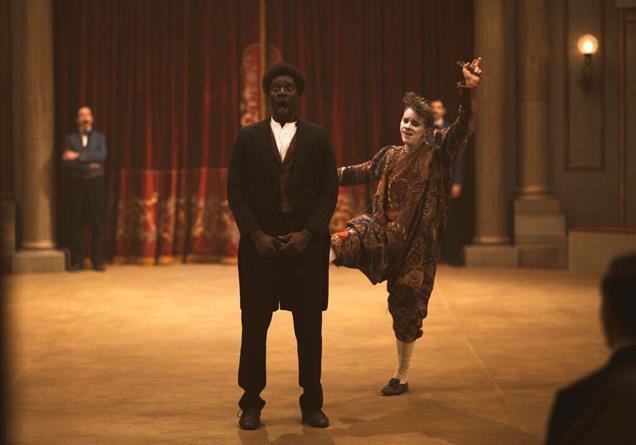
Monsieur Chocolat is one of those typical period dramas that tells a story of days of human degradation gone by more for the sake of the present day than for the desire to accurately reflect the times depicted. Though the director and writers proclaimed their intention of re-introducing a once famous French artist who by the dawn of the 21st Century had slipped into obscurity for a contemporary audience, the issues of race, though certainly a factor of Chocolat's life, are addressed far more strongly than they most likely were back in the days. Of course, Chocolat's entire career was based around his otherness and influenced more by the ignorant cultural notions of white audiences than they were by reality, but that didn't stop him from becoming one of the top theatrical artists of his day. And he was known to be proud of that achievement, even though much of his acts involved getting his arse kicked by a white clown.

But the blatant, painful melodrama of his life suggested by Monsieur Chocolat is more of an attempt to remind modern audiences of the insanity and humiliation on which his career was based rather than on actually reported events. Not to mention Chocolat's private demons involving women, booze, drugs and gambling, which add further obstacles to his career beyond simply attempting to add diversity to his stage acts. Basically, by adding all these other troubles, the writers make it clear that Chocolat is an artist like any other, dealing with the same pitfalls of fame that other artists experienced. It makes for rather generic situations beyond the ever degrading scenes of racial subjugation and does little to push Monsieur Chocolat above the myriad of similar films involving struggling performers of any ilk.


The performances, less so. Omar Sy may actually have hit a career high note in this one, delivering what certainly can be called his most convincing performance since Intouchables. He moves from merry clown entertaining women and children to broken, down-on-his-luck artist plagued by rampant racism seemingly effortlessly. Not to mention he and his co-star James Thierrée are equally matched, with the latter playing a perfect counterpart as the stage obsessed but otherwise grumpy and serious clown Footit, a total opposite to the light hearted Chocolat in many other respects beyond race. The duo makes for a strikingly different pair of personalities you could hardly imagine sharing the circus, though the ultimate break-up feels an inevitable event from the get-go. The circumstances involving their separation were not as 'black and white' as this film suggests though. Again, Monsieur Chocolat feels the need for distorting the truth to underscore the malign racism of the era. That message is well received, but the historical character of Chocolat is not aided by hammering home the message so harshly. However, thanks to this film, he is also not forgotten, so the makers succeeded in that regard as well.

donderdag 13 maart 2014

Today's Review: Suzanne


Yet again have I written a review for MovieScene:

http://www.moviescene.nl/p/154302/suzanne_-_recensie

Not a film that achieved what it set out to do. You just don't get to connect with a character enough if you seen 25 years of her life in the space of only 90 minutes. Suzanne therefore gets stuck in a web of consequences, not in creating understanding or exploring proper motivations of the protagonist, who we cannot help but judge harshly for her woeful willingness to behave both wholesomely irresponsible and socially inacceptible. Even though we supposedly get to see what we need to see, it's not enough to mentally associate as closely as we would like in order to place Suzanne's criminal activity in the proper context. Decent acting and fine cinematography not withstanding, for at least the movie succeeds on that account. Women that fall in love with all the wrong men still remain a mystery to the rest of the world. Suzanne doesn't change that.

zaterdag 23 november 2013

Today's Mini-Review: La Vie d'Adèle


La Vie d'Adèle: ****/*****, or 8/10

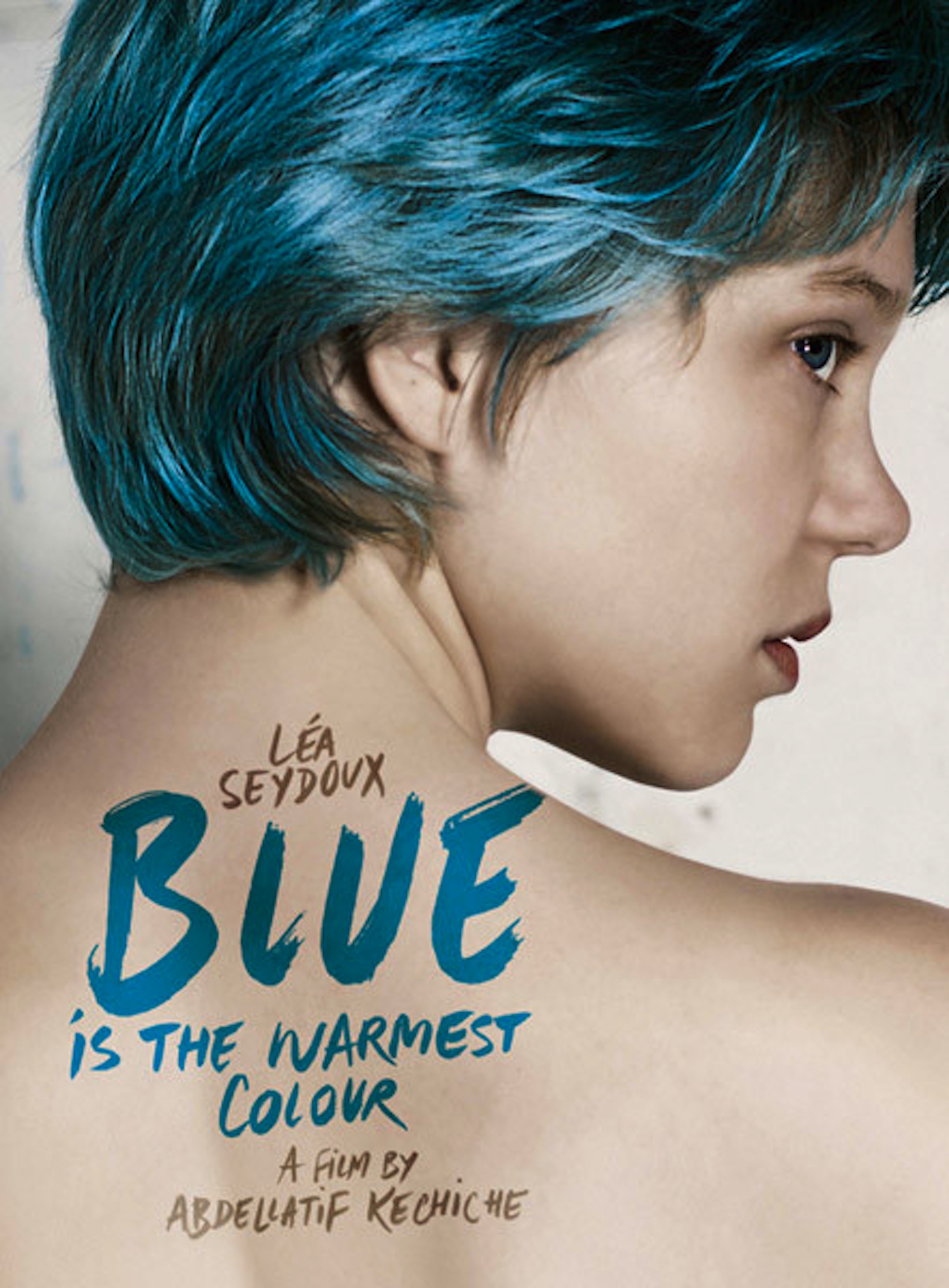
Abdellatif Kechiche's exploration of love, released in some territories under the title Blue is the Warmest Color, packs quite a powerful punch in terms of both emotional and controversial contents. This microcosmic three-hour epic follows the young Adèle (relative newcomer Adèle Exarchopoulos) during the evolution of her first love and sexual awakening, divided into two distinct chapters. In the first, the teenage girl is struggling with societal expectations and personal preferences. Though she physically experiments with boys, she quickly grows confused and disappointed as it doesn't seem to be able to stimulate her as she has been brought up to believe it should. A circumstantial kiss with a girl leads her to suspect she is looking for love in all the wrong places, a hypothesis soon tested out in a gay bar. When she meets the free-spirited Emma (Léa Seydoux), who has a habit of dyeing her hair blue, the two connect almost instantly, which leads them to start the road down a genuine romantic relationship, which includes many a scene of passionate same-sex intercourse. In the second chapter, we find the pair some years down the road, after Adèle has graduated and is aspiring to become a elementary school teacher, while Emma is starting to come into her own as an artist. Despite their love continuing to flourish, the element of novelty has worn of and Adèle considers she might have jumped to conclusions about her sexual nature as she finds herself interested in male partners after all, which causes her to be unfaithful to Emma and attempting to lie about it afterwards to no avail. Emma uncovers her infedelity and in a fit of rage kicks her out of the house. Adèle must come to terms with the sad fact she has lost her first love due to her own faux pas, but it will take her quite some time to recover from this emotional trauma.

La Vie d'Adèle must surely have been an extraordinary ordeal for the two young actresses carrying the piece in terms of filming. Kechiche tells Adèle's story relying on close-ups for most of the film, their every facial nuance laid bare, which makes us feel like we're right on top of them continuously. Correspondingly, the two women also spend a lot of time on top of each other, in a number of quite explicit lesbian sex scenes that leave next to nothing to the imagination, covering the entire range of physical positions you can think of where two women are involved. Though this apparent excess of groping, fingering and tribbing appears titillating at first, these scenes carry on for far longer than feels comfortable for the audience. However, they are yet another natural part of the everyday love life of these girls in the director's mind and as such ought not be censored for the sake of the audience's own inhibitions, nor are they meant to arouse. Accusations of blatant pornography cannot be wholly dismissed, but clearly are not Kechiche's sole intentions, whatever the levels of controversy and thus publicity these scenes might spark. In that regard, he also holds little interest in the homosexual nature of the mutual love he examines. Though at first the concept of a girl falling in love with a girl and the views thereof in society, i.e., Adèle's high school and home environment, relate the usual notions of otherness and awkwardness, the story quickly evolves to the point where that fact simply matters not. Though the two women don't openly flaunt their love for each other at every turn, the gay side of their relation is quite apparent yet never the subject of open criticism: these are just two people in love, it's as simple as that for Kechiche. Whether it is intended as such or not, it's quite a statement to make in contemporary France, where homosexuality is still a matter of heated debate and even violent confrontations. Kechiche doesn't seem to care about current day politics. Realism, and realism only, is key, as he illustrates by making effective use of improvisation throughout the film, the script only used sparingly to help the actresses establish their own natural rhythm of conversing and interacting, instead of merely adhering to the lines written down. It's a monumental task for any actor/actress, no matter how experienced, but both of them succeed to completely convincingly results: Exarchopoulos in particular is to be applauded for the achievement of portraying the inexperienced Adèle to such compelling success, considering her own lack of experience in terms of acting. La Vie d'Adèle deconstructs the theme of love entirely, from its inception to its brutal ending, its joys and its horrors exposed, fully justifying its running time of 187 minutes despite the risk it carries of discouraging the audience. Kechiche is not afraid to end the movie on a note of ambiguity in regard to Adèle's own understanding and weathering of the concept, as she is confronted by the mark it has left on her. Sometimes love is a blessing, but an equal amount of time it's a curse, the director remarks.

maandag 4 november 2013

Today's Mini-Review: Jeune & Jolie


Jeune & Jolie: ***/*****, or 6/10

François Ozon paints a titillating but rather illogical coming-of-age portrait of the seventeen year old Isabelle (Marine Vacth) who explores her sexuality over the course of a year, told in four episodes over the four seasons. In summer we witness the nubile French girl's defloration by a German boy whilst on vacation with her parents. It's not a very fulfilling first time to say the least, as the young man humps her in a rather unflattering way (though alcohol is partially to blame). In the next season Isabelle chooses a secret life of prostitution, the suggested notion being to seek out other sexual options with men of various ages and preferences to really find out what she likes and desires herself. The exact reason for opting for such a drastic measure to discover her own sexual nature Ozon regrettably leaves in the dark, a rather cowardly move on his part as a writer, since it requires quite a leap of faith to take this decision for granted, one most spectators will have difficulty with. Vacth (actual age 23) nevertheless exhibits a brave performance in her role as hooker, as she is seen nude throughout the film on a regular basis throughout many a steaming sex scene, some exerting a genuine sense of tenderness and even playfulness, but others falling into a category of either unpleasant to watch to the point of debasing, or just awkward redundancy as we fully understood she was a prostitute at that point in the story. Despite all the intercourse she partakes in, the only real connection Isabelle experiences is with an old man who actually seems to care about her as a person too, instead of simply as a body for hire. Unfortunately she proves too much for his weak heart which expires as they have sex one time too many, after which Isabelle's hidden profession comes to light to the police, and ultimately her parents. Over the next two seasons, the girl must cope with her double life, her mother even more so, and come to terms with the reason why she chose such a dangerous and desperate path for her self-exploration. A clear answer is sadly never provided, so we are led to believe that any girl whose first time isn't pretty could easily go down the same route. Isabelle, however, must also deal with the death of a man, especially when she meets his widow (Charlotte Rampling) in spring, who seeks answers of her own regarding his demise. An overly mutually understanding confrontation follows, which further adds to the plot's credibility being stretched further than it ought to be. With Jeune & Jolie Ozon doesn't penetrate the realm of female sexuality for the first time (e.g. Swimming Pool for example), but he does so in his least convincing film to date. Nevertheless, thanks to strong performances by the cast overall and Vacth in particular, as well as genuinely compelling emotions being stirred in the various revelations (not answers, mind you) of the details of Isabelle's life, Jeune & Jolie is still a far cry from the mindless sensational soft-erotic drivel it would otherwise have become.

woensdag 10 juli 2013

Today's Review: Do Not Disturb


Here's another review I wrote for MovieScene this week:

http://www.moviescene.nl/p/148416/do_not_disturb_-_recensie

I wanted to like this movie, but it didn't make it easy for me to do so. It wasn't until the end that I found it to be truly deserving of the genre description 'comedy', by which time it was kinda too late anyway. A French remake of an American movie is also kinda odd: it's usually the other way. Currently, Intouchables and Das Leben der Anderen are undergoing such treatment, only because Americans can't be bothered to read subtitles. It seems the same is true for the French. Maybe the original movie, Humpday, simply didn't get a French dubbed release. It was a small indie movie after all, so it's not inconceivable. But this remake truly proves that "us" Europeans are no better than those Yanks when it comes to remaking movies for our own convenience. We'd do well to remember that every time we complain about the Americans running off with yet another one of "our" Euro-classics. And hey, sometimes those do work! Just look at Let Me In and The Girl with the Dargon Tattoo, good remakes both, though like any remake, not really needed in the overall scheme of things, especially if you're willing to sit through a language you're unfamiliar with. You could call Do Not Disturb a good remake, since it follows the original Humpday plot line so closely. However, in that case you ought to say Humpday just isn't a terrific movie...

zaterdag 29 juni 2013

Today's bunch of minireviews: young people, old people and sex


Spring Breakers: ****/*****, or 7/10

Harmony Korine's provocative take on the death of the American Dream – or the exact opposite, its ultimate realization – follows a quartet of young college girls (including Harmony's wife Rachel) who will stop at nothing to celebrate Spring Break in Florida just to engage in endless mindless, decadent sex and drug use. Being penniless proves a bit of an obstacle at first, but their solution is as shocking as it is effective: just rob a restaurant, get in a car and don't look back. It's only the beginning of a nightmarish thrill ride into the mind of America's hedonistic youngsters who, despite beind educated and full of opportunity, prefer to opt for the easy way out in order to live a careless/carefree life, even if only for a short while. Just when they're living their fantasy to the fullest, the police intervene and haul their asses to jail for abuse of illicit substances. Fortunately, a rapper/gangster/parasite called Alien (James Franco being quite the chameleon, to say the least!) bails them out and introduces them to his world of everything. Thanks to his wild and violent life style leeching off the American way of life, he has loads of guns, loads of dope and loads of sex to offer, which the girls accept all too eagerly. Except for the devout Christian of course, who decides to return home: quite the hypocrit, considering her religious values ought to have kept her from coming along for this ride in the first place, knowing full well what she got herself into but opting to look the other way for her own pleasure. The other girls have the time of their life for a while, until the situation turns dark when a rival mobster threatens Alien's turf. Soon however, it appears Alien got more than he bargained for when the remaining teens prove quite resilient in helping him deal with the aggressor in a surprisingly violent manner. 

Casting several former Disney Channel stars like Selena Gomez (Wizards of Waverly Place) and Vanessa Hudgens (High School Musical) was a brave and perfect choice, both underscoring the point Korine tries to make and allowing these girls to break completely with their 'sweet & innocent' stigma. People who expect lots of booze and boobs in an overly simplistic story get exactly what they expected, just handed in a different way than they would probably have liked, since Spring Breakers is not a simple exploitation flick, but a mesmerizing descent into madness rife with wildly divergent visual gimmicks and hallucinatory effects, making the audience less of a viewer and more of a participant. Korine's rebellious denial to uphold to cinematic conventions made distributors rather uneasy, since the expectations of mainstream teen drama mixed with evocative artsy display caused them, in their limited money driven line of thinking, to be unable to successfully classify this film. As a result, Spring Breakers witnessed a release in both multiplexes and arthouse theaters, but failed to fully win over both audiences due to its rough, offbeat style and confronting thematic contents. Mission accomplished, Korine!


Thérèse Desqueyroux: **/*****, or 5/10

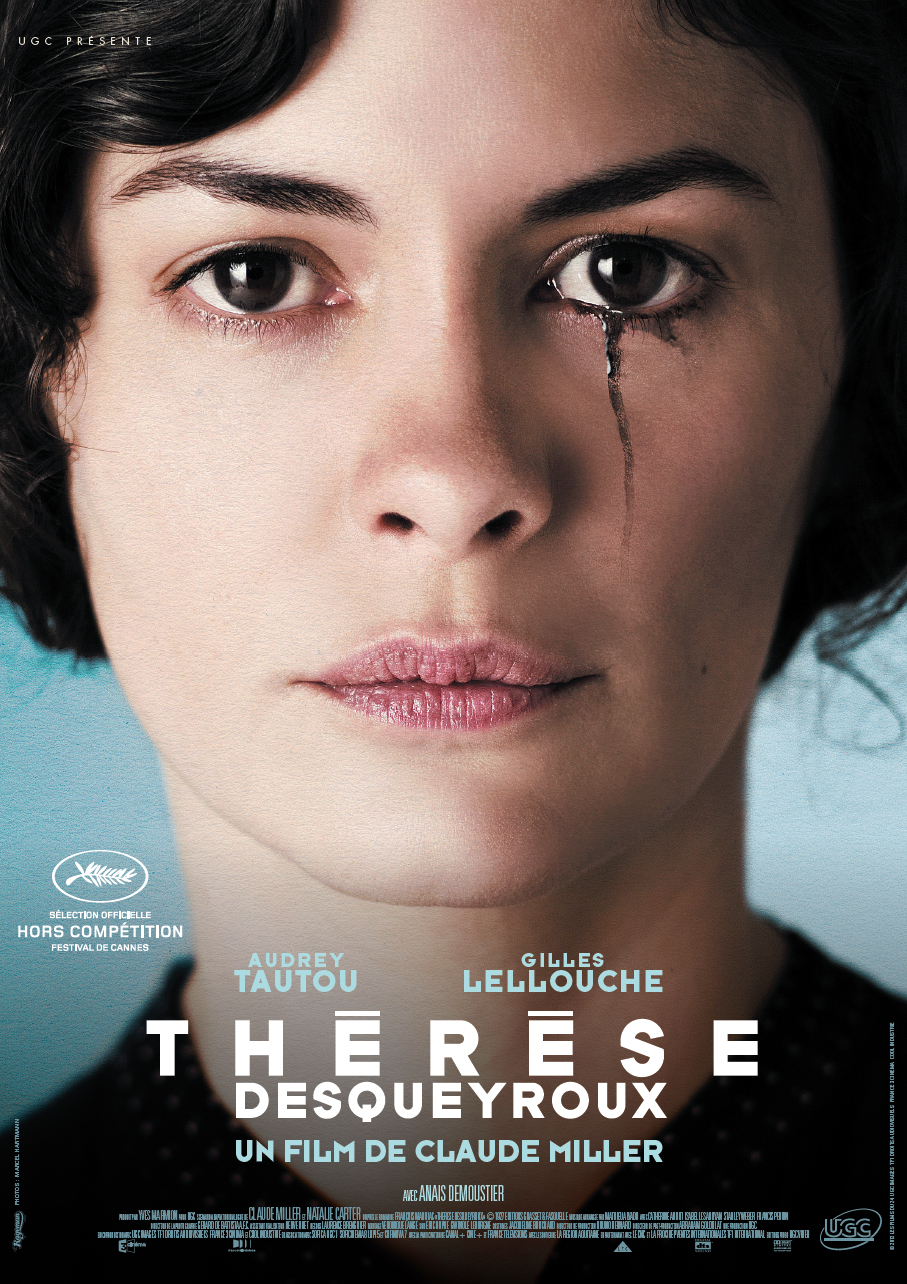
Dull French period drama, set in the 1920s, about the daughter of a wealthy land owner who is forced to marry an older man just so her family can improve its social status by getting its hands on his lands as well and thus becoming a major player in the pinery business. Thérèse (played by Audrey Tautou) soon finds that her loveless marriage revolves all around her child her husband sired with her, while she herself matters little anymore. She's as much a commodity as the pine trees her family trades in, and she receives as little affection. Yet she is expected to help convince a female relative, who's deeply in love with a boy of low status, to also marry for money. The continuing lack of care and interest in what she wants soon drive Thérèse to take outrageous, increasingly dark measures to get noticed again, including setting fires in the plantation and poisoning her husband. When her disturbing deeds come to light, her family threatens to take her child from her and gives her house arrest to avoid the scandal from becoming public knowledge. Though Tautou gives a convincing performance of a cold and calculating woman who sees her freedom and personal space deteriorate more and more, it's hard to feel much for her, since she and those around here are all despicable people who base their lives on increasing the family fortune and their social status instead of aiming to live a happy family life. Interesting parallels can be drawn between this French film and the TV-show Game of Thrones, which have much in common from a plot perspective. However, the latter does succeed much more in squeezing compelling drama out of nasty people out to strengthen their family and riches by marriage and procreation. Thérèse Desqueyroux has to make do with annoying people dancing around each other for two hours. At least the period setting of provincial France in the Twenties offers some diversion from the otherwise tedious story progression of this film.


Song for Marion: ***/*****, or 6/10

Cheerful feel-good movie that is bound to make anyone smile. Grumpy old Arthur (Terence Stamp) is married to the ever optimistic Marion (Vanessa Redgrave), whose favorite passtime is singing in a local choir with other old folks under the tutelage of the beautiful younger woman Elizabeth (Gemma Arterton, a joy to behold as always). Arthur thinks little of her hobby, thinking she'll make a fool of herself, but when she passes away from cancer he feels he must honour her passion and join up with the choir which has entered a singing contest. Arthur does so despite suffering from stage fright and general lack of interest in basically everything, including his estranged son (Who? Christopher Eccleston!) and his granddaughter. The utterly sympathetic and optimistic old performers in Elizabeth's choir, quite a colorful band of singers with their various funny idiosyncrasies, prove to be the most charming and uplifting element of the film (especially when they cheekily start singing about sex), but the emotional core revolves around Arthur and Marion. Though it is rather puzzling to find a spirited woman like her marrying a cynical old fart like him, their devotion towards one another is pulled off convincingly enough to make you believe Arthur would bother with putting up with her hobby, going so far as to save the day in the choir competition where Elizabeth's merry band of singing enthusiasts is as out of place between all the professional top choirs as Arthur is in Marion's choir itself. Of course father and son also become closer to one another due to all the merriment the songs deliver. This movie is utterly devoid of narrative surprises but proves just as pleasing all the same for all ages. An overly simplistic and predictable story does not stand in the way of strong, touching performances throughout and an overall 'don't worry be happy' attitude that nobody can resist. The song may be for Marion, but the movie is for everybody who expects nothing but 90 minutes of cheerful delight.

zaterdag 11 mei 2013

Today's News: S.H.I.E.L.D. show is a go / La Cinquieme Saison mini-review


This news has been on MovieScene mere minutes and it's already available here:

http://www.moviescene.nl/p/147013/marvels_s.h.i.e.l.d._officieel_een_serie

Personally I can only say: bring it! Yes, the overall story synopsis sounds like a bland retreat of shows like The X-Files or The 4400, but hey, I liked those shows and I like Marvel so I still have no reason not to be thoroughly excited. Plus, I've been a great admirer of the way Marvel is constructing its larger cinematic universe in theaters and I'm quite intrigued by the question of how they will continue keeping this up on the small screen. After all, it's one thing to have a series of movies that are referring to one another culminating in one big giant super movie (The Avengers, remember?), but it's quite another to incorporate a TV series into this whole. TV shows just work via different logistics, different methods of production, different ways to keep their principal actors in check, etc. It's laudable ABC dares to take the risk, but also rather understandable considering the box office results from both The Avengers last year and currently Iron Man 3 (though the latter didn't deserve it as much as the former unfortunately). Be it in the TV business or in Hollywood, you can't keep a good exec away from the promise of being showered in precious dough, eh? And what's up with that likeable Agent Coulson playing the lead of this show, despite having died in The Avengers? Seems there's already one big mystery to solve to begin with.

With Marvel, Joss Whedon and TV (the last two categories alone would pique my interest already, really) all mixed together, I can safely say that however Agents of S.H.I.E.L.D. will turn out, it will be interesting on multiple levels, regardless of its eventual quality or lack thereof. I for one think it might actually happen to be a good show, and I'll definitely seek it out to shield me from boredom!


By the way, it's been quite a while since I posted a review (mini or otherwise) on this blog of mine. Guess I should go and remedy this critical drought, and why not start now? So here's a little review to let you know I have not forgotten about posting other things than my pieces for MovieScene. I saw this fascinating little film at Provadja recently:


La Cinquième Saison

Rating: ****/*****, or 7/10

A poetic European look at Apocalyptic cinema, this film deals with a small rural community which is confronted with the sudden emergence of a new season. Nihilistic in nature, it falls between winter and spring and is basically a season of nothingness: there's no snow or rain, but nature stays dead as nothing grows, except for the desperation of the townspeople as their resources dwindle. Soon people go to ever increasing lengths just to stay alive or to explain this unusual break in seasonal patterns, to shocking results. Young girls prostitute themselves simply for food, while the town's outsider is branded a cause to all the town's dismays, targeted as a human sacrifice and burned alive. Though much more esoteric in tone than regular end-of-the-world dramas, the film proves all as haunting and unsettling as it successfully registers the dark side of man and his unwavering ability for cruelty when faced with inexplicable catastrophe and basic survival. Also explored is mankind's role in this world under the uncompromising rule of the environment (though it is never addressed whether mankind itself is at fault for the creation of this fifth season), which can still play hell with our sense of civilization and kindness when it comes down to creating unsustainable living conditions that make society crumble. The visual imagery the film resorts to is both gritty and raw as the material demands, but at times surprisingly off-beat and confusing. The Apocalypse has truly gone arthouse, as La Cinquième Saison proves.


donderdag 14 maart 2013

Today's Review: Trois Mondes

Finally got a decently lenghty review up again, at MovieScene as usual:

http://www.moviescene.nl/p/145052/trois_mondes_-_recensie

I'll willingly admit it's not my best review, but this was a fairly tough nut to crack. As is normal for my MS reviews it has been edited to some extent (about 200 words have been omitted, some justly, others not so much), but I understand why and I do agree it may have been for the best. I'm just glad I finally got back to serious reviewing at all!