Posts tonen met het label family drama. Alle posts tonen
zaterdag 12 november 2016
Today's Review: The 9th Life of Louis Drax
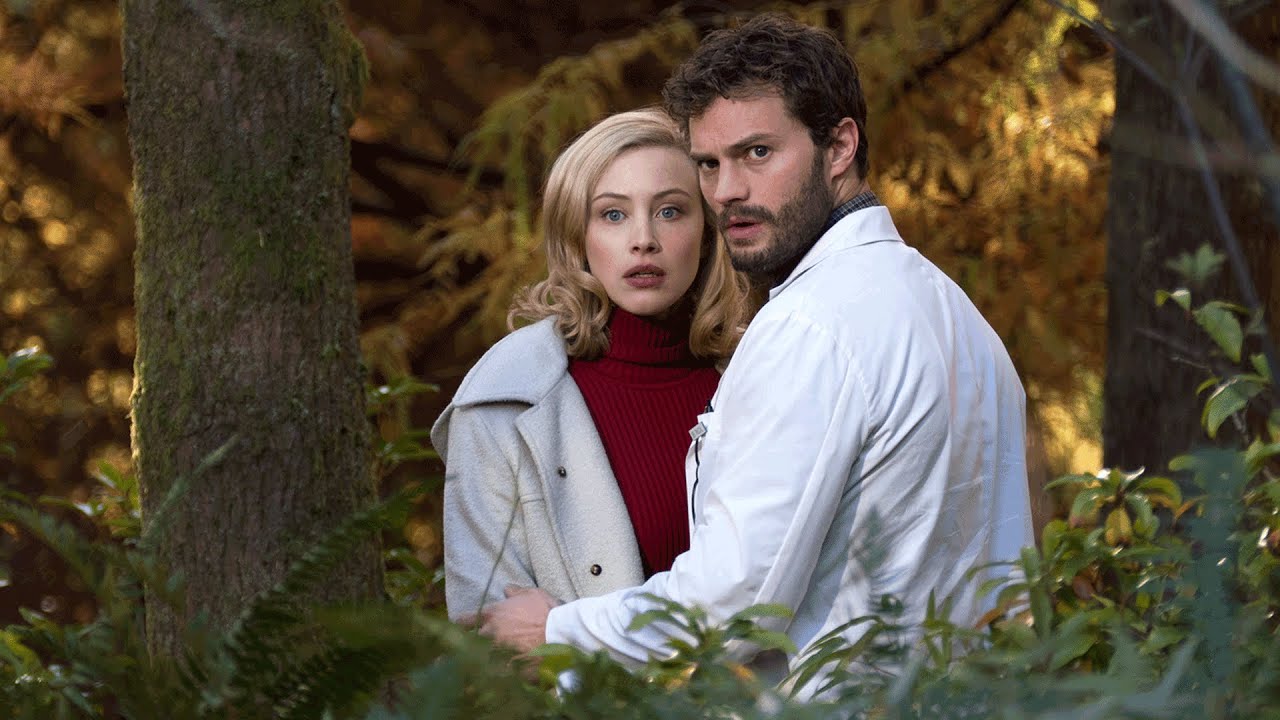
Met The 9th Life of Louis Drax lijkt Alexandre Aja een waardige opvolger voor zijn zonderlinge Horns voor ogen gehad te hebben. In die bizarre film trok hij alles uit de kast in een gitzwarte, gothic komedie die de regels van de fantasy en horror aan zijn laars lapte. Goed nieuws voor de genrefans die er wel om konden lachen, want Aja tracht dus nu hetzelfde te bewerkstelligen. Het probleem is echter dat aan de basis van The 9th Life of Louis Drax een bloedserieus en beladen thema staat, dat zich maar moeilijk leent voor alle fantastische opsmuk waarmee Aja het serveert. Wat begint als een licht en komisch jongensavontuur, ontspoort hoe langer hoe meer in een duister relaas over slechte ouders, psychisch trauma en een dodelijke drang naar aandacht, waarbij Aja's mentaliteit van 'kijk-deze-malligheid-eens' volkomen misplaatst voelt.
De Louis Drax uit de titel is een negenjarig jochie dat de pech had in coma te raken na een val van een klif. Dat klinkt onfortuinlijk, maar is voor Louis slechts het zoveelste ongeluk in zijn korte bestaan. Die pech begon naar eigen zeggen al bij zijn geboorte en heeft zich sindsdien geuit in een reeks voorvallen die elk ander kind niet overleefd zou hebben. Nu lijkt ook voor Louis de grens bereikt, want het lukt hem niet om uit zijn coma te stappen. Dat geeft hem echter de gelegenheid om te observeren hoe zijn omgeving reageert op zijn toestand. Na het voorval is een onderzoek in gang gezet om te beoordelen of er opzet bij zijn ongeluk in het spel was. Alle sporen wijzen naar zijn sindsdien verdwenen vader. Ondertussen grient zijn beeldschone moeder aan zijn zijde, wat de aandacht trekt van de onwaarschijnlijk aantrekkelijke arts die Louis' curieuze geval bestudeert. Want dat er met het joch en zijn ouders veel meer aan de hand is dan een jammerlijk afgelopen picknick, laat zich snel raden.
Zo beschouwd schijnt The 9th Life of Louis Drax allereerst een doorsnee 'whodunit', maar dan had Aja zeker voor de eer bedankt. Voor een regisseur met uitsluitend horrortitels in zijn zak geen gedweep met standaard misdaadonderzoek. Nee, daar moeten bovennatuurlijke elementen, zoals engelen en zeemonsters, aan te pas komen wil het interessant worden. Dat leent zich prima voor de sfeer van jeugdig avontuur die de film aanvankelijk uitstraalt en een jonge doelgroep doet vermoeden. Al snel blijkt echter dat het hoe en waarom achter Louis' leed minder fantastisch, maar vooral duisterder en schokkender is dan verwacht. Het exotische element van The 9th Life of Louis Drax pakt daarbij misleidend uit en slaat dood. Wie met een kinderfilm van doen dacht te hebben, vergist zich behoorlijk. De film ontaardt in een thriller waarin optimistische fantasie plaatsmaakt voor zwaar drama over menselijke pijn en gestoorde ouder-kindrelaties. Op zich geen onaardige wending, ware het niet dat serieus drama aan Aja verspild is.
Uiteraard baseert Aja dit drama slechts op het bronmateriaal van schrijfster Liz Jensen. Maar gezien zijn staat van dienst is het niet verwonderlijk dat hij visueel flink uitpakt wanneer het script hem dat toestaat. Aja leeft zich veelvuldig uit met licht/donkercontrasten en stemmingmakende halo's, waardoor de film absoluut sfeerrijk is. De overdreven spookachtige soundtrack had wel een tikkeltje minder gemogen. De stijlmiddelen houden het verloop van de eerste helft enigszins intrigerend, ondanks de menselijke tekortkomingen naast al het mysterie. Want tegenover de vraagtekens rond het lot van Louis wordt een potsierlijke plotlijn geplaatst over een verhouding tussen moeder en dokter, beiden met het uiterlijk van een supermodel. Het tenenkrommende subplot mag dan uiteindelijk in dienst van Aja's grote misleiding staan, dat het lachwekkende trekjes aanneemt zal hopelijk toch onbedoeld zijn.
Eveneens niet bevorderlijk voor onze band met de hoofdpersonen is het feit dat de titelfiguur eigenlijk niet zo'n aardig kereltje is. Tijdens het voortdurende onderzoek levert hij commentaar op zijn situatie en zijn verleden, à la het inhoudelijk soortgelijke (en ook al niet beklijvende) The Lovely Bones, maar erg sympathiek is hij niet. Hij stookt tussen zijn ouders en doodt zijn hamsters. Vloeit dit alles voort uit een onverwerkt trauma rond zijn bekvechtende opvoeders? Met de achterliggende redenen heeft Aja schijnbaar minder affiniteit dan met de bovennatuurlijke kanten die hij doet vermoeden. Hij verliest zich in Louis' fantastiewereldje en sleurt ons daarin mee, terwijl dat uiteindelijk als bijzaak, en Louis als bijfiguur in het leven van zijn ouders, bestempeld wordt. Dat Aja ons hardhandig uit die fantasie haalt voor een naargeestige climax vol kommer en kwel die niets meer wegheeft van de vrolijk gestemde opening, is ronduit bezwaarlijk. Aja jongleert losjes met allerhande genres, maar balans wordt node gemist in het uiteindelijk allerminst luchtige geval Louis Drax.
donderdag 10 november 2016
Today's Review: Toni Erdmann
De critici spreken schande van het feit dat Toni Erdmann in Cannes buiten de prijzen viel, maar als iemand zich daar weinig druk om zal maken, dan is het regisseuse Maren Ade zelf wel. Geïnspireerd door haar vader, een verwoed grappenmaker, is het project voor haar een persoonlijke zaak. Hij was degene die haar leerde dat je het leven niet te ernstig moet nemen en er vooral van genieten moet. Een boodschap die de regisseuse aanstekelijk uitdraagt in Toni Erdmann. In dat opzicht is ze niet te vergelijken met het vrouwelijke hoofdpersonage, wier drijfveren ambitie en carrière zijn. Ongeacht haar verlies in Cannes is het Ade gelukt juist met een tegenovergestelde levensovertuiging richting de top te klimmen, want Toni Erdmann is een allesbehalve serieus maar toch betekenisvol drama geworden.
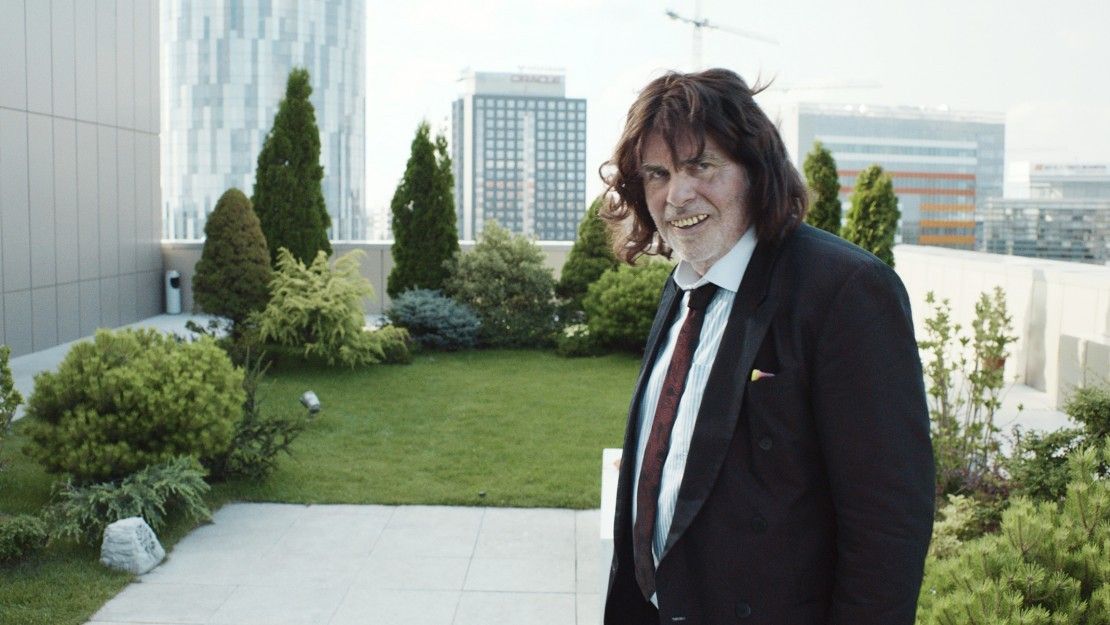
Die titelfiguur Toni, gebaseerd op Ades eigen vader, is een uit noodzaak geboren persoon. Eigenlijk heet de oudere heer Winfried. Hij heeft niet bijster veel van het leven gemaakt, maar houdt er toch volop van, met zijn absurde gevoel voor humor als levensbepalende karaktereigenschap. Een schrijnend contrast met zijn dochter Ines, die tijdens het beklimmen van de ladder van het bedrijfsleven een tegenovergestelde figuur is geworden. Vader en dochter hebben weinig meer gemeen. Dat wordt Winfried pijnlijk duidelijk als hij haar bezoekt in Boekarest, waar zij vertoeft om een grote vis in de oliewereld voor haar baas aan de haak te slaan. Dochterlief heeft amper tijd voor haar vader en beschouwt hem als een sta-in-de-weg, ondanks zijn boerse charme waarmee hij zelfs haar doelwit bekoort. Tegelijkertijd maakt Winfried zich hoe langer hoe meer zorgen om zijn kind, dat tot een humorloze vrouw is uitgegroeid voor wie het ontslaan van mensen aan de orde van de dag lijkt te zijn. Hier moet ingegrepen worden, maar dat kan alleen Toni Erdmann.
Erdmann is gewoon Winfried met valse tanden en een sjofele pruik. Dat heeft Ines natuurlijk meteen door, maar toch staat ze toe hoe dit typetje zich in de high society van het bedrijfsleven naar binnen bluft en de hotemetoten inpalmt met zijn doldwaze charisma en bizarre anekdotes. Is het een onbewuste drang om uit haar verstikkende kleurloze bestaan bevrijd te worden of wil zij zien hoe weinig haar vader begrepen heeft van haar wereld? Ade laat het in het midden, maar Erdmann weet zich hoe dan ook goed te handhaven in de wereld van de 'één procent'. Dankzij het betoverende karakter van de meesterlijke Peter Simonischek sleept Erdmann ook ons volledig mee in zijn ondermijnende toneelstuk, waarmee het komische gedeelte van de film verzekerd is. Tegelijkertijd verliest Ade, geholpen door het sterke tegengas dat zijn tegenspeelster Hüller Simonischek geeft, het dramatische aspect van het mentale getouwtrek tussen Winfried en Ines geen moment uit het oog.
"Ben je eigenlijk wel een mens?", vraagt een vertwijfelde Winfried zijn dochter als hij geconfronteerd wordt met haar holle bestaan in de zakenwereld. Zijn dochter is een bikkelharde tante geworden, die alles inzet om de doelstellingen van haar bedrijf te behalen. Uitgaan, diners, zelfs haar verjaardagsfeestje, alles is slechts een middel in een strijd om de cijfers en alleen anonieme seks en af en toe een lijntje coke vormen enige ontspanning. Stilstaan bij de belangrijke dingen in het leven, zoals familie, is er niet bij. Van een eigen persoonlijkheid is weinig te bespeuren. Papa is niet trots op haar, maar bezorgd. Tegelijkertijd leidt ook Winfried niet het meest begerenswaardige leven. Hij is gescheiden, leeft alleen en pas als zijn hond sterft, zoekt hij toenadering tot zijn dochter. Daar mogen gerust vraagtekens bij gezet worden, maar hij is duidelijk gelukkiger dan zijn naar maatschappelijke maatstaven meer geslaagde dochter. Succes garandeert geen geluk. Toni Erdmann draait om twee totaal verschillende, maar even geknakte mensen wier verstandhouding opnieuw moet beginnen. De leugen Toni Erdmann moet die toenadering mogelijk maken.
Dat ingrijpen in andermans leven voor de eigen bestwil doet Erdmann met verve. Subtiliteit is daarbij niet het sleutelwoord. Wanneer hij Ines confronteert met het ontslag van arme arbeiders voor onbeduidende fouten neigt de film toch een beetje naar moralistisch sentiment. Er kan eveneens afgedongen worden op de eenzijdige wereld die Ade schetst van het bedrijfsleven. Dat is echter bijzaak, want het emotionele hart van Toni Erdmann wordt sterk gevormd door dit duet tussen twee persoonlijkheden, dat zowel aangrijpend als hilarisch is. Erdmann is een even merkwaardige als innemende verschijning die ons direct aan zijn kant weet te trekken, waardoor we volledig opgaan in de geleidelijke ontdooiing van de ijskoude Ines. Het duurt bijna drie uur, maar die tijd vliegt voorbij. De boodschap is niet bijster vernieuwend, maar dankzij heerlijke films als Toni Erdmann genieten we des te meer van het leven. Prestigieuze prijzen heeft Ade niet nodig, de breed gedragen erkenning dat Toni Erdmann een van de hoogtepunten van 2016 vormt, volstaat.
zaterdag 4 juni 2016
Today's Review: Elle
Picking up some speed at last.
Elle - recensie
It's an odd thing, but the press seems to almost unilaterally adore this latest film by Paul Verhoeven, with myself being an exclusion to that fact. Even though I love most of Paul Verhoeven's work - even going so far as to publicly consider the much maligned Showgirls a very fun film - I had a hard time appreciating this film. Even though I admit there's a number of things to appreciate about it.
First thing, it's a superb piece of acting by the lead, the fabulous French actress Isabelle Huppert. She delivers a grand performance as the protagonist, Michele, a powerful director of a videogame company who one day unexpectedly finds herself the victim of a brutal rape by an unknown assailant. She effortlessly navigates the part of rape victim and dominant, matriarchal presence at her job and as head of her family of miscreants. Better yet, the dormant demons of her shady past awake to stir things up even more, which soon makes for an intense psychological game between herself and those around her. Nobody is a match for her, both in terms of character and in terms of acting. Sadly, the rest of the cast is nowhere near as exciting to watch and mostly consists of sleazy personas out to make her life more miserable. It's a shame less effort was put into making Michele's surroundings a bit more interesting, but with such a powerful performance as her own, it's hard to keep up.
Second, Verhoeven basically does what he has always done: not give a damn about cinematic conventions and do as he like without taking what many people would consider 'good taste' into account. His continuation of exploring the underbelly of man proves devoid of adhering to the usual norms of narrative progression. Whoever thinks the rape dictates the rest of Michele's actions is wrong, as she doesn't end up a victim of the act, but rather her environment becomes a victim of herself. There's no tear jerking drama here wherein the violated female must come to terms with the traumatic event, nor is there your typical Hollywood style thriller plot which sees the aggressor hunted down by a revenge driven survivor. Yes, Michele does take matters into her own hands and aims to find her rapist, but this detective story thread suddenly comes to a dead stop as the identity of the culprit is revealed earlier than expected, to unforeseen and rather incredulous results. Wherever you think the story is going, Verhoeven doesn't care about your expectations.
Such stubbornness I generally approve of, since there's enough predictable studio drivel going around already. Nevertheless, despite Verhoeven clearly putting his own stamp on Elle which makes it a rather unique final result, I still found it far from a satisfying movie. It's simply too rebellious for the sake of being rebellious. It's a strange and uncomfortable mix of a thriller, family drama and dark comedy, filled with wholly unsympathetic characters. It echoes Verhoeven's scandalous Dutch film Spetters, which saw the auteur heavily criticized and proved one of the prime reasons for him to switch from Holland to Hollywood (and a good choice that was!). However, that film was torn to shreds by critics, while 35 years later Elle is unanimously embraced. The times apparently have changed, but Verhoeven has not changed with them and continues to be an eternal provocateur. In the current political milieu, such an attitude is apparently rewarded. Just not by me. I appreciate Verhoevens refusal to change his style and stick to his (lack of) principles, but I much lament his cynicism. And though it seems the press doesn't share that perspective, I have a feeling many a regular audience member will agree with me upon seeing the strange shock that is Elle.
zaterdag 23 april 2016
Today's Review: Bezness as Usual
Another review up at FilmTotaal, with one more to follow in the same week:
Bezness as Usual - recensie
This is the type of documentary you don't go to the movies for. The type you expect to see on public access late at night. The kind of topic that doesn't really attract you unless you already experience a personal stake in it. For its own type, it's not bad per se, it just lacks the necessary angle for which it would be a boon to theater audiences on other occasions than festival screenings. That's nothing to be held against it, it's just the way it is. The main actual argument against it is it introduces a despicable man whose shenanigans we have to watch for a good ninety minutes. A man who we can't judge as anything but unsympathetic from the get-go, but who the protagonist feels the need to discover if there's other sides to him that justify his behavior, past and present.
Big surprise: not really, he's just an old con man trying to use his son as a business angle rather than feeling true fatherly emotions for. A hard truth to swallow, but one we saw coming miles away, which makes for little emotional intensity. Considering this movie is basically self-therapy for the director, a child of different ethnicities torn between loyalties to people on two continents, it succeeds in making the protagonist reach a new understanding, but the same doesn't hold true for the audience. At the same time, we get a glimpse of far larger events unfolding in Tunisia, as the threat of terrorism grows ever stronger, but this subject is only slightly touched upon. Bezness as Usual is a small scale drama unfolding between two people, anything beyond that, however intriguing, is not the point. Too bad, since it might have made for a more dynamic and less predictable documentary. The type you would want to see on the big screen.
zaterdag 16 april 2016
Today's Review: Mammal
Another review up, with more soon to follow:
Mammal - recensie
Why would a new mother abandon her child and husband? It's an intriguing question, usually surrounded with heavy social stigma, since any mother denying her maternal instincts is either downright abject or at the least a bad excuse for a person, or so society swiftly judges. Nevertheless, it happens and it begs an answer. Those looking for one will not find it in Mammal. In fact, though at first thought the movie seems to revolve around a mother who accepts a second chance for motherhood, that may be too much of a generalization. But some sort of connection, both emotional and physical, between two vastly different but equally lost souls, is certainly in order in this narrative.
Margaret abandoned her family soon after her son was born, and she now has been out of their lives for 18 years. When news about her son's disappearance reaches her, not much sorrow is demonstrated. Nevertheless, around the same time, she accepts a wild kid from the street, roughly the same age as her own child, to live with her. The big question obviously being why. A simple act of generosity? Or perhaps another shot at maternity, after foregoing that responsibility all those years ago? For a while, the latter option seems to be the case, but when things get overly physical between her and the boy, Joe, that theory doesn't hold up any more. If motherhood is indeed Margaret's objective, she has some odd notions of the concept at least.
Unfortunately, Mammal - the metaphoric title suggests a nurturing nature to their relationship based on maternal instincts, though there's also an undeniable social aspect to it as well, so one can look at it from both angles - is short on motivations. It's not Daly's intention to spoon feed us all the answers, which is fine, but there's simply too few of those concerning the various characters' actions to go around. Things happen as they do, while particular reasons are entirely up to the viewer to come up with. It makes Mammal a rather hollow film. Thankfully, there's strong performances throughout, which do make us care enough to stick with the protagonists rather than lose all interest entirely. We hardly get to know these people to the extent that we should for Mammal to deliver the gripping drama it feels like it wants to, but as fellow mammals we sympathize enough to feel some emotional connection to stick with them for a good hour and a half.
donderdag 19 juni 2014
Today's Review: Das Wochenende
MS posted this review of mine today (a day later than usual for reviews of new movies):
http://www.moviescene.nl/p/156070/das_wochenende_-_recensie
Quite a dull watch in all honesty. It's not the subject, nor is it the acting. It's the poor dialogue and unrelenting petty squabbling that get the better of this movie. If you have nothing to do during the weekend, better watch something else regardless. There's better movies featuring the (German) RAF out there, as there are more appealing films involving family bitterness exploding.
donderdag 13 maart 2014
Today's Review: Suzanne
Yet again have I written a review for MovieScene:
http://www.moviescene.nl/p/154302/suzanne_-_recensie
Not a film that achieved what it set out to do. You just don't get to connect with a character enough if you seen 25 years of her life in the space of only 90 minutes. Suzanne therefore gets stuck in a web of consequences, not in creating understanding or exploring proper motivations of the protagonist, who we cannot help but judge harshly for her woeful willingness to behave both wholesomely irresponsible and socially inacceptible. Even though we supposedly get to see what we need to see, it's not enough to mentally associate as closely as we would like in order to place Suzanne's criminal activity in the proper context. Decent acting and fine cinematography not withstanding, for at least the movie succeeds on that account. Women that fall in love with all the wrong men still remain a mystery to the rest of the world. Suzanne doesn't change that.
donderdag 27 februari 2014
Today's review: Nebraska
It's been a while, but I finally wrote another review for MovieScene:
http://www.moviescene.nl/p/153740/nebraska_-_recensie
Now this was truly a charming film, both beautifully poignant and utterly hilarious at times. It has a small but delightful story, a lot of heart, strong performances throughout and a fabulously cinephile style hearking back to cinematic glory from ages past, as is clearly its intention. BUt you can read all that in the actual review. It would be a shame if this movie didn't score an Academy Award or two, though it features very tough competition and in terms of Oscars will likely end up one of those overlooked gems. I'm pretty sure it will find its audience, which will give it the praise it is due.
donderdag 28 november 2013
Today's Mini-Review: What Maisie Knew
What
Maisie Knew: ***/*****, or 6/10
Some
children are blessed with loving parents, while others are stuck with
horribly egocentric folk that just can't get along, to the detriment
of their offspring. Poor Maisie (young newcomer Onata Aprile, only 7
years old at the time of shooting) unfortunately has to contend with
the latter, as her terrible excuses for parents, played by Julianne
Moore and Steve Coogan, simply cannot see eye to eye about anything
and only communicate by shouting at each other and arguing ad
nauseam. Maisie can't remember ever seeing them in another, happier
state of their relationship and has gotten used to their constant
petty bickering, but doesn't let it get her down as she tries to make
the best of it. Of course, the question always on our mind is: does
she understand that the emotionally unhealthy environment she's
growing up in is not the regular way for children to mature? Could
she ever choose between her mother or her father if it came down to
it as they are both lobbying for her unwavering love? Coogan and
Moore certainly excel in playing people you just can't help but hate
for how they're so obviously ruining Maisie's childhood, a fact they
ignore becayse they are more concerned for besting the other in
winning Maisie's love. While we are busy detesting these horrible
guardians for causing her to accept a living condition that is quite
simply unacceptable to behold for anybody with a slightest sense of
reponsibility, hope looms on the horizon as her parents both mix up
with just the right people to turn her life into a more positive
direction. Her father marries her foreign (Scottish) nanny, while her
mother hooks up with a seemingly not so bright, tall guy (Alexander
Skarsgård attempting to shed some of that sinister, scheming vampire
image of his, courtesy of True Blood, by playing a sweet,
easily likeable bartender). Unfortunately the story soon progresses
in the most predictable of directions as these two people, who
actually care more about Maisie as a person than as a means of
annoying the other by acquiring custody of the girl, come to
understand just how easy it is to love this charming child and agree
how much she deserves to be taken care of by decent folks. And
naturally they can't help themselves by also falling in love with
each other when they realize just what a manipulative, sleazy people
Moore and Coogan are, abusing both them and Maisie for their own
purposes as they keep up their disgusting little power play. In terms
of plot development, we soon come to know that What Maisie Knew
has little surprises to offer while delivering its fairly repetitive,
one-sided melodrama. The film makes up for this in the acting
department, where young Aprile stuns the audience with a most
exceptional, truly inspiring and convincing performance; a remarkably
rare occurrence for such a young child, but a solid promise for her
future career in acting should she decide to keep it up (we can only
hope). While the adult actors go through the motions in a more
regular fashion, which isn't devoid of merit but simply not nearly as
mesmerizing, Aprile carries the film as very few other actresses her
age could ever have done, proving just how much truth there is in
that old adage that good casting is doing half the work. What
Maisie Knew is just average in all other regards, but a fabulous
performance like this is well worth checking out, as it is so seldom
witnessed.
zondag 27 oktober 2013
Today's Mini-Review: Blue Jasmine
Blue
Jasmine: ****/*****, or 8/10
Woody
Allen returns to directing with a vengeance after a disappointing
interlude of lesser, though still decent, films. Allen's greatest
gambit in Blue Jasmine is the formidable talent provided by
the divine Cate Blanchett. Her portrayal of a down-on-her-luck big
city socialite who must leave her comfort zone of excessive luxury in
exchange for crashing on her blue-collar sister's couch (sort of,
since both women were adopted as children) and getting an ordinary
job both causes you to hate this woman and feel for her (at first!)
in her misery and increasingly deteriorating mental state. Thanks to
her former husband (impeccably nefarious Alec Baldwin), a wealthy
entrepreneur whose entire fortune was built on the ruthless conning
of decent folk – including her own sister and her former fiancé –
Jasmine was living the good life until she herself brought down her
own house in a petty move that showed she was at least as vicious and
self-absorbed as her spouse. Allen doesn't just give the reasons for
her sad emotional state away; instead he utilizes a distinctly
fragmented narrative that gives you one bit of information at a time
until the full picture is revealed at the close of the film. But all
the while, he paints a distressing portrait of an utterly
narcissistic character who is living in extreme denial of her sorry
social situation brought about by turning a blind eye to the obvious
shenanigans of her husband for her own financial security's sake.
Nevertheless,
a depressing drama Blue Jasmine is not. Rather, it is a
tragicomedy in the truest sense of the word, which is swiftly
indicated by the delightful opening that features Jasmine's non-stop
rambling about her life to a complete stranger on a plane flight.
Other hilarious moments include Jasmine's illogical reasoning as she
decides what sort of job she thinks she deserves, as well as her
wonderfully funny portrayal of a lousy dentist assistant, who can do
nothing right but is so good looking her boss (a rather atypical
performance by Michael Stuhlbarg) can't keep his hands off her, which
illuminates the fact Jasmine is all style over substance: something
that most certainly cannot be said for the film itself, unlike some
of Allen's other recent work. Allen's message is clear: the rich and
wealthy of this world, whose life is built on their own house of
cards, are playing with fire at the ruin of others, but mostly
themselves, as the hardworking everyday folk have much less to lose
and can regain their happiness and lust for life far easier. You
might consider this a form of social commentary on the current
economic crisis that tells the audience it's really not all that bad
unless you can't cope with living a simpler life, but Allen doesn't
claim to have pretensions towards such lecturing on world affairs in
Blue Jasmine. However, he clearly illustrates the life of high
society is not a state of being to be envied with its incessant petty
bickering and rampant relational double-crossing, especially compared
to us normal people who fortunately don't have to deal with such
scandalous affairs. Case in point, Jasmine's sister Ginger (a
charming Sally Hawkins), who soon must deal with the rifts in her own
circle caused by Jasmine's disturbing presence in her home. Ginger
blames the bad history between her and her sister on her ex-husband,
but over the course of the film must come to terms with Jasmine's
apparent self-destructive nature, which threatens to drag her down
with her, except she won't let it, after which she gets back on her
feet much quicker because of her flexible stance towards life.
Meanwhile, poor Jasmine sinks deeper and deeper, to our delight and
sense of moral justice, as pity ever more tucks its tail between its
legs when we come to know what she hath wrought and how much she
deserves her fate, which is all the while coupled with nothing but
the sincerest admiration for Blanchett's displayed skills at her
craft in making this downward spiral feel totally compelling
throughout.
Labels:
alec baldwin,
blue jasmine,
cate blanchett,
comedy,
con man,
drama,
economic crisis,
family drama,
michael stuhlbarg,
psychology,
sally hawkins,
tragicomedy,
Woody Allen
woensdag 31 juli 2013
Today's Mini-Reviews: Before Midnight
Before
Midnight: ****/*****, or 7/10
Third
installment in Richard Linklater's Before romance trilogy (for
lack of an official name), that began with Before Sunrise (1995)
and continued with Before Sunset (2004). We revisit the lives
of Jesse (Ethan Hawke) and Celine (Julie Delpy), 18 years after their
first all too brief encounter in Vienna and nine years after their
second equally short sexual interlude in Paris, that left them with
twin girls. Now they meet up again in Greece for vacation as an
almost genuine family, which causes long simmering emotions to stir,
both for good and for bad. Though they agree their life as a
semi-divorced couple (they were never married to begin with) with two
adorable but ever attention seeking children leaves a lot to be
desired – he has problems dealing with his vicious real ex-wife and
connecting to the son he sired on her, while her career is at a
crossroads and as a devout feminist, she is bothered by the feeling
society wants her to totally give herself to her children instead of
being successful – they do still deeply care for one another as is
evident when they visit Greek friends where it seems their love life
is the most sweepingly romantic of all of them. However, when they
are given a luxurious hotel room for one night, their differences and
mututal feelings of lack take over, causing quite an argument between
them. This film is quite amazing in that it's basically a few scenes
of the two protagonists and a few minor characters engaging in
endless conversation about ordinary things, yet it's totally
compelling due to the completely believable performances, the fast
paced, realistic, and often witty and snappy dialogue and the
relatibility of it all as these are totally regular folks
experiencing everyday problems. An education in minimalist
filmmaking, each scene can take up to 20 minutes with no more
editing, music or other movie trickery than needed so you can really
flow with these characters. The romantic tone of the piece is
underscored with a little help from the beautiful small town Greek
settings and landscapes, except for the hotel scene – which takes
place entirely in an ugly, modern, eerily lit boring white room –
which of course is the only location where Jesse's and Celine's
relationship turns into bitter strife and mutual reproachment, until
they seem to reconcile at an outdoor restaurant a little while later.
The neutral zone between man and woman might as well be a battlefield
for dominance, Linklater suggests, but if both parties really care
for one another and aim for simple understanding, nothing can stand in the
way of true love.
zondag 31 maart 2013
Today's batch of mini reviews
Picking
up where I left off, here's yet another batch of recently seen films
that have not been critiqued on this my blog in sufficient detail and
thus have to make do with a mini-review. The term 'missed movies' no
longer applies here, since I have seen these films after my PC was
returned to me and I was back online again. Truth is, now that I am
writing for MovieScene and screening films for audiences at Provadja,
next to my regular work at Pathé, I just don't have time for
old-fashioned extensive reviews anymore. I am watching more movies
than I can handle, so to say. Expect to see this type of mini-review
more often and 2,000 word reviews less and less around here. It may
not be a bad thing per se, considering word has reached my ears
regarding modern man and his lack of time and interest for lengthy
movie discussions. By keeping it short and simple I might actually
attract more readers, even though one could argue my blog is dumbing
down. Not to worry, I'm sure there's still many a long review to come
(MovieScene reviews aside, though they're of medium length really),
at least once I've caught up with mentioning all the films I've seen
in the past months. Getting there, slowly but surely.
Lore:
****/*****, or 7/10.
Fascinating
microcosmic (post) WW II tale from a German perspective, focusing on
the plight of teenage girl Lore, shortly after Germany has
capitulated to the allied forces. Lore has had a good life in a happy
Nazi family until she finds her world shattered by the Führer's
death and the downfall of the Third Reich. Her parents, being devout
Nazis, have to run before the Allies catch up with them and are
forced to leave their children behind in the process. Lore, a
powerful performance by the young Saskia Rosendahl, has to trek her
way with her younger brothers and sisters to distant Hamburg across
newly occupied territory, dodging Russian forces and her own
countrymen who have degenerated into lawlessness. Along the way she
meets a young Jewish man, freshly released from Auschwitz, who
uneasily teams up with them to their mutual benefit for mere
survival. The movie does a great job of portraying the lost German
generation that grew up in the Third Reich and didn't know better,
but had to cope with their parents' atrocities and lies afterwards.
The key issue for Lore is trust: she trusted Hitler and her parents
unconditionally, only to be betrayed by their failure. Now she has to
trust a man whom she has been raised to hate, despite the genuinely
helping hand he offers (which quickly earns him the faith of Lore's
siblings, who are just too young to understand the stakes involved).
Matters are complicated further when she develops a strange, possibly
romantic, attraction to the guy, something he may or may not be
exploiting. To Australian director Cate Shortland's credit, the film
is completely spoken in German. She also presents a great metaphor
for puberty, when a child's world is changed completely as are its
feelings for those it has always taken for granted, without getting
overly preachy. However, a less lyrical and dream like quality, plus
a little faster pacing, might have made her movie more accessible.
De
Ontmaagding van Eva van End: ****/*****, or 8/10.
Whaddayaknow,
a good Dutch movie! Not surprisingly, considering director Michiel
ten Horn used the fabulous work and style of Wes Anderson for
inspiration, creating a definite Dutch counterpart of that particular
auteur's work. All the typical Anderson ingredients are there (except
for Bill Murray), including wacky characters, colourful visuals,
dysfunctional family drama and a funky soundtrack. And decent writing
of course. The Van End family members have a hard time connecting to
one another and lead their own little lives in their own silly little
worlds, until daughter Eva takes home a German foreign exchange
student. The boy turns out to be the perfect human being, an angelic
blond persona with great empathy for the whole world, whose healthy,
altruistic life style soon creates havoc at his guest home as the
whole family reacts differently to his presence and their natural
balance is severely upset, exposing a few dirty family secrets in the
process. And yes, Eva gets her cherry popped as the title indicates,
though not in the way you would first expect. Solid acting,
especially for Dutch actors, though of course young Austrian actor
Rafael Gareisen leaves the greatest impression. The movie leaves
ample room for both genuinely heartfelt drama and funny jokes and
situations, some surprisingly edgy and politically incorrect. Ten
Horn does a fine job of translating Anderson to a Dutch setting
(unconsciouslyly or not, but it seems utterly unlikely he has never
heard of his American inspiration), making the movie look distinctly
Dutch but not feeling like any other Dutch film, all for the better.
It's a real shame Dutch audiences prefer to watch crap like Verliefd
op Ibiza and Het Bombardement over little gems like this,
but it's good to know not all hope is lost for Dutch cinema thanks to
talented directors like Ten Horn inspired by all the right people.
Zero
Dark Thirty: ****/*****, or 8/10.
Kathryn
Bigelow continues to critique America's army following her big Oscar
breakthrough The Hurt Locker (2009). This time she focuses on
the hunt for Osama bin Laden by the driven and resourceful female CIA
agent Maya (excellent bit of acting on Jessica Chastain's part),
inspired by true events, not all of which have been formally
disclosed. Maya gets increasingly obsessive over the Agency's
inability of locating Bin Laden and soon makes it her personal job to
see the hunt come to an end, especially after dear colleagues of her
die in related terrorist bombings. The climactic chopper showdown at
Bin Laden's villa where a team of Navy SEALs has to quietly fight its
way through the building to claim its prize was one of the most
rewardingly suspenseful scenes of 2012. And to Bigelow's credit, the
face of the Al-Qaeda leader was never even shown, clearly stating the
movie is not so much about the man himself, as about Maya's long road
to get to him. The movie's merit as a genuinely good film was
overshadowed by the controversy surrounding Bigelow's explicit
portrayal of torture of terrorist suspects at the hands of American
agents: no doubt such crossing of political and ethical lines took
place historically, but Bigelow was said to condone it. However,
Bigelow makes no statement of her own, just showcasing events as they
supposedly happened. The torture could have proven to be instrumental
in tracking the most wanted man alive down in the long run, but she
presents it as just another part of the bureaucratic machinery: a
frightfully gruesome part though, revealing more than we would want
her to reveal on the subject, and as such already indicating torture
sure is no fun. Nevertheless, she was denied a well deserved Oscar or
two: Zero Dark Thirty's only win was for Sound Editing, an
award the movie had to share with Skyfall in a rare 'tie'
situation at the Academy.
maandag 14 mei 2012
Darjeeling Limited, The
Rating:
***/*****, or 7/10
So far,
Wes Anderson's worst film. However, a more apt description would be
this is his least good film, since it's by no means a bad movie, once
again utilizing his signature colourful style to great visual effect.
It's the overly sentimental plot that gets stuck in family drama
(another Wes Anderson staple) a little too often that's the main
problem. Three brothers (Owen Wilson, Jason Schwartzman and Adrien
Brody), all very different from one another, trek across India by
train in hopes of a bonding experience after having drifted apart due
to the death of their father. They also set out in search of their
mother (Anjelica Huston) who resides in those parts. Each has their
personal demons to overcome in the process, be they drug related,
depression, or a troubled relationship with a woman. While exploring
the beauty of India via the railroad, each deals with his problems in
his own way, which leads to various hilarious moments in the first
half of the film, among other things involving a beautiful female
train attendant, her overprotective lover and a venomous snake.
Anderson's usually offbeat and oddball comedy sadly is traded in for
overly melodramatic family squabbling and reconciliation in the
picture's second half. Overall, this movie is a mixed bag, but far
from a failure and otherwise as 'Wesandersonesque' as they come.
Featuring bit parts of Natalie Portman and Wes Anderson's personal
muse Bill Murray.
As a
compendium piece to flesh out the Jason Schwartzman character,
Anderson directed the short film Hotel Chevalier, which was
shown as a short feature in front of The Darjeeling Limited in
many theaters. It worked as a footnote released together with the
main film, but by itself it seemed like an excuse to have Natalie
Portman take off her clothes, which is also not a bad thing per se.
Starring:
Owen Wilson, Jason Schwartzman, Adrien Brody
Directed
by Wes Anderson
USA: Fox
Searchlight Pictures, 2007
zondag 13 mei 2012
Dark shadows loom over Tim Burton
Dark
Shadows:
Rating: ***/*****, or 6/10
Sometimes a good notion backfires,
despite the right ingredients being present. In the case of Dark
Shadows, Tim Burton's latest, the main problem is these
ingredients have become stale and somewhat hard to swallow. Burton
presents us with yet another one of his specialty dishes, a typically
off-beat Gothic horror comedy, but it tastes old and mushy because it
offers little surprises. Burton's dark and brooding yet also
satirical and good spirited style has finally come to the point where
it feels it has reached its expiration date, after already
disappointing us two years ago with Alice in Wonderland. The
situation is all the more grave considering the letdown revolves
around a project Burton claims to have great affinity for, namely his
re-imagining of the classic cult TV show Dark Shadows, which
ran for well over a whopping 1,200 episodes from 1966 till 1971. The
strange supernatural occurrences of the Collins family, involving
vampires, werewolves, witches and the likes, sounds exactly like
Burton's cup of tea, and therein lies part of the problem, since
Burton apparently has become predictable, allowing his style to
dictate his projects for him.
Dark Shadows sees the eighth
collaboration between Burton and his personal muse Johnny Depp (for
those of you who must know, the previous joint ventures, in
chronological order of succession, were Edward Scissorhands
(1990), Ed Wood (1994), Sleepy Hollow (1999), Charlie
and the Chocolate Factory (2005), Corpse Bride (2005),
Sweeney Todd: The Demon Barber of Fleet Street (2007) and the
above mentioned Alice in Wonderland (2010)), which also comes
as no surprise, since the film has a wonderfully bizarre character
uncomfortable with his life and the people around him for a
protagonist, and Depp has shown to excel at playing such characters,
usually to the delight of the audience. The role of vampire Barnabas
Collins, who has spend nearly 200 years buried in a coffin and
finally awakens in 1972, setting off in an attempt to restore his
family's position, as such seems tailor made for Depp. After Barnabas
and his family have been cursed by a witch who strongly loved the
decent man he used to be, the bloodsucker finds himself locked away
into the grave for two centuries, only to be accidentally awakened by
a construction crew. Barnabas returns to his former home, the grand
Collinwood Manor from which his father used to run a fishing empire
along the Maine coast, only to find it in a state of decay with his
family decimated to a number of only four, the family fortune
seemingly lost. He takes it upon himself to protect his remaining
relatives from the forces that have plagued them for centuries, and
vows to return the family business to its former glory. Alas,
Angelique, the witch that turned Barnabas vampire so long ago (played
by a deliciously vile Eva Green, who energetically throws herself
into the role and obviously likes the bitchy character a lot) has
since expanded her ambitions from mere witchcraft to the realm of
economics, having taken over the Collins' family business, making her
a successful businesswoman and respected pillar of the community, so
the witch and the vampire find themselves at odds once more as the
latter tries to win back what was once his.
In this
struggle, Barnabas is backed by the Collins matriarch Elizabeth
(Michelle Pfeiffer, a woman of stature who's not afraid to make
sleazy deals to keep her family together), despised by her teen
daughter Carolyn (Chloë Grace Moretz nails this grumpy character
perfectly, and fortunately happens to be her exact age as a bonus),
distrusted by Elizabeth's brother Roger (Johnny Lee Miller playing
the family scumbag successfully) and revered by Roger's son David
(the young newcomer Gulliver McGrath), a boy who sees his dead
mother's ghost. Thrown into this mix are the groundskeeper Willie
(Jackie Earle Haley, ever creepy), David's new private teacher Vicky
(the beautiful Bella Heathcote playing the girl with the biggest
secret of the bunch) and the family psychiatrist and regular drunk
Dr. Hoffman, in which we recognize Burton's other muse, his fiancé
Helena Bonham Carter, who co-starred in six of his films before this
one, making us wonder just who Burton actually loves more, Depp or
the woman he means to marry. At least Barnabas does not stand alone,
but every member of his entourage has demons all their own, some
merely psychological, others all too real, adding to his existing
troubles. Plus he also has to deal with the strange new world of the
1970s, its technological advancements (like cars and televsion sets)
and cultural changes (including women's lib and youth subcultures)
alike, which turns out to be encompassing the film's most memorable
and hilarious moments, but unfortunately these get underexposed in
favour of the rather bland family story line and the battle against
the wicked witch.
Depp once again does his usual thing,
portraying Barnabas as a soul out of time who must come to terms with
a much changed world and unite his family against the evil witch that
has sought to destroy them, but it's less than a stellar piece of
acting simply because it all feels so familiar, as if we've seen this
performance often before, with only slight variations every time.
Fortunately Depp is not the only character in this film, though of
course he is supposed to be the biggest draw for the general
audience. Dark Shadows is seemingly blessed with a host of
characters, each with his or her own issues and secrets. Warning!
Here be spoilers! However, herein lies yet another problem,
since the film's plot comes with so many characters most of them do
not get a good chance to shine and remain poorly underdeveloped,
despite personal afflictions that haunt them and have impact on the
whole family struggle for survival. For one thing, Carolyn turns out
to be a werewolf, but this is revealed only in the climactic end
battle with Angelique, at which point it's too late in the film to be
of narrative use other than to provide some more creature action and
plot confusion. Similarly, Vicky is supposedly the reincarnation of
Barnabas' dead wife Josette, but the exact how-and-why to this
remains severely underexplained, though it does force a romantic
subplot on the movie's overall story, and even a love triangle of
sorts, since Barnabas still feels enough for his tormenter Angelique
to give into her seductions, resulting into a wild night of carnal
pleasure. Similarly, David talks to his dead mother, Roger plans to
run off with the family treasure Barnabas has exposed and Dr. Hoffman
infuses herself with Barnabas' blood in a scheme to live forever.
Each character comes with story baggage, much of which just won't fit
in the luggage compartment of the train that is Dark Shadows
as it moves onward to its destination, and many things get left
behind along the way.
This is all the more disappointing
considering the actors do a good job portraying their characters and
we would have liked to have seen them be put to more satisfying use:
it would not have been a bad idea if Burton and screenwriter Seth
Grahame-Smith – who wrote the novel Abraham Lincoln: Vampire
Hunter, the movie adapatation of which will reach theatres in
August of this year, so 2012 isn't done with vampire movies just yet
– would have scrapped a few of these subplots and twists in favour
of the overall feel of a coherent story line. The subplots may have
been moments of tease designed to be fleshed out in a potential Dark
Shadows sequel, but on their own they don't work to the advantage
of this movie on own. Also, the many characters and their separate
plot lines make it seem we've watched a compilation of the first 200
episodes of the original television show.
Despite the many downsides to the film,
most of which result in a messy overall plot, there's also things to
enjoy in Dark Shadows. The film knows many a comical note,
mainly in the moments Barnabas is faced with the vast differences
between his own era and the swinging Seventies. So he's confronted by
a huge McDonald's logo at the site of his resurrection, he mistakes
his own grand-grand-etc. niece for a 'lady of the evening' due to her
loose way of dressing, and he sits down for a philosophical debate
about love with a group of hippies, which he brutally kills
afterwards in his physical need for human blood (he's a vampire after
all). Also of great joy are the soapy love/hate moments between him
and Angelique, culminating in a passionate night of love making that
does not stay confined to the bed but takes place all over the room,
including the walls and the ceiling, after which Barnabas remarks
this was 'a regrettable turn of events' as they sit in a totally
wrecked room at the end of their sexual outburst. It's moments like
these that provide for the most entertaining part of the film, and
certainly the most memorable, considering the rest of the film proves
all too forgetful afterwards. Unfortunately, they only make the film
half decent, instead of actually good, a level the movie sadly does
not reach, also in part to the unsatisfactory way the film seems to
deliver its message that family should stick together no matter how
odd some of its members are. If that's so, how come Roger ran off
with the money, the house got burned down and the locals think the
Collins family is just a bunch of sinister freaks? Sure, the evil has
been vanquished, but it's a far cry from a happy end to conclude this
motion picture with.
After seven projects working with the
same director, usually in the same genre and the same visual style,
the fact is the combination Burton/Depp has really gotten worn out
and stale, indicating both men should probably take a long break from
each other and meet some new people to escape the dreary routine
they've succumbed to. Though Burton has used a grotesque style all
his own that made him Hollywood's leading auteur, by now it
has proven to be a huge 'been there, done that', resulting in
disappointing films that only see a continuation of his style instead
of some form of improvement upon it. Turning to a new genre
altogether could be a solution to the routine Burton seems stuck in.
Obviously, the director himself feels differently, since he's not
done with family oriented Gothic horror this year: come October his
latest stop motion piece Frankenweenie will be released. It
may use a different format, but seems overall typically Burtonesque.
At least it doesn't star Johnny Depp, maybe that will prove to be
enough of a change this time...
And watch the trailer here:
Abonneren op:
Posts (Atom)