Posts tonen met het label monsters. Alle posts tonen
zaterdag 12 november 2016
Today's Review: The 9th Life of Louis Drax
Met The 9th Life of Louis Drax lijkt Alexandre Aja een waardige opvolger voor zijn zonderlinge Horns voor ogen gehad te hebben. In die bizarre film trok hij alles uit de kast in een gitzwarte, gothic komedie die de regels van de fantasy en horror aan zijn laars lapte. Goed nieuws voor de genrefans die er wel om konden lachen, want Aja tracht dus nu hetzelfde te bewerkstelligen. Het probleem is echter dat aan de basis van The 9th Life of Louis Drax een bloedserieus en beladen thema staat, dat zich maar moeilijk leent voor alle fantastische opsmuk waarmee Aja het serveert. Wat begint als een licht en komisch jongensavontuur, ontspoort hoe langer hoe meer in een duister relaas over slechte ouders, psychisch trauma en een dodelijke drang naar aandacht, waarbij Aja's mentaliteit van 'kijk-deze-malligheid-eens' volkomen misplaatst voelt.
De Louis Drax uit de titel is een negenjarig jochie dat de pech had in coma te raken na een val van een klif. Dat klinkt onfortuinlijk, maar is voor Louis slechts het zoveelste ongeluk in zijn korte bestaan. Die pech begon naar eigen zeggen al bij zijn geboorte en heeft zich sindsdien geuit in een reeks voorvallen die elk ander kind niet overleefd zou hebben. Nu lijkt ook voor Louis de grens bereikt, want het lukt hem niet om uit zijn coma te stappen. Dat geeft hem echter de gelegenheid om te observeren hoe zijn omgeving reageert op zijn toestand. Na het voorval is een onderzoek in gang gezet om te beoordelen of er opzet bij zijn ongeluk in het spel was. Alle sporen wijzen naar zijn sindsdien verdwenen vader. Ondertussen grient zijn beeldschone moeder aan zijn zijde, wat de aandacht trekt van de onwaarschijnlijk aantrekkelijke arts die Louis' curieuze geval bestudeert. Want dat er met het joch en zijn ouders veel meer aan de hand is dan een jammerlijk afgelopen picknick, laat zich snel raden.
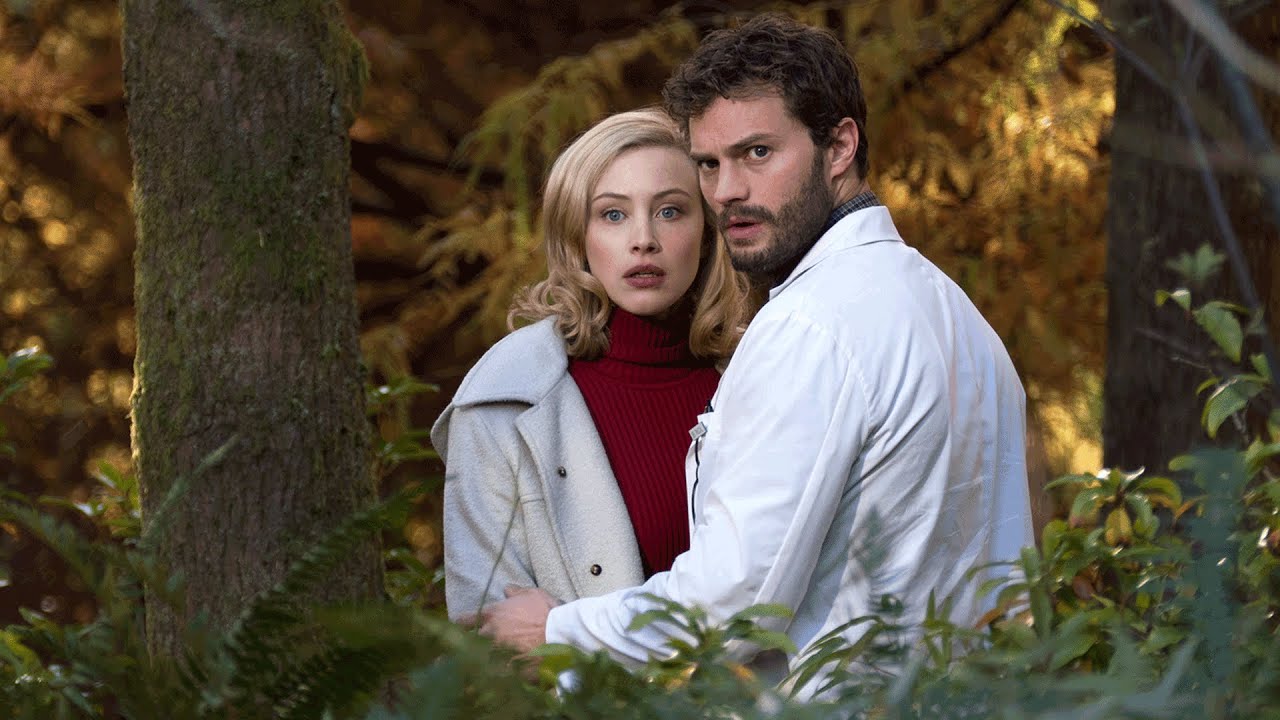
Zo beschouwd schijnt The 9th Life of Louis Drax allereerst een doorsnee 'whodunit', maar dan had Aja zeker voor de eer bedankt. Voor een regisseur met uitsluitend horrortitels in zijn zak geen gedweep met standaard misdaadonderzoek. Nee, daar moeten bovennatuurlijke elementen, zoals engelen en zeemonsters, aan te pas komen wil het interessant worden. Dat leent zich prima voor de sfeer van jeugdig avontuur die de film aanvankelijk uitstraalt en een jonge doelgroep doet vermoeden. Al snel blijkt echter dat het hoe en waarom achter Louis' leed minder fantastisch, maar vooral duisterder en schokkender is dan verwacht. Het exotische element van The 9th Life of Louis Drax pakt daarbij misleidend uit en slaat dood. Wie met een kinderfilm van doen dacht te hebben, vergist zich behoorlijk. De film ontaardt in een thriller waarin optimistische fantasie plaatsmaakt voor zwaar drama over menselijke pijn en gestoorde ouder-kindrelaties. Op zich geen onaardige wending, ware het niet dat serieus drama aan Aja verspild is.
Uiteraard baseert Aja dit drama slechts op het bronmateriaal van schrijfster Liz Jensen. Maar gezien zijn staat van dienst is het niet verwonderlijk dat hij visueel flink uitpakt wanneer het script hem dat toestaat. Aja leeft zich veelvuldig uit met licht/donkercontrasten en stemmingmakende halo's, waardoor de film absoluut sfeerrijk is. De overdreven spookachtige soundtrack had wel een tikkeltje minder gemogen. De stijlmiddelen houden het verloop van de eerste helft enigszins intrigerend, ondanks de menselijke tekortkomingen naast al het mysterie. Want tegenover de vraagtekens rond het lot van Louis wordt een potsierlijke plotlijn geplaatst over een verhouding tussen moeder en dokter, beiden met het uiterlijk van een supermodel. Het tenenkrommende subplot mag dan uiteindelijk in dienst van Aja's grote misleiding staan, dat het lachwekkende trekjes aanneemt zal hopelijk toch onbedoeld zijn.
Eveneens niet bevorderlijk voor onze band met de hoofdpersonen is het feit dat de titelfiguur eigenlijk niet zo'n aardig kereltje is. Tijdens het voortdurende onderzoek levert hij commentaar op zijn situatie en zijn verleden, à la het inhoudelijk soortgelijke (en ook al niet beklijvende) The Lovely Bones, maar erg sympathiek is hij niet. Hij stookt tussen zijn ouders en doodt zijn hamsters. Vloeit dit alles voort uit een onverwerkt trauma rond zijn bekvechtende opvoeders? Met de achterliggende redenen heeft Aja schijnbaar minder affiniteit dan met de bovennatuurlijke kanten die hij doet vermoeden. Hij verliest zich in Louis' fantastiewereldje en sleurt ons daarin mee, terwijl dat uiteindelijk als bijzaak, en Louis als bijfiguur in het leven van zijn ouders, bestempeld wordt. Dat Aja ons hardhandig uit die fantasie haalt voor een naargeestige climax vol kommer en kwel die niets meer wegheeft van de vrolijk gestemde opening, is ronduit bezwaarlijk. Aja jongleert losjes met allerhande genres, maar balans wordt node gemist in het uiteindelijk allerminst luchtige geval Louis Drax.
zaterdag 11 juni 2016
Today's Review: Warcraft
Up to date again.
Warcraft - Recensie
Judging from the on-again, off-again subtitle The Beginning, it's clear Universal Studios hopes for this first entry into the Warcraft film franchise not to be the last. A ton of money has been thrown at the screen on a project that has been in development for nigh a decade to entice both fans and ignorant audiences alike, but the best intentions regardless, it's unlikely the film will sit well with the latter demographic, while it remains to be seen whether it'll be to the liking of the former. After all, the gamers are simple spectators on a quest played by Duncan Jones and his team, rather than their own. General viewers meanwhile get treated to a grand and supposedly rich fantasy universe for which they have a tough time developing a feeling, considering Warcraft only forms the tip of the proverbial iceberg.
The World of Warcraft is vast and extensive, yet a film franchise has to start somewhere explaining it all. The Beginning addresses the origin of the wars between Orcs and Men, so it is said in the opening narration. Which also proves a major spoiler to the movie's own plot, considering the outcome of it all has already been determined. While much of the movie follows a minority of Orcs attempting to establish a truce with the world of Men they just invaded, with that opening statement in mind, there's few narrative surprises in store for us. Which doesn't mean we don't feel for this peaceful, noble Orc warriors, who find themselves a pawn of a sinister force's greater schemes to suck this world dry of life like it did their own home before. Brought to life by the latest motion capture innovations, the movie follows the new path of creating convincing digital characters based on intense acting performances, in the same style as the recent Planet of the Apes movie so successfully. It works, as these are some of the finest Orcs we've seen on the big screen thus far.
Alas, the same cannot be said for their human counterparts. The noble knights and conniving warlocks of Azeroth aren't nearly as interesting to behold as their fresh enemies, a victim of both dull, generic fantasy writing and uninspired performances. Though there's definitely a pool of talent assembled here, none of these actors truly seemed to have affinity with the exotic subject matter. All the silly spells and swashbuckling sword moves can't change that, and there's plenty of both to go around. In fact, Warcraft fanatics will recognize plenty of everything from their beloved games much to their enjoyment and to the detriment of ours, the casual viewers not acquainted with this realm. Especially in the first thirty minutes of the movie, the plot travels from one outlandish location to the next without allowing us much room to absorb it all, get to know its rules or develop a sense of geography for the whole. While names like Ironforge and Stormwind are no doubt iconic nomenclature to the fans, they never rise above the sound of generic fantasy to inexperienced ears. Same can be said for the other inhabitants of Azeroth: Dwarves, Elves and the like are briefly seen here and there but otherwise play no part.
Undoubtedly there's more to the World of Warcraft than what's shown here, but for the general audience, what realms are served never really click. It all looks fabulous but none of it makes us truly care on the same level as the Lord of the Rings movies did. Whether the fans will absorb this take on their beloved franchise as much as they did their interactive equivalent remains to be seen, but the studio better hope they do. Other audiences at best get a decent two hours of generic fantasy entertainment out of it, but nobody will be converted to the Warcraft cause. Which, considering the cost of this hugely expensive movie, might easily suggest The Beginning will also prove the end for the Warcraft film franchise.
vrijdag 5 september 2014
Today's Triple News: dark equalizer games
It took a while for worthy news to appear online, but after a week of not posting any, I got back in shape:
http://www.moviescene.nl/p/157083/nieuwe_trailer_monsters_dark_continent_
Wow, the scope of this franchise certainly got a lot bigger. In fact, we can finally speak of a franchise now. Not that these are positive developments per se. It's happened countless times before that a cheaply produced movie that connected with an audience got one or more unwanted sequels that failed to do so again. Even though Monsters made its money back (it was hard not to, considering its shoestring budget) and its director, Gareth Edwards, has since gone on to dabble in big budget, heavy FX films like Godzilla and now Star Wars, I doubt many people will be familiar with the original movie when the sequel hits theaters. In fact, I kinda suspect this will be released straight to VOD and the home video market in the Netherlands. It hasn't got much going for it to warrant a theatrical release here. There's no big names in the cast, it's not released by a major studio and the Monsters franchise won't ring a bell to so many people. Apart from the home cinema market, this is really the stuff of film festivals and such (bet we'll be seeing this on Imagine 2015!). Considering Monsters: Dark Continent, too, is done on not that large a budget (though still considerably more than the peanuts its predecessor cost), that doesn't necessarily mean the movie is doomed in tersm of boxoffice. Wouldn't surprise me if this too made enough dough to excuse a third installment. Again without Edwards, who will be slaving away on Godzilla 2 in Hollywood by that time.
http://www.moviescene.nl/p/157093/nieuwe_trailer_en_poster_the_equalizer
Though there's some good people in the cast, this movie doesn't excite me in the least. Man with a shady past and a talent of getting things done the violent way turns vigilante and fights the mob on his own. Nothing new here. Except maybe it's the Russian mob ingredient, as muscle flexing Russians are kind of a thing in the media right now. Denzel Washington seems very capable in the lead role. Also not a surprise, as this character bears similarities to his persona in Training Day, which, under the guidance of the same director, won him an Oscar over a decade ago. Seems like actor and director figured they might find similar success again doing a similar thing. At least Marton Csokas looks positively creepy as the Russian mob boss (which I know perfectly well he's capable of, as he's an underestimated character actor in my mind) and Chloë Grace Moretz sheds her Hit Girl image a bit by playing the victim for once. She makes a cute underage prostitute, enough for any middle-aged man to get sentimental over when she's taking punches in public. Of course, this movie will do well enough because people keep falling for runaway vigilantes effectively fighting a one-man war against crime. That's what we all wished we could do when it came down to it, eh? I bet Washington will succeed in his noble quest in The Equalizer, as there don't seem to be many surprises here otherwise. He'll probably die in the process though, or something like that. Unless they want to keep an opening for a second film. Remind me again, why did this typical action flick take precedence in IMAX over the visually much more intriguing The Maze Runner?
http://www.moviescene.nl/p/157114/eerste_poster_katniss_voor_hunger_games_mockingjay
It took a while, but there's finally a Mockingjay teaser poster for Katniss Everdeen too. Virtually the entire supporting cast had preceded her until now, either in Capitol prisoner gard or full-on revolutionary soldier gear. Now that the main character has been added to the teaser campaign, it's high time the visually more enticing one-sheets were rolled out. If Catching Fire's poster campaign is any indication, it seems like Mockingjay will easily outdo it. Recurring theme of course being the Mockingjay itself, which already made its presence known on virtually all of the earlier ad artwork. It's done more subtly on this latest teaser poster though, but the message is pretty clear as it leaves little to the imagination that once again the nature of Katniss as a symbol for rebellion against tyranny (whether she likes it or not) is emphasized. And Jannifer Lawrence's backside looks good too, as always.
maandag 9 juni 2014
Today's Review: Godzilla
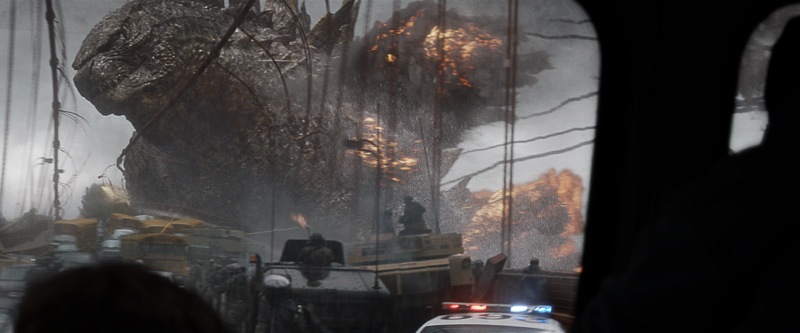
Godzilla:
****/*****, or 7/10
You
can't keep a classic monster down. All you can do is keep him locked
in the fridge for a while, until the time is right to introduce him
to a new generation. And so it is with that most iconic King of
Monsters, Godzilla. Toho, the Japanese studio behind the creature,
hasn't released a new Gojira flick of its own ever since his
big 50th anniversary showdown Final Wars in 2004.
As the Big G is turning 60 this year, it seemed about time to revamp
him once more for an international audience. Teaming up with studio
Warner Bros., making audiences forget about the previous American
remake, the dreadful 1998 Roland Emmerich movie, proved the least of
challenges. This time, the director's chair was given to somebody who
had proven experience carefully balancing human drama and monster
action, the man behind the guerrilla style low budget Monsters,
Gareth Edwards (whose credits until that point included only that
movie). His take on the giant reptilian behemoth makes for one of the
finest Godzilla movies yet, but it also frustratingly
illustrates just how little you can do with the character.
Thematically,
Godzilla has always been an obvious case of 'man versus nature' and
this time proves no different. Man's folly playing with powers
(usually atomic) beyond his control that end up wrecking civilization
has been a prime franchise message since day one, but as it has been
a decade since it was last sent to audiences, this is as good a time
as any to reapply it to Godzilla's latest origin story. However,
Edwards opts to focus most of the plot's attention not on examining
Godzilla's existence, but his foe's instead. This story thread is
neatly interwoven with the fate of the Brody family. Living in Japan
in 1999, father Joe (the always formidable Bryan Cranston) and mother
Sandra (Juliette Binoche) work at a Japanese nuclear power plant,
where things soon mysteriously go awry, leading to the plant's
destruction and Sandra's dramatic death before her husband's eyes.
The area is soon declared a quarantine zone, but Joe can't stop
investigating the strange events of that fateful day for the next 15
years, alienating him from his son Ford (a rather bland and forgetful
Aaron Taylor-Johnson).
When
his father once again causes trouble with his illegal excursions into
the forbidden zone, the now adult Ford, a US Navy officer, indulges
him to present his case or shut up about it forever. Their father-son
bonding trip into the zone makes for a frightful, haunting return to
their old family house in a now abandoned, rundown city. Alarming
news imagery of the Fukushima area in the wake of the terrible
tsunami and the nuclear disaster that followed is successfully evoked
by the ruined town set to give this Godzilla movie a 21st
century update that accordingly makes it feel sufficiently current
and underscores Godzilla's original themes still claim merit.
Stumbling onto a secret government operation, the Fords are
confronted with the 'MUTO', a giant insectoid creature, millions of
years old, that has laid dormant for countless ages, but is now
waking up. And all the military might in the world is not gonna stop
it from following its natural instincts to feed on atomic energy –
it eats nuclear bombs, which kinda sounds like a solution really –
and procreate. To the latter end, it has signaled a wake-up call to
its mate and the two beasties proceed to hook up again, likely to
humanity's demise, with more tragic consequences to the Fords,
directly caught in its wake.
Edwards
spends quite some time setting up the MUTO's motivations and the
plight of the Ford family, soon making you ask a most pertinent
question: where is Godzilla? It must be stated that there is
surprisingly little scenes of the actual Godzilla in this movie, but
when he finally does appear, he does so with a vengeance. The giant
reptile is the MUTO's natural enemy of ages past and as one big bug
called the other, so too their predator woke up to find its prey, as
expert Dr. Serizawa (Hollywood's obligatory Japanese actor, Ken
Watanabe) explains, while donning a foreboding look of concern and
alarm that irritatingly stays for the entire film. The name Serizawa
will sound familiar to Godzilla aficionados, and is just one of many
little tidbits Edwards has lovingly thrown in as an hommage to the
Japanese movies. The MUTO's, however, are a new invention
specifically for this film, but they serve their purpose adequately
for resurrecting Godzilla and providing for a good old-fashioned
Kaiju brawl at the movie's climax. Just like the Godzilla themes
of old have hardly changed, so too does the audience's taste for big
monster battles remain, as Edwards all too clearly understands. It
just takes quite a while to arrive at that point in the film where
the fight finally goes down. We have to sit through many a scene of
human character drama that ultimately doesn't make us really care
about their plight before we get what we want. Though patience is
required, it cannot be denied that the introduction of both Godzilla
and his adversaries is slowly but surely built to a crescendo. When
the Big G finally does appear for the first time, it will be hard for
fans to repress a chill at this reunion with their old friend. It
would have been even more effective had the classic Godzilla score
been applied, but the current soundtrack proves effective enough.
It's
clear Edwards sees no point in redefining Godzilla's look, as
Emmerich did before, as this new incarnation of Godzilla stays rather
true to the recognizable Japanese forms. Of course, this being a big
blockbuster movie, the beast has grown in size considerably to
accommodate the humongous budget and the expected onslaught it wreaks
on both human cities and the military forces thrown at him. Edwards'
respect for the classic Kaiju movie approach of men in suits playing
the monsters shows, as you'd almost be inclined to think Godzilla is
brought to life again in just that manner. Even the MUTO's motions
seem decidedly human at times, but make no mistake: all three
monsters are fully digital creations, not guys in suits smashing
cardboard sets. Nevertheless, Edwards' ode to sixty years of
'suitmation' is well appreciated. Still, the notable differences in
Godzilla's appearance compared to his predecessors, particularly his
rather obese bodily features, are bound to tick off some fans.
Unjustly
so, as this Godzilla, both the execution of the titular character and
the movie as a whole, form a vast improvement over the previous
American capitalization of the Japanese property. That said, in terms
of story Edwards adds little novelty to the previous fifty years of
Gojira. The message remains the same, and is delivered in a
rather serious fashion, as this particular Godzilla is certainly one
of the darker takes on the character: for Edwards, giant monster
movies are a serious business and there isn't much room left for
levity. The usual tendency towards flat human character development
interspersed between delightful monster battles remains. The fact is,
there's only so much you can do with a giant monster. Edwards will be
hard pressed to find innovative angles to take his successful reboot
in for the next installments. However, as this movie demonstrates,
times haven't changed enough for the cautions against man's tampering
with nature to subside, nor has the audience changed to such an
extent they can't appreciate a good ol' titanic monster clash on the
big screen. Even if the upcoming sequels fail to deliver notably new
directions for the franchise, clearly Godzilla has enough of a fight
left in him for another fifty years.
woensdag 4 juni 2014
Today's Double News: Hercules into the wild
How's about sum' news, yo?:
http://www.moviescene.nl/p/156010/nieuwe_trailer_hercules_online
http://www.moviescene.nl/p/155999/opvolger_nieuwe_wildernis_in_de_maak
The rule that success at the box office guarantees a sequel is not limited to fiction films. When enough money is made, even documentaries require a follow-up of sorts by an insatiable studio. Of course, the 'of sorts' bit is what is most poignant here, as it's open to interpretation just how such a sequel should built on what came before. After all, a documentary dealing with a specific subject can basically cover everything there is to say about that and not leave room for more of the same about the subject, thus rendering a sequel a blatant redundancy. So it is with De Nieuwe Wildernis in my mind. The point has been made well enough: the Oostvaardersplassen are a beautiful nature preserve that doesn't actually preserve nature as it used to be, but nature as it can be, aided by humanity's graces. You can shoot more breathtakingly splendid shots of horses prancing about, foxes hunting or all manner of birds generally being pretty, but it would add little of consequence. A new angle is what makes it stand out, and it seems distributor Dutch Filmworks has found one. And so this sequel isn't really a sequel, just equipped with a title - the Dutch version at least - that creates all the right expectations from an audience that fondly remembers its "predecessor" and hopes to be dazzled by nature's beauty once more. And yes, it does show the Oostvaardersplassen again. But not solely that area, as it is incorporated into a mosaic of European nature in general. And since the movie is made by Frenchmen who conceived of their angle independently from De Nieuwe Wildernis, expect a different kind of documentary. It's good to know Dutch audiences will soon get the chance to be familiarized by the splendour of forests and wildlife outside of Holland too, so they'll know where to plan their next vacation. As for the possibility of a direct follow-up, I think it surely exists. There's other nature preserves in the Netherlands worthy of being immortalized on film, you know. How about National Park the Meinweg in Limburg? Or the Hoge Veluwe? Why not focus on the wacky antics of beavers in the Biesbosch, that ought to attract a crowd. An actual sequel to De Nieuwe Wildernis really isn't outside the realm of possibility. Just as long as people stay away from the depicted area after having been delighted by the film instead of going around trampling nature's beauty en masse, I'm all for it.
This second Hercules trailer makes me a bit more hesitant about the project that the first. Those fabulous Twelve Labours of his only form part of the background story apparently, so most, if not all, of the neat monster action seen in this trailer will not be featured as extensively as I had hoped in the movie proper. Instead, the plot will focus on Herc's latter days as a mercenary, saving a kingdom and a beautiful princess from tyrannical oppression. Sounds a bit too familiar a plot for my taste. Not much different from what The Legend of Hercules was all about earlier this year, except with a bigger cast and budget (good thing too, makes it look less than a crappy video game). Also fairly reminiscent of Dwayne Johnson's own The Scorpion King. Still good for a laugh no doubt, but not as spectacular as recanting all Twelve Labours in full would have been. And there's still no movie that does justice to that complete Hercules epic, it's always served in bits and pieces instead. This story would really be better suited for a TV series, also considering its rather episodic nature. I wouldn't be surprised if that were to happen eventually (preferably on HBO with lots of nudity and gore and all the other niceties of life). But for now, we have to make the best we can with partial retellings of the myth, some good (hopefully), most not so much (like the last one). I remain skeptic as to what category this particular rendition will end up belonging to, though I can guess.
zondag 18 mei 2014
Today's many little bits of News
Here's a few scoops I posted on MS in recent days. They just keep piling up, don't they?:
http://www.moviescene.nl/p/155773/eerste_teaserposter_minions
http://www.moviescene.nl/p/155772/nieuwe_poster_guardians_of_the_galaxy
http://www.moviescene.nl/p/155749/trailer_monsters_dark_continent_online
http://www.moviescene.nl/p/155708/channing_tatum_wordt_x-man_gambit
Channing Tatum as Gambit? I vehemently object to this, though I get the reasons why he might be considered suitable for the role. Gambit is girlbait, he's a rogue (get the pun there?), he's charming and sultry, and these are all qualities the female part of humanity generally agrees Tatum possesses. The argument Tatum 'understands Gambit because they're both from the American South' is baloney: there's a vast difference between Gambit's home state of Louisiana and Tatum's native Alabama, even though they lie next to each other. My major issue with Tatum's casting is they didn't ask my opinion beforehand.
No, that's not it.
It's what Tatum brings to the franchise in terms of starpower that vexes me. Tatum by now is a firmly established hot moviestar that mostly appeals to the female demographic (not X-Men's main audience for sure), more so for his looks than for his ability to act. X-Men by now is a firmly established hot movie franchise that mostly appeals to the male demographic (age 12-35 or thereabouts). Obviously adding Tatum to the mix is a tactic by the studio to attract new audiences, and given Tatum's status he's very likely gonna play a major role (he'll no doubt take a major salary too). So far, the franchise hasn't resorted to casting big Hollywood stars. Sure, Hugh Jackman is one now, but he wasn't when he first started playing Wolverine. Plus, Jackman cares about his character, which is why he keeps coming back to play him even though he has no contractual obligations or acting challenges in store for him to do so. That's character loyalty. Tatum has gone on record stating he's not all that much into X-Men, though he claims to like Gambit. Duh, otherwise he wouldn't have accepted the part. But this is likely just promotional bull. I doubt he read the comics or watched the cartoons just because Gambit occasionally appeared in it. I fear Tatum is gonna detract audience attention away from what really matters about X-Men. In Gambit's solofilm this is not that big an issue (though Wolverine's solofilms left a lot to be desired compared to the proper X-movies). But in X-Men: Apocalypse, you need a strong ensemble of characters performed by team players who don't mind taking a backseat if the plot demands it (Anna Paquin's Rogue being scrapped from Days of Future Past without the actress complaining because it's for the greater good is a good example of taking one for the team). That's not something I think Tatum easily accepts. Also, the movie is likely to be built around Tatum (and Jackman too, still) to accomodate his star status. Certainly for X-Men: Apocalypse, that doesn't bode well, as this story deals with a team of mutants more than ever instead of it centering around a single character (apart from Apocalypse himself in a way). It seems a wrong time to start calling special attention to one character, especially one that was seen before but played by another actor (Taylor Kitsch). I would much prefer it if Gambit was re-introduced in his own film first, then appeared in a group effort later. Kinda like The Avengers, from which every studio owning Marvel property takes a page these days. In this case, the wrong page I'd say.
Monsters was a small film shot on a low budget in a guerilla style of filmmaking. It seems the sequel Dark Continent takes a different route. I didn't even think this unusual creature feature got enough audience attention to warrant a successor, but on that small a budget, profit isn't hard to accomplish and so a sequel is a given by the rigid laws of Hollywood. Obviously on a bigger budget, considering the visual effects (and this is still only the trailer too). It seems that's where most of the money went, since the plot feels fairly generic and there's no big names attached (playing a bit part in Game of Thrones gets you noticed but doesn't make you an instant star, Joe Dempsie). I don't think a second film was needed or desired by those who saw the first film, and it seems the original director Gareth Edwards agreed with me, as he's hardly involved with the production of Part 2 at all. He's listed as 'executive producer', but that's saying nothing. Stan Lee is listed under the same credit for virtually every Marvel movie, only for coming up with the characters back in the days, but otherwise doesn't do a thing, other than appearing in his cameos for fun. Edwards of course traded a shot at directing the sequel to his baby in for doing the remake of Godzilla. Good thing too, since you'd need a monster enthusiast to get the King of Monsters right, which I hear he has done. It seems there was little more to add to Monsters though, and so far the trailer for Monsters: Dark Continent proves just that.
Now that's what I call a bitchin' poster! Okay, so it's in many ways identical to the previous posters for Marvel Studios' movies, save for the different setting and characters of course. For now, I like to think of that as studio consistency, which is something Marvel excels in as it's continuously expanding its Cinematic Universe. And it works on this poster better than ever. There's also more than a little resemblance to the way Star Wars posters were composed (especially the classics by Drew Struzan), and that's also not a bad thing to say about promotional material for an ambitious space opera like this. This poster is colourful, appealing and otherwise just plain badass. I hope the movie delivers on the goods promised here.
The first poster for Minions, that's a different thing entirely. All it shows are a few characters, a title and a date set against a plain white background, but nothing else is needed for a teaser poster. At the sight of the minions, kids will know enough. And their parents who will pay for seeing the film in theaters too, poor things. But is a film about the minions themselves a good thing? Don't they work better as supporting characters? I see a kind of Smurf motive here. Other than the fact these little creatures already feel similar to the Smurfs by their simple but easily recognizable colour coding and their own invented language, the Smurfs first appeared in a comic album in which they were not the main characters, but they soon came into their own and few people remember the names of the characters in whose story they co-starred (naturally, I do). Since then, they have taken popular culture by storm worldwide. I doubt the minions will witness a similar fate, but it's hard to deny they steal the show in these Despicable movies. It's up to the first Minions film to prove they can do without their evil master in the future. And if they fail, we still have the Smurfs.
zondag 23 februari 2014
Today's Poster: the big G returns to do what he does best
I found another neat new poster to post on MovieScene:
http://www.moviescene.nl/p/153929/nieuwe_poster_godzilla
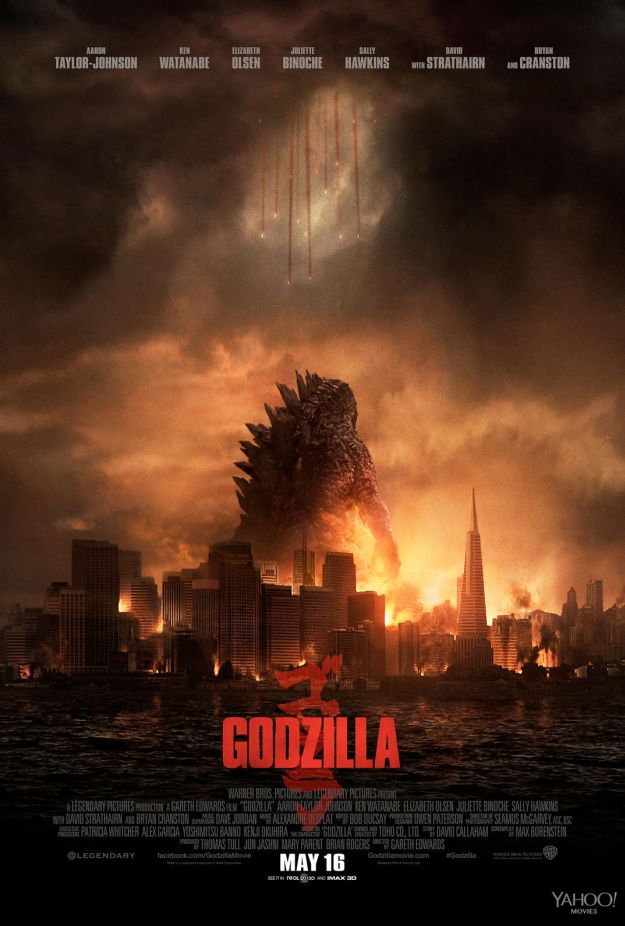
This is how you do a good poster, at least in the case of a remake (which is sort of what this movie is, though there's plenty of room for new material). You refamiliarise your audience with the character in question, in a setting that brings about a shock of recognition. It reminds you what you remember most about what you liked about the original character, which is thrashing cities in Godzilla's case. If you like Godzilla at all, that is; which a lot of people apparently do, considering the 28 original Japanese movies and the two American remakes, this being the second. It's a giant monster movie staple, but spectators still get a kick out of seeing human habitat laid to waste at the feet of some ferocious, titanic creature. Especially if the city being demolished is familiar to them (hence why these movies usually tend to favour big landmark cities, obviously). At the same time, this movie makes you curious enough not to get overly negative about this iconic character being milked again for a new generation, by adding the element of curiosity. What are those falling lights above Godzilla's head? Is he gonna get mixed up with alien lifeforms with nefarious schemes again, maybe? This poster also adequately displays what Godzilla is all about (or at least, should be), functioning as the ultimate nuclear nightmare destroying human lives by the thousands after having been resurrected by man's folly of playing with powers too big and volatile for his control or understanding. Nevertheless, if Godzilla will indeed fight extraterrestrial antagonists or rivalling giant mutations, he may also be mankind's only hope. Whether 'Kaiju' enthusiast Gareth Edwards (Monsters) will opt for either take on Godzilla, or just go for both, remains to be seen. That he gets Godzilla however seems clear from this poster. Plus, unlike what happened to the previous Godzilla, he honours the original Japanese design by staying close to it, instead of giving him a giant make-over as occurred in 1998. That also can't hurt.
Labels:
action,
aliens,
dinosaurs,
gareth edwards,
giant monsters,
godzilla,
gojira,
japan,
kaiju,
monsters,
remake
maandag 20 januari 2014
Today's Mini-Review: Deep Rising
Rating:
****/*****, or 7/10
Starring:
Treat Williams, Famke Janssen, Anthony Heald
Directed
by Stephen Sommers
USA:
Calimari Productions, 1998
Before
Stephen Sommers sank his teeth in remaking The Mummy (and soon
after milking it dry with various unwarranted sequels and spin-offs)
and before going totally overboard with the remaining classic
Universal Horror monsters with the lackluster Van Helsing, he
had already shown his affinity for monsters with this delightful big
budget B-movie. Assembling a diverse cast, including several notable
character actors that would later be seen in more ambitious fare,
Sommers brings us an excellent action chiller set on a luxury ocean
liner on her maiden voyage that has the misfortune of being boarded
by a band of ruthless brigands. Their trouble is something even more
insidious beat them to their target and swiftly proceeds to move
against them as well.
Treat
Williams (a veteran of all kinds of TV and movie work, just not of
the memorable kind) stars as smuggler captain Finnegan, who has taken
on the thankless job of transporting a group of dangerous
testosterone dominated mercenaries (think Aliens, except these
are bad guys) to the Argonautica, a gargantuan cruise ship and
playground for the rich and wealthy, that has just embarked on her
first trip across the South China Sea. Offloading the volatile,
loudmouth band of privateers – among them Djimon Hounsou
(Gladiator, Blood Diamond), Wes Studi (Avatar,
Hell on Wheels) and
Jason Flemyng (Stardust, X-Men: First Class) – should
be all in a day's work, but unfortunately all their plans are shot to
hell when it turns out something far more sinister and deadly already
boarded the boat and ate most of the passengers and crew. Stumbling
upon a few survivors, including sexy con woman Trillian (Famke
Janssen), the gang must soon alter their intentions as they are faced
with ghastly sea monsters that mean to slither their grotesque
tentacles all around their bodies to suck 'em dry. At least the
revelation that the mercs planned on torpedoing the ship after they
got away with the money allows them some firepower to retaliate and
save their skin, provided someone is left alive to blow the boat
sky-high. It's soon a matter of 'no honor among thieves' as it turns
out nobody here can be trusted, not even in the face of getting
devoured by slimey sea serpents, of sorts. Amidst pirates and sleazy
cruise ship managers it's hard to step up as the voice of reason, but
Finnegan attempts to do so anyway and at least succeeds in convincing
Trillian to bail out while they still can, also making for some
semi-romantic tête-a-tête between them that thankfully never gets
in the way of the real fun but actually gives them both the necessary
rogue-ish character. Unfortunately, Finnegan's contractors won't let
them walk away and are set to complete their mission, even all
through the maritime monster infestation that threatens to kill them
all. Working their way through the vessel, Deep Rising's plot
soon develops along the old fashioned 'ten little Indians' line, but
the pleasure to be had proves none the less of it.
Unlike
most of Sommers' monster movies soon to follow, Deep Rising
feels like an actual entry into the horror genre, instead of catering
to the 'PG-13 happy' crowd of Hollywood execs who want to make their
films as accessible to most demographics as they can, which led to
all his subsequent movies merely playing with horror conventions but
instead devolving into typical FX driven blockbuster spectacle.
Nevertheless, Sommers' willingness to throw in CGI where the budget
allows him can already be felt in this film as the creatures often
look overly digital (not surprising, considering digital effects were
still largely new territory around this time) and particularly
towards the climax end up being overused, but still the movie
contains its fair share of suspenseful and gory moments. If you ever
wondered what a half-digested human being looks like, here's an
answer for you and it is kinda disturbing to behold. Despite the
uneasy reliance on digital FX to allow the monsters to do their
horrific killing, in terms of sheer fast paced action interspersed
with moments of aptly timed comedy delivered by a cast that seems to
thoroughly enjoy itself, Deep Rising proves to be about as
entertaining as they come without feeling the need to be more than
just solid popcorn enjoyment. There's a reason the film's finale
comes with an hilarious open ended note – without the usual sequel
pretensions – that underscores that everything that came before
should not have been taken at all seriously, in case that was not
perfectly clear from the onset of the film. In the annals of
'delightful movie pairings', Deep Rising's 'modern pirates
versus sea monsters' deserves to be worthy of some credit.
Ultimately
this effective horror extravaganza failed to attract an audience and
became a typical box office bomb. Rather undeservedly so in my mind,
as I consider this a vastly underrated, hugely entertaining
action/horror flick. If you like dynamic action on the high oceans
and you don't mind a bit of sea monsters slaughtering humans
throughout, this is about as good as it gets. And if out of that
sentence only the 'action' part appeals to you, Deep Rising
definitely doesn't sink in its efforts.
maandag 6 januari 2014
Today's Mini-Review: Day the World Ended
Rating:
***/*****, or 7/10
Starring:
Richard Denning, Lori Nelson, Mike Connors
Directed
by Roger Corman
USA:
Golden State Productions, 1955
Truth is,
few of the films from Roger Corman's early days of directing schlock
movies for a dime are 'good' in the usual sense of the word. In fact,
most (if not all) of them are cheap exploitation quickies shot for
next to nothing so they could do nothing but make a profit in
drive-in theaters screaming for content to cater to teenage love
birds more interested in each other in the dark than in the goings-on
present on the big screen in front of them. Flicks like The Beast
with a Million Eyes (1955), Swamp Women (1956) and It
Conquered the World (1956) nowadays are interesting only to geeks
revelling in bad taste or film students exploring the fringes of
acceptable study material. Still, the occasional sort-of decent film
can be found among Corman's early work for those with enough
patience and the stomach for digesting campy creature features from
the Fifties. Day the World Ended I count among these very few.
Stories
about man's inability to coexist in peace with his fellows, even when
such cooperation would be to both parties' mutual advantage in the
struggle for basic survival, have often resulted in fascinating
pieces of audiovisual excitement studying the human condition and
continue to do so to this day even when you thought little more could
be added to the subject, except for different, usually
interchangeable threats. You think people watch popular shows like
The Walking Dead only for the excessive gore and neat-o zombie
make-up? Think again: they watch it for the gripping human drama
involved in living together under extreme circumstances. Corman
applied the same formula to this post-apocalyptic tale of tragedy
almost sixty years ago, as he tells the story of a small band of
survivors who seek refuge in the same remote mountain location when
the bombs finally fall, a typical fear of the Fifties where such an
occurrence never seemed so unlikely. Among those that would live are
a survivalist, his pretty daughter, a geologist, a loudmouth crook,
his slutty girlfriend and a man with a terrible secret. Of course
tension quickly mounts between these disparate people over the usual
things, like who's in charge, who rations the food and who ends up
dating the daughter. Most of the film consists of people arguing, but
fortunately the movie only lasts 79 minutes and the man with a secret
mutates into a horrifying monster (read: guy in a silly suit) to
spice things up a bit. Corman proves quite adept in suspensefully
paving the way for the creature's first appearance between all the
petty bickering. And even though you know the actual monster isn't
gonna succeed in living up to this buildup to his rampage, if you
know and accept what type of movie you're watching before you start,
you might be able to get a kick out of this film regardless of the
total lack of production values, even if only for laughs (who ever
said Corman made serious movies anyway?). Aficionados of Fifties'
Sci-Fi films will also be grateful to see Richard Denning star as the
handsome scientist and noble man of action, as the actor is almost a
staple of the science fiction films of this era, starring in genre
pieces like the classic Creature from the Black Lagoon (1954)
and less well remembered pictures like The Black Scorpion (1957)
and Target Earth (1954).
The
dystopian themes of Day the World Ended, effectively
underscoring that man is his own worst enemy (hardly a novel notion
in 1955 to begin with), have since been addressed in other films and
television ad infinitum (compare various episodes of the different
Twilight Zone series, as well as recent films like The
Divide and The Mist for example) yet continue to fascinate
and appeal to people, who cannot help but wonder if this was really
what it came down to when the world went to hell. Corman crafts a
fairly entertaining film out of the subject matter, which remains one
of his best, though that is hardly saying something. Though I
wouldn't exactly recommend this type of film to anyone, I can
honestly say that if you ever fell the need to go sit and watch an
obvious cashgrab B-movie from a master in creating such fare the
likes of Corman, it might as well be this one. You could do far worse
and really, really waste your time.
zondag 29 december 2013
Today's Mini-Review: Daybreakers
Rating:
****/*****, or 8/10
Starring:
Ethan Hawke, Willem Dafoe, Sam Neill
Directed
by Michael & Peter Spierig
USA:
Lionsgate, 2009
You'd
think that after 80 years of vampire movies there's little 'fresh
blood' to be added to the genre, but Daybreakers proved such
pessimist thinking wrong. Containing one of the most intriguing
premises I've ever come across, this film puts a wholly different
spin on the notion of the undead thriving on the blood of their human
victims. In the not too distant future, a viral outbreak has turned
most of the world population into vampires, while regular human
beings have become quite the endangered species. Since the vamps need
human blood to survive while they are as immortal as usual, blood
shortages are increasingly threatening the societal status quo (which
remains remarkably human in appearance). A hematologist (Ethan Hawke)
works tirelessly on a synthetic blood substitute, experiments which
continue to fail, partially because the CEO of the company that
controls the 'real deal' (a deliciously sinister Sam Neill) is rather
keen to keep making the big bucks off rich vampires that can afford
genuine blood. Vampires or not, money is still the driving factor
behind it all, to the detriment of civilization. The situation is
getting ever more untenable as poorer vampires are so desperate they
start feeding on each other or even on themselves, causing them to
mutate into crazed bat people (a funny take on the ever present
relationship between vampires and bats, which otherwise plays no
significant part in this film); freaks that are brutally exterminated
by the authorities. Hawke's sympathetic scientist, made vampire by
his brother against his will, proves a guilt ridden person determined
to change this upside down world for the better and sympathizes with
what few humans remain free, continuously hunted by the vampire
military as they are. After aiding a group of humans evade capture,
he is contacted by an underground resistance movement, led by
ex-vampire Willem Dafoe, that aims to develop a cure for vampirism,
the only viable way for both humans and vampires to survive their
impending doom. Hawke accepts their invitation and joins their cause,
which soon pits him and the rebels against Neill's profit driven
tyranny.
Daybreakers'
strongest moments are found in its first half, as we explore a world
where vampirism is the normal state of being and society has evolved
to accomodate it. Since the vampires of Daybreakers adhere to
many of the archetypal characteristics of the genre, they also cannot
abide ultraviolet light, and therefore “life” takes place at
night, so commonplace items like houses and cars are designed to
protect against sunlight. In other regards, this world differs little
from our own, as the vamps work in order to pay their bills, buy
their blood and live their immortal life. The disturbing imagery of
humans forcefully strapped to transfusion tubes and slowly drained of
their life essence in huge factory like environments successfully
evokes comparisons to how we ourselves as a species treat animals in
the bio-industry for our own basic needs without allowing them any
shred of dignity and natural behavior. The vampire world is living in
its 11th hour, close to self-annihilation caused by plain
and simple greed of those in power who prove unwilling to change for
the common good, in some regards echoing our own inability to alter
our ways for the better in fear of loosing what we gained. In the
second half of the movie, Daybreakers sheds such symbolism and
largely replaces the exposition of its fascinating dystopia in favor
of more trite and true action scenes and an overabundance of
traditional gore (it's still a horror film, you know!), including some almost orgiastic blood baths of
famished vampires feeding. Whether society is ultimately changed for
the better is left somewhat ambiguous, as the movie underscores the
notion that vampires, for all their superior physical strength, are
still always all too human in their limited line of thinking. Though
it's a pity the movie doesn't end as strongly as it started, it
doesn't undermine Daybreakers' position as one of the more
ingenious vampire films to date, a far cry from the currently popular
image of these undead as sexy hunks to appeal to teenage audiences.
zaterdag 5 oktober 2013
Today's News: the big G stomps his way into a new teaser
Not done with MS news posting just yet:
http://www.moviescene.nl/p/150606/teaser_trailer_remake_godzilla_online
Seems a solid teaser trailer. We get to see enough of this film to get us interested - if your interest is ever at all piqued by this type of film - in the usual death and destruction Kaiju-monsters tend to cause, ending on the big reveal of the main antagonist, without showing him off too much, thus keeping us intrigued as to his total form. It seems Gareth Edwards (who previously directed the low budget guerilla shoot Monsters as an homage to Godzilla and similar creature features) has the utmost respect for the big beastie, judging from his all too similar appearance compared to his Japanese counterparts, as opposed to the previous American Godzilla, which was and looked too much like an overgrown iguana. Also, Edwards makes it clear this movie is all about Godzilla himself; there's no human characters in sight here, despite the cast boasting such names as Bryan Cranston, Aaron Taylor-Johnson, Juliette Binoche and the regular go-to Japanese guy for Hollywood flicks, Ken Watanabe. In fact, even the voice-over is not from any of the movie's standard cast, but a historical citation from Robert Oppenheimer. His chilling, haunting quote referring to the Bhagavad Gita is always a good choice when speaking in terms of nuclear holocaust, and in cinematic fiction, the offspring of such human folly, the giant monsters out to get mankind for its hugely irresponsible ways. Speaking of monsters, the teaser also indicates Godzilla is not the only big boy in this film. At least one other giant creature is visible, though it doesn't appear to be in perfect health anymore, undoubtedly having been knocked to smithereens by the big G's fire breath (you'd think after nigh on sixty years other Kaijus would know better than to mess with the King of Monsters!). Seems we can expect some decent Kaiju on Kaiju action - in terms of fighting, I mean! - besides Godzilla thrashing puny humans, as he also does best.
Overall, I'm teased. One thing's for sure: it can't actually be worse than the 1998 American attempt.
maandag 9 september 2013
Today's Mini-Review: Percy Jackson: Sea of Monsters
Percy
Jackson: Sea of Monsters:
**/*****, or 5/10
Second
Percy Jackson film, following the demi-decent, excessively
long named Percy Jackson & the Olympians: The Lightning Thief,
but being even more forgetful. This time Percy Jackson (Logan Lerman
again) and his fellow friends from Camp Halfblood, where all the
offspring of the gods sired on mortals are gathered for their safety,
set out on a quest to find the Golden Fleece in the so-called 'Sea of
Monsters', better known as the Bermuda Triangle. They do so to heal a
magical tree that protects their home with a forcefield that keeps
non halfbloods out, but which has been compromised since the tree is
dying. The Fleece contains healing properties that might save it, and
therefore, save themselves. Unfortunately a band of rogue halfbloods
with sinister plans led by the same dull villain from the first film,
the whiny demi-god Luke, are also seeking this magical MacGuffin so
they can use it to deliver the evil god Kronos, a fiery humanoid
terror, from bondage. The brave Percy and his companions, Ron and
Hermione Grover the – supposedly funny – Satyr and the “wise”
Annabeth (with racist attitudes towards Cyclopses), must beat them in
a race against time across the most dangerous sea of all to defeat
Kronos for once and for all. And they get no help from their divine parents,
which is a shame since they were played by terrific actors you just
can't get enough of (the likes of Sean Bean and Kevin McKidd) in the
first film. At least we are a little compensated by the appearance of
Nathan Fillion as the dashing entrepeneur Hermes, with a nod to
Firefly thrown in (which totally blows over the heads of the
target audience, but might make some older viewers chuckle). Like its
predecessor, Sea of Monsters feels very much like the 'Greek
myth' version of the first few Harry Potter films, complete
with prophecies and chosen ones, magic and monsters, and a
triumvirate – though of two boys and a girl, sadly lacking the
necessary chemistry – of young lead characters getting entangled in
one action driven situation after another. Unfortunately the movie
lacks the heart and soul that increasingly drove Potter and Co.,
while the plot tries to keep its head above water in an ocean of
gaping plot holes and overly digital FX sequences. Some of these are
at least exciting to a minor extent, like the fight against a metal
robot bull and the scene where the protagonists are swallowed by
Charybdis (basically the Sarlacc from Return of the Jedi,
except embedded in water instead of sand), but the rest of them is
nothing if not boring. There's an irony in the fact that old fantasy
films fondly remembered mostly for containing elaborate monster
fights done in stop motion, like those of Ray Harryhausen, have stood
the test of time, while their present day counterparts that try the
same with CGI prove oh so forgetful and will undoubtedly end up not
so universally revered in future years. If you look at the set-up of
this film, a plot dealing with the resurrection of the ancient Kronos
whose rise will cover the world in chaos coupled with one scene after
another of the main characters fighting digital creatures, Sea of
Monsters bears more than a striking resemblance to the abysmal
Wrath of the Titans, which was also a lousy sequel to an
already disappointing film that unsuccessfully tried to cash in on
the ever ongoing public interest in Greek mythology by getting itself
lost in people battling digital creatures. A shame really, since the
notion of the ancient Greek world of gods and monsters continuing to
simmer just under the surface of modern times but unseen by Muggles
everyday humans is worthy of a better execution. Oh well, if we want
to see old gods get mixed up with our contemporary world, there's
still Thor: The Dark World to look forward to.
dinsdag 9 juli 2013
Today's Review: Monsters University
Here's my latest review for MovieScene, of a certain recent Pixar movie no less:
http://www.moviescene.nl/p/148393/monsters_university_-_recensie
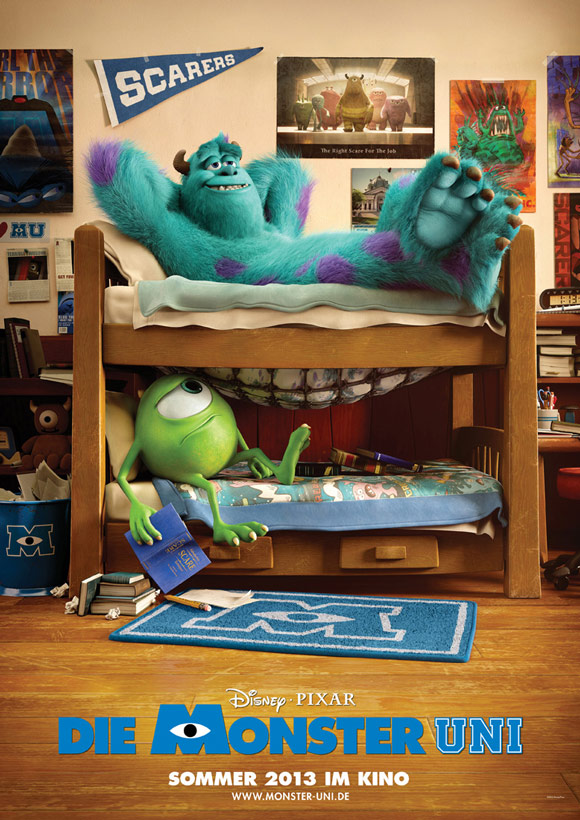
The review basically says it all. If you're too lazy to go through 900 words, here's as good a summary as I can ever give you: Monsters University is a fun Pixar movie, but it's not a particularly good Pixar movie. Though the movie looks great and is filled with all kinds of likeable little details as well as good jokes for both adults and kids, the story leaves much to be desired, as it's filled with every kind of college cliché imaginable, simultaneously being all too predictable. It's not a sheer work of genius as Pixar used to deliver (the predecessor Monsters, Inc. among those), but it's just a damn entertaining piece of work regardless. I guess that's all we can hope for from Pixar from now on, now that Disney's dominion and its tight creative grip is choking the originality out of the animation studio, thus having ended its golden age. But hey, we'll always have Monsters, Inc.! And The Incredibles, and Finding Nemo. Plus Ratatouille. And let's not forget the Toy Story trilogy. Or Up, or Wall-E. There's a lasting legacy for ya. Too bad about all the upcoming sequels to those...
dinsdag 17 juli 2012
The Movie Stars which were Visual Effects: Early Stop Motion and Realism
I'm
still on vacation - i.e. sitting at home and watching telly; can you
blame me with this weather? - and haven't taken the time to go and
watch any new movies to review yet (something I hope to remedy in the
next few days). I've been expanding the Movie Archives on an almost
daily basis, covering the B and starting with C, but you'll notice
little of that on the main page. Since I believe in the necessity and
inevitability of change (and could use a break from writing
mini-reviews), I thought I'd might as well dust of one of my old
papers and post it here, thus also expanding the Article Section. So
here's the first episode of a three-part miniseries concerning early
stop motion and the matter of realism. It's a fun little paper, one I
had almost forgotten about. But it's definitely a must-add to my
blog, and I hope you enjoy it. As I remember it got a pretty good
grade too. Oh, the memories!
Inleiding
Ooit
hoorde ik een anekdote over The Lost World (USA: Harry O. Hoyt,
1925): er werd verteld dat de dinosaurussen in de film door het
publiek als levensecht werden beschouwd en de mensen zich afvroegen
waar deze dieren vandaan kwamen. In een enkel geval viel iemand flauw
bij de aanblik van de woeste Tyrannosaurus in de film. Of dit waar is
of niet is mij niet bekend. Het verhaal is vergelijkbaar met de
anekdote over de mensen in het publiek die angstig wegvluchtten voor
de naderende trein in L’arrivée d’un train à La Ciotat
(Frankrijk: Auguste en Louis Lumière, 1896), wat uiteindelijk niet
waar bleek te zijn. Als de anekdote over The Lost World echter waar
is zegt dit iets over het realisme dat men door middel van stop
motion animatie kon, of probeerde te, bereiken in deze en andere
films uit de vroege periode in de filmgeschiedenis.
De
verhouding tussen realisme en vroege stop motion is wat ik in
dit paper wil onderzoeken. Het proces werd (en wordt soms nog)
gebruikt in fantastische films om onmogelijke dingen te
verwerkelijken. Desondanks is het in de ogen van een hedendaags
publiek, dat verwend is met de luxe van Computer Generated
Imagery, nooit realistisch, maar overduidelijk met poppen gedaan.
Hoe keek het publiek er vroeger echter tegenaan? Werd het echt als
realistisch beschouwd? Of was men op de hoogte van het feit dat het
slechts modellen waren?
Het
is moeilijk zoveel jaren achteraf nog antwoorden te vinden op zulke
vragen. Desondanks zal ik hier een poging wagen. Mijn onderzoeksvraag
luidt als volgt:
In
welke mate werd stop motion animatie in de vroege cinema beschouwd
als realistisch?
Centraal
in mijn studie zal de relatie tussen stop motion en realisme
staan, maar ik zal ook aangeven welke plaats stop motion
aannam tussen andere vroege filmeffecten. Een andere vraag waar ik
zal trachten een antwoord op te geven is met welk doel stop motion
aanvankelijk gebruikt werd voor de cinema. Hoe groeide het uit tot
een zeer aanvaardbare manier van effectenwerk dat onmogelijkheden in
de realiteit mogelijk maakt op het scherm?
In
zal mij in dit paper hoofdzakelijk concentreren op het werk van
Willis O’Brien (1886-1962), de voornaamste pionier van vroege stop
motion, en in mindere mate op stop motion in trick
films van George Méliès (1861-1938), hoewel deze laatste niet
of nauwelijks gebruik maakte van puppet animation zoals
O’Brien dat deed, maar andere vormen van stop motion benutte
voor andere doeleinden. Bovendien zal ik mij beperken tot de periode
die loopt van 1895 tot 1933: in het laatste jaar werd King Kong (USA:
Merian C. Cooper en Ernest B. Schoedsack, 1933) uitgebracht,
ongetwijfeld het grootste meesterwerk dat ooit gebruik maakte van
stop motion, en als zodanig een film die goed aangeeft tot
welk realistisch niveau stop motion in staat is. Uiteraard
zijn er anderen die in deze periode gebruik maakten van stop
motion (hoewel niemand zo veelvuldig als O’Brien) en werd het
ook na 1933 nog frequent gebruikt (onder andere door de grootmeester
van de techniek, Ray Harryhausen), maar aangezien dit paper van
beperkte omvang is wil ik mij niet verliezen in een al te brede
bespreking van het onderwerp, maar richt ik mij hoofdzakelijk op het
hier afgebakende gedeelte van het stop motion terrein.
Hoofdstuk
1: realisme, trick films en Méliès
Alvorens
in te gaan op stop motion is het noodzakelijk eerst kort mijn
definitie van het concept ‘realisme’ te geven. Wat versta ik in
dit paper onder deze term? De inhoud van het begrip ligt in deze
scriptie in de wisselwerking tussen stop motion als
animatietechniek enerzijds en het weergeven van de werkelijkheid (of
een werkelijkheid) anderzijds. De interactie tussen mens (zij
het geanimeerd of van vlees en bloed) en stop motion monster
en de mate waarin zulke interactie natuurlijk en ongeforceerd
aanvoelt, daarop zal ik mij richten wanneer in spreek van realisme in
deze scriptie.
Dikwijls
wordt beweerd dat vroege cinema zich concentreerde op het op beeld
vastleggen van gebeurtenissen die zich voor de camera afspeelden. Dit
is zo, maar vaak waren zulke gebeurtenissen in scène gezet met als
doel vastgelegd te worden. Dit is dus niet het weergeven van de
realiteit, maar van een schijnwerkelijkheid, die de realiteit
nabootst. Special effects werden (en worden nog steeds)
toegepast als hulpmiddel voor het creëren van een dergelijke
schijnwerkelijkheid. Ook stop motion is hiervoor een
hulpmiddel. Hoe ingenieuzer de special effects, hoe
fantastischer de realiteit in de film; al in de vroege cinema namen
realiteiten in films dankzij special effects een ongelooflijke
vorm aan die in de alledaagse wereld niet daadwerkelijk kan bestaan.
Zulk
gebruik van vroege special
effects
vind men in de trick
films,
een categorie films die draaide om fantasie en hiervoor effecten,
waaronder vroege stop
motion,
inzette om het publiek versteld te doen staan van de illusies die de
films opvoerden. Hierbij hoefde niet eens gebruik gemaakt te worden
van een narratief, het ging hoofdzakelijk om de effecten zelf. Het
was een onderdeel van de ‘cinema
of attractions’,
de vroege cinema die draait om het visuele plezier van het publiek,
van de toeschouwer voor wie het hele idee van bewegend beeld op
zichzelf al fantastisch was. Trick
photography,
het manipuleren van de camera en/of de film voor het scheppen van
illusies1,
was de cinematische versie van theatraal illusionisme, waarin de
kijker op het verkeerde been gezet wordt en verrast wordt door de
trucages. Daarbij hoeven de trucages niet in dienst te staan van een
verhaal, hoewel dat in de loop der jaren, naarmate het filmpubliek
veeleisender werd, wel het geval werd in de cinema. Het is niet
verrassend dat zich onder de pioniers van de cinema mensen bevonden
die een achtergrond hadden in het illusionisme.
Een
van de eerste filmmakers die aanvankelijk werkzaam was in het theater
maar omschakelde naar film en haar potentieel was George Méliès,
die zich voornamelijk richtte op trick
films,
en trick
photography
voor narratieve doeleinden gebruikte. Méliès maakte op grote schaal
gebruik van trucages, om bijvoorbeeld het idee te geven dat objecten
van grootte veranderden of simpelweg verdwenen. Door middel van zulke
effecten schetste Méliès verhalen waarin mensen in de meest
fantastische en wonderbaarlijke situaties terecht kwamen, van
ruimtereizen (zoals in Le
voyage dans la Lune
(FR: George Méliès, 1902)) tot diepzeeduiken (zoals in Le
voyage à travers l'impossible
(FR: George Méliès, 1904)). Méliès toonde het publiek een
werkelijkheid en manipuleerde deze door middel van special
effects,
om het verhaal een fantastische richting in te sturen. Van groot
belang was hierbij de montage, waarin hij gebruik maakte van onder
andere ‘superimpositions’,
‘dissolves’
en ‘time-lapse’.
Hoewel zulke special
effects
in wezen in dienst stonden van het verhaal in het merendeel van zijn
films, vormden ze desondanks zelf de grote attractie. De
verhaallijnen in de films werden als charmant ervaren, maar het waren
de trucages die het publiek zich deed afvragen ‘Hoe doen ze dat?’.
Zoals het een echte illusionist betaamt liet Méliès het publiek
ernaar raden. Hij was een theatrale showman
die zijn trucages, waar het immers allemaal om draaide, niet
verklapte.2
Hoe
zit het met stop
motion
in Méliès’ werk? Het was voor hem slechts één van de vele
beschikbare special
effects,
en hij maakte er niet op zodanig veelvuldige wijze gebruik van dat
het typerend voor zijn oeuvre genoemd kan worden (in tegenstelling
tot latere pioniers als O’Brien en Harryhausen, in wiens geval stop
motion
hun ‘trademark’ is). Hierdoor is het wel aanwezig, maar niet in
opvallende mate. Hij gebruikt het voornamelijk in ‘stop
substitution’,
een techniek waarbij de camera filmt, stilgezet wordt, en vervolgens
weer verder filmt, terwijl men in de tussentijd de mise-en-scène
veranderd heeft: zo kan de filmmaker het publiek laten geloven dat er
in een oogwenk iets veranderd is binnen de realiteit die de film
presenteert. Deze techniek is niet hetzelfde als stop
motion animation,
de techniek die in deze scriptie de boventoon voert. Hierbij maakt
men gebruik van modellen die men frame voor frame beweegt om zo de
illusie van beweging op te wekken. Het principe is echter gelijk, de
verandering van frame tot frame binnen een film voor doeleinden die
zonder de techniek onmogelijk zijn. Volgens dit gegeven liet Méliès
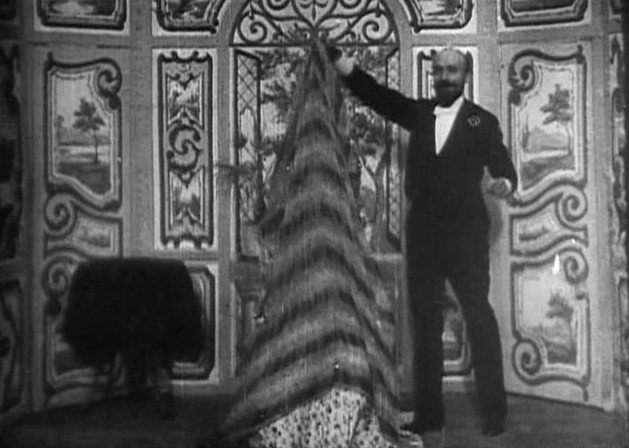
een skelet veranderen in een levende vrouw in Escamotage
d'une dame au théâtre Robert Houdin (FR:
George Méliès, 1896). In deze zeer korte film (plusminus 30
seconden), die zijn eerste film met special
effects
erin was3,
maakt hij gebruik van stop
motion
wanneer hij zichzelf - hij gebruikte zichzelf in zijn eerste films
dikwijls als hoofdrolspeler - toont terwijl hij een doek over een
stoel hangt, waarbij eerst een skelet verschijnt, en na de doek een
tweede keer gebruikt te hebben er een vrouw onder vandaan komt.4
De hele scène is frame voor frame in elkaar gezet, waardoor de
bewegingen van Méliès nogal houterig en onrealistisch overkomen.
(Dit is het grote argument tegen het realisme van stop
motion,
dit effect van strobing:
de animatie lijkt houterig omdat de toeschouwer de individuele
posities van de modellen ziet
als
individuele posities in plaats van één vloeiende beweging wat het
gesuggereerd wordt te zijn.5
Dit effect geeft stop
motion
volgens velen echter een ‘droomachtige kwaliteit’ wat een
belangrijk kenmerk is voor de fantastische film.6)
Dit
is niet het enige voorbeeld van stop motion in Méliès’
werk, maar wel het treffendste. Het geeft aan dat stop motion
net als andere trucages gebruikt kon worden om toeschouwers een
verrassend effect voor te schotelen om verbazing en amusement bij hen
op te wekken. Stop motion en andere special effects
trekken daardoor de toeschouwer een fantastische wereld binnen waarin
datgene mogelijk is wat niet in de alledaagse wereld gebeurt. Alec
Worley merkt op:
Transformation
is the essence of magic, be it transforming one thing into another or
producing something out of nothing. Thus fantasy cinema was born the
moment George Méliès turned his assistant into bones.7
Hoewel
Méliès stop-substitution
met grote regelmaat benutte, maakte hij echter zelden gebruik van
stop
motion animation,
wat de focus is van dit paper. Zijn aandacht in het opwekken van
trucages ging meer uit naar het beeld voor beeld bewegen van acteurs
dan in het animeren van modellen, terwijl latere filmmakers stop
motion
gebruikten om modellen in hetzelfde frame als acteurs te tonen en de
suggestie te wekken dat er tussen beide interactie plaatsvond. Voor
Méliès is stop
motion
een special
effect
als ieder ander: een hulpmiddel, een techniek, een trucage die een
verrassing kan opwekken maar niet zodanig dat het de film maakt.
Hoewel Escamotage
d'une dame au théâtre Robert Houdin tot
het fantastische genre gerekend kan worden houdt Méliès het in
menselijke context: hij gebruikt stop
motion
voor personen, niet voor onmenselijke wezens zoals later het meest
gebruikte doel van de techniek zou worden. Méliès benutte geen
poppen of modellen die frame voor frame bewogen werden om als
dergelijk “levend wezen” te figureren, een special
effect
dat als personage diende dat alleen via special
effects
gerealiseerd kon worden. Realisme speelde überhaupt geen rol in
Méliès’ werk, aangezien hij wist dat de trucages in zijn films
net zo artificieel waren als die in het theater en dat het publiek
hiervan op de hoogte was.8
Hierdoor nam hij niet de moeite om van stop
motion
een techniek voor het nabootsen van de realiteit te maken.
Hoewel
het in Méliès’ films niet naar voren komt werd stop
motion animation
al kort na de geboorte van de cinema toegepast. De vroegst bekende
film die deze vorm van stop
motion
toepaste is waarschijnlijk The
Humpty Dumpty Circus
(USA: Albert E. Smith, 1897) gemaakt door de Edison Company, waarin
houten dieren en acrobaten kunstjes vertonen in een filmpje van 40
seconden.9
De film werd goed ontvangen waarop Edison een tweede filmpje met
dezelfde techniek vervaardigde, A
Visit to the Spiritualist (USA:
Regisseur onbekend, 1899). Een ander vroeg voorbeeld is The
Teddy Bears (USA:
Edwin S. Porter, 1907).10
Niemand zag er echter veel brood in of had het geduld om dit soort
filmpjes te blijven maken, op één persoon na, die daardoor als
pionier van deze techniek beschouwd wordt. Dit was Willis O’Brien,
een tijdgenoot van Méliès. En hij is degene die er als eerste een
middel in zag om het onmogelijke op een realistische manier mogelijk
te maken.
1
Brosnan, John. Movie Magic: the story
of special effects in the cinema.
Londen: MacDonald, 1974: p. 15
2
Worley, Alec. Empires of the
Imagination. Jefferson: McFarland &
Company Inc. Publishers, 2005: p. 23
3
Pinteau, Pascal. Special Effects: an Oral
History. New York: Harry N. Abrams
Inc., 2004: p. 22 / Schechter, Harold, David Everitt. Film
Tricks: special effects in the movies.
New York: Harlin Quist Books, 1980: p. 16
4
Worley 2005: p. 18-19
5
Brosnan 1974: p. 182
6
Schechter en Everitt 1980: p. 154
7
Worley 2005: p. 19
8
Schechter & Everitt 1980: p. 153
9
Brosnan 1974: p. 151
Abonneren op:
Posts (Atom)


.jpg)