Posts tonen met het label japan. Alle posts tonen

vrijdag 19 mei 2017

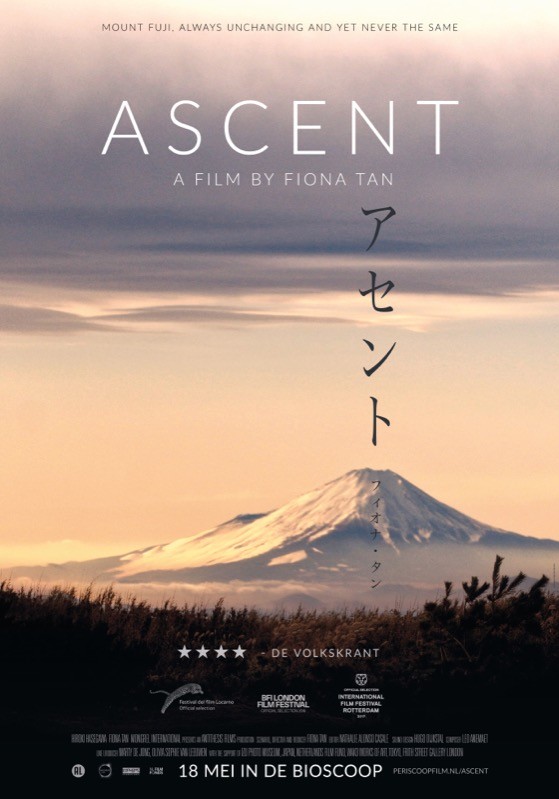
Today's Review: Ascent


Met vierduizend foto's een semidocumentair verhaal vertellen over een berg, je moet het maar durven. Fiona Tan doet precies dat in Ascent, een experimentele film waarin bewegend beeld geschuwd wordt, maar toch een verhaal verteld moet worden aan de hand van louter fotografie. En het hoofdonderwerp is niet eens een mens, maar een berg. Maar dan wel één van de beroemdste en meest gefotografeerde bergtoppen op aarde, de Japanse Fuji. Aan deze piek kleeft zoveel symboliek en geschiedenis dat Tan haar tachtig minuten makkelijk gevuld krijgt. Want Fuji is onlosmakelijk verbonden met het verleden, het heden en de toekomst van Japan en haar inwoners en dus goed voor een onuitputtelijke bron van verhalen. Tan brengt er een handjevol ter herinnering in Ascent, maar het feit blijft dat de film ondanks de dappere vorm toch een verzameling fraaie plaatjes voorzien van boeiende maar statische voice-overs blijft.

Wie verwacht dat een film die slechts bestaat uit fotografisch materiaal per definitie een documentaire moet zijn, komt bedrogen uit. Tan gebruikt de verzamelde shots tegen de verwachting in ook met een narratief doeleinde. In dat verhaal wordt een Engelse vrouw geconfronteerd met de door haar overleden Japanse geliefde bijeen vergaarde foto's van de berg Fuji. Ze probeert via deze foto's hernieuwd inzicht te krijgen in de Japanse geest, die ze weliswaar van dichtbij meemaakte, maar als buitenstaander nooit volledig kon begrijpen. Fuji is essentieel in die Japanse mindset. Zelfs voor niet-Japanners roept het iconische beeld van de berg direct associaties op met de haast ongrijpbare mystiek van het land van de rijzende zon, die wonderlijke natie waar eeuwenoude traditie en ongebreidelde moderne technologie zo eenvoudig hand in hand lijken te gaan. Fotografie is echter niet de meest moderne technologie, maar door haar langere geschiedenis voor Tan wel de ideale methode om Fuji te bezien, op een manier waarvoor film, fictie of documentaire tekort zou schieten.

Fotografie is immers de kunst van het stilstaande beeld en die onwrikbaarheid is nou net wat Fuji schijnbaar typeert. Het uiterlijk van Fuji is in wezen niet veranderd, van die alleroudste foto's uit het midden van de negentiende eeuw tot op de dag van vandaag. Fuji is simpelweg een onbeweeglijke natuurkracht die voor Tan alleen via fotografie begrijpelijk gemaakt kan worden. En daarin verschilt de berg niet veel van de mensen om haar heen. Want ondanks de technologische vooruitgang verandert de Japanse geest haast niet. Zij wordt misschien getemperd door de tijden, zoals in haar turbulente oorlogsverleden, maar blijft anderszins eveneens onwrikbaar. Tan illustreert dat door het voortdurende ontzag dat de Japanners koesteren voor hun berg te tonen in de veelzijdigheid van het fotografisch materiaal. Eeuwenoude, met de hand ingekleurde studiofoto's van bont gekostumeerde geisha's met een getekende Fuji op de achtergrond gaan hand in hand met hedendaagse kiekjes van toeristen genomen vanuit stedelijke vergezichten en het weidse platteland. Het is die diversiteit die Ascent boeiend houdt.
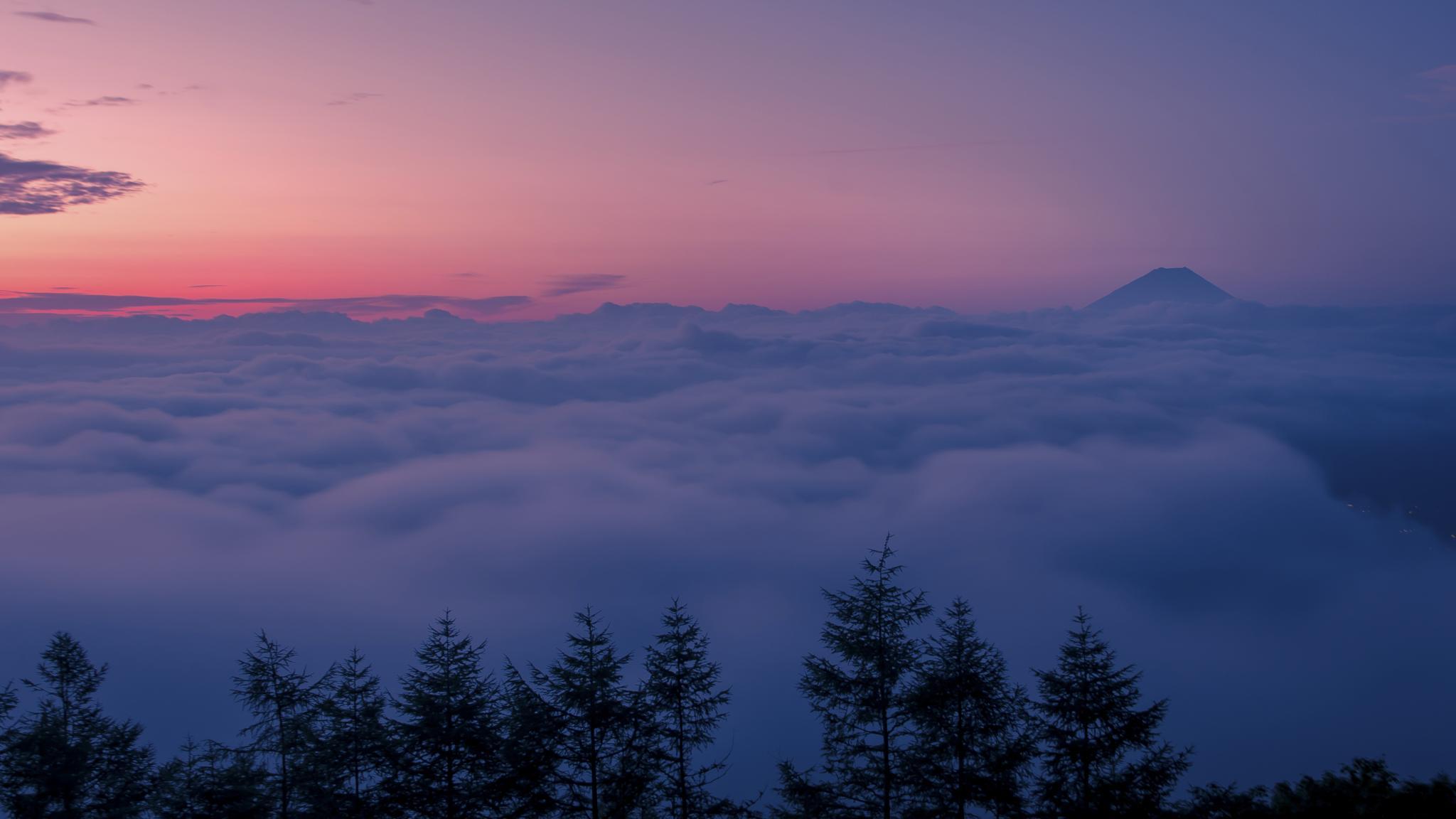
 

Voor Tan en haar hoofdpersoon wordt echter de beklimming uit de titel door de (op Fuji?) gestorven Hiroshi als leidraad genomen. Dichter bij Fuji dan op haar wonderschoon besneeuwde top kan men niet komen. Die beklimming is meer een ritueel dan een toeristische uitstapje, dat door duizenden tegelijk voltrokken wordt, als een soort bedevaart. Zoals de poëtische voice-over van Hiroshi - verleden tijd voor zijn vrouw, maar zeer in leven in zijn eigen vertelling van zijn 'close encounter' met de berg - vertelt zit Fuji in het Japanse bloed. Dat onderstrepen de verhalen die beide vertellers ons meegeven. Mythologie wordt moeiteloos afgewisseld met historische anekdotes. Zelfs het optreden van Fuji in de film King Kong versus Godzilla wordt aangehaald, waarbij de berg het decor vormt voor het titanengevecht uit de titel. Gelijk ook een strijd tussen Japanse en westerse iconografie, eveneens van toepassing op Fuji's historie. Als symbool voor Japan trachtten de Amerikanen tijdens hun bezetting na de Tweede Wereldoorlog die symboliek te breken door de berg zoveel mogelijk uit film en foto's te censureren. Een zinloze taak natuurlijk, want die berg staat er immers nog steeds in al zijn onbeweeglijke glorie, zo onderstreept Tans relaas treffend.
 
Die immobiliteit moet echter toch relatief beschouwd worden, want Fuji is en blijft een vulkaan en vulkanen zijn wispelturige natuurkrachten. Hoewel de laatste uitbarsting alweer meer dan driehonderd jaar geleden plaatsvond - ruim voordat de fotografie ten tonele verscheen, dus van het gevaar van Fuji geen beeldmateriaal - zal de berg uiteindelijk opnieuw haar vurige woede over haar omgeving uitstorten. "Foto's zijn ijs, film is vuur", meent Tan in Ascent, maar als vulkaan is Fuji beide. De fotografische benadering is gewaagd, maar toch te beperkt om de geest van Fuji waarachtig te vangen. Hoewel Tans opzet respect oogst door ondanks de beperkingen van het door haar gebruikte medium onze aandacht vast te kunnen houden, is een berg van Fuji's kaliber een dynamischer eerbetoon waard.

zaterdag 28 mei 2016

Today's Review: The Sea of Trees


Another review belatedly posted here:

The Sea of Trees - recensie

If you thought Gus van Sant would be more suited to make an interesting picture about the phenomenon of the Japanese suicide forest Aokigahara than the creators of the recent bland horror movie The Forest would, you thought wrong. Say what you will about The Forest, it had no other pretentions than being an average spooky flick (except maybe for the 'average' part, but then they should have tried harder). The Sea of Trees, not so. It's a bold potpourri of supernatural thrills, Japanese versus Western belief systems, tearjerking drama and philosophical reflections on the nature of suicide. At least, it likes to be. It sadly fails in every respect, making this a prime candidate for the title of 'Worst Gus van Sant Movie'.

The ingredients for a terrific movie are all there. There's a haunting mystery (a forest where people voluntarily come to kill themselves), a shot at emotionally compelling drama (a husband and wife not getting along but coming together over the latter's impending demise), some damn fine actors (McConaughey, Watanabe, Watts, need I say more?) and lots of wonderful cinematography. The movie only succeeds in offering that last bit to our satisfaction. Whether it's the director or the screenwriter who couldn't be bothered with stringing it all together seamlessly into an intriguing whole is hard to tell. It's certainly not the actors, as all of them appear bored or distracted. In Watanabe's case, matters are made worse due to him apparently having been hired as Hollywood's token Japanese man for this occasion, making him rant on about Japanese superstition ad nauseam. We simply can't learn to care about either him or his American companion, who set out to kill himself but had a change of heart in his desire to help his new local friend get home alive. It's seemingly enough of a motivation after the devastating death of his wife to make him find new faith in life and forget all about his suicidal plans, but not for us to go along with his new lust for living.


We simply cannot care about it all, which also stems from Van Sant's odd choice of going nigh 'full Hollywood' in his dramatic scenes set in the States. Usually he opts for what many consider a more European style, but in this scenario, studio tearjerking methods got his preference. And so we have to sit through dull and ultimately predictable flashbacks explaining the protagonist's desire to end his life, even though, illogically, he and his wife never really got along anyway. The scenes in the forest, meanwhile, offer little more captivating moments or surprising twists. Admirably shot and lit as they may be (though much of it not actually filmed in Japan, but rather Stateside) and accompanied for the most part by decently melancholy music, we still grow restless over the lack of empathy triggered at our side of things. It's not so bad that it makes us want to kill ourselves, but it's still frighteningly frustrating to come to realize that a director who often has something worthwhile to share with his audience, really has absolutely nothing noteworthy to say about a fascinating topic of conversation as the so-called Sea of Trees.


zondag 23 februari 2014

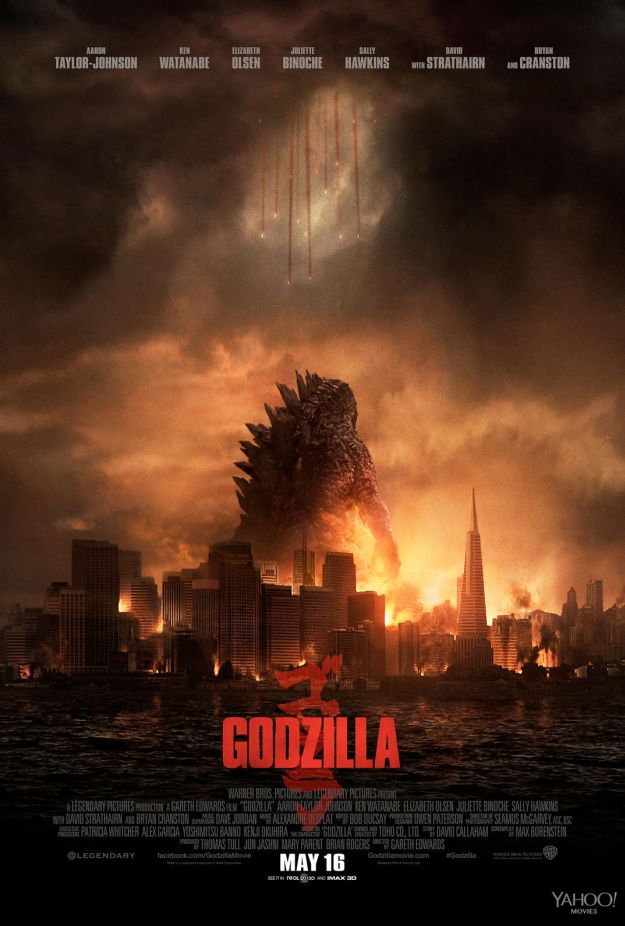
Today's Poster: the big G returns to do what he does best


I found another neat new poster to post on MovieScene:

http://www.moviescene.nl/p/153929/nieuwe_poster_godzilla

This is how you do a good poster, at least in the case of a remake (which is sort of what this movie is, though there's plenty of room for new material). You refamiliarise your audience with the character in question, in a setting that brings about a shock of recognition. It reminds you what you remember most about what you liked about the original character, which is thrashing cities in Godzilla's case. If you like Godzilla at all, that is; which a lot of people apparently do, considering the 28 original Japanese movies and the two American remakes, this being the second. It's a giant monster movie staple, but spectators still get a kick out of seeing human habitat laid to waste at the feet of some ferocious, titanic creature. Especially if the city being demolished is familiar to them (hence why these movies usually tend to favour big landmark cities, obviously). At the same time, this movie makes you curious enough not to get overly negative about this iconic character being milked again for a new generation, by adding the element of curiosity. What are those falling lights above Godzilla's head? Is he gonna get mixed up with alien lifeforms with nefarious schemes again, maybe? This poster also adequately displays what Godzilla is all about (or at least, should be), functioning as the ultimate nuclear nightmare destroying human lives by the thousands after having been resurrected by man's folly of playing with powers too big and volatile for his control or understanding. Nevertheless, if Godzilla will indeed fight extraterrestrial antagonists or rivalling giant mutations, he may also be mankind's only hope. Whether 'Kaiju' enthusiast Gareth Edwards (Monsters) will opt for either take on Godzilla, or just go for both, remains to be seen. That he gets Godzilla however seems clear from this poster. Plus, unlike what happened to the previous Godzilla, he honours the original Japanese design by staying close to it, instead of giving him a giant make-over as occurred in 1998. That also can't hurt.

maandag 10 februari 2014

Today's Review: 47 Ronin


47 Ronin: **/*****, or 4/10

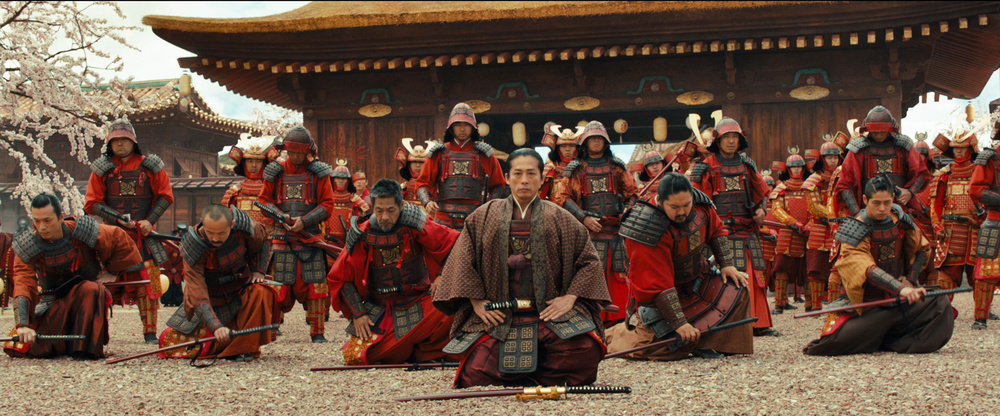
'To understand the story of the 47 ronin is to understand Japan' this movie states as its introduction, attempting to place what's to come in a historical context for audiences unfamiliar with ancient, feudal Japan. The story of these 47 samurai, who witnessed the death of their master which caused them to become shamed ronin and afterwards successfully plotted and executed their revenge to regain their honour and die a noble suicide, is one of Japan's most popular and enduring legends. Such a serious tale of death and dishonour is not the usual stuff of grandiose Hollywood productions and therefore this original saga was embellished with plenty of action, romance and expensive effects to make it more worthy of being turned into a blockbuster movie. However, the heart of the story was left unchanged (something Japanese traditionalists at least will appreciate) and as a result, 47 Ronin proves a rather uncomfortable and uneasy mix of Japanese and western storytelling.

47 Ronin is told from the perspective of Kai, a mysterious halfbreed orphan who is found by Lord Asano of Ako province. Despite the advice of his samurai who consider him a demon child, Asano takes him in because he sees 'something' in the boy. Raised alongside Asano's daughter Mika the orphan grows up to be Keanu Reeves, and they develop a typical secret desire for one another (credibility of which is hindered by the fact that Keanu looks and is much older than the actress playing his love interest, though they are meant to be about the same age). Kai is of course an all too obvious attempt to make it easier for western audiences to identify with the strange and unknown Japanese way of life, but as is usually the result of such additions, Kai gets too important for the story's good, as if the movie's 'natives' are unable to carry out their bold plan without a white man's help. Identification is ever a challenge for the audience where the stoic Reeves is concerned, and 47 Ronin proves no different, though his emotionless expression at least suits the subject matter. However, Asano was right, as Kai is no ordinary boy but is indeed connected with the supernatural. Which is just as well, as it turns out 18th Century Japan, unlike the original legend told us, was surprisingly infested with the occult, monsters and wraiths. Did I mention 47 Ronin is also a fantasy movie? Well, it is.


Asano suffers a rivalry with the ruthless Lord Kira (who ironically is played by Tadanobu Asano). Hellbent on taking over Ako (and as is typical, everything else too in the long run), Kira employs the talents of a shapeshifting witch (Pacific Rim's Rinko Kikuchi) to stir things up. Kikuchi is evidently enjoying the role of seductive sorceress, but like her boss plays evil only for evil's sake, which makes for a rather poorly motivated, dull duo of bad guys. Their schemes succeed as Asano is tricked into openly attempting to kill Kira in the presence of their shogun, for which he is sentenced to seppuku. Romanticising this act of suicide, Asano's death is overly poetic and bloodless, despite the fact he's disemboweling himself and getting his head struck off. After his death, his samurai are declared dishonoured ronin and, to turn insult into agony, Mika is forced to wed Lord Kira. This will not do, after which Asano's captain Oishi (Hiroyuki Sanada, grave and cold as often) plots revenge. And even though he never liked him, he asks Kai to join the quest. Good thing too, as the revelation of his upbringing by forest ghosts sure aids in defeating their monstrous and demonic opponents. Most of which were already defeated in terms of convincing the audience due to the poor visual effects job done on them.


Amidst all the beheadings and dismemberment that follows, it's evident that a different kind of cutting called editing also did not work in 47 Ronin's favour. At times it's obvious that material was discarded, making for an occasionally jumbled flow of the movie's plot, especially in the case of the scenes on the 'Dutch Island', where Kai is sold into a brief life of slavery and gladiatorial servitude. An impressively tattooed pirate, heavily used in the film's marketing campaign, is seen only for a short moment, while the perceptive eye is able to spot a brief appearance by Yorick van Wageningen: aggressive changes in the post-production process reduced his part to the quickest of cameos. At least there is nothing wrong with the design of the movie, which does at times look sensational and exotic, even in 3D. Though little effective use is made of that technology, as the straightforward quest for vengeance is otherwise quite two-dimensional. Despite all the added fantasy spectacle, the story remains the tale of a group of angry knights seeking revenge for the death of their lord. Their sense of honour is all that matters, a point which the movie gets across, but is hard to be approved by everybody. Despite the addition of various grotesqueries and scenes of supernatural suspense to make the story more entertaining and acceptable for the non-Japanese, the general mood of the film is overly sombre and devoid of relatable humour. Not counting a particularly fat ronin who, as overweight people tend to do in Hollywood blockbusters, is supposed to introduce a bit of comedy to occasionally lighten the tone, but fails miserably.


The only understanding western audiences will take away with them from seeing 47 Ronin is that Hollywood and Japanese legend don't mix to everybody's satisfaction. We understand that Japanese notions of honour are obsessed with ritual suicide, choosing death over life even when the situation, from our point of view, would definitely dictate differently. As the movie is transformed into otherwise fairly standard fantasy fare, the conclusion of the legend is left unchanged: evil has been vanquished, the land made safe, but still the 47 ronin are ordered to die, as per the climax of the original story. No happy end by western standards here, as Keanu and his fellow warriors take their own life (gladly, even!), leaving their grieving loved ones behind, for such is their way of honour. At times it feels like 47 Ronin means to make suicide a popular trend by extolling its virtues. Western audiences can only stand amazed by what at times appears to be a genuine glorification of seppuku. In this regard, the Japanese can be glad Hollywood left the core of their legend untampered despite the addition of witches and monsters to make things more exciting, but a 'gaijin' audience is left estranged as their notions of what constitutes a satisfactory ending – even if it would have been the stuff of cliché – are shattered. To understand the story of the 47 ronin is to acknowledge the extreme clash of cultures between Japan and Hollywood in this matter: 47 Ronin makes that much painfully clear.