Posts tonen met het label documentary. Alle posts tonen
donderdag 29 juni 2017
Today's Review: Buena Vista Social Club: Adios
Toen Wim Wenders in 1998 werkte aan zijn documentaire Buena Vista Social Club, zal hij niet vermoed hebben dat de muzikanten op leeftijd die het onderwerp van de film vormden korte tijd later wereldberoemd zouden zijn. Hun gelijknamige album brak records en zorgde voor een opleving in de Cubaanse muziekscène, die ook buiten de communistische eilandstaat populair werd. De oudere musici begroetten dit succes slechts met gracieuze ironie, want wat heb je aan faam op hoge leeftijd? Voor hen was het levend houden van hun geliefde Cubaanse klanken de hoofdzaak. Het vervolg én afscheid Buena Vista Social Club: Adios laat zien dat de groep daarin met verve geslaagd is, in een melancholieke terugblik op de laatste twintig jaar, waarin openhartig uit de doeken wordt gedaan welke successen en welk verlies deze uitstervende generatie muzikanten heeft doorstaan.
Voor de muziekliefhebbers zal het verhaal rond het album Buena Vista Social Club geen geheim zijn, maar Buena Vista Social Club: Adios neemt een groot deel van haar speelduur in beslag om de feiten nog even op tafel te leggen. Muziekproducenten Ry Cooder en Nick Gold scharrelden samen met bandleader Juan de Marcos een aantal vergeten veteranen uit het Cubaanse muziekcircuit bij elkaar, om een album op te nemen met de melodieën die in hun jonge jaren hun leven domineerden. Geen geringe opgave, want de oudjes, onderhand allemaal dik in de zeventig of ouder, waren uit het publieke oog verloren geraakt. Sommigen waren al lang met pensioen, anderen probeerden in armoede met baantjes als schoenenpoetser de eindjes aan elkaar te knopen. Geen van hen had de laatste decennia nog opgetreden. Toch lukte het de producenten om de flamboyante grijze persoonlijkheden bijeen te brengen en een weergaloos album uit hun ongeoefende talent te smeden, wat bovendien leidde tot een tweetal snel uitverkochte concerten. Het eerste vond plaats in Amsterdam in 1998, gevolgd door een optreden in de befaamde Amerikaanse Carnegie Hall. Vooral het laatste was een doorbraak, gezien de politieke spanningen tussen Cuba en de VS.
De resultaten mochten er zijn. Het album werd een enorm succes, evenals de documentaire die Wenders over het ontstaan ervan regisseerde. De sprankelende Cubaanse muziek maakte een comeback op het wereldtoneel en de performers werden allemaal alsnog beroemd, ondanks hun hoge leeftijd. Follow-up Buena Vista Social Club: Adios, met Wenders aangebleven als producent, laat zien hoe de groep omging met hun onverwachte sterrenstatus. Dat leidt gezien de feiten natuurlijk niet tot verrassende conclusies. De nuchtere oudjes bleven vooral zichzelf en lieten zich boven alles leiden door hun muziek. Op extravagante levensstijlen of de gebruikelijke excessen die sterrenlevens doorgaans typeren, hoeven we hier natuurlijk niet te rekenen. Wel op het onvermijdelijke heengaan van een aantal bandleden, de eerste al in 2003. Onderhand is al ruim de helft van de originele groep overleden, waarmee het perspectief van de overgebleven leden verschoven is van hun eigen deelname aan de huidige Cubaanse muziek naar het doorgeven van hun tradities en waarden aan de volgende generaties.
Daaraan besteedt Buena Vista Social Club: Adios echter opvallend weinig aandacht. Dat is ook geen al te grote verrassing. De titel maakt al duidelijk dat de nieuwe documentaire vooral een afscheid is. Het nieuwe wordt en passant aangestipt, maar het spotlicht is vooral gereserveerd voor het oude, voor de allerlaatste keer. Daarom is het toch een beetje jammer dat de film zo'n groot deel van haar tijd uittrekt voor het herhalen van het succesverhaal dat al in Wenders' eigen docu werd belicht. Hoewel nuttige kennis voor de leek, zal het voor kijkers met degelijke kennis toch als nodeloos veel herhaling overkomen. De sterkere momenten van Buena Vista Social Club: Adios liggen dan ook vooral in het terugblikken van de nog in leven zijnde groepsleden op hun succes na de uitbreng van het eerste album. Daarin wordt met respect gesproken over hun overleden kameraden, terwijl de vurige Cubaanse temperamenten toch ook ruimte overlaten voor eerlijke reflectie op hun menselijke gebreken. De zelfkennis die gepaard gaat met de ouderdom maakt dat ze ook zichzelf niet al te serieus nemen. Wat dat betreft heeft hun roem weinig teweeggebracht.
Buena Vista Social Club: Adios is echter op zijn intrigerendst wanneer het dieper ingaat op het culturele belang van deze renaissance in de Cubaanse muziek. Muziek verbroedert en overstijgt menselijke grenzen, zo gaf hun eerste concert in de VS destijds al aan. Met de dooi in de koele relatie tussen beide landen is die trend onverminderd voortgezet, met een concert in het Witte Huis voor president Obama als hoogtepunt. Terecht, want de vibrante muziek swingt nog steeds onverminderd voort. Uiteraard bruist de documentaire van de opzwepende tropische Cubaanse klanken, net zoals de oudjes dat zelf hun hele leven hebben gedaan. Ondanks de inhoudelijke tekortkomingen vormt Buena Vista Social Club: Adios daarmee een waardige laatste aria van deze verdwijnende muzieklegende.
vrijdag 19 mei 2017
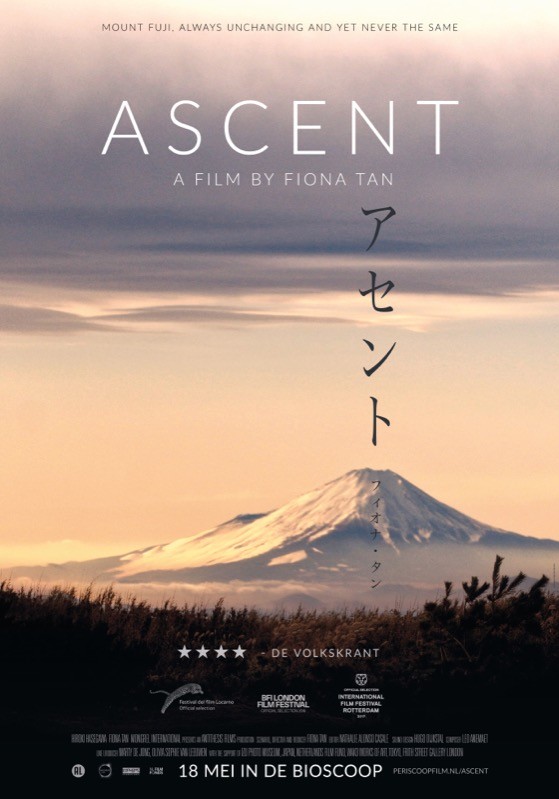
Today's Review: Ascent
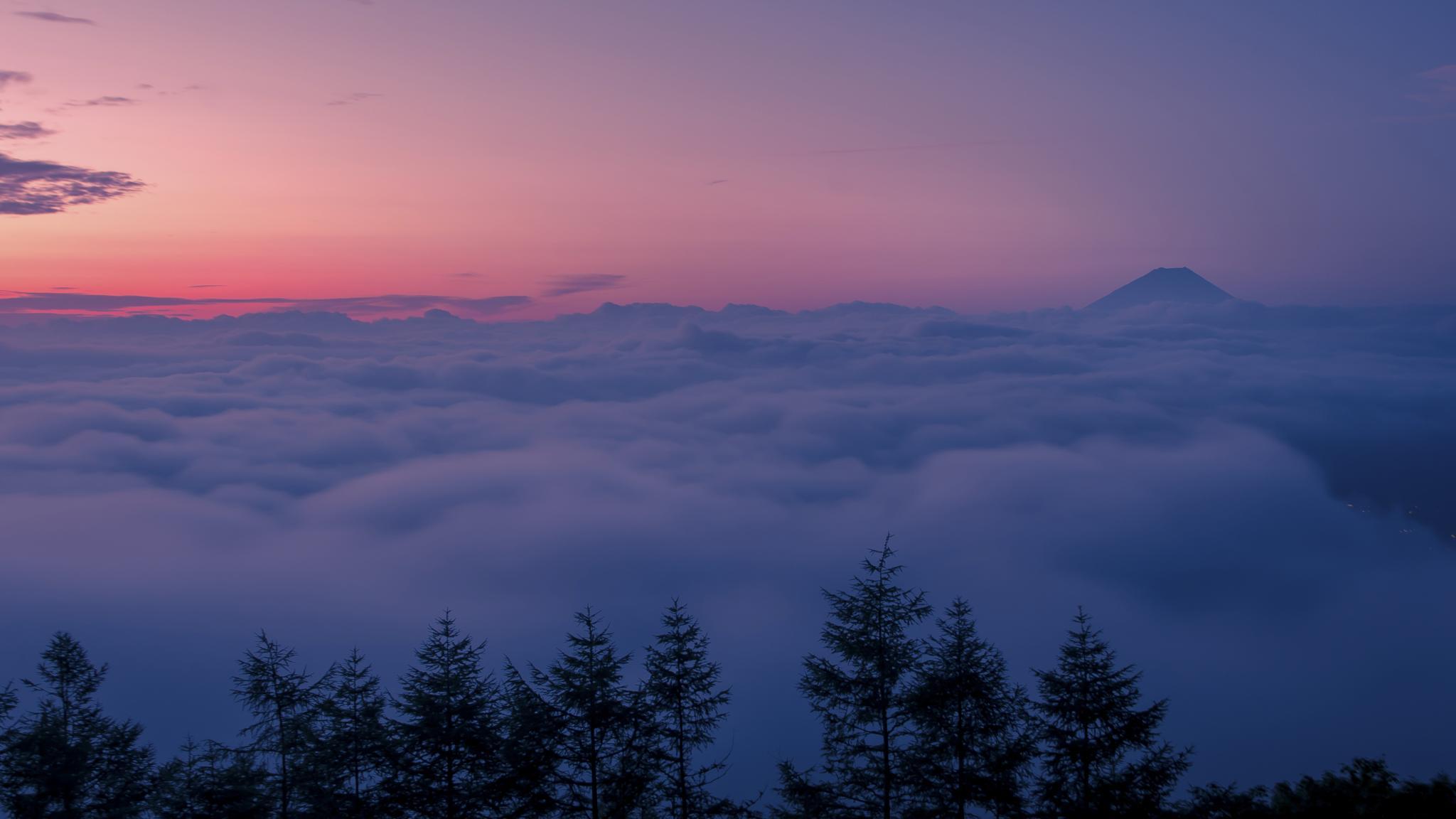
Met vierduizend foto's een semidocumentair verhaal vertellen over een berg, je moet het maar durven. Fiona Tan doet precies dat in Ascent, een experimentele film waarin bewegend beeld geschuwd wordt, maar toch een verhaal verteld moet worden aan de hand van louter fotografie. En het hoofdonderwerp is niet eens een mens, maar een berg. Maar dan wel één van de beroemdste en meest gefotografeerde bergtoppen op aarde, de Japanse Fuji. Aan deze piek kleeft zoveel symboliek en geschiedenis dat Tan haar tachtig minuten makkelijk gevuld krijgt. Want Fuji is onlosmakelijk verbonden met het verleden, het heden en de toekomst van Japan en haar inwoners en dus goed voor een onuitputtelijke bron van verhalen. Tan brengt er een handjevol ter herinnering in Ascent, maar het feit blijft dat de film ondanks de dappere vorm toch een verzameling fraaie plaatjes voorzien van boeiende maar statische voice-overs blijft.
Wie verwacht dat een film die slechts bestaat uit fotografisch materiaal per definitie een documentaire moet zijn, komt bedrogen uit. Tan gebruikt de verzamelde shots tegen de verwachting in ook met een narratief doeleinde. In dat verhaal wordt een Engelse vrouw geconfronteerd met de door haar overleden Japanse geliefde bijeen vergaarde foto's van de berg Fuji. Ze probeert via deze foto's hernieuwd inzicht te krijgen in de Japanse geest, die ze weliswaar van dichtbij meemaakte, maar als buitenstaander nooit volledig kon begrijpen. Fuji is essentieel in die Japanse mindset. Zelfs voor niet-Japanners roept het iconische beeld van de berg direct associaties op met de haast ongrijpbare mystiek van het land van de rijzende zon, die wonderlijke natie waar eeuwenoude traditie en ongebreidelde moderne technologie zo eenvoudig hand in hand lijken te gaan. Fotografie is echter niet de meest moderne technologie, maar door haar langere geschiedenis voor Tan wel de ideale methode om Fuji te bezien, op een manier waarvoor film, fictie of documentaire tekort zou schieten.
Fotografie is immers de kunst van het stilstaande beeld en die onwrikbaarheid is nou net wat Fuji schijnbaar typeert. Het uiterlijk van Fuji is in wezen niet veranderd, van die alleroudste foto's uit het midden van de negentiende eeuw tot op de dag van vandaag. Fuji is simpelweg een onbeweeglijke natuurkracht die voor Tan alleen via fotografie begrijpelijk gemaakt kan worden. En daarin verschilt de berg niet veel van de mensen om haar heen. Want ondanks de technologische vooruitgang verandert de Japanse geest haast niet. Zij wordt misschien getemperd door de tijden, zoals in haar turbulente oorlogsverleden, maar blijft anderszins eveneens onwrikbaar. Tan illustreert dat door het voortdurende ontzag dat de Japanners koesteren voor hun berg te tonen in de veelzijdigheid van het fotografisch materiaal. Eeuwenoude, met de hand ingekleurde studiofoto's van bont gekostumeerde geisha's met een getekende Fuji op de achtergrond gaan hand in hand met hedendaagse kiekjes van toeristen genomen vanuit stedelijke vergezichten en het weidse platteland. Het is die diversiteit die Ascent boeiend houdt.
Voor Tan en haar hoofdpersoon wordt echter de beklimming uit de titel door de (op Fuji?) gestorven Hiroshi als leidraad genomen. Dichter bij Fuji dan op haar wonderschoon besneeuwde top kan men niet komen. Die beklimming is meer een ritueel dan een toeristische uitstapje, dat door duizenden tegelijk voltrokken wordt, als een soort bedevaart. Zoals de poëtische voice-over van Hiroshi - verleden tijd voor zijn vrouw, maar zeer in leven in zijn eigen vertelling van zijn 'close encounter' met de berg - vertelt zit Fuji in het Japanse bloed. Dat onderstrepen de verhalen die beide vertellers ons meegeven. Mythologie wordt moeiteloos afgewisseld met historische anekdotes. Zelfs het optreden van Fuji in de film King Kong versus Godzilla wordt aangehaald, waarbij de berg het decor vormt voor het titanengevecht uit de titel. Gelijk ook een strijd tussen Japanse en westerse iconografie, eveneens van toepassing op Fuji's historie. Als symbool voor Japan trachtten de Amerikanen tijdens hun bezetting na de Tweede Wereldoorlog die symboliek te breken door de berg zoveel mogelijk uit film en foto's te censureren. Een zinloze taak natuurlijk, want die berg staat er immers nog steeds in al zijn onbeweeglijke glorie, zo onderstreept Tans relaas treffend.
Die immobiliteit moet echter toch relatief beschouwd worden, want Fuji is en blijft een vulkaan en vulkanen zijn wispelturige natuurkrachten. Hoewel de laatste uitbarsting alweer meer dan driehonderd jaar geleden plaatsvond - ruim voordat de fotografie ten tonele verscheen, dus van het gevaar van Fuji geen beeldmateriaal - zal de berg uiteindelijk opnieuw haar vurige woede over haar omgeving uitstorten. "Foto's zijn ijs, film is vuur", meent Tan in Ascent, maar als vulkaan is Fuji beide. De fotografische benadering is gewaagd, maar toch te beperkt om de geest van Fuji waarachtig te vangen. Hoewel Tans opzet respect oogst door ondanks de beperkingen van het door haar gebruikte medium onze aandacht vast te kunnen houden, is een berg van Fuji's kaliber een dynamischer eerbetoon waard.
Labels:
art,
arthouse,
ascent,
documentary,
fiona tan,
fuji,
godzilla,
japan,
mountain,
narrator,
photography
zondag 5 februari 2017
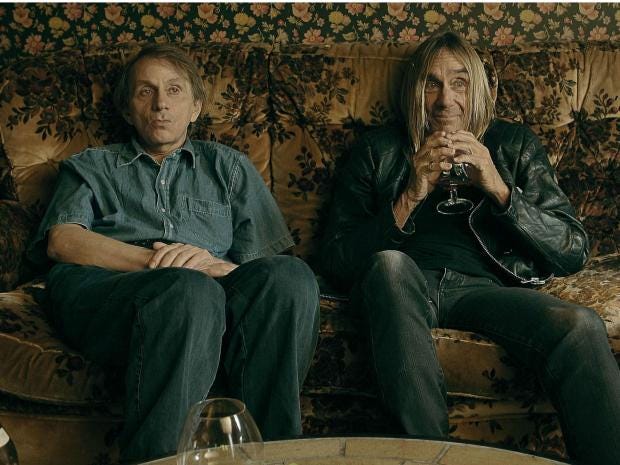
Today's Review: To Stay Alive - A Method
Bent u een kunstenaar en ziet u het allemaal niet meer zitten? Meent u dat de harde maatschappij uw creatief genie miskent en staat u op het punt er de brui aan te geven? Hou nog even vol, want uit zulke wanhoopsgevoelens komt de fraaiste kunst tot stand. Aldus menen Michel Houellebecq en Iggy Pop, die dit station van radeloosheid al gepasseerd zijn. Met de sympathiek optimistische semidocumentaire To Stay Alive - A Method steken zij hun collega-kunstenaars een hart onder de riem. Dat lijden, zo stelt het duo, is een essentieel onderdeel van de kunsten en drijft de vasthoudende artiest juist naar nieuwe hoogtes. "Lijden is goed, lijden is nuttig."
Het is een conclusie die schrijver Houellebecq al in 1991 trok in zijn essay Rester Vivant - Méthode. Ten tijde van schrijven werd hij evenzeer geplaagd door levensmoeheid als de beoogde lezersdoelgroep: de onbegrepen kunstenaars. Na het felle antimaatschappelijke stuk, waarin hij vooral ageerde op de zere wonden van de onbegripvolle samenleving te blijven drukken, brak Houellebecq alsnog door. Tegenwoordig wordt hij gezien als een creatieve duizendpoot, werkzaam als filosofisch auteur, dichter, toneelschrijver en cineast en populair onder een opvallend groot publiek. Dat was hij allemaal niet geweest als hij er destijds een einde aan had gemaakt. En als het hem lukte, waarom zou hetzelfde dan niet mogelijk zijn voor andere kunstenaars?
Muzieklegende Iggy Pop las diens essay en trok dezelfde conclusie, omdat hij in Houellebecqs relaas ook zijn eigen levenspad herkende. Ook Pop, nu gezien als de vader van de punkrock, dreigde er in een grijs verleden ooit mee te stoppen, maar bleef volharden te midden van alle waanzin, overtuigd van zijn muzikaal gelijk. Eveneens met groot succes. Pop en Houellebecq bleken geestverwanten en hun wederzijdse bewondering leidde al eerder tot een toenadering, toen Pop een aantal nummers schreef voor een documentaire over de schrijver. Die film werd geregisseerd door de Nederlander Erik Lieshout. Met diens pseudodocumentaire To Stay Alive - A Method is de cirkel nu rond en brengt Lieshout schrijver en zanger nog dichter bij elkaar. 'Pseudo', want de film is zowel een toneelstuk als een op feiten gebaseerd verhaal. Het is echter hoofdzakelijk een kunstzinnig pamflet.
Het gespeelde element van To Stay Alive - A Method bestaat uit de ontmoeting tussen de twee grootheden, waarin Pop zichzelf speelt maar Houellebecq de rol van de fictieve kunstenaar Vincent op zich neemt. Een schijnbaar mislukte artiest die in eenzaamheid aan zijn meesterstuk werkt in het huis van zijn grootouders en met een bezoek van Pop, die Houellebecqs boodschap ter harte neemt, wordt aangespoord om vooral door te zetten. Tussendoor leest Pop met zichtbaar enthousiasme voor uit het werk van de schrijver en richt hij zich bevlogen direct tot het publiek. Degenen die menen dat Pop en Houellebecq een uitzondering op de regel vormen in de annalen van de kunsten en het heus nog niet zo eenvoudig is als het essay verkondigde, komen bedrogen uit, want Lieshout heeft nog meer noten op zijn zang. Hij interviewt drie volslagen onbekende kunstenaars die een soortgelijke achtergrond van lijden kenden, maar uit het dal van de gekte zijn opgekrabbeld. Dichters met een psychiatrische achtergrond die niet opgaven en ondanks alles er bovenop kwamen, en daardoor hun beste werk naar boven brachten. Door de portrettering van dit drietal plaatst Lieshout de twee grootheden op gelijke voet met hun talloze onbekende collega's die net als zijzelf worstelden, of nog steeds worstelen, met de minachting van de maatschappij maar zich daardoor niet lieten tegenhouden. Daarmee illustreert hij uitstekend Houellebecqs punt. Hoewel bekende namen blijken de twee sterren immers eveneens verlegen, alledaagse mensen en dat maakt hen net zo aandoenlijk als hun roemloze tegenhangers.
Wat niet wegneemt dat ze wel degelijk charisma kennen. Zeker Pop weet onze aandacht er volledig bij te houden als hij het essay citeert, want zijn van levenservaring doorgroefde stem werkt betoverend. Daarmee helpt hij de 'tegeltjeswijsheid' die To Stay Alive - A Method soms dreigt te typeren op afstand te houden. Want voor elke fraaie uitspraak als "to learn to become a poet is to unlearn how to live" volgt er een fletser geval als "het universum is als een discotheek". Pop komt er wel mee weg. Toch is het jammer dat we vooral van zijn verleden als lijdend voorwerp amper achtergrond meekrijgen. Hoe zat het dan voorheen met diens creatieve smart? Voor een film van amper zeventig minuten maakt Lieshout er helaas weinig woorden aan vuil. Voorkennis lijkt vereist. Maar het draait voor Lieshout bovenal om Houellebecqs boodschap, en die wordt vanuit voldoende standpunten belicht, zonder enig cynisme. Een kunstenaar in de put heeft daar ongetwijfeld voldoende aan en kan na het zien van To Stay Alive - A Method met hernieuwde hoop aan de slag.
woensdag 23 november 2016
Today's Review: Shadow World
De Belgische regisseur Johan Grimonprez zou zich best eens kunnen vinden in de verrassende Amerikaanse verkiezingsuitslag. Je kunt zeggen over vastgoedmagnaat Trump wat je wilt, maar zijn belangen zijn tenminste niet verstrengeld met de wereldwijde internationale wapenhandel. Uit Wikileaks-documenten blijkt dat Hillary Clinton daarentegen wel betrekkingen had met dat schimmige web des doods, dat Grimonprez in de documentaire Shadow World placht bloot te leggen. Een nobel streven van zijn kant, maar ondanks de vele onthutsende anekdotes die hij opvoert doet de kijker niet bijster veel nieuws op. Dat politici en wapenfabrikanten twee handen op één buik zijn, is immers al langer bekend. Maar daarom niet minder beangstigend.
De schaduwwereld uit de titel is de samenzwering tussen schimmige wapenconglomeraten (o.a. BAE en Lockheed) en politieke kopstukken om elkaar machtig en rijk te houden. Dit ten koste van het democratisch proces, dat uitgehold wordt door deze corruptie. Grimonprez, die zich baseert op het boek van de Zuid-Afrikaanse politicus Andrew Feinstein, interviewt diverse personen die lucht kregen van deze omvangrijke affaire, die al decennia aanhoudt en dusdanig verweven is met het politieke systeem dat hij niet meer te ontrafelen valt. De wapendealers hebben voldoende dekking vanuit de politiek om op de achtergrond hun smerige zaakjes op te bouwen. En als andersdenkende regeringen een nieuw bestel proberen op te bouwen, schakelen ze de (vooral westerse) mogendheden in om die regering met brute efficiëntie te saboteren, zoals het landen als El Salvador en Chili verging. Want wie de immens lucratieve wapenhandel dwarsboomt, moet het bezuren.
De personen die Grimonprez spreekt over dit diep verontrustende onderwerp zijn allemaal vanuit hun werkveld geconfronteerd met de schaduwmachthebbers. Het is een breed gezelschap, onder wie zich niet alleen journalisten en mensenrechtenactivisten bevinden, maar ook advocaten, filosofen en zelfs een enkele wapenhandelaar. Het siert Grimonprez dat hij een dergelijk bont gezelschap kon aansporen hun verhaal uit de doeken te doen. Hun onthullingen betreffen een omvangrijk netwerk van corrupte politici en de wapendealers die hen financieren, wat al in de zeventiger jaren aanving. Het is een bijzonder geraffineerde organisatie die veelvuldig de draaideurpolitiek hanteert: vertegenwoordigers van de wapenhandel gaan de politiek in, voeren een beleid uit dat hun doelstellingen behartigt en keren terug naar hun voormalige werkgever als hun politieke loopbaan tot een eind komt. Dick Cheney, Tony Blair, George W. Bush, de lijst is lang. De verrassing is echter niet groot, want van veel van de genoemde namen was hun deelname aan dit soort praktijken al langer bekend. Shadow World voelt daardoor vaak aan als een herhaling van oud nieuws.
Toch blijft het intrigeren, al die smeuïge verhalen (macht, wapens, seks!) over de omvang van dit verborgen apparaat, dat feitelijk onze democratie al decennia lamlegt. De grote hoeveelheid invalshoeken van de 'talking heads' (want die wat starre opzet weet hij helaas niet altijd te vermijden) belicht het onderwerp van alle kanten. De kant van de wapenhandelaar, die in dit geheel slechts de menselijke neiging tot geweld bevestigd ziet. Van de wetsexpert, die zijn zorgen uitspreekt over de totale inmenging van de fabrikanten in de democratie. Maar ook van minder voor de hand liggende personen, zoals de Arabische man die als simpele verzetsdaad een schoen naar Bush gooide en dat moest ontgelden met een enkeltje antiterroristenkamp. Ironisch is het gesprek met een journalist in Beiroet over hebzucht en moraliteit met hoorbaar wapengeknal op de achtergrond. Ook al blijft het een opsomming van al vaker belichte feiten, de reikwijdte van de zaak die Grimonprez in amper anderhalf uur schetst, is zowel indrukwekkend als zorgwekkend. Visueel zet hij kracht bij zijn betoog door de getuigenissen af te wisselen met radaropnamen en warmtebeelden van de directe doelwitten van het verderfelijke systeem. Kleine hittemassa's die door een drone tot gort geschoten worden. Bloedeloze beelden, maar ontegenzeggelijk effectief. Het kunnen terroristen zijn, maar evengoed onschuldige burgers, zelfs kinderen. Of gewoon tegenstanders van de wapenhandel.
Hoe boeiend Grimonprez' verzamelde verhalen ook zijn, de vraag hoe we uit deze verstikkende greep geraken dringt zich op. Helaas heeft hij geen antwoorden. Shadow World legt feiten op tafel, maar geen oplossingen. Dat frustreert, want de toeschouwer verlaat de zaal met het idee dat de politiek absoluut niet meer te vertrouwen is en het democratisch systeem onherroepelijk beschadigd is. Wat dat betreft wordt de film op een ironisch moment uitgebracht, nu het Amerikaanse volk juist vanuit die gedachte een outsider als president heeft verkozen die misschien, heel misschien, dit walgelijke systeem kan breken. Trump is en blijft echter een keiharde zakenman, dus of de schaduwwereld die Grimonprez aan de kaak stelt een tegen- of juist een medestander heeft gevonden, valt nog te bezien. Want in de VS is oorlog simpelweg geprivatiseerd.
zaterdag 23 april 2016
Today's Review: Bezness as Usual
Another review up at FilmTotaal, with one more to follow in the same week:
Bezness as Usual - recensie
This is the type of documentary you don't go to the movies for. The type you expect to see on public access late at night. The kind of topic that doesn't really attract you unless you already experience a personal stake in it. For its own type, it's not bad per se, it just lacks the necessary angle for which it would be a boon to theater audiences on other occasions than festival screenings. That's nothing to be held against it, it's just the way it is. The main actual argument against it is it introduces a despicable man whose shenanigans we have to watch for a good ninety minutes. A man who we can't judge as anything but unsympathetic from the get-go, but who the protagonist feels the need to discover if there's other sides to him that justify his behavior, past and present.
Big surprise: not really, he's just an old con man trying to use his son as a business angle rather than feeling true fatherly emotions for. A hard truth to swallow, but one we saw coming miles away, which makes for little emotional intensity. Considering this movie is basically self-therapy for the director, a child of different ethnicities torn between loyalties to people on two continents, it succeeds in making the protagonist reach a new understanding, but the same doesn't hold true for the audience. At the same time, we get a glimpse of far larger events unfolding in Tunisia, as the threat of terrorism grows ever stronger, but this subject is only slightly touched upon. Bezness as Usual is a small scale drama unfolding between two people, anything beyond that, however intriguing, is not the point. Too bad, since it might have made for a more dynamic and less predictable documentary. The type you would want to see on the big screen.
zaterdag 21 november 2015
Today's Review: A Family Affair
Reviewing for FilmTotaal continues:
A Family Affair - recensie
This was one boring watch. I had a tough time sitting this one out. I can't imagine why this would be the opening documentary for the IDFA (International Documentary Festival Amsterdam). It was just stale in every way. Stilistically it was a dud, mostly consisting of archive footage and talking heads. Worse thing, I couldn't care less about the topic. Grandmother is a cold hearted bitch and the whole family hates her. So of course the director, her grandson, would want to know why. But that is exactly what we just can't put our finger on. It's just the way it is. Bringing her back from South Africa to confront the rest of the family is a bad idea for everybody. It's not helping anyone discovering new perspectives, it just confirms that grandma doesn't care and nobody cares about grandma. Even the director is eventually antagonized by her ongoing manipulations. Which get particularly awkward when she declares she's in love with him. Yeah, right...
A Family Affair's biggest problem is its subject just proves wholly annoying. This is one mean old woman. Not someone you want to watch for the better part of two hours. I did, and I didn't enjoy it. As far as I'm concerned, this affair had better be left to the family itself. Why bother audiences with it? Especially in theaters, when it lacks the punch to be big screen material. This sort of documentary is usually seen late at night on public television. Or on documentary festivals for a one time screening. But not as an opening feature for the world's most prestigious documentary festival.
zaterdag 10 oktober 2015
Today's Review: The Visit: An Alien Encounter
Some reviewing has been done again:
The Visit: An Alien Encounter - recensie
Aliens visiting our Earth: it can happen, you know?
This is without a doubt a very intriguing premise, but the end result leaves something to be desired. Blame it on the approach, stemming from the lack of archive material to cover, since The Visit: An Alien Encounter revolves around an event that hasn't happened yet and might not ever happen at all. Of course, some dramatization is required when there's little else to show but talking heads. Director Michael Madsen (not the American actor of the same name) opts for an enactment of a possible visit by extraterrestrials, but one that does not show said visitors so as to keep it a complete mystery what they look might like, since we are not likely to find out any time soon. The result is only one side of the visit in question is shown, and it's our own. Which fits the conclusion that whatever else, aliens arriving on our planet will first and foremost be a human affair.
First contact will change the way we look at ourselves. Whatever the visitors may look like - similar to humans or something far from it, something so devoid of human characteristics or even traits of other life forms that share our planet - they will place a mirror in front of us as to the questions of our expectations of the unknown, our control or lack thereof over the unknown, and the resulting dealing with the unknown in ways that are all too human. Fear, a very likely scenario, is a prime human condition Madsen addresses, which is why the governments that prepare for 'The Visit' would hope to keep it a quite affair, rather than a public one, considering the ways the public responds are more than likely to be far from calm and orderly. But however controlled those governments plan to keep things, there's so many possibilities provided by our complete lack of knowing what's coming (or what is not coming at all) that control itself is ever an illusion.
What's left out of the equation is wonder. Most of the scientists interviewed for this film are so busy delving into the ramifications of the visitors' arrival for humankind that they don't tend to pause and wonder over the eventual happening itself. The very fact that this may actually come to pass, in the distant or even close future. You can't really blame them, as they're sitting opposite a camera, addressing the audience as if they were the visitor and are asked to state the first questions regarding their field expertise that enter their minds considering the subject. And then they turn out the dutiful experts indeed. Though it makes for a scientifically intriguing and philosophically appropriate film, it's not the most inspiring one. Madsen hopes to hold off any stale science talk and lack of pace by adding a bit of action in a recreation of The Visit, complete with frightened mobs and charging soldiers, but his stylistic choices of extreme slow motion give it all an overly sensational and exaggerated feeling. Once again, blame it on the absence of actual extraterrestrials to point the camera at.
The Visit: An Alien Encounter is an ambitious and fascinating documentary on paper, but in actuality can't hold off moments of feeling tedious. Nevertheless, the point is well made: if there's aliens coming, be prepared for everything. Some of our governments and scientists certainly are.
Labels:
aliens,
an alien encounter,
documentary,
first contact,
michael madsen,
moviescene,
philosophy,
science,
science fact,
science fiction,
scientists,
the visit,
the visit: an alien encounter
woensdag 4 juni 2014
Today's Double News: Hercules into the wild
How's about sum' news, yo?:
http://www.moviescene.nl/p/156010/nieuwe_trailer_hercules_online
http://www.moviescene.nl/p/155999/opvolger_nieuwe_wildernis_in_de_maak
The rule that success at the box office guarantees a sequel is not limited to fiction films. When enough money is made, even documentaries require a follow-up of sorts by an insatiable studio. Of course, the 'of sorts' bit is what is most poignant here, as it's open to interpretation just how such a sequel should built on what came before. After all, a documentary dealing with a specific subject can basically cover everything there is to say about that and not leave room for more of the same about the subject, thus rendering a sequel a blatant redundancy. So it is with De Nieuwe Wildernis in my mind. The point has been made well enough: the Oostvaardersplassen are a beautiful nature preserve that doesn't actually preserve nature as it used to be, but nature as it can be, aided by humanity's graces. You can shoot more breathtakingly splendid shots of horses prancing about, foxes hunting or all manner of birds generally being pretty, but it would add little of consequence. A new angle is what makes it stand out, and it seems distributor Dutch Filmworks has found one. And so this sequel isn't really a sequel, just equipped with a title - the Dutch version at least - that creates all the right expectations from an audience that fondly remembers its "predecessor" and hopes to be dazzled by nature's beauty once more. And yes, it does show the Oostvaardersplassen again. But not solely that area, as it is incorporated into a mosaic of European nature in general. And since the movie is made by Frenchmen who conceived of their angle independently from De Nieuwe Wildernis, expect a different kind of documentary. It's good to know Dutch audiences will soon get the chance to be familiarized by the splendour of forests and wildlife outside of Holland too, so they'll know where to plan their next vacation. As for the possibility of a direct follow-up, I think it surely exists. There's other nature preserves in the Netherlands worthy of being immortalized on film, you know. How about National Park the Meinweg in Limburg? Or the Hoge Veluwe? Why not focus on the wacky antics of beavers in the Biesbosch, that ought to attract a crowd. An actual sequel to De Nieuwe Wildernis really isn't outside the realm of possibility. Just as long as people stay away from the depicted area after having been delighted by the film instead of going around trampling nature's beauty en masse, I'm all for it.
This second Hercules trailer makes me a bit more hesitant about the project that the first. Those fabulous Twelve Labours of his only form part of the background story apparently, so most, if not all, of the neat monster action seen in this trailer will not be featured as extensively as I had hoped in the movie proper. Instead, the plot will focus on Herc's latter days as a mercenary, saving a kingdom and a beautiful princess from tyrannical oppression. Sounds a bit too familiar a plot for my taste. Not much different from what The Legend of Hercules was all about earlier this year, except with a bigger cast and budget (good thing too, makes it look less than a crappy video game). Also fairly reminiscent of Dwayne Johnson's own The Scorpion King. Still good for a laugh no doubt, but not as spectacular as recanting all Twelve Labours in full would have been. And there's still no movie that does justice to that complete Hercules epic, it's always served in bits and pieces instead. This story would really be better suited for a TV series, also considering its rather episodic nature. I wouldn't be surprised if that were to happen eventually (preferably on HBO with lots of nudity and gore and all the other niceties of life). But for now, we have to make the best we can with partial retellings of the myth, some good (hopefully), most not so much (like the last one). I remain skeptic as to what category this particular rendition will end up belonging to, though I can guess.
donderdag 19 december 2013
Today's Review: Walking with Dinosaurs 3D
Oh my! Look what movie I rated 2 out of 5 (or 4 out of 10) stars on MovieScene:
http://www.moviescene.nl/p/152438/walking_with_dinosaurs_3d_-_recensie
I really wanted to like this movie more than I could (since it's a dinosaur movie!), but it made it impossible to do so because it was so hugely disappointing. However, I was emotionally prepared for the disappointment by increasingly disturbing trailers and related marketing material that indicated the renowned BBC dinosaur documentary suffered from severe dumbing down under the shameless supervision of the conservative 20th Century-Fox studio (do execs there even believe dinosaurs once existed for real, instead of only in the easily exploitable minds of innocent children?). So I knew the end result would not be to my liking, and it sadly proved to be true. This movie was just nothing like the original WWD series and everything like Disney's Dinosaur (but worse). Interestingly enough, it's the second 3D movie I reviewed this week that consists of a poor mix of drama and documentary, both featuring animals and using spectactular nature photography (WWD at least has made good use of fabulous landscapes, I'll grant them that). At least Amazonia didn't overly anthropomorphize its non-human protagonists, though in that film's case the addition of a narrative was also used to attract a younger audience.
So that's one new dinosaur film down the drain. I have better hope for Pixar's The Good Dinosaur and Jurassic World, but this certainly does not bode well for a dinosaur popularity revival. Says the guy who bought most of the new WWD action figures regardless. Hey, at least those don't talk, they roar, as dinosaurs ought to.
woensdag 18 december 2013
Today's Review: Amazonia 3D
Wrote another review for MovieScene a while back, it finally got published today:
http://www.moviescene.nl/p/152048/amazonia_-_recensie
A mixed bag, this film. The storialized aspect shouldn't be the main draw, that would be the spectacular wildlife photography, as is usual for documentaries. This movie isn't 100% documentary stuff though, which is probably a mistake, since the natural imagery would have been enough to make it worthwhile (both regular and in 3D), yet now you have a plot of sorts getting in the way of that to appeal to a younger audience. That said, I'm glad this movie didn't try to evade the issue at hand, namely the destruction of the rain forest and the loss of all its beauty (and dangers) for human short term greed. It takes a while for that issue to be addressed and the focus on that topic is rather brief but thoroughly effective, as the grim look of a demolished jungle is shocking for all ages, and hopefully succeeds in convincing all ages of the necessity of ending deforestation. Good message, but not perfect execution.
Labels:
3-D,
3D,
amazonia,
animals,
documentary,
drama,
monkey,
moviescene,
rain forest,
thierry ragobert
maandag 3 juni 2013
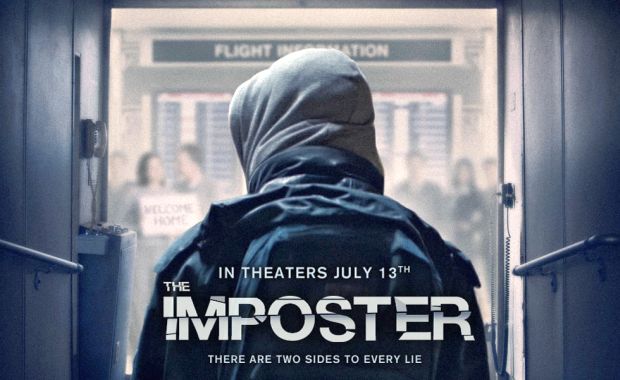
Today's Mini-review: The Imposter
The
Imposter: ***/*****, or 6/10
Semi-documentary
centered around the unbelievable case of a French con man who posed
as a missing American boy and almost got away with it. 13 year old
Nick Barclay disappears in Texas in 1994, seemingly reappears a few
years later in Spain, but looks nothing like the original (natural
ageing not withstanding). Yet on return in the States, he is hailed
by “his” family as the actual missing child, until the web of
lies on both sides just can't do anything but unravel completely. The
imposter is outed as a French swindler who has been passing himself
off as missing children before, despite being in his late twenties.
The real questions the film then tries to answer revolves around the
ease with which the family accepted the con man. As their preferred
explanation, the filmmakers suggest the possibility someone in the
family was involved with Nick's supposed death, which his relatives
tried to cover up. No hard evidence for this theory is presented
though. The film consists of interviews with the various parties
involved, intercut with re-enactments of what they claim transpired.
This movie in a lot of ways emulates the mischievous protagonist
himself, posing as a documentary and even being accepted as such,
while obviously heavily fictionalized. Still, in many instances it's
quite unclear where the truth ends and the fiction begins. This could
have made for a more intriguing film were it not for its overreliance
on talking heads, which soon gets tedious (especially when they
repeat themselves). The failure to account for what really happened
to poor little Nick also makes for a frustrating ending: though this
cannot be contributed to the filmmakers, their emphasis on their own
speculation regarding Nick's death at the hands of his family, which
is investigated quite thoroughly near the end of the film and then
briskly discarded as a mere theory, also makes for an unsatisfying
climax. This film undeniably applies an interesting format to tell
its incredible story, but the number of narrative lies employed to
make it more tense end up doing some injustice to its contents.
donderdag 13 december 2012
Review: Caesar Must Die
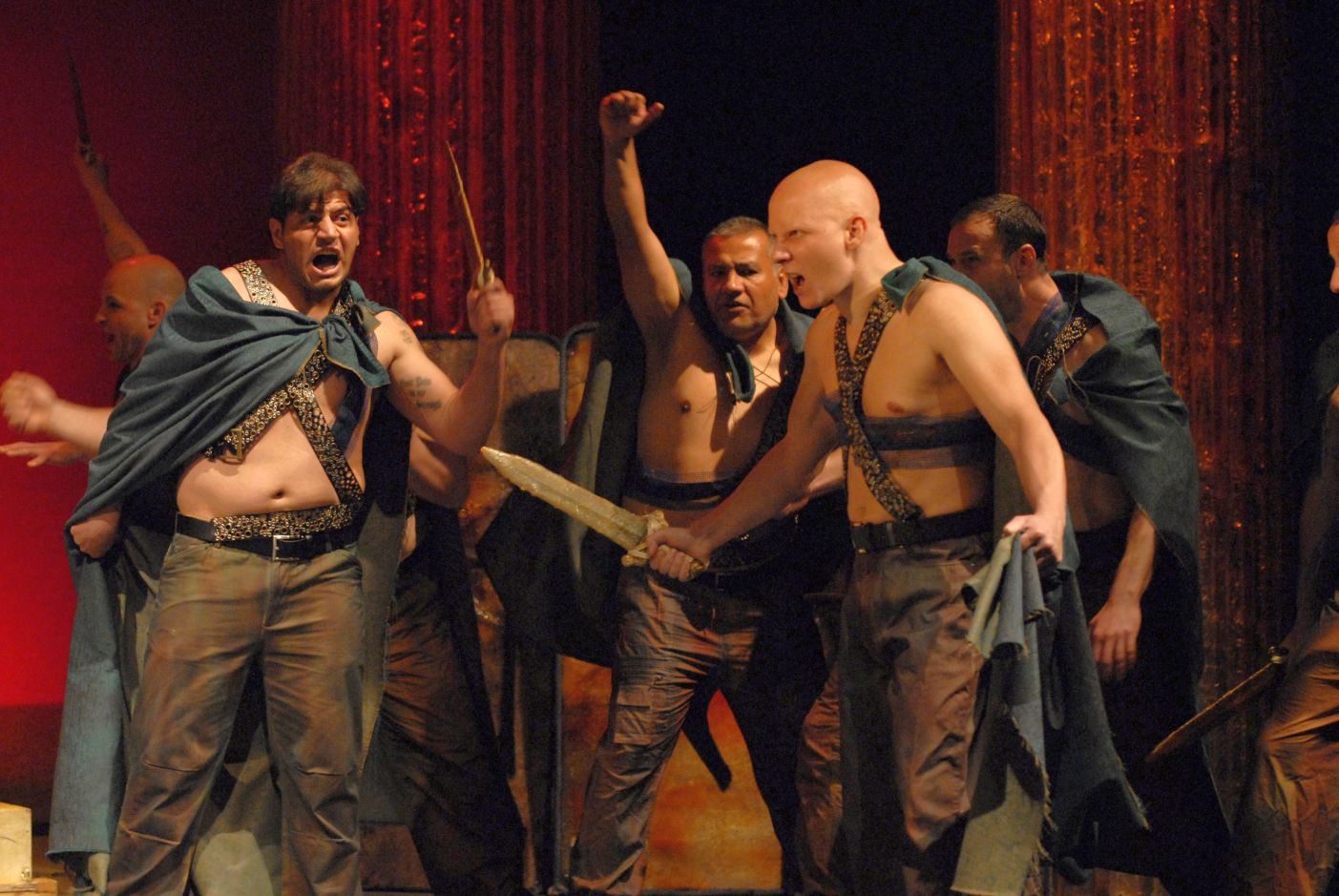
And so my computer once again returns to the store from whence it came to undergo yet another attempt to install Windows Vista - properly this time I hope. This means that once more I'll have very limited opportunities for about one or two weeks to update this blog. Do not despair though! Always, hope prevails. Today for example I had my second movie review, of an arthouse pseudo-docu drama called Caesar Must Die, posted on MovieScene, and the result (once again changed in terms of length from its original, this time at least by my own hand), can be found here:
http://www.moviescene.nl/p/142408/caesar_must_die_-_recensie
Up next in my MS schedule is a press screening for Silent Hill: Revelation 3D next week. It'll be a nice reprieve from reviewing arthouse flicks (which is not to say I don't enjoy that). I sincerely hope my computer has returned to me by that time, otherwise I'll find writing a piece about said movie quite the challenge. Fortuitously, in darkness there is always a little light left, since the large amounts of spare time I now have at my disposal make it easier for me to watch the predecessor (simply named Silent Hill) to prepare me for the upcoming chore.
Oh, and supposedly The Hobbit arrived at theaters this week, which means I'll be tasked with the quest to see it despite overwhelming odds in the shape of the humongous masses on the same quest. If you thought Frodo had it bad, think again... Nobody ever said going to the movies for free is easy...
http://www.moviescene.nl/p/142408/caesar_must_die_-_recensie
Up next in my MS schedule is a press screening for Silent Hill: Revelation 3D next week. It'll be a nice reprieve from reviewing arthouse flicks (which is not to say I don't enjoy that). I sincerely hope my computer has returned to me by that time, otherwise I'll find writing a piece about said movie quite the challenge. Fortuitously, in darkness there is always a little light left, since the large amounts of spare time I now have at my disposal make it easier for me to watch the predecessor (simply named Silent Hill) to prepare me for the upcoming chore.
Oh, and supposedly The Hobbit arrived at theaters this week, which means I'll be tasked with the quest to see it despite overwhelming odds in the shape of the humongous masses on the same quest. If you thought Frodo had it bad, think again... Nobody ever said going to the movies for free is easy...
woensdag 5 december 2012
Recensie: Sol LeWitt
Today witnesses the posting of my first actual movie review on MovieSene.nl, Sol LeWitt, a documentary about the American minimalist and conceptual artist of the same name. The result of my first press screening experience, which had me actually sitting in the theatre and watching the film instead of merely ushering attendants, in can be viewed here:
Sol LeWitt
Please note that my review has been cropped a little bit to get it more in line with MovieScene's style. It's a bit shorter than my average review posted on this blog (though that is probably only for the better), while some sentences and words have been changed in order not to alienate readers not used to overly long and thorough descriptions. So if you're reading this and you end up thinking, 'my, his style sure has improved/gotten worse!', keep in mind my writing style is very much the same. I'm just being reigned in a bit, it's a learning curve.
Here's to many more reviews to follow!
Sol LeWitt
Please note that my review has been cropped a little bit to get it more in line with MovieScene's style. It's a bit shorter than my average review posted on this blog (though that is probably only for the better), while some sentences and words have been changed in order not to alienate readers not used to overly long and thorough descriptions. So if you're reading this and you end up thinking, 'my, his style sure has improved/gotten worse!', keep in mind my writing style is very much the same. I'm just being reigned in a bit, it's a learning curve.
Here's to many more reviews to follow!
Abonneren op:
Posts (Atom)