Posts tonen met het label epic. Alle posts tonen
zaterdag 11 juni 2016
Today's Review: Warcraft
Up to date again.
Warcraft - Recensie
Judging from the on-again, off-again subtitle The Beginning, it's clear Universal Studios hopes for this first entry into the Warcraft film franchise not to be the last. A ton of money has been thrown at the screen on a project that has been in development for nigh a decade to entice both fans and ignorant audiences alike, but the best intentions regardless, it's unlikely the film will sit well with the latter demographic, while it remains to be seen whether it'll be to the liking of the former. After all, the gamers are simple spectators on a quest played by Duncan Jones and his team, rather than their own. General viewers meanwhile get treated to a grand and supposedly rich fantasy universe for which they have a tough time developing a feeling, considering Warcraft only forms the tip of the proverbial iceberg.
The World of Warcraft is vast and extensive, yet a film franchise has to start somewhere explaining it all. The Beginning addresses the origin of the wars between Orcs and Men, so it is said in the opening narration. Which also proves a major spoiler to the movie's own plot, considering the outcome of it all has already been determined. While much of the movie follows a minority of Orcs attempting to establish a truce with the world of Men they just invaded, with that opening statement in mind, there's few narrative surprises in store for us. Which doesn't mean we don't feel for this peaceful, noble Orc warriors, who find themselves a pawn of a sinister force's greater schemes to suck this world dry of life like it did their own home before. Brought to life by the latest motion capture innovations, the movie follows the new path of creating convincing digital characters based on intense acting performances, in the same style as the recent Planet of the Apes movie so successfully. It works, as these are some of the finest Orcs we've seen on the big screen thus far.
Alas, the same cannot be said for their human counterparts. The noble knights and conniving warlocks of Azeroth aren't nearly as interesting to behold as their fresh enemies, a victim of both dull, generic fantasy writing and uninspired performances. Though there's definitely a pool of talent assembled here, none of these actors truly seemed to have affinity with the exotic subject matter. All the silly spells and swashbuckling sword moves can't change that, and there's plenty of both to go around. In fact, Warcraft fanatics will recognize plenty of everything from their beloved games much to their enjoyment and to the detriment of ours, the casual viewers not acquainted with this realm. Especially in the first thirty minutes of the movie, the plot travels from one outlandish location to the next without allowing us much room to absorb it all, get to know its rules or develop a sense of geography for the whole. While names like Ironforge and Stormwind are no doubt iconic nomenclature to the fans, they never rise above the sound of generic fantasy to inexperienced ears. Same can be said for the other inhabitants of Azeroth: Dwarves, Elves and the like are briefly seen here and there but otherwise play no part.
Undoubtedly there's more to the World of Warcraft than what's shown here, but for the general audience, what realms are served never really click. It all looks fabulous but none of it makes us truly care on the same level as the Lord of the Rings movies did. Whether the fans will absorb this take on their beloved franchise as much as they did their interactive equivalent remains to be seen, but the studio better hope they do. Other audiences at best get a decent two hours of generic fantasy entertainment out of it, but nobody will be converted to the Warcraft cause. Which, considering the cost of this hugely expensive movie, might easily suggest The Beginning will also prove the end for the Warcraft film franchise.
woensdag 2 juli 2014
Today's Triple News: an exodus of empires at the Apocalypse
The quest to post new news continues:
http://www.moviescene.nl/p/156389/eerste_teaser_boardwalk_empire_seizoen_5
Looks good. Looks positively final too. A sense of foreboding and imminent closure is clearly instilled with all the little hints at the show's ending found here. 'All Empires Fall', not very subtle, but it can't hurt to let the viewer know this grand show will soon come to an end. And am I gonna miss it. Boardwalk Empire is definitely on my Top-3 of currently running shows. Spectacular production values, compelling writing, intriguing mix of fiction and history and some of the loveliest acting you'll find on telly these days: what's not to like here? But as always, all good things must come to an end. Besides, I haven't even seen season 4 yet, so the finale is not so close for me as for most others. It's a nice thing the teaser makes it clear some of my favorite characters are still alive - some of them just had to be, according to the history books - but I can take a spoiler or two, as they are unavoidable when you're in a line of (unpaid) work that includes posting movie news. Nevertheless, as has become obvious throughout previous seasons (or indeed, most HBO shows for that matter), death still ever lurks around the corner for the characters we've come to appreciate. So we better enjoy seeing these folks interact with each other on screen for a final season, while we still can. For even if they do survive all the way up to the end, we won't be seeing them again anyhow.
http://www.moviescene.nl/p/156408/nieuwe_fotos_ridley_scotts_exodus
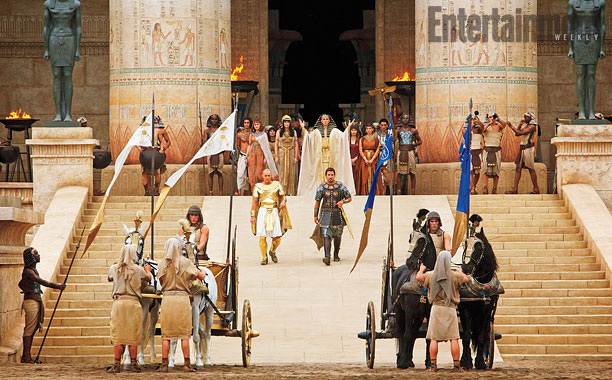
There's no denying Sir Ridley Scott is the closest thing we have today to the Cecil B. DeMilles and David Leans of yesteryear. While most of his contemporary colleagues opt to film against mostly blue-screen backdrops on this type of epic film, Scott prefers to deal with the real thing as much as the budget allows. And thanks to his long list of past successes, his budgets tend to be fairly large. Hence his opportunity to shoot scenes on sets like the one above, which can best be described as 'lavish'. Which is not to say Scott has difficulty employing the use of digital trickery when tangible means fall short. There's still a Red Sea to part the blue way (or green, it's all the same). The appeal of lush visual effects, spectacular set construction and grandiose costume design aside, will this new retelling of the familiar Exodus story offer anything of novelty? Maybe Scott took a note from Darren Aronofsky's Noah, which told the Biblical tale in a more streamlined form (also to accommodate viewers of other persuasions, it cannot be denied). However, Scott is a much more straightforward director with a tendency to prefer the classical approach of storytelling. I very much doubt his take on Exodus will deviate much from previous incarnations, surely not as much as Noah dared to be different. Which may be for the better, considering the fairly uncomfortable, haphazard results that spawned (also thanks to studio interference).
http://www.moviescene.nl/p/156405/singer_onthult_details_opening_x-men_apocalypse
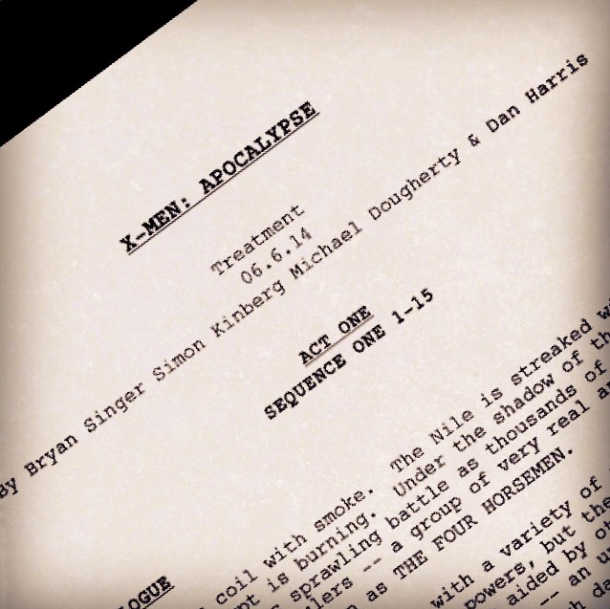
And there's more ancient Egypt to go around in Hollywood these days. Which will not surprise audiences who knew better than to walk away before the end credits of X-Men: Days of Future Past had rolled completely. As Bryan Singer's tease of the treatment shows here, X-Men: Apocalypse will open more or less on the same note its predecessor left us, namely the backstory of the age old mutant En Sabah Nur, who will grow over the centuries to become the new X-nemesis Apocalypse. Spectators familiar with the comics won't be surprised by this particular bit of background story for the mutant megalomaniac, as it is integral to the formation of this big Marvel baddie and his 'not all mutants were created equal' philosophy. The scene also serves to flesh out his prime henchmen, the Four Horsemen, which may be of major importance to the various X-Men we're familiar with, as some of them will undoubtedly be chosen to represent Apocalypse - whether they want to or not - in the movie's present day and age. Or is Singer going to be very brave and ignore the events of Days of Future Past by diving directly in the alternate reality popularly known as the Age of Apocalypse? I would applaud that decision, but I'm sure it won't come that far, as the studio will be convinced it will needlessly confuse the general audience, which might have some difficulty accepting the notion of alternate universes which in the comics has become a routine ingredient of the X-franchise. It would also detract from the cinematic universe studio Fox is currently hoping to built (though Days of Future Past showed disappointingly little evidence of that, hinting at the studio's insecurity as to how to proceed on that front) if things were to be mixed up too much at this point. Lastly, Days of Future Past's overly cheerful ending, where a dark finale heralding the rise of Apocalypse seemed to have made so much more sense than the happy-happy joy-joy climax we were served instead, goes to show Singer too isn't so brave as to stir things up that aggressively. I don't expect to be surprised by X-Men: Apocalypse too much from a narrative perspective, as I'm not at all surprised by the hints dropped through this Instagram tease.
Labels:
boardwalk empire,
bryan singer,
Christian Bale,
epic,
exodus,
HBO,
history,
Marvel,
moviescene,
Ridley Scott,
script,
Steve Buscemi,
television,
x-men,
x-men: apocalypse
woensdag 4 juni 2014
Today's Double News: Hercules into the wild
How's about sum' news, yo?:
http://www.moviescene.nl/p/156010/nieuwe_trailer_hercules_online
http://www.moviescene.nl/p/155999/opvolger_nieuwe_wildernis_in_de_maak
The rule that success at the box office guarantees a sequel is not limited to fiction films. When enough money is made, even documentaries require a follow-up of sorts by an insatiable studio. Of course, the 'of sorts' bit is what is most poignant here, as it's open to interpretation just how such a sequel should built on what came before. After all, a documentary dealing with a specific subject can basically cover everything there is to say about that and not leave room for more of the same about the subject, thus rendering a sequel a blatant redundancy. So it is with De Nieuwe Wildernis in my mind. The point has been made well enough: the Oostvaardersplassen are a beautiful nature preserve that doesn't actually preserve nature as it used to be, but nature as it can be, aided by humanity's graces. You can shoot more breathtakingly splendid shots of horses prancing about, foxes hunting or all manner of birds generally being pretty, but it would add little of consequence. A new angle is what makes it stand out, and it seems distributor Dutch Filmworks has found one. And so this sequel isn't really a sequel, just equipped with a title - the Dutch version at least - that creates all the right expectations from an audience that fondly remembers its "predecessor" and hopes to be dazzled by nature's beauty once more. And yes, it does show the Oostvaardersplassen again. But not solely that area, as it is incorporated into a mosaic of European nature in general. And since the movie is made by Frenchmen who conceived of their angle independently from De Nieuwe Wildernis, expect a different kind of documentary. It's good to know Dutch audiences will soon get the chance to be familiarized by the splendour of forests and wildlife outside of Holland too, so they'll know where to plan their next vacation. As for the possibility of a direct follow-up, I think it surely exists. There's other nature preserves in the Netherlands worthy of being immortalized on film, you know. How about National Park the Meinweg in Limburg? Or the Hoge Veluwe? Why not focus on the wacky antics of beavers in the Biesbosch, that ought to attract a crowd. An actual sequel to De Nieuwe Wildernis really isn't outside the realm of possibility. Just as long as people stay away from the depicted area after having been delighted by the film instead of going around trampling nature's beauty en masse, I'm all for it.
This second Hercules trailer makes me a bit more hesitant about the project that the first. Those fabulous Twelve Labours of his only form part of the background story apparently, so most, if not all, of the neat monster action seen in this trailer will not be featured as extensively as I had hoped in the movie proper. Instead, the plot will focus on Herc's latter days as a mercenary, saving a kingdom and a beautiful princess from tyrannical oppression. Sounds a bit too familiar a plot for my taste. Not much different from what The Legend of Hercules was all about earlier this year, except with a bigger cast and budget (good thing too, makes it look less than a crappy video game). Also fairly reminiscent of Dwayne Johnson's own The Scorpion King. Still good for a laugh no doubt, but not as spectacular as recanting all Twelve Labours in full would have been. And there's still no movie that does justice to that complete Hercules epic, it's always served in bits and pieces instead. This story would really be better suited for a TV series, also considering its rather episodic nature. I wouldn't be surprised if that were to happen eventually (preferably on HBO with lots of nudity and gore and all the other niceties of life). But for now, we have to make the best we can with partial retellings of the myth, some good (hopefully), most not so much (like the last one). I remain skeptic as to what category this particular rendition will end up belonging to, though I can guess.
woensdag 7 mei 2014
Today's News, and plenty of it
Time restraints prohibited me to repost some of my news items for MS on this blog, so today there's more than usual:
http://www.moviescene.nl/p/155538/mole_man_gecast_voor_fantastic_four_reboot
http://www.moviescene.nl/p/155565/eerste_trailer_star_wars_rebels
http://www.moviescene.nl/p/155587/frank_lammers_speelt_michiel_de_ruyter
http://www.moviescene.nl/p/155616/spring_breakers_2_aangekondigd
Let's just start with the oldest bit of novelty and work our way to the latest, shall we?
Hopefully Nelson will fare better in this Marvel movie than he did in the last, where we only witnessed the beginning of his rise to supervillainy, but were withheld the result. Apparently Fox has bigger events in store for the seasoned character actor this time, already outing him as the Mole Man-to-be, though underscoring he won't be used as such in the first upcoming installment in the FF's reboot franchise. After all, Dr. Doom is slated to take centre stage as the primary antagonist for that film, as it ought to be, as he's the Fantastic Four's most appreciated and recognizable foe. The Mole Man is indeed a decent baddie for a later film, and since a second movie has already been announced, it's likely that's where we will first see Nelson assuming the mantle of the dimunitive underground monarch. Nelson is a bit taller than we're used to seeing the Mole Man, so either the studio fits the character to the actor - which may not be such a bad idea as an evil midget is the stuff of both political incorrectness and silliness - or Nelson will undergo a bit of a CG transformation to make his appearance adhere more to what the comic book fans will most likely expect.
As for computer generated imagery, Star Wars has had lots of it over the last fifteen years, but nowhere near as much as on the small screen in various animated shows. This fall, a new one will be added to the Disney XD channel, called Star Wars Rebels (no colon). This first brief trailer adequately shows it's from the same creators as The Clone Wars series, and as such the franchise stays consistent in terms of animation style on telly. However, this is the first Disney produced Star Wars show, and a dreaded feeling of childishness cannot be denied upon viewing the promo above. Bumbling droids and cheesy oneliners have been a staple of the franchise since its inception, though more frequent in use since the prequel trilogy. It seems Disney has no trouble continuing this trend to appeal to kids, though older audiences may not find it as agreeable. Of course, most adults were largely done with any new Star Wars material after Episode III, and those that remain hopeful of improvement will no doubt focus all of their attention on the next true event, the release of Star Wars Episode VII. Until such time, Rebels is as good a way as any to ensure Disney keeps its publicity running and guarantee the current generation gets indoctrinated into Star Wars, so they can be influenced to run to toy stores and buy every conceivable tie-in merchandise items Disney has licensed. And if Episode VII proves any good, the older generation will no doubt do likewise.
I wasn't aware a movie about the life and times of Michiel de Ruyter was in production, but as he's one of the most iconic Dutch historical heroes around, it had to happen sooner or later. Historical epics that tell of other chapters of Dutch history than the events in WW II have been kind of a trend since the successful Nova Zembla, though for every hit there is a painful flop to remind us of the challenge. Remember Kenau? Most likely you don't. Considering the abundance of naval battles De Ruyter fought, the producers have their job cut out for them keeping the budget in line. Which is no doubt why they had to let Yorick van Wageningen go. He was the perfect choice in my mind, but even the finest piece of casting is only a small piece of the whole the budget allows for. Frank Lammers is a fine second choice: he's fairly well known to Dutch audiences but hasn't had a breakthrough internationally, making him more affordable than Van Wageningen who has co-starred in various big Hollywood productions. Plus, Lammers has proven himself to be a capable, reliable actor, and not just for his role on Nachtrit for which he won a Gouden Kalf. If he can fight his way through taxi wars, naval battles should be an easy labor for him.
A sequel to Spring Breakers? That's the attraction of the less artsy elements of that particular movie, tits and ass and young Hollywood starlets, speaking. Those are no doubt the ingredients that drew in the majority of the audience for the first film. Nevermind the director's weird and hallucinatory montage and lighting, the dreamy visual quality and the simple plot of sex and violence, crime and drugs relaying the greatest imaginable culmination and therein the demise of the American Dream. Mr. Korine told his tale and presented his warning of lust and doom, and that suffices for him (apparently, as he's not inclined to participate in this sequel). Not so for the studio, who is now pressing for a second movie containing more of the same. Which is not to say there's not more to state on the subjects Korine discussed. Religion is certainly a subject that would fit in easily in a tale of Sodom and Gomorrah like this one. In fact, it was already lightly touched upon in the predecessor via one of the female protagonists who disappeared early on in the film (and for the better no doubt). There's more controversy to tackle in that department, plus a potential to bring back that character. Whether or not the studio cares about these possible ideological overtones or not, a Spring Breakers 2 could work. But considering most audiences thought of the first film as a disappointment (most of them probably just didn't get its intentions, even though this sounds horribly elitist of me to say), is there any public interest in a second coming? Then again, sex always sells. Isn't there another batch of former Disney starlets ready to exploit?
http://www.moviescene.nl/p/155538/mole_man_gecast_voor_fantastic_four_reboot
http://www.moviescene.nl/p/155565/eerste_trailer_star_wars_rebels
http://www.moviescene.nl/p/155587/frank_lammers_speelt_michiel_de_ruyter
http://www.moviescene.nl/p/155616/spring_breakers_2_aangekondigd
Let's just start with the oldest bit of novelty and work our way to the latest, shall we?
Hopefully Nelson will fare better in this Marvel movie than he did in the last, where we only witnessed the beginning of his rise to supervillainy, but were withheld the result. Apparently Fox has bigger events in store for the seasoned character actor this time, already outing him as the Mole Man-to-be, though underscoring he won't be used as such in the first upcoming installment in the FF's reboot franchise. After all, Dr. Doom is slated to take centre stage as the primary antagonist for that film, as it ought to be, as he's the Fantastic Four's most appreciated and recognizable foe. The Mole Man is indeed a decent baddie for a later film, and since a second movie has already been announced, it's likely that's where we will first see Nelson assuming the mantle of the dimunitive underground monarch. Nelson is a bit taller than we're used to seeing the Mole Man, so either the studio fits the character to the actor - which may not be such a bad idea as an evil midget is the stuff of both political incorrectness and silliness - or Nelson will undergo a bit of a CG transformation to make his appearance adhere more to what the comic book fans will most likely expect.
As for computer generated imagery, Star Wars has had lots of it over the last fifteen years, but nowhere near as much as on the small screen in various animated shows. This fall, a new one will be added to the Disney XD channel, called Star Wars Rebels (no colon). This first brief trailer adequately shows it's from the same creators as The Clone Wars series, and as such the franchise stays consistent in terms of animation style on telly. However, this is the first Disney produced Star Wars show, and a dreaded feeling of childishness cannot be denied upon viewing the promo above. Bumbling droids and cheesy oneliners have been a staple of the franchise since its inception, though more frequent in use since the prequel trilogy. It seems Disney has no trouble continuing this trend to appeal to kids, though older audiences may not find it as agreeable. Of course, most adults were largely done with any new Star Wars material after Episode III, and those that remain hopeful of improvement will no doubt focus all of their attention on the next true event, the release of Star Wars Episode VII. Until such time, Rebels is as good a way as any to ensure Disney keeps its publicity running and guarantee the current generation gets indoctrinated into Star Wars, so they can be influenced to run to toy stores and buy every conceivable tie-in merchandise items Disney has licensed. And if Episode VII proves any good, the older generation will no doubt do likewise.
I wasn't aware a movie about the life and times of Michiel de Ruyter was in production, but as he's one of the most iconic Dutch historical heroes around, it had to happen sooner or later. Historical epics that tell of other chapters of Dutch history than the events in WW II have been kind of a trend since the successful Nova Zembla, though for every hit there is a painful flop to remind us of the challenge. Remember Kenau? Most likely you don't. Considering the abundance of naval battles De Ruyter fought, the producers have their job cut out for them keeping the budget in line. Which is no doubt why they had to let Yorick van Wageningen go. He was the perfect choice in my mind, but even the finest piece of casting is only a small piece of the whole the budget allows for. Frank Lammers is a fine second choice: he's fairly well known to Dutch audiences but hasn't had a breakthrough internationally, making him more affordable than Van Wageningen who has co-starred in various big Hollywood productions. Plus, Lammers has proven himself to be a capable, reliable actor, and not just for his role on Nachtrit for which he won a Gouden Kalf. If he can fight his way through taxi wars, naval battles should be an easy labor for him.
A sequel to Spring Breakers? That's the attraction of the less artsy elements of that particular movie, tits and ass and young Hollywood starlets, speaking. Those are no doubt the ingredients that drew in the majority of the audience for the first film. Nevermind the director's weird and hallucinatory montage and lighting, the dreamy visual quality and the simple plot of sex and violence, crime and drugs relaying the greatest imaginable culmination and therein the demise of the American Dream. Mr. Korine told his tale and presented his warning of lust and doom, and that suffices for him (apparently, as he's not inclined to participate in this sequel). Not so for the studio, who is now pressing for a second movie containing more of the same. Which is not to say there's not more to state on the subjects Korine discussed. Religion is certainly a subject that would fit in easily in a tale of Sodom and Gomorrah like this one. In fact, it was already lightly touched upon in the predecessor via one of the female protagonists who disappeared early on in the film (and for the better no doubt). There's more controversy to tackle in that department, plus a potential to bring back that character. Whether or not the studio cares about these possible ideological overtones or not, a Spring Breakers 2 could work. But considering most audiences thought of the first film as a disappointment (most of them probably just didn't get its intentions, even though this sounds horribly elitist of me to say), is there any public interest in a second coming? Then again, sex always sells. Isn't there another batch of former Disney starlets ready to exploit?
Labels:
computer animation,
epic,
fantastic four,
frank lammers,
michiel de ruyter,
mole man,
moviescene,
sequel,
spring breakers,
spring breakers 2,
Star Wars,
star wars rebels,
tim blake nelson,
trailer
zondag 20 april 2014
Today's Review: Noah
Noah:
***/*****, or 6/10
You
have to applaud his boldness, as Darren Aronofsky isn't afraid to
seek out controversy with his first blockbuster movie. After sticking
to the experimental and independent corners of contemporary American
cinema for decades and continuously teasing the industry with his
alleged plans to direct a big budget film for a major studio on more
than one occasion (RoboCop for example), Aronofsky finally did
just that. He hasn't made it easy on himself, opting for a Biblical
epic that needs to appease both the religious spectators and the
general international audience that does not care much for
Old-Testament overtones, in a time where the divide between the
tastes of both has parted as wide as Moses did the Red Sea. With
Noah, Aronofksy makes a brave attempt to keep everybody
emotionally invested in the story of the man chosen by God to
preserve His creation, but it proves an undertaking as monumental as
saving the whole of the animal kingdom on a single boat.
Noah's
main problem is it must be faithful enough to the source material
without being so religious as to scare away non-believers, as the
studio can't afford to choose one part of the film's potential
audience over the other to recuperate from its 125 million dollar
budget. Concessions to both parties had to be made, and the result is
an obvious, uncomfortable attempt at making a Biblical epic feel less
Biblical but no less epic. If the studio ever thought they could have
made a final cut of this movie that wouldn't be prone to harsh
judgment from Christian groups, screentesting three different rough
cuts – none of them in line with Aronofsky's own vision – to
strong criticism from a religious audience made them aware of the
impossibility of that endeavour. And so Aronofksy's cut is the one
shown in theaters, bound to undergo the inevitable public scrutiny.
Noah
follows Russell Crowe as the titular character. A descendant from
the line of Seth, he and his family live a life of vegetarian
righteousness and solitude, away from the rest of mankind, the
offspring of the murderer Cain, which has deteriorated into a
semi-industrial yet barbaric state and devoured the natural world.
Avoiding contact with other people, Noah and his wife (Jennifer
Connelly) have kept their three sons sheltered, teaching them to
respect creation above al else. Naturally, the boys prove curious as
to the way of life from their violent brethren, the rebellious middle
son, Ham (Logan Lerman) most of all. Plagued by disturbing visions of
humanity suffering under a great flood and inexplicable signs of the
Creator – a being adressed only as such throughout the piece, as
the term 'God' appears taboo – Noah seeks out his grandfather
Methuselah (Anthony Hopkins) to learn what It has in store for him.
The strange and somewhat childish hermit informs him that the Creator
is planning on cleansing His world by water, washing away all the
wickedness of man, while Noah is destined to save the innocent, the
animals, from extinction. And thus Noah sets out to built a vessel to
do just that.
Even
a man as tough as Crowe cannot hope to perform such a Herculean task
by himself, but thankfully Aronofksy has added some stone giants to
aid him in his divine labour. Fallen angels that were abandoned by
God because they desired to help the sons of Cain in their growth,
they exist as supernatural beings of light trapped in volcanic rock
bodies, deformed and in agony over the fact men returned their
kindness with mayhem and war. Of course, a man as obnoxiously
righteous and noble as Noah wins them over easily. These so-called
Watchers now do more than observe, helping Noah to complete his task
and protect the Ark they construct together over eight years time.
The stone giants form a welcome addition to the rather dreary Noah
and his one-note family, dull to watch thus far. It's also clear that
much of the budget for visual effects went into designing them, at
least more so than the budget allocated to rendering the animals that
come pouring into the Ark when it is completed. Their design, which
bears to mind both utterly fantastic and prehistoric creatures,
compels the audience to consider Noah even more of a fantasy
picture: unless Aronofsky means to take some sort of evolutionary
process into account, envisioning these animals as almost their
contemporary counterparts, but not just quite there yet.
Naturally,
it's the human element that proves key in making us care about Noah's
plight. The selfless man must confront the vicious king Tubal-Cain
(Ray Winstone) and his legion of followers as the rains start to fall
and the monarch gets wind of the Creator's purpose for his people.
Winstone as always makes for an alarming villain, but there is an
uneasy truth in the king's philosophical rhetoric as well: God made
man in his image, so does that not also include his capacity for
destruction? After all, how much difference is there between a God
who feels like destroying mankind to save His creation and a king who
kills to feed his people? Though the resulting thunderstorm battle
between Noah and the Watchers and Tubal-Cain's vast forces proves a
fairly thrilling battle – a comparison to the Helm's Deep battle
from The Two Towers does not feel inappropriate – it's such
exploration of the nature of man and his relation to the Creator's
purpose that make for Noah's most interesting aspect, as could
be expected from Aronofsky. Unfortunately, once the battle is over
and the waters swallow the world, the film has reached its narrative
climax, but Aronofsky spends another 45 minutes examining the
emotional climax, as Noah's family finally gets to evolve into more
than cardboards characters. A little late to the game, as an
overdrawn ending forces itself upon the spectator.
It's
in this third act of the film that Noah emerges as a true religious
fanatic, claiming to alone understand his Creator's purpose as His
chosen one. The protagonist feels that God intended for humanity to
die out entirely, including him and his family, for the greater good
of the innocent animals. Fortunately the only woman in his company
eligible for breeding, a young girl once rescued on the road (Emma
Watson, with an overly strong off-putting English accent), was
barren, but proves no more thanks to Methuselah's convenient magic.
As his oldest son gets her pregnant, Noah makes no secret from his
intention to murder her child if it's a girl. And so the noble hero
quickly degenerates into a violent misogynist terrorizing his family
for months on end. Suffice to say, the audience quickly loses all
sympathy for him. Maybe this new side of Noah is what ticked off the
religious audience in the first place, as it wanted to make clear
that not all true believers condone such homicidal, fanatically
zealous behavior. To make matters worse, the king managed to slip
aboard the Ark unseen and lick his wounds in the lower levels aided
by the rebellious teenager Ham, who is angry with his father for not
allowing him to find a girl to share his life with before the
Apocalypse. It takes nine months for the waters to recede and Noah's
crisis of faith to reach its crescendo, while the king is eating his
way through the animal kingdom in the lower decks and Noah doesn't
even notice species dying out rapidly on his watch. Of course Noah
predictably chooses love over blind faith in the end and kills the
king: and so generic Hollywood conventions triumph over Aronofksy's
fascinating but at times disturbing notions on the human condition in
relation to its supreme being.
For
those that feared Aronofsky's signature style is lost adhering to the
rules of Hollywood, they can rest assured to some extent as it is
only tempered. Aronofsky still gets to revel in fast cutting montages
and creepy dream sequences as often before, applying the former into
a neat but contextually awkward sequence of life's evolution. The
director also makes wonderful use of the fabulous landscapes provided
by the Iceland locations to give the viewer a sense of awe throughout
the picture. And as in his earlier work, he's not afraid to
occasionally outright shock the audience, illustrated by a
nightmarish sequence in which Noah visits Tubal-Cain's encampment in
secret and witnesses animals being torn apart alive by hungry mobs,
who have also taken to cannibalism. The disturbing imagery
effectively evokes dark and moody paintings of hell and Judgment Day
by the likes of Bosch and convinces us that whatever truth there is
in the king's words, Tubal-Cain is not a good guy. So we are left
with picking the side of a man who makes his family cry as he
threatens to kill newborns on behalf of a God who destroys the world
to start over, in the hopes of getting it right this time. It's
ironic the studio tried to do a similar thing in the editing room to
get that final cut of Noah that appeases everybody, despite
the misgivings of the director who had to do all the hard work. Man
failed God (again) as was bound to happen, and though there's solid
action galore and a decent time allotted for thoughtfully debating
the relationship between man and his creator, Aronofksy similarly
could never have succeeded in making Noah work for everybody.
maandag 31 maart 2014
Today's Review: 300: Rise of an Empire
300:
Rise of an Empire: ***/*****, or 6/10
The
visually unusual action-on-steroid flick 300 proved to be
quite the unexpected box office success back in 2006. It took a while before the
army of pixel pushing programmers got reassembled for a second chance
at glory, which many blamed on Frank Miller, the writer/artist of the
original graphic novel of the same name. Considering Miller isn't
even done publishing his follow-up Xerxes yet and the current
sequel 300: Rise of an Empire hardly follows that particular
story, such critique is quite unfounded. This second installment
could have been shot years ago, and it would probably have been for
the better, since the distinguished visual style that characterizes
both this movie and its predecessor has been copied almost as often
as the signature quote 'This is Sparta!' has since been
enthusiastically and overly loudly uttered in fanboy circles. But
what becomes quite clear early on upon watching Rise of an Empire, is
that 'this' is not Sparta anymore.
Rise
of an Empire, from a narrative viewpoint, serves as both a
prequel and a sequel to 300, and even has some of the newly
depicted events take place simultaneously with its illustrious
forebear. The result is a rather uncomfortable mix of separate story
elements all cramped together in one movie that feels the need to
both explain the motives behind the ruthless conquest of the
antagonist, the Persian king Xerxes (Rodrigo Santoro), and explore
the political intrigue between the various Greek city-states that
must unite against him to keep Greece Greek. The movie flashes back
to Xerxes' past as easily as it does to the outcome of the battle of
Thermopylae, which makes for an overall chaotic feel that was lacking in the original 300, whose narrative structure proved less
distracting and more coherent. The movie starts with the history of
how Xerxes became king of Persia after the death of his father at the
hands of the Athenian Themistokles, and his rise to power afterwards
guided by delusions of divinity. A supernatural element provided by
some fluorescent pool in a cave which supposedly made him a god is
all too easily discarded by the spectator from its inception, as he/she has already
seen the scar Leonidas gave him in the previous film, which
effectively stripped him of his godlike status. And as soon as the
movie is done demystifying the giant despot, who we find out
basically grew from a whimpy princeling's grief over his father, the
title of the film makes progressively little sense, as we're only ten
minutes into the movie. It took that long for the titular 'empire' to
'rise', now the remaining 90 minutes will be spend on bringing about
its decline.
More
poignant to the title's failure is the fact Xerxes is merely a
supporting character to the overall story, as the movie is based
around the personal battle between Themistokles (Sullivan Stapleton)
and his Persian counterpart, Artemisia (Eva Green), the vengeful
admiral of Xerxes' navy. Artemisia is a sly, seductive and
manipulative woman who pressured her king into going to war with
Greece, despite the advice of his dying father against participating
in such a costly, doomed exercise. As a horribly abused former child slave of
Greek descent, she has some personal issues with the Greeks to
conclude, which brings her head-on with the Athenian statesman. Green
portrays this strong woman with visible delight and ensures the
enemy's side is not devoid of the necessary charisma, which would
have played well off Gerard Butler's equally commanding Leonidas.
Unfortunately, she has to make do with Stapleton's rather bland
Themistokles instead, who proves to lack the gravitas one would
expect from such a renowned politician. Equipped with largely the
same ideological motivations as Leonidas, Themistokles keeps droning on
about the magnificence of Greek freedom as opposed to Persian
tyranny, which he deems so grand and noble it's worth risking every
soldier's life to uphold it. Problem is, because of Artemisia's
distressing background of pain and suffering such lines are somewhat
rendered moot, as we know the limits of Greek freedom, while Leonidas at least did a much catchier job at
delivering them and inspiring his troops to kick Persian ass. We'd be
inclined to pick Artemisia's side, were it not for her routine of
viciously despatching her bumbling commanders in disturbing ways.
300:
Rise of an Empire proves to be a telling case of 'girl power'
over the political machinations of the men who assume command. The
film reintroduces the character of Queen Gorgo (Lena Headey), who
also serves as the film's narrator. It's not the endless quasi-poetic
lines the script supplies her, it's her ability to stand up to
Themistokles and voice her displeasure with his approach to fight
“his” war, coupled with her own desire to right the wrong that
was done to her and Sparta, that make her more compelling to watch
and listen to than her Athenian rival. Gorgo proves at least as tough
a female presence as Artemisia and the two are almost kindred spirits
if they hadn't been fighting on opposing sides. Unfortunately they do
not grace the screen together but are both limited to interacting
with the boring Themistokles. A showdown between both female
characters would have been preferable, but sadly we are denied. Too
bad, it's not like these movies care the least bit for historical
accuracy.
Though
narratively and emotionally this semi-sequel turns out to be a mixed
bag, it's the action and visual flair characteristic of the
established 300 style that should make the film. In that
regard the movie leaves little room for disappointment. However,
because of 300's then-originality and the numerous copycats
that followed it, there's little novelty to discern here. If you
expected excessively muscled men beating their adversaries in all
manner of gruesome, bloody ways, usually shown in extreme slow-motion
shots against obviously digital backdrops, that's what you'll receive. Athenian muscles are not as
outrageous as their Spartan counterparts, which is probably a good
thing as it ought to cause less physical insecurity amongst the
audience's male demographic (though the same may not be said of
Artemisia's ample bosom dimensions for female viewers). Since most of
the movie revolves around the naval battles between the Greek and
Persian fleets, the movie differs in tone with its predecessor mostly
in that regard, trading in the earthy red colour pattern for a blue
maritime quality. The bombastic hardrock style soundtrack remains to great effect though. Epic shots of ships ramming into each other and the
various tactics applied by both naval commanders to do as much damage
as possible serve the majority of the film's action sequences, but it
cannot be helped that these start to feel tedious as the movie
progresses. Battles on boats simply do not provide the same
opportunity for colourful combat diversity as land battles do due to
their limiting nature. Don't expect to see any monstrous men,
elephants or rhinos fighting in Artemisia's war. The script
apparently acknowledged this lack of fantasy by adding a strange
dream sequence in which a drowning Themistokles envisions giant
marine reptiles picking off his men as they lie dying in the water.
As any expensive blockbuster sequel of today, this movie is billed a
3D-experience, but little effective use is made of that technology.
There's the occasional arrow or spear in your face, but otherwise the
film offers little remarkable in this regard.
300:
Rise of an Empire is a fairly decent follow-up to its predecessor
that proves largely devoid of surprise or inspiration and arrives a
little late to the battlefield, but does what people expect it to do. It packs quite a punch in the female
acting department, but its male stars and their motives are simply
not as interesting to keep your attention from drifting on the waves
of its maritime action scenes. Though it serves its obligatory bit of
gory battle scenes, it stylistically can't stand up to its predecessor
and feels like little more than a compendium piece in terms of story.
It will definitely not rank as high on a popcultural level, absent
absurdly cocky but highly quotable lines that proved 300's
trademark and are sorely missed here. Truth is, Athenians are just a lot less fun to go to
battle with than those delightfully over-the-top-and-then-some
Spartans with their constant flow of witty reprisal.
woensdag 26 maart 2014
Today's Double News: Hercules ain't part of the Avengers yet here
Must post more news, must post more news!:
http://www.moviescene.nl/p/154668/eerste_trailer_dwayne_johnsons_hercules
http://www.moviescene.nl/p/154639/nieuwe_setbeelden_avengers_age_of_ultron
This Hercules is more like it. All kinds of monsters and supernatural elements present, just as the original Greek myth offered aplenty. It's amazing there hasn't yet been a Hercules/Herakles movie to do those elements of the story justice. You wish Ray Harryhausen had made a movie about the demi-god in his time. It seems this is the closest we will ever get, even though the central part of the story isn't about the Twelve Labours (so I wouldn't hope for too much solid monster action just yet). Instead, it's about Herc playing a merc and fighting a tyrant to save a kingdom. That sounds a little bit too much like The Scorpion King (The Rock's breakthrough in the film business), which in itself was doing a derivative job of the Eighties' Conan the Barbarian franchise. In fact, apart from the monsters and the instantly recognizable "brand name" Hercules, there's very little here that seems to set this story apart from Scorp. Oh well, at least it looks to be a fun action flick, with a good cast. And sorry Dwayne, I'm not referring to you. I'm talking about established GBAs (Grand British Actors) like John Hurt and Ian McShane. Plus less grand but still very British actors like Peter Mullan, Joseph Fiennes and Rufus Sewell. Why is it that action flicks like these always have to rely on Britain's top talent to carry the acting, while the Americans only show off their muscles? Acting your way out of a CGI heavy film like this, now that's a real Labour!
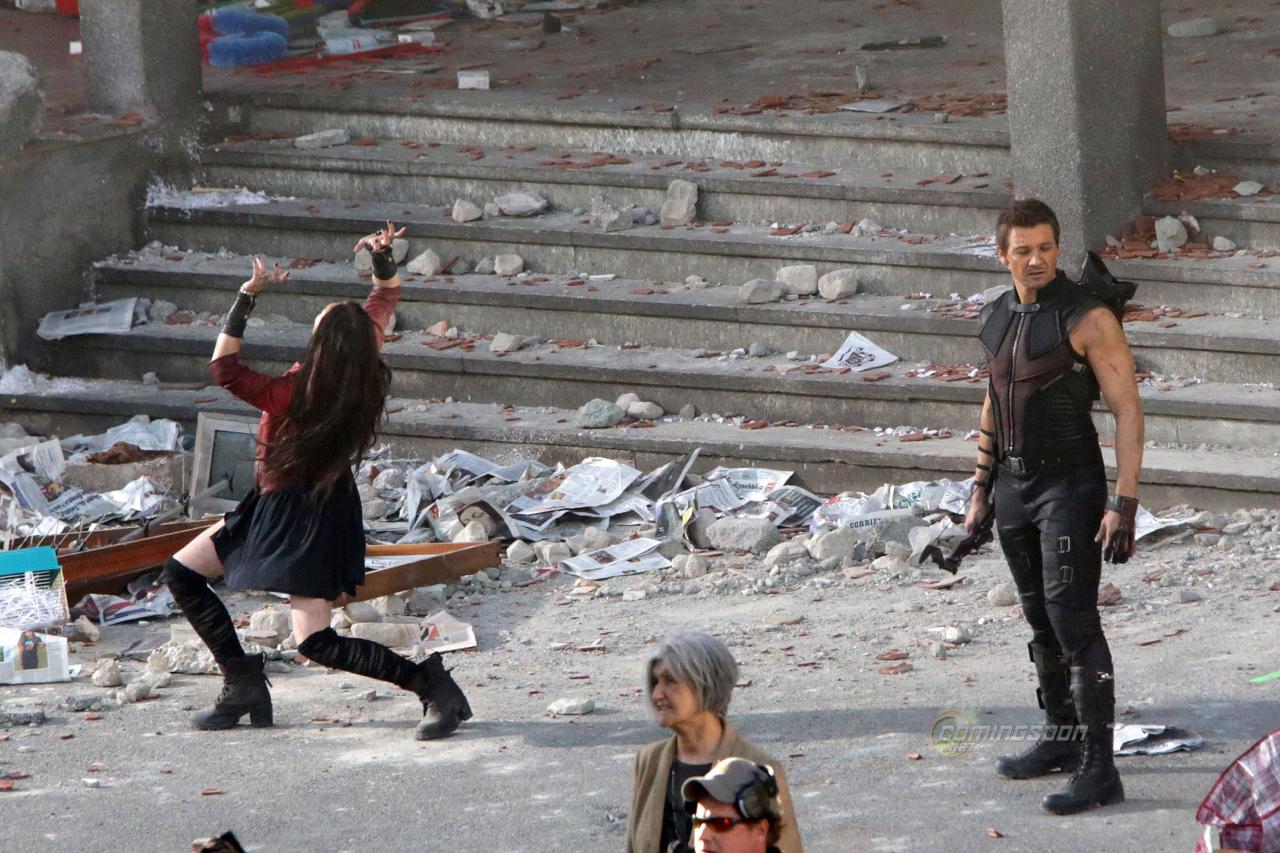
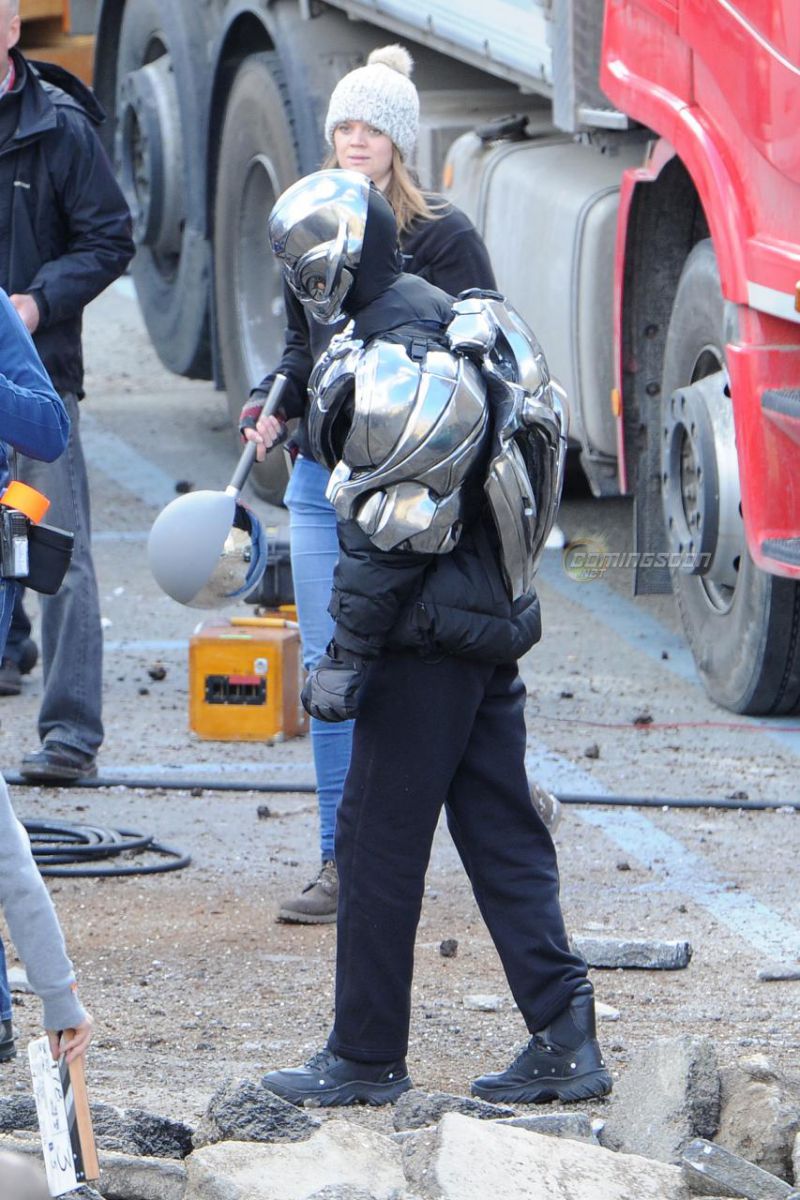
And we got our first glimpses of several new highly anticipated Marvel characters as photos from the Italian set of Avengers: Age of Ultron leaked. First off, there's
donderdag 17 oktober 2013
Today's News: Dwayne Johnson versus earthquake
Another post of mine on MovieScene:
http://www.moviescene.nl/p/150918/dwayne_johnson_gecast_in_rampenfilm_san_andreas
The user comment left behind by someone that read this newsflash isn't wholly incorrect: this does bear a fair bit of resemblance to 2012. Problem is, that film was basically the ultimate disaster movie, featuring everything from devastating earthquakes to giant volcanic eruptions and humongous tidal waves, so how could you hope to impress a post-2012 audience with "only" an earthquake? Simple. You add a star. As is the case in most disaster movies, the star of the film is the disaster itself, while the cast is only meant to guide you through it to add some human drama. That's why casts of disaster movies usually, with very few exceptions, don't feature big name moviestars but only 'moderately well known' actors instead, often with the addition of older actors that have slowly but surely fallen out of favor with the public's immediate interest (as was done all through the Seventies with classic actors of the Thirties, Fourties and Fifties). None of the actors in 2012 were genuine moviestars. But now Dwayne Johnson gets to stand up to an earthquake, and currently he's undeniably a hot star, with a fairly wide audience appeal. So people that don't care about Johnson get to enjoy the tremors (which probably won't bring The Rock down), while Johnson fans will care less about the actual catastrophe, but simply crave to see their hero back in action. You wonder why studios don't employ big names in this type of epic film more often. It may have something to do with the bad reputation of disaster movies (also thanks to the Seventies), that so far generally told stars they've reached their expiration date. Maybe Johnson can debunk that much maligned 'genre curse'.
In other ways San Andreas seems an overly standard disaster flick: epic shots of ruin and destruction coupled with standard family drama throughout (an estranged family too, that no doubt finds new strength due to their trials). I doubt Johnson can change much about that routine. Especially if it's brought to us by Brad Peyton, who delivered quite a similar story in Journey 2: The Mysterious Island, except against a fantasy backdrop. Even in 3-D though, I doubt San Andreas will outboast 2012 in terms of scope and awe.
donderdag 29 augustus 2013
Today's News: an Exodus of Thor posters


Here's a double bill for ya:
http://www.moviescene.nl/p/149631/nieuwe_posters_thor_the_dark_world
http://www.moviescene.nl/p/149632/nieuwe_cast_voor_ridley_scotts_exodus
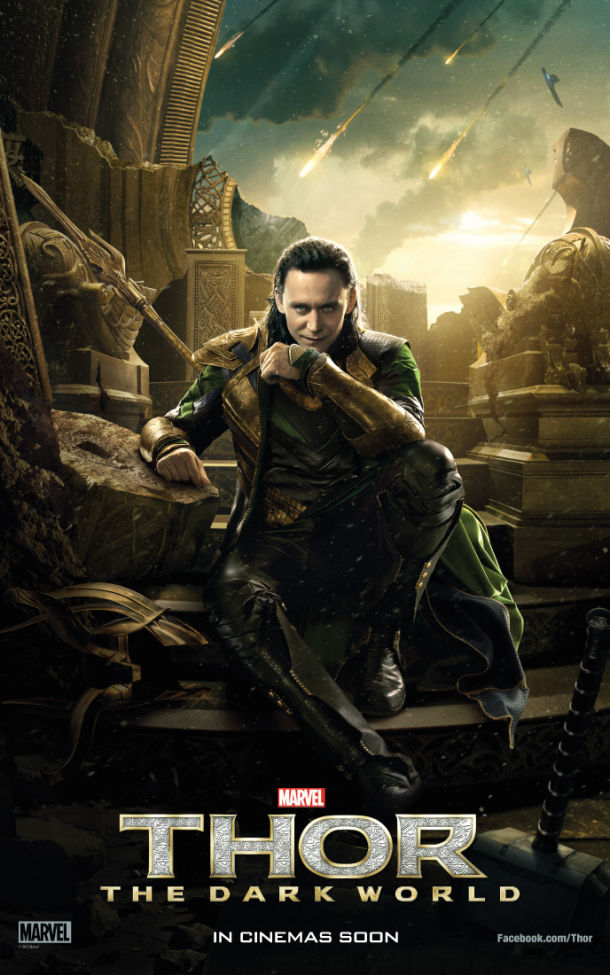
A pair of grand new posters, befitting the characters in question me thinks. Thor looks mighty and divine as a thunder god ought to, while Loki appears sinister and villainous as always. There's some subtle clues in the Loki poster concerning the fate of Asgard at the hands of the legion of the Dark World of Svartalfheim, possibly - and likely - with Loki's aid. There's little more to be said about these new one-sheets other than that they continue to foster hopes Thor: The Dark World will be an epic Marvel flick successfully succeeding its predecessor in terms of cosmic scope and marvelous mysticism.
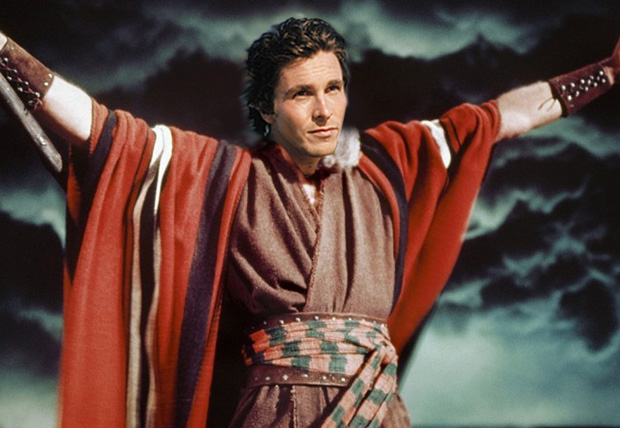
And speaking of epic - as subtle a segue as you're ever gonna get from me - there's Sir Ridley Scott's latest project which appears to be just that, but Biblical. It appears Exodus is his serious take on the Old Testament book of the same name, without going for a more cynical tone, as was at first the idea with his Robin Hood (which unfortunately didn't work out though, and it ended up a typical period film devoid of surprises accordingly). So far its increasingly impressive cast seems up to the task, though I do disagree with the casting choice for Christian Bale as Mozes; personally I wouldn't follow Bale to the Promised Land, though I concur there are plenty of others that would. I'm more intrigued by the casting of established character actors the likes of Ben Kingsley (also a Sir), John Turturro, Sigourney Weaver and Joel Edgerton (not Sirs). As for Aaron Paul, he seems the odd one out in this bunch. Unless he's supposed to deliver a lighter overall tone to the piece, something I trust Scott won't let get out of hand. That he can play the type of character he did in Breaking Bad is one thing, but now Paul must prove he's up to playing other types of roles as well. Under Scott's supervision, I say we need not fear for anything less than stellar performances of Bale's colleagues throughout. As for Bale himself, well... he's Batman... no more! Ben Affleck is Batman now, deal with it.
maandag 7 mei 2012
Conan the Barbarian (2011)
Rating:
***/*****, or 6/10
Re-imagination
of the Conan franchise and the barbarian character itself,
first immortalized by Arnold Schwarzenegger in 1982. Jason Momoa (the
former Khal Drogo on the brilliant HBO show Game of Thrones)
has big boots to fill indeed, and does it adequately enough judging
by the size of his biceps and the lack of subtlety and talent for
murder displayed in his take on Conan. This sleeker, more modern
action flick retells the origins of Conan, keeping close to
Schwarzenegger's Conan the Barbarian (1982) combined with some
elements from Conan the Destroyer (1984), starting of as a
wild child who witnesses his tribe massacred and his beloved father
(Ron Perlman!) viciously put to death at the hands of the evil tyrant
king Khalar Zym (Stephen Lang once again failing to portray a truly
disdainful antagonist as he did on Avatar (2009)). Seeking
revenge in the long run, Conan at first sticks to the life of a thief
and a pirate, until he picks up Zym's trace again and slashes his way
to the top through a long row of creepy henchmen, delivering some
decent action scenes and rescuing a beautiful lady of royal blood
(Rachel Nichols) in the process. This princess is intended as a human
sacrifice so Zym and his maniacal sorceress daughter (a delightful
Rose McGowan who is obviously having a ball here) can summon the
powers of an ancient mask and conquer the world. Of course Conan
doesn't make it easy for them, resulting in a string of violent
fisticuffs, intense moments of swords hacking into human flesh and
overly digital monsters to be fought, basically the ingredients most
spectators would have expected. Overall a fairly entertaining action
film, certainly the best in director Marcus Nispel's repertoire
(which isn't saying much with movies like Pathfinder (2007)
and Friday the 13th (2009) on his
score), but never truly special and certainly not as iconic as
Schwarzenegger's original portrayal of the classic Robert E. Howard
character. The movie did rather poorly at the box office, despite
being released in 3-D (though for most of the film you wouldn't have
noticed this), so we probably won't be hearing from Conan for a
while. A shame on the one hand, but on the other, we'll always have
Ah-nuld.
Starring
Jason Momoa, Stephen Lang, Rose McGowan
Directed
by Marcus Nispel
USA:
Millennium Films, 2011
Conan the Destroyer
Rating:
***/*****, or 5/10
Mildly
entertaining but ultimately underwhelming successor to the superior
Conan the Barbarian (1982). The strong but silent warrior
returns to the big screen as he is tasked by a ruthless queen to
escort her young and beautiful niece to a faraway magic castle to
find a jewel that can awaken the sleeping god, Dagoth, she worships. Together
with a ragtag band of fellow warriors, Conan fights marauders,
sorcery and demons along the way, while the princess falls in love
with him. Little do both know she is destined to be a human sacrifice
to the monstrous god, and there are those in the warriors' ranks who
must ensure the girl will fulfill that destiny, even if it means
killing Conan in the process. Though there's more intrigue in the
story compared to its predecessor, it often gets in the way of the
plan simple action people will expect from this film, while a PG
rating, ill suited to the material (Barbarian was rated R
after all), further restricts the fighting to such an extent it never
gets beyond childish and mediocre. The
effects are also not on par with the first film, though they still
make for a decent dreamy level of quality that contributes to the
overall sense of fantasy. Noted science fiction and fantasy director
Richard Fleischer (20000 Leagues Under the Sea (1954),
Fantastic Voyage (1966), Soylent Green (1973)) has been
known to produce better fare than this, though it remains an
interesting entry in his oeuvre. A third movie, which could have
undone the flaws of this film, unfortunately never got beyond the
planning stages of production. In order to still get his dose of
fantasy acting, Schwarzenegger opted for a supporting role in the
suspiciously similar Red Sonja the following year, ironically
enough also directed by Fleischer.
Starring:
Arnold Schwarzenegger, Grace Jones, Wilt Chamberlain
Directed
by Richard Fleischer
USA: Dino
De Laurentiis Company, 1984
Conan the Barbarian (1982)
Rating:
****/*****, or 7/10
Classic
'Sword & Sorcery' type of film, a landmark fantasy movie of the
Eighties and the definitive cinematic breakthrough of the iconic
Arnold Schwarzenegger. Based on the works of Robert E. Howard and set in an unspecified chapter of mankind's
prehistory, Conan witnesses his tribe being massacred as a child by
the forces of the evil sorcerer Thulsa Doom (fabulous role for James
Earl Jones), after which the boy is doomed to slavery. Surviving his
ordeal of slave labor, the adult Conan rises all the stronger as a
gladiator and fights for his freedom, after which he sets out on a
bloody quest for vengeance. Trying his hand at theft at first, Conan
meets the beautiful female thief Valeria (Sandahl Bergman) with whom
he soon falls in love after which the pair is asked by a king to
reclaim his stolen daughter from the vile clutches of a Snake Cult
ruled by Doom. With a minimum of dialogue (no more than is absolutely
necessary for the character), Milius has the rogue warrior
mercilessly fight his way through hordes of monsters and minions
under the command of the villainous practitioner of the dark arts,
often with a very amusing cynical lack of subtlety, a form of acting
Schwarzenegger is shown to excel at (and would often do so again in
similar roles in his action packed repertoire). Though the effects
have aged quite a bit, they still add a wonderful otherworldly
quality to the piece, often emulated but rarely surpassed. A fabulous
epic score by Basil Poledouris completes the fun. Followed by the
inferior Conan the Destroyer two years later. The intriguing
opening narration of this film mentions Conan's ascent to the level
of king: though this was intended to be featured in a third film,
often claimed to be titled Conan the Conqueror, it sadly never
materialized.
Starring:
Arnold Schwarzenegger, Sandahl Bergman, James Earl Jones
Directed
by John Milius
USA: Dino
De Laurentiis Company, 1982
Labels:
action,
arnold schwarzenegger,
barbarian,
basil pouledoris,
Conan,
conan the barbarian,
epic,
fantasy,
james earl jones,
john milius,
robert e. howard,
sandahl bergman,
sword and sorcery,
thulsa doom
maandag 30 april 2012
Chronicles of Narnia: Prince Caspian, The
Rating:
***/*****, or 6/10
Second
entry into the Narnia franchise thankfully tones down its religious
overtones (the role of the Jesus lion Aslan is shortened quite a bit)
and trades it for a grittier and darker overall feeling. The four
Pevensie kids return to Narnia and find a great deal of time has
passed since they left their own magic kingdom. The Telmarines,
descendants of a band of pirate invaders, hold dominion over the
realm and have greatly reduced the number of its original inhabitants
(good thing too!), the various mythical creatures and annoying
talking animals. Their rightful heir, prince Caspian (pretty boy Ben
Barnes), finds himself victim of a foul plot by his uncle Miraz
(renowned Italian actor Sergio Castellitto) who claims the throne for
himself, leaving Caspian to run for his life, which brings him into
contact with the Pevensies and their native Narnian allies who plan
to bring down the genocidal Telmarine reign. Better acting (even the
kids have picked up a few tricks it seems), less Christianity, more
action and a more carefully crafted story make for a better Narnia
film, which still isn't saying that much. In fact, I may be biased
because I witnessed some of the filming while vacationing in
beautiful Slovenia at the time. It must be said, Slovenia's natural
beauty is used to great effect. Andrew Adamson redeems himself for
his first Narnia flick somewhat, but the film still leaves a few
things to be desired, including its obviously digital talking animals
and an overall lack of humor to tell us not to take things to
seriously here. The movie didn't do as well as hoped at the box
office, making Disney sell the franchise rights to Fox. Good
riddance!
Starring:
Ben Barnes, Sergio Castellitto, Liam Neeson
Directed
by Andrew Adamson
USA: Walt
Disney Pictures, 2008
Chronicles of Narnia: The Lion, The Witch and the Wardrobe, The
Rating:
**/*****, or 4/10
Obvious
attempt by Disney to cash in on the sudden popularity of the fantasy
genre in the wake of the fantastic Lord of the Rings movie
trilogy. The trick seemed simple: take a book from a well known
fantasy series and adapt it into a sweeping epic of a film, and build
an easily exploitable franchise around it. Granted, this first Narnia
film did pretty well at the box office, but remains maligned by
critics the world over and is an altogether feeble movie based on the
classic book by C.S. Lewis. During WW II, the four Pevensie children
are sent to live at a big mansion on the English countryside, where
they discover a wardrobe that turns out to be a doorway to the
fantasy world of Narnia. However, this realm is in the grip of a
severe ice age because the evil White Witch (Tilda Swinton doing a
good job at playing a ruthless villain) rules the land. The coming of
four human children means the dawn of a return to peace and
prosperity under the benign rule of the lion god Aslan (voice by Liam
Neeson), but the White Witch doesn't surrender her regime so easily
and a grand battle for the freedom of Narnia erupts, with the
Pevensies at the heart of it (fortunately Father Christmas equips
them with the necessary deadly tools to kill their opponents: good
job, giving weapons to kids!). Laced with extremely obnoxious
Christian overtones (including the annoying parallels between a
certain carpenter/magician and Aslan, who dies for the sins of
another but is resurrected), this movie at many turns feels like it
means to convert us to Christianity, while it's also a poorly acted - especially those pesky kids and a vast array of irritating digital talking animals - and humorless piece of work that takes
its fantasy concepts a little too serious, which seems an odd move
for director Adamson, who previously delivered two superb Shrek
films. The audience, apart from Christian fanatics who obviously
loved it, quickly grew tired of it as they demonstrated by making the
sequel Prince Caspian do quite poorly at the box office, after
which Disney swiftly abandoned the franchise, selling the rights to
Fox, where its right wing religious overtones were more at home.
Still, general interest in the franchise remains low.
Starring:
Tilda Swinton, James McAvoy, Liam Neeson
Directed
by Andrew Adamson
USA: Walt
Disney Pictures, 2005
Labels:
action,
andrew adamson,
aslan,
chronicles of narnia,
epic,
fantasy,
Liam Neeson,
lion,
narnia,
pevensie,
religion,
talking animals,
tilda swinton,
wardrobe,
white witch,
witch
maandag 9 april 2012
Caligula
Rating:
***/*****, or 6/10
One of
the most bizarre entries in the recorded history of cinema, this
kinky movie is clearly a product of the seventies with its
'laissez-faire' attitude towards movie contents. The story
behind this production is at least as intriguing and sleazy as the
final product itself. A grandiose mixture of historical epicness and
pornography, this movie went through many tumultuous phases, both
during and particularly after production. At its core it tells the
story of Caligula (Malcolm McDowell), a young man who rose to be
Emperor of ancient Rome at the death of his vile old uncle Tiberius
(Peter O'Toole surrounded by naked people), but ruled for only four
years because of his disgusting appetites. The movie shows, among
other things, Caligula hosting several orgies, engaging in incest
with his sister Drusilla (Teresa Ann Savoy) and having hundreds of
people viciously executed for next to no reason. McDowell does an
excellent job of portraying the spoiled but traumatized young
emperor, but he's outstaged at every turn by the abundance of
explicit sex scenes, including fellatio, cunnilingus, lesbian sex,
group sex, people urinating on each other, attempted intercourse with
fish and various other animals, naked mutants and about everything
else the Penthouse producers could think of: it'll come as no
surprise original screen writer Gore Vidal had his name removed from
the credits when he noticed what had been done to his serious screen
play. From a camp perspective, this is actually all rather fun, but
if you're looking for historical accuracy, or subtlety, you'll find
little here. The movie is still banned in several countries, while
there has been almost a dozen cuts in circulation over the years, and none of the make for a really good film, but all of them are fascinating to behold nonetheless.
Starring:
Malcolm McDowell, Helen Mirren, Peter O'Toole
Directed
by Tinto Brass, Bob Guccione
Italy/USA:
Penthouse Film International, 1979
Bridge on the River Kwai, The
Rating:
****/*****, or 9/10
Phenomenally
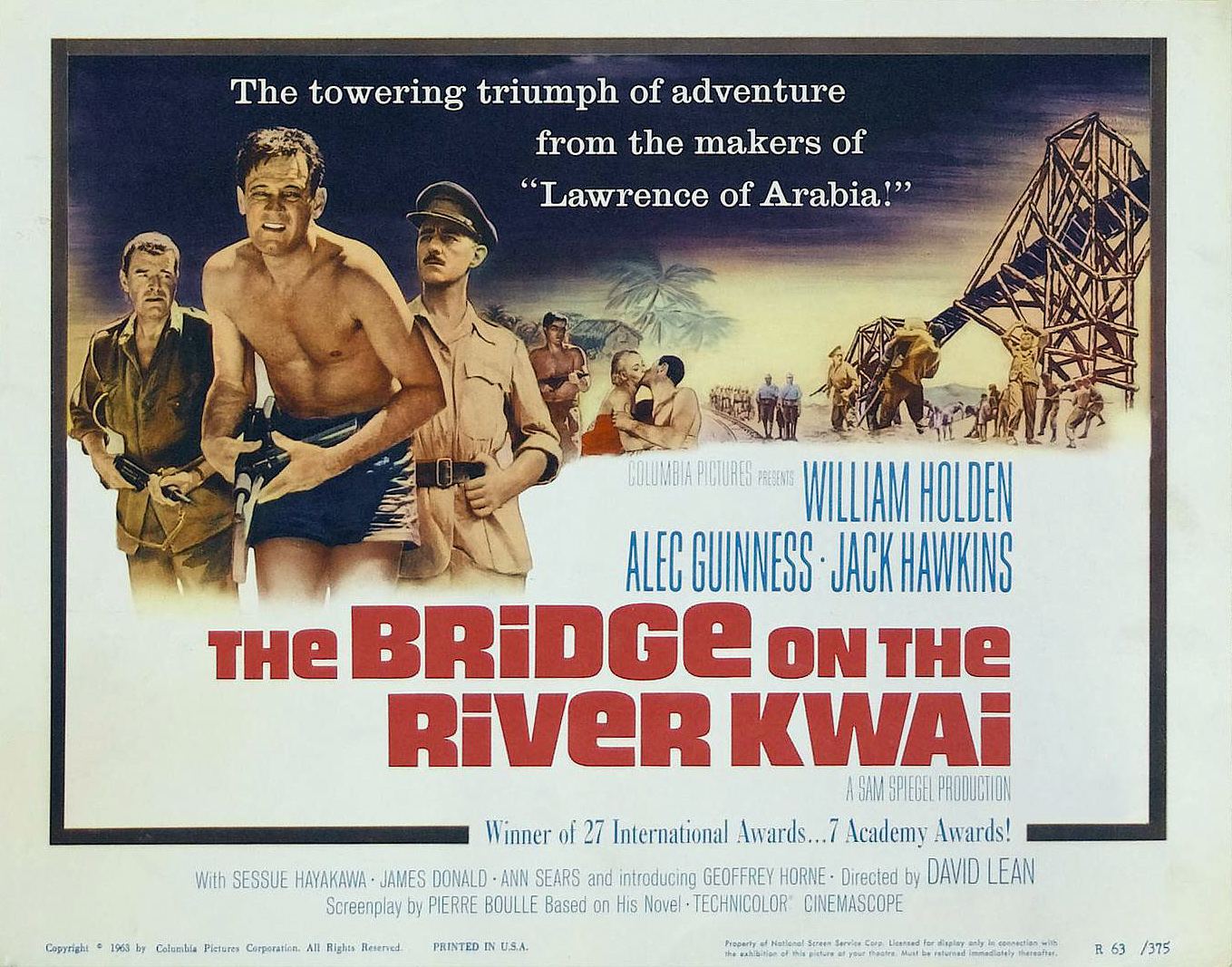
gripping epic and classic war movie like only old-school master
director David Lean could deliver. In a Japanese concentration camp,
a group of British POWs under the command of stiff upperlip colonel
Nicholson (Alec Guinness) is ordered to construct a bridge over a
jungle river. Meanwhile, Allied Command has also learned of the
bridge and has dispatched a team of men, led by Major Warden (Jack
Hawkins) and Shears (William Holden), an escapee from the prison camp
everyone considered dead, to destroy it. After a gruesome trek
through the dense Indochinese jungle, the saboteurs arrive, but will
Nicholson allow them to blow up the result of all his hard work?
Solid plot and superb acting, particularly Guinness in his role as a
colonel completely devoid of emotion, who sees the bridge as a symbol for English spirit
during adversity, a triumph of British leadership over Japanese
barbarity, but at his heart is simply suffering from obsessive
compulsion over his command and racist attitude towards his Asian
captors. The movie boasts impressive production design and most of it
is real: if you ever want to see a train crashing down an exploding
bridge for real, go and see this magnificent film, which was
good for seven Academy Awards. Lean would later
outdo himself with the brilliant Lawrence of Arabia (1962).
Starring:
Alec Guinness, William Holden, Jack Hawkins
Directed
by David Lean
USA:
Columbia Pictures, 1957
maandag 2 april 2012
Braveheart
Rating:
*****/*****, or 10/10
Excellent
historical epic regarding the 13th century Scottish
rebellion against England led by William Wallace. When his beloved
wife is brutally sexually assualted and executed by English soldiers,
Wallace goes berserk against his cruel overlords and starts a full
scale war, driving the English armies of the merciless king Edward I
(Patrick McGoohan) from Scottish lands in several epic battles (the
production of which included some of the first cases of CGI used for
massive battle scenes), though he finds himself hindered by
uncooperative backstabbing Scottish noblemen who care more about
their own stature and wealth than about the fate of their oppressed
people. Warning! Spoilers! Fortunately
Wallace has a secret admirer in the wife of the English crown prince,
princess Isabelle (Sophie Marceau), which soon turns into a very
romantic and genuinely heartfelt doomed love affair. Mel Gibson both
directs and stars in this motion picture, and does an exceptional job
at both, winning the film five Academy Awards. His disturbing
interest later in life for overly long torture scenes (resulting in
torture porn movie The Passion of the Christ) is already
evident in Wallace's gruesome death scene. Though Gibson isn't
particularly nuanced when it comes to his portrayal of the English
(all creepy, violent butchers) and takes some poetic license with
recorded history, he makes up for it with a truly gripping and
ultimately tragic story of a man who lost everything and turned that
loss into a quest for vengeance and a desire for freedom, inspiring
his people to fight for theirs. Accompanied by one of the most
beautiful (and ever popular) musical scores in film history, this is
quite simply one of the great masterpieces of the nineties and a
precursor to the return of the popularity of historical epics
(setting the stage for Gladiator to fully break out the genre
again).
Starring:
Mel Gibson, Sophie Marceau, Brendan Gleeson
Directed
by Mel Gibson
USA: Icon
Productions, 1995
maandag 19 maart 2012
Beowulf & Grendel
Rating:
****/*****, or 8/10
Fairly
low budget old-school movie based on the ancient English poem proves
that you don't need an abundance of digital effects, or even a lot of
cash, to make a compelling epic period film. The hero Beowulf (Gerard
Butler) travels north to aid king Hrothgar (Stellan Skarsgård)
in his fight against the giant troll Grendel who continues to plunder
his village and slaughter his men. Beowulf fights the monster, but
things are not as simple as they appear as he soon finds himself
ensnared in a personal vendetta between the king and the beast that
goes back many years, in danger of being trapped in an endless cycle
of bloodshed without end, as he also has to confront Grendel's
mother, lover and son. This version values the psychology of the
protagonist, questioning the validity of his reasons to fight, over
displaying epic battles with cool monsters. It also utilizes the
superb natural vistas Iceland offers to great effect, thus adding to
the film's overall grandeur without having to spend millions of
dollars over it. Though often hugely underrated, it's undoubtedly the
most thought provoking film version of the Beowulf legend
around so far.
Starring:
Gerard Butler, Stellan Skarsgård,
Sarah Polley
Directed
by Sturla Gunnarsson
UK/Iceland:
Movision, 2005
Beowulf
Rating:
****/*****, or 7/10
Second
foray of Robert Zemeckis into the realm of 'performance capture' (the
first being The Polar Express (2004), allowing digital artists
to record the motions of actors in blue suits on stage, especially
their facial movements for maximum emotional impact, and filling in
everything else via the computer afterwards. This time Zemeckis
appropriated this technique for telling the epic tale of the medieval
hero Beowulf (Ray Winstone), a valiant but arrogant warrior who comes
to the aid of a king (Anthony Hopkins) who is plagued by the hideous
monster Grendel (Crispin Glover). Beowulf fights the monster
successfully, but must than deal with his seductive mother (Angelina
Jolie) who promises him fame and riches in return for him giving her
a new son. Beowulf accepts, but finds he made a deal with the devil:
though he gets what was promised it makes him feel empty and alone.
When his son returns as a dragon and lays waste to his kingdom,
Beowulf gets one last chance to set things right and be a genuine
hero again. Plenty of good action and amazing visuals, but the
digital technique just didn't prove able to convincingly breathe life
into the pixelized cast, making them feel eerily artificial and
soulless. It did prove effective for getting Angelina Jolie stark
naked though. Zemeckis, not one to give up on an evolving means of
effects, applied performance capture a third time to his take on A
Christmas Carol (2009). Beowulf was the first film I ever
watched in (IMAX) 3D, and still one of the very few I feel made
effective use of the 3D process (just before the 3D craze got a hold
of Hollywood and most blockbusters used it to squeeze more bucks out
of the audience without delivering the promised goods): the way those
giant sea serpents alone came at you made the movie quite
spectacular, despite its digital shortcomings. Overall, a good
version of the old English poem, effectively combining the very old
with the very new.
Starring:
Ray Winstone, Anthony Hopkins, Angelina Jolie
Directed
by Robert Zemeckis
USA:
Paramount Pictures, 2007
Ben-Hur
Rating:
****/*****, or 8/10
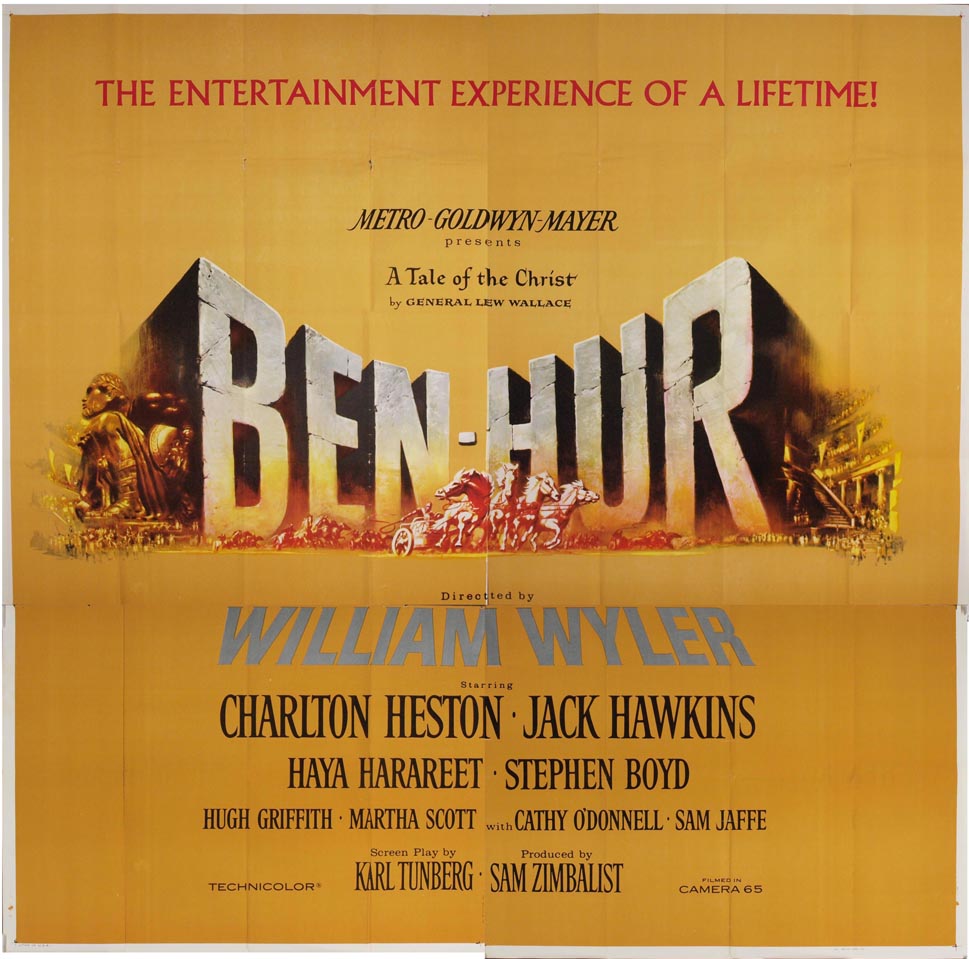
One of
the greatest Hollywood epics of all time, the first film ever to win
the record amount of 11 Academy Awards, most of them well deserved.
Charlton Heston stars as the Jewish nobleman Juda Ben-Hur, who finds
out his once close friendship with the young Roman aristocrat Messala
(Stephen Boyd) has succumbed to his strict duties as a Roman officer.
This new distrust between them soon turns to hatred when, after an
accident that leaves the new Roman governor of Judea wounded, Messala
condemns Juda to the galleys as a slave and sends his family to the
dungeons. However, Juda survives his ordeal, fueled by his hate, and
in a grandiose naval battle between the Roman fleet and pirates,
rescues the life of Roman Consul Arrius (Jack Hawkins), after which
he is redeemed by the Emperor, adopted by Arrius and embarks on a
star career as a charioteer before returning to Judea to seek
vengeance on Messala in the sands of the most famous chariot race in
film history. However, winning the race and fatally crippling his
adversary in the process does not return his family or his happiness,
things only Christ can give him on the Cross. For the majority of
modern day viewers, the overt Christian overtones in the final third
of the movie – the film is subtitled 'a Tale of the Christ after
all – are hard to bear in their cheesiness, but this movie remains
a solid undying classic in every other respect (with extra credit
going to the great CinemaScope cinematography, the wonderful, catchy
music and the excellent production design): the fabulous naval battle
and the highly exciting chariot race remain unsurpassed.
Starring:
Charlton Heston, Stephen Boyd, Jack Hawkins
Directed
by William Wyler
USA: MGM,
1959
Abonneren op:
Posts (Atom)