Posts tonen met het label Rome. Alle posts tonen

maandag 21 oktober 2013

Today's Mini-Review: Cleopatra


Starring: Elizabeth Taylor, Richard Burton, Rex Harrison

Directed by Joseph L. Mankiewicz

USA/UK: 20th Century-Fox, 1963


If 'lavish' is the singular term to bestow upon the historical epics of the Fifties and Sixties, Cleopatra exceeds the term in every way, making it clear from the get-go of its four-hour running time this, adjusted for inflation, is definitely one of the most excessive and expensive movies of them all. 20th Century-Fox sure wasn't thrilled by that fact at the time, as it nearly pushed the studio into bankruptcy. Nevertheless, it persisted in the project (since cancellation would have been its death sentence for sure) and today it remains a testament to just how staggeringly detailed and rich a movie can be made to look if enough money is thrown at it. In many ways, Cleopatra is not one, but two movies: director Joseph L. Mankiewicz always intended for it to be released in two parts (a decision the home cinema release has honoured by splitting the movie in half, spread over two discs). The first would have been called Caesar and Cleopatra, its sequel Antony and Cleopatra, as the movie conveniently cuts from one male protagonist to the other around the middle of the film, with the Queen of Egypt the constant that unites them both in a tale of passion, decadence, lust and glory.


Grand diva Elizabeth Taylor plays her most iconic role of all as the young queen that finds herself in the middle of the plots and intrigue at the Egyptian court of her brother who means to dispose of her, only to be saved by the older Roman general Caesar (a thoughtful and intelligent, but undeniably ruthless and pragmatic character portrayed by Rex Harrison) who, compelled by her wit and charm, instead forms an alliance with her and gets rid of her treacherous sibling. Said union spawns a son, Caesarion, which gives her an incentive to make a claim on the rule of Rome when his father is murdered in the Senate. Enter his boorish, no-nonsense second-in-command Mark Antony (the notorious Richard Burton) who has his own notions on the matter, but swiftly is suckered into Cleopatra's web of passion too, an affair destined to end in tragedy. Ironically, Taylor and Burton couldn't keep their hands off each other in reality as well, leading to one of the most scandalous and infamous love affairs in Hollywood history that made Brangelina look second rate. Keeping the affair in line as well as could be managed – basically, not at all, thanks to Burton's loudmouth persona – to avoid overly devastating public scrutiny, coupled with the ever rising production problems and outrageous costs (driving a movie originally budgeted at 2 million dollars to a whopping 44 million dollars), drove many a Fox executive close to madness, but over the years Cleopatra made a decent recuperation for the studio and even turned a bit of a profit. 

 
Audiences sure got what they payed for: an outrageous epic-to-end-all-epics with a scale and scope still unsurpassed, using some of the biggest sets ever created, populated by thousands of extras and a diverse range of wild beasts, all just as background material. And unlike the digitally saturated present day, it was all there in the flesh, making the sets look as spectacularly opulent in real life as they appear on film. Of course the fabulously rich enviroments where secondary only to Taylor's magnificent performance as the young monarch, at first relying on her sensual beauty and ever underestimated intelligence for her own basic survival, but soon applying both to make her country and herself a top player in Mediterranean politics by going head to head with the might of Rome in a love affair with one of its most powerful men that is bound to destroy an empire, and ultimately herself as tragedy ensues. Taylor definitely dominates each scene and won't allow the bombastic sights to take centre stage. She is aided by a grand cast which includes the likes of Roddy McDowall and Martin Landau, only tools for her to play off against as they can't compare with her majesty. Nevertheless, because of the endless show of grandiose sets, sexual plotting and Roman violence it cannot be denied Cleoptra feels like it's dragging on too long, which convinces the audience cutting it into two separate pieces would probably have been for the best. Even so, Cleopatra remains one of the most sensational movies ever produced, its history as wild and epic as the history that inspired it.


zondag 14 oktober 2012

Provadja's Past Presentations

Autumn continues to deliver a rather sad stream of unremarkable movies wedged in-between a great summer and a hotly anticipated winter that will conclude the otherwise excellent year of 2012 with a much anticipated bang. The lack of appealing movies has kept me from going to cinemas for a few weeks now, something I hope to remedy soon. However, it's also caused me from revisiting this blog much too often of late, and that's not what I intended. Thank heaven for Wednesday nights though, since they offered me a solution! Running the show every week at the local arthouse theater Provadja provides for something to occupy my thoughts with so I can use my experiences there in times of cinematic drought like these. The downside is I'm watching these films from the projector's booth where the movies' sound is being drowned by the noisy humming of the machines, plus I occasionally leave the room to check on other things, at which point I am likely to miss scenes of interest if not importance to the overall picture. Therefore, I can't consciously write an in-depth review of such films since I just didn't get to fully appreciate the film as it was seen by the regular audiences and I might have missed vital clues that upon closer inspection harbored the filmmakers' intentions, which I would be likely to misinterpret. However, I do get to see enough of these films to form a decent opinion on the overall narrative (if any (eh, Holy Motors!)), the general direction and the actors' performances. That gives me at least something to work with here. So which films did I get to project for Provadja's clientele lately? Here's a few from the last month.


Et si on vivait tous ensemble?

Rating: ***/*****, or 7/10

Stéphane Robelin wrote and directed this socially engaged movie, released in France a year earlier than it arrived in the Netherlands. This thoughtful dramedy (drama with a comedic note to keep it from becoming too much to bear) provides an intriguing solution to the question what should be done with old people. Rather than stick them all together in a retirement home, the seniors in this movie (played compellingly by such notable actors as Jane Fonda, Geraldine Chaplin and Pierre Richard) decide they might do better spending their last days and defeating the isolation commonly associated with old age by living in a small commune where they can just keep an eye on each other instead of having to hire total strangers to do it for them. Of course having five headstrong and short tempered elderly people sharing the same house also isn't the best of ideas, as they soon discover a level of intrigue and discord between them they had not anticipated, which ultimately ends up in a revelation of some sordid secrets from the past that might shatter their friendship.

Fortunately they had the good sense to hire the young German ethnology student Dirk (Daniel Brühl, Inglourious Basterds, Good Bye Lenin!) to do the housekeeping in exchange for the opportunity to study the elderly up close for his research. Dirk manages to keep the old folks from falling out with each other entirely, indicating the younger generation should still take good care of their predecessors, without placing restrictions on their lives as is done in retirement homes. The difference between the protagonists' life style and the situation of their peers behind lock and key for their “own good” is effectively made clear when one of their number falls ill and his friends rescue him from the clutches of ruthlessly institutionalized elderly care as they break him out of a shamefully prison like facility. Of course growing old it's not all as depressing as this, as Dirk finds out when one of the old ladies supplies him with ample details on her sexual activities for his research, much to his embarrassment (and ours!). Robelin's call for mutual understanding between the old and the young is laudable, but the movie fails to fully answer the question whether old people becoming each other's room mates would truly be a workable solution. Age detrimentally catches up with everybody after all, and as the movie perfectly illustrates with the character of Dirk, the intervention and guidance of the young remains vital, even though many seniors wouldn't want to admit it. However, Robelin's suggestion we can and should do better in our attempts to care for the elderly is decently underscored: nobody would want to whither away in retirement homes, certainly not without their dearest friends closeby.

This movie was distributed in Holland under the shorter and simpler title Tous Ensemble, while it was released accordingly as All Together in most English speaking territories.


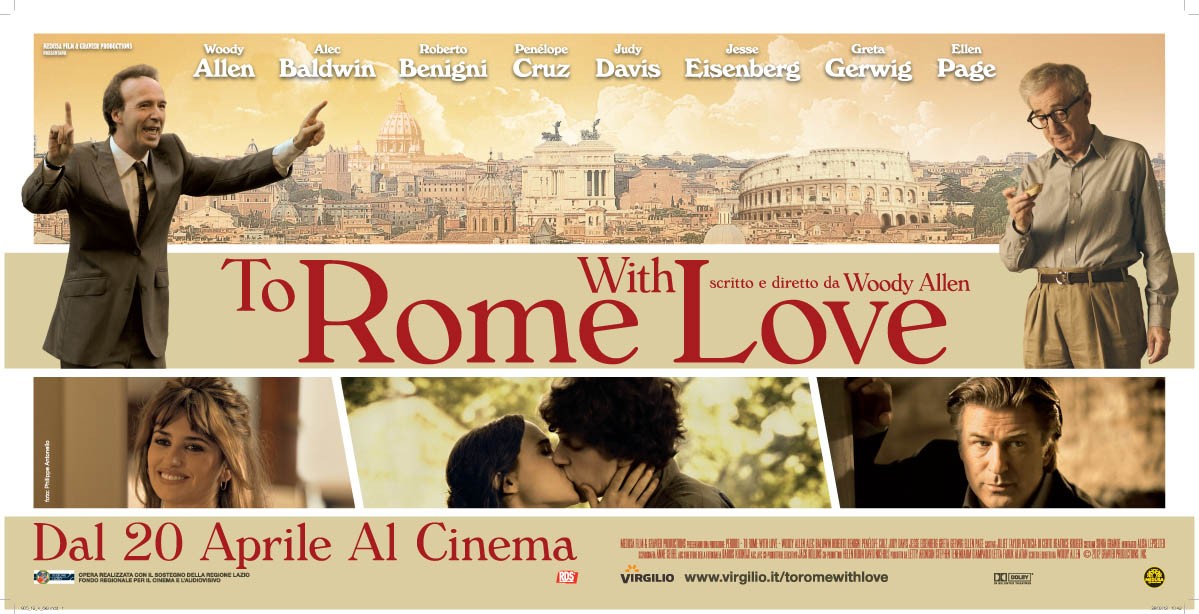
To Rome with Love

Rating: ***/*****, or 6/10

Woody Allen continues to pay homage to the great cities of the world and this time directs his attention to Rome, where he has an ensemble cast of noted actors play in four different stories set in the Eternal City, though never overlapping one another.

First, famed architect John (Alec Baldwin) revisits Rome where he supposedly meets a young student of architecture Jack (Jesse Eisenberg) and guides him in his ever complicated dealings with his girlfriend and her friend Monica (Ellen Page, always a joy) who he quickly falls in love with, despite his intentions not to. Question is, is John simply reliving his Roman experiences of thirty years past and criticizing what he should have thought about Monica then?
Second, the young American Hayley (Alison Pill) and Italian Michelangelo (Flavio Parenti) decide to get married, after which her parents Phyllis and Jerry (Judy Davis and of course Woody Allen himself) fly to Rome and meet his family, including his father Giancarlo, an undertaker. Bored to death in retirement, Jerry overhears Giancarlo singing operas in the shower and quickly plans to make a star out of him, but since his talents only work in the shower, Jerry is forced to make unorthodox decisions to allow his plans for fame and glory to come to fruition.
Third, newlyweds Milly (Alessandra Mastronardi) and Antonio (Alessandro Tiberi) visit Rome on their honeymoon, but events swiftly separate them, setting both of them on their own adventures as Antonio is mistaken for somebody else by a prostitute (Penélope Cruz) after which he applies her talents to ensure a good business deal goes through as planned, while his new wife finds herself ensnared by a famous Italian actor and is lured into a passionate affair, only to be interrupted – and saved – by a robbery.
Fourth, average Roman citizen Leopoldo (Roberto Benigni, love him or hate him, as usual) lives a mundane life but all of a sudden finds himself the centerpiece of attention for the media as he rises to full-fledged but short-lived stardom for no reason whatsoever.

Utilizing Rome's many fabulous settings to great effect, Allen's various stories prove to be less compelling, driven by simple and predictable plot twists. In the hands of a lesser director this would only spell doom for the film, but in Allen's capable hands it at least results in a cheerful viewing experience as the cast fully embraces and enjoys their roles (and their pleasant stay in Rome no doubt). Still, the quality of the four stories differs considerably, with the tale of Milly and Antonio the film's high point as both characters are swept off their feet by Rome's turbulent life offering them ample opportunities for inappropriate passion, with the both of them struggling to escape fate's ironic turn of events to return to their true love. Aided by Penélope Cruz' joyful and memorable performance as a hooker this story stands out the most, while at the other end of the spectrum the tale of Jerry's attempt to bring Giancarlo's voice to full on-stage recognition results in the predictable answer of having him perform operas while showering, a resolution only appreciable for those not familiar with Donald Duck comics. And while the story of Leopoldo offers plenty of opportunities to critique the Italian paparazzi media Allen forgoes this chance in favor of a simple story of a normal man living his fifteen minutes of fame which blows over as suddenly as it started, resulting in Benigni jumping through the Roman streets with his pants pulled down in hopes of recapturing his glory that so unexpectedly has come and gone. To Rome with Love makes it clear Allen, who was offered to direct a film in Rome with full financial support of local distributors, never intended for this film to be more than the sum of its rather bland parts, but it's a credit to his capabilities as a director and the quality of his assembled cast the film at least succeeds in giving us two hours of simple fun in the Roman sun. Accept it as Allen's way of sending the world a postcard, from Rome, with love.


And watch the trailers here:

Et si on vivait tous ensemble?:


To Rome with Love:

zaterdag 9 juni 2012

Dream TV Series


I still didn't get to watch any new movies (my vacation isn't over yet), so I got some time to think about any dream projects I'd really like to see get made some time, but this time I focused on television series. This is of course dangerous territory for me, since I only followed a brief course in Television Studies in my early college days and never pursued the topic further, opting instead for Film Studies (like most of my fellow students did). Though I enjoy a good TV show as much as the average bloke, I'm much more of a layman when it comes to the subject, but that doesn't stop me from having an opinion on it, like I have an opinion about... well, everything really. So here's a few ideas for TV shows I really hope get picked up by the right people and like to see realized as epically as they deserve.

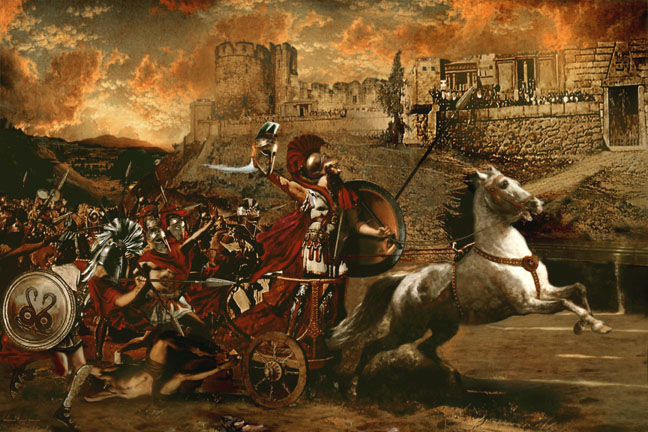
Rome 2.0

Remember that fabulously well written, violently gritty and sexy, largely realistic TV series about the last days of the Roman Republic and the rise of the Roman Empire HBO produced a few years back? Well, you should! It's still my favorite TV series, and it got very positive reactions from audiences and critics all over the globe (which is not related to it simply being my favorite TV series, I'm just a fan as basically all its viewers understandably became). Sadly, HBO considered the show so expensive (which really showed!), they pulled the plug prematurely, so while Rome was opted for five seasons, only two of them got made (and the second season, though still of great quality, did indeed feel a bit rushed). This decision was all about money, because regardless of the high production costs involved everybody loved it and kept on watching for all 22 episodes, so it wasn't the audience's fault. HBO exces later stated they regretted cancelling the show, which lead to talk about a Rome theatrical film. That project unfortunately still hasn't gotten to fruition, and I doubt it ever will at this point.


But why not just throw out the movie idea altogether and pick off where the show left us? In fact, why not explore ancient Rome before the start of the series too? What would really make me happy is a show chronicling the whole history of Rome, starting ab urbe condita in 753 B.C., and ending with the downfall of the Western Empire in 476 A.D., showing us all of the city's history, from King to Republic to Empire, all in the style and quality of the first Rome TV series. I hear you thinking, 'that's much too epic a project'. Yup, it is, which is why it's just a dream of mine. But it could be very good television, not to mention a very very very long series. There certainly seems to be an audience for it, judging from the success of films like Gladiator and shows like Spartacus: Blood and Sand (of course, the existence of such works would make certain periods of Roman history already familiar to audiences, but in this time of remakes, reboots and reimaginings, that hardly seems a relevant issue). And indeed, the glory of Rome itself, which went well before its time. Plus, now that Spartacus is coming to an end despite its continuous popularity, there seems to be a vacancy here...

Iliad and Odyssey

Speaking of glory, how come two of the most quintessential works of literature still haven't gotten the audiovisual treatment they deserve? Homer's Iliad, about the Trojan War, and Odyssey, about Odysseus' journey home, have both seen numerous adaptations, and very few of them did the original stories justice. As the movie Troy showed, any movie, even one with a running time of 196 minutes, would just be too short to tell the whole story properly. So why not a TV series instead, and indeed tell the whole story, including all the stuff later authors added to it: granted, some of the additions were uncalled for, while others became iconic, even near synonymous with Homer's work, like the Trojan Horse. 


A TV show could tell it all and wouldn't need to skip a thing, showing us stuff we never got to see in any adaptations so far, like Achilles fighting the Amazons, or the destruction of the Ithacan fleet by the Laistrygonian giants. Of course, this show too would be too long and too epic to ever be realistically produceable. But I'm sure that's what they said about A Song of Ice and Fire before, and look how well that turned out... HBO, I hope you're reading this!

The Life and Times of Scrooge McDuck

This seems like an odd choice, but those who have actually read these particular Uncle Scrooge comics by Keno Don Rosa, – undoubtedly the greatest Duck artist since Carl 'The Duck Man' Barks – will know better. The original twelve part comic book series reveals the full life story of the richest Duck in the world and how he got to be so stupendously wealthy, yet also so pitifully lonely. From his early days as a poor kid on the streets of Glasgow to his financial empire building in the first half of the 20th Century, The Life and Times of Scrooge McDuck offers human drama at its best. In fact, you could even substitute the ducks for humans with no effect to the overall story. But why not stay true to the source material and use real Ducks? That is, animated of course. Computer animation, possibly even motion capture techniques similar to the recent The Adventures of Tintin: The Secret of the Unicorn, seems the best way to go here, bringing life to this particular avian convincingly enough to care for him as he relentlessly seeks riches to escape the utter poverty of his childhood days and restore the name of the once proud Clan McDuck, only to find getting rich comes with a price as he has to abandon the potential love of his life and his relationship with his direct family turns bitter, when he evolves from a once loving and caring boy to a hardened sourdough into a tired, battered old man with no friends or family, just a shitload of money.


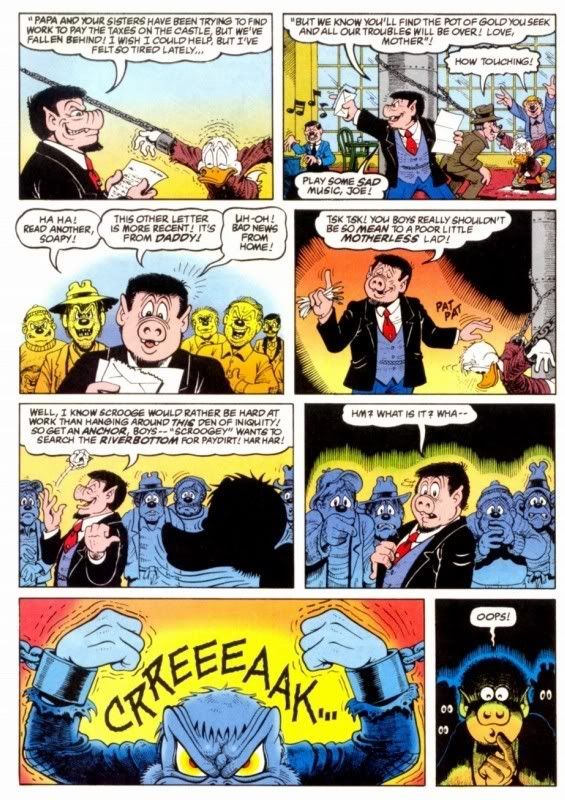
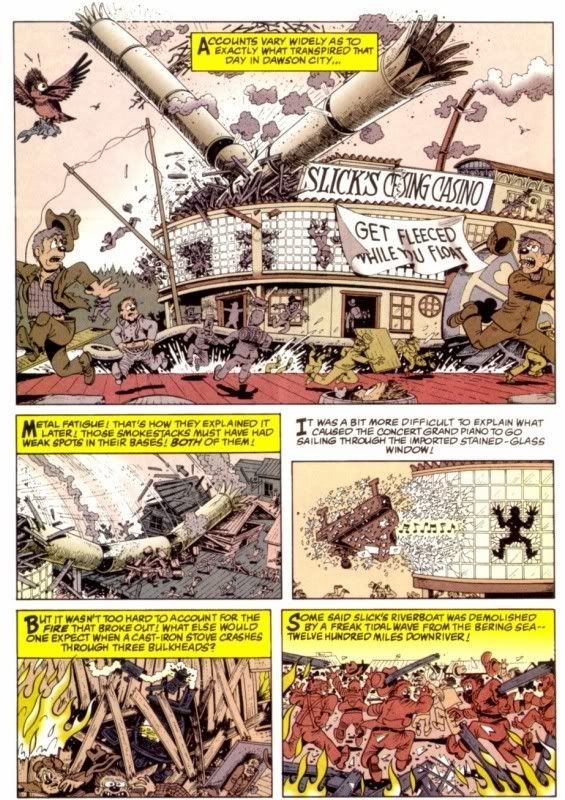
This is not the Scrooge McDuck you think you know from the often embarrasingly childish Disney kiddy magazines, this is hardcore Duck lore filled with tragedy, woe and hard earned life lessons! Certain scenes still get me every time no matter how often I've read them, -Spoilers!-  like the way news of the tragic death of Scrooge's mother reaches him as he's chained to the steam pipes of a river boat by his archnemesis Slick who means to publicly humiliate him, only to witness Scrooge break into utter rage in pain over his loss and destroy the whole ship singlehandedly. As this scene illustrates, there's room for humour thrown in too at times, so it doesn't get too hard to watch. Plus, it's surprisingly historically accurate, as Scrooge meets actual historical characters (except they're 'black nosed' in the obligatory Disney fashion) and lives through some epic historical events, among them the Krakatau eruption in 1883 and the sinking of the Titanic in 1912. A TV miniseries could tell the story chapter by chapter, remaing true to Don Rosa's original art and losing very little in the translation. Remember the Young Indiana Jones TV series? Well, it's very much like that, but with Ducks. And it still beats it easily.


20,000 Leagues Under the Sea

And then there's this much beloved science fiction adventure story, which really ought to be remade properly (despite my love for the 1954 movie) before the recent silly plans to give Will Smith Nemo's captain's chair come true. You'd think a classic tale like this would have been given a decent treatment in the present age of CGI blockbuster remakes, but apparently it's not the case. Or worse, they could do to this Jules Verne story what they did to Journey to the Center of the Earth and Mysterious Island and turn it into some preposterous 3D action flick aimed primarily at kids and making money over their lack of developed taste. Or maybe, just maybe, they could treat it with honors and remain faithful to the original work (minus the rampant animal abuse of the nineteen-hundreds). 


A TV miniseries seems the most appropriate here, some 13 episodes of showcasing Professor Aronnax's adventures sous la mer as he and his friends set out in search of the sea monster which turns out to be a highly advanced submarine constructed and captained by a bitter man who has turned his back on humanity, choosing life under the sea instead. For some reason, I always envisioned Jeremy Irons in the role of Nemo, but I'm open to other (good) options. A miniseries set in the Victorian Era, chronicling the explorations of the deep seas, watching aquanauts battling giant squids and enjoying the occasional trips to cannibal infested tropical island paradises? Bring it on! But at least treat it seriously, and with some shred of decency, unlike the fate which befell some of Verne's other works recently...

maandag 9 april 2012

Caligula


Rating: ***/*****, or 6/10


One of the most bizarre entries in the recorded history of cinema, this kinky movie is clearly a product of the seventies with its 'laissez-faire' attitude towards movie contents. The story behind this production is at least as intriguing and sleazy as the final product itself. A grandiose mixture of historical epicness and pornography, this movie went through many tumultuous phases, both during and particularly after production. At its core it tells the story of Caligula (Malcolm McDowell), a young man who rose to be Emperor of ancient Rome at the death of his vile old uncle Tiberius (Peter O'Toole surrounded by naked people), but ruled for only four years because of his disgusting appetites. The movie shows, among other things, Caligula hosting several orgies, engaging in incest with his sister Drusilla (Teresa Ann Savoy) and having hundreds of people viciously executed for next to no reason. McDowell does an excellent job of portraying the spoiled but traumatized young emperor, but he's outstaged at every turn by the abundance of explicit sex scenes, including fellatio, cunnilingus, lesbian sex, group sex, people urinating on each other, attempted intercourse with fish and various other animals, naked mutants and about everything else the Penthouse producers could think of: it'll come as no surprise original screen writer Gore Vidal had his name removed from the credits when he noticed what had been done to his serious screen play. From a camp perspective, this is actually all rather fun, but if you're looking for historical accuracy, or subtlety, you'll find little here. The movie is still banned in several countries, while there has been almost a dozen cuts in circulation over the years, and none of the make for a really good film, but all of them are fascinating to behold nonetheless.


Starring: Malcolm McDowell, Helen Mirren, Peter O'Toole


Directed by Tinto Brass, Bob Guccione


Italy/USA: Penthouse Film International, 1979

woensdag 1 februari 2012

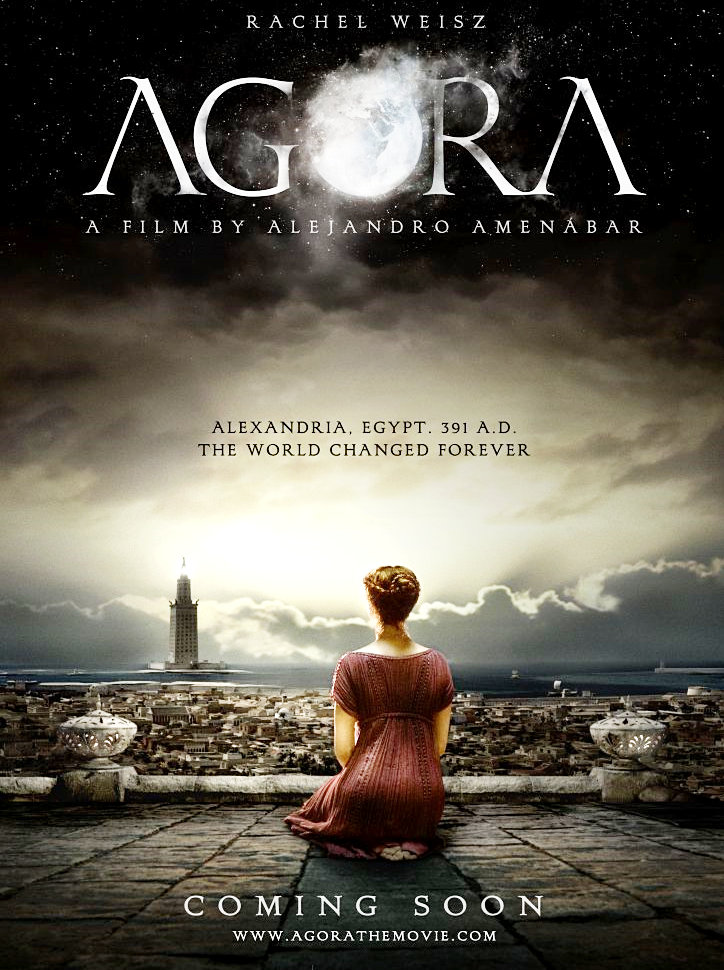
Agora


Rating ****/*****, or 8/10

Amenábar's call to religious tolerance tells the dramatic story of 4th century scientist and philosopher Hypatia (Rachel Weisz in one of her best roles), an intelligent woman who taught at the famous Great Library of Alexandria. In a city were religious turmoil took ever more dangerous turns for non-Christians, she sought to scientifically unravel the mysteries of the solar system, leading to her untimely violent death at the hands of fundamentalist Christians who considered her a blaspheming witch. 
 
 
Starring: Rachel Weisz, Max Minghella, Oscar Isaac

Directed by Alejandro Amenábar

Spain: Mod Producciones, 2009