Posts tonen met het label witch. Alle posts tonen

woensdag 25 september 2013

Today's Mini-Review: The Conjuring


The Conjuring: ****/*****, or 7/10

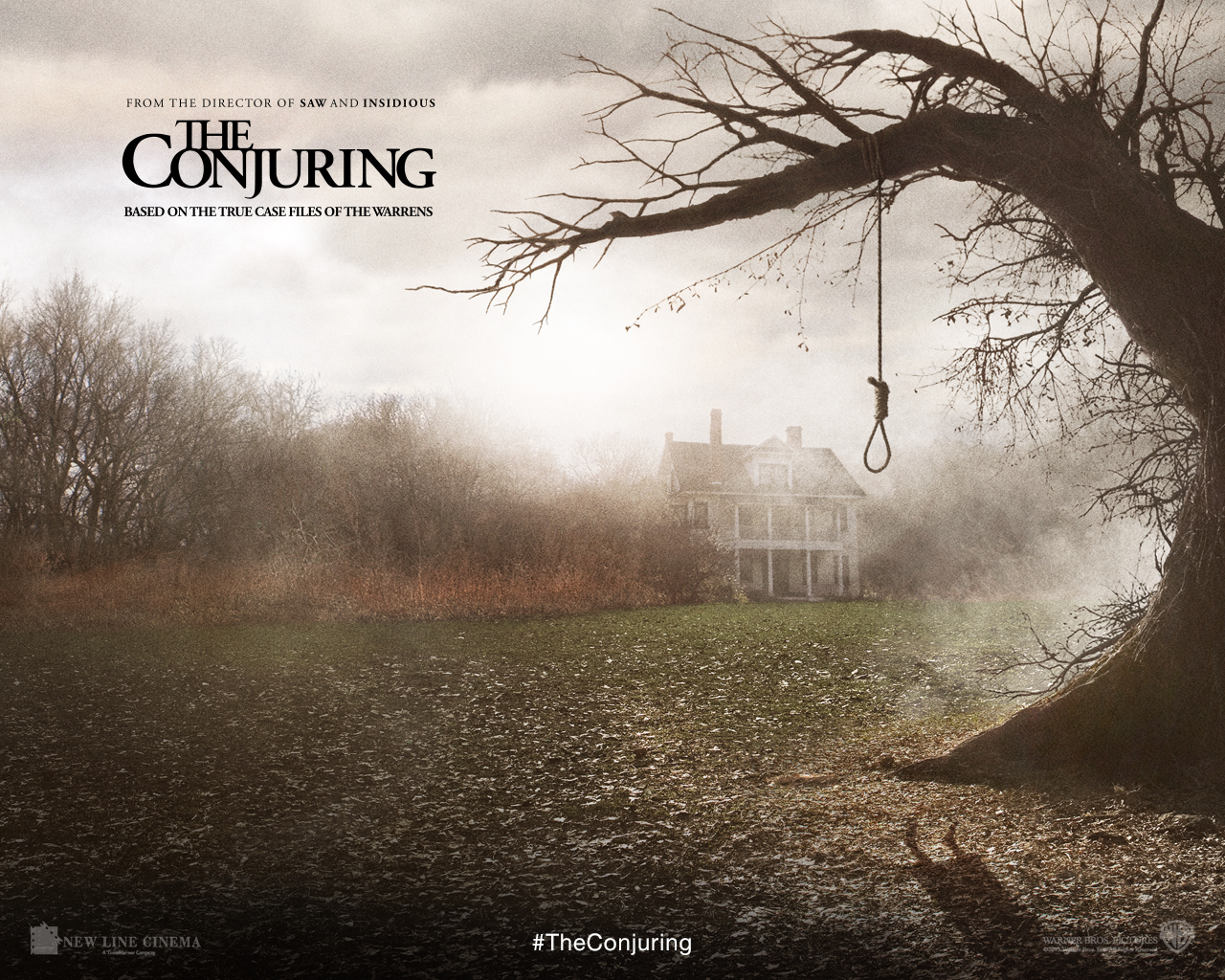
James Wan merrily continues to reinvigorate the horror genre to great effect in this spooky possession type scary flick. Though 'reinvigorate' may be said too much, as The Conjuring is driven by trite but true scare effects that have literally been employed thousands of times already. Nevertheless, Wan makes them work as if there's still a sense of novelty to them. Supposedly based on true events – with the end credits providing the necessary pictures to back up that statement – The Conjuring follows the married Warren couple specialized in demonology and paranormal investigations, which is confronted by the most shocking case of their already illustrious career. The Perron family recently moved to an old provincial house on Rhode Island, where they have been plagued by bizarre occurrences ever since their arrival, which swiftly seem to take increasingly aggressive turns. Doors slam shut on their own accord, unexplained sounds are heard everywhere, the dog died a mysterious death (even though it never even dared to enter the house) and their daughters are harassed and assaulted by unseen assailants all night long. With the balanced help of both hard science and religious ritualism, the Warrens discover the presence of several ghosts of folks that have died horrible deaths in the house over time (some of them actually sympathetic), the cause of which is a satanic presence with an appetite for child murder that won't let go of the Perrons until the blood of their girls has been shed. To put an end to this terror the Warrens must call on all their experience and lots of luck to get everyone involved, including themselves and their own kid, out of this gruesome mess alive. Naturally the evil spirit won't make it so easy for them. A synopsis like this reads like a repetition of narrative elements and age old horror themes that have been done to death. It cannot be denied that it is just that, and so are the effects Wan utilizes to scare the bejesus out of his audience. Surprisingly, it all works great nonetheless. Maybe it's his sense of timing (there's many a moment of small shocks followed by silence, which itself is shattered by a big shock), his careful employment of efficient, mood setting lighting and editing techniques, or maybe it's the convincing performances delivered by his cast, with Vera Farmiga and Patrick Wilson making ghostbusting exorcists feel plausible and compelling. It's probably the whole. Despite this movie's failure to come up with wholly new concepts to the horror genre, instead embracing all the clichés people have come to associate withe the genre, The Conjuring proves a genuine scarefest from beginning to end, guaranteed to oblige both regular viewers out for an evening of thrills and die-hard horror lovers who gave up on Hollywood's tactics ages ago. Hopefully this movie will stay a standalone film, instead of soon being the victim of rapid enfranchisement as happened all too easily to Wan's Saw – to detrimental plot effects, though unfortunately not so much in terms of box office– which currently also seems to be the case with Insidious, to which Wan just released a sequel as well (it's a fruitful year for him apparently). The Conjuring is a good old-fashioned horror film which brings to mind all the similarly themed classics of old (though of course not getting anywhere near the shock level of, say, The Exorcist), but shouldn't be exploited ad infinitum as some of Wan's other movies have been, for its own benefit. You can only be reminded of how creepy a door can be so many times before the feeling of dread is getting stale.

zaterdag 14 september 2013

Today's News: exit Potter, enter Scamander


Breaking News from MovieScene (unfortunately posted a day too late since I was gone yesterday):

http://www.moviescene.nl/p/150016/harry_potter_spin-off_aangekondigd

You know it had to happen sooner or later. Potter was much too profitable and is still hugely popular, so they couldn't just let it rest. More money is to be made here most definitely, therefore ignoring the franchise was never an option, leaving only two routes to take: rebooting Potter for the movies, which would have been too controversial since the last movie is less than two years old, or exploring the Potterverse in more detail via some other way. I'm glad Warner Bros. went for the most sensible option, since we'll be getting something new now, which is simultaneously the stuff of fantasy audiences are already comfortable and familiar with. I'm also glad to see Rowling is connected more closely than she ever has been before, doing her first bit of genuine screenwriting. Say what you will about being overprotective of her brainchild, a bit of creative and quality control on her part certainly can't hurt this upcoming second franchise.

But will this work on screen? I haven't read Fantastic Beasts and Where to Find Them (yet), so I can't truly speak from experience, but what I know about the book is that it's basically meant as a fun tie-in to Potter proper, an encyclopedic textbook about various fictional creatures devoid of a specific narrative (though with hand written notes of Harry and his friends), never meant to be adapted into a movie or any similar audiovisual formats. That means there still is a lot of writing to be done here before the project's plot is in decent shape to start filming. In fact, at this point nearly everything in terms of story has yet to be conceived other than the protagonist, Newt Scamander, and the assorted magical creatures he deals with. Therefore, I think it's highly unwise Warner immediately decided to make an ungoing series of films based solely on this single book. It would have been more tactically sound to start with one movie and see the results first. After all, more than one recent franchise has had the misfortune of being the victim of overly enthusiastic corporate planning in advance and just ending up being dropped after disappointing box office results, thus losing a lot of money as pre-production on the sequel had already begun. Nevertheless, Fantastic Beasts and Where to Find Them seems a fascinating project containing those elements we've come to love most about Potter: magic, unusual locations and vistas and odd creatures of all shapes and sizes. This time, it takes place seven decades before the events of Potter, so as a bonus we'll get an undoubtedly lavish period look to the piece, which is always most welcome. Though it's too early to get overexcited just yet, it's guaranteed Rowling's next baby is one to keep track of as it grows and grows. I'll be sure to do just that!

zondag 14 april 2013

Today's bunch of mini-reviews


Great Expectations: ***/*****, or 6/10

Mike Newell's take on the classic novel by Charles Dickens. The elaborate visual look to the film suggests a director who has dabbled in big Hollywood pictures, correctly so with the likes of Harry Potter and the Goblet of Fire and Prince of Persia: The Sands of Time on Newell's resumé. Despite his experience in big American movies, Great Expectations is decidedly British in tone, as it should be considering it's based on a British novel centered on a poor British boy getting involved in the affairs of wealthy British folk. Little Pip leads a normal harsh life in the lower class, struggling to make a living. He soon finds himself entranced by the eerie Ms. Havisham, a bat shit crazy lady who was betrayed by her bethrothed and since hates all men. The woman sets him up with her young but cold ward Estella with the purpose that he falls in love with her and she gets to break his heart, which kinda happens. Later in life Pip (now played by Jeremy Irvine) is invited to become a gentleman in London, learning the do's and don'ts of high society, courtesy of an unknown benefactor. He soon meets Estella again, now performed by the ravishing Holliday Grainger (of Borgias fame), but is dismayed to hear she is set to marry a not so likable other. Can Pip rescue his love from the clutches of the upperclass? Will he become a gentleman after all? What's the deal with Ms. Havisham and who is paying for his upbringing? Thanks to the lovely acting of the cast of Harry Potter notable veteran English actors, among them Helena Bonham Carter, Ralph Fiennes and Robbie Coltrane, we are about to find out. And still, despite this solid cast with its impeccable performances and a grandiose detailed period look, Newell's Great Expectations just ends up being somewhat dull. Is it the fact the story has been done so often in years past (even South Park has done an episode around it)? Is it the dated story of social inequality and upperclass intrigue? Who's to say? Truth is, it's better not to foster too great an expectation beforehand, since you might end up disappointed, but it won't be the actors' or the production designer's fault. And don't expect any robot monkeys either.


Hansel & Gretel: Witch Hunters: ***/*****, or 6/10

This is not the fairy tale you heard as a kid, about two young siblings killing a witch in an oven. Well, that does happen, but this movie mostly focuses on the successful career of slaying witches those children made afterwards as they grew up. Thanks to Norse director Tommy Wirkola, who in his own country is noted for his 'Nazi zombie' flick Dead Snow, this new spin to the fairy tale ends up being a slick, action packed horror flick filled with many an over-the-top witch kill and creepy monstrous crones to match (good make-up effects there!). Hansel (Jeremy Renner doing what he always does, which is not so interesting) and Gretel (Gemma Arterton, always interesting!) scour the land as bounty hunters, often being hired to track and eliminate local witch infestations. Now, they must face the ultimate ordeal of converging black magic as a powerful witch leader (Famke Janssen) is determined to perform a dark ritual that would grant her great power to the ruin of all good things. As an added nuisance, she needs Gretel's blood to do the trick and Gretel doesn't agree with that decision. Soon the pair must fight off more witches than they ever did before, at the same time learning a new thing or two about the place of witches in the world and the fate of their parents they always thought abandoned them in the woods to die. A typical simple plot bereft of true narrative surprises, but a decent stage for nice hardcore action and a plethora of thrilling stunts. The movie delivers in those regards, and with a running time of just under 90 minutes doesn't overstay its welcome.


Oz: The Great and Powerful: ***/*****, or 7/10

Big budget semi-prequel to The Wizard of Oz (more so to the book than to the 1939 classic film, also for copyright reasons), directed by Sam Raimi who gets more family friendly than we've ever seen him before. Down-on-his-luck country magician Oz (James Franco) gets swept to the far away fantasy land of the same name via balloon and tornado where he is hailed as the saviour of the realm. Since it would make him king, earn him the love of several gorgeous woman (Mila Kunis, Michelle Williams and Rachel Weisz, lucky bastard!) and provide him with a fabulous treasure, the greedy swindler all too eagerly accepts, despite the fact he's expected to kill a wicked witch (a lot of witches in Hollywood all of a sudden: I guess vampires are retro by now). Accompanied by several digital characters, Oz sets out to complete his task, which will cost him more effort than he initially considered. Even though our protagonist is basically a truly egomaniacal dick, the obligatory stereotypical moral lessons soon do their work (this is Disney after all) and all ends well with Oz being outed as a good man with his heart in the right place. This is not a movie you see for character development, but one you watch for visual thrills. Oz has never looked so ominously breathtaking, the Emerald City has never been greener and the Yellow Brick Road is just so dastardly yellow. Inhabited by a multitude of strange creatures (including terrifying flying baboons to scare the kids... in 3D!) and adorned with all manners of spectacular vistas, the technical aspect of the film is secure. In fact, it's underscored by a delightful nod to the classic film – they just couldn't ignore that one – as the film opens in black & white, in the original Academy frame ratio, up until the moment Oz meets Oz and we're colourblinded by contemporary digital possibilities in three dimensions. It works well enough, despite the story being largely 'been there, done that'. It's not Raimi's most original production, but there's great fun to be had for the whole family for a good two hours, as is Disney's goal in life.

maandag 13 augustus 2012

Pixar finally fully Disneyfied


Brave: ***/*****, or 6/10

It was a given Pixar's long running winning streak of top movies had to come to an end sooner or later, and judging from the quality of the latest addition to the Pixar oeuvre, Brave, that time has now finally come. After two years of releasing sequels only – one very good (Toy Story 3 (2010)), the other not so much (Cars 2 (2011)) – and with the studio focusing on similar milking dry of past glory (for example, next year's Monsters University and the already announced Toy Story 4 and even Finding Nemo 2...), Brave was supposed to have been the last apparent vestige of Pixar's once supreme creative ingenuity, but unfortunately the final product feels lacking in almost every respect and thus only endorses the fact Pixar's days of making original animation of the highest quality, unsurpassed by its various competitors in the industry (Blue Sky and Dreamworks Animation its closest rivals, this year entering the field with Ice Age 4 and Madagascar 3 respectively), are now truly behind them. It was feared this would happen ever since Disney officially took over the fledgling studio back in 2006, but several fabulous Pixar projects already in the making (including Ratatouille (2007) and Wall·E (2008) held off this imminent quality deterioration for a few years. Whatever deals Pixar and Disney have officially stated to have made concerning Pixar's creative control, judging from Brave and the upcoming slate of sequel abundance, Disney has finally managed to get Pixar in line with its own creative agenda. Unfortunately, the audience turns out to be the biggest loser in the process.


Like so many of Disney's classic (and less classic) animated films, Brave revolves around a young princess and her struggle to fulfill her dreams and life ambitions despite the wishes of her parents/guardians who would instead see her become someone she never wanted to be. The princess in question is named Merida (voiced by Kelly Macdonald) and is the eldest child and only daughter of the Scottish monarchs King Fergus (performed with audible joy by Billy Connolly) and Queen Elinor (played by Emma Thompson), ruling over several clans in the ancient Scottish highlands in an unspecified period in history, or put otherwise, in the typical magic kingdom Disney does best, though this kind of fantasy setting is new to Pixar. While Elinor is a genuinely regal lady of royal blood, the boorish loudmouth Fergus obsessed with bear hunting – especially the huge demon bear Mor'Du that once took his leg – seems her exact opposite, though the pair of them is deeply in love regardless: Merida has inherited the best of both worlds, and has grown into a beautiful and intelligent but adventurous and overly independent young woman who does not take kindly to being told what to do and much prefers typical male occupations like hunting, hiking and horse riding over the feminine arts like poetry and embroidery her mother would prefer to see her spend her time with. In fact, the strict and stern Elinor tries hard to shape her daughter into the perfect princess, at all times directing her attention to the social graces of the Scottish nobility, but much to her chagrin (and to Fergus' enjoyment, as well as our own) Merida's tomboyish nature always wins out. Merida herself has little qualms over being told what to do by her dominant mother, until the day she learns the clan leaders are visiting the royal castle to have their firstborn sons compete for the princess' hand in marriage.

Unlike the Disney princesses of old, who usually couldn't wait to marry any number of interchangeable charming princes, Merida does not take kindly to be auctioned off and means to take her destiny into her own hands. One could argue the whole notion of a princess fighting her imminent wedlock instead of willfully embracing it could be taken as a narrative role-reversal in an attempt by Pixar to pay homage to the age-old Disney tradition. However, the solution to Merida's marital issues ultimately fail to feel like any sort of intertextual nod: in fact, it feels more like the marriage of the formerly free spirited Pixar and the proudly traditional Disney has reigned in the creative temperament of the former to keep it more in line with the boringly conservative ideological policy of the latter. Whereas Merida might win the freedom to choose her own partner, Pixar apparently is only allowed to produce fully Disneyesque movies, at least for the foreseeable future.

In the case of Brave, the combination of princess and marriage is hardly the only element present in the plot to remind us of past Disney films. The film goes so far as to incorporate a number of songs, much like the ones that used to dominate the soundtrack of many a Disney classic (think Pocahontas (1995), Beauty and the Beast (1991) and The Little Mermaid (1989)), except you shouldn't expect to see these songs win any Academy Awards anytime soon, considering their rather poor and forgetful quality (which fortunately does mean they won't get stuck in your head for many days to come as they used to do). The lyrics literally enter one ear only to immediately exit the other, but they go a little like 'I'm a Scottish lass, hair all red Firing arrows makes me glad But now my mom wants me to wedI wannae, so now I'm sadOooh, I wish my mom were dead'; the usual Disney stuff really, except far from catchy, all for the best.


Warning! Spoilers! Of course, a headstrong teenage girl like Merida doesn't mean to get suckered into holy matrimony so easily and tries to get out of it by proving her superiority in archery over her prospected suitors. Despite her remarkable skills at shooting arrows this attempt fails because she breaks clan rules by competing in this wholly male tournament, much to the dismay of the clan leaders. When she gets into a huge argument with her outraged mother over her conduct unbecoming a princess of the realm, she simply makes a run for it and flees into the forest, where she encounters a strange elderly woman masquerading as a wood carver, but of course an obvious witch, though not as stereotypically evil or sinister as Disney witches once tended to be, opting instead for the routine of the bumbling old lady impaired by memory loss. Merida agrees to buy all her carvings if the aged sorceress supplies her with a single spell to change her mother's mind, but like all princesses making deals with magic hags, she doesn't quite get what she hoped for, as she sees her mother transformed into a bear. This unfortunate metamorphosis is made even more unfortunate by reminding us of the much maligned Disney feature Brother Bear (2003), a movie not deserving the title of 'Disney Classic' at all, and Brave does an equally adequate job at making us wish we had forgotten all about that film by also making the plot of a human transforming into a bear feel wholesomely underwhelming.

Since Fergus has little love for bears, especially in his own castle, Merida must smuggle her now furry mother out to the safety of the woods in a scene devoid of suspense and filled with silly gags instead. Afterwards, Merida sets out to reverse the spell with her mother, a human in the body of a bear, in tow, learning that if she does not break the curse within two days her mother will become a real bear permanently. In a few all too brief scenes Elinor demonstrates a loss of her human faculties in favor of bear instincts, threatening Merida's plight to save her (and in fact, her very life), but for most of this mother-daughter bonding experience, director Mark Andrews opts for levity instead, making the bear feel less like Merida's queen mum and more like a hairy sidekick the likes of Chewbacca (except less funny). Most of their time in the forest is spent showing Merida's ability to survive in the wild as opposed to her stiff mother's total inexperience with outdoor activities, bear instincts not withstanding, which leads to various scenes intended as comedy, but feeling too forced to be truly comically successful. In the long run, a cure against the bear spell is the objective and when Merida finds a method she must smuggle her mother back into the castle, keeping her out of her father's spear, while she herself must take care not to fall prey to Mor'Du, who also turns out to be royalty cursed to be a bear for all eternity (seems like it was the witch's answer to any problem). Eventually she succeeds in the nick of time and all's well that ends well: Elinor is human again and Merida is no longer forced to marry, all because of – or in spite of? – Merida's bravery to rebel against traditions but her willingness to accept responsibility when things go awry. Plot wise, it's clear Pixar didn't turn out very brave.


In fact, Brave is most fun when its characters don't act particularly brave at all. Merida's rebellious shenanigans in the first half of the film are far more enjoyable than her tiresome and predictable efforts to set things right in the second half. King Fergus steals the show not by being brave (though he's certainly shown to be capable of heroism when protecting his clan from the terrifying Mor'Du on several occasions), but by being a somewhat childish ruler apt at telling compelling tall tales, drinking and fighting his fellow clan leaders in an overall devil-may-care attitude that makes it clear where Merida gets it from. Similarly, the rulers of clans Macintosh (only one of many little Steve Jobs tributes in this film), MacGuffin (cute Hitchcock reference there) and Dingwall are most convincing and most appreciable when they're shown engaging in petty bickering and arguing as they're overly proudly introducing they're equally not so brave sons to Fergus' court. It's the first half of the movie, when the various zany Scotsmen and their families are introduced and compete over Merida's affections, where Brave witnesses its strongest moments. As soon as the movie enters a more serious tone, at least as much as it can with a bear acting like a human being, spectator's interest in the overall plot starts to wane. Still, there's something to enjoy for everybody in Brave. However, it's just much less than we're used to from a supposedly original Pixar product. For adults, especially those that have seen their fair share of both Disney and Pixar films, it's certainly not the worn out story. They'll have to make due with several good jokes in the first 45 minutes, and the excellent visual look throughout (after all, the technological prowess of computer animation continues to deliver staggering results, and at least Brave makes ample uses of these). Such impressive visuals are however hindered by unnecessary 3-D effects, which add little moments of true depth but make a rather dark film look even more colourless.

In conclusion, Brave is the definite proof for the growing numbers of naysayers who predicted the end of the Age of Pixar at the hands of insidious Disneyfication from within years ago. There's simply nothing brave about mindlessly copying Disney's style, which by itself hasn't yielded a truly good film since the late nineties. For the moment, with the plethora of sequels in store for us, a further loss of quality seems inevitable for Pixar. Hopefully they'll pull yet another miraculous Toy Story 3 out of their hat, but this seems wishful thinking. In the meantime, until another non-sequel is produced, Brave will be lamented as Pixar's last original film, one that simply didn't prove to contain much originality. In the current Disney/Pixar mindset, Brave 2 seems a more likely thing to happen...


And watch the trailer here:
zondag 13 mei 2012

Dark shadows loom over Tim Burton


Dark Shadows: Rating: ***/*****, or 6/10

Sometimes a good notion backfires, despite the right ingredients being present. In the case of Dark Shadows, Tim Burton's latest, the main problem is these ingredients have become stale and somewhat hard to swallow. Burton presents us with yet another one of his specialty dishes, a typically off-beat Gothic horror comedy, but it tastes old and mushy because it offers little surprises. Burton's dark and brooding yet also satirical and good spirited style has finally come to the point where it feels it has reached its expiration date, after already disappointing us two years ago with Alice in Wonderland. The situation is all the more grave considering the letdown revolves around a project Burton claims to have great affinity for, namely his re-imagining of the classic cult TV show Dark Shadows, which ran for well over a whopping 1,200 episodes from 1966 till 1971. The strange supernatural occurrences of the Collins family, involving vampires, werewolves, witches and the likes, sounds exactly like Burton's cup of tea, and therein lies part of the problem, since Burton apparently has become predictable, allowing his style to dictate his projects for him.


Dark Shadows sees the eighth collaboration between Burton and his personal muse Johnny Depp (for those of you who must know, the previous joint ventures, in chronological order of succession, were Edward Scissorhands (1990), Ed Wood (1994), Sleepy Hollow (1999), Charlie and the Chocolate Factory (2005), Corpse Bride (2005), Sweeney Todd: The Demon Barber of Fleet Street (2007) and the above mentioned Alice in Wonderland (2010)), which also comes as no surprise, since the film has a wonderfully bizarre character uncomfortable with his life and the people around him for a protagonist, and Depp has shown to excel at playing such characters, usually to the delight of the audience. The role of vampire Barnabas Collins, who has spend nearly 200 years buried in a coffin and finally awakens in 1972, setting off in an attempt to restore his family's position, as such seems tailor made for Depp. After Barnabas and his family have been cursed by a witch who strongly loved the decent man he used to be, the bloodsucker finds himself locked away into the grave for two centuries, only to be accidentally awakened by a construction crew. Barnabas returns to his former home, the grand Collinwood Manor from which his father used to run a fishing empire along the Maine coast, only to find it in a state of decay with his family decimated to a number of only four, the family fortune seemingly lost. He takes it upon himself to protect his remaining relatives from the forces that have plagued them for centuries, and vows to return the family business to its former glory. Alas, Angelique, the witch that turned Barnabas vampire so long ago (played by a deliciously vile Eva Green, who energetically throws herself into the role and obviously likes the bitchy character a lot) has since expanded her ambitions from mere witchcraft to the realm of economics, having taken over the Collins' family business, making her a successful businesswoman and respected pillar of the community, so the witch and the vampire find themselves at odds once more as the latter tries to win back what was once his.

In this struggle, Barnabas is backed by the Collins matriarch Elizabeth (Michelle Pfeiffer, a woman of stature who's not afraid to make sleazy deals to keep her family together), despised by her teen daughter Carolyn (Chloë Grace Moretz nails this grumpy character perfectly, and fortunately happens to be her exact age as a bonus), distrusted by Elizabeth's brother Roger (Johnny Lee Miller playing the family scumbag successfully) and revered by Roger's son David (the young newcomer Gulliver McGrath), a boy who sees his dead mother's ghost. Thrown into this mix are the groundskeeper Willie (Jackie Earle Haley, ever creepy), David's new private teacher Vicky (the beautiful Bella Heathcote playing the girl with the biggest secret of the bunch) and the family psychiatrist and regular drunk Dr. Hoffman, in which we recognize Burton's other muse, his fiancé Helena Bonham Carter, who co-starred in six of his films before this one, making us wonder just who Burton actually loves more, Depp or the woman he means to marry. At least Barnabas does not stand alone, but every member of his entourage has demons all their own, some merely psychological, others all too real, adding to his existing troubles. Plus he also has to deal with the strange new world of the 1970s, its technological advancements (like cars and televsion sets) and cultural changes (including women's lib and youth subcultures) alike, which turns out to be encompassing the film's most memorable and hilarious moments, but unfortunately these get underexposed in favour of the rather bland family story line and the battle against the wicked witch.


Depp once again does his usual thing, portraying Barnabas as a soul out of time who must come to terms with a much changed world and unite his family against the evil witch that has sought to destroy them, but it's less than a stellar piece of acting simply because it all feels so familiar, as if we've seen this performance often before, with only slight variations every time. Fortunately Depp is not the only character in this film, though of course he is supposed to be the biggest draw for the general audience. Dark Shadows is seemingly blessed with a host of characters, each with his or her own issues and secrets. Warning! Here be spoilers! However, herein lies yet another problem, since the film's plot comes with so many characters most of them do not get a good chance to shine and remain poorly underdeveloped, despite personal afflictions that haunt them and have impact on the whole family struggle for survival. For one thing, Carolyn turns out to be a werewolf, but this is revealed only in the climactic end battle with Angelique, at which point it's too late in the film to be of narrative use other than to provide some more creature action and plot confusion. Similarly, Vicky is supposedly the reincarnation of Barnabas' dead wife Josette, but the exact how-and-why to this remains severely underexplained, though it does force a romantic subplot on the movie's overall story, and even a love triangle of sorts, since Barnabas still feels enough for his tormenter Angelique to give into her seductions, resulting into a wild night of carnal pleasure. Similarly, David talks to his dead mother, Roger plans to run off with the family treasure Barnabas has exposed and Dr. Hoffman infuses herself with Barnabas' blood in a scheme to live forever. Each character comes with story baggage, much of which just won't fit in the luggage compartment of the train that is Dark Shadows as it moves onward to its destination, and many things get left behind along the way.

This is all the more disappointing considering the actors do a good job portraying their characters and we would have liked to have seen them be put to more satisfying use: it would not have been a bad idea if Burton and screenwriter Seth Grahame-Smith – who wrote the novel Abraham Lincoln: Vampire Hunter, the movie adapatation of which will reach theatres in August of this year, so 2012 isn't done with vampire movies just yet – would have scrapped a few of these subplots and twists in favour of the overall feel of a coherent story line. The subplots may have been moments of tease designed to be fleshed out in a potential Dark Shadows sequel, but on their own they don't work to the advantage of this movie on own. Also, the many characters and their separate plot lines make it seem we've watched a compilation of the first 200 episodes of the original television show.

Despite the many downsides to the film, most of which result in a messy overall plot, there's also things to enjoy in Dark Shadows. The film knows many a comical note, mainly in the moments Barnabas is faced with the vast differences between his own era and the swinging Seventies. So he's confronted by a huge McDonald's logo at the site of his resurrection, he mistakes his own grand-grand-etc. niece for a 'lady of the evening' due to her loose way of dressing, and he sits down for a philosophical debate about love with a group of hippies, which he brutally kills afterwards in his physical need for human blood (he's a vampire after all). Also of great joy are the soapy love/hate moments between him and Angelique, culminating in a passionate night of love making that does not stay confined to the bed but takes place all over the room, including the walls and the ceiling, after which Barnabas remarks this was 'a regrettable turn of events' as they sit in a totally wrecked room at the end of their sexual outburst. It's moments like these that provide for the most entertaining part of the film, and certainly the most memorable, considering the rest of the film proves all too forgetful afterwards. Unfortunately, they only make the film half decent, instead of actually good, a level the movie sadly does not reach, also in part to the unsatisfactory way the film seems to deliver its message that family should stick together no matter how odd some of its members are. If that's so, how come Roger ran off with the money, the house got burned down and the locals think the Collins family is just a bunch of sinister freaks? Sure, the evil has been vanquished, but it's a far cry from a happy end to conclude this motion picture with.


After seven projects working with the same director, usually in the same genre and the same visual style, the fact is the combination Burton/Depp has really gotten worn out and stale, indicating both men should probably take a long break from each other and meet some new people to escape the dreary routine they've succumbed to. Though Burton has used a grotesque style all his own that made him Hollywood's leading auteur, by now it has proven to be a huge 'been there, done that', resulting in disappointing films that only see a continuation of his style instead of some form of improvement upon it. Turning to a new genre altogether could be a solution to the routine Burton seems stuck in. Obviously, the director himself feels differently, since he's not done with family oriented Gothic horror this year: come October his latest stop motion piece Frankenweenie will be released. It may use a different format, but seems overall typically Burtonesque. At least it doesn't star Johnny Depp, maybe that will prove to be enough of a change this time...


And watch the trailer here:

maandag 30 april 2012

Chronicles of Narnia: The Lion, The Witch and the Wardrobe, The


Rating: **/*****, or 4/10


Obvious attempt by Disney to cash in on the sudden popularity of the fantasy genre in the wake of the fantastic Lord of the Rings movie trilogy. The trick seemed simple: take a book from a well known fantasy series and adapt it into a sweeping epic of a film, and build an easily exploitable franchise around it. Granted, this first Narnia film did pretty well at the box office, but remains maligned by critics the world over and is an altogether feeble movie based on the classic book by C.S. Lewis. During WW II, the four Pevensie children are sent to live at a big mansion on the English countryside, where they discover a wardrobe that turns out to be a doorway to the fantasy world of Narnia. However, this realm is in the grip of a severe ice age because the evil White Witch (Tilda Swinton doing a good job at playing a ruthless villain) rules the land. The coming of four human children means the dawn of a return to peace and prosperity under the benign rule of the lion god Aslan (voice by Liam Neeson), but the White Witch doesn't surrender her regime so easily and a grand battle for the freedom of Narnia erupts, with the Pevensies at the heart of it (fortunately Father Christmas equips them with the necessary deadly tools to kill their opponents: good job, giving weapons to kids!). Laced with extremely obnoxious Christian overtones (including the annoying parallels between a certain carpenter/magician and Aslan, who dies for the sins of another but is resurrected), this movie at many turns feels like it means to convert us to Christianity, while it's also a poorly acted - especially those pesky kids and a vast array of irritating digital talking animals - and humorless piece of work that takes its fantasy concepts a little too serious, which seems an odd move for director Adamson, who previously delivered two superb Shrek films. The audience, apart from Christian fanatics who obviously loved it, quickly grew tired of it as they demonstrated by making the sequel Prince Caspian do quite poorly at the box office, after which Disney swiftly abandoned the franchise, selling the rights to Fox, where its right wing religious overtones were more at home. Still, general interest in the franchise remains low.


Starring: Tilda Swinton, James McAvoy, Liam Neeson


Directed by Andrew Adamson


USA: Walt Disney Pictures, 2005

maandag 26 maart 2012

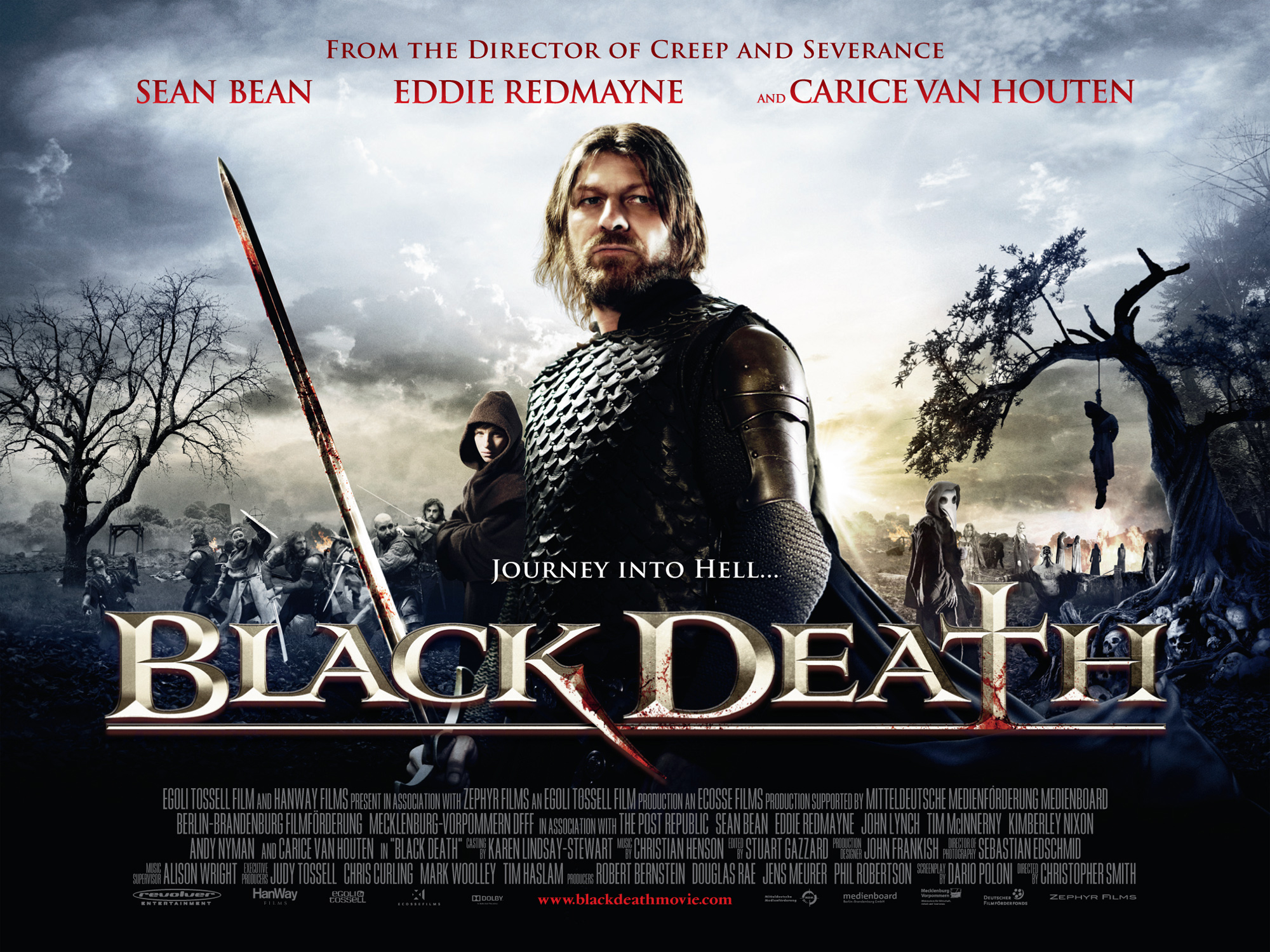
Black Death


Rating: ***/*****, or 6/10


Thematically intriguing but too overtly low budget and conflicted action/fantasy flick set in medieval times. When England is struck by the outbreak of the Black Death, the bubonic plague, the young monk Osmund (Eddie Redmayne) is ordered to investigate a remote village which supposedly has not been stricken by the disease, much to the chagrin of church authorities who suspect witchcraft is involved. Accompanied by a band of grizzly mercenaries under the command of the butch but superstitious knight Ulric (Sean Bean once again playing in the genre he fits in the most), Osmund discovers a peaceful community of atheists led by the beautiful “witch” Langiva ("our" own Carice van Houten, but with a normal English accent this time) who do not take kindly to the intruders intending to introduce God to the villagers by force and violently dispatch the wicked woman, instead casting the first stone upon them, which leads to a harrowing series of executions, chases and general goriness. The notion of atheists forcing Christians to renounce their religion in a time when that religion tolerated no different points of view is a charming reversal of roles, but the resulting dark climax of the film either doesn't bother making a point or simplistically states 'we're all just faulty human beings'. Overall, playing with religious themes and upturning them makes for an interesting addition to the genre, but eventually ends in general bloodshed all too easily without taking such intriguing content much further. Good action and damn fine acting regardless.


Starring: Sean Bean, Carice van Houten, Eddie Redmayne


Directed by Christopher Smith


UK/Germany: HanWay Films, 2010


zaterdag 4 februari 2012

Stardust


Rating: ****/*****, or 8/10

Een sprookje zonder franchise-ambities

Dankzij het succes van de Lord of the Rings en Harry Potter reeksen is de interesse voor het fantasy-genre weer helemaal terug van weggeweest, na in de jaren negentig grotendeels afwezig te zijn gebleven. Aangezien het wapengekletter en getover van beide grootse franchises vele miljoenen oplevert dicteert de hebzuchtige marktstrategie van Hollywood dat er meer van hetzelfde stramien gemaakt moet worden om maar zoveel mogelijk winst uit het genre te persen. Tot dusverre heeft deze tactiek echter nog geen boeiende films opgeleverd, met het beschamend slechte Eragon als voorlopig dieptepunt. Die film had studio Fox een nieuwe blockbuster-reeks moeten opleveren, maar na deze flop valt dat (gelukkig!) te vergeten. Over een paar maanden is het de beurt aan The Golden Compass om het op fantasie beluste publiek opnieuw te bekoren en hopelijk een kassucces te worden, of Eragon te volgen in de bodemloze put der vergetelheid.

Te midden van alle beslissende slagen tussen Goed en Kwaad in verbluffend mooi vormgegeven fantastische landschappen vol merkwaardige digitale wezens die de recente golf aan fantasy-films ons voorschotelt vergeten we bijna dat het ook anders kan. Gelukkig is er nu Stardust om ons hieraan te herinneren. Dit keer geen overdreven episch verhaal of overdaad aan peperdure effecten, maar een bescheiden relaas over een verlegen jongeman die, om het hart van zijn geliefde te winnen, in een magische wereld terechtkomt en daar zijn ware aard ontdekt. Het geheel is voorzien van een aanstekelijk humoristische toon die in het merendeel van het fantasy-genre ontbreekt en impliceert dat dit sprookje, ondanks enkele wijze levenslessen die het behelst, niet al te serieus genomen hoeft te worden.


Tristan Thorn (de heerlijk naïeve Charlie Cox) groeit op in het dorpje Wall, dat, zoals de naam al aangeeft, gekenmerkt wordt door een muur; een gat hierin zou een portaal naar een magisch koninkrijk vormen. Om de liefde van het hooghartige verwende kreng Victoria (Sienna Miller) te verkrijgen betreedt Tristan de toverachtige wereld, op zoek naar een gevallen ster om aan haar te doneren in ruil voor haar hand. Echter, de ster blijkt een wonderschone dame genaamd Yvaine (Claire Danes schittert als dit hemels lichaam), die geenszins van sprake is een huwelijkspresentje te worden en veel liever terugkeert naar het firmament waar ze vandaan kwam. Op de vlucht voor de boosaardige heks Lamia (Michelle Pfeiffer, die zich zichtbaar kostelijk amuseert als de kwade feeks) die Yvaines hart nodig heeft om haar jeugd terug te krijgen, moet het duo samenwerken, wat uiteraard leidt tot Tristans herziene kijk op liefde en Yvaines inzicht dat een menselijk leven met de juiste persoon zo slecht nog niet is.

De zaak wordt gecompliceerd als de arrogante prins Septimus (een overtuigend sinistere Mark Strong) ook op de ster blijkt te jagen, die hem zal helpen de troon van zijn vader over te nemen, als hij de competitie met zijn broers overleeft. De oude koning (prima kleine rol voor fossiel Peter O'Toole) zag graag dat zijn zoons elkaar afmaakten in hun strijd om de heerschappij, waar Septimus in uitblonk, maar hij moet ook het kroonjuweel zien te bemachtigen dat Yvaine uit de lucht haalde en zij nu om haar nek draagt. Uiteraard belanden Tristan en Yvaine op hun vlucht in de ene na de andere fantastische belevenis, met als hoogtepunt een treffen met de alom gevreesde luchtpiraat kapitein Shakespeare (Robert de Niro, eindelijk weer in een rol die wel in het geheugen blijft hangen, zij het om andere redenen dan we van hem gewend zijn) die er een geheim nichterig leven op nahoudt.


In regie van de talentvolle Matthew Vaughn ontwikkelt Stardust zich tot een heerlijk sprookje dat zich niet bezighoudt met Grote Zaken en epische queestes waarvan het fantasy-genre zich recentelijk al te vaak bedient. Vaughn toont zich een kundig regisseur, wat opmerkelijk is aangezien dit slechts zijn tweede film is. Het is Stardust echter niet aan te zien, want de film kan zich ondanks zijn redelijk lage budget moeiteloos meten met de meeste grote blockbusters van de laatste jaren. Desondanks laat Stardust ook hier en daar een steekje vallen en zijn de visuele effecten niet altijd even vlekkeloos, maar door het amusante verhaal, het prima acteerwerk en de kostelijke humor is dat snel vergeven. Vooral dat laatste aspect is een openbaring, want het werd node gemist in het genre tot dusverre. De humor in Stardust neemt bij vlagen satirische vormen aan, spelend met de bekende weg in het genre door overdreven variaties op de heks, de prins en dergelijke archetypen neer te zetten, zonder de typische glans van een sprookje te verliezen.

Stardust is een bekoorlijke vertelling uit het rijk der fantasie voor jong en oud dat de heden ten dage heersende conventies van het genre op de hak neemt zoals het al even geslaagde The Princess Bride dat twintig jaar eerder deed. De film laat zien dat een grootscheepse, overdadige aanpak niet noodzakelijk is om een fantasy-film die een wijd publiek aan moet spreken te vervaardigen. En waar teveel andere genrefilms (zoals het eerder genoemde Eragon en het al even deplorabele The Chronicles of Narnia) de laatste tijd overduidelijke franchise-aspiraties hebben en slechts dienen als opstapje voor een hele reeks soortgelijke meuk om in te haken op recent succes binnen dit genre, laat Stardust blijken daar geen behoefte aan te hebben door in twee uur tijd een prima afgerond verhaal te vertellen dat duidelijk geen vervolg zal krijgen en dat bovendien niet nodig heeft. Hopelijk neemt Hollywood Vaughns boodschap aan en richt ze zich minder op product-marketing en meer op inhoud, dan volgt dat gewenste succes ongetwijfeld later wel.