Posts tonen met het label kids. Alle posts tonen

woensdag 21 oktober 2015

Today's Review: Ramon en het Paard van Sinterklaas


Here's my first review for FilmTotaal. Same business, different employee.

http://www.filmtotaal.nl/recensie.php?id=45825

The first Flemish Sinterklaas movie is definitely modeled after the Dutch formula. Which is not surprising, since until so far, the Flemish kids had to make do with the myriad of Dutch Sinterklaas titles. And those proved succesful enough to finally convince Belgian producers to develop a Sinterklaas product of their own. And since only one Dutch Sint movie is produced this year - usually it's two, sometimes even more - why not return the favour and release it in Holland? They need not have bothered. Not that Ramon en het Paard van Sinterklaas is particularly bad (though it's certainly not a good family film that wins the hearts of all family members, as it's really only fun for kids), but it doesn't add anything to the slate of Dutch movies covering the topic, other than certain long running characters in Sint's Flemish entourage that the Dutch kids aren't at all familiar with. And most of them aren't so much fun to watch they'll stick in kids' minds for very long.


Aside from that, the film feels very much like its Dutch counterparts. Sint and co. are preparing for their trip up north, something goes awry - in this case, Sint's horse and its attendant are kidnapped - but all ends well and the festivities can procede as they always do, full of mirth and merriment. Add to that a cast of supporting characters (but no children, interestingly enough) to spice things up a bit and you have a thirteen-a-dozen Sinterklaas flick. In Holland, it's good to keep the kids occupied for a good 90 minutes. However, there's so many side characters in this film, that it ends up nigh two hours in length. Too long for the parents, and as it turned out at the press screening where the target audience was represented as well, also quite a challenge for the kids to sit through without getting overly restless. So there at least is a difference with the Dutch method: the Flemish take their time. Other than that, if it wasn't for the accents and the presence of Antwerp, you'd hardly think you were watching a foreign Sinterklaas picture. I would have preferred something more distinct from the Dutch takes on the subject.

The big question on most parents' minds of course is: how are the Belgians portraying Zwarte Piet? It's a white guy in make-up, the blackness explicitly stated to be the result of crawling up and down chineys, just as he was always supposed to be. Good approach. However, thicker layers of soot might have been applied, since this particular Piet (and there's only one of him here) obviously hadn't seen a chimney for months. Which might as well be true, as I doubt he's doing much chimney diving at home in Spain. Nevertheless, when you call a well established character Zwarte Piet and the first reponse he gets from a child is 'is that Zwarte Piet?' because there's so little black on him, you know you're confusing kids needlessly. I'll say no more on the matter than that I applaud the Belgian intentions but their execution still leaves room for unnecessary debate.


woensdag 22 januari 2014

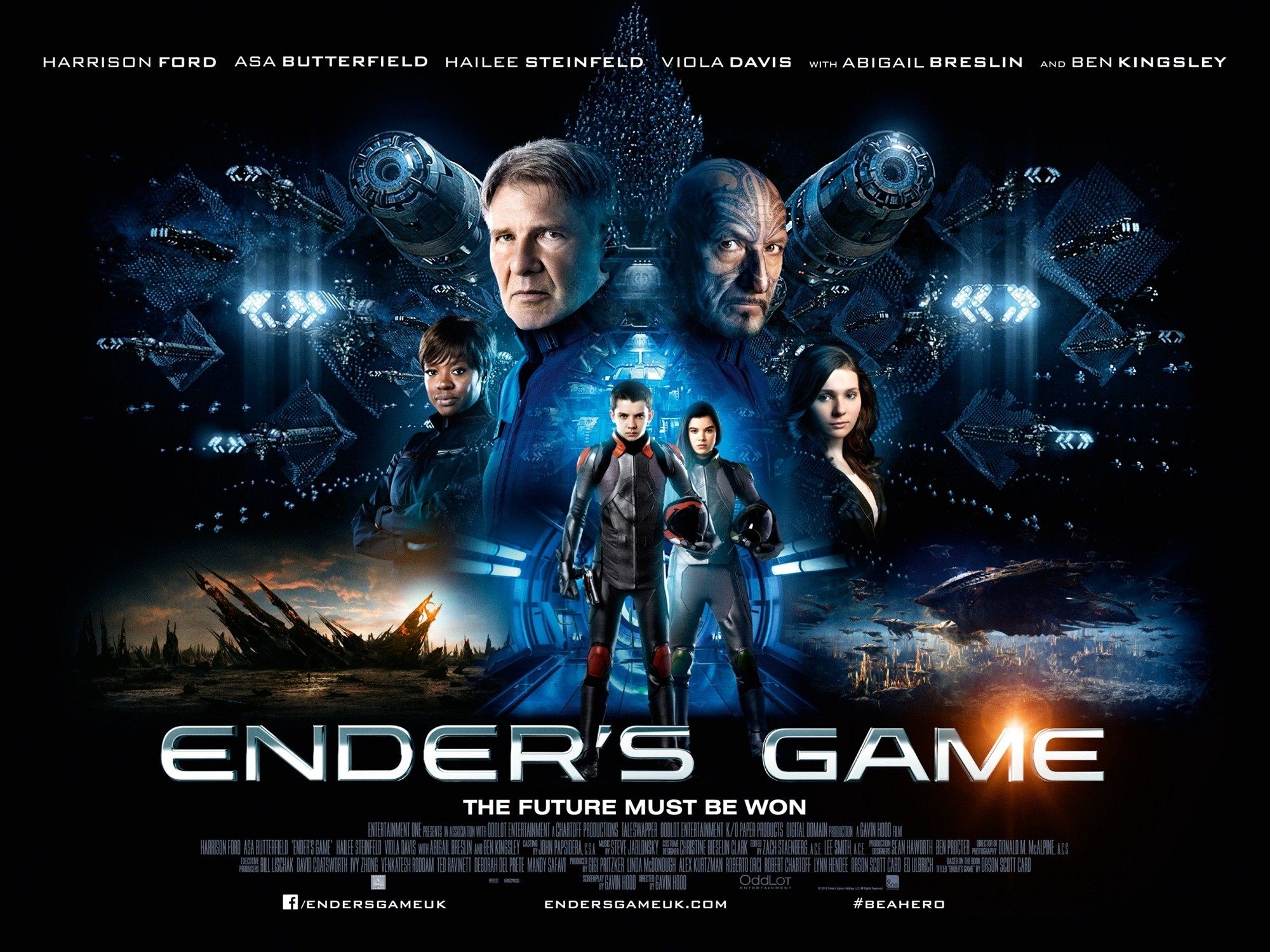
Today's Review: Ender's Game


Went to another press screening for MovieScene last week, and here's the result:

http://www.moviescene.nl/p/153155/enders_game_-_recensie

This movie was more thought provoking than I anticipated. Training kids' minds in order to manipulate them into becoming master strategists with no moral complexion to annihilate the enemy? Not the stuff you usually see in PG-13 movies. A lot of good actors - half of the child actors too have Oscar nominations already - though a lot of them didn't come off as particularly compelling because their characters were given little opportunity to grow on you. It's Ender's movie after all, and Asa Butterfield did a pretty good job carrying his film. Too bad about the obligatory hopeful and happy Hollywood close, but it doesn't hurt the shocking (though not hugely surprising) climax near the end of the film that shows us just how low Ender has unintentionally sunk due to his commanding officers screwing him over, all for the so-called sake of humanity. For a film that most at first glance would consider to be a generic Sci-Fi action flick, as such it packs a more powerful punch than expected.

woensdag 25 september 2013

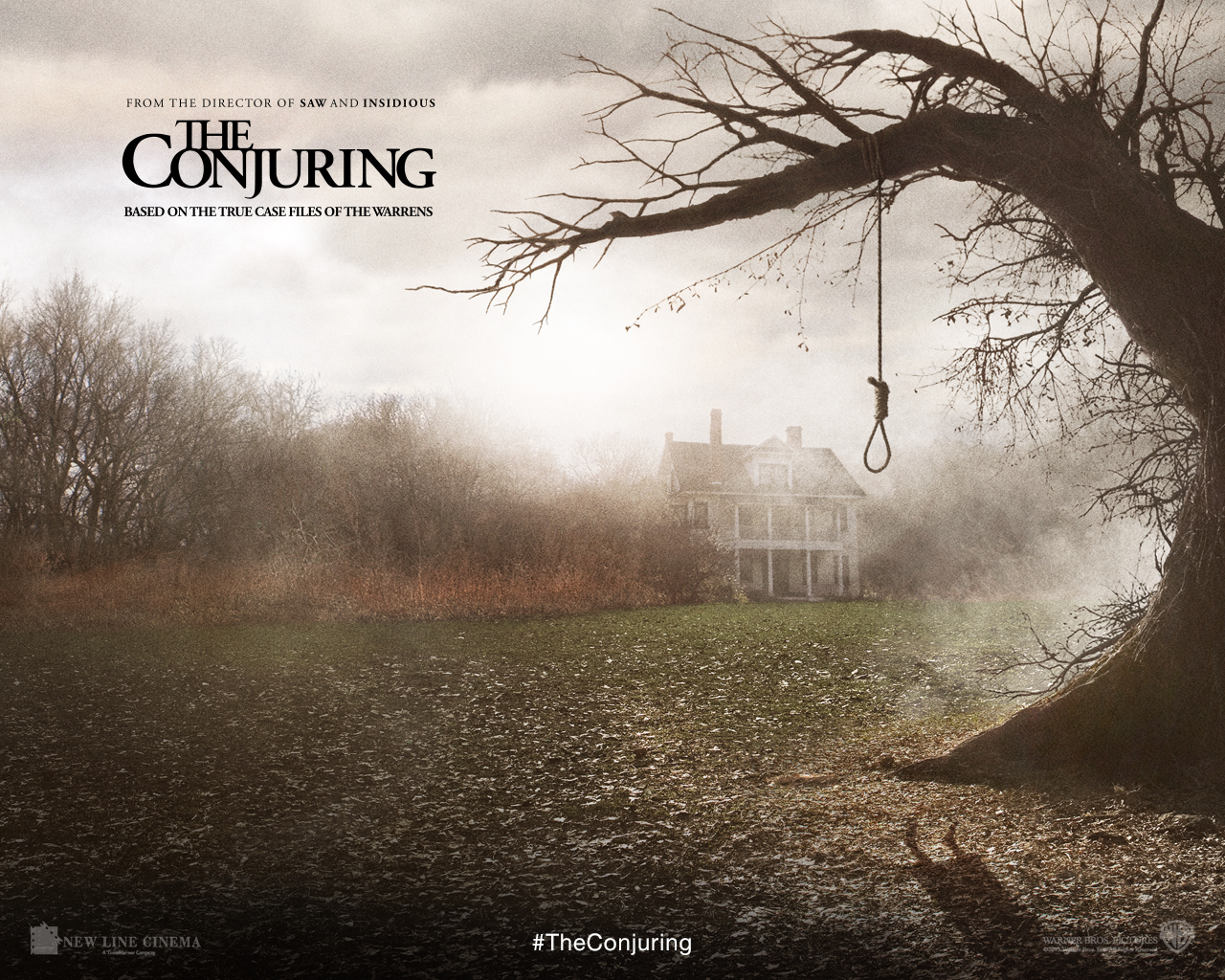
Today's Mini-Review: The Conjuring


The Conjuring: ****/*****, or 7/10

James Wan merrily continues to reinvigorate the horror genre to great effect in this spooky possession type scary flick. Though 'reinvigorate' may be said too much, as The Conjuring is driven by trite but true scare effects that have literally been employed thousands of times already. Nevertheless, Wan makes them work as if there's still a sense of novelty to them. Supposedly based on true events – with the end credits providing the necessary pictures to back up that statement – The Conjuring follows the married Warren couple specialized in demonology and paranormal investigations, which is confronted by the most shocking case of their already illustrious career. The Perron family recently moved to an old provincial house on Rhode Island, where they have been plagued by bizarre occurrences ever since their arrival, which swiftly seem to take increasingly aggressive turns. Doors slam shut on their own accord, unexplained sounds are heard everywhere, the dog died a mysterious death (even though it never even dared to enter the house) and their daughters are harassed and assaulted by unseen assailants all night long. With the balanced help of both hard science and religious ritualism, the Warrens discover the presence of several ghosts of folks that have died horrible deaths in the house over time (some of them actually sympathetic), the cause of which is a satanic presence with an appetite for child murder that won't let go of the Perrons until the blood of their girls has been shed. To put an end to this terror the Warrens must call on all their experience and lots of luck to get everyone involved, including themselves and their own kid, out of this gruesome mess alive. Naturally the evil spirit won't make it so easy for them. A synopsis like this reads like a repetition of narrative elements and age old horror themes that have been done to death. It cannot be denied that it is just that, and so are the effects Wan utilizes to scare the bejesus out of his audience. Surprisingly, it all works great nonetheless. Maybe it's his sense of timing (there's many a moment of small shocks followed by silence, which itself is shattered by a big shock), his careful employment of efficient, mood setting lighting and editing techniques, or maybe it's the convincing performances delivered by his cast, with Vera Farmiga and Patrick Wilson making ghostbusting exorcists feel plausible and compelling. It's probably the whole. Despite this movie's failure to come up with wholly new concepts to the horror genre, instead embracing all the clichés people have come to associate withe the genre, The Conjuring proves a genuine scarefest from beginning to end, guaranteed to oblige both regular viewers out for an evening of thrills and die-hard horror lovers who gave up on Hollywood's tactics ages ago. Hopefully this movie will stay a standalone film, instead of soon being the victim of rapid enfranchisement as happened all too easily to Wan's Saw – to detrimental plot effects, though unfortunately not so much in terms of box office– which currently also seems to be the case with Insidious, to which Wan just released a sequel as well (it's a fruitful year for him apparently). The Conjuring is a good old-fashioned horror film which brings to mind all the similarly themed classics of old (though of course not getting anywhere near the shock level of, say, The Exorcist), but shouldn't be exploited ad infinitum as some of Wan's other movies have been, for its own benefit. You can only be reminded of how creepy a door can be so many times before the feeling of dread is getting stale.

donderdag 18 april 2013

Today's Review: Kid

Wrote this review for MovieScene the other day:

http://www.moviescene.nl/p/146055/kid_-_recensie

So overall, an interesting concept, but not the best execution imaginable. It's a rather inaccessible and at turns downright dull film, but it's surprising to see the climax works as well as it does regardless. Does it help us better understand the inner mind of children after an intense trauma like the violent death of a parent? Not particularly. Does the plight of the main haracter(s) compel us enough to feel a sense of shock at the unpredictable conclusion of events? Apparently so. Considering we spent most of the time watching at people staring at each other in overly drawn out silent close-ups, Troch must have been doing something right after all. But that doesn't make for a fully satisfying cinematic experience.


zaterdag 27 oktober 2012

Breathing new life into Tim Burton

Frankenweenie: ****/*****, or 8/10

Moviebuffs familiar with Tim Burton's oeuvre will probably remember how one of his earliest projects for Disney backfired on him, though it ended up setting him in the right direction for a very fruitful career. In 1984 Burton directed a 29 minute family film named Frankenweenie, an homage to the iconic original Frankenstein films from the Thirties, involving a boy who loses his beloved dog but revives him via electricity, to the shock of his neighbourhood. Though it was a simple horror story for all ages, Disney was dismayed and deemed the short film too disturbing and scary for its target audience, denying it a theatrical run (but for some reason still giving it a home video release). Burton was fired from the studio and looked for jobs elsewhere, soon setting himself on the right track as he directed a number of smash hits, including Batman (1990), Edward Scissorhands (1990) and Batman Returns (1992), eventually becoming a major player in Hollywood despite (or because) continuing to utilize his own unorthodox visual style and displaying his love for outcasts and their encounters with the bizarre. Leaving Disney may have been the best thing that ever happened to Burton, but it didn't stop him from revisiting the failure that basically started his career, remaking his own short into a theatrical movie in an even darker and more off-beat fashion 28 years later, but still for the same Walt Disney Studios that didn't think much of him or his work all those years ago. Apparently Burton's acclaimed career, plus an earlier cooperation between the pair when doing the highly successful Alice in Wonderland (2010), ensured Disney gave Burton the benefit of the doubt and the chance to bring Frankenweenie back to life in an even more spectacular way than the dog in the story is reanimated.
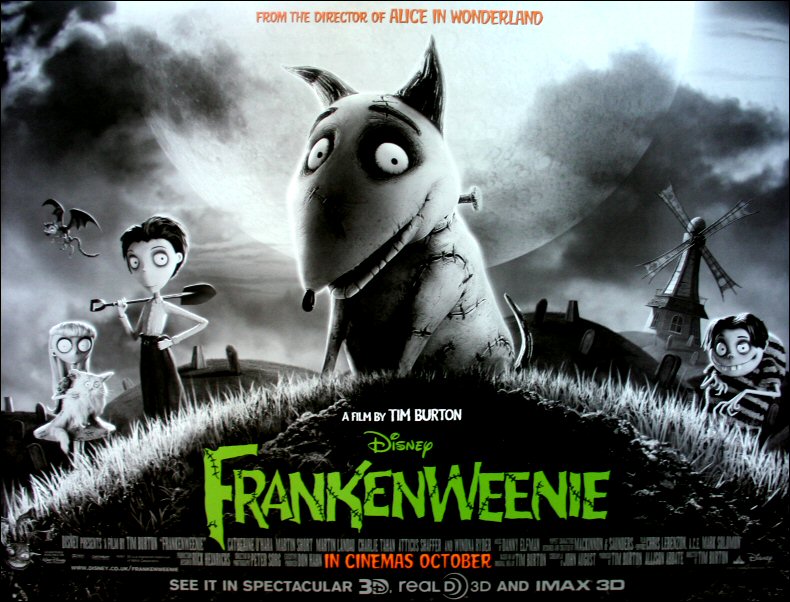

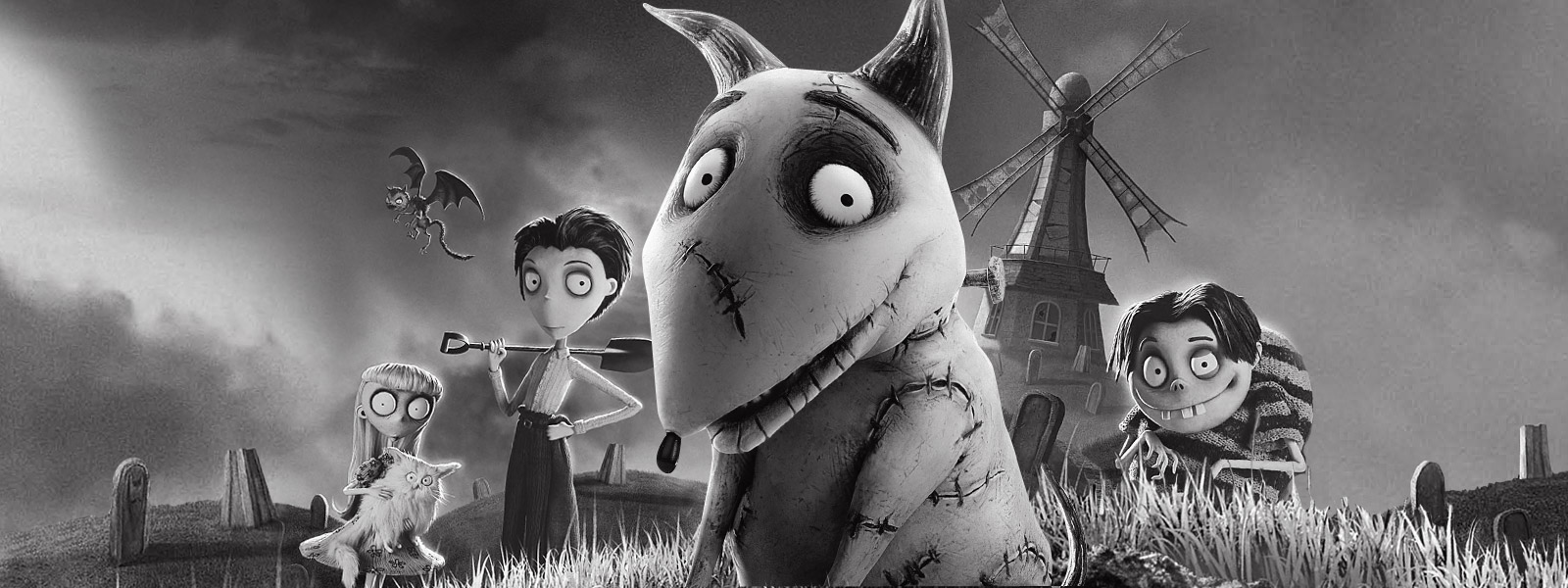
For despite the film now running 87 instead of only 29 minutes, surprisingly little has changed in terms of story. Warning! Spoilers! The protagonist is still a little boy named Victor Frankenstein, a nerdy and imaginative kid whose best buddy in the whole world is his dog, called Sparky (there's more than a little 'nomen est omen' in there somewhere I reckon). Together they do anything from just playing around on the streets to making home movies wherein the canine stars as a dinosaur slayer protecting cardboard cities from plastic monsters. Of course with hobbies like that, Victor isn't the most popular kid in school, but as long as he has Sparky, he doesn't mind. But soon, tragedy strikes and Sparky is fatally run over by a car and laid to rest, leaving an inconsolable Victor all alone, despite his parents' assurances Sparky moved on to a special place in his heart. However, when he learns of electricity and its effects on dead tissue at school, the boy turns to the dark art of science to bring his pet back to life by having its soulless body struck by lightning. Against all odds, the experiment is a success and his best friend is given a second chance at life, though not in a perfect physical state as parts of him occasionally come loose. Despite his efforts to keep Sparky's resurrection a secret, the rest of the town soon finds out and is appalled by this abominable obstruction of everyday life, turning into a typical angry mob out to make sure the dead dog stays dead this time. Tracking the pair to an old windmill, the construction catches fire and traps Victor inside until Sparky gives his second life to save his young master. Touched by his courage, the townspeople are convinced Sparky deserved to live, after which they help Victor restoring him to life once more in a total feel-good happy ending only Disney can deliver (though it's maybe a bit too cheerful for a Tim Burton picture).
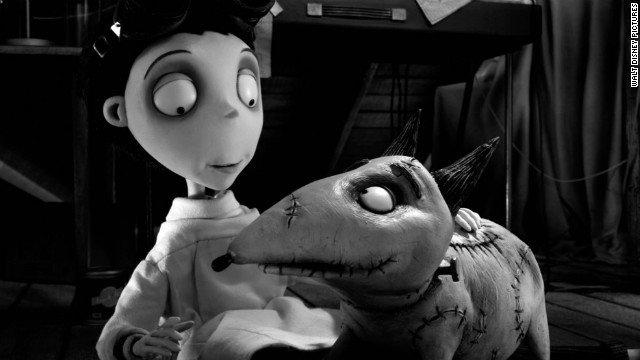

Though the plot has hardly changed, there couldn't have been a bigger difference in execution, as Burton turns to the much admired art of traditional stop motion animation for his second incarnation of Frankenweenie. Hardly a stranger to this type of filming, having produced The Nightmare Before Christmas (1993) and directed Corpse Bride (2005) before, Burton's use of stop motion turns out fully justified as it gives the movie a stylistic and visual edge over both the movie's predecessor as well as many a “regularly” animated Disney movie. The film's look is simply stunning, with some of the smoothest stop motion work to date, and it also fits into Burton's oeuvre in a completely consistent manner: the various characters, both human and animal, are all typically Burtonesque with their big eyes, pale faces and generally caricaturized physical features, while their brooding, often Gothic surroundings make no mistake Tim Burton's signature stamp is all over this film. Frankenweenie might as well be called Corpse Bride's twin sister, were it not for the fact that, unlike that film but like the original short, Frankenweenie is also shot in black and white to make it appear even more distinct, as well as perfectly in sync with the horror classics of old – particularly James Whale's brilliant original Frankenstein (1931) and The Bride of Frankenstein (1935), to which the movie knowingly owes more than a little, on the narrative side – the movie keeps referring to throughout the piece. While many a gag referring to such narrative and stylistic forebears, albeit visual or in dialogue, is undoubtedly missed by younger members of the audience, those even slightly versed in the genre will recognize a multitude of little nods and in-jokes softening the overall gloomy mood the style and story prescribe. That doesn't mean there's no fun to be had for the kids or the more uninformed spectators, as they too are treated to many an outrageously zany moment triggering a few good laughs.

At the same time, despite the many humourous occurrences, the movie isn't afraid to downplay its moments of grief, and much to the credit of the animation crew such instances are shot with the full range of emotion they necessitate, making even the toughest viewers feel sad as we witness Sparky's death – which fortunately remains largely obscured from vision, instead of seen in more detail than is necessary, underscoring the power of suggestion which Burton has also mastered – and the sorrow it inflicts on those left behind, the high point of tragedy remaining a simple shot of Sparky's neighbour dog, a female poodle with whom he used to play ball through a hole in the fence separating them: the poodle nods the ball through the hole, then waits for a return nod that never comes. Maximum emotional effect achieved through stylistic simplicity, and nobody ought to keep a dry eye.


Despite the overall story remaining largely identical to that of the original short film, a longer running time does warrant the inclusion of a few subplots to flesh things out just a bit more. The most noticeable difference in narration is the science contest dominating events in Victor's class as his school mates are all attempting to outthink each other in making the most spectacular contribution to science, encouraged by their new substitute teacher with his unpronouncable but decidedly Eastern European sounding name (impeccable voicework done by Burton veteran Martin Landau, who won an Academy Award for his role in Burton's masterpiece Ed Wood (1994)). When the word gets out on Victor's achievements, even though they were a personal project to be kept hidden from the rest of the town, the all too natural reaction of the other kids is imitation, as they understandably decide to resurrect their own deceased pets as well. However, their actions are motivated more by the desire for fame and glory than they are by heart, while their teacher explained to Victor the outcome of his experiment was fueled primarily by the love for his subject instead of the lust for self-enrichment. Naturally, the various rival experiments result in the creation of many monstrous mutations soon terrorizing the town, including a cat/bat hybrid and a giant dinosauresque turtle, enabling Burton and his partners in animation to go all out with the stop motion process, continuing the age old tradition of stop motion applied for breathing life into monsters, as pioneered by special effects legends like Willis O'Brien and Ray Harryhausen. It also results in a grander overall scale of the film, clearly setting it apart against the simpler original short movie, plus it adds some dynamic action for those audience members who find it hard to sit through all the genuine emotion the movie keeps evoking, if any. Ultimately though, Frankenweenie doesn't need such spectacle since its core plot about a boy and his dog is moving enough in itself and remains the picture's heart and soul, despite the additions made to make a short film longer.

Only a few months ago, I critiqued Burton's Dark Shadows and feared his signature style was overused by himself (and nowadays, by many others, too), which led to a deterioration of quality in his recent films, culminating in Dark Shadows ending up as one of Burton's biggest disappointments of the last decade. I'm only too glad to find myself positively surprised by Frankenweenie, one of his most delightful films to date, which has proven this director is still fully capable of delivering a satisfying viewing experience when his heart is truly in it. Getting even at Disney while coming full circle from the start of his career to the point where he is now clearly made sure Burton was fully invested in this project, and he is proven right after a quarter century: Frankenweenie was a thoroughly enjoyable short movie then as it is a full theatrical film now, for audiences both young and old. Apparently, in Burton's case revenge is a dish best served dead, and revived.


Sidenote: life is not without its cruel little ironies. For example, I got to watch Frankenweenie the same week I had to let go of (yet another) one of my cats. 2012 is not a good year for me, pet wise. Since I happen to like animals more than people – if you know me and this notion offends you, don't take it personally, it's just the way I am – I'm having some trouble letting go, even though it wasn't my favorite cat. In fact, the pet in question, poor little Akka, was always drooling, generally unhygienic and somewhat obnoxious, but I still loved her in her own right, and I will naturally miss her presence (unlike the other cats, who don't seem to miss her at all). Considering Frankenweenie revolves around the troubles of letting go of your beloved pets, it got me thinking. If I were a creative little boy and I lived in Tim Burton's imaginative world, I no doubt would go for the solution offered in the film and resurrect the hell out of my dead cat. However, I am not and I cannot, and even if it were scientifically feasible, I would not. Especially not after the animal in question had been rotting underground for a week (even if protected by the cover provided by a wooden box, as Sparky was given). After all, letting go when somebody or something dies is just a part of life, the dark side of life of course, but still life.


What would be achieved by keeping dead animals alive? Sure, you can stick to their presence forever, but would it really be the pets you knew and loved? As Frankenweenie showed, Sparky's resurrection, instigated by love or not, was the result of a lucky shot, while the same experiment failed with all the other ex-pets. Monstrous mutations were the result, creepy crawlies and towering behemoths that looked nothing like their living predecessors. Moreover, if they had been healthy and happy like they used to be, death would lose its impact. You could just keep on recharging your dead pet to breathe a semblance of new life into it over and over again, which would keep you from letting go and forming new special bonds with other animals. But of course, new animals would still be born, and soon the number of zombified creatures would grow to excessive rates and leave less room for the living. Death may not be a nice thing, but there is a definite natural purpose to it. My cat had a decent life for over 16 years and she got to live to a fair old age. It's more than I can say for my previous cat, who succumbed to organ failure at age nine, which was far too young for my taste. Instead of focusing on resurrecting pets, it seems more reasonable to turn attention towards extending the natural lifespan of pets, which usually lasts for only one or two decades, while their masters' life outlasts them for many more years. For the same reasons as stated above I feel it shouldn't be attempted by artificial means though. Besides, natural human lives last far longer nowadays than they did centuries ago. I reckon the same is increasingly true for pets' lives, who receive better care and food than they did in days gone by. Who knows, with a little luck cats will eventually live for many more years than they do today. And if not, the memories of a good cat will last a lifetime in that special place in our heart. Even though we would have preferred them to stay here with us in the flesh...


And watch the trailer here:

woensdag 20 juni 2012

Wes Anderson's kids are allright


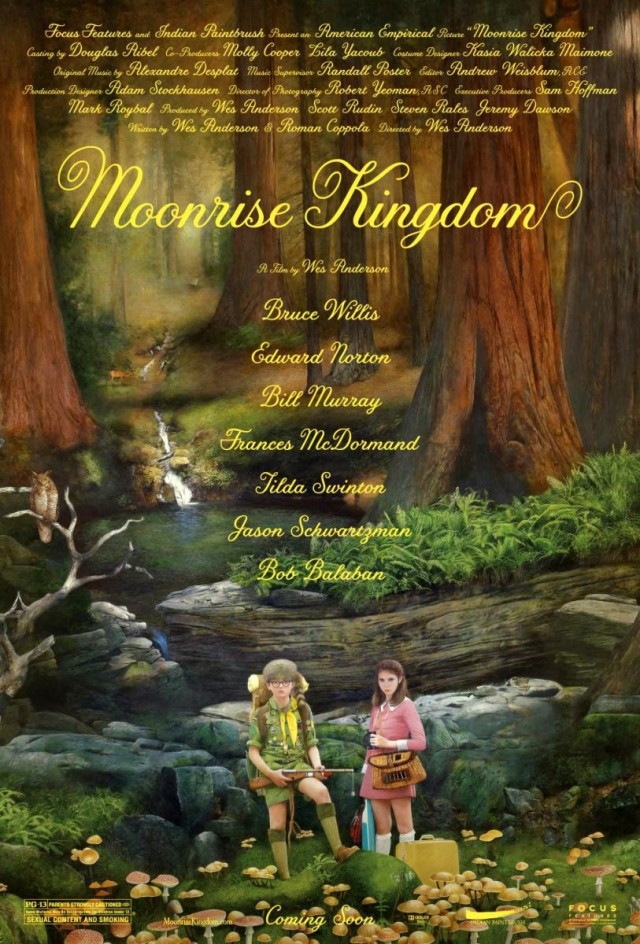
Moonrise Kingdom: ****/*****, or 8/10

And so Wes Anderson, that overly creative director of delightful family comedy drama, returns to live action filming after having taken a short break from it in favour of proving his style is equally charming when applied to stop motion animation, which resulted in The Fantastic Mr. Fox, based on the classic children's novel by Roald Dahl. Anderson apparently picked up a thing or two in a narrative sense from the great author, considering the newest addition to his own oeuvre as a distinguished film auteur (his style always instantly recognizable in every scene) like many of Dahl's stories deals with intelligent kids breaking free from the often abusive world of angry adults that simply refuses to understand them, instead restricting their growth processes by incapsulating them in a repressive regime of habits. Whether inspired by Dahl or simply containing thematic similarities by pure coincidence, Moonrise Kingdom is a wonderful hommage to smart children and their first steps towards true self-reliance despite the obstacle that adults usually prove to be.


The stage for Moonrise Kingdom is provided by New Penzance, a fictional New England island like only Wes Andersonland can provide, complete with Native American cultural leftovers, red-and-white coloured lighthouse, ferry and mail plane, plus the addition of existing Rhode Island (where the movie was shot) natural beauty of stunning quality, the bare facts of all this being relayed to the audience by an odd looking old man in a red coat and a silly hat who simply acts as narrator, not as a relevant character otherwise. The year being 1965, it's the perfect spot for a boy scout camp, which is run by part time math teacher Scout Master Randy Ward (Edward Norton, Fight Club) in a tight and strictly organized manner, which makes it all the harder for the man to accept one of his scouts, the pipe smoking orphan boy Sam Shakusky (Jared Gilman) has gone AWOL. At the same time, the dysfunctional Bishop family is dismayed to discover their little girl Suzy (Kara Hayward) has also made a run for it without their knowledge or permission, upsetting her attorney parents Walt and Laura (Bill Murray, Anderson's go-to-guy – this film marking their sixth collaboration – and newcomer-to-his-work Frances McDormand, of Burn After Reading fame). A search for the pair of runaways is swiftly underway, spearheaded by local police officer Captain Sharp (Bruce Willis, also an Anderson first-timer), a likeable but lonely man who happens to have an affair with Laura. While the search progresses, it becomes blatantly clear the two kids have planned their escape much more effectively than the generally dimwitted adults are seen to conduct their pursuit of them, making for many an hilarious gag in the process as we have come to expect and enjoy from Wes Anderson.

In a flashback we learn Sam and Suzy, both only twelve years of age, met the year before at a local church play, which led to mutual intrigue at first, followed by a pen pal connection and an eventual love relationship, which led them to elope together in order to both escape their incompetent guardians and get married and live in the wilderness. It's a deliciously naive but romantic ploy only the mind of a child could conceive, despite the minds of both kids appearing to be in a better overall condition than those of their grown-up trackers. In fact, it's Scout Master Ward's relentless (and prone to violence) team of boy scouts who locate the runaways first, leading to a surprisingly suggestive moment of aggression and a dead scout mascotte, proving Sam and Suzy are ready to fight for their freedom and their now hard earned right to live alone on a beautiful private beach.


Unfortunately the timing for their escape could have been better, as a devastating hurricane and the resulting flood threatens their island paradise, adding a sense of urgency to the plot. Fortunately for them – or not – the adults find them in time, but by now both Captain Sharp and the boy scouts have come to respect the sensible pair's honest wishes and fully understand their desire to get away from their messed up guardians. Despite the bloody incident earlier between them, in a surprising turn of events the scouts spring both Sam and Suzy from their confinement and relocate them to a church during the now raging storm. Again cornered by the ones they tried to get away from, as well as confronted by a lady from Social Services (Tilda Swinton) – a nameless character simply referred to by everyone, including herself, as 'Social Services', a joke the Dutch subtitling sadly does not pick up – Sam and Suzy again make a now desperate run for it, risking their lives to prove the world their love is real, as is their desire to fight for their independence.

Overall, it's not a complicated plot and a brief synopsis might only make it sound childish, but it's Wes Anderson's approach to things that makes it work as well as it does. As is his usual style, the film is as quirky and colourful as his previous works, making every scene vibrantly appealing and cramped with little details, most of them only visible a brief moment, thus in itself making the film worthy of a second viewing if only to take in all the hidden jokes. Fortunately there's an abundance of not so hard to miss gags as well, both visual and in dialogue, all the actors chipping in to make the jokes as well timed and performed ad they need be. To add to the movie's charm, the film is shot using a 16 mm camera (a first for Anderson), thus enhancing the general 'old movie' feel, making it subconsciously feel more realistically like 1965, which only shows Anderson still isn't afraid to experiment a little bit here and there to discover what works best to convey a style all his own as compellingly as possible. As for experimenting, extra credit is due to him for the fact he dares to explore the blossoming sexual feelings of his two underage main characters, resulting in a 'French kissing' scene in underwear that will undoubtedly make conservative America cringe and whine, but in the context of the scene feels perfectly justified and innocent, as are all the activities he allows this pair, considering the rigid and awkward people they attempt to escape from.


Visual style and experimentation aside, as always it's the actors that make a Wes Anderson movie feel the most like a Wes Anderson movie, utilizing a typical acting style that carefully balances between introvert and emotionally disconnected on the one side and completely over the top on the other. In Moonrise Kingdom's case the greatest accomplishment in this regard comes courtesy of Hayward and Gilman, both completely inexperienced as actors with no previously established acting skills to back them up, yet both delivering a surprisingly successful and engaging performance, making it feel like they've been playing around in Anderson's movies for years. Of course, Bill Murray, who has been doing just that, also succeeds in adding yet another zany character to his repertoire, as does Jason Schwartzmann, whose bit part as an amoral and corrupt Scout leader unfortunately proves all too short. Frances McDormand, Tilda Swinton and Edward Norton fit right in, too, quickly adopting the less emotional and more dysfunctional manner of acting we've grown accustomed too in Anderson's work, despite never having appeared in one of his films before. The weakest link in this star-studded ensemble proves to be Bruce Willis, oddly enough considering his long range of expertise, who, despite portraying Captain Sharp convincingly as a sympathetic but not all too bright character, simply feels both out of place and out of touch in this film, as if not having been able to fully master the acting style required for a Wes Anderson movie. Fortunately this never gets too frustratingly apparent, nor does it ruin any of the scenes he appears in. But no matter how well any of the established actors do in Moonrise Kingdom, its genuine tour-de-force of acting is supplied by the two young main characters who carry the majority of the movie and steal our hearts in the process, making us only hope we'll be hearing more of them in the future.

Moonrise Kingdom could be called a return to form on Wes Anderson's part, a redemption after the wholesomely disappointing The Darjeeling Limited in 2007, were it not that the off-beat Fantastic Mr. Fox, despite being an animated movie, was too blatantly 'Andersonesque' to be deservedly called a deviation from his specific form. As a live action film, his latest release proves a very nice reminder just wat he's capable of, ranking among his best right alongside Rushmore (1998) and The Life Aquatic with Steve Zissou (2004), for being both genuinely funny and admittedly adorable to watch, while also containing enough heart and soul to be raised above average comedy. Be they live action or be they animation, Moonrise Kingdom strongly reaffirms the fact Wes Anderson films are always something to truly look forward to.

And watch the trailer here:


maandag 30 april 2012

City of Ember


Rating: ****/*****, or 7/10


Underrated, enjoyable post-apocalyptic fantasy family flick. After a devastating world war, mankind retreated underground with the hopes of once returning to the surface. Hundreds of feet below ground, the City of Ember was constructed as a safe house to the last remnants of humanity, its lights kept running by huge machinery. However, after several generations had passed, the descendants of the original survivors forgot about their origin and the world above, while the technology keeping them alive slowly degraded, threatening to leave them in everlasting darkness. Superb child actress Saoirse Ronan (nominated for an Oscar for Atonement) stars as young Linda Mayfleet, a girl driven by curiosity and intelligence who wants to fight off the imminent undoing of her home town and the corruption of Ember's greedy Mayor (Bill Murray once more excels at playing a scumbag) and his sinister henchmen, but is confronted on the one hand by narrow minded doctrine stating Ember is all there is, and on the other by giant men-eating mole creatures (making this movie a tad too scary for younger kids). The film sports a tremendously exciting look, almost making Ember itself a living, breathing entity, but we get to explore this ingeniously crafted world less than we would want in exchange for a fairly typical coming-of-age story about kids fighting the older generation's strict rules that seek to keep them mentally chained, breaking loose in the worn out 'follow your heart' style. Still, the delightful fantasy tones of this oft neglected film make for a pleasant surprise to those who bother to check it out.


Starring: Saoirse Ronan, Bill Murray, Toby Jones


Directed by Gil Kenan


USA: Walden Media, 2008

maandag 16 april 2012

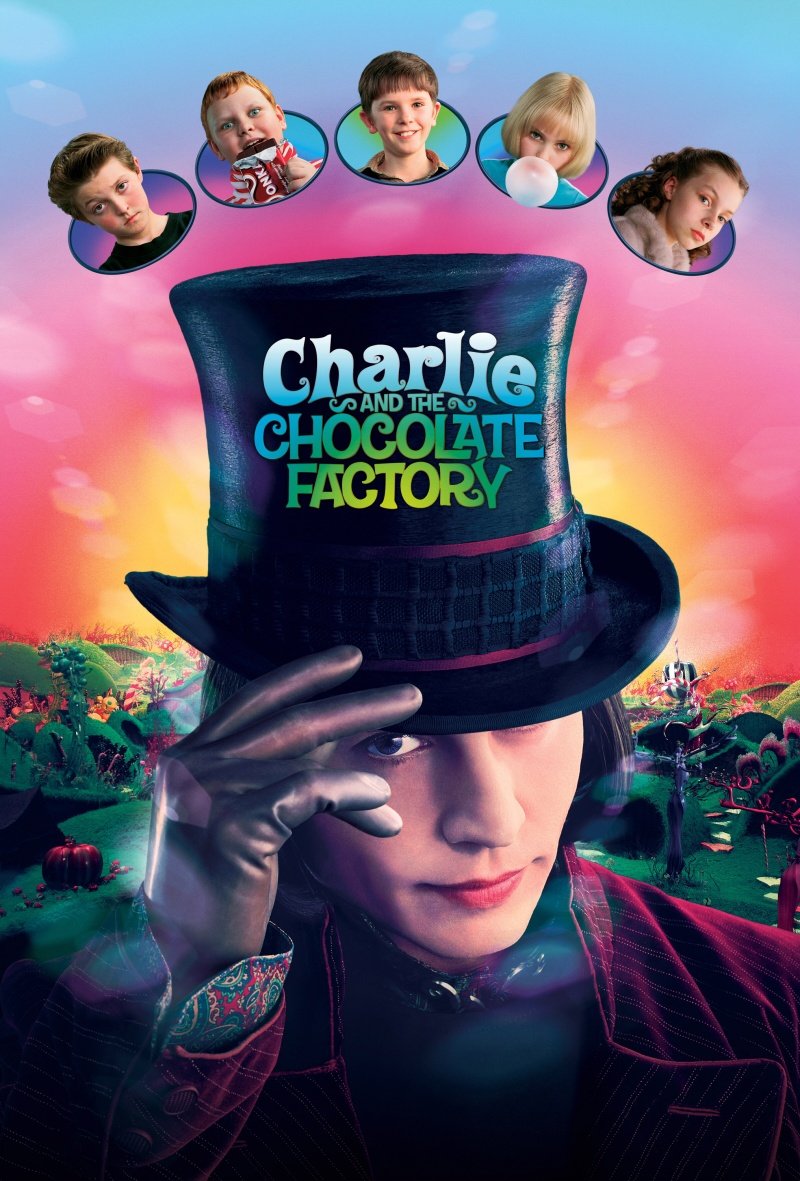
Charlie and the Chocolate Factory


Rating: ****/*****, or 8/10


One of Tim Burton's finest and most underrated films, based on the equally great book by Roald Dahl. Poor Charlie Bucket (Freddie Highmore) is in for a major change in his life when he finds a coveted Golden Ticket in a chocolate bar, which allows him and his grandfather (David Kelly) to visit the grand chocolate factory run by the mysterious hermit Willy Wonka (another wacky character performed with the necessary flair and theatricality by Johnny Depp, in his fourth collaboration with Burton). Together with four other lucky kids, each with his/her own unique depraved character defect (making them generally unsympathetic little bastards), and their equally abhorring parents, young Charlie is in for the ride of his life when he's confronted with the dazzlingly delightful wonders of Wonka's works in a vast array of mouth-watering scenes of candy fantasy. However, the factory has its dark sides too, as the nasty kids soon discover when their flaws get the better of them, leading them to their so deserved doom. Burton's Gothic visual style and witty sense of dark irony lend themselves perfectly for adapting Dahl's chocolate fairy tale to the big screen, with fabulous results. Includes some excellent and memorable songs performed by the Oompa-Loompas, a race of Lilliputians from a far-off land in Wonka's employ, as well as a wicked bit part for the brilliant Christopher Lee as Wonka's dentist father, adding a bit of depth to the character of this amazing but obviously mentally unstable chocolateer.


Starring: Johnny Depp, Freddie Highmore, David Kelly


Directed by Tim Burton


USA: Warner Bros, 2005

maandag 26 maart 2012

Blob, The


Rating: ***/*****, or 6/10


Odd mix of horror and juvenile delinquency films launched the brilliant career of the noted actor Steve McQueen (The Great Escape, The Towering Inferno). When a bizarre lifeform lands on Earth and starts devouring all life it comes in contact with, growing ever bigger in the process, Steve and his girl, along with their buddies and the police, must find a way to stop it. Quite the potential for great horror here (something the eighties' remake realized full well, considering just how insanely gorier it was), but unfortunately this was ignored in favor of scenes involving teens cruising around in their cars and playing loud music, which made it a hit with the kids of the day (something the studio hoped for, which is why the movie was made in colour). In fact, the film's  catchy but obnoxious opening music became a smash hit. It spawned a completely useless and campy sequel in 1972, titled Beware! The Blob. This movie, despite being plain silly, retains a charm and a cult following all its own.


Starring: Steve McQueen, Aneta Corsaut, Earl Rowe


Directed by Irvin S. Yeaworth, Jr.


USA: Fairview Productions, 1958