Posts tonen met het label space. Alle posts tonen
woensdag 22 januari 2014
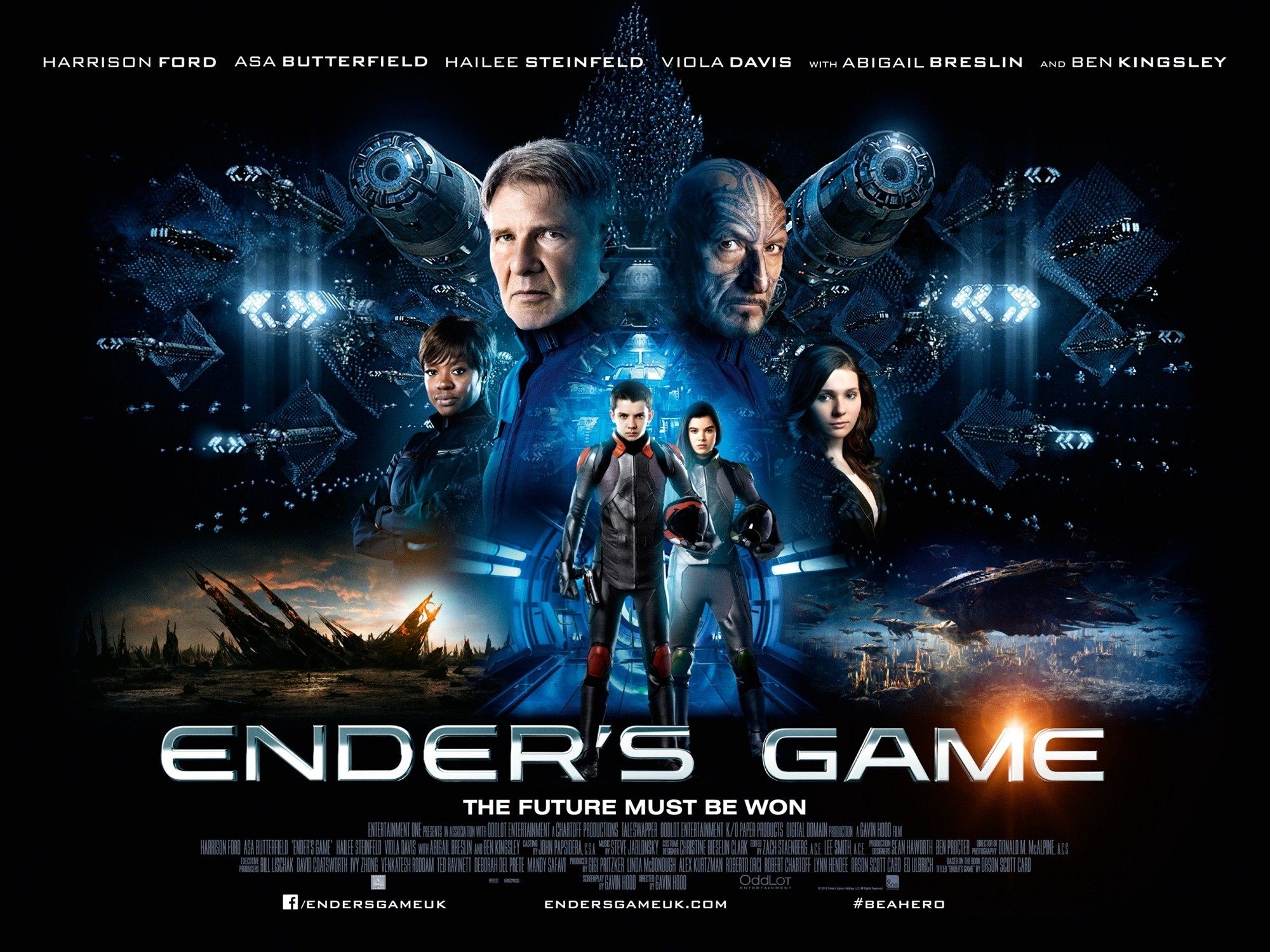
Today's Review: Ender's Game
Went to another press screening for MovieScene last week, and here's the result:
http://www.moviescene.nl/p/153155/enders_game_-_recensie
This movie was more thought provoking than I anticipated. Training kids' minds in order to manipulate them into becoming master strategists with no moral complexion to annihilate the enemy? Not the stuff you usually see in PG-13 movies. A lot of good actors - half of the child actors too have Oscar nominations already - though a lot of them didn't come off as particularly compelling because their characters were given little opportunity to grow on you. It's Ender's movie after all, and Asa Butterfield did a pretty good job carrying his film. Too bad about the obligatory hopeful and happy Hollywood close, but it doesn't hurt the shocking (though not hugely surprising) climax near the end of the film that shows us just how low Ender has unintentionally sunk due to his commanding officers screwing him over, all for the so-called sake of humanity. For a film that most at first glance would consider to be a generic Sci-Fi action flick, as such it packs a more powerful punch than expected.
zondag 13 oktober 2013
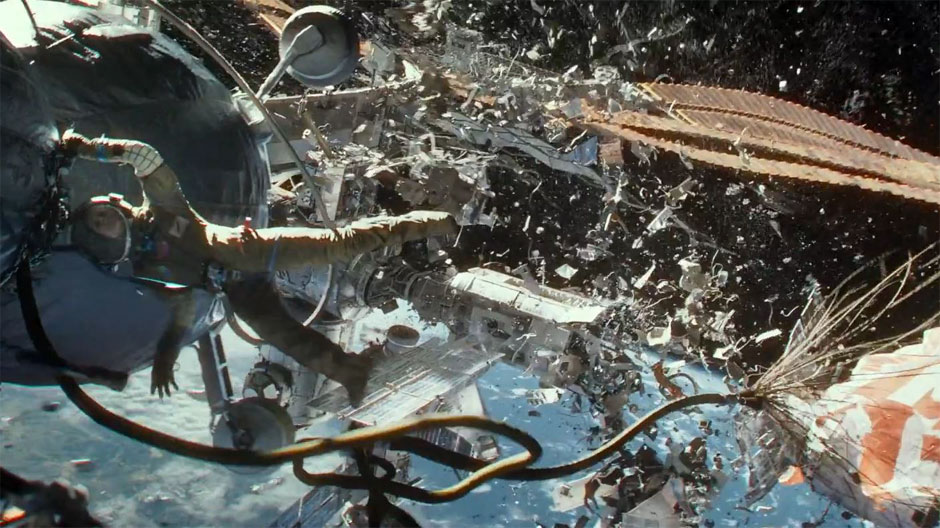
Today's Mini-Review: Gravity
Gravity: ****/*****, or 8/10
It
is rare these days to encounter effects in movies that look so
astounding that they pull the audience in completely and won't let go
until the credits roll. After twenty-odd years of increasing overuse
of CGI, it seemed positive that everything had been done, also owing
to the plethora of home video releases containing behind-the-scenes
footage that reveals in detail the tricks of the trade, thus
enhancing the audience's expertise on what is real and what is not
when watching a film. It has diminished the emotional impact of the
contemporary blockbuster, which often tends to rely heavily on such
big budget effects work, because we spectators think we've seen it
all and know it all by now. But once in a while a movie comes along
that does manage to sweep us off our feet entirely and immerses us
completely into the world its director has envisioned for our viewing
pleasure. In such uncommon cases, the often derogatory term 'effects
film' turns out both wholly justified and incorrect: the effects it
contains do not make a film, but instead engage us into a full
fledged cinematic experience we cannot help but be captivated by so
strongly that all we can do is undergo it until it releases its grip
on us. And then we still sit back in awe for a while longer, with
that most pertinent of questions firmly on our minds: how on Earth
did they do that?! Alfonso Cuaron (Children of Men, Harry
Potter and the Prisoner of Azkaban) has crafted just such a
fantastic experience with Gravity, a superior science-fact
feature that adheres to the laws of physics but constructs its own
laws in terms of what you can accomplish cinematographically these
days. From a narrative point of view it's simply the struggle of two
astronauts (George Clooney and Sandra Bullock) to survive in our
planet's orbit after their space shuttle has been devastated by space
debris caused by the demolition of a Russian satellite. In every
other regard, there is nothing simple about Gravity.
It
is most definitely one of the greatest accomplishments in the field
of visual effects and 3-D technology in recent years and an
incredible tour-de-force on the part of both actors whose
capabilities are put to the most extreme test imaginable. In fact,
you are pulled in so deeply you neither have the time nor the
interest to agree the story is pretty bare and the few attempts at
introducing deeper levels of character development – including
Bullock's character still trying to cope with the death of her young
daughter – don't add all that much to the protagonists' plight. We
run with them because we cannot help but feel we are one of them, and
we too must get out of this ordeal in one piece before time (and
oxygen) runs out. Applying his signature use of the 'long take',
Cuaron opens the movie on a quiet, peaceful note as we witness “our
fellow astronauts” working on a telescope, a job that suddenly
turns extremely hazardous as the debris field hits their workplace
hard, cutting them loose, adrift into the endless black ocean of
space: all in a single, apparently uninterrupted shot (though few
will actually consider that fact as we are already engaged fully by
this point). We're slowly introduced to their Zero-G environment, but
soon must deal with intense camera movements as we float around the
shuttle in fast motions at first, and soon almost unchecked as the
mission is spiralling out of control. Their spacecraft lost, our
fellow pair of astronauts must make its way to the ISS before it too
gets hit by the rubble, and before they run out of breathable air, if
they ever hope to get back down to Earth. Unfortunately physics don't
make it easy on them and reaching their goal appears ever more
hopeless. All to our benefit, as we are treated to some of the most
spectacular visual imagery seen on the big screen in years. Gravity
is a prime showcase of what 3-D can add to a film other than a higher
admission price. Not only is the cinematography breathtaking, we feel
part of a three-dimensional environment at all times, surrounded by
pieces of space rubble on every side, or Bullock's sweat and tears
when we are locked in an escape pod with her in very close quarters.
The intricate shots of floating equipment and people going up, over
and around each other adds a layer of depth that is not likely to be
surpassed in film any time soon. Even though the lack of sound in
space deprives us of an auditory experience the likes of Star
Wars, the immersive visuals make us forget all about any lack
where other sense are concerned. Credit is also due to the seasoned
actors, Bullock in particular, that make the whole experience feel
that much more convincing – though the effect the film has on our
stomachs does half their work already – by delivering excellent
performances few of their colleagues could have matched as they play
off against each other and... yes, against what else, exactly? How
much, if anything, of what we seen on screen was there to aid them?
Even for a trained eye, it's nigh impossible to tell where the real
setting ends and the fictional construct begins. Yet we never get the
feeling we are watching visual effects, which is of course exactly
the trick such effects aim to pull off: don't let the audience know
you are only an effect. The result is a staggering, completely
compelling cinematic experience, one best seen on the big screen as
it is doubtful its full physical and emotional impact is done justice
on a home cinema release, though hopefully the latter can tell us
just how Cuaron and his team managed to accomplish this extraordinary
feat. One thing is for sure, Gravity is gravitating towards
well deserved Best Visual Effects and Best Cinematography Oscars.
vrijdag 30 augustus 2013
Today's Mini-review: Elysium
Elysium:
****/*****, or 8/10
A
fabulously dystopian science fiction flick in every sense of the
term, courtesy of the still fairly inexperienced South-African
director Neill Blomkamp, who continues treading the path he started
with the smash hit District 9 (2009). No extra-terrestrials
this time, as Elysium focuses on our own local troubles on Earth.
Overpopulation and pollution have taken their toll on our world by
the time the year 2154 arrives, but for those stemming from rich and
powerful families, life is a never ending vacation on the space
station Elysium, where the wealthy look down on their fellow man
below in excessive luxury. Alarmingly protective to make sure the
huge masses won't infect the beauty of their private Heaven, the
common man is not allowed to visit the station, and most travel
between locations is done exclusively by robots. There's no sickness
on these Elysian fields made reality, as each residence has its
private medical pod which immediately cures all ailments. The ex-con
Max (Matt Damon) is not so lucky, as he gets exposed to a lethal dose
of radiation at the shuttle factory – you'd think such dangerous
but important work was delegated to droids too, but humans are no
doubt cheaper and more expendable in this sorry state of affairs –
after which he is informed he's only got five days left to live. In
an effort to save his sad existence, but soon that of the daughter of
the love of his life (Alice Braga) too, he gets involved with a shady
criminal organization that seeks to infiltrate Elysium to hack its
systems and make illegal human trafficking easier. All Max needs to
do is kidnap a visiting station dignitary – the terrific and
terrifyingly rude and unsympathetic William Fichtner, who considers
his Earthly brethern little more than unhygienic cheap labour – and
break into his head via a comlink wedged in his brain to steal the
neccesary data. Unfortunately, things go wrong and the target dies
during the heist. What's worse, he happened to be involved in a
covert operation orchestrated by Elysium's Minister of Defense (Jodie
Foster with a funny accent) – who has no moral qualms in shooting
down refugee ships from earth to make sure no poor people invade her
homeland – to seize government control. Soon Max must run for his
life, both to reach Elysium before the countdown ends, and to evade a
particularly nasty and amoral band of ruthless mercenaries led by the
unstable, maniacal Kruger (Sharlto Copley, who starred in District
9).
Blomkamp
develops this disturbingly inhumane world with its outrageous divide
between the haves and the have-nots – a not all too inconceivable
and unbelievable scenario considering our present day social
situation – to a frightfully effective extent, hearkening back to
similar dystopian genre classics of the the notoriously gloomy
Seventies the likes of Soylent Green and Rollerball,
illustrating a future society where all our present day problems
continue to exist, except they've grown to seemingly unsolvable
proportions. The potential consequences of our everyday indifference
and our political inabilites to end such increasing social inequality
are amply showcased in Elysium,
but not in such a heavy-hearted manner they alienate the audience.
Similarly, Blomkamp has put his design team to incredibly good use,
creating a visually lavish world which does not seem so farfetched in
terms of technological capabilities and is clearly an extension of
today's tech, which makes for many a memorable, visually pleasing
shot and dynamic action scene. It looks and sounds amazing, yet
always serves both the story and this world's credibility.
Still,
despite its superior look, solid action and fascinating plot, Elysium
as a film is not as perfect and beautiful as the space station that
shares its name. The climax is rather a forced one, much more
cheerful than expected and warranted, wherein common criminals
inexplicably prove to be revolutionaries. Foster's conspiracy plot
line ends up underexposed and essentially unused in the last act,
while her character remains underdeveloped to be adequately menacing
and understandable. Both Foster and Copley are guilty of overacting,
the latter going a little bit off the deep end in his portrayal of a
bad guy that apparently does not have a shred of recognizable
humanity or redeeming qualities at all (though he does know his
South-African lullabies). Similarly, Damon proves a flawed casting
choice: true, Damon can act, but he's much too big a movie star to
convincingly play an everyday down-on-his-luck factory labourer with
a checkered past. A less known actor would have been preferable,
since all we can see now is Matt Damon looking goofy with a heavy
assortment of tattoos and all kinds of mechanical gizmos strapped to
his body. Despite these few shortcomings, Elysium is science
fiction filmmaking according to the finest traditions of the genre:
socially engaged, thematically rooted in the actuality of the day,
intricate and intriguing but grounded where reality is concerned in
terms of its futurist design, and simply never dull. Delivering a
worthy successor to District 9, Blomkamp is sure to become one
of the greats in contemporary science fiction cinema, deservedly so.
maandag 12 augustus 2013
Today's Article: Destination God Part 2: Man Into Space
Hoofdstuk
2: Man into space,
het vierde subgenre
Zoals
ik reeds aangaf in de inleiding is één van de voornaamste redenen
voor het schrijven van deze scriptie het ontbreken van het vierde
subgenre in het sciencefictiongenre in mijn BA-paper. Daarom zal het
in dit paper alsnog behandeld worden. Hierbij ga ik in op zowel de
representatie van religie als wetenschap in het subgenre gevolgd door
een casestudy; deze aanpak komt sterk overeen met de manier waarop ik
in mijn BA-scriptie de drie andere subgenres besproken heb, met als
verschil dat religie daarin niet behandeld werd. Zoals we hieronder
zullen zien speelt religie een niet onbelangrijke rol in dit
subgenre.
Paragraaf
2.1: definitie van en de rol van wetenschap in het subgenre
Als
er één subgenre is waarin sciencefiction zich duidelijk van horror
onderscheidt, dan is het wel het ‘man
into space’
subgenre. In dit subgenre gaat het meer om de wetenschap zelf dan de,
mogelijk desastreuze, consequenties van deze wetenschap. Science
is, meer dan in de andere subgenres, de spil waar de films in dit
genre om draaien. Wetenschap is wat deze films drijft, wat de
verhaallijnen mogelijk maakt. In dit genre wordt wetenschap als
overwegend positief gezien en ruimtereizen als iets optimistisch in
relatie tot het onbekende.1
Uiteraard zijn er ook de nodige uitzonderingen die wijzen op de
gevaren van wetenschap. Desondanks is dit subgenre zonder meer het
mildst in de representatie van wetenschap en wetenschappers.
Als
voornaamste reden hiervoor kan de band die dit subgenre heeft met de
werkelijkheid genoemd worden. Naast wetenschappelijk verantwoord is
dit subgenre ook het meest realistisch en actueel. Vooral in de
beginjaren van het sciencefictiongenre in de vijftiger jaren, toen de
‘man into space’
films het genre overheersten terwijl de andere subgenres nog uit de
startblokken moesten komen, is de grens tussen ‘science fiction’
en ‘science fact’
vaak vaag. Dankzij de intrigerende invloed van het fantastische
concept van ruimtereizen met raketten, dat in wetenschappelijke
kringen de boventoon voerde, postuleerden deze eerste genrefilms wat
er zou kunnen gebeuren als de mens de ruimte zou betreden. Hierin
ging de film die als kiem van het genre wordt beschouwd, Destination
Moon (USA: Irving Pichel, 1950), het verst. Door
zijn veelvuldig gebruik van bestaande wetenschappelijke theorieën en
de serieuze toon omtrent het, op dat moment futuristische en in de
volksmond onwaarschijnlijke, concept van ruimtereizen kan deze film
welhaast een semi-documentaire genoemd worden. Deze realistische toon
bleef een frequent verschijnsel in het subgenre (hoewel latere films
het voornamelijk gebruikten als achtergrond voor fantastische
concepten, zoals buitenaardse beschavingen of andere planeten, dan
als basis voor een verhaal).
Hierin
ligt een interessante paradox met de andere subgenres: terwijl het
subgenre de meest realistische representatie van wetenschap geeft,
gaat het ‘t verst in het weergeven van de fantastische kanten van
het sciencefictiongenre. Terwijl de andere subgenres zich bezighouden
met de huidige tijd en samenleving, waarin de ‘Other’
(buitenaardse wezens, reusachtige monsters) naar ons – dat wil
zeggen, Amerika – toekomt, speelt dit subgenre zich dikwijls af in
de toekomst waarin wij naar andere werelden trekken en daardoor zelf
het contact met de ‘Other’
opzoeken, of waarin wij zelf de ‘Other’
zijn. Echter, het paradoxale hierin is dat ook in de ‘altered
human’
en ‘terrestrial
creature’
subgenres wij zelf de ‘Other’
als het ware “opzoeken” door ons gebruik of misbruik van onze
technologie. Desondanks, door haar representatie van de toekomst en
andere werelden, die contrasteert met de andere subgenres doordat zij
daarin ontbreekt, blijft het ‘man
into space’
subgenre op het eerste gezicht een vreemde eend in de bijt.2
Door veelvuldig gebruik van dergelijke semantische aspecten (ruimte,
ruimteschepen, andere planeten, toekomst) is dit subgenre echter wel
het makkelijkst af te bakenen van de andere subgenres.
Wat
drijft de mensheid de ruimte in? Twee verschillende drijfveren worden
als reden hiervoor aangegeven in de films van dit subgenre. De eerste
is wetenschap zelf, het aloude vergroten van kennis waarop wetenschap
zich baseert. In deze films (maar ook al bijna in de realiteit) heeft
de wetenschap het punt bereikt waarop de technologie om een
ruimtereis te maken bestaat. De mens trekt daarom de ruimte in en
volgt daarbij de richtlijn van wetenschap: nog meer kennisvergaring.
De vraag luidt hier eerder ‘waarom niet?’ dan ‘waarom wel de
ruimte in?’: het gaat de wetenschappers er niet om of de mensheid
de ruimte in moet,
maar of zij het kan.
De technologie bestaat, dus waarom zou men er geen gebruik van maken?
Deze reden kan als arrogant en zelfs onverantwoordelijk
geïnterpreteerd worden: wetenschappers denken niet na bij hun
creaties en het resultaat dat zij aanrichten, maar puur om de daad
van het creëren zelf. Desondanks worden wetenschappers hier eerder
als naïef dan als expliciet arrogant neergezet: in hun welhaast
kinderlijke enthousiasme naar de nieuwe mogelijkheden verliezen zij
de potentiële resultaten uit het oog. Uiteindelijk geven zij hun
fouten echter wel toe, leren zij hun les en nemen zij
verantwoordelijkheid, waardoor ze niet als kwaadwillend worden
afgeschilderd. Deze eerste reden wordt als geheel minder frequent
aangetroffen in het subgenre, maar is toch een belangrijke factor die
een duidelijk conservatieve blik op technologische ontwikkeling
geeft.
Dat
geldt niet voor de tweede reden, waarbij wetenschap niet alleen als
progressief, maar zelfs onmisbaar geacht wordt. Deze tweede reden uit
zich dan ook in bittere noodzaak. De (Amerikaanse) mensheid moet
de ruimte in, anders volgt rampspoed. In het
subgenre dringt de ernst van de noodzaak voor ruimtereizen zich op
twee manieren aan, die los van elkaar gezien kunnen worden, maar ook
gekoppeld.
Ten
eerste is er de competitie. Als wij,
de Amerikanen, niet als eerste de ruimte ingaan en haar mysteries
ontsluieren, dan doen zij
het wel. Wie zijn ‘zij’? ‘Zij’ worden zelden bij naam genoemd
in het sciencefictiongenre, maar het is overduidelijk: ‘zij’ zijn
de communisten, de Russen, die in de jaren vijftig in een bittere
‘space race’
verwikkeld waren met Amerika. Degene die als eerste de ruimte
“verovert” heeft een groot tactisch voordeel over de oppositie.
In Destination Moon wordt
deze stelling als volgt uitgelegd:
A
rocket is an absolute necessity. If any other power gets on into
space before we do, we’ll no longer be the United States, we’ll
be the disunited world. […] The race is on and we’d better win
it, because there’s absolutely no way to stop an attack from outer
space. The first country that can use the moon for the launching of
missiles will control the Earth.
Als
de VS de ruimte niet als eerste veroveren, dan doet de Sovjet-Unie
het. Dat zou de mogelijke ondergang van Amerika en haar idealen
kunnen betekenen. Zo geïnterpreteerd draait het niet alleen om de
mensheid zelf die de ruimte intrekt, maar ook om de idealen die zij
meebrengt en verspreidt. Amerika, het land dat zichzelf portretteerde
als laatste hoop voor vrijheid en democratie alom, had zodoende de
plicht om de ruimte als eerste te bereiken om een Utopia te stichten
(hetzij op Aarde, hetzij in de ruimte zelf). Deed zij dat niet, dan
volgde een ideologische Apocalyps, waarin de Russen hun systeem met
geweld aan de rest van de wereld op zouden dringen.
De
tweede reden is nog grimmiger, en minder frequent gebruikt maar toch
zeer treffend. De ruimte wordt hier geportretteerd als de laatste
hoop voor de gehele mensheid, zelfs als een toevluchtsoord voor de
Apocalyps. De Aarde is gedoemd, maar door de ruimte in te trekken kan
de mensheid overleven, zoals in When Worlds
Collide (USA: Rudolph Maté, 1951). Of andersom:
een buitenaardse beschaving is gedoemd, maar door naar de Aarde te
reizen en de mensheid om hulp te “vragen” kan redding gevonden
worden, à la This Island Earth
(USA: Joseph M. Newman, 1955). In het laatste geval kan onze
technologie zich ook tegen ons keren en door wanhopige vijandelijke
wezens gebruikt worden, zoals te zien is in Flight
to Mars (USA: Lesley Selander, 1951), waarin
Marsbewoners de raket van een groep menselijke ruimtereizigers wil
kopiëren om met een leger raketten de Aarde te veroveren. Zo
waarschuwt de film voor het potentiële misbruik van technologische
macht, waar de eerste reden voor de menselijke drijfveer de ruimte in
te trekken ook al werd voorgelegd.
When
Worlds Collide en het Apocalyptische uiterste van
de tweede reden zullen in Hoofdstuk 5 uitvoeriger behandeld worden.
Hier voldoet het om te stellen dat deze Apocalyptische visie gevoed
werd door de angst voor de atoombom: dankzij dit aspect van de
wetenschappelijke vooruitgang kon het mogelijk niet lang duren
voordat men werkelijk gedwongen werd de hoop op de ruimte als
toevluchtsoord te richten. Zoals John Brosnan opmerkt:
That
film-makers suddenly became interested in ways of leaving earth is
not surprising since, at the time, it didn’t seem likely that the
Earth would be around for much longer.3
Zoals
in de andere subgenres doet wetenschap in dit subgenre boete voor de
verwoesting die zij heeft veroorzaakt door ook de oplossing aan te
dragen die de mensheid, of tenminste een gedeelte hiervan, kan
redden. Echter, de daadwerkelijke Apocalyptiek zoals die in het ‘man
into space’ subgenre wordt getoond, is
zelden aan menselijke wetenschap toe te schrijven. Of zij wordt
veroorzaakt door de natuur (When Worlds Collide)
of door buitenaardse wetenschap (This Island
Earth): in beide gevallen redt menselijke
wetenschap de mensheid. Hoe dan ook, de metafoor voor de angst voor
het atoom blijft duidelijk.
Paragraaf
2.2: religie in het subgenre
Een
eerste vraag die zich aandient bij de benadering van het
‘man into space’
subgenre betreft de ruimte zelf: wat was de ruimte voor de
(Amerikaanse) mens in de jaren vijftig? Voor veruit de meeste mensen
was het een onbekend, ongedefinieerd gebied waar men weinig of geen
kennis van had. De wetenschappelijke verkenning van de ruimte voorbij
het eigen zonnestelsel kwam net op gang: in principe kon men alles
verwachten achter deze nieuw geopende grens.
Een
oud thema dat niettemin in enkele gevallen naar voren komt in het
subgenre (voornamelijk impliciet, maar expliciet in Conquest
of Space (USA: Byron Haskin, 1955);
zie beneden)
is het motief van de ruimte als het terrein van God en/of hogere
machten: een domein waar de mens zich uit respect verre van dient te
houden. Of God zich letterlijk in de ruimte bevindt of dat de ruimte
een bufferzone tussen het Aardse en het hemelse is wordt niet
aangestipt in het subgenre. Desondanks speelt de eerste drijfveer van
het ruimtereizen (zoals in de vorige paragraaf beschreven) hier een
rol: de vraag of de mens de ruimte in mag of moet, tegenover het feit
dat hij het kan. De ruimte wordt vaak aangeduid als een onbekend
domein waar onvoorstelbare, zo niet goddelijke, krachten heersen die
de mens voorzichtig dient te benaderen - of helemaal niet - in diens
queeste naar wetenschappelijke kennis. In het genre is de ruimte niet
zozeer verboden terrein voor de mens, maar wel een terrein dat met
alle voorzichtigheid en respect benaderd dient te worden. Zoals de
opening narrator in
Invaders from Mars (USA:
William Cameron Menzies, 1953) zich uitdrukt:
The
Heavens. Once an object of superstition, awe and fear. Now a vast
region for growing knowledge: the distance of Venus, the atmosphere
of Mars, the size of Jupiter and the speed of Mercury. All this and
more we know, but their greatest mystery the Heavens have kept a
secret: what sort of life, if any, inhabits these planets?
Zoals
ook in bovenstaand citaat te zien is wordt de term ‘the
heavens’ gebruikt. In tegenstelling tot het
alternatief, ‘space’,
heeft deze term een duidelijk religieuze connotatie. De
veelvuldigheid van het gebruik van deze term in het
sciencefictiongenre in de vijftiger jaren duidt op het bovenstaande
oude thema van de ruimte als Gods rijk. Doorgaans blijft het bij
connotaties als ‘heavens’.
Het thema zelf wordt namelijk zelden concreet besproken in het
sciencefictiongenre in de vijftiger jaren. Naarmate het decennium
vorderde werd het hoe langer hoe minder relevant. De ‘space
race’ werd steeds heftiger; het thema
vormde slechts een achterhaalde sta-in-de-weg. In sciencefictionfilms
uit latere periodes wordt de term ‘heavens’
slechts zeer zelden benut als aanduiding van het concept ‘space’.
Dit
oude thema werd in de loop van het decennium vervangen door een nieuw
thema, dat, hoewel het niet ontkende dat de ruimte mogelijk een
goddelijk domein was (maar hier vooral niet op inging), deze nieuwe
aanwezigheid van de mens in de ruimte goedkeurde, zij het slechts de
Amerikaanse mens. Hoewel de filmindustrie gretig met het thema van de
ruimtereis aan de haal ging, was de Amerikaanse overheid en
wetenschap nalatig geweest in de ontwikkeling van daadwerkelijke
methodes om de ruimte te betreden. Hierdoor kwam het als een schok
toen de Russen in 1957 Spoetnik lanceerden en zij technologisch
gezien opeens op het Westen voor leken te liggen. De paniek die deze
lancering veroorzaakte deed de Amerikaanse overheid beseffen dat het
verder ontwikkelen van ruimtetechnologie noodzakelijk was waarop zij
vervolgens flink vaart zette achter de ‘space
race’.
De vraag was nu: hoe zit het met God? Stond Hij werkelijk achter de
Amerikaanse zaak? Gods positie en voor sommigen Zijn hele bestaan
werd in twijfel getrokken.4
Ellwood merkt op:
Sputnik,
the Soviet artificial satellite whose appearance so confounded those
who had trusted implicitly in God and the scientific superiority of
the West. The makers of the metal moonlet mocked such pretensions,
declaring the cosmic traveller had discovered nothing resembling God
in the empty reaches of space.5
Het
debat over de toelaatbaarheid van de mens in de ruimte was hiermee
definitief verleden tijd. Amerika moest en zou de ‘space
race’ winnen en niet toestaan dat het
communisme ook de ruimte veroverde. De ruimte diende toe te behoren
aan Amerika en de Westerse idealen. Wetenschappelijke ontwikkeling
zou dit mogelijk maken.
Patrick
Lucanio beschrijft in zijn werk hoe Amerikaanse technologische
ontwikkeling de mensheid een ‘tweede Eden’ beloofde, waarin
wetenschappelijke innovaties het leven makkelijk hadden gemaakt onder
een ideologie van vrijheid en democratie. Met
betrekking tot het ‘man
into space’
subgenre stelt hij dat ‘…the
colonization of space was yet another manifestation of the second
Eden’.6
De
Amerikaanse waarden werden dankzij de vruchten van de
wetenschappelijke vooruitgang de ruimte in gezonden door de “echte
Amerikaan” zoals deze afgeschilderd werd in de ‘scientist
hero’
van het genre: een knappe, blanke, heteroseksuele man met gezond
verstand, uiteraard Godvrezend. Zoals Lucanio hem omschrijft een
‘American
Adam’:
The
American Adam […] is the Adam before the Fall. He is morally pure
and socially innocent; his drive is for freedom, manifested by his
never-ending escape from the confines of civilization and from the
corruption that accompanies civilization. His vision is a romantic
vision, a quest, it seems, for the perfect world.7
Deze
zoektocht naar een betere, zo niet perfecte, wereld is een drijfveer
van het ‘man into space’
subgenre: een wereld zonder angst en paranoia, zonder communisme. Een
dergelijke wereld wordt doorgaans niet gevonden in het genre: alle in
de ruimte aangetroffen werelden, ook al lijken ze aanvankelijk nog zo
utopisch, blijken karakterfouten te delen met de menselijke
beschaving (als reflectie op de tijdsgeest) en naderen hun ondergang
(o.a. in Flight to Mars en
This Island Earth): in andere
gevallen hebben dergelijke fouten de wereld die de ruimtereizigers
vinden al lang geleden verwoest, een waarschuwing voor het lot van
onze eigen wereld die in de jaren vijftig relevanter dan ooit voelde
(o.a. in Rocketship X-M (USA:
Kurt Neumann, 1950) en Forbidden Planet
(USA: Fred M. Wilcox, 1956)). (Zie in Hoofdstuk 5 met betrekking tot
deze verloren beschavingen mijn passage over de ‘Alien
Apocalypse’.)
Hoewel
God niet aangetroffen wordt in de ruimte, voelt de ruimtereiziger in
het genre vaak een connectie met het goddelijke als hij zich in het
hemels firmament waagt om de Amerikaanse idealen te verspreiden. In
een aantal momenten in het subgenre bespreekt hij het gevoel gestuurd
te worden door een goddelijke macht naar een bepaald doel. In een
enkel geval is deze goddelijke invloed negatief, zoals in Conquest
of Space als de missie de ene tegenslag na de
andere ondervindt wat de gezagvoerder ervan overtuigt dat God niet
wil dat de mens zich verder de ruimte in waagt (Conquest
of Space wordt hieronder uitvoerig behandeld). De
andere gevallen zijn overwegend positief. Een voorbeeld is te vinden
in Rocketship X-M: om
onverklaarbare redenen wijzigt de X-M raket koers en gaat zij naar
Mars in plaats van naar de maan, haar beoogde doel. De wetenschappers
merken dan op:
Dr.
Lisa van Horn: ‘What does it mean, Dr.?’
Dr.
Karl Eckstrom: ‘It means there are times when a mere scientist […]
must pause and observe
respectfully
while something
infinitely greater assumes control.
I believe this is one of those times.’ [my emphasis]
In
gevallen als deze lijkt God de (Amerikaanse) mens te sturen naar een
bepaald doel. Gezien de opvattingen over de relatie tussen God en de
VS in de jaren vijftig (zie Hoofdstuk 1) is het niet merkwaardig dat
het sciencefictiongenre deze positieve connectie onderstreept, zij
het zelden op expliciete wijze: het wordt doorgaans gelaten bij een
opmerking als deze die niet concreet op God slaat maar wel aangeeft
dat een hogere macht de ruimtevaart naar een doel stuurt. Wat is dit
doel? De “verovering” van de ruimte door het Amerikaanse Ideaal.
Zoals Destination Moon
aangeeft wanneer de Amerikaanse vlag op de maan geplant wordt:
By
the grace
of God
and in
the name of the USA
I take possession of this planet for
the benefit of mankind.
[my emphasis]
In
deze film claimt Amerika de maan voor het welzijn van de mensheid
(niet slechts de Amerikaanse samenleving), en God staat dit toe. Eens
te meer blijkt hieruit de gedachte dat God aan de Amerikaanse kant
van vrijheid en democratie staat: het is de Amerikaanse missie deze
waarden onder de hele wereld, zo niet daarbuiten, te verspreiden
tegenover het communisme, de ideologie van de ‘unfriendly
foreign power’ die de ruimtereis in deze
film probeerde tegen te houden. In haar pogingen om de ruimte voor
het Amerikaanse Ideaal te veroveren voordat een tegenstrijdige
ideologie dat doet gaan wetenschap en religie hand in hand.
Aan
de hand van When Worlds Collide
zal de tweede drijfveer voor het maken van ruimtereizen, het
overleven van de mensheid, aanvullend besproken worden in Hoofdstuk
5, gezien het aanwezige Apocalyptische aspect. Ik zal er hier niet op
ingaan, teneinde onnodige herhaling te voorkomen.
Paragraaf
2.3: casestudy Conquest
of Space
Conquest
of Space is
qua uitgangspunt en design typerend
voor het
‘man
into space’
subgenre, maar thematisch is het dat niet. De film draait om de
eerste stap in ‘deep
space’
die de mensheid in de toekomst8
zet na jaren voorbereiding: een groots ruimtestation is geconstrueerd
van waaruit de eerste raket een reis naar Mars zal ondernemen in de
eerste fase van de ‘verovering van de ruimte’, de poging tot
kolonisatie van andere planeten door de mensheid. De mensheid werkt
samen om dit doel te bereiken in een organisatie genaamd de ‘Supreme
International Space Authority’; in de film wordt de bemanning
geleid door Amerikaanse archetypes (de strenge maar rechtvaardige
generaal, de idealistische jongeman, de komisch bedoelde sidekick).
De
film, geregisseerd door Byron Haskin en geproduceerd door George Pal,
is afgezien van een enkele designfout (de raket is merkwaardig genoeg
uitgerust met vleugels) vrij realistisch in de weergave van
wetenschappelijke theorieën en concepten. Dit is niet vreemd,
aangezien Pal eerder in het decennium verantwoordelijk was voor de
“pseudo-documentaire” Destination
Moon. Met
Conquest of
Space zette
hij de trend van wetenschappelijk verantwoorde sciencefiction voort.9
Dezelfde Pal leverde, in samenwerking met Haskin, twee jaar eerder
The War of
the Worlds
(USA: Byron Haskin, 1953) af, waarin een weinig positief beeld van
wetenschap geschetst werd ten gunste van religie en geloof, dat aan
het eind van de film de mensheid redt van de Martianen (zie voor een
analyse van de representatie van wetenschap in deze film Casestudy 1
van ‘It Came from Cold War America’). Opmerkelijk genoeg lijken
Pal en Haskin hun opvattingen ten opzichte van wetenschap herzien te
hebben. Waar in The
War of the Worlds
de menselijke wetenschap faalde in haar pogingen de mensheid te
beschermen tegen de monsterlijke Martiaanse oorlogsmachine, vormt
wetenschap in Conquest
of Space
een belangrijk hulpmiddel voor het in vrede leven van de mensheid. In
deze film moet religie het ontgelden, althans die religie die geen
ruimte laat voor interpretatie. In The
War of the Worlds was
geloof daarentegen de redder van de mensheid.10
Religie
in deze film is direct gekoppeld aan het oude thema van de ruimte als
het heilige domein van God, dat in 1955 al grotendeels achterhaald
was vanwege de feller wordende ‘space race’.
Hierdoor wijkt de film thematisch af van andere ‘man
into space’ films, die dit motief alleen
impliciet behandelden maar het goeddeels negeren ten bate van de
wonderen van de wetenschap en de noodzaak van het ruimtereizen. De
mensheid vormt, dankzij wetenschappelijke hoogmoed, een indringer in
‘the heavens’ en
wordt gestraft voor zijn godslastering. Althans, dit is de redenatie
van generaal Samuel Merritt, die verantwoordelijk was voor de bouw
van het ruimtestation en de raket, en de eerste missie naar Mars
leidt. Merritt heeft vanaf het begin van de reis sterke bedenkingen
over de onderneming, aangezien het oorspronkelijk de bedoeling was
naar de maan te gaan. Zijn superieuren besloten opeens het doel te
veranderen terwijl de missie hier niet op berekend was. Tot zover
zijn er geen religieuze bezwaren tegen de missie. Die bezwaren komen
geleidelijk, als de raket met de ene na de andere catastrofe
(ongelukken, botsingen met een asteroïde, verlies van
bemanningsleden) geconfronteerd wordt. Dit overtuigt Merritt er hoe
langer hoe meer van dat de missie vervloekt is vanwege de
godslastering die de bemanning pleegt door te ver de ruimte te
betreden. Uiteindelijk tracht hij er alles aan te doen om de missie
te saboteren – hierbij Bijbelcitaten in het rond strooiend –
waarbij hij zelfs moord niet schuwt.
Merritts
transformatie van plichtsgetrouwe wetenschapper naar raaskallende
godsdienstwaanzinnige wordt weinig onderbouwd. Het enige element dat
Merritt in connectie brengt met religie is zijn Bijbel die hij leest
tijdens de trip naar Mars. De film impliceert dat genoeg psychische
tegenslag en teveel geloof in de Bijbel als Absolute Waarheid elk
rationeel mens in een gewelddadige radicaal kunnen veranderen. Hier
tegenover plaatst de film het beeld van de rationele mens die
vertrouwt in wetenschappelijke vooruitgang, in de persoon van Merrits
zoon, kapitein Barney Merritt. Ook hij ondergaat psychische druk door
alle tegenslag, maar hij blijft geloven dat de wetenschap een
oplossing voor alles kan bieden. Hij ontkent niet dat er een hogere
macht in het spel kan zijn en benut dit ook in zijn argumentatie om
zijn vader te overtuigen van de noodzaak van hun reis, getuige de
volgende dialoog:
Barney:
‘I
don’t remember you reading the Bible so often, sir.’
Generaal
Merritt: ‘It’s the one book you never really get through reading.
Man’s every move, his every thought, every action, is in there
somewhere, recorded or predicted. Every move except this one.
According
to the Bible, Man was created on the Earth. Nothing is ever mentioned
of his going to other planets. Not one blessed word.’
Barney: ‘Well, at the time the Bible was written, it wouldn't have made much sense, would it?’ Generaal Merritt: ‘Does it now? The Biblical limitations of Man's wanderings are set down as being the four corners of the Earth. Not Mars, or Jupiter, or infinity. The question is, Barney, what are we, explorers or invaders?’
Barney: ‘Invaders? Of what, sir?’ Generaal Merritt: ‘The sacred domain of God. His heavens. To Man, God gave the Earth, nothing else. This taking of... of other planets... it's almost like an act of blasphemy.’
Barney: ‘But why? They belong to no one else.’ Generaal Merritt: ‘We don't know that.’
Barney: ‘But look, sir, it couldn't be just an accident that at the very time when Man's resources on Earth are reaching an end, Man develops the ability to leave his own world and seek replenishment on other planets. The timing is what fascinates me: it's too perfect to be accidental.’
Barney: ‘Well, at the time the Bible was written, it wouldn't have made much sense, would it?’ Generaal Merritt: ‘Does it now? The Biblical limitations of Man's wanderings are set down as being the four corners of the Earth. Not Mars, or Jupiter, or infinity. The question is, Barney, what are we, explorers or invaders?’
Barney: ‘Invaders? Of what, sir?’ Generaal Merritt: ‘The sacred domain of God. His heavens. To Man, God gave the Earth, nothing else. This taking of... of other planets... it's almost like an act of blasphemy.’
Barney: ‘But why? They belong to no one else.’ Generaal Merritt: ‘We don't know that.’
Barney: ‘But look, sir, it couldn't be just an accident that at the very time when Man's resources on Earth are reaching an end, Man develops the ability to leave his own world and seek replenishment on other planets. The timing is what fascinates me: it's too perfect to be accidental.’
Generaal
Merritt: ‘Those other planets might already be tenanted.’
Barney: ‘Oh, I don't think so... the universe was put here for Man to conquer.’
Qua
religieuze overtuiging lijkt Merritt het meest op een
overenthousiaste fundamentalistische evangelist die hardnekkig
gelooft in de Bijbel als contextloos werk dat universele waarden voor
alle tijden en situaties omvat en kritiekloos gehoorzaamd moet
worden: tegenspraak wordt niet getolereerd. Het verschil van mening
eindigt daarop in een conflict tussen vader en zoon, dat uitmondt in
de dood van de vader die in een laatste sabotagepoging zijn zoon
aanvalt, die vervolgens in zelfverdediging zijn waanzinnige vader
neerschiet.
De
argumentatie van zowel vader als zoon Merritt slaat terug op
drijfveren tot ruimtereizen zoals ik die in Paragraaf 2.1
formuleerde. Ten eerste is er de reis naar de ruimte vanwege de
bestaande mogelijkheid daartoe. In deze film heeft de mensheid de
technologie om de ruimte in te trekken, maar wat is daartoe zijn
reden? Volgens generaal Merritt is deze er niet, aangezien de mens op
Aarde dient te blijven volgens Gods geschriften: de mens gaat de
ruimte in omdat hij het kan, maar staat er niet bij stil of hij dat
mag. Daarmee pleegt hij godslastering van de ergste soort, meent
generaal Merritt:
Generaal
Merritt: ‘Merritt speaking. Here's the report. Lost course for
several days due to near-collision with asteroid, but we can still
reach destination as planned... which may be Mars, or Hell. This
voyage is a cursed abomination!
If it were possible I'd come back now, return the ship to Earth and
blow it up-’
Barney: ‘General, please!’
Generaal Merritt: ‘-together with all plans in existence for building another! We're committing Man's greatest sacrilege! And we can't stop!’ [my emphasis]
Barney: ‘General, please!’
Generaal Merritt: ‘-together with all plans in existence for building another! We're committing Man's greatest sacrilege! And we can't stop!’ [my emphasis]
Ten
tweede is er de ruimtereis uit noodzaak, wat in het meningsverschil
uiteindelijk wint. Deze drijfveer gebruikt Barney in zijn
argumentatie: de grondstoffen op Aarde raken op, als de mens wil
overleven moet hij nieuwe grondstoffen in de ruimte vinden. Gebeurt
dit niet, dan zal de Aarde in een nieuwe Wereldoorlog terechtkomen in
de strijd om grondstoffen. Een bemanningslid, de Japanse sergeant
Imoto, gebruikt eerder dit argument om de noodzaak van de missie, en
zijn trots eraan deel te mogen nemen, te onderstrepen. Zijn precieze
bewoording is echter bizar uitgedrukt en maakt zelfs gebruik van
racistische stereotypering. Het zegt meer over hoe Amerika destijds
tegen de Japanners aankeek dan dat het een duidelijke onderbouwing
geeft van de noodzaak de ruimte in te trekken op zoek naar
grondstoffen:
Some
years ago, my country chose to fight a terrible war. It was bad, I do
not defend it, but there were reasons. Somehow those reasons are
never spoken of. To the Western world at that time, Japan was a
fairybook nation: little people living in a strange land of
rice-paper houses... people who had almost no furniture, who sat on
the floor and ate with chopsticks. The quaint houses of rice paper,
sir: they were made of paper because there was no other material
available. And the winters in Japan are as cold as they are in
Boston. And the chopsticks: there was no metal for forks and knives
and spoons, but slivers of wood could suffice. So it was with the
little people of Japan, little as I am now, because for countless
generations we have not been able to produce the food to make us
bigger. Japan's yesterday will be the world's tomorrow: too
many people and too little land.
That is why I say, sir, there
is urgent reason for us to reach Mars: to provide the resources the
human race will need if they are to survive.
[my emphasis]
Wat
de bemanning aantreft op Mars, een dor onontgonnen terrein zonder
spoor van leven, duidt op de ruimte als gebied voor grondstoffen en
lijkt de afwezigheid van een goddelijke macht die tegen menselijke
aanwezigheid kan zijn te bevestigen. Als een bemanningslid opnieuw
opmerkt dat de hele missie vervloekt is door alle tegenslag wijst een
ander hem op de levenloosheid van Mars en de hierdoor geïmpliceerde
afwezigheid van God:
“Only
God can make a tree.” Okay? Where is it? Where's the trees, and the
flowers, and the grass? Where's the water? You hear me? Where's
the water?!
Desalniettemin,
de bemanning ontkent niet dat God bestaat. Integendeel, ook Barney
wijst in het eerste citaat op het feit dat de situatie te toevallig
is om niet gestuurd te worden door een hogere macht. Een herhaling
van zijn argument:
[…]
it
couldn't
be just an accident
that at the very time when Man's resources on Earth are reaching an
end, Man develops the ability to leave his own world and seek
replenishment on other planets. The timing is what fascinates me:
it's too
perfect to be accidental.
[my emphasis]
In
Barneys denkkader geeft deze macht toestemming aan de mensheid om de
ruimte in te trekken en diens voortbestaan te waarborgen, wat blijkt
uit de haast perfecte aaneenschakeling van omstandigheden. Dit
argument kan beschouwd worden als een uiting van het geloof in de God
die het Amerikaanse Ideaal steunt, de God die achter Amerika’s
handelingen in de naam van democratie en vrijheid staat en zorg
draagt voor Amerika’s overleven, en daardoor dat van de hele
mensheid. In deze film wordt de verovering van de ruimte, ondanks de
doorgaans negatieve connotatie van het woord ‘verovering’, niet
gezien als een verkeerde daad, maar als noodzakelijk en indirect
gesteund door God.
In
tegenstelling tot in The War of the Worlds
maakt Conquest of Space geen
gebruik van religieuze symboliek (afgezien van het kruis als
markeerpunt voor het graf van de generaal op Mars), maar is de
discussie over de functie van religie alleen terug te vinden in de
dialoog. De dialoog is precies datgene wat ten node gemist wordt
tussen de verschillende kerken in de vijftiger jaren, en deze film
spreekt dit thema (waarschijnlijk onbewust) aan ter illustratie van
het gebrek aan samenwerking tussen de kerken. In een kritieke
situatie, zij het fictief (de oprakende grondstoffen) of actueel (de
dreiging van het communisme) is het juist noodzakelijk verdeeldheid -
hetzij tussen kerken in de realiteit, of tussen de naties zoals de
film weergeeft (de naties werken samen in de “verovering” van de
ruimte door de mensheid) - opzij te zetten om samen te overleven,
waarbij religie als bindmiddel en wetenschap als hulpmiddel moet
dienen. Dit is het punt dat Conquest of Space
lijkt te willen maken, maar door de eenzijdige negatieve
representatie van de aanvankelijk rationele generaal die onder druk
in een redeloze fanatiekeling verandert waarschuwt de film eerder
voor de gevaren van het blind vertrouwen in de Bijbel.
‘How
far is too far?’, luidt de tagline
van de film. Het antwoord hierop schuilt niet
in de vorderingen van de technologische ontwikkeling of het verkennen
van de ruimte, maar in de grenzen van het geloof. Een degelijke
balans tussen vertrouwen in de vooruitgang en religie is goed
mogelijk (zoals Barneys perspectief aantoont), tenzij men te ver gaat
in het letterlijk nemen van de bronnen van religie, waarop radicale
geloofsbelijdenis een belemmering vormt voor het welzijn van de
mensheid.
1
Sobchack, Vivian. ‘The alien landscapes of the planet Earth:
science fiction in the fifties.’, in: Atkins, Thomas R. Science
Fiction Films. New York: Monarch
Press, 1976: p. 51
2
Dit is een reden dat ik het ‘man into space’ subgenre
niet in mijn BA-scriptie behandelde. Naast het feit dat ik het te
laat distantieerde van de andere subgenres wist ik niet goed hoe ik
de geportretteerde toekomstbeelden voldoende kon laten aansluiten
met onderzoek naar de samenleving in de jaren vijftig zelf, die
duidelijker gerepresenteerd werd in de andere subgenres. Deze fout
hoop ik hier goed te maken.
3
Brosnan, John. Future tense: the cinema
of science fiction. New York: St.
Martin’s Press Inc., 1978: p. 81-82
4
Ellwood 1997: p. 186
5
Ellwood 1997: p. 175
6
Lucanio, Patrick. Them or us:
archetypal interpretations of fifties alien invasion films.
Indianapolis: Indiana University Press, 1987: p. 88
7
Lucanio 1987: p. 88
8
De precieze datum wordt in de film zelf niet genoemd, maar het is
ongetwijfeld niet in de jaren vijftig. Brosnan beweert dat het ‘set
in the 1980s’ is (Brosnan 1978: p. 79); ook op IMDb wordt dit
vermeld.
9
Pal maakte o.a. gebruik van technisch advies van Wernher von Braun
(ontwerper van de Duitse V-2 raket). Brosnan
1978: p. 81
10
Pal en Haskin zijn zeer wisselvallig in hun weergave van de relatie
tussen wetenschap en religie. Als hun hele repertoire aan
sciencefictionfilms van de vijftiger jaren in beschouwing wordt
genomen lijken ze geen eenduidige mening over deze relatie te
hebben. In Destination Moon is, op een enkele opmerking na, geen
sprake van religie: wetenschap voert de boventoon en helpt Amerika
als eerste de maan te bereiken. When Worlds Collide gebruikt
daarentegen op verschillende momenten Bijbelse spreuken om het
Apocalyptische gehalte van de film te benadrukken. In deze film
vormt wetenschap het middel dat de laatste restanten van de mensheid
naar een nieuw thuis in de ruimte voert, als een metafoor voor de
Ark van Noach. Hier kunnen wetenschap en religie dus vreedzaam
samengaan en vormt wetenschap tot op zekere hoogte een eigen religie
(zie Hoofdstuk 5). Daarop volgt The War of the Worlds, die een
grimmig beeld van falende menselijke wetenschap schetst, naast een
schokkende metafoor voor de overdaad aan wetenschappelijke kracht in
haar representatie van de zeer geavanceerde maar onethische
Martianen. In deze film wordt de mensheid slechts gered door zich
tot God te wenden (‘divine intervention’). Tenslotte
volgt Conquest of Space waarin wetenschap als een hulpmiddel voor
het overleven van de mensheid wordt beschouwd, dat door sommige
gelovigen wordt omarmd (in de persoon van Barney), maar door anderen
als godslasterlijk wordt gezien (Generaal Merritt). Het lijkt erop
dat Pal en Haskin geen specifieke opvatting prefereren maar iedereen
te vriend willen houden door zowel religie als wetenschap
multi-interpretabel te laten.
zondag 9 september 2012
Snake Plissken in space
Lockout: ***/*****, or 7/10
The
contemporary major Hollywood studios are not known for their
originality. The abundance of sequels, reboots, remakes, reimaginings
and the like, all for the purpose of building marketable and easily
exploitable franchises, allows little room for any well conceived
fresh ideas to swing into full production and hit theaters. New ideas
seemingly remain the province of the smaller independent studios
circling Hollywood, often praised for their “European” attitude
towards intriguing scripts and securing finance for their smaller
scaled but emotionally more elaborate set-up. However, in truth the
European sensibility isn't much different at all, as proven by the
European 'major' Luc Besson, who is well known for producing dynamic
motion pictures similar in style and substance to their American
counterparts, in typically American genres like action and science
fiction. While Besson has skillfully directed a fair amount of superb
European genre movies that were also accessible to overseas
audiences, like Léon (1994) and The Fifth Element
(1997), many of the movie projects he takes under his wing as a
producer are less original. So when the credits of Lockout reveal
the film was 'based on an original idea by Luc Besson', such a
statement has to be taken with a grain of salt, considering the film
is a highly derivative product of other movies, chief among them John
Carpenter's classic Escape from New York (1981).
'In
the not too distant future, a disgraced soldier is charged with a
secret mission to retrieve a person of importance from an
out-of-control maximum security prison, where utter lawlessness rules
as the inmates are in control.' An apt short synopsis for Escape
from New York, as easily applicable to Lockout. Main
differences being that the prison in the former is located on
Manhattan, walled off from the rest of the world, while in the latter
it's literally off-world as the prison is located on a giant space
station called MS One. The identity of the people in need of rescue
from the clutches of the depraved prisoners are also a close match,
but not quite identical. In Escape from New York the mission
objective is the United States President, who very conveniently ended
up in the worst place on Earth, the last place where he would want to
find himself in, considering the deplorable prison is ironically the
result of his administration. In Lockout, the honor of ending
up in the worst place off Earth is reserved for his daughter Emilie
(played by Maggie Grace of Lost fame (back when Lost
hadn't written itself to death yet in a plethora of extremely
convoluted plot twists, which is the exact opposite of Lockout's
seemingly lazy writing process)), who chose to go up to MS One on a
bleeding heart PR-trip to make sure the inmates are treated nicely.
They're not of course, and when all hell breaks loose as they escape
their stasis cells, the First Daughter will pay the price for the
penitentiary's faults, if the escapees find out her true identity.
The
stage is set, the victim is chosen and the battle lines between the
angry convicts and the incompetent authorities are drawn. Enter a
lone rogue, suckered into saving the government official from certain
death with freedom as his reward. In Escape from New York, the
rogue dispatched to enter the hell hole was called Snake Plissken
(Kurt Russell), a one-eyed ex-special forces agent done with doing
government chores, turning to an outlaw life instead so he didn't
have to take crap from nobody no more, armed with a general 'fuck
you' attitude and whatever guns he can his hands on. It proved to be
a singularly badass character, good for a sequel with an all too
similar plot, Escape from L.A. (1996). Lockout enters
its own anti-hero, recently disgraced CIA operative Snow who is
charged with murder and treason, planned to be send to MS One anyway
for his alleged crimes (of which he is naturally innocent), until it
occurs to his superiors deploying him to save the President's little
girl is their best bet, while negotiators try to reason with the
unreasonable bad guys for their hostages' lives as a diversion. So
off he goes, sneaking into the facility, aiming to get out of the
rampaging prisoners' claws himself as he figures out a way to smuggle
his objective to safety. Snow, played enthusiastically by Guy Pearce,
is a tough and cynical military man with his heart in the right
place, despite being framed in an espionage plot. Of course he
doesn't give a damn about the mission at first but eventually he
establishes a rapport with Emilie, without the situation getting too
typically mushy and sentimental (though with a hint of sexual tension
due to possible romantic feelings interspersed throughout the whole,
without feeling like an in-your-face love relationship, which would
have felt contrived and inappropriate). Grace delivers ample witty
remarks against Pearce's many rude and sexist comments, often with
much needed hilarious effect to keep the film from revolving solely
around the ensuing violence. Snow may not look and sound as iconic as
Snake (the eye patch is sorely missed), but his relation with Emilie
adds a dimension of character levity Snake had to do without. You
didn't see him engage in sarcastic dialogue with the President.
Equally
entertaining to behold is the ensemble of crazed psychopaths catching
the brunt of Snow's wrath as he struggles for his life and Emilie's.
Amongst the assorted rapists and serial killers are nightmarish men –
the prisoners are all male, unfortunately: it might have been
thoroughly entertaining to see what screwed up female convicts Besson
and his directors could have concocted – you would only expect in
extra-terrestrial prisons, devoid of any humanity, only out to
ruthlessly maul people, including their fellow inmates. Most
noteworthy is the original escapee, a true psycho named Hydell
(Joseph Gilgun), sporting an emaciated physique, a dead eye and a
bunch of creepy tattoos to go along with his already freaky stature
perfectly. Emilie made the mistake of interviewing Hydell on MS One's
living conditions first, resulting in the obsessive criminal spending
the rest of the film trying to get his hands on her in order to
perform whatever ungodly unspeakable obscenities on her if he gets
the chance, while at the same time releasing the rest of the
detainees. Equally menacing is his older brother Alex (Vincent
Regan), who may lack Hydell's degenerate bodily qualities but makes
up for it in full by being the hardest yet the most intelligent man
on the station and as such the de facto leader of the villainous gang
of thugs, killing everybody who would challenge his merciless rule
while managing to keep his monstrous brother in check for a while
longer. Alex and Hydell rule their conquered prize with an iron fist,
the latter terrorizing the staff and their fellow prisoners while the
former conceives a plan to get off the station alive, with poor
Emilie at the heart of it, much to her dismay. All the while, Snow
has to make his way through scores of similarly fucked up bad guys,
one more vile and subhuman than the other, to ensure the pair of them
get out in one piece. While Snow and Emilie drive the plot, it's the
inhuman prisoners that supply the fun and the actors behind them that
are shown to be the most capable performers in the piece. Snake
Plissken apparently had it easy: most of the criminals he encountered
weren't half as repulsive or unstable as the villains Snow has to
face.
The one
element Lockout cannot do without as much as Escape from
New York couldn't, is action. Though Besson handed over the
director's chair to a pair of newcomers to directing, James Mather
and Stephen St. Leger, it's clear they studied their producer's flair
for adrenaline packed stunts and fireworks intensively, adding yet
another high voltage action flick to Besson's already explosive
oeuvre, and of course to their own. Where action is concerned, the
movie definitely should not had have to rely on visual effects work
alone, since in many cases the CGI is of rather poor quality (still
an often heard complaint in European films of a bigger budget).
Though the establishing shots of the MS One space station look decent
enough, the same cannot be said for a highway chase scene in the
beginning of the movie, nor in a space battle between the
penitentiary's defensive guns and a small fleet of fighter ships
later on. The effects of both scenes are painfully reminiscent of any
poorly rendered video game of the last few years and only show
European effects departments still have a long way to go before
they're on par with their American counterparts. On the action front,
it's the close quarters fisticuffs that form the film's strength,
pitching poor Pearce against an array of angry convicts, resulting in
many a gun battle as well as hand to hand fights employing knifes,
tools and bare hands as both parties try to viciously take each other
out as gruesomely (and for the audience, desirably) as possible.
Compared to visual effects in general this may look like crude
technique, but it looks a whole lot more realistic than anything the
computers contributed to Lockout and
is sure an awful lot more fun to watch.
Overall,
whatever Lockout's end credits claim, original this movie is
not. In fact, a few minor dissimilarities with Escape from New
York aside, it's as close to movie plot theft as you can get,
apparently driven by the desire to make a few bucks off the story of
an established cult classic that just won't get remade instead.
However, it is all kinds of fun, both as a guilty pleasure for those
aware of John Carpenter's previous addition to the genre and as a
decent action flick for those who are not. Though Guy Pearce is no
Kurt Russell and his agent Snow would never be a fair match for
Snake, he carries the film with enough rude bravura and physical
prowess as an action (anti-)hero to make us run along with him, while
Maggie Grace adds an enjoyable new element to the mix as the damsel
in distress who in the end takes to the fight herself as much as
necessary in order to show there has been some progression on the
gender front in the action genre in the last thirty years. Rookie
directors Mather and Leger accomplish an excellent feat by accepting
the thankless job of directing what's basically an Escape from New
York rip-off but making it feel slick and adrenaline packed to
such an extent the general audience won't notice and the film buffs
won't care about their near sacrilegious undertaking all that much.
However, Besson had better spend some time developing a truly
original story for his future projects, instead of aiming to
copy+paste Carpenter's sequel Escape from L.A. next. After
all, you can only plagiarize so many movie plots before public
opinion turns against you and you're send off to prison yourself.
And
watch the trailer here:
dinsdag 6 maart 2012
Armageddon
Rating:
**/*****, or 4/10
Overly
noisy and bombastic action spectacle featuring the imminent demise of
our planet by a giant asteroid, so an unlikely group of oil drillers
is send into space to drill a hole in this threat and plant a nuclear
bomb into it so it can be blown up in space before it kills us all.
Though the movie features a deliciously good cast and plenty of
action, its at times completely asinine plot, cheesy jokes, focus on
loud explosions and abundance of annoying moments of blatant American
patriottism clearly betray this film to be yet another obnoxious
Michael Bay product, dragging on for 150 minutes from one silly
catastrophe to another until we simply cannot care about the
characters' plight any more. Too bad, since the film starts out
pretty good with a convincing and spectacular action scene of small
meteorites hitting landmarks around the globe. After that, the movie
only goes progressively downhill, despite the solid score and the
many fine actors involved.
Starring:
Bruce Willis, Ben Affleck, Steve Buscemi
Directed
by Michael Bay
USA:
Touchstone Pictures, 1998
zaterdag 4 februari 2012
Serenity
Rating: ****/*****, or 8/10
Tweede
strijd van verliezer Whedon bewijst zijn gelijk
Menigeen
zal de naam Firefly
weinig zeggen. Het was de titel van een zeer geslaagde televisieserie
die Joss Whedon, de man achter het zeer succesvolle Buffy the
Vampire Slayer, in 2002 produceerde voor Fox-TV. Helaas bleek de
serie geen lang leven beschoren aangezien Fox er al na vijftien
afleveringen de stekker uit trok. Een grove inschattingsfout, want
aan de kwaliteit van deze sciencefiction-serie lag het niet, wat
vervolgens bewezen werd toen Firefly op DVD alsnog een culthit
werd. Whedon zwoer dat hij het er niet bij zou laten en dat hij
Firefly op de één of andere manier een nieuw onderdak zou
geven. Hij hield zijn woord, want hij komt nu met een bioscoopfilm
aanzetten, getiteld Serenity, ditmaal geproduceerd door
Universal. En ondanks de verhuizing naar zowel een nieuwe studio als
het witte doek, heeft hij het oude, hoge niveau van de serie weten te
behouden, wat resulteert in een flitsende actiefilm vol met frisse
ideeën en aanstekelijk intrigerende personages.
De film
opent met een korte introductie die de kijker niet meer dan
noodzakelijk meegeeft om de stand van zaken in dit universum te
begrijpen. Ergens in de verre toekomst heeft de mensheid de Aarde
verlaten en zich in een ander zonnestelsel gevestigd waar vele
werelden gekoloniseerd zijn. Een aantal werelden heeft zich succesvol
verenigd in een Alliantie, terwijl de rest nog ruige grensgebieden
zijn waar orde en tucht ver te zoeken is. In een poging deze planeten
beschaving bij te brengen brak er een verschrikkelijke oorlog uit die
de Alliantie glansrijk won. Echter, Serenity is een ode aan de
loser, en toont zodoende de lotgevallen van een samengeraapte
bemanning op een vervallen vrachtschip genaamd 'Serenity': het zootje
ongeregeld zijn diegenen die de oorlog verloren maar weigeren zich
aan te passen aan de norm van civilisatie en daarom tegendraads hun
eigen koers bepalen. Een passende parallel met de serie zelf, die ook
verloor, maar dankzij de rebelse Whedon toch een tweede kans krijgt.
Onder
leiding van kapitein Malcolm Reynolds (Nathan Fillion, als een jonge
Harrison Ford in Star Wars) probeert het gezelschap aan boord
van 'Serenity' het hoofd boven water te houden, hetzij door eerlijke
klussen als vrachtvervoer, hetzij door bankroof en andere
criminaliteit. De bemanning vormt een bont gezelschap bestaande uit
onder andere een dommekracht, een priester, een hoer en de jonge
dokter Simon (Sean Maher) met diens psychisch begaafde zusje River
(de als actrice al even begaafde Summer Glau): allen mensen die
eigenlijk niets gemeen hebben, maar desondanks samen weten te werken
zonder daarvoor in een keurslijf te moeten worden geplaatst zoals de
Alliantie het liever ziet.
Maar
dit vrije, wetteloze bestaan wordt niet zonder een slag of stoot
geleverd: Simon en River zijn op de vlucht voor de Alliantie, die
gruwelijke experimenten op het meisje heeft uitgevoerd, waarbij ze
informatie heeft opgedaan die een grote bedreiging vormt voor het
geloof in de autoriteit van de heersende macht. Een rücksichtslose
agent (Chiwetel Ejiofor, Amistad) – met een beangstigende
balans tussen rede en brute agressie, evenals de Alliantie zelf –
wordt erop uit gestuurd om River terug te halen, waarbij grof geweld
niet geschuwd wordt. 'Serenity', nu tot doelwit van het militaire
apparaat van de Alliantie bestempeld, moet bovendien ook nog uit
handen zien te blijven van de gruwelijke Reavers, een groep
ruimtekannibalen die al moordend planeten plundert.
Ziehier
de premisse van één van de meest originele en onderhoudende
sciencefictionfilms van de laatste jaren. Als een geslaagde mix
tussen sciencefiction en het Western-genre vormt Serenity een
uniek mengsel van genre-conventies, en levert daarnaast zinderende
actie en bovenal doeltreffende karakterontwikkeling. Want hoewel de
film een hoeveelheid spetterende actiescènes bevat en de visuele
effecten zich makkelijk kunnen meten met menig recente blockbuster,
draait de film volledig om de personages. In Firefly bestond
de bemanning uit negen personages en allen zijn terug voor de
bioscoopversie, waarbij ze niet allemaal evenveel in beeld komen maar
toch voldoende ontwikkeld worden om de sympathie van het publiek te
krijgen: een hele opgave voor een speelfilm die in twee uur een even
rijke wereld moet weergeven als een TV-serie van vijftien
afleveringen. Maar de film slaagt met vlag en wimpel en weet ervoor
te zorgen dat we niet alleen om alle personages gaan geven, maar ook
een behoorlijke dosis spektakel en humor achter de kiezen krijgen.
Bovendien
heeft Whedon Serenity toegankelijk weten te maken voor mensen
die niet bekend zijn met diens voorganger, zonder te blijven steken
in een overdaad aan uitleg over wat er voorheen met de personages is
gebeurd en waar de serie überhaupt over ging. Gezien het aantal
onafgehandelde plotlijnen die de TV-serie liet liggen mag dat best
een prestatie genoemd worden. Hierdoor behelst Serenity een
succesvol vervolg dat de trouwe schare fans evenveel zal behagen als
Firefly dat deed, terwijl het voor de leek een geslaagde
eerste kennismaking met Whedons universum vormt.
Uiteraard
is dit laatste ook Whedons doel: hoe meer mensen Serenity
zullen waarderen, des te groter is de kans dat Firefly een
langer tweede leven is beschoren. We helpen het hem hopen, want het
hoge niveau van deze film
toont aan dat Whedon nog lang niet klaar is met dit universum.
Firefly verdient beter dan opnieuw te worden vergeten, maar
het is aan het publiek om dat definitief te bewijzen.
Labels:
action,
adventure,
based on TV-series,
Chiwetel Ejiofor,
firefly,
Joss Whedon,
Malcolm Reynolds,
Nathan Fillion,
reavers,
River Tam,
science fiction,
serenity,
space,
space opera,
spaceship,
Summer Glau
Abonneren op:
Posts (Atom)


__Armageddon(3).jpg)