Posts tonen met het label space opera. Alle posts tonen

woensdag 14 december 2016

Today's Review: Rogue One: A Star Wars Story


Hollywood wordt verweten te teren op de nostalgische onderbuik van haar publiek. Populaire franchises worden teruggebracht naar hun basis met zoveel mogelijk knipogen naar vroeger. Uiteraard mag Star Wars, de moeder aller fanfranchises, niet aan het herkauwlijstje ontbreken, terwijl de reeks tegelijkertijd klaargestoomd wordt voor de toekomstige generatie. Disney lost die tegenstrijdigheid op door zich in de eigenlijke 'Episodes', ondanks de aanwezigheid van oudgedienden, vooral te richten op wat komen gaat, terwijl in de 'Anthology' serie juist de oudere fan zijn hart kan ophalen bij nieuwe verhalen over oude situaties. Rogue One geeft geslaagd de aftrap met één grote nostalgietrip naar het allereerste uur van de ruimtesage, het getouwtrek om die wapenplannen.
 
De afloop is bekend, maar dat mag de pret niet drukken. Hoe het de Death Star uiteindelijk verging is niet van belang, wel hoe het onding tot stand kwam en hoeveel moeite de Rebellen moesten doen om de bouwplannen te bemachtigen. Spil in dit relaas is de getroebleerde Jyn Erso, die door het verzet wordt geronseld in een speurtocht naar haar vader. Zoals ook voor Luke gold, kampt Jyn met flinke 'daddy issues'. Papa Erso werd destijds met geweld van haar ontrukt door kwade Keizerlijke genius Krennic, die zijn technologisch vernuft benutte voor de verwezenlijking van zijn droom des doods. Geplaagd door zijn geweten probeert de ongelukkige echter de opstandelingen van vitale kennis te voorzien. Reden genoeg voor de norse rebellenkapitein Andor om samen met Jyn de waarheid achter de Death Star te achterhalen. Tegen haar zin in, want ze zit niet te wachten op een hernieuwde kennismaking met zowel het verzet als haar vaderlief.


Gareth Edwards blijkt de juiste keuze voor de regiestoel van Rogue One, nadat hij hiervoor met succes Godzilla heruitvond op een wijze die recht deed aan diens verleden, maar fris genoeg was voor het heden. Hij overgoot het reuzenreptiel met een intrigerend duister sausje en doet nu hetzelfde met Star Wars, want de helden in Rogue One zijn lang zo heldhaftig niet. De kersverse Rebellenalliantie moet haar draai als vrijheidsstrijders nog vinden, vooral de methodes die haar afzetten tegen de onderdrukker die zij bestrijdt. Andor is bijvoorbeeld niet te beroerd om pardoes een paniekerige informant uit de weg te ruimen. Dat zijn eigenlijke missie hem kaarsrecht tegenover zijn beschermeling Jyn plaatst, is al gauw duidelijk en zorgt voor het nodige vuurwerk tussen de onvrijwillige bondgenoten. Op hun eerste trip kruisen zij het pad van een fanatieke rebellenleider wiens werkwijze te grof was voor de Alliantie. De manier waarop zijn gesluierde aanhangers in een drukke woestijnstad achteloos hun tegenstanders te lijf gaan, zal onder Edwards geen toevallige parallel met de brandhaarden in het Midden-Oosten vormen. Het is aan Jyn om de rebellie op diens eerste grote missie om te vormen tot een coherent geheel van goeieriken, zoals we die kennen uit de originele trilogie.

Het siert Edwards dat Rogue One voorzien is van volwassen morele diepgang en bovengemiddelde karakteruitdieping in wat feitelijk een onvervalste oorlogsfilm is, maar nooit verliest hij de pure lol uit het oog die Star Wars zo kenmerkt. Dankzij het bonte samenraapsel aan personages - waaronder een Keizerlijke overloper, een blinde Force-adept, een lekker cynische droid - en hun overtuigende onderlinge chemie, vormt de film een weergaloos avontuur vol exotische locaties en humoristische terzijdes. Het plezier dat de cast, van de stoere heldin tot de vilein schmierende schurk, beleeft, spat zichtbaar van het scherm. Kleine misstappen, zoals het gemakzuchtig snel heen en weer schakelen tussen diverse locaties in het begin van de film, zijn daardoor makkelijk te vergeven. En hoewel Jyns aanhoudend pleidooi voor de kracht van hoop wat geforceerd overkomt, stoort het nergens. Het hinten naar 'nieuwe hoop' is immers slechts één van vele verwijzingen naar de originele trilogie die het nostalgische gevoel van Rogue One zo aanstekelijk maken.

Want hoewel voor iedereen onderhoudend, is Rogue One een feest van herkenning voor de fans. Het respect dat Edwards en zijn kompanen voor vooral Episode IV koesteren, is in elk shot voelbaar. Herkenbare sets, muziek, dialoog en cameo's van allerhande oude personages worden een dikke twee uur lang over ons uitgestort, waarbij een gevoel van nodeloze uitpersing der klassieken zich nimmer opdringt. We vergeven zelfs het gemis van de iconische openingstitels. Rogue One is overduidelijk een product van liefde. En natuurlijk een visueel genot. X-Wings en Star Destroyers, maar ook nieuwe voertuigen, vliegen ons om de oren en de Death Star zelf zag er nog nooit zo glorieus uit. Het spektakel was gegarandeerd, maar voelt met de puike cast en dito regie haast meeslepender dan ooit. Bovendien hoeft de film geen frustrerende overkoepelende mysteries voor latere delen op te bouwen, waartoe The Force Awakens was veroordeeld. Rogue One is geen schaamteloze uitmelking van onze nostalgie, maar Edwards' liefdesbrief aan de fans, waartoe hij klaarblijkelijk ook zichzelf rekent.

zondag 14 december 2014

Today's Double News: ascending inside out


Time is often against me, and so it proved this second half of the week. This is all the news I could muster:

http://www.moviescene.nl/p/158313/nieuwe_trailer_inside_out

This is getting somewhere, conceptually. Though there's still a lot of questions to be answered. I had a tough time visualizing how this whole interplay between the voices and the characters they control would work. I guess I got my answer. It does seem a somewhat static concept though. Are these voices really gonna stay confined to being simple talking heads in a conference room playing off each other as they suggest the actions of their subject? That has a tendency to get boring. I assume it's gonna be more visually interesting that that, somehow. I like the little details, like each set of voices taking on the characteristics (moustache, glasses, hairstyle and the like) of their host. I do believe limiting the voices to a set of five does sell the human psyche a bit short, but at least it makes for coherent storytelling, not plagued by an abundance of different emotional characters. Would have made more sense if some other emotions popped up in the minds of other characters, as everybody has some more strongly developed emotions defining their personality. Maybe that will still be the case, but we just don't see it from this trailer (which is basically more a clip of the film than an actual trailer, it must be noted). For now, the concept still isn't worked out as much to get me really excited about this film, but at least it proves intriguing and - as far as I'm aware - inspired.These days, that's as much as you could hope for in a Pixar movie.


http://www.moviescene.nl/p/158314/nieuwe_posters_jupiter_ascending

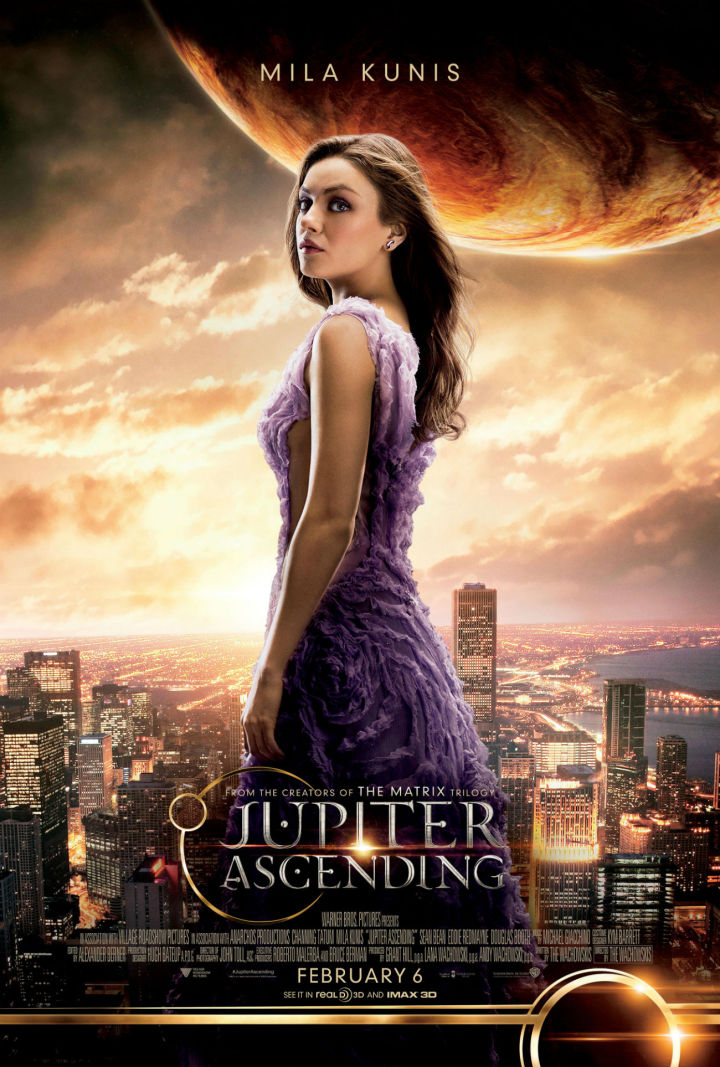
Yay, character posters! No big budget Hollywood flick's promotional campaign would be complete without them. Typical set-up of archetypal characters here. You've got your lead, a female for a change; her love-interest; the villain; and the wiser, older gentleman whose services will mostly consist of providing expositionary dialogue, to help both the protagonist and the audience get acquainted with this new world. Interesting to see Sean Bean is by now considered old and wise enough to play the part of the latter. But hey, any excuse to get him (and an excruciating death scene on his part) in your film is well worth the effort. I still wish the leading couple would have seen different casting, as the acting of neither Kunis nor Tatum appeals to me. But hey, it's not about their acting (or about me, sadly), it's about their popularity with the audience, and both stars are undeniably hot at the moment in that regard. I won't deny that despite the dull leads, this movie has very much peaked my interest. Even though in many ways it seems like it's copying Dune a bit too much, the notion of humanity being just a resource of vastly superior extraterrestrial life to exploit at will is a nice change of pace. Though no doubt the plot will devolve into the typical 'chosen one' routine of old. The set-up may prove fascinating (and the visual effects, too, naturally), the execution likely less so. Oh well, we didn't expect the ingenuity of the original Matrix come again from the Wachowskis, now did we?


zondag 26 oktober 2014

Today's News: business as usual


It's been a slow second half of the week for posting movie news. Good thing too, it won't cause me to get behind again:

http://www.moviescene.nl/p/157681/nieuwe_john_carter_in_de_planning

I had hoped for this, so I'm glad the estate of Edgar Rice Burroughs isn't letting a second John Carter of Mars movie gestate for another 70 years. I was really disappointed Disney's John Carter flopped so hard at the boxoffice. Sure, it wasn't perfect, but it was a damn fun movie with great visuals and it had solid franchise potential. Maybe I liked it more than I should, but subject material like this - strange aliens, exotic alien worlds, sexy alien chicks, etc. - really is my cup of tea, always has been. Granted, the movie made its fair share of mistakes both in terms of development, narrative and marketing, but in my mind it truly deserved a better fate. And so ERB, Inc. thinks, too. The original books were groundbreaking, swashbuckling rollercoasters of adventure novels that have endured for many decades, so there must still be an audience for them somewhere. No harm in trying again, starting from scratch, maybe not spending such excessive amounts of money on them this time. I'm really hopeful the company can find a new partner, a studio that still feels there's room for old fashioned Sci-Fi adventures like these. At least this time they know what not to do to make it work. Though it would make sense for both the estate and the studio to wait a little longer, after Jupiter Ascending and Star Wars Episode VII have hit theaters, so they can see whether there's still an audience for grandiose space opera in the ERB tradition.


http://www.moviescene.nl/p/157701/nieuwe_trailer_the_woman_in_black_2

Seems like more of the same. Which is not necessarily a bad thing, as the first Woman in Black was quite a decent horror flick with its wonderfully creepy and moody period look. Trading in a late Victorian style for a WW II era visual look is not a bad thing. From a story point of view, it makes sense as to why people would allow kids to visit that horribly haunted house again. It seems a better place for children to be than a bombed-out London, any regular parent would think. City folks don't believe in countryside ghost stories after all. And not having Daniel Radcliffe as the protagonist is probably a good notion too. His post-Potter presence in the previous part tended to overshadow the movie as having its own identity. The Woman in Black is still commonly referred to as 'that spooky film featuring Harry Potter', and I don't think that does it any justice at all. Then again, the second installment stars Potter's Narcissa Malfoy, for those who weren't aware. Hopefully it doesn't mean the movie will soon be acknowledged as 'that spooky movie starring Draco's mum'. That is, if Angel of Death turns out as decent a scary movie (or more so) as its predecessor. Otherwise, I couldn't really care less anyway.


http://www.moviescene.nl/p/157700/_bale_speelt_steve_jobs_in_boyles_biopic

Another Steve Jobs biopic? There was one in theaters only a year ago. Than one, however, didn't win much favour with audience or critics with its rather bland and straightforward approach. Nor are its director and main star (Ashton Kutcher, if you recall) considered such bankable talents as Christian Bale and Danny Boyle. So yeah, why not make another? There's still plenty to tell about so inspiring and innovative a man, no doubt. Plus, there's better storytellers available, and Boyle sure is an intriguing choice. I don't mind Bale, though he tends to go a little too far in his acting, reminding you that you're not watching the character he plays, but that you're seeing Bale doing his extreme thing again. The script is in the capable hands of Aaron Sorkin, who seems to be in danger of being typecast as the screenwriter for penning biopics about important folks in the digital industry for hugely talented directors (he also did The Social Network, after all). You think we'll get multiple Bill Gates motion pictures when that Microsoft man logs out of this life? If so, Sorkin is likely to be Hollywood's go-to guy to pen a script about Gates' life.


http://www.moviescene.nl/p/157709/jesse_eisenberg_in_dcs_suicide_squad

Hopefully poor Jesse Eisenberg fully realized what he got himself into before signing on as Lex Luthor in Batman v Superman: Dawn of Justice. Considering DC's overly ambitious plans for its own cinematic universe - clearly copying Marvel's designs, but still - it would be natural for a bad guy of Luthor's stature to appear in multiple DC movies soon. Luthor, after all, has his greedy conniving arms wrapped aroud a lot of shady businesses in the DC comics, and has had them there for decades. The movie version is expected to be just as busy controlling an evil empire, one that's not restricted to simply plaguing his nemesis Superman, but many of his fellow heroes as well. Right now the most apt comparable character available in the Marvel Cinematic Universe villain would be Loki, who also started out the archenemy of one but soon demanded a bigger piece of the superhero pie. Luthor is likely to do the same. Nevertheless, his skills would make him more of an evil Nick Fury, controlling strings of a lot of other baddies behind the scenes, as Fury does with good guys (or what he considers to be such, at least). In this case, it seems he's the guy responsible for forming the supervillain team called Suicide Squad, soon to give the Justice League a hard time. I wouldn't be surprised to see him, and thus Eisenberg, make regular appearances, both minor and major, in many upcoming DC movies. And I'm sure Eisenberg won't particularly mind, it just keeps him occupied while the pay checks keep coming in at a steady flow.

zondag 1 juni 2014

Today's News: we have a Thanos but when will we see him?


One of MS's latest scoops was posted there by my reliable self:

http://www.moviescene.nl/p/155978/josh_brolin_speelt_marvelschurk_thanos

The biggest revelation in this bit of news is not that Marvel has enticed yet another powerhouse actor to play a major villain role (and in terms of baddies, they don't come much bigger than this one!), but more so the fact that we still won't see him in this, his next "appearance". The message is clearly that Brolin, for now, will be limited to voice acting Thanos in Guardians of the Galaxy only. Of course they didn't cast him solely for his voice talents, evident as they may be, but with plans to make more overt use of his acting capabilities for later projects. Just when we will get to see those remains unclear. Certainly not in Ant-Man. Likely not in The Avengers: Age of Ultron, where Earth's Mightiest Heroes already have bad guys Ultron and Baron Von Strucker to contend with. They may tease him in the post- or midcredits stingers in that film, but, as was the case with the first Avengers film, it will reamin limited to a teaser so not much will be shown of him. Other future Marvel projects are still a bit sketchy thus far. Thanos doesn't seem the stuff of Captain America 3 or Dr. Strange. My money is on The Avengers 3 at the soonest, and that won't be until 2018 at the least. Gives Brolin a lot of time to prepare for the role, while Marvel is allowed the opportunity to make the Avengers and the Guardians of the Galaxy coherently join forces to fight this cosmic evil together. At least, it sure seems like that is the studio's intention, as they're teasing him in both their respective movies, and if Guardians of the Galaxy turns out to appeal to the audience, that's the type of überteam-up the fans will be aching for.


As for Brolin, he's solid actor, capable of playing a wide range of characters, in projects as diverse in range and scope as The Goonies and Planet Terror to No Country for Old Men and Milk. So I have no doubt he can do this splendidly. I'm more concerned with how they're gonna pull him off other than by Brolin's acting. No doubt the voice will be changed, probably lowered in volume, to accomodate the expectations that come with such a heavy, bulky and larger-than-life extraterrestrial character. As for his physical appearance, I'm quite convinced it's gonna be CGI. If I'm not mistaken, he already was a digital character in The Avengers, and we only got to see the side of his face in that one. Motion capture seems the way to go, giving Brolin more to do and exploiting his talents to their fullest. They would be building on Guardians' character Groot in a technical aspect, who is similarly brought to life by Vin Diesel supplying both voice and bodily motions. Not to mention Marvel's expertise on doing the Hulk, who's very similar in terms of body proportions to Thanos. But all of this is speculation and conjecture at this point and will remain so for quite a few years longer. Let's just wait what Thanos sounds like first. We'll get to know him bit by bit at this rate, before the big final reveal, whenever that may occur.


zondag 18 mei 2014

Today's many little bits of News


Here's a few scoops I posted on MS in recent days. They just keep piling up, don't they?:

http://www.moviescene.nl/p/155773/eerste_teaserposter_minions

http://www.moviescene.nl/p/155772/nieuwe_poster_guardians_of_the_galaxy

http://www.moviescene.nl/p/155749/trailer_monsters_dark_continent_online

http://www.moviescene.nl/p/155708/channing_tatum_wordt_x-man_gambit

Channing Tatum as Gambit? I vehemently object to this, though I get the reasons why he might be considered suitable for the role. Gambit is girlbait, he's a rogue (get the pun there?), he's charming and sultry, and these are all qualities the female part of humanity generally agrees Tatum possesses. The argument Tatum 'understands Gambit because they're both from the American South' is baloney: there's a vast difference between Gambit's home state of Louisiana and Tatum's native Alabama, even though they lie next to each other. My major issue with Tatum's casting is they didn't ask my opinion beforehand.

No, that's not it.

It's what Tatum brings to the franchise in terms of starpower that vexes me. Tatum by now is a firmly established hot moviestar that mostly appeals to the female demographic (not X-Men's main audience for sure), more so for his looks than for his ability to act. X-Men by now is a firmly established hot movie franchise that mostly appeals to the male demographic (age 12-35 or thereabouts). Obviously adding Tatum to the mix is a tactic by the studio to attract new audiences, and given Tatum's status he's very likely gonna play a major role (he'll no doubt take a major salary too). So far, the franchise hasn't resorted to casting big Hollywood stars. Sure, Hugh Jackman is one now, but he wasn't when he first started playing Wolverine. Plus, Jackman cares about his character, which is why he keeps coming back to play him even though he has no contractual obligations or acting challenges in store for him to do so. That's character loyalty. Tatum has gone on record stating he's not all that much into X-Men, though he claims to like Gambit. Duh, otherwise he wouldn't have accepted the part. But this is likely just promotional bull. I doubt he read the comics or watched the cartoons just because Gambit occasionally appeared in it. I fear Tatum is gonna detract audience attention away from what really matters about X-Men. In Gambit's solofilm this is not that big an issue (though Wolverine's solofilms left a lot to be desired compared to the proper X-movies). But in X-Men: Apocalypse, you need a strong ensemble of characters performed by team players who don't mind taking a backseat if the plot demands it (Anna Paquin's Rogue being scrapped from Days of Future Past without the actress complaining because it's for the greater good is a good example of taking one for the team). That's not something I think Tatum easily accepts. Also, the movie is likely to be built around Tatum (and Jackman too, still) to accomodate his star status. Certainly for X-Men: Apocalypse, that doesn't bode well, as this story deals with a team of mutants more than ever instead of it centering around a single character (apart from Apocalypse himself in a way). It seems a wrong time to start calling special attention to one character, especially one that was seen before but played by another actor (Taylor Kitsch). I would much prefer it if Gambit was re-introduced in his own film first, then appeared in a group effort later. Kinda like The Avengers, from which every studio owning Marvel property takes a page these days. In this case, the wrong page I'd say.


Monsters was a small film shot on a low budget in a guerilla style of filmmaking. It seems the sequel Dark Continent takes a different route. I didn't even think this unusual creature feature got enough audience attention to warrant a successor, but on that small a budget, profit isn't hard to accomplish and so a sequel is a given by the rigid laws of Hollywood. Obviously on a bigger budget, considering the visual effects (and this is still only the trailer too). It seems that's where most of the money went, since the plot feels fairly generic and there's no big names attached (playing a bit part in Game of Thrones gets you noticed but doesn't make you an instant star, Joe Dempsie). I don't think a second film was needed or desired by those who saw the first film, and it seems the original director Gareth Edwards agreed with me, as he's hardly involved with the production of Part 2 at all. He's listed as 'executive producer', but that's saying nothing. Stan Lee is listed under the same credit for virtually every Marvel movie, only for coming up with the characters back in the days, but otherwise doesn't do a thing, other than appearing in his cameos for fun. Edwards of course traded a shot at directing the sequel to his baby in for doing the remake of Godzilla. Good thing too, since you'd need a monster enthusiast to get the King of Monsters right, which I hear he has done. It seems there was little more to add to Monsters though, and so far the trailer for Monsters: Dark Continent proves just that.


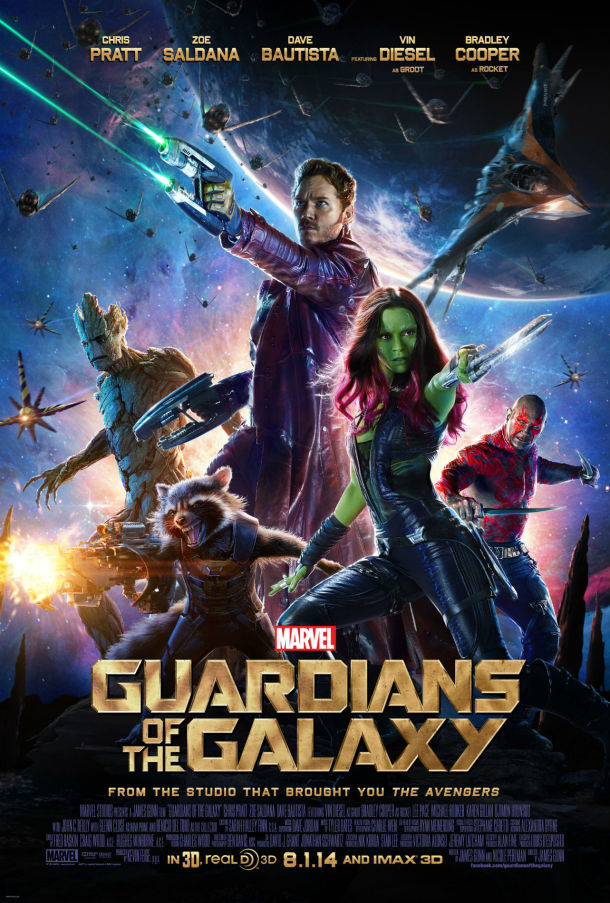
Now that's what I call a bitchin' poster! Okay, so it's in many ways identical to the previous posters for Marvel Studios' movies, save for the different setting and characters of course. For now, I like to think of that as studio consistency, which is something Marvel excels in as it's continuously expanding its Cinematic Universe. And it works on this poster better than ever. There's also more than a little resemblance to the way Star Wars posters were composed (especially the classics by Drew Struzan), and that's also not a bad thing to say about promotional material for an ambitious space opera like this. This poster is colourful, appealing and otherwise just plain badass. I hope the movie delivers on the goods promised here.


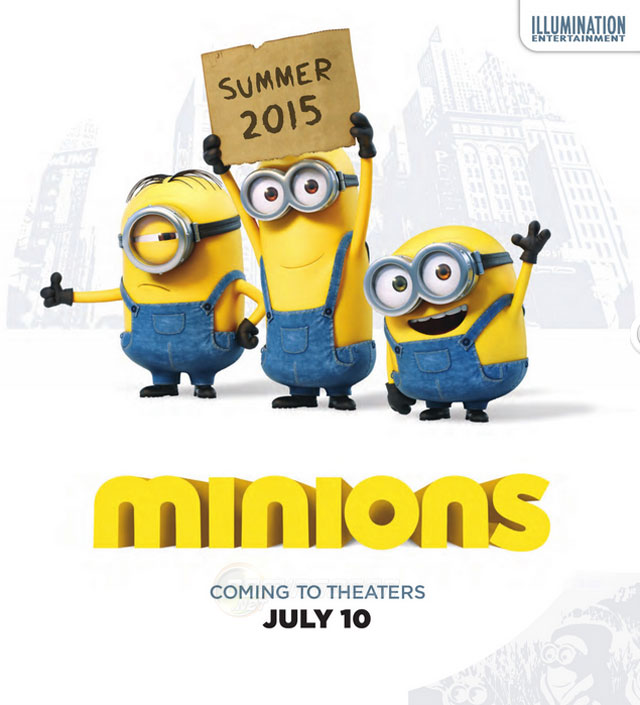
The first poster for Minions, that's a different thing entirely. All it shows are a few characters, a title and a date set against a plain white background, but nothing else is needed for a teaser poster. At the sight of the minions, kids will know enough. And their parents who will pay for seeing the film in theaters too, poor things. But is a film about the minions themselves a good thing? Don't they work better as supporting characters? I see a kind of Smurf motive here. Other than the fact these little creatures already feel similar to the Smurfs by their simple but easily recognizable colour coding and their own invented language, the Smurfs first appeared in a comic album in which they were not the main characters, but they soon came into their own and few people remember the names of the characters in whose story they co-starred (naturally, I do). Since then, they have taken popular culture by storm worldwide. I doubt the minions will witness a similar fate, but it's hard to deny they steal the show in these Despicable movies. It's up to the first Minions film to prove they can do without their evil master in the future. And if they fail, we still have the Smurfs.


vrijdag 25 april 2014

Today's Double News: Flashy new Hobbit name


Here's a double bit of recent movie news for y'all:

http://www.moviescene.nl/p/155362/derde_hobbit_krijgt_nieuwe_naam

http://www.moviescene.nl/p/155325/fox_produceert_remake_flash_gordon

You can't keep a legendary Sci-Fi franchise down forever. Interest in it waxes and wanes, and always it comes back, though it may take a few decades. Flash Gordon is about as classic a name in the genre as they come, currently celebrating his 80th birthday no less. Still, most members of the contemporary audience will probably recognize the name only from being (lovingly) made fun of in Seth MacFarlane's recent comedy Ted. Admittedly, I have never seen or read any of the various incarnations myself (for shame!). I guess I should at least check out the 1980 movie, which is arguably the most well remembered version on the character's tale around. From what I know about the adventures of Flash, the most important aspect of a potentially successful remake is not to make it feel corny and kitsch. Though it cannot be denied that the character has had a great impact on popular culture and the Sci-Fi genre in particular - Star Wars owes more than a few of its narrative make-up to the 1930s' space hero - its familiarity also caused the genre to be looked at with disdain for decades. It was just hard to take this space opera seriously - can you blame it with silly names like 'Planet Mongo' and 'Ming the Merciless'? - and it wasn't until the Fifties that science fiction pictures based around intelligent premises instead of the attractive exoticness of special effects and alien locales started to make their mark on (the cinematic front of) the genre. Ever since then, Flash has had a tough time truly connecting with an audience other than avid fanboys. The 1980 movie failed to built a continuing franchise of movies around the concept, and even the 2007 TV-series proved shortlived. Maybe the wondrous sense of adventure of the space opera is just too outdated and old-fashioned by now, as spectators demand more intelligence form their science fiction these days. After all, John Carter is a very similar sort of space hero, and look how poorly he did at the box office only two years ago. Will Flash Gordon do any better? It may take a few new Star Wars movies to get the public interested in space operas again, but it's safe to say Gordon will return in one form or another even if this new project fails to find an audience. He always has. Hopefully the same will ring true for John Carter...


Now fantasy, that still works. In fact, if you say it's more popular a genre than ever, you may not be wrong. It keeps scoring with the audience, as Game of Thrones reaches new heights in terms of audience ratings (and download ratings too). And at the same time, The Hobbit trilogy carries on, slowly but surely nearing its end as Peter Jackson is in the process of finishing that third and final movie. Which just got a new name, like it or not. There and Back Again it is called no more, as it has received the novel subtitle The Battle of the Five Armies. Can't say I'm a big fan of that one. Granted, it covers the movie's contents well enough, as this is what most of the film will deal with. I'd say it's too blunt a title. The Lord of the Rings movies may already have had their subtitles picked out for them by the source material, but The Hobbit is not so fortunate. Can you imagine the second LotR movie being named The Battle of Helm's Deep? Surely not, as The Two Towers has a more ominous and poetic, less direct quality to it. So I thought it was with There and Back Again, as the book did not provide a catchy enough subtitle itself (The Clouds Burst? Nay!). PJ argues it would have fit a two movie adaptation, but not a three part series, as Bilbo was already 'there' in The Desolation of Smaug. True. But he's still 'there', and he is destined to go 'back again'. So in my mind, it's not a relevant argument. The Battle of the Five Armies is simply too direct, though not without merit of mystery for a lay audience. Whose forces make up these five armies? And how does the dragon, which at one point seemed to be what this series was all about, fit in exactly? Predictable questions that would not arise with There and Back Again, but will not entice the audience any more than the last movie already would have. Truth is: The Battle of the Five Armies sounds like a cheap video game title. I would have preferred something with a little more literary charm to it. Even the other suggested new name, Into the Fire, sounded more intriguing. But hey, I'm not making these movies, I'm only paying to watch them (well, not really) so why should I care about the titles as long as the movie proves as entertaining (or more so) than its predecessors? It's not like fanboys revelled in the second movie's name either. Or even the first. I guess it takes an actual fantasy writer slash linguist to come up with something really iconic. It surely would have helped if Tolkien had split up the original novel in three parts himself.

woensdag 19 februari 2014

Today's Trailer: Guardians of the Galaxy unleashed at last


Posted the teaser above on MovieScene yesterday, but everybody will agree the video below is much more interesting:

http://www.moviescene.nl/p/153859/eerste_teaser_guardians_of_the_galaxy

This movie is looking better and better. There's a delightful 'space opera' vibe about the whole project, a seemingly highly entertaining blend between wild adventure, quirky humour and explosive action in a fabulously otherworldly Sci-Fi setting, suppported by an enthusiastic cast that seems to thoroughly enjoy their zany characters. I even look forward to seeing that talking raccoon in action now. Nevertheless, the last movie that gave me this feeling was John Carter, which I ended up loving while most others sadly did not, as it flopped mercilessly. Maybe this type of movie is just passé, over and done with, too retro for its own good? Maybe people these days are too cynical, so it's too difficult to visually entrance them as they're being transporting to extraterrestrial sights and sounds. Call it 'Star Wars prequel trilogy backlash' if you must, you wouldn't be wrong. I'm just hopeful the Marvel logo breeds certain expectations about what audiences can look forward to - i.e., superheroes - that may not fall in line with reality, as this is not really a superhero movie. In most other respects however, this movie appears to fit right in with Marvels canon of films in tone and atmosphere. However, if the Disney logo wasn't enough to draw audiences to go and see John Carter, would the Marvel logo be enough to ensure Guardians of the Galaxy fares better at the boxoffice? Especially with the knowledge (though probably not something general audiences will ever consider) that Disney and Marvel are now sleeping in the same bed. If these Guardians succeed in winning spectators over, as I sincerely hope they will, maybe space opera will be rewarded a new life as well.


zondag 13 oktober 2013

Today's Mini-Review: Gravity


Gravity: ****/*****, or 8/10

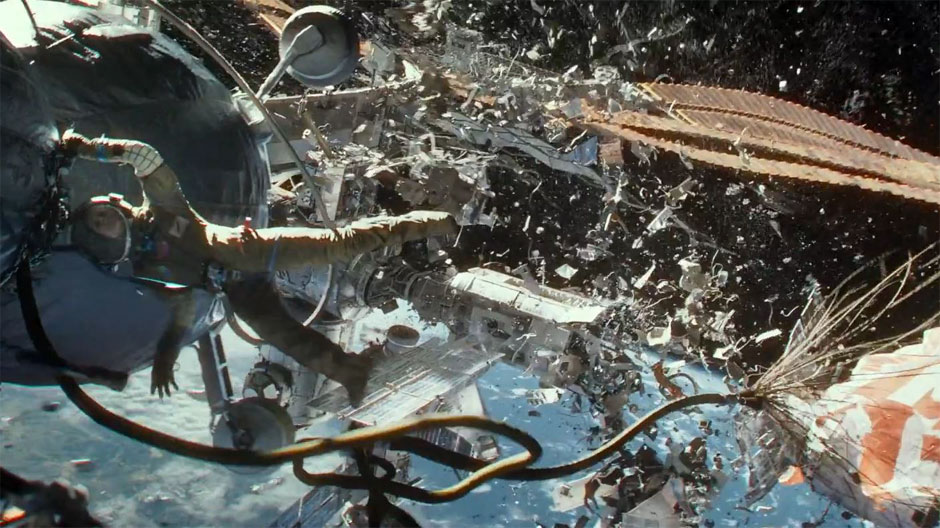
It is rare these days to encounter effects in movies that look so astounding that they pull the audience in completely and won't let go until the credits roll. After twenty-odd years of increasing overuse of CGI, it seemed positive that everything had been done, also owing to the plethora of home video releases containing behind-the-scenes footage that reveals in detail the tricks of the trade, thus enhancing the audience's expertise on what is real and what is not when watching a film. It has diminished the emotional impact of the contemporary blockbuster, which often tends to rely heavily on such big budget effects work, because we spectators think we've seen it all and know it all by now. But once in a while a movie comes along that does manage to sweep us off our feet entirely and immerses us completely into the world its director has envisioned for our viewing pleasure. In such uncommon cases, the often derogatory term 'effects film' turns out both wholly justified and incorrect: the effects it contains do not make a film, but instead engage us into a full fledged cinematic experience we cannot help but be captivated by so strongly that all we can do is undergo it until it releases its grip on us. And then we still sit back in awe for a while longer, with that most pertinent of questions firmly on our minds: how on Earth did they do that?! Alfonso Cuaron (Children of Men, Harry Potter and the Prisoner of Azkaban) has crafted just such a fantastic experience with Gravity, a superior science-fact feature that adheres to the laws of physics but constructs its own laws in terms of what you can accomplish cinematographically these days. From a narrative point of view it's simply the struggle of two astronauts (George Clooney and Sandra Bullock) to survive in our planet's orbit after their space shuttle has been devastated by space debris caused by the demolition of a Russian satellite. In every other regard, there is nothing simple about Gravity


It is most definitely one of the greatest accomplishments in the field of visual effects and 3-D technology in recent years and an incredible tour-de-force on the part of both actors whose capabilities are put to the most extreme test imaginable. In fact, you are pulled in so deeply you neither have the time nor the interest to agree the story is pretty bare and the few attempts at introducing deeper levels of character development – including Bullock's character still trying to cope with the death of her young daughter – don't add all that much to the protagonists' plight. We run with them because we cannot help but feel we are one of them, and we too must get out of this ordeal in one piece before time (and oxygen) runs out. Applying his signature use of the 'long take', Cuaron opens the movie on a quiet, peaceful note as we witness “our fellow astronauts” working on a telescope, a job that suddenly turns extremely hazardous as the debris field hits their workplace hard, cutting them loose, adrift into the endless black ocean of space: all in a single, apparently uninterrupted shot (though few will actually consider that fact as we are already engaged fully by this point). We're slowly introduced to their Zero-G environment, but soon must deal with intense camera movements as we float around the shuttle in fast motions at first, and soon almost unchecked as the mission is spiralling out of control. Their spacecraft lost, our fellow pair of astronauts must make its way to the ISS before it too gets hit by the rubble, and before they run out of breathable air, if they ever hope to get back down to Earth. Unfortunately physics don't make it easy on them and reaching their goal appears ever more hopeless. All to our benefit, as we are treated to some of the most spectacular visual imagery seen on the big screen in years. Gravity is a prime showcase of what 3-D can add to a film other than a higher admission price. Not only is the cinematography breathtaking, we feel part of a three-dimensional environment at all times, surrounded by pieces of space rubble on every side, or Bullock's sweat and tears when we are locked in an escape pod with her in very close quarters. The intricate shots of floating equipment and people going up, over and around each other adds a layer of depth that is not likely to be surpassed in film any time soon. Even though the lack of sound in space deprives us of an auditory experience the likes of Star Wars, the immersive visuals make us forget all about any lack where other sense are concerned. Credit is also due to the seasoned actors, Bullock in particular, that make the whole experience feel that much more convincing – though the effect the film has on our stomachs does half their work already – by delivering excellent performances few of their colleagues could have matched as they play off against each other and... yes, against what else, exactly? How much, if anything, of what we seen on screen was there to aid them? Even for a trained eye, it's nigh impossible to tell where the real setting ends and the fictional construct begins. Yet we never get the feeling we are watching visual effects, which is of course exactly the trick such effects aim to pull off: don't let the audience know you are only an effect. The result is a staggering, completely compelling cinematic experience, one best seen on the big screen as it is doubtful its full physical and emotional impact is done justice on a home cinema release, though hopefully the latter can tell us just how Cuaron and his team managed to accomplish this extraordinary feat. One thing is for sure, Gravity is gravitating towards well deserved Best Visual Effects and Best Cinematography Oscars.

zondag 23 juni 2013

J.J. Abrams: to cowardly go where better men have gone before


Star Trek Into Darkness: **/*****, or 4/10


Warning! Here be spoilers! But who cares?!

I'm not having a good time lately. Star Trek Into Darkness has recently been released to critical acclaim and positive box office results. Tough luck for me, since now I have to continually remind people around me whay this is not a good thing, same as J.J. Abrams' previous “Star Trek” film (2009) was not a good thing. At least this time many Trekkies are agreeing with me J.J.'s involvement might not have been the preferred direction for the franchise to go in hindsight – a lot of my fanboy colleagues at first disagreed with me on J.J.'s previous monstrosity and ended up actually liking it, bunch of morons! – since many have a hard time accepting his take on Khan, which is a watered down, emotionally empty version of the original 1982 Trek classic The Wrath of Khan. And even Trekkies agree buggering their classics is not something that Trek should have to endure. But it does, and the general audience – bless their God given 'right to be stupid'! – loves J.J. for it.

Star Trek Into Darkness opens with an overly Spielbergian action climax á la Raiders of the Lost Ark, which is not surprising since it's well known that J.J. has always been inspired by Spielberg, as well as for his tendency to be blatantly derivative of the master's work if he can help it. The public finds Kirk, Spock and McCoy on M-class planet Nibiru where a giant volcanic eruption is threatening the surivival of the local humanoid species. Of course, Kirk cannot allow the Nibirians to be wiped out, even though the Prime Directive dictates non-involvement with non Warp drive equipped species. In essence this means Kirk should just let things happen as they happen and ignore the species' plight altogether. Which was the way Picard usually went for in TNG, if his crewmembers didn't screw it up for him. In this case, Kirk does the screwing up himself, saving the species but doing irreparable cultural damage when he's allowing them to see (and afterwards worship) the Enterprise in all its glory as it rises from the ocean. The audience doesn't get time to question what the hell it was actually doing underwater in the first place (well? What was it doing there?! You tell me!), except to show off a few cool shots having a starship do something that hasn't been done before, but only for the sake of looking cool as opposed to making narrative sense. Of course this infringement upon Starfleet's 'rule of rules' doesn't go unpunished and Kirk has his command taken away from him. Rightly so, since if this (and in fact the whole previous movie) demonstrates anything, it's that this particular Kirk is too young, too impulsive and too stupid to properly fit into a captain's chair. 


Luckily for Kirk however, Starfleet HQ is attacked and his friend and mentor Captain Pike is killed – no wheelchair with simple yes/no vocal interface for this timeline's Pike! – and Kirk can convince the admiralty to give him back the Enterprise and go on a manhunt for the terrorist behind the plot, a man named John Harrison, who is ultimately revealed to be Khan so soon into the movie that it doesn't really matter if I spoil it for you here (besides, there's a spoiler warning above, nerfherder*!). Kirk tracks the villain down to Q'onoS (but spelled 'Kronos', so people don't get confused aligning what they hear with what they see onscreen) where he beamed to after his last attack on Earth – nevermind Trek physics in this timeline, if it avoids lenghty story telling and swiftly gets “our heroes” where they need to go it works fine for Abrams – which ends up in an all too brief showdown with a bunch of Klingons (ugly with helmets, uglier without; but at least they speak something resembling Klingon) before Khan is arrested and taken back aboard ship, where the plot thickens. Or so Abrams would like us to think. Turns out Khan is just a puppet in a larger masterplan of a naughty Starfleet admiral who's out for a little 'coup d'etat' on the Federation for his own inexplicable but undoubtedly nafarious ends. And that's the film's biggest problem right there.

The main issue against STID in regards to Khan as an antagonist is that for the longest time he plays second fiddle to Peter Weller's villainous Admiral Marcus. It's not until Marcus is disposed of that Khan comes into his own. Until that time we have to make do with an overly militaristic old fart threatening to subvert Starfleet in order to... yeah, for what reasons exactly? Marcus' motivations remain rather vague. But then, an admiral who keeps a model of a top secret warship on his desk for all to see is hard to take serious anyway. At least Khan has clearer goals, and they are not even so ignoble. In fact, once Marcus, who forced his hand all the time, is out of the way, Khan isn't even that much of a bad guy – he just wants to rescue his own “crew”, much like Kirk tries to protect his – but the script has him act like one after a completely gratuitous surprise appearance by old Spock (Leonard Nimoy selling out once more), who informs his younger alternative self, and the laymen in the public (there will be many no doubt), just who Khan used to be in the original time line, so the audience expects Khan to be just as evil now. Consequently, he is, for no other reasons than to satiate our expectations and to fill the void left by Marcus' demise which has left the film without a proper bad guy. Unlike was the case with the original Khan, there's no reason for Khanberbatch to have any real personal beef with Kirk. In fact, they teamed up successfully against Marcus only a minute before, making Khan even more 'less of a bad guy'. The lack of a solid conflict between Kirk and Khan is a severe weak point in establishing Khan anew, as is his so-called status as a superhuman. Thanks again to poor scripting, Khan is hardly allowed to show off his superiority, at least in the brain department. His actions are more the result of opportunity than they are of careful advance planning. Like everything in J.J.'s Trek-verse, Khan is just not as smart as he ought to have been. At least Cumberbatch portrays him with enough angry vigour and physical prowess to come off as 'fairly frightful'. But he's still a far cry from Ricardo Montalban's original, far superior super human, who was truly dominating “his” movie in terms of menace and intellect. After all, he caused Spock to die.


In Star Trek Into Darkness, it's Kirk's time to meet his maker. Thing is, his untimely demise doesn't make for an emotionally gripping final moment as he faces Spock, hands to the glass in an effort to reach out in mutual understanding and respect one last time. Problem being, this is not the Kirk we have known for so long and thus come to love. We've been with this particular Kirk for only a few hours total and that's simply not enough to care deeply enough about him to make us feel anything when he kicks the bucket. And even if it did, we are robbed of this intended emotional climax anyway thanks to a very cheap and convenient plot device, courtesy of Khan. The genetically enhanced dictator not only packs a mean punch, but he also has healing powers in his blood. Long story short, giving Kirk a blood transfusion returns him to the living – yes, you're reading this correctly – and all's well that ends well. Seriously, what was the point of having him die at all, apart from haphazardly echoing the bittersweet, tearjerking final moments of Star Trek II? Apparently it was only a way to piss Spock off once more, making him go on an emotional rampage (again! That's twice in two movies: apparently this Spock just isn't a very good Vulcan) and defeating Khan for once and for all. Obviously, not without a little help from his girlfriend Uhura. Women resucing their men out of tough spots is as much a cliché as the age old damsel-in-distress these days.

And there we have another weakness in the script when it comes to characters: Uhura. Or better said: the rest of the crew. They don't get that much to do and continue not to matter much. Uhura for some reason has an actual boyfriend/girlfriend relationship with Spock, even if this is completely illogical. After all, in the preceding film planet Vulcan was destroyed, so why would Spock bother dating a human girl instead of a Vulcan woman when there's already so little Vulcan blood left to keep the species going? The whole how and why behind their liaison is blatantly ignored, nor does it ever get beyond the stage of petty squabbling interspersed with brief moments of saying 'I love you'. And that's just not enough to make a relationship with consequences of this magnitude a thing of logic. Or realism. Then there's Sulu. Which is basically all that can be said of his presence in this film. So moving on, we have Chekov, Russian accent more cringeworthy and annoying than ever. This time he gets his big break and is moved from helmsman to Chief Engineer, a completely ridiculous career switch that would only make sense to blind people (Get it? Of course you don't, you need to know Trek for realsies to get that one!). What happened to Scotty, you might ask? Well, he had moral qualms (yes, there's some in Abrams' Trek at last!) when he was asked to okay for a load of unconventional photon torpedoes aboard ship, which he declined so Kirk gave him the sack. My reason to fire him would have been Simon Pegg's overuse of everything connected to the Scottish dialect, including some heavy drinking. But even drunk he can be convinced to help Kirk out regardless, and he shows up just in time to save the day, just so the plot can fill some holes it wouldn't be able to fill without the aid of ample alcoholic consumptions. Oh, and McCoy occasionally graces the screen with his presence too, but not enough to truly matter other than bringing Kirk back from the dead when the needs of the one outweigh the needs of the Trekkies who just want this branch of the franchise to be closed down for good.

Is there nothing good to be said for Star Trek Into Darkness? Sure there is. Zachary Quinto does a fair job imitating Leonard Nimoy, for the most part. The visual effects, of which there are more than in all the previous Trek movies combined, appear convincing enough, except for the times they are obscured by lens flares. I gotta say, I got a bit of a kick out of seeing Q'onoS, a dark, sombre, foreboding planet with a single moon that was shot to pieces (Praxis no doubt). But for the most part it was painfully clear J.J. prefers Star Wars over Star Trek. Almost all locations and action sequences felt like something out of Wars. For one thing, 23rd century San Francisco looked more like Coruscant than it did Earth. This Trek universe is populated with all manner of gizmos and creatures that are meant as little throwaways just for fun, but will confuse the hell out of true Trekkies. What the hell was that android thing doing on the bridge? What's the deal with those Starship Troopers type dress uniforms they're wearing at formal gatherings? And why did the totally gratuitous and irrelevant semi-nude scene starring Alice Eve's body last so briefly? At least some of those throwaways refer back to actual Trek: bonus points for the Enterprise NX-01 model on Marcus' desk! And as a freebie, you get a bit of Section 31 in this film too.


J.J. is definitely not a true Trekkie, as he has shown and even openly stated many times before, but at least the writers took clues of previous Trek and incoporated them in their script for Into Darkness. This film is laced with references, some clever and subtle, others not so much (think in-your-face, mind meld style). The general audience will probably be unaware of virtually all of them, but that will not be the case for Trekkies. The effort is appreciated, but the undeniable result is whenever a reference pops up, it hearkens back to better Trek and leaves a sour aftertaste, instead of the joyful feeling one usually experiences when getting a reference. That, plus the fact Star Trek Into Darkness feels like a soft and shallow retread of one of the most classic Trek films makes this movie another kick in the groin (or the knee, depending on where certain species keep their genitals) for the true fanbase that has lived and evolved with Trek for decades, but has a hard time accepting the dumbing down of what was once an intelligent, witty and engaging Sci-Fi franchise.

Fortunately for J.J., turning Trek into an action driven brainless space opera has landed him the gig for directing Star Wars Episode VII. Hopefully that will soon mean Abrams will stop being involved with Trek. Why shouldn't he after all? Star Wars is where his heart lies as he has reminded us all too often. We can only hope Trek will now be given to someone who really cares about it and understands how it works. Though I fear permanent damage has been done to the franchise by Abrams' lack of care, I cannot help but feel ever inspired by Gene Roddenberry's faith in humanity and its continuous striving for a better future. In Trek's case, it can't get much worse. But at least Abrams' work has compelled people who didn't know jack about Trek to seek out true Trek and explore its strange old worlds. If anything, it suggests Trek will continue to live long and prosper in some way, and so will the Trekkies.


*The derogatory term 'nerfherder' actually stems from the Star Wars universe, but you would hardly be able to discern Abrams' Trek-verse from the Star Wars universe anyway, so what the heck...


maandag 30 april 2012

Chronicles of Riddick, The


Rating: ***/*****, or 7/10


Overly bombastic and grandiose sequel to the much smaller scale Sci-Fi horror flick Pitch Black (2000), revealing director Twohy had near Star Warsian aspirations with the Riddick character, which despite the ambitious undertaking of this epic attempt never really materialized any further. Set some years after the events of Pitch Black, Chronicles of Riddick picks up with the continuing hunt for the dangerous anti-hero Riddick (Vin Diesel doing the only type of character he can pull off successfully: the grumpy, violent bullyboy with a heart of gold), though this time not so much for the bounty on his head, but more for the purpose of having him combat a new threat to the galaxy in the shape of the massive world-conquering army of Necromongers, who seek to convert all life to their semi-religious cause or kill it instead. Riddick has little interest in abandoning his quiet lonely life in the wilds, but hesitantly accepts, resulting in a fair amount of high adrenaline fight and chase sequences in a movie that looks terrific but is ultimately yet another haphazard play on the age-old 'good versus evil' routine. Though Riddick continues to be a fun character for his total lack of subtlety and cynical attitude, the rest of his universe is just a bit too weird to fully run along with. Also features Karl Urban (always a blast in this type of action film) as a Necromonger commander caught in a MacBeth type web of intrigue with his wife (Thandie Newton) out to persuade him to kill his dark overlord and take his place, as well as a small role for Judi Dench as an elemental spirit seeking to convince Riddick to be a force for good. Star Wars this is not, but if you take the silly names and bizarre characters with a grain of salt there's quite a few things to enjoy in this action flick. A third Riddick movie has been in the works for years and as of 2012 seems to be finally picking up some steam.


Starring: Vin Diesel, Karl Urban, Judi Dench


Directed by David Twohy


USA: Universal Pictures, 2004

vrijdag 9 maart 2012

Barbarella


Rating: ***/*****, or 7/10


Extremely campy sixties' Sci-Fi film, almost unique in its own right as a countercultural hippie science fiction flick. In the distant future, astro-navigatrice Barbarella (Jane Fonda in her younger days, when she obviously wasn't very experienced in the art of acting) is ordered by the President of Earth to track down missing scientist Durand Durand, who is rumoured to have invented a terrible weapon, on the uncharted planet of Tau Ceti. Upon arrival, Barbarella falls from one crazy, saucy situation into another, as she is confronted by psychopath kids with murderous biting dolls, a blind angel who lost the will to fly and a city of evil ruled by a wicked bisexual dominatrix. To get out of such pickles she constantly loses her outfit, only to be dressed in an even skimpier one than before, plus she makes love to anyone she comes across and frequently runs into various hallucinatory substances. They sure don't make them like this anymore (though a remake has been planned for years) and it's no secret why. Still, if you know what you're in for, this can be a very fun movie.


Starring: Jane Fonda, John Phillip Law, Anita Pallenberg


Directed by Roger Vadim


France/Italy: Dino De Laurentiis Cinematographica, 1968

zaterdag 4 februari 2012

Serenity


Rating: ****/*****, or 8/10

Tweede strijd van verliezer Whedon bewijst zijn gelijk

Menigeen zal de naam Firefly weinig zeggen. Het was de titel van een zeer geslaagde televisieserie die Joss Whedon, de man achter het zeer succesvolle Buffy the Vampire Slayer, in 2002 produceerde voor Fox-TV. Helaas bleek de serie geen lang leven beschoren aangezien Fox er al na vijftien afleveringen de stekker uit trok. Een grove inschattingsfout, want aan de kwaliteit van deze sciencefiction-serie lag het niet, wat vervolgens bewezen werd toen Firefly op DVD alsnog een culthit werd. Whedon zwoer dat hij het er niet bij zou laten en dat hij Firefly op de één of andere manier een nieuw onderdak zou geven. Hij hield zijn woord, want hij komt nu met een bioscoopfilm aanzetten, getiteld Serenity, ditmaal geproduceerd door Universal. En ondanks de verhuizing naar zowel een nieuwe studio als het witte doek, heeft hij het oude, hoge niveau van de serie weten te behouden, wat resulteert in een flitsende actiefilm vol met frisse ideeën en aanstekelijk intrigerende personages.

De film opent met een korte introductie die de kijker niet meer dan noodzakelijk meegeeft om de stand van zaken in dit universum te begrijpen. Ergens in de verre toekomst heeft de mensheid de Aarde verlaten en zich in een ander zonnestelsel gevestigd waar vele werelden gekoloniseerd zijn. Een aantal werelden heeft zich succesvol verenigd in een Alliantie, terwijl de rest nog ruige grensgebieden zijn waar orde en tucht ver te zoeken is. In een poging deze planeten beschaving bij te brengen brak er een verschrikkelijke oorlog uit die de Alliantie glansrijk won. Echter, Serenity is een ode aan de loser, en toont zodoende de lotgevallen van een samengeraapte bemanning op een vervallen vrachtschip genaamd 'Serenity': het zootje ongeregeld zijn diegenen die de oorlog verloren maar weigeren zich aan te passen aan de norm van civilisatie en daarom tegendraads hun eigen koers bepalen. Een passende parallel met de serie zelf, die ook verloor, maar dankzij de rebelse Whedon toch een tweede kans krijgt.


Onder leiding van kapitein Malcolm Reynolds (Nathan Fillion, als een jonge Harrison Ford in Star Wars) probeert het gezelschap aan boord van 'Serenity' het hoofd boven water te houden, hetzij door eerlijke klussen als vrachtvervoer, hetzij door bankroof en andere criminaliteit. De bemanning vormt een bont gezelschap bestaande uit onder andere een dommekracht, een priester, een hoer en de jonge dokter Simon (Sean Maher) met diens psychisch begaafde zusje River (de als actrice al even begaafde Summer Glau): allen mensen die eigenlijk niets gemeen hebben, maar desondanks samen weten te werken zonder daarvoor in een keurslijf te moeten worden geplaatst zoals de Alliantie het liever ziet.

Maar dit vrije, wetteloze bestaan wordt niet zonder een slag of stoot geleverd: Simon en River zijn op de vlucht voor de Alliantie, die gruwelijke experimenten op het meisje heeft uitgevoerd, waarbij ze informatie heeft opgedaan die een grote bedreiging vormt voor het geloof in de autoriteit van de heersende macht. Een rücksichtslose agent (Chiwetel Ejiofor, Amistad) – met een beangstigende balans tussen rede en brute agressie, evenals de Alliantie zelf – wordt erop uit gestuurd om River terug te halen, waarbij grof geweld niet geschuwd wordt. 'Serenity', nu tot doelwit van het militaire apparaat van de Alliantie bestempeld, moet bovendien ook nog uit handen zien te blijven van de gruwelijke Reavers, een groep ruimtekannibalen die al moordend planeten plundert.

Ziehier de premisse van één van de meest originele en onderhoudende sciencefictionfilms van de laatste jaren. Als een geslaagde mix tussen sciencefiction en het Western-genre vormt Serenity een uniek mengsel van genre-conventies, en levert daarnaast zinderende actie en bovenal doeltreffende karakterontwikkeling. Want hoewel de film een hoeveelheid spetterende actiescènes bevat en de visuele effecten zich makkelijk kunnen meten met menig recente blockbuster, draait de film volledig om de personages. In Firefly bestond de bemanning uit negen personages en allen zijn terug voor de bioscoopversie, waarbij ze niet allemaal evenveel in beeld komen maar toch voldoende ontwikkeld worden om de sympathie van het publiek te krijgen: een hele opgave voor een speelfilm die in twee uur een even rijke wereld moet weergeven als een TV-serie van vijftien afleveringen. Maar de film slaagt met vlag en wimpel en weet ervoor te zorgen dat we niet alleen om alle personages gaan geven, maar ook een behoorlijke dosis spektakel en humor achter de kiezen krijgen.


Bovendien heeft Whedon Serenity toegankelijk weten te maken voor mensen die niet bekend zijn met diens voorganger, zonder te blijven steken in een overdaad aan uitleg over wat er voorheen met de personages is gebeurd en waar de serie überhaupt over ging. Gezien het aantal onafgehandelde plotlijnen die de TV-serie liet liggen mag dat best een prestatie genoemd worden. Hierdoor behelst Serenity een succesvol vervolg dat de trouwe schare fans evenveel zal behagen als Firefly dat deed, terwijl het voor de leek een geslaagde eerste kennismaking met Whedons universum vormt.

Uiteraard is dit laatste ook Whedons doel: hoe meer mensen Serenity zullen waarderen, des te groter is de kans dat Firefly een langer tweede leven is beschoren. We helpen het hem hopen, want het hoge niveau van deze film toont aan dat Whedon nog lang niet klaar is met dit universum. Firefly verdient beter dan opnieuw te worden vergeten, maar het is aan het publiek om dat definitief te bewijzen.

Star Trek: Nemesis


Rating: **/*****, or 5/10

Een oud Star Trek-verhaal in een nieuw jasje

Star Trek: Nemesis is alweer het tiende deel in een reeks films die in 1979 begon met Star Trek: The Motion Picture. Daarnaast is het de vierde film met de bemanning van de serie Star Trek: The Next Generation in de hoofdrol, na zes delen waarin de cast van de originele serie het roer recht hield. Hoewel Shatner, Nimoy en kornuiten tijdens hun zesde reis op het grote scherm duidelijk aangaven dat ze onderhand te oud werden voor hun ruimte-avonturen en ook bewust met dit gegeven speelden, bleek Star Trek VI: The Undiscovered Country een verrassend sterke film en een heerlijke politieke satire die bewees dat leeftijd niet van belang hoeft te zijn om een goede film af te leveren, zolang het scenario maar goed geschreven is en de film iets zinnigs te zeggen heeft over de historische stand van zaken. Hun opvolgers, onder leiding van Captain Picard (het altijd capabele acteerkanon Patrick Stewart), beginnen onderhand ook al aardig op leeftijd te raken, maar in hun geval blijkt de energie bij hun vierde film al opgebrand te zijn. Na het matige Star Trek: Insurrection, alweer vier jaar achter ons, blijkt ook Star Trek: Nemesis geen hoogvlieger.

Waar Insurrection aanvoelde als een lang uitgesponnen televisie-aflevering heeft Nemesis duidelijk intenties van een meer epische aard, zoals het betaamt voor een TV-serie die het op het witte doek mag proberen. Dit werkte prima in de achtste film, Star Trek: First Contact, waar alle elementen op de juiste plaats vielen en dit een spectaculaire actiefilm opleverde die nog steeds met recht de beste van de tien films genoemd mag worden. Nemesis lijkt hetzelfde doel voor ogen gehad te hebben en is rijkelijk voorzien van grootschalige actiescènes en mooie plaatjes, maar het komt hier toch minder uit de verf, vooral omdat het verhaal ons hier minder kans geeft om de personages te geven en wat er op het spel staat te doorgronden.


Nemesis draait om de duistere kant van de twee belangrijkste personages, Captain Picard en de androïde Data, in de vorm van hun sinistere tegenhangers. In het laatste geval ontdekt de bemanning van het ruimteschip Enterprise een prototype van Data genaamd B-4, die duidelijk technisch onderontwikkeld is en in feite als diens zwakzinnige broertje beschouwd kan worden. Uiteraard probeert Data zijn nieuwe familielid te onderwijzen in enkele komisch bedoelde scènes, maar de suffe robot wekt eerder irritatie op dan humor.

Vervolgens krijgt Picard de opdracht naar Romulus te gaan, omdat de voorheen verraderlijke en agressieve Romulans laten weten over vrede te willen praten. Uiteraard is alles niet wat het lijkt, en eenmaal aangekomen blijkt er een machtswisseling te hebben plaatsgevonden, waarbij een ras genaamd de Remans dat door de Romulans altijd als slaven uitgebuit werd (hoewel we in bijna veertig jaar Star Trek nog nooit van deze lui gehoord hebben) hun overheersers overmeesterd en onderworpen heeft. Hun leider is een schimmige figuur genaamd Shinzon (Tom Hardy, Black Hawk Down), die een kloon van Picard blijkt te zijn. Uiteraard staat vrede allerminst op zijn agenda en blijkt hij Picard nodig te hebben voor diens bloed dat zijn genetische mankementen kan herstellen. Alsof dat niet genoeg is, is blijkt Shinzon ook voornemens om de Federatie aan te vallen en met een verschrikkelijk wapen de Aarde te vernietigen. Waar dat voor nodig is wordt niet verteld, evenmin als de logica achter het feit dat een altijd onderworpen ras de vredelievende vijand van hun voormalige onderdrukkers wil vernietigen uit de doeken gedaan wordt. Zulke gaten in het verhaal leveren Nemesis helaas een flinke deuk op, hoewel de hierop volgende aaneenschakeling van 'space battles' actieliefhebbers zal bekoren.


Het is erg jammer dat Nemesis minder aandacht schenkt aan het vertellen van een goed gebalanceerd verhaal dan aan het ons voorschotelen van uitstekende actiescènes. De schuld ligt hoofdzakelijk bij schrijver John Logan. Regisseur Stuart Baird, een nieuwkomer in het Star Trek universum, kan het niet verweten worden, aangezien hij niet betrokken was bij het schrijven van het script en bovendien laat zien dat hij ondanks alles een bekwaam regisseur met een flair voor zinderende actie is.

Het grootste nadeel van Star Trek: Nemesis is dat het allemaal niets nieuws onder de zon is. Het plot vertoont wel heel opvallende overeenkomsten met dat van Star Trek II: The Wrath of Khan, een terechte klassieker in het sciencefictiongenre. Beide films voeren een booswicht op die een persoonlijk conflict met de Captain (destijds Kirk, nu Picard) heeft uit te vechten en beschikt over een massavernietigingswapen, wat na een lange, groots opgezette schermutseling (allebei in een ruimtenevel nog wel!) het leven eist van een hoofdpersonage dat zelfopoffering verkiest boven de dood van zijn vrienden. Zodoende niks 'where no man has gone before' deze keer: het is een oud verhaal, en Wrath of Khan deed het bovendien beter, hoewel Stewart en zijn collegae hun best doen om het geloofwaardig te maken, waarbij vooral Brent Spiner als de altijd aimabele Data een extra pluim verdient.

Hoewel Nemesis wel degelijk geslaagde momenten kent, zoals het langverwachte huwelijk tussen Riker en Troi, de moord op de Romulaanse senaat en de sensationele ruimteveldslag aan het einde van de film, geeft de film ons helaas niet genoeg reden om ons voor de personages en hun strijd te interesseren. De meeste aandacht gaat naar Picard en Data, terwijl de rest van de bemanning nogal op de achtergrond blijft. De strijd tussen beide officieren en hun duistere tegenhangers laat ons overwegend koud: B-4 is een achterlijk figuur, terwijl Shinzons beweegredenen voor het overgrote deel te onlogisch zijn om hem de geloofwaardigheid van een intrigerende schurk mee te geven. Bovendien wekt zijn ellenlange gezever over de band tussen hem en Picard, hun wederzijdse 'spiegel-status', op den duur slechts ergernis op. En hoewel de Romulans, altijd al een fascinerend antagonistisch ras in The Next Generation, een formidabele tegenstander hadden kunnen zijn, blijken de Remans domweg niet te kunnen boeien.


Nemesis is een teleurstellende toevoeging aan het al bestaande canon Star Trek films, die breekt met de zogenaamde 'wet van Star Trek' die beweert dat de films met een even nummer van hoge kwaliteit zijn. Een zesde film zal er voor Picard en zijn getrouwen wel niet meer in zitten. Het is jammer dat zij niet eenzelfde hoogstaande laatste aria krijgen als hun voorgangers onder Kirk. Wat de toekomst Star Trek brengt blijft vooralsnog onduidelijk. Er zijn nog drie series, maar geen hiervan lijkt een goede kandidaat voor een trip naar het grote doek. Gezien de hedendaagse tendens in Hollywood om oude succesverhalen opnieuw op te starten, is de kans groot dat ook Star Trek dit lot ten deel zal vallen. Of dit positieve resultaten zal opleveren met bijna veertig jaar Star Trek geschiedenis achter de rug is nog maar zeer de vraag.