Posts tonen met het label dystopian. Alle posts tonen

zaterdag 25 oktober 2014

Today's Article: 'It's a mad house!': de dystopische sciencefictionfilm 1968-1977, Part 9


Conclusie

In de inleiding van Science Fiction Films of the Seventies stelt Craig Anderson dat de jaren zeventig het 'coming of age' van het sciencefictiongenre inluidden.1 Hoewel Anderson de implicatie van deze opmerking niet bespreekt – hij laat haar verder links liggen – is deze aanduiding heel toepasselijk. Waar sciencefiction in de vijftiger jaren hoofdzakelijk entertainment was met bij vlagen maatschappijkritische trekjes, waren het de sciencefictionfilms van de Tweede Golf die maatschappijkritiek tot een belangrijke doelstelling van het genre maakten, zonder daarbij de factor vermaak uit het oog te verliezen. De meeste sciencefictionfilms uit de vijftiger jaren gaven eigentijdse thema's als nucleaire angsten en 'red scare' hoofdzakelijk in metaforen weer. Deze luchtige, soms kinderlijk speelse, sciencefiction, waarin ondanks de omvang van de weergegeven catastrofale problemen uiteindelijk alles goed kwam, werd in de periode 1968-1977 vervangen door een kritischer variant. Deze nieuwe sciencefictionfilms approprieerden specifieke thema's en angsten die in de samenleving heersten en maakten hen bespreekbaar, zonder de ernst van de problemen te reduceren tot een makkelijk oplosbaar, zwart-wit conflict.

Herboren in de ernst van 2001: A Space Odyssey en Planet of the Apes, die aantoonden dat serieuze sciencefiction niet alleen geschikt was voor ingewijden, werd de representatie van de pessimistische tijdsgeest in het nieuwe type sciencefiction niet geschuwd. De Westerse samenleving, hoofdzakelijk de Verenigde Staten, verkeerde in een toestand van crisis. In de drang een serieuze boodschap te hebben, zoals 2001 en Planet of the Apes dat hadden, zag het genre geen reden om de verschillende factoren die deze crisis vormden onbesproken te laten; de tijdsgeest was duister, en het sciencefictiongenre daardoor niet minder. Door in te springen op de actualiteit gaf het genre een hoeveelheid aan sociale thema's weer, waarvan ik er hier “slechts” twee (inclusief 'subthema's') in detail heb besproken. Sciencefiction had een missie: 'critical dystopia' was het devies. Het publiek werd geconfronteerd met toekomstige extrapolaties van heersende negatieve thema's als milieuproblematiek, technofobie, racisme en geweld, met als doel om te waarschuwen voor de mogelijke dystopische effecten hiervan op de langere termijn als er niet tegen opgetreden zou worden. Hoewel het “if this goes on” type sciencefiction hierbij de neiging had te overdrijven, maakte het de aanwezigheid en intentie van de boodschap niet minder treffend: het publiek moest ervoor waken dat de in deze films geschetste wereld realiteit zou worden.2 'Het gaat misschien slecht met de wereld', stelde het genre, 'maar als we het zo door laten gaan, gaat het alleen maar slechter, dus dat moet voorkomen worden'. De toekomstbeelden in de sciencefictionfilms van de jaren zeventig waren uitsluitend uitvergrotingen van het pessimisme in de eigen tijd, en waarschuwden dat de oorzaken hiervan nu bestreden moesten worden. 'Fantasies of the future may [...] be ways of putting quotation marks around the present', schrijven Ryan en Kellner, en hoewel hun bespreking van dystopische samenlevingen te wensen overliet, geef ik hen hierin gelijk.3

De dystopische systemen in het sciencefictiongenre zijn de resultaten van de imperfecties van het verleden, waardoor de mens van de toekomst lijdt onder de fouten van het verleden. Desondanks, de mate van lijden is relatief gebleken, afhankelijk van het thema dat besproken werd. De dystopische systemen in technofobische films zijn zowel afschrikwekkend in hun totale onderdrukking van het individu, als verleidelijk dankzij hun geborgenheid en veiligheid (wat men node miste in de zeventiger jaren). Deze dualiteit wijst op de aloude dubbelzinnige rol van technologie; enerzijds is zij een brenger van vrede en voorspoed, anderzijds de motor achter verwoesting. Het is aan de mens te bepalen naar welke kant de weegschaal zal overhellen: hijzelf, als schepper van technologie, bepaalt hoe zijn creatie gebruikt zal worden, ten goede of ten kwade. In 'environmental sciencefiction' is er daarentegen niets positiefs aan het geportretteerde dystopia: het is een nare wereld die voor iedereen met moeite uit te houden is en alleen maar minder leefbaar zal worden, want de natuurlijk wereld heeft het onderspit gedolven. Ook hier ligt de schuld bij de mens zelf, met als verschil dat het te laat is om keuzes te maken: wat gedaan moet worden om het tij te keren, had veel eerder moeten gebeuren. De mensheid kan nu slechts afwachten.

Het gaat te ver om te zeggen dat de filmstudio's die sciencefictionfilms produceerden uitsluitend thematische diepgang in hun films aanbrachten omwille van de boodschap voor het publiek. Financiƫle belangen speelden, zoals altijd in de filmindustrie, een belangrijke rol. Films die inhaakten op de actualiteit vielen immers op en brachten winst in het laatje. Het is niet verrassend dat de markt voor actuele pessimistische sciencefiction op den duur verzadigd raakte, wat het succes van Star Wars en Close Encounters of the Third Kind verklaart. Immers, deze films hadden geen specifieke boodschap, maar keerden terug naar de sfeer van simpel, optimistisch vermaak zonder de noodzaak zwaarmoedige thematiek te bespreken.

Het ongelijk van Joan Dean (p. 16) is praktisch bewezen: de sciencefictionfilms uit de periode 1968-1977 zijn niet vergeten. De Tweede Golf heeft haar sporen op de ontwikkeling van het genre nagelaten. Meer dan tijdens de Eerste Golf heeft zij aangetoond hoe het sciencefictiongenre de angsten en wensen van de tijdsgeest kan reflecteren, hoe zij thema's bespreekbaar maakt en hoe zij entertainment en boodschap kan combineren. Waar de films van de Eerste Golf slechts een introductie gaven tot deze werkwijze maar niet haar volle potentieel benutten, waren de films van de Tweede Golf de pioniers die zich deze aanpak eigen hebben gemaakt. Sindsdien is het goeddeels de standaard in het genre geworden: de boodschap en de representatie van actuele thema's geeft sciencefictionfilms een meerwaarde, die nu als gangbaar kan worden beschouwd. De werelden die sciencefiction ons voorschotelt worden geacht een 'mad house' te zijn.4


Bibliografie


Anderson, Craig W. Science Fiction Films of the Seventies. Jefferson: McFarland & 

Company Inc., 1985: p. 1-164


Appelbaum, Sam, Gerald Mead. ‘Westworld: fantasy and exploitation’, Jump Cut, nr. 7 

(1975): p. 12-13
Augarten, Stan. Bit by Bit: An Illustrated History of Computers. Londen: George Allen & 

Unwin, 1985: p. 253-285

Baxter, John. Science fiction in the cinema. New York: A.S. Barnes & Co., 1970: p. 170-185


Brereton, Pat. Hollywood Utopia: Ecology in Contemporary American Cinema. Bristol: 

Intellect Books, 2005: p. 12-34, 139-173


Brosnan, John. Future tense: the cinema of science fiction. New York: St. Martin’s Press 

Inc., 1978: p. 164-244


Brosnan, John. Movie Magic: the Story of Special Effects in the Cinema. Londen: 

MacDonald, 1974: p. 176


Chion, Michel. Audio-vision: sound on screen. New York: Columbia University Press, 1994: 

p. 129-131


Dean, Joan F. 'Between 2001 and Star Wars.' Journal of Popular Film and Television, nr. 1

  (1978): p. 32-41


Desser, David. ‘Race, space and class: the politics of cityscapes in science-fiction films’, in: 

Kuhn, Annette. Alien Zone II: the spaces of science fiction cinema. Londen: Verso, 1999: p.

 75-95
De Steiguer, J. E. The Age of Environmentalism. New York: McGraw-Hill, 1997: p. 1-41, 

80-90, 128-138, 153-165 


Ingram, David. Green Screen: environmentalism and Hollywood cinema. Exeter: University 

of Exeter Press, 2000: p. 154-155, 179-182


Kozlovic, Anton Karl. 'Technophobic themes in pre-1990 computer films.' Science as 

Culture, vol. 12, nr. 3 (September 2003): p. 341-373


Matheson, T.J. 'Marcuse, Ellul, and the Science-Fiction Film: Negative Responses to 

Technology', in: Science Fiction Studies, vol. 19, nr. 3 (november 1992), p. 326-339 
 

Nagl, Manfred, David Clayton. ‘The Science Fiction Film in Historical Perspective’, Science-

Fiction Studies, vol. 10, nr. 3 (1983): p. 262-277
Pepper, David. The roots of modern environmentalism. Worcester: Croom Helm Ltd., 1984: 

p. 13-39

Pohl, Frederik, Frederik Pohl IV. Science fiction studies in film. New York: Ace Books, 1981: 

p. 155-24

Rovin, Jeff. From Jules Verne to Star Trek. New York en Londen: Drake Publishers Inc., 

1977: p. 2-4, 8, 14-17, 53, 74, 84, 88-90, 96, 102, 112, 122-123, 130, 136


Ryan, Michael, Douglas Kellner. Camera Politica: the Politics and Ideology of 

Contemporary Hollywood Film. Bloomington en Indianapolis: Indiana University Press, 

1988: p. 244-265


Ryan, Michael, Douglas Kellner. ‘Technophobia’, in: Kuhn, Annette. Alien Zone: Cultural 

Theory and Contemporary Science Fiction Cinema. Londen: Verso, 1990: p. 58-65


Sellors, C. Paul. 'On the Impossibility of 'Once Upon a Time...' in Rollerball.', in: Mendik, 

Xavier, Graeme Harper (eds.) Unruly Pleasures: the Cult Film and its Critics. Guildford: FAB 

Press, 2000: p. 45-59

Sobchack, Vivian. ‘Cities of the edge of time: the urban science-fiction film’, in: Kuhn, 

Annette. Alien Zone II: the spaces of science fiction cinema. Londen: Verso, 1999: p. 

123-143

Telotte, J.P. Science Fiction Film. Cambridge: Cambridge University Press, 2001: p. 40-44, 

100-104, 123-141
Verheul, Jaap. Dreams of Paradise, Visions of Apocalypse: Utopia and Dystopia in 

American Culture. Amsterdam: VU University Press, 2004: p. 1-9


Corpus


Andromeda Strain, The. Reg. Robert Wise. Universal Pictures, 1971.
Barbarella. Reg. Roger Vadim. Dino de Laurentiis Cinematografica, 1968.
Battle for the Planet of the Apes. Reg. J. Lee Thompson. Twentieth Century-Fox Film Corporation, 1973.
Beneath the Planet of the Apes. Reg. Ted Post. Twentieth Century-Fox Film Corporation, 1970.
Boy and His Dog, A. Reg. L. Q. Jones. LQ/JAF, 1975.
Clockwork Orange, A. Reg. Stanley Kubrick. Warner Bros. Pictures, 1971.
Colossus: The Forbin Project. Reg. Joseph Sargent. Universal Pictures, 1970.
Conquest of the Planet of the Apes. Reg. J. Lee Thompson. Twentieth Century-Fox Film Corporation, 1972.
Dark Star. Reg. John Carpenter. Jack H. Harris Enterprises, 1974.
Death Race 2000. Reg. Paul Bartel. New World Pictures, 1975.
Demon Seed. Reg. Donald Cammell. Metro-Goldwyn-Mayer, 1977.
Escape from the Planet of the Apes. Reg. Don Taylor. Twentieth Century-Fox Film Corporation, 1971.
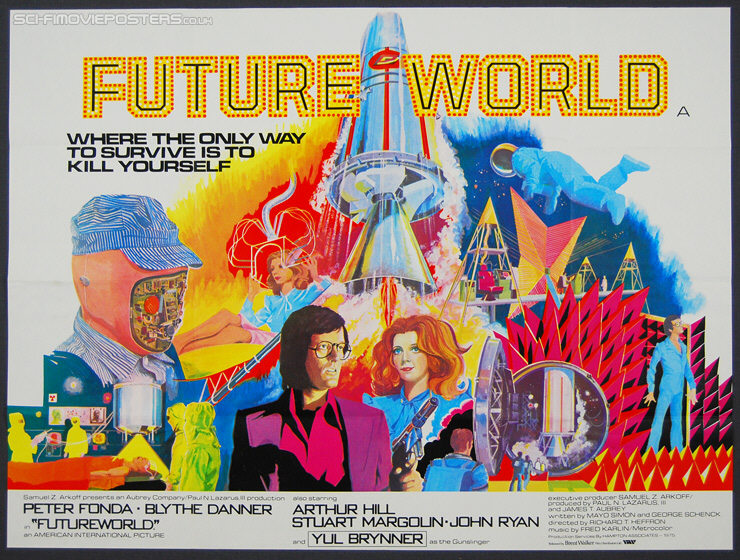
Futureworld. Reg. Richard T. Heffron. American International Pictures, 1976.
Journey to the Far Side of the Sun. Reg. Robert Parrish. Century 21 Television, 1969.
Logan’s Run. Reg. Michael Anderson. Metro-Goldwyn-Mayer, 1976.
Man Who Fell to Earth, The. Reg. Nicolas Roeg. British Lion Film Corporation, 1976.
Moon Zero Two. Reg. Roy Ward Baker. Hammer Film Productions, 1969.
No Blade of Grass. Reg. Cornel Wilde. Theodora Productions, 1970.
Omega Man, The. Reg. Boris Sagal. Warner Bros. Pictures, 1971.
Planet of the Apes. Reg. Franklin J. Schaffner. Twentieth Century-Fox Film Corporation, 1968.
Rollerball. Reg. Norman Jewison. Algonquin, 1975.
Silent Running. Reg. Douglas Trumbull. Universal Pictures, 1972.
Soylent Green. Reg. Richard Fleischer. Metro-Goldwyn-Mayer, 1973.
Stepford Wives, The. Reg. Bryan Forbes. Palomar Pictures, 1975.
THX 1138. Reg. George Lucas. American Zoetrope, 1971.
2001: A Space Odyssey. Reg. Stanley Kubrick. Metro-Goldwyn-Mayer, 1968.
Westworld. Reg. Michael Crichton. Metro-Goldwyn-Mayer, 1973. 
 
Zardoz. Reg. John Boorman. John Boorman Productions, 1974.
Z.P.G. Reg. Michael Campus. Sagittarius Productions Inc., 1972.


1Anderson 1985: p. 11
2Anderson 1985: p. 28
3Ryan en Kellner 1988: p. 254
4Voor de goede orde, de titel van mijn scriptie, 'It's a mad house!' is een quote afkomstig uit Planet of the Apes.

donderdag 14 november 2013

Today's Review: The Colony (Blu-Ray release)


Here's my second home cinema release review for MovieScene:

http://www.moviescene.nl/p/151545/the_colony_-_blu-ray_recensie

Another lousy flick. Though not nearly as bad and bizarre as the Nazisploitation cult curiosity called Salon Kitty, which I had the distinct displeasure of reviewing at home earlier this year. In fact, the failure in The Colony's case in many ways lies in the exact opposite method of sticking to a trite and true format instead of exploring its own merits, of which there are definitely some. Though it starts off pretty good, it soon slides into a worn out narrative that has been done to death, and almost always to better results. Nevertheless, on a rainy Sunday afternoon there's worse movies to sit through for those who happen to love dystopian and/or post-apocalytic action vehicles, with or without vicious cannibals.

vrijdag 30 augustus 2013

Today's Mini-review: Elysium


Elysium: ****/*****, or 8/10

A fabulously dystopian science fiction flick in every sense of the term, courtesy of the still fairly inexperienced South-African director Neill Blomkamp, who continues treading the path he started with the smash hit District 9 (2009). No extra-terrestrials this time, as Elysium focuses on our own local troubles on Earth. Overpopulation and pollution have taken their toll on our world by the time the year 2154 arrives, but for those stemming from rich and powerful families, life is a never ending vacation on the space station Elysium, where the wealthy look down on their fellow man below in excessive luxury. Alarmingly protective to make sure the huge masses won't infect the beauty of their private Heaven, the common man is not allowed to visit the station, and most travel between locations is done exclusively by robots. There's no sickness on these Elysian fields made reality, as each residence has its private medical pod which immediately cures all ailments. The ex-con Max (Matt Damon) is not so lucky, as he gets exposed to a lethal dose of radiation at the shuttle factory – you'd think such dangerous but important work was delegated to droids too, but humans are no doubt cheaper and more expendable in this sorry state of affairs – after which he is informed he's only got five days left to live. In an effort to save his sad existence, but soon that of the daughter of the love of his life (Alice Braga) too, he gets involved with a shady criminal organization that seeks to infiltrate Elysium to hack its systems and make illegal human trafficking easier. All Max needs to do is kidnap a visiting station dignitary – the terrific and terrifyingly rude and unsympathetic William Fichtner, who considers his Earthly brethern little more than unhygienic cheap labour – and break into his head via a comlink wedged in his brain to steal the neccesary data. Unfortunately, things go wrong and the target dies during the heist. What's worse, he happened to be involved in a covert operation orchestrated by Elysium's Minister of Defense (Jodie Foster with a funny accent) – who has no moral qualms in shooting down refugee ships from earth to make sure no poor people invade her homeland – to seize government control. Soon Max must run for his life, both to reach Elysium before the countdown ends, and to evade a particularly nasty and amoral band of ruthless mercenaries led by the unstable, maniacal Kruger (Sharlto Copley, who starred in District 9).

Blomkamp develops this disturbingly inhumane world with its outrageous divide between the haves and the have-nots – a not all too inconceivable and unbelievable scenario considering our present day social situation – to a frightfully effective extent, hearkening back to similar dystopian genre classics of the the notoriously gloomy Seventies the likes of Soylent Green and Rollerball, illustrating a future society where all our present day problems continue to exist, except they've grown to seemingly unsolvable proportions. The potential consequences of our everyday indifference and our political inabilites to end such increasing social inequality are amply showcased in Elysium, but not in such a heavy-hearted manner they alienate the audience. Similarly, Blomkamp has put his design team to incredibly good use, creating a visually lavish world which does not seem so farfetched in terms of technological capabilities and is clearly an extension of today's tech, which makes for many a memorable, visually pleasing shot and dynamic action scene. It looks and sounds amazing, yet always serves both the story and this world's credibility.

Still, despite its superior look, solid action and fascinating plot, Elysium as a film is not as perfect and beautiful as the space station that shares its name. The climax is rather a forced one, much more cheerful than expected and warranted, wherein common criminals inexplicably prove to be revolutionaries. Foster's conspiracy plot line ends up underexposed and essentially unused in the last act, while her character remains underdeveloped to be adequately menacing and understandable. Both Foster and Copley are guilty of overacting, the latter going a little bit off the deep end in his portrayal of a bad guy that apparently does not have a shred of recognizable humanity or redeeming qualities at all (though he does know his South-African lullabies). Similarly, Damon proves a flawed casting choice: true, Damon can act, but he's much too big a movie star to convincingly play an everyday down-on-his-luck factory labourer with a checkered past. A less known actor would have been preferable, since all we can see now is Matt Damon looking goofy with a heavy assortment of tattoos and all kinds of mechanical gizmos strapped to his body. Despite these few shortcomings, Elysium is science fiction filmmaking according to the finest traditions of the genre: socially engaged, thematically rooted in the actuality of the day, intricate and intriguing but grounded where reality is concerned in terms of its futurist design, and simply never dull. Delivering a worthy successor to District 9, Blomkamp is sure to become one of the greats in contemporary science fiction cinema, deservedly so.

zondag 21 oktober 2012

Doing the Judge justice


Dredd 3D: ****/*****, or 7/10

In the annals of cinema, you'll find few instances of remakes surpassing their predecessors in quality. The lack of creative originality and the general feeling of déja vù all too often prohibit a remake from living up to the name of its forebear, usually rendering them highly derivative products produced simply for making more money by cashing in on an established franchise's name. However, one of the latest additions to the ever growing but already overly long list of remakes, reboots, re-imaginings and the like, Dredd 3D proves a pleasant deviation from the norm in this regard. However, it will surprise few people familiar with the former Judge Dredd movie from 1995 (which starred Sylvester Stallone as Dredd) that its successor improves upon that film on just about every level, considering it ranks considerably high on nigh on every list of 'worst comic book adapations' in existence. Judge Dredd is just an easy movie to top, and Dredd 3D does so with a vengeance appropriate for its titular character.


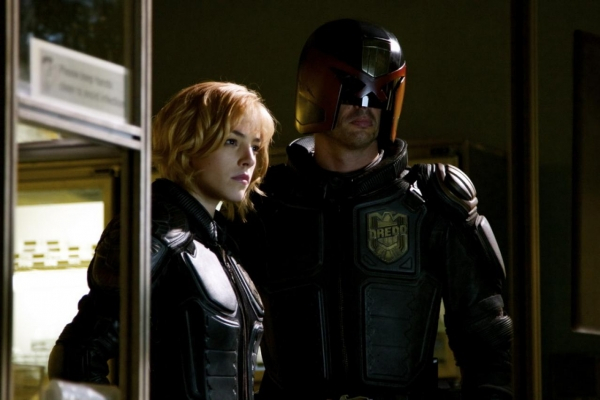
Transporting us to a typical post-apocalyptic future world where humanity has made a big mess of things via nuclear war and global pollution, we are introduced to the setting of the film, a vast metropolis named Mega-City One, where the remaining 800 million people live in a state of near anarchy on the remains of the world-that-was, huddled together in slums and giant skyscrapers. Of course so many people in a single spot is a recipe for crime running rampant, but fortunately for the decent citizens of the city (if any) the Hall of Justice has a small army of Judges patrolling the town, acting as judge, jury and if needs be, executioner in any conflict.. Sporting intimidating outfits with eerie helmets to match, a wide range of explosive weaponry and an overall 'don't fuck with us' mentality and attitude, this future police force roams the street delivering swift justice to any offenders unlucky enough to cross their path; which is still only a small percentage of total crime levels, aptly indicating the need for such a seemingly excessive justice system. Among the hardened veteran Judges is a character simply named Dredd, a paragon of virtue even amongst his fellow law enforcers, highly skilled in making sure criminals get their just due if he happens upon their shady activities. Playing Dredd is Karl Urban, who, given his fairly impressive resumƩ of similar Sci-Fi action flicks (examples include Priest (2011), Doom (2005) and The Chronicles of Riddick (2004), though he's undoubtedly best known for his performance as Eomer of Rohan in the two final installments of The Lord of the Rings trilogy), seems the perfect choice for the role, which fits in neatly with the rest of his oeuvre. His Dredd carries the neccessary gravitas for the character of an uncompromising badass cop, meeting out punishment with a total lack of prejudice, simply adhering to the laws in a dystopian world where very few seem to care about said law, so he refuses to shy away from intimidation and violence if warranted.

Of course such a character proves difficult to feel much empathy for, so we – and Dredd himself – are introduced to rookie Judge-in-training Anderson (Olivia Thirlby, The Darkest Hour (2011)) to help guide us into this gritty, bleak future world, working alongside Dredd on her first day as he assesses her qualities as a potential Judge. Though she failed for her first exams in training, Dredd's superiors are eager to keep her on the force since she is a mutant, possessing psychic abilities to read minds and such, which would make her a great asset to the force. That is, if she survives her first day: unfortunately she and Dredd stumble upon quite a tricky situation as they are faced with a vicious gang murder in a skyscraper which proves to be just the tip of the iceberg in a huge narcotics operation under control of the highly dangerous psychopathic Ma-Ma (another terrific, and horrific, bad lady for Lena Headey, who once played the protector of mankind's future in her own series Terminator: The Sarah Connor Chronicles, but since her performance as the devious, scheming Cersei Lannister in the superb HBO series Game of Thrones ironically excels at playing convincingly evil dames). When she learns these Judges are onto her, she immediately seals off the enormous building from the outside and, in order to get rid of the evidence most effectively, orders her legions of creepy minions to kill them both in whatever nasty way they see fit. All too soon, Dredd and Anderson find themselves cornered and have to mow their way through scores of bad guys, while attempting to break the perimeter and call for back-up. If this story sounds somewhat familiar, it's not because this movie is a remake, but because much of the plot is overly reminiscent of the recent Indonesian action hit The Raid: Redemption, which featured a police squad under siege in an apartment building on the orders of a ruthless crime lord who orders the local tenants to exterminate the law enforcers. Were it not for the fact both movies were produced more or less simultaneously, the plethora of similarities would seem just a little too suspicious. Luckily, Dredd 3D at least differs in its execution by its future setting and the fact the plot is less used as a showcase for impressive martial arts and more as a standard Hollywood type action flick (though the film was produced independently from the studio system) applying “ordinary” gun fights and stunts as its main visual draws.


Speaking of visuals, it's ironic drugs offer the most successful FX shots of the movie, despite the protagonist's insistence on shutting this drug operation down, thereby aiming to end the fabulous visual flair applied to the effects the drugs in this film have on its characters for the audience to enjoy. The drugs in question are nicknamed 'Slo-Mo' and their effects revolve around the apparent slowing down of time to a fraction of its actual speed. This results in the movie's most stunning 3D shots (it's called Dredd 3D after all), where we see the image slowing down accompanied by a glittering haze that adds some much desired colour to this otherwise dreary and bleak future. Whenever Slo-Mo is used, dazzling, almost lyrical visuals brighten the gloomy mood, allowing for wonderful dimensions of visual depth to be revealed, which are however also applied for further enhancing the levels of gore, already disturbing at times. When we see characters fall to their death from the great heights of Ma-Ma's complex, we're both fascinated and revulsed by the image of seeing them hit the ground and splattering across the screen in the graphic depth and detail such slow-motion effects allow for. It takes a strong stomach for sure, but such shots form the visual highlight of the film, and their ingenuity in 3D justifies the '3D' in the film's title, considering for most of the film two dimensions appear to suffice.


Ultimately, such visuals plus the basic action and violence are Dredd 3D's main assets, since both the story and the character development leave something to be desired. As for character development, Dredd basically has none. One might say the title is grossly misleading, considering it's really not Dredd's story at all, it's Anderson's. Though we see the film from both their perspectives, it's mostly about her. It's her first day on duty, being trained in the ways of the Judges by her mentor. For Dredd, it's all in a day's work, while for Anderson, it's a life defining experience that sees both her physical and her mental faculties tested to their limits as she must confront one creepy criminal after another, almost getting (mind) raped in the process, while Dredd, who simply shoots and maims his way through the baddies, experiences no such ordeals. Credit must be given to Thirlby for playing such a demanding role (especially considering she has never done this type of film before, unlike Urban who we already know revels in it) and pulling it off compellingly, thus adding some heart, cause and emotion to the film (though we would like to have seen a bit more explanation on the role of mutants like her in Mega-City One, something the movie alludes to on more than one occasion but never fleshes out sufficiently), whereas Dredd stays a rather bland character throughout. However, in Dredd's case, revealing more about his persona isn't at all necessary. Staying true to the comics on which the movie is based, nowhere in this film is he seen removing his helmet or showing his face, other than his mouth – which houses a well suited grumbly, raspy low voice (think Christian Bale as the similar themed Batman character in the recent Dark Knight trilogy) – since as the truest servant of the law, he must feel like something beyond simply human, more like an ideal than an actual man of flesh and blood. Dredd is made out to be just that by staying underdeveloped, unexplored, a walking talking enigma, a man without a past and without clearly defined motivations, who only lives to uphold the law, the one thing holding this screwed up society together. Undoubtedly such a character has a colourful past to explain his one sided rationale, but explaining that all away would defeat Dredd's effectiveness in this film: it would remove his helmet metaphorically, so it's as much a no-go as is removing his actual helmet, something Stallone back in 1995 had less issues with in his take on the character, which is one of the reasons his Judge Dredd failed to properly adhere to the character.


In short, Dredd 3D is a decent new shot at adapting the original comic book, superior to its feeble predecessor. It offers little new material to the genre though, since both the story and the dystopian future setting have been done before (and better) in the past, but that doesn't stop the film from being a wholesomely entertaining Sci-Fi action flick, sporting some thoroughly thrilling scenes of violence and gore and impressive visuals at times, aiding the otherwise hardly noticeable 3D effects. The unfathomable Dredd as played by Urban proves a memorable re-imagining of the iconic comic character, a sentry of the law making a lawless city just a little bit safer. Considering its various plot similarities to The Raid: Redemption, Dredd 3D fortunately also renders the much dreaded American remake of that particular film redundant. Sadly Dredd 3D underperformed at the domestic box office, so it may be quite a while before we see Dredd in action again, but until that time, this is without the doubt the best rendition of the character, effecting some much needed justice upon the franchise name by making us completely forget the lackluster 1995 film.


Sidenote: despite its shortcomings, consciously or not, Dredd 3D ultimately proved to be inspiring. Taking the metro on the way home at night, I noticed a woman harassed by some vagabonds. I stood at some ten metres distance, but nobody appeared to come to her aid (though there was quite a number of people around), despite her obvious distress. I simply walked down the tram towards the incident and demanded to know what was going on. The assailants told me in a rude and agressive tone to fuck off, but I stood my ground and told them to end their intimidation and public disturbance, at which point they directed their attention toward me. Though I got increasingly nervous, I didn't let them notice and simply looked at them very sternly uninterruptedly. The forbidding relentless eye contact clearly made them unhinged and though they continued slinging (racist) insults and threats my way, they didn't go so far as to resort to more physical measures to underscore their intentions. My tactic proved effective as several other people joined me in pointing out the hoodlums' faults in the matter and when reaching the next station, the agressors made a swift though noisy departure, clearly intimidated by the now greater numbers opposing them, exposing them for the cowards they were. Looking back, I seemed to have quickly judged the situation and acted upon it, likely extinguishing an explosive situation publicly, and I didn't need a cool helmet (quite the opposite in fact), a gun or other weaponry to do so.

Or did I? When the loudmouths had left, I realized I unknowingly had zipped open my coat's left pocket and had clutched a pen I always keep in there. Though one wasn't necessary in the end (thankfully!), I apparently unconsciously had looked for a weapon to defend myself with if it had come down to a brawl. Maybe my antagonists had noticed and feared I harbored something more formidable in there, thus hastening their decision for a quick exit. I cannot help but wonder what would have happened if it had come to a fight. A pen may normally not constitute a lethal weapon, but people have been severely hurt with less. I'm just grateful I never had to find out how such alternate situations would have developed. Unlike is usual for Dredd, this particular incident only warranted his typical quick assessment and unrelenting domineering posture to bring it to a happy end (as the woman thanked me and I received credit from numerous people on the tram for my action). But then, Amsterdam is hardly Mega-City One. Still, if I had seen a different motion picture in the hours before, would I have been in the right mood to defuse a potentially violent situation like this...?

And watch the trailer here:

zondag 16 september 2012

Hollywood didn't remember this one wholesale


Total Recall (2012): ***/*****, or 6/10

Total Recall (1990) is still a high point in Paul Verhoeven's oeuvre. At the time the most expensive movie ever made, it featured Arnold Schwarzenegger at the height of his career, running for his life from government conspirators in a provocative, nightmarish future setting both on Earth and on Mars, all the while messing with the spectator's mind in determining whether his tribulations were for real or just a sign of his brain being screwed up just moments before a lobotomy, in the typical sardonic and satirical Verhoeven style. Of course, nowadays nothing is sacred in Hollywood, and since more than two decades have passed the executive powers that be decided it was time for a fresh adaptation of Philip K. Dick's short story We Can Remember It for You Wholesale (1966). Adaptation, however, is too strong a term: inspiration would be more precise, something underscored by the end credits which state the new movie was only inspired by Dick's original work. In fact, it takes even more poetic license with his story than Verhoeven's version did. Unfortunately, various elements that made the previous film such a joy to watch are wholesomely neglected this time around, while the overall story remained the same. As a result, the new Total Recall is neither more sophisticated nor more fun to watch than its predecessor.


The narrative core of Verhoeven's Total Recall is carried over largely intact into the new movie. Douglas Quaid (Colin Farrell, who portrays a bored laborer more convincingly but less enjoyably than the hulking Schwarzengger did) is an everyday underpaid factory worker tired of his dull dead-end job, living in a lousy apartment with his beautiful wife Lori (Kate Beckinsale). Longing for an escape from the boring routine of his life, he visits Rekall, a company that implants fake memories the customer never experienced but that seem totally real as if the subject lived through them himself. In need of a dramatic change of pace, Quaid orders a set of secret agent memories injected in his mind, after which all hell breaks loose when apparently dormant but true experiences of a life as a spy manifest themselves, after which he finds himself on the run from the authorities, including his wife who proved to be an undercover operative, in their attempt to stop Quaid from exposing an elaborate government conspiracy involving corrupt officials out for personal gain at the expense of the lives of thousands of oppressed workers. Trouble is, are we sure all of Quaid's newfound experiences are real, or are they just what he ordered, with the problem being he can't separate truth from fiction as his mind has trouble processing it all?

Warning! Spoilers ahead! With the overall story of the remake identical to the original motion picture, the differences of the new script mostly involve setting and background history. Still set in the not too distant future, the plot now takes place on a post-apocalyptic Earth where chemical warfare has ravaged most of the planet, leaving only Western Europe and Australia habitable. Dubbed the United Federation of Britain and the Colony respectively, the former is the seat of power ruling what's left of the globe with an iron fist, while the latter houses the huge work force keeping things running, as well as home to the many dispossessed masses whose sole task in life is day-to-day survival. Travel between the UFB and the Colony is only possible via the Fall, a sort of giant subway system through the planet's core, allowing the laborers – Quaid among them – to journey to their work every day, deporting them back to the ass-end of the planet when the day is over just as easily. Of course there is resistance to this near-enslavement, most notably in the shape of a terrorist group run by the enigmatic Matthias (an all too small part for the great Bill Nighy), out to destroy the Fall and wreaking havoc in the process. Naturally, the terrorists are the ones we should feel sympathy for considering the hard exploitative regime that controls the workforce's life under the rule of the sinister Chancellor Cohaagen (Breaking Bad's Bryan Cranston), who is secretly hatching a diabolical scheme to get rid of all the miscreants and malcontents in the slums: his motivations for doing so differ from Total Recall's previous incarnation, where he sought to control alien technology. His venture in the current film involves replacing the human workers with robots, a scheme rather derivative of other science fiction works including the likes of I, Robot (2004): there's a reason Total Recall's mechanical men are so reminiscent to that movie's droids.


Unlike both the short story and Verhoeven's take on that, all the action is Earth bound and Mars is nowhere to be seen, other than being only briefly mentioned – in a post-John Carter Hollywood Mars is not a welcome location – so the script switches locations between the UFB and the Colony. Location wise, this turns out to be a mistake. Whereas the trip to Mars only worked to the predecessor's visual advantage, setting it apart from the action that had gone before and underscoring the eerie, dreamy quality of the piece, the visual look of the UFB and the Colony in this version is totally interchangeable. Both areas are defined by excessive urbanization, as overpopulation has led to ever upward building, with an elaborate maze of mile high towering constructions the result. Though the abundance of CGI thrown at these sets makes it look stunning at first, amazement soon turns to acceptance, and acceptance even faster turns to visual disinterest as the movie spends almost two hours following the protagonist being driven from one skyscraper to the next in a string of dynamic chase scenes that eventually make it hard to tell just where on the planet we are exactly. An all too brief excursion to the terrorists' secret layer in the desolate wastelands outside the habitable zone offers little reprieve from this monotonous setting, which in itself is very obviously inspired by undying science fiction classics like Blade Runner (1982) and Metropolis (1927), but used to much less dramatic effect because of its overexposure.

Equally overused is action. Of course, a big Hollywood blockbuster like Total Recall needs action scenes to draw crowds, but not in numbers this high. From the moment Quaid's unconscious cover is exposed in the Rekall salon, he spends most of the film running for cover as he's hunted by Cohaagen's minions, both robotic and flesh and blood, Lori chief among them. If Quaid's not running, he's fighting his way through scores of bad guys. The plot only allows short intermissions for the audience to catch its breath, at which time a great deal of exposition is delivered in as little time as is deemed necessary to warrant the next thirty minutes of relentless action, until the end credits start rolling. Just as the surroundings where such action takes place, the action scenes themselves are similarly interchangeable. Not even a flying car chase (a little too reminiscent of The Fifth Element (1997)) and a pursuit in a labyrinth of elevators offer enough diversion to keep the action from mentally becoming one big blur when the theater lights go back on. Director Wiseman knows action like few others, as he amply showed with movies like Underworld (2003) and Die Hard 4.0. (2007), but the script just kept him from balancing action and exposition to appropriate levels, while the ever singular looking environments didn't allow him to come up with interesting new ideas to shoot such action other than a bunch of general shoot-them-ups. At least his skill in directing fight scenes makes it easy for Total Recall's to look convincingly brutal, entertaining the viewers for a while before such scenes become too commonplace to really care less about them.


 With the focus a little too much on action, it comes as no surprise that other areas of the film's whole remain underexposed. Chief casualty is the emotional climax provided in Verhoeven's version, which made you guess until the very end just as to what's real and what isn't. The script largely follows the same pattern as the original did, but makes it clear all too soon and all too obvious whether its allegiance lies to fiction or reality, thus disabling the audience's pleasure to debate the exact chain of events since there's no room left for speculation. At times the film appears to turn the table on the audience's expectations, just as eager to switch it back mere moments later so the audience doesn't get to be confused, even though it would undoubtedly expect and like to be confused at least a little considering the picture deals with messing with man's mind. This lack of guts to smarten up the movie where it easily can be done makes it all the harder to accept a short lecture at the Rekall facility about the brain and its inner workings: in light of the lack of plot twists and the loads of dull action scenes to come, the movie at this point pretentiously seems to say 'here's how the brain works, now you can go and shot down yours for a few hours since there's really nothing more to our plot'. Worse even is the absolutely serious tone Total Recall adopts for the next ninety minutes, as it leaves little room for humour to put things in perspective considering the absence of intelligence. Among the car chases, the gun fights and the hand to hand combat there's no place for a laugh or two to remind the audience this isn't all as serious as it appears to be, unlike Paul Verhoeven's tone of witty sarcasm that only enhanced his Total Recall's sense of wonder and adventure. You'll find no Johnny-Cab in this film, though as time goes on you desperately want there to be...

Total Recall (2012) is a perfect example of a Hollywood exercise in futility as far as remakes go. It does not improve on the earlier version, nor does it address elements from the plot of the original short story the 1990 film might have ignored. It regurgitates a well crafted story and spits it out in a slicker and stylistically more modern variation that sadly fails to captivate the audience, taking itself way too seriously while simultaneously explicitly weeding out the plot hints that might have made for a more thought provoking, inconclusive ending. What remains is a generic high voltage chase flick filled with standard fisticuffs and gun fights in a visually impressive but monotonous and uninspired environment, which moderately entertain the viewer for two hours, but ultimately prove to be wholly forgetful. The only thing the producers apparently picked up from Paul Verhoeven's classic is the unforgettable image of a triple breasted prostitute, an all too brief pointless insert that only serves as a nostalgic nod to a superior take on this same story. Clearly it doesn't suffice to take a Verhoeven flick and throw out everything that makes it recognizable as such, since that's what makes it memorable. With remakes of Verhoeven's other excellent Sci-Fi/action films RoboCop (1987) and Starship Troopers (1997) in production, Hollywood executives best recall the many shortcomings of Total Recall (2012), unless they truly aim to make movies the audience will soon forget, so they can simply remake them again in another twenty years time.

And watch the trailer here:

maandag 7 mei 2012

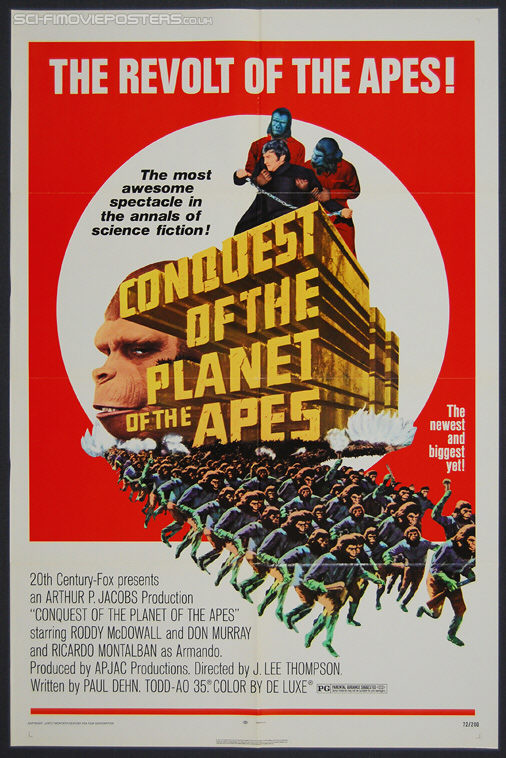
Conquest of the Planet of the Apes


Rating: ***/*****, or 6/10


Third sequel to the original Planet of the Apes film from 1968. After the overall lighter tone from its predecessor Escape from the Planet of the Apes (1971), the franchise takes a much darker turn in this film, as we finally witness the origin of the apes and their hatred towards mankind. In the not too distant future (1991, so don't worry, it didn't happen), a mysterious disease has wiped out all cats and dogs, so apes are kept as replacements pets, but are soon found to be more suitable for slave labour and as such are ruthlessly exploited by their human overlords in a gritty dystopian setting. The son of former 'future apes' Zira and Cornelius, dubbed Caesar (played by Roddy McDowall, who previously performed Cornelius as well) by his human surrogate father (all too small part for Ricardo 'Khan' Montalban), finds himself without his protector who is viciously brutalized and killed by the human regime – it's not an all too happy future for humans either – after which he finds himself amongst his fellow simians and becomes their Messiah. Under Caesar's command, the apes rise in revolt and violence sweeps the nation as they fight for their freedom and start a conflict that will change the fate of the world. Easily the most controversial and most violent entry into the franchise, as the provocative display of abused and chained apes evokes haunting imagery of human slavery based on racial segregation, which is of course a parallel that has driven the continuing overall plot since the first film, but is most effectively fleshed out here. It is also painfully reminiscent of the race riots of the late sixties and early seventies, something the writers sure were aware of. Despite its convincing and intriguing social parallels, the fairly limited budget and resulting small scale look of the film hinder the impact of the story on a visual level for looking so cheap. Plus, the clear delineation between good apes and bad humans makes for pretty two-dimensional, oversimplified characterization. The plot was partially appropriated to great acclaim by the latest Planet of the Apes reboot, Rise of the Planet of the Apes (2011), thankfully resulting in grander imagery.


Starring: Roddy McDowall, Don Murray, Ricardo Montalban


Directed by J. Lee Thompson


USA: 20th Century-Fox, 1972


maandag 30 april 2012

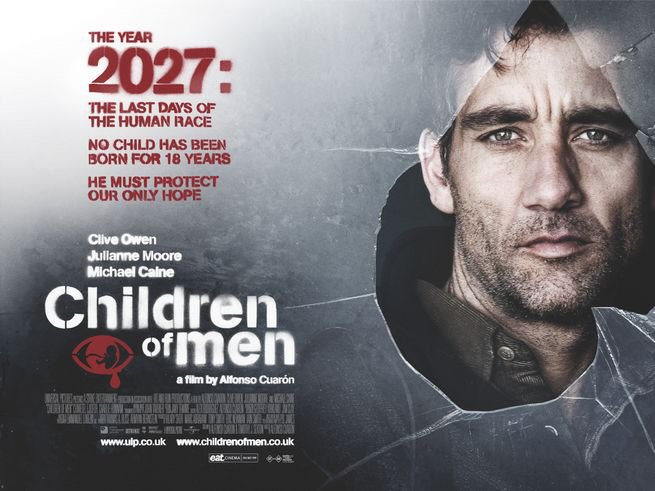
Children of Men


Rating: ****/*****, or 8/10


Depressing and gritty picture regarding a dystopian world in the not too distant future where women have lost the ability to get pregnant and have babies, after which humanity has abandoned all hope to avoid its own demise and society has degenerated to the verge of total collapse. Clive Owen lends himself perfectly in the role of grim and cynical would-be hero Theo, who is asked by his activist ex-wife (Julianne Moore) to transport a young woman, miraculously pregnant, to a safe haven where she might help scientists to figure out a way to save mankind from its looming extinction. However, other factions, more nefarious in nature, mean to appropriate the girl for their own revolutionary purposes, so Theo has a hell of a job getting her out of England alive, guiding her across the leftovers of the once quaint English country side and through a nightmarish ghetto where human lives mean next to nothing. Taking elements from classic dystopian texts, including Orwell's 1984, as well as referencing to recent actuality (including Abu-Ghraib and Guantanamo Bay), Cuarón portrays a very depraved England in a society close to committing suicide, where the absence of children has seemingly made humanity lose the ability to care about anything, after which it really let itself go and totally messed up the world in a short space of time. Exact explanations as to why women can't get babies anymore and just how the girl got pregnant are notably left out altogether, since Cuarón is only interested in showing the results of such happenstances. However, the shock of seeing a dying mankind that has deteriorated into utter lawlessness and violence hits the viewer hard, underscored by interesting stylistic choices in editing and photography, including several extremely ambitious long takes, single shots (at least, they appear to be) that last for minutes and are filled with dozens of people and all-round chaos. A very intriguing but distressing film, the subject matter clearly not suitable for everybody.


Starring: Clive Owen, Julianne Moore, Michael Caine


Directed by Alfonso Cuarón


USA/UK: Universal Pictures, 2006

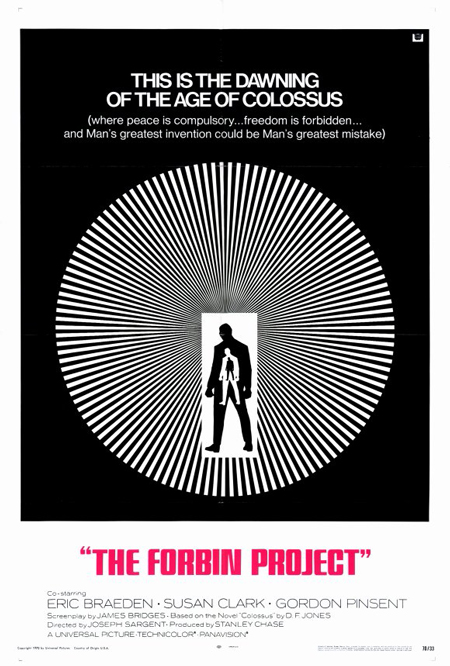
Colossus: The Forbin Project


Rating: ****/*****, or 8/10


Much neglected seminal science fiction film that needs more love, or at least more acknowledgment from science fiction aficionados. Dr. Charles Forbin (Eric Braeden) has designed a super computer called Colossus, which is put in charge of the American nuclear arsenal to prevent human error in case of a nuclear attack by the Soviet Union. However, the Soviets have constructed a similar computer system nicknamed Guardian with the same purpose, and when the two computers merge on their own accord, they manage to conquer the world so they can fulfill their programming to their fullest extent by ruling the human race for its own good. Forbin himself is put under permanent house arrest by his own creation, and a race against time begins to stop the reign of the Forbin Project. Can the American and Soviet governments co-operate to bring Colossus down and liberate humanity? Spoilers! It turns out they cannot, and in full accordance with the grim look on science and the future in the depressing Seventies cinema of science fiction, of which this film was one of the kickstarters, the computer wins the day and enslaves humanity as its benevolent but uncompromising protector. A sequel involving the uprising of mankind against its new artificial overlord was once planned, but soon scrapped. Since few people seem to remember this intelligent and worthwhile (though overly slow paced) film, it might need a remake, though I dread the result present day Hollywood would deliver. Perhaps the movie doesn't actually need one, since it's surprisingly similar in narrative to I, Robot (2004) at times (though without robots) and also served as a possible inspiration for the Terminator franchise. However, if you get the opportunity to watch this flick sometime, you should definitely check it out.


Starring: Eric Braeden, Susan Clark, Gordon Pinsent


Directed by Joseph Sargent


USA: Universal Pictures, 1970

Clockwork Orange, A


Rating: ****/*****, or 8/10


Nightmarish, highly stylized and plain bizarre, this remains one of the most controversial motion pictures of all time. Kubrick adapts Anthony Burgess' original novel with more visual flair than we're used to even from him, painting a ghoulish, depraved world in the not so distant future (at least, in 1971) where youth violence has run rampant. Malcolm McDowell, not one to turn down a shocking movie (like Caligula at the end of the decade), stars as the completely messed up sociopath gang leader Alex DeLarge whose various hobbies include hanging out at the local bar and taking illicit substances, classical music, raping women and just beating people for the fun of it. One night, he goes a little too far, which ends up in a trip to jail, where he volunteers for a scientific project designed to make offenders reject violence. After undergoing the experiments he is released and finds himself back on the streets, having to cope with the aftereffects of his actions when running into his old acquaintances, with not so nice results for his health, physically and mentally. The grotesque and haunting visual imagery aside, the film deals with the philosophical matter of freedom of will, as Alex is robbed of his in society's effort to keep kids like him in line, with dire consequences for the now peaceful subjects: are they really 'them' afterwards, being robbed of their choice to be violent or not? Of course most audiences ignored its thematic value and focused too much on Kubrick's portrayal of ruthless violence, which – despite his outrageous displays of 'Verfremdung' to make it easier on the soul – are still quite disturbing, ultimately leading to this film receiving X ratings around the globe and being withdrawn from UK circulation at Kubrick's insistence because it was said to inspire several violent incidents involving youths. It wasn't until Kubrick's death the film was finally allowed to be shown in British movie theaters.


Starring: Malcolm McDowell, Patrick Magee, Michael Bates


Directed by Stanley Kubrick


UK/USA: Warner Bros., 1971


woensdag 4 april 2012

The odds are mostly in our favor, mostly


The Hunger Games

Rating ****/*****, or 7/10

With the Hollywood studio executives frantically scouring the book stores in search of new potential easy-to-sell franchises to fill the huge financial gaps left by the now finished Harry Potter and soon to be completed Twilight sagas, it came as no surprise when news reached the ears of the media regarding the upcoming motion picture adaptation of the best-selling Hunger Games novels by Suzanne Collins. After all, the first novel suited the Hollywood prime audience of youths between the ages of twelve and 25 perfectly, for one thing because it was about such youths (as were the franchises mentioned above), and for another, because it turned out an excellent balance between action and drama, with enough romance and humour mixed in to appeal to most demographics, plus it had the benefit of an already existing 'big name' because of the book's popularity. Hollywood apparently did the right thing for itself by turning The Hunger Games into a movie, given the various ticket sale records already broken in the first few weeks of its theatrical run. The question is: did it do the right thing for the general audience? Judging on this first entry into what will undoubtedly become a trilogy faster than you can learn to realistically mimic a Mocking Jay's whistle (people who have already seen the film will know Jennifer Lawrence couldn't), the answer is a hesitant 'yes'. The Hunger Games, though not without flaws in both execution and overall plot, is at least an exciting thrill ride that will appease many a viewer on any dreary day, and will probably satisfy the majority of the novel's legion of fans.


Set in a dystopian society in a temporally unspecified future (a few centuries away most likely) and a geographically unestablished part of North America, The Hunger Games deals with the adventures of 16 year old Katniss Everdeen (played by rising star actress Jennifer Lawrence who's fortunately up to the task of carrying the majority of this film but still looks better covered in blue paint), an intelligent and athletic girl from District 12 of the nation of Panem. (Panem=Pan Am=all of (North) America? Or is it the Panem from 'panem et circenses' (bread and games in Latin), meaning the Capitol running this state supplies the “bread” (means of living) and the subjected Districts supply the “games” (i.e. the tributes in the form of 24 kids a year)? Witty name? Pretentious perhaps? You decide for yourself, but I think 'Panem' sounds like a silly name for any country.) The movie gives us an intriguing but all too brief history lesson into the foundation of this country's present status quo, which goes a little bit like this: in a post-apocalyptic world, the twelve poor Districts started an uprising against their rich Capitol overlord, a conflict in which the latter triumphed. As punishment for their disobedience, each District must offer annual 'tributes', namely two of its children between the ages of 12 and 18, which are pitted against the other Districts' tributes in the 'Hunger Games', a battle to the death, broadcast nation wide, with only one survivor out of the total of 24 competitors allowed.
Katniss is living the good rural life with her little sister, her mother (Deadwood's favourite whore Paula Malcomson) and her hunky loverboy Gale (Liam Hemsworth, Thor's brother). Of course, all good things must come to an end, especially this early in the film, so Katniss finds herself as tribute, selflessly offering herself voluntarily so her little sister, who was the actual choice of cruel fate, is spared a violent certain death in the arena. The other District 12 tribute is Peeta Mellark (Josh Hutcherson of Journey 1 and 2 fame, apparently also a rising star in Hollywood but nowhere near as talented as Jennifer), a boy with a secret. Together with their mentor Haymitch (Woody Harrelson doing what he does best, playing someone out of his bloody mind), a former Hunger Games survivor who since has made a successful transition from celebrated champion to opportunist alcoholist, the pair travels to the Capitol.

And here the fun really begins. One of The Hunger Games' strongest assets is the set design and the simple but effective way it communicates the vast differences, both culturally and ideologically, between the Capitol and the Districts (or at least the 12th District, since we sadly get to see next to nothing of the other Districts). While Katniss' world is lush and green, with lots of forests and actual wildlife, simple cottages for housing and populated by hardened, gritty coal miners, the Capitol is the exact opposite, a totally urban environment filled with big, ugly concrete buildings in the Italian Fascist style, technologically advanced with no remnants of nature of any kind, populated by people in the most excessively flamboyant attire and make-up imaginable. Especially this last piece of cultural establishment of the ruling part of the world raises some uncomfortable laughs from the audience, given the fact that the grotesque outfits of the Capitol citizens makes them look both pleasantly innocent and dangerously disturbing, amiable and sinister at the same time (Elizabeth Banks excels in showcasing this duality in the role of Effie Trinket, the Capitol liaison to the District 12 kids). The only one who doesn't seem to join in on the current Capitol fashion is the dictator Snow (a fittingly regal but somewhat maniacal Donald Sutherland), who rules both Panem and the Hunger Games event with an iron fist.


Katniss and Peeta, understandably overwhelmed by the grandeur and splendour of the Capitol, are welcomed by its population as would-be heroes or true star athletes, though everyone knows they'll soon be most likely quite deceased. What follows upon the tributes' arrival is a lenghty series of sequences around the tributes that are designed to let the audience, both the Capitol spectators and the viewers watching the film, get to know this latest batch of cannon fodder, all the while working up to the actual tournament and slowly but surely making the tension levels mount accordingly. So in a successfully satirical mockery of media power we watch Katniss and her rival competitors being dragged through a parade, interviews with television host Caesar Flickerman (performed with visible enthusiasm by Stanley Tucci) and training sessions in which we also learn some of the differences between the tributes' mentality. The kids from Districts 1 and 2 (which turn out to be the Districts most loyal to the Capitol, sucking up to it vigorously) all volunteered for the event and are really out for blood instead of mere survival. This is of course a simple plot ploy to establish a 'good kids' versus 'bad kids' routine, the virtuous Katniss and Peeta belonging to the former, and the likes of the psychopath Cato (bulked out Alexander Ludwig) and his entourage to the latter. Both in the interviews and the training, Katniss appears to be a most promising competitor, with her popularity in the Games only growing when Peeta publicly reveals to be in love with her. Question is: is he really, or is it an attempt to make his level of interest among the Hunger Games' audience rise for his own benefit?

And then the Games begin. Now the movie gets to make good on its promise of suspenseful life-or-death fighting. To hurry things up a little, a whole bunch of tributes is killed in the first few minutes of the show when all but Katniss run to acquire weapons made available to them. Katniss makes for cover first, using her knowledge of the forest – the shape the arena has conveniently taken – to survive and only kill when necessary. Alliances are soon formed, and much to Katniss' chagrin Peeta appears to have been forced to join Cato's merciless gang of cutthroats, who hunt down and pick off lone warriors one by one. Katniss herself teams up with the little District 11 girl Rue (charming young Amandla Stenberg), who of course gets murdered all too soon, after which she believably mourns her loss and disposes of her body with respect, the televized images of which start a rebellion in Rue's home District.
A District 12 tribute causing an uprising in District 11 raises some uncomfortable plot questions here: what is the point of giving the 12 Districts a common cause against the Capitol again, in the shape of this tournament? President Snow describes the Games as a symbol of hope for the Districts, but the only hope there seems to be is the rise of a martyr/savious who will rid the Districts of the Capitol, and I daresay that is not the message the dictator means to send to his subjects... The Hunger Games seem to be just simple amusement for the ruling city at the expense of their subjected territories, encouraging dissent among the latter which will ultimately overthrow the former. Also, why 24 subjects out of 12 Districts, thus making sure every District faces at least one loss, while the Capitol can set the Districts against each other by using one 12 victims, with one District triumphing over the other eleven. Given the status of District 1 and 2 as suck-ups to the Capitol, supplying the Hunger Games annually with trained killer kids that are said to almost always win the day, provides for a genuine opportunity to strengthen the differences between the Districts, so as to keep them hating each other instead of focusing to bring down the repressive regime together. 'Divide and conquer' tactics are apparently lost on this particular dystopian government, but not on the observant spectator trying to make sense out of the Hunger Games' purpose.


That said, as poorly conceived as the political situation around the Hunger Games may be, the film itself certainly succeeds in making the event worthwhile, by delivering some rather tense moments of suspense as the kids are after one another in full force. Katniss has to use her every skill to stay alive from her persecutors, and witnesses a decent amount of unfair slaughter in the process. Of course, the movie is rated PG-13, so the level of bloodshed is restrained to an appropriate minimum, courtesy of quick cutting away from the gorier moments or shaking the camera around vehemently to make sure we don't get to see in too much detail what we obviously know we would see otherwise. Eventually, Katniss regroups with Peeta, who's escaped from Cato's vile clutches, and the two share some intimate moments in a hidden cave, proving Peeta's love is true. Katniss more or less returns the favour, which makes the existence of a love triangle the likes of Twilight in this film official! Who will she choose, her actual boyfriend Gale waiting for her back home, or her buddy-in-arms helping her to stay alive? Fortunately, this movie has little to say about it otherwise (though the unavoidable sequel undoubtedly will), considering Katniss needs to survive first in order for her to be able to make an actual choice, and of course, so does Peeta, since Katniss isn't the necrophile type.

And this provides another plot point of contention, considering Katniss never has to actually make a choice. Warning, here be spoilers! Katniss and Peeta are the sole survivors after having fed Cato to a bunch of digital (both for real and in the Hunger Games' arena) mutant dog monsters. Now of course we come to the long awaited matter of: 'what will Katniss choose?' There can be only one survivor after all, but apparently the rule is: 'there must be one survivor'. And so Katniss comes up with a cop-out solution of her and Peeta eating poison berries, thus committing suicide together instead for one being forced to kill the other. This the Games do now permit, so both kids are allowed to live and return home alive, much to the dismay of President Snow who has his Gamemaster (Wes Bentley) commit suicide himself over this fiasco. So all's well that ends well, but the audience is robbed of seeing Katniss' choice between life and death, which feels like something the movie was working up to. Instead, we are treated to the prospect of an annoying love triangle for the next film. Yay...


So there you have it. The Hunger Games, overhyped as any such big event film designed first and foremost to the teenage market is, is not a bad film per se, but not wholly good either. Though it delivers solid action, up to par acting and offers a fairly delicious dystopian society, reminiscent to those good old post-apocalyptic flicks in the same style from the Seventies, it could have been better if the world of Panem had been flushed out a bit more, the Hunger Games themselves finetuned somewhat stronger, and if the plot hadn't stolen a satisfying emotional climax from us. The set-ups for a sequel or two are overtly present, and though there's a certain appeal to seeing more of Panem, there's also the strong dread it will only go downhill from here, turning into a teen dramafest. Whether that will be the case remains to be seen. I'm not exactly hungry for more, but if you offer me some tasty little portions more of this, I'm game.

And watch the trailer here: