Posts tonen met het label apocalypse. Alle posts tonen

woensdag 1 juni 2016

Today's Review: X-Men: Apocalypse


Still behind on all the stuff I wrote, but slowly gaining.

X-Men: Apocalypse - Recensie

'Third one is always the worst' says Jean Grey when leaving the theater after watching Return of the Jedi back in '83. She was right about that one, and conscious or unconscious (I doubt the writer intended for this movie to be the weakest in the second X-trilogy), she's also correct about X-Men: Apocalypse. However, also like Return of the Jedi, Apocalypse still is a whole lot of mutant fun for those who didn't expect the franchise to reach new heights anyway.

Granted, it's not the story that provides the mirth, since it's the stuff of repetition, variations on themes and lack of narrative evolution. Basically, another all-powerful mutant rears his head and threatens to destroy the world for mankind so that its stronger successors can take over. And once again, the X-Men, fighting for peace between man and mutant, must get together to stop this megalomaniacal scheme from becoming reality. This time, it's not Magneto who has hatched the diabolical plan, but rather a 5,000 year old ideological predecessor, an ancient Egyptian once worshiped as a god, with the modern moniker Apocalypse. Magneto, once more masterfully performed by Michael Fassbender, merely provides some muscle to help Oscar Isaac's semi-god with his evil shenanigans. Isaac does a decent job playing an age old villain, but he's no Fassbender and his Apocalypse is nowhere near as intimidating or intriguing as the much more relatable Magneto.


Still, the villain suffices for the cause of bringing together two generations of X-Men, the First Class lot and the new batch of young recruits, including novel takes on classic X-characters Cyclops, Jean Grey and Nightcrawler. Their performances and their chemistry make us hopeful for the future of the franchise, should the studio feel like using them for the next installment Apocalypse seems to be building up to. For although it's meant as a conclusion to a trilogy, the ground work is amply laid for more to come and these young stars succeed in making us curious about what lies ahead. The new additions to the cast are aided by snappy dialogue and light humour, making the shortcomings in the plot not nearly as blatant as they would have been in lesser hands. Nevertheless, it's clear director Bryan Singer, who has made his fourth X-movie with this title, has run out of ideas for the X-universe. Though we appreciate his work on both trilogies, new blood would be equally welcome in the creative room as it proved in the cast.


maandag 6 januari 2014

Today's Mini-Review: Day the World Ended


Rating: ***/*****, or 7/10

Starring: Richard Denning, Lori Nelson, Mike Connors
Directed by Roger Corman
USA: Golden State Productions, 1955

Truth is, few of the films from Roger Corman's early days of directing schlock movies for a dime are 'good' in the usual sense of the word. In fact, most (if not all) of them are cheap exploitation quickies shot for next to nothing so they could do nothing but make a profit in drive-in theaters screaming for content to cater to teenage love birds more interested in each other in the dark than in the goings-on present on the big screen in front of them. Flicks like The Beast with a Million Eyes (1955), Swamp Women (1956) and It Conquered the World (1956) nowadays are interesting only to geeks revelling in bad taste or film students exploring the fringes of acceptable study material. Still, the occasional sort-of decent film can be found among Corman's early work for those with enough patience and the stomach for digesting campy creature features from the Fifties. Day the World Ended I count among these very few.


Stories about man's inability to coexist in peace with his fellows, even when such cooperation would be to both parties' mutual advantage in the struggle for basic survival, have often resulted in fascinating pieces of audiovisual excitement studying the human condition and continue to do so to this day even when you thought little more could be added to the subject, except for different, usually interchangeable threats. You think people watch popular shows like The Walking Dead only for the excessive gore and neat-o zombie make-up? Think again: they watch it for the gripping human drama involved in living together under extreme circumstances. Corman applied the same formula to this post-apocalyptic tale of tragedy almost sixty years ago, as he tells the story of a small band of survivors who seek refuge in the same remote mountain location when the bombs finally fall, a typical fear of the Fifties where such an occurrence never seemed so unlikely. Among those that would live are a survivalist, his pretty daughter, a geologist, a loudmouth crook, his slutty girlfriend and a man with a terrible secret. Of course tension quickly mounts between these disparate people over the usual things, like who's in charge, who rations the food and who ends up dating the daughter. Most of the film consists of people arguing, but fortunately the movie only lasts 79 minutes and the man with a secret mutates into a horrifying monster (read: guy in a silly suit) to spice things up a bit. Corman proves quite adept in suspensefully paving the way for the creature's first appearance between all the petty bickering. And even though you know the actual monster isn't gonna succeed in living up to this buildup to his rampage, if you know and accept what type of movie you're watching before you start, you might be able to get a kick out of this film regardless of the total lack of production values, even if only for laughs (who ever said Corman made serious movies anyway?). Aficionados of Fifties' Sci-Fi films will also be grateful to see Richard Denning star as the handsome scientist and noble man of action, as the actor is almost a staple of the science fiction films of this era, starring in genre pieces like the classic Creature from the Black Lagoon (1954) and less well remembered pictures like The Black Scorpion (1957) and Target Earth (1954).


The dystopian themes of Day the World Ended, effectively underscoring that man is his own worst enemy (hardly a novel notion in 1955 to begin with), have since been addressed in other films and television ad infinitum (compare various episodes of the different Twilight Zone series, as well as recent films like The Divide and The Mist for example) yet continue to fascinate and appeal to people, who cannot help but wonder if this was really what it came down to when the world went to hell. Corman crafts a fairly entertaining film out of the subject matter, which remains one of his best, though that is hardly saying something. Though I wouldn't exactly recommend this type of film to anyone, I can honestly say that if you ever fell the need to go sit and watch an obvious cashgrab B-movie from a master in creating such fare the likes of Corman, it might as well be this one. You could do far worse and really, really waste your time.


zondag 5 januari 2014

Today's Mini-Review: The Day the Earth Stood Still (remake)


Rating: **/*****, or 4/10

Starring: Keanu Reeves, Jennifer Connelly, Jadem Smith
Directed by Scott Derrickson
USA: 20th Century-Fox, 2008

The thing about remakes is they need to retell a story of old (or at least apply its general concepts) while giving it meaning that reflects contemporary society, instead of carbon-copying the meaning of their original counterpart to little avail in a changed world. In that regard, the remake of the Sci-Fi classic The Day the Earth Stood Still (1951) is spot-on, replacing a warning against the dangers of nuclear weapons for an ecological message against man's carelessness where the health of the world's environment, and thus his own, is concerned. In most other respects, this new The Day the Earth Stood Still feels like a redundant exercise in how not to redo a well remembered movie.


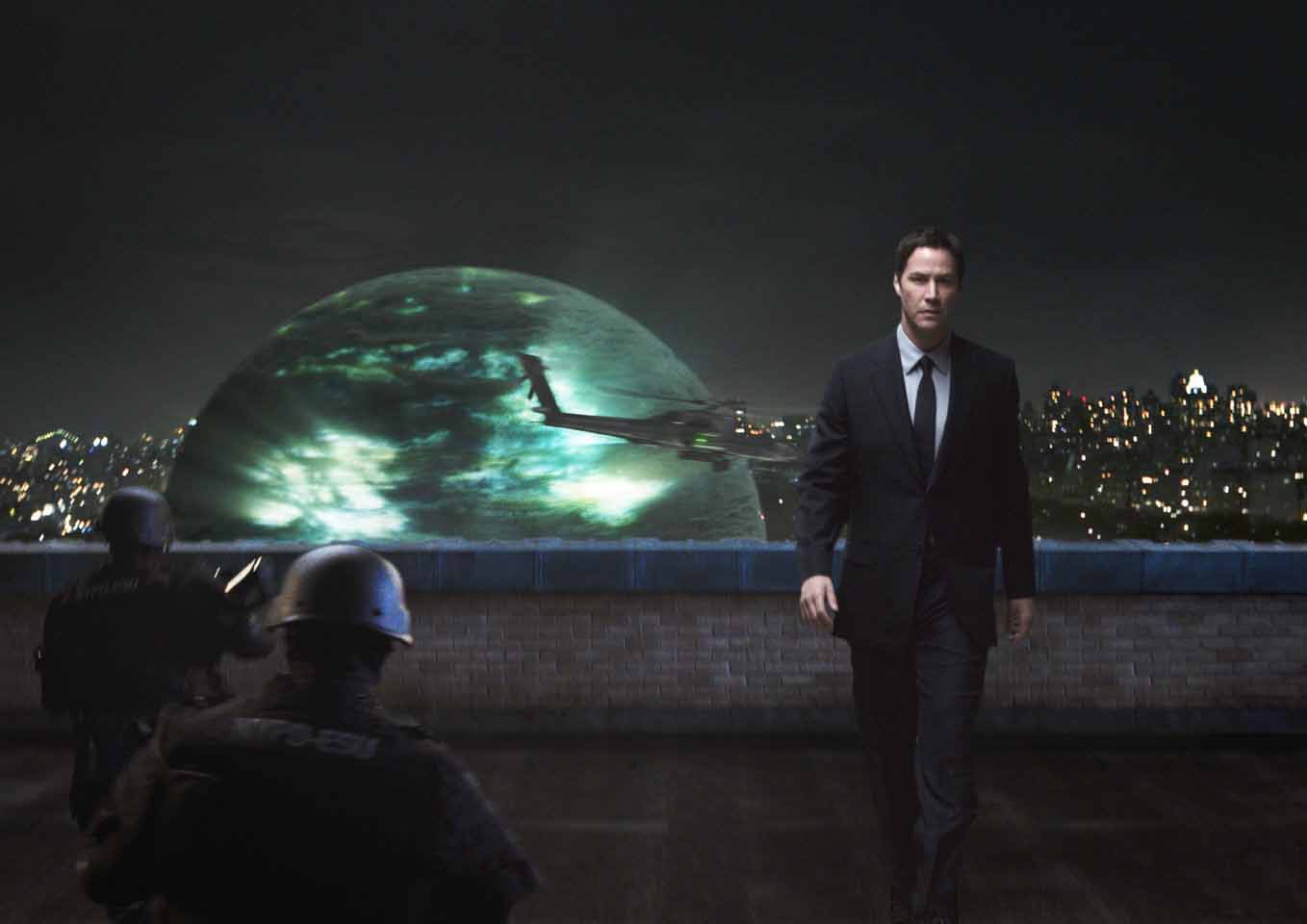
Like its predecessor from the Fifties, the film revolves around an extraterrestrial visitor, with a giant robot in tow, who is met with hostility and fear on our planet. Darker and grittier than the original, there is good cause to treat the stranger (an aptly emotionless (as always) Keanu Reeves) with aggressive caution, as he's not here delivering an ultimatum telling us to change our ways for the better, but has instead come to eradicate the human infestation from the face of the galaxy in an attempt to save all other life forms spawned by Mother Earth. Life, he says, is rare in the vast limitless of space and therefore a precious thing, but life endangering all other life must be swiftly dealt with: the ends clearly justify the means. Arriving in a sphere (as opposed to a saucer, like before) the alien called Klaatu has come not as a Christ figure like in the original film, but as an Anti-Christ, hellbent on unleashing his own weapon of mass destruction upon our not so innocent world. Said weapon proves to be his artificial companion Gort, who appears to be a metallic giant in humanoid shape, but actually consists of huge numbers of nanites capable of devouring everything they come into contact with. Thankfully humanity has its on secret weapons to combat Klaatu's convictions, namely a smart and strong female scientist (played by Jennifer Connelly) who manages to dissuade the alien from his destructive plans, backed up by the effective reasoning of an aged professor (John Cleese) who morally convinces him humanity must be allowed to make its own choices in the natural process of its evolution. Even though Klaatu's frozen heart is thawed and his role is turned around a full 180 degrees so Keanu can once again play the Messiah (e.g., The Matrix trilogy and Constantine), his original point is amply illustrated as the military tampers with his devices in a botched attempt to destroy them, only unleashing their horrors as nanites swarm the land and the FX department is given the opportunity to go all-out so as to obscure the fact this version of The Day the Earth Stood Still hardly proves as emotionally compelling as its forebear did.


Aside from an update in themes and special effects, this remake offers little improvement over its predecessor. Religious overtones are obviously still to be found: aside from Klaatu's messianistic role, there is the notion of 'space arks' for example, small spheres evacuating all animal species off-world before being engulfed by a sea of nanites. The movie walks a fine line between being too obvious and too subtle, but the representation of religion is the least of its problems. This new The Day the Earth Stood Still has a hard time convincing the spectator that an alien intelligence can so easily be persuaded to alter its agenda, which from the start felt so ruthlessly unalterable thanks to Reeves' emotionless portrayal. What's worse, his turnaround is accomplished through interaction with the scientist and her kid, a terribly obnoxious and ungrateful little brat (Jaden Smith, ofcourse), the latter more often given the audience the impression Klaatu was right from the start and humanity really is a plague better wiped out for the universe's sake, than making it easy for us to accept the otherworldly being is starting to appreciate contact with mankind and suddenly considers humans worth saving after all. The talents of both Connelly and Cleese remain underused in favor of this irritating child character, while it's they who deliver the truly valid arguments as to why humanity is just not so black and white as Klaatu feared. Meanwhile, being a big winter release, the current The Day the Earth Stood Still all too eagerly uses the tools at its disposal thank to the wonders of digital technology by adding many a bombastic scene of computer generated imagery fighting soldiers, reducing the film to the level of the average type of big FX driven action flick, instead of ending up as a smart and sensible science fiction drama like the far superior 1951 incarnation. Nowhere does this film feature either the intellectual impact or the trend setting production design the original was blessed with. Instead, its eco-message is delivered in a bland and forgetful new groove, the impression the film leaves as tiny as the nanites it showcases.


A retooling of the original film where the phrase 'nuclear weapons' would simply have been substituted with 'global pollution' would probably have made for a more agreeable and certainly cheaper way to update that film for today's public, as the 2008 version of The Day the Earth Stood Still adequately illustrates that changing the message to fit the times while throwing huge sums of money at the project to give it that slick blockbuster feel coupled with ignoring the character aspects that ought to make us care doesn't make for a good film, let alone for an effective means to convince the audience of the value of the themes addressed.

And Happy Birthday, Sis!!

zondag 1 december 2013

Today's Mini-Review: The World's End


The World's End: ****/*****, or 8/10

The triumvirate of Wright, Pegg and Frost deliver their final aria (for now) with this conclusion of their 'Three Flavours Cornetto' trilogy, a threesome of films connected only by their own presence in front and behind the camera, the cameo appearance of the famous ice cream brand and the great fun and delightful British humor throughout. Whereas the previous installments (Shaun of the Dead (2004) and Hot Fuzz (2007)) addressed the horror and cop drama genres respectively, The World's End tackles science fiction, the creepy secretive alien invasion sort to be precise (think Invasion of the Body Snatchers, It Came from Outer Space and Day of the Triffids). Thankfully, it does so to the same hilarious effect their predecessors did. While he played a police sergeant in Hot Fuzz, a token of societal responsibility and virtue, Simon Pegg this time gets to play a character the complete opposite named Gary King, devoid of responsibility and virtue, who prefers to focus his life on drinking, doing drugs and other assorted hedonistic endeavors. Once the centre of a close group of childhood friends that largely revolved around him, he never left childhood, while his friends (Nick Frost, Martin 'Bilbo' Freeman, Paddy Considine and Eddie Marsan) grew up and embarked on an ordinary, mundane lifestyle with all the perks (family life, decent jobs) and downsides (boredom) that came with the territory. When Gary reemerges in their life after an absence of a decade, they soon find themselves drawn to revisiting their high school town, against all of their better judgment, in a second attempt to complete the epic pub crawl once left unfinished, all the way from the First Post to the World's End. Twelve pubs, sixty pints total (at the least!), five former comrades who have grown apart mostly because of Gary's never ending irresponsibility, one long night in store for all of them... Especially when they discover – in an epic, instant classic gents' bathroom brawl – their old town has become the center of an alien invasion that has slowly but surely replaced the village denizens with robots. Can these “five musketeers” halt this impending Apocalypse, armed only with beer, mutual dislike and an old car with the silly moniker 'the Beast'?

More importantly, can Wright and co. deliver another comedy that is on an equal level with their duo of previous 'blood and ice cream' movies? The answer is an undeniable 'yes, they can'! The World's End is at least as witty, fast paced, catchy and thoroughly funny a film as its forebears, but also appropriately borders on melancholy as its creators make us realize they've grown up as actors/directors themselves, and this film in many ways is an end to their cinematically cohesive world they have caused us to come to love. Though there's bound to be more joined projects on their part somewhere in the future, in terms of subversive, all-English comedy poking fun at specific film genres, this is a definite conclusion and it feels as such throughout. It doesn't stop them, or us, from enjoying themselves as they continue to do what they did best so far once more, as The World's End is loaded with extremely snappy gags, great one-liners and excellent comedic timing from all involved. Wright again concretely illustrates the fact he has a cinematic style all his own, which is marked by fast dialogue, dynamic editing and visual and thematic parallelism, which underscores The World's End status as a part of a trilogy tonally if not narratively. And despite all the hilarity, there's room for a moral message that never gets overly preachy or in-your-face: you can walk a path between growing up and staying young without losing your identity to society's norms, if you stay loyal to your friends and family. But if you opt for downright immaturity, you might just find the world exploding in your face. In the case of The World's End, the latter is all the more enjoyable as the Cornetto trilogy comes to its grand close.


woensdag 18 september 2013

Today's Article: Destination God, Part 5

Hoofdstuk 5: Apocalyptiek: atoombommen en het Einde der Tijden

Zoals opgemerkt in Hoofdstuk 1 was angst een bepalend kenmerk van de Amerikaanse samenleving in de vijftiger jaren. Angst voor het communisme was alom tegenwoordig, vooral toen de situatie in Korea tot een werkelijke oorlog escaleerde. Maar sterker nog was de angst voor de bom. Dit was een geheel nieuw soort angst, een collectieve vrees voor een plotseling einde aan alles dat men kende. De bom kon zonder waarschuwing inslaan, waar dan ook in Amerika, en in korte tijd een groot gebied verwoesten. Sterker nog, in een atoomoorlog zouden kernwapens in een ommezien de menselijke beschaving van de aardbodem kunnen vegen, of zelfs al het leven op Aarde uit kunnen roeien. Hoe grootschalig een dergelijke vernietiging zou kunnen zijn wist de gemiddelde Amerikaan niet, maar dat het een reëel gevaar betrof was zeker. Ellwood verwoordt de angsten in dit tijdperk als volgt:

Many now living still remember that in those days, as children or young people, they did not expect to live to full adulthood. They would die in a nuclear holocaust, or be sent to some far-off battlefield where the cold war had become hot, like Korea, and die there.1


Vergelijkbaar stelt Brosnan:

Prior to Hiroshima and Nagasaki talk of splitting the atom was, to the man in the street, just another esoteric subject for egghead scientists to indulge in, but after the war the general public quickly realized that atomic power could destroy not only cities but the whole world. Almost overnight the assumed permanency of life on earth had vanished, and people were forced to live with the traumatic awareness that total, worldwide obliteration was a strong possibility in the near future.2

Uiteraard haakte Hollywood in op dit thema van het Einde der Tijden, of in ieder geval het einde van de beschaving zoals Amerika dat kende. Hoewel het in sciencefictionkringen niet een geheel nieuw thema betrof3, was het grotendeels onontgonnen terrein in de filmindustrie. Desondanks, binnen enkele jaren ontstond er een diversiteit aan representaties van dergelijke Apocalyptiek, divers zowel in haar representatie per subgenre als binnen de subgenres zelf. In bijna alle gevallen van apocalyptische sciencefictionfilms speelde religie een rol, variërend van slechts sporadisch aanwezig tot nadrukkelijk in beeld. Eens te meer wordt bovendien de nadruk gelegd op de definitie van “vooruitgang”, technologische ontwikkeling die de mensheid veel goeds beloofd maar ook grote nadelen met zich meebrengt. 
 
Het sciencefictiongenre in de jaren vijftig toont verschillende maten van verwoesting, van ‘grootschalig’ tot ‘totaal’. In de meeste gevallen is wetenschap, direct of indirect, de boosdoener. Het geval van grootschalige verwoesting is terug te vinden in bijna het gehele ‘terrestrial creature’ subgenre en in de meer agressieve variatie op het ‘alien invasion’ subgenre dat de aliens als veroveraars toont. Vooral in het ‘terrestrial creature’ subgenre is de connectie met de atoombom expliciet: in het merendeel van de films uit dit subgenre worden de wezens ofwel gecreëerd door de straling veroorzaakt door atoomproeven (It Came from Beneath the Sea, Them!), ofwel gewekt door atoomproeven (The Beast from 20,000 Fathoms, The Giant Behemoth, The Deadly Mantis). Dit subgenre is het duidelijkst in haar opvattingen met betrekking tot de atoombom: de bom brengt grootschalige verwoesting met zich mee die hele steden in de as legt. Minder concreet is zij in haar oordeel over de wetenschap die de bom heeft geschapen; wetenschap wordt in dit subgenre dan ook zelden eenzijdig gerepresenteerd. De films uit het subgenre maken doorgaans het statement dat wetenschap weliswaar zulke problemen voortbrengt, maar ze ook oplost, waardoor een tweezijdig beeld van wetenschap ontstaat. De wetenschap neemt verantwoordelijkheid voor het door haar aangerichte kwaad, en presenteert een plan of uitvinding om het kwaad weer uit te roeien. Het gaat niet om de wetenschap zelf, maar om diegenen die haar gebruiken, lijkt dit subgenre te beweren. 
 
Deze boodschap wordt verder benadrukt in het ‘alien invasion’ subgenre, waarin we voorbeelden zien van zowel het positieve gebruik als het misbruik van wetenschap. Aan de ene kant zijn er enkele wezens die aantonen dat wetenschap ten goede gebruikt kan worden en zelfs een Utopia kan voortbrengen (The Day the Earth Stood Still, Red Planet Mars). Aan de andere kant zijn er de buitenaardsen die hun wetenschap ten kwade gebruiken en de mensheid met geweld willen onderwerpen, wat opnieuw gepaard gaat met grootschalige verwoesting (The War of the Worlds, Earth vs the Flying Saucers). Ook dit subgenre levert een tweezijdig beeld van wetenschap, waarin zowel een beeld getoond wordt van de voordelen als de nadelen van verregaande technologische ontwikkeling (ofwel een vreedzaam Utopia, of een versmelting van biologie met technologie dat leidt tot ontmenselijking).

Naast de ‘grootschalige verwoesting’ is er de ‘totale verwoesting’ in het genre, die slechts in een paar films aangetroffen wordt. De films die hier als voorbeeld kunnen dienen zijn Day the World Ended (USA: Roger Corman, 1956), Five (USA: Arch Oboler, 1951), Target Earth, en On the Beach (USA: Stanley Kramer, 1959). In deze films wordt de mogelijke wereld na de ramp – de ‘Atomic Holocaust’, de ‘collective incineration and extinction which could come at any time, virtually without warning’4 waar men voor vreesde in de vijftiger jaren – behandeld. Een allesverwoestende nucleaire oorlog of soortgelijke ramp heeft een handjevol overlevenden achtergelaten, die met elkaar moeten leren leven. (Er zou hier sprake van een potentieel vijfde subgenre in het sciencefictiongenre kunnen zijn, ware het niet dat de twee films die zich niet onder één van de andere subgenres laten plaatsen, On the Beach en Five, een zeer laag gehalte sciencefiction omvatten, en zich beperken tot het afschilderen van de diverse gedaantes van het menselijk wezen en de psychologie van het omgaan met het einde. Hoewel zij een duidelijke afspiegeling van de angst voor de bom vormen, worden zij hier niet behandeld, door hun twijfelachtige status als sciencefiction.5)


Hoe verhoudt religie zich tot de verschillende visies op wetenschap in films die Apocalyptische vormen aannemen? Zoals eerder vermeldt in paragraaf 4.2 (p. 44) kan gesproken worden van de thema’s ‘wetenschap als religie’ en ‘wetenschap versus religie’. Opmerkelijk is de prominentie van ‘wetenschap als religie’ in deze Apocalyptische sciencefictionfilms. Hoewel wetenschap doorgaans de verwoesting heeft gecreëerd (via de atoombom), werpt zij zich in veel gevallen op als redder van de mensheid. In Day the World Ended heeft een wetenschapper, die de bui al zag hangen, zich verschanst in een fall-out vrije bunker waarin hij een paar overlevenden opvangt. In Target Earth, zoals in meer ‘alien invasion’ films, rekent de menselijke wetenschap uiteindelijk af met haar boosaardige buitenaardse tegenhanger. In zulke films redt “gewone” religie de mensheid niet (in tegenstelling tot in een film als The War of the Worlds), maar profileert de wetenschap zich als datgene wat de mensheid de Apocalyps zal doen overleven, waarbij zij zich elementen van religie eigen maakt. Zij beschermt de wereld (Amerika) tegen kwaadaardige buitenaardse “religies” (de verwoestende buitenaardse wetenschap als on-Amerikaanse ideologieën). De wetenschappers worden priesters, met eigen “rituelen” en een eigen taal die voor niet ingewijden onbegrijpelijk is. Wetenschap lijkt de functie van de kerk over te nemen en biedt een betere, comfortabele wereld voor iedereen die haar als autoriteit accepteert. Door middel van technologische vooruitgang levert zij het betere leven dat zij de mensheid belooft. Ook Vieth maakt deze vergelijking tussen wetenschap en religie:

The power of science lies in its ability to both provide answers and to control the fundamental (that is, atomic) forces of nature. Its practitioners are privy to that understanding and have power over those forces. The metaphor is similar to certain religious constructions, with science as revealed truth and scientists as priests. 6

De connectie tussen wetenschap en religie, hoewel thematisch frequent aanwezig, wordt slechts een enkele keer expliciet aangekaart in de films zelf. Zo beweert een wetenschapper in Invaders from Mars dat ‘Doctors are sort of like ministers, you can tell them anything’, wanneer een jongetje aan komt lopen met het verhaal dat zijn ouders door aliens zijn overgenomen. Evenals religie presenteert wetenschap een wereldbeeld dat een waarheid voor ogen staat en met deze waarheid de mens van dienst wil zijn. Echter, wetenschap baseert zich op de directe realiteit, niet op de vermeende gebeurtenissen van duizenden jaren eerder. Wetenschap concentreert zich op het hier en nu, net zoals haar resultaten (de verregaande technologische ontwikkeling in de jaren vijftig) afgeleverd worden in het hier en nu. De wetenschap is daardoor niet zozeer spiritueel, maar substantieel. Desondanks tracht zij eenzelfde geestelijke troost en vrede te bewerkstelligen als “echte” religies, door zich in te zetten voor een betere wereld voor de gehele mensheid. Ook critici in de jaren vijftig zagen een parallel tussen wetenschap en religie; vooral schrijvers in Godsdienststudies vonden een dergelijke vergelijking beangstigend. Ellwood haalt als voorbeeld Robert Fitch aan, die waarschuwt voor

[…] a “new priesthood of science”, with scientists as “a new sort of religious order”, set apart from the rabble by “a discipline, a language”, and an attitude” of contemptus mundi – disdain for the world of ordinary people – though their language was not Latin but the arcane hieroglyphics of mathematics. Their temptations, like that of any priestly class, were spiritual pride, and the desire to assume temporal authority, being ethical purists and devoutly believing that such power would be for the good of all.7

Zulke kritiek op wetenschap was niet geheel ongegrond. Evenals religie kan ook zij vervormd of misbruikt worden en ingezet worden voor doeleinden die haaks staan op haar bedoelingen. De impact van haar misbruik is echter groter dan religieus misbruik, zeker in het tijdperk van de atoombom. Bovendien, als wetenschap de mensheid al redt, dan nog is de wereld onherroepelijk veranderd, zo ingrijpend is haar invloed.8 In het sciencefictiongenre wordt dit laatste punt zowel bevestigd als ontkracht: verandering door de invloed van wetenschap kan catastrofaal zijn, maar ook positief of zelfs noodzakelijk. Het is hier gepast de blik opnieuw op het ‘man into space’ subgenre te richten.


De grootschalige verandering die wetenschappelijke vooruitgang teweeg kan brengen wordt zowel op positieve als negatieve wijze geïllustreerd in het ‘man into space’ subgenre. De positieve manieren, de mogelijkheden van ontdekking en verovering van de ruimte en de welvaart die dit de mensheid kan opleveren, zagen we al in Hoofdstuk 2. De negatieve kanten, naast het mogelijke conflict met religie waar het gaat om het domein van God, nemen ook in dit subgenre Apocalyptische vormen aan. In plaats van een Aardse Apocalyps maakt men hier echter gebruik van, zoals ik het noem, de ‘Alien Apocalyps’: de weergave van stervende of verwoeste buitenaardse beschavingen veroorzaakt door wat wetenschappelijke vooruitgang had moeten zijn. Zo tonen de films de wonderen van de wetenschap, het reizen in de ruimte, maar waarschuwen zij tegelijk ook voor het achterliggende gevaar dat misbruik van wetenschap kan vormen. Voorbeelden van de ‘Alien Apocalyps’ zijn te vinden in Forbidden Planet, waarin een technologisch geavanceerde beschaving een staat van Utopia had bereikt, om vervolgens ten onder te gaan aan haar eigen sluimerende primitieve driften: wetenschap kan een perfecte wereld opleveren, maar dit is zinloos zolang deze wereld bevolkt wordt door wezens die zelf imperfect zijn. This Island Earth toont een beschaving die in een staat van oorlog is met een naburige planeet, waardoor wetenschap slechts wordt aangewend voor het vervaardigen van wapens en de planeet zijn ondergang tegemoet gaat. Andere films houden het dichter bij de realiteit van de jaren vijftig en plaatsen de atoombom in deze context. Zowel Flight to Mars als Rocketship X-M tonen een post-apocalyptische wereld geschapen door een atoomoorlog. In het eerste geval heeft de beschaving zich gedeeltelijk gehandhaafd maar wordt zij nu geconfronteerd met tekort aan grondstoffen die zij vervolgens op de Aarde willen buitmaken (het exacte tegendeel van de situatie in Conquest of Space, waarin de mensheid zelf de ruimte intrekt op zoek naar grondstoffen). In het tweede geval zijn de overlevenden gedegenereerd tot blinde mutanten die in een staat van primitieve barbarij leven. De boodschap is in alle gevallen duidelijk: kijk wat de wetenschap deze beschavingen heeft gebracht en houd in het achterhoofd dat zij zowel voordelen als nadelen kan brengen. Het is aan de mens zelf ervoor te waken dat wetenschap niet misbruikt wordt.

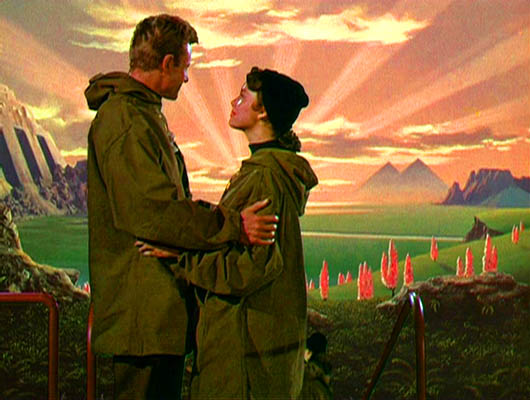
Naast de ‘Alien Apocalyps’ toont het ‘man into space’ subgenre in enkele gevallen ook een menselijke Apocalyps. Daarbij is wetenschap de grote redder van de mensheid in plaats van de boosdoener: wetenschap helpt de mensheid overleven, zowel in minder gehaaste omstandigheden (het opraken van aardse grondstoffen in Conquest of Space) als in situaties van direct gevaar. Ter illustratie, het meest concrete voorbeeld van de wetenschap die de mensheid van de Apocalyps redt en naar een betere wereld leidt treffen we aan in When Worlds Collide, waarin wetenschap sterk de vorm van een religie aanneemt. Deze film vormt een geval apart in het kader van ‘totale verwoesting’, aangezien zij ‘totaal’ zeer letterlijk neemt en zich niet beperkt tot de verwoesting van de menselijke beschaving, maar van de planeet zelf. Daarmee vormt zij het ultieme voorbeeld van de noodzaak voor de mens om de ruimte in te trekken, zoals besproken in paragraaf 2.1. In When Worlds Collide wordt de hele Aarde vernietigd in een botsing met de ster Bellus. Haar satelliet, de planeet Zyra, scheerde enkele dagen eerder daarvoor rakelings langs de Aarde, en een klein aantal mensen weet in een raket naar Zyra te vluchten om daar een nieuwe menselijke beschaving op te bouwen. De (Amerikaanse) wetenschap had de Apocalyps voorspeld: zij zag de planeet als eerste naderen en waarschuwde de mensheid, maar werd niet geloofd door wetenschappers uit andere landen. Dankzij het kapitalistische Amerikaanse systeem – het persoonlijke kapitaal van een rijke grootindustrieel die de boodschap wel serieus neemt – kon zij een reddingsplan in werking stellen: de constructie van een ruimteschip dat, als de Ark van Noach (de film zelf legt deze link ook expliciet), een handjevol mensen kan redden. Uiteindelijk slaagt het schip erin gelanceerd te worden vlak voor de Aarde ten onder gaat, en komt het aan op Zyra. Eenmaal geland op haar oppervlak blijkt deze planeet een paradijselijk oord, een hemels landschap met groene velden, bloeiende bomen, zonnestralen en witte wolkjes. Zo redt de wetenschap haar getrouwen (immers, alleen mensen die bijgedragen hebben aan de bouw van het schip mogen mee) van de totale ondergang. 


Geproduceerd door George Pal blijft de film uiteraard niet gespaard voor religieuze connotaties (in grotere hoeveelheden dan andere Apocalyptische films), evenals de jaren hierop zou gebeuren met The War of the Worlds en Conquest of Space. De film opent met een shot van de Bijbel, waarin te lezen is (terwijl hymnische muziek klinkt op de achtergrond):

And God looked upon the earth, and behold, it was corrupt; for all flesh had corrupted his way upon the earth. And God said unto Noah, the end of all flesh is come before me; for the earth is filled with violence through them: and, behold, I will destroy them with the earth…

Dit citaat impliceert dat deze Apocalyps een straf van God is. De verwoester, de planeet Bellus (wat een connotatie oplevert met het Latijnse woord voor 'oorlog' en als zodanig al een beeld van verwoesting suggereert) komt ook uit de “hemelen”, maar wordt in de film zelf verder niet aan God toegeschreven. In tegenstelling tot de andere variaties op het Einde der Tijden in het sciencefictiongenre uit deze periode is hier sprake van een natuurlijke verwoester, niet van een technologische verwoester die door de wetenschap is voortgebracht. Als God de mensheid inderdaad straft in deze film, doet Hij dat niet voor haar wetenschappelijke transgressies. Hij stelt de “sekte van de wetenschap” immers toe om het “paradijs” te bereiken en daar een nieuwe menselijke samenleving op te bouwen. ‘[…] we are hoping that with God’s help and guidance, a few may do exactly that’, stelt de wetenschapper die de Verenigde Naties toespreekt, en hij krijgt gelijk. Als het Einde der Tijden later in de film daadwerkelijk nadert en Zyra dichterbij komt, wat gepaard gaat met natuurrampen en grootschalige verwoesting, komt ook de rest van de mensheid tot inkeer.
Never before in the history of the world has humanity felt so close to God. As Zyra inexorably rushes toward us, perhaps to destroy the Earth, men and women of all races and creeds pause to think, to pray and to atone’, wordt over de radio vermeldt. Maar het is te laat voor de rest van de mensheid. De wetenschap heeft de noodzaak om maatregelen te treffen verkondigd, maar dat gebeurde niet. Alleen dat deel van de mensheid dat geloof had in de wetenschap (en dan alleen de ware wetenschap, want ook de wetenschappers waren verdeeld) zal gered worden.

Wetenschap en religie gaan hier hand in hand: niet voor niets zien we halverwege de film een close-up van een boekenkast waarin de Bijbel naast wetenschappelijke boeken (onder andere Anatomy of the Human Body, Practical Mathematics en Standard Agriculture) staat, maar wel twee keer zo dik is als de andere boeken. Ook de Bijbelse opening van de film wekt de indruk dat religie de overhand heeft: hoewel het niet als zodanig gesteld wordt in de film, gunt God het de wetenschappers (Noach) een Ark te bouwen, de ondergang te overleven en het Paradijs te betreden.9 God staat welwillend tegenover de wetenschap, maar Zijn macht overheerst nog steeds de macht van de wetenschap.


1 Ellwood 1997: p. 171
2 Brosnan 1978: p. 72
3 In geschreven sciencefiction werd het thema van grootschalige verwoesting dor technologische ontwikkeling al decennia eerder aangekaart, onder andere in het werk van H.G. Wells (Brosnan 1978: p. 72). In sciencefictionfilms was het tot dan toe slechts een enkele keer behandeld, onder andere in Things to Come (USA: William Cameron Menzies, 1936), een film die gebaseerd is op een boek van diezelfde Wells.
4 Citaat van Susan Sontag in: Sobchack 1980: p. 47
5Tegenover beide films valt Day the World Ended onder het ‘altered human’ subgenre, en is Target Earth een ‘alien invasion’ film. Het verhaal van beide films komt overeen met het uitgangspunt van deze Apocalyptische films zoals hier omschreven: een groep mensen met uiteenlopende achtergronden wordt door een allesomvattende ramp bij elkaar gebracht en moet leren met elkaar te leven, terwijl ze respectievelijk mutanten/buitenaardse robots van het lijf moeten zien te houden.
6 Vieth 2001: p. 180
7 Ellwood 1997: p. 188
8 Jancovich 1996: p. 27
9 Anton Kozlovich bespreekt When Worlds Collide kort in zijn tekst over Christusfiguren in film. Hij beschrijft een beschouwing van Glenn Erickson over Zyra als een ‘subtextual Jesus’. Persoonlijk vind ik dit te ver gaan, des te meer omdat Erickson’s argument niet onderbouwd wordt en Kozlovich het laat bij deze aanduiding die hijzelf ook afschildert als pretentieus. Daarom heb ik Zyra, de planeet als Christusfiguur, niet behandeld in paragraaf 4.1. Kozlovich, Anton Karl. The Structural Characteristics of the Cinematic Christ-figure.The Journal of Religion and Film, vol. 8 (september 2004): p. 9

zaterdag 11 mei 2013

Today's News: S.H.I.E.L.D. show is a go / La Cinquieme Saison mini-review


This news has been on MovieScene mere minutes and it's already available here:

http://www.moviescene.nl/p/147013/marvels_s.h.i.e.l.d._officieel_een_serie

Personally I can only say: bring it! Yes, the overall story synopsis sounds like a bland retreat of shows like The X-Files or The 4400, but hey, I liked those shows and I like Marvel so I still have no reason not to be thoroughly excited. Plus, I've been a great admirer of the way Marvel is constructing its larger cinematic universe in theaters and I'm quite intrigued by the question of how they will continue keeping this up on the small screen. After all, it's one thing to have a series of movies that are referring to one another culminating in one big giant super movie (The Avengers, remember?), but it's quite another to incorporate a TV series into this whole. TV shows just work via different logistics, different methods of production, different ways to keep their principal actors in check, etc. It's laudable ABC dares to take the risk, but also rather understandable considering the box office results from both The Avengers last year and currently Iron Man 3 (though the latter didn't deserve it as much as the former unfortunately). Be it in the TV business or in Hollywood, you can't keep a good exec away from the promise of being showered in precious dough, eh? And what's up with that likeable Agent Coulson playing the lead of this show, despite having died in The Avengers? Seems there's already one big mystery to solve to begin with.

With Marvel, Joss Whedon and TV (the last two categories alone would pique my interest already, really) all mixed together, I can safely say that however Agents of S.H.I.E.L.D. will turn out, it will be interesting on multiple levels, regardless of its eventual quality or lack thereof. I for one think it might actually happen to be a good show, and I'll definitely seek it out to shield me from boredom!


By the way, it's been quite a while since I posted a review (mini or otherwise) on this blog of mine. Guess I should go and remedy this critical drought, and why not start now? So here's a little review to let you know I have not forgotten about posting other things than my pieces for MovieScene. I saw this fascinating little film at Provadja recently:


La Cinquième Saison

Rating: ****/*****, or 7/10

A poetic European look at Apocalyptic cinema, this film deals with a small rural community which is confronted with the sudden emergence of a new season. Nihilistic in nature, it falls between winter and spring and is basically a season of nothingness: there's no snow or rain, but nature stays dead as nothing grows, except for the desperation of the townspeople as their resources dwindle. Soon people go to ever increasing lengths just to stay alive or to explain this unusual break in seasonal patterns, to shocking results. Young girls prostitute themselves simply for food, while the town's outsider is branded a cause to all the town's dismays, targeted as a human sacrifice and burned alive. Though much more esoteric in tone than regular end-of-the-world dramas, the film proves all as haunting and unsettling as it successfully registers the dark side of man and his unwavering ability for cruelty when faced with inexplicable catastrophe and basic survival. Also explored is mankind's role in this world under the uncompromising rule of the environment (though it is never addressed whether mankind itself is at fault for the creation of this fifth season), which can still play hell with our sense of civilization and kindness when it comes down to creating unsustainable living conditions that make society crumble. The visual imagery the film resorts to is both gritty and raw as the material demands, but at times surprisingly off-beat and confusing. The Apocalypse has truly gone arthouse, as La Cinquième Saison proves.


donderdag 22 november 2012

Today's Film: Dawn of the Dead (2004)


Dawn of the Dead


Rating: ****/*****, or 8/10


Few remakes ever surpass their predecessors, but this one gets remarkably close, if it's not a definite improvement over the already great original George A. Romero zombie classic from 1978. Zack Snyder, who would go on to direct 300, Watchmen and unfortunately Sucker Punch, first proved his talent for adapting – in this case re-adapting – other people's work with this gripping, gory and hugely entertaining horror flick. A zombie plague engulfs America after which a band of survivors barricades itself in a shopping mall for safety. Tensions run high in the group as its members continue to find themselves attacked by the living dead and eventually a choice must be made: do these people decide to stay in their safe haven where they got everything they need except their freedom, or do they take their chances storming out in an attempt to find out whether there's other people still alive out there in some remote and secure location, with the hopes of joining them. 

The story remains largely the same (except for the absence of a violent, marauding biker gang invading the mall), but the hungry undead are more lethal than ever, this time also adding speed to help satiate their lust for devouring human flesh, making them much easier to take seriously than Romero's slow, lumbering walking dead, thus only enhancing the suspense (and the body count). Fantastic make-up efects galore in this picture, providing a wide array of eerie zombies and disturbing scenes of dismemberment and bloodshed. Still, Snyder doesn't let the gore rule the film, but prefers to locate the horror in the story itself. Of particularly great shock effect is the film's fabulous opening, which starts off very restrained and seemingly normal with a nurse just going home after a hard day's work, going to bed at night and waking up the next morning finding her neighbourhood burning in utter chaos and despair as it has suddenly fallen prey to a zombie apocalypse. Though the movie treats us to many a memorable moment of naked, merciless terror later on, this gruesome opening stands out as its most horrifying scene. The TV show The Walking Dead – though itself based on a graphic novel – would later feature a very similar world of undead post-apocalyptics, clearly inspired by this remake and building on its premise of a ragtag group of survivors trapped in a hellish world ruled by hungry corpses.


Starring: Sarah Polley, Ving Rhames, Jake Weber


Directed by Zack Snyder


USA: Strike Entertainment, 2004


zondag 2 september 2012

Laughing and crying at the face of doom

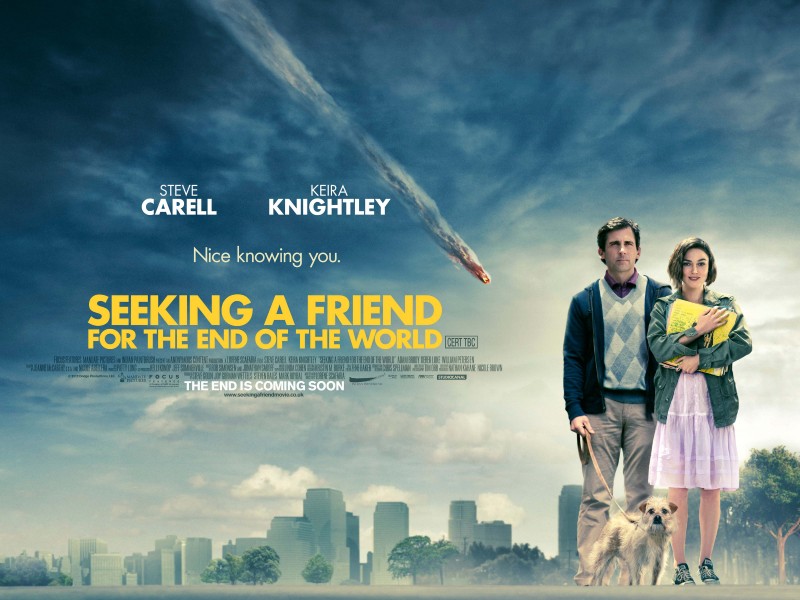
Seeking a Friend for the End of the World: ***/*****, or 6/10


Hollywood has been continuously reminding us of the upcoming end of the world slated for December 21st 2012 – be sure to note it in your agenda if you haven't yet, so you don't plan early Christmas or New Year activities on the same date only to end up seeing your festivity appointments ruined – in the recent years, delivering a stream of films either revolving around the day of reckoning itself or the harsh and cruel life afterwards (examples include but are not limited to 2012 (2009), The Book of Eli (2010) and The Road (2009), some of them good, others not so much). Though such films all incorporated their own take on global annihilation, the one thing they had in common was the fact the world's demise is not a laughing matter, echoing the billions of lives lost and/or the endless suffering of those left alive. Even in multimillion dollar blockbuster popcorn movies that feature some good-spirited levity to keep the piece from becoming to much to bear for the spectator, the catastrophe is taken seriously and is often treated as having a genuine basis in reality for keeping it from being too alienating for audiences, even though the implicated scientific foundations of the films are utter bollocks (again, 2012). Only months before the expected event itself, Seeking a Friend for the End of the World is added to the genre of Doomsday movies, reassuring us that the Apocalypse is such a grand, large scale and unavoidable thing it's okay to laugh about it instead of succumbing to depression. Unfortunately, the delightful tone of hilarity dominating the first hour of the film soon devolves into a melodramatic frenzy running the second, which once again makes it hard for viewers to determine just what to do when the end of times does arrive.


In Seeking a Friend for the End of the World, the Apocalypse is caused by that good old Number One suspect of worldwide destruction, the big bad asteroid about to smash into the face of the planet. Hardly a new thing for the genre, the film playfully reminds us of similar occurrences in past movies, i.e. Michael Bay's noisy and overly hyperactive Armageddon (1998), by having a radio announcer state in the very opening scene that an attempt to send astronauts on a space shuttle to the humongous rock, nicknamed Matilda, in order to blow it up has failed: only three weeks are now left for all of us, in which time we will get regular updates on Matilda's approach accompanied by all our classic rock favorites. And so the tone of the plot is set, in two different ways. First, it's clear from the get-go this is not a blockbuster movie all about showcasing spectacular effects in ever more grandiose action sequences: in fact Matilda herself is never even shown anywhere but on the movie's poster. This movie simply isn't about the Doomsday event itself, but about how life is spent in the time preceding it. Second, it's clear there's no getting out of this one, so humanity might as well enjoy all life has to offer until then, a simple truth most people all too eagerly accept. But not insurance salesman Dodge (Steve Carell), who finds little has changed for him despite the fact his wife has just ran out of his life. While his friends are all too happy engaging in carefree sexual relations, illegal experimentation with vast arrays of mind expanding substances and other activities generally considered to be against the law, the only thing Dodge needs to do is convince his Hispanic cleaning lady she doesn't need to come in next week if she doesn't want to.

Warning! Spoilers! Though admittedly a story about a man who keeps on living his dreary life while all around him is quickly degenerating into full blown anarchy is funny in its own right, the title of this film makes it blatantly clear Dodge isn't going to face the end alone much longer. Enter his neighbour Penny (Keira Knightley), a likeable young woman who in many ways is his polar opposite, being much more emotional and impulsive, but she too has just found her relationship shattered and thus the two of them make for decent soulmates about to spend their final weeks alone together as they share their personal dreams and make a deal to help each other realize them. For Dodge, it's a reunion with his first sweetheart Olivia, who sent him a letter, which much to his dismay had been stuck at Penny's mail box for months due to being wrongly delivered, in which she claims that their break-up was a mistake since he was the love of her life. For Penny, it's the promise of finding a plane (since air traffic has been shut down entirely) to take her back home to England – you didn't think someone with Keira's heavy accent was passing for an American here, did you? – so she can reunite with her family for their final days. Soon confronted with gangs of plunderers sweeping through the city and threatening their safety, the pair embarks on a road trip to search for solutions to both their challenges, taking in tow a dog someone tied to Dodge's foot with a note simply saying 'sorry', which therefore becomes the canine's new name. A man, a woman and a dog, soon sure to be deceased: it sounds like a good recipe for a road movie containing ample amounts of hilarity, but unfortunately from here on out the movie only goes downhill as much as the time left to them to succeed in helping each other get what they want.


Their trip starts off promising though, involving scenes that manage to keep the surprisingly feel-good Apocalyptic humour despite Dodge and Penny's serious intentions. For example, a sequence that sees them hitching a ride with a man in a pick-up truck who acts increasingly suspicious as if he means to kill them – who would care after all? – manages to turn audience's expectations on their head to successfully hilarious effect when he gets shot through the head instead, revealing he had hired a hitman to kill him and assumed the two hitchhikers were about to pull off that particular job. Also good for a few laughs is a scene based at Friendsy's, a restaurant where the excessively cheerful and positive waiters aim to be the customers' friend, where Penny's simple remark that it's Dodge's birthday ends up starting an orgy. For a while these and similar scenes suffice to keep the audience enchanted and engaged, but it soon becomes clear the direction the story maneuvers in exchanges comedy for drama, with a blatantly predictable and unavoidable romance between Penny and Dodge as its centerpiece: however, it seemingly takes forever to get both characters to come to the same conclusions, much to the viewers' chagrin.

Such shortcomings in the plot can hardly be attributed to the leading actors carrying the piece. For Carell, it's yet another opportunity to portray an agreeable but lethargic character, an ordinary man thrown into an extraordinary situation and unsure as how to proceed. We feel sorry for him as it becomes painfully clear there's just nobody to share the end with him but us, something he doesn't even seem to care much about until Penny walks into his life with the letter he always hoped Olivia had sent him, giving him a final mission at last. Knightley is equally suited to the part of Penny, a nice, caring girl with an unfortunate talent for chaos due to being a hypersomniac, but her lust for life and willingness to see Dodge's quest through to the end makes up for this flaw. The vibrant (when awake) Knightley plays off quite well against Carell's more ataraxic Dodge and their shared road trip succeeds into eliciting ample amounts of warm humorous moments until it becomes simply too obvious the two of them are made for each other, a realization that just comes all too soon for the audience to keep it compelled in the film's second half, a flaw in the story we can only attribute to first time director Lorene's Scafaria's inexperience as a writer (as this is her second movie, the first being Nick and Norah's Infinite Playlist (2008)).


The movie's plot is based around the simple question of what people would do if they knew their time had almost ran out, resulting in the obvious answer – whatever they like, preferably if it was formerly frowned upon – dished up in a not too gratuitous fashion, refraining from too much sex and violence despite the movie being rated R. It makes for a fun movie for a while, until the realization that Dodge and Penny's own ideas about their end won't come to fruition the way they initially insisted upon, though together they can find a good way to die, something the audience is aware off a full hour before they are, which leads to a frustratingly drawn out string of scenes in which both characters are dancing around the obvious conclusion, still clinging to their final wishes and the need to make them come true despite getting ever more impossible to achieve. In the meantime, the atmosphere of general hilarity that dominated the film at first has been traded in for unabashed melodrama, as the characters are continuously confronted with their growing affection for each other and their mutual refusal of such feelings in favor of helping the other reaching their obviously already lost causes: even after the pair has engaged in coitus, evaded dangerous situations involving looting and murder and has spend the seemingly happiest time of both their lives the truth continues to elude them, and the audience can only sit back and watch the inevitable being postponed, wondering what happened to all the jokes that got the movie off on such a good start.

As a whole, Seeking a Friend for the End of the World means to be both funny and serious, an inner conflict between two opposites that clashes as hard as a giant asteroid would with the Earth. The lighthearted comedic tone of the first half just doesn't reconcile with the more serious but overly melodramatic quality of the latter half of the film, leaving the audience confused just as to what to make of this oddball movie. It's admirable to see a movie take a whole different approach to the by now largely worn out though still popular 'end of the world' routine, but the movie fails to fully cash in on its original and offbeat intentions. The first hour of the movie delivers some witty jokes and hilarious gags that fortunately save the overall movie from full failure and make it worth a watch at least once, but in hindsight it would have been preferable if director Scafaria had stuck to this side of the story completely despite her laudable desire to touch upon more serious themes as well. Unfortunately mere comedy was not enough for her, resulting in a haphazard plot that means to put no less than two genre spins on a concept usually reserved for blockbusters, comedy on the one hand, romantic drama on the other. The fact the movie can only do one of these justice is a damn shame, but it's not the end of the world.

And watch the trailer here:

maandag 7 mei 2012

Constantine


Rating: ***/*****, or 7/10


Fascinating mix of horror and action, based on the DC comic book series Hellblazer. Keanu Reeves stars as John Constantine, a cynical, rude chain smoking exorcist who has had the misfortune of having the ability to see the angels and demons secretly roaming our world all around us since childhood. Despite having dispatched scores of demons back to hell, he's on his last legs suffering from terminal lung cancer, soon doomed to a final one-way trip to the underworld. Reeves is reunited with Rachel Weisz (they starred opposite each other in Chain Reaction (1996), who plays a detective investigating the apparent suicide of her mentally ill Catholic twin sister. She soon finds out it was a part of a much larger plot that might involve the sudden End of Days as the son of Satan means to overthrow his father's reign and release hell on Earth. Despite the two of them not getting along, Constantine is forced to team up with her to stop this imminent Apocalypse, but finds himself being hindered by both angels and demons alike, all with their own agenda, including a androgynous deranged Gabriel (Tilda Swinton). Though visually impressive – especially the hellish version of Los Angeles – and containing a bunch of solid action and horror scenes, the weird potpourri of historical and Apocalyptic elements and Biblical role-reversals has to be taken with quite a grain of salt. Reeves also falls back into his already firmly established Messiah routine (and it wouldn't be the last time), while Weisz clearly proves who is the better actor of the two. A sequel has been in the works for years, but always fails to materialize beyond mere planning.


Starring: Keanu Reeves, Rachel Weisz, Tilda Swinton


Directed by Francis Lawrence


USA: Warner Bros., 2005


maandag 30 april 2012

Children of Men


Rating: ****/*****, or 8/10


Depressing and gritty picture regarding a dystopian world in the not too distant future where women have lost the ability to get pregnant and have babies, after which humanity has abandoned all hope to avoid its own demise and society has degenerated to the verge of total collapse. Clive Owen lends himself perfectly in the role of grim and cynical would-be hero Theo, who is asked by his activist ex-wife (Julianne Moore) to transport a young woman, miraculously pregnant, to a safe haven where she might help scientists to figure out a way to save mankind from its looming extinction. However, other factions, more nefarious in nature, mean to appropriate the girl for their own revolutionary purposes, so Theo has a hell of a job getting her out of England alive, guiding her across the leftovers of the once quaint English country side and through a nightmarish ghetto where human lives mean next to nothing. Taking elements from classic dystopian texts, including Orwell's 1984, as well as referencing to recent actuality (including Abu-Ghraib and Guantanamo Bay), Cuarón portrays a very depraved England in a society close to committing suicide, where the absence of children has seemingly made humanity lose the ability to care about anything, after which it really let itself go and totally messed up the world in a short space of time. Exact explanations as to why women can't get babies anymore and just how the girl got pregnant are notably left out altogether, since Cuarón is only interested in showing the results of such happenstances. However, the shock of seeing a dying mankind that has deteriorated into utter lawlessness and violence hits the viewer hard, underscored by interesting stylistic choices in editing and photography, including several extremely ambitious long takes, single shots (at least, they appear to be) that last for minutes and are filled with dozens of people and all-round chaos. A very intriguing but distressing film, the subject matter clearly not suitable for everybody.


Starring: Clive Owen, Julianne Moore, Michael Caine


Directed by Alfonso Cuarón


USA/UK: Universal Pictures, 2006

dinsdag 6 maart 2012

Armageddon


Rating: **/*****, or 4/10


Overly noisy and bombastic action spectacle featuring the imminent demise of our planet by a giant asteroid, so an unlikely group of oil drillers is send into space to drill a hole in this threat and plant a nuclear bomb into it so it can be blown up in space before it kills us all. Though the movie features a deliciously good cast and plenty of action, its at times completely asinine plot, cheesy jokes, focus on loud explosions and abundance of annoying moments of blatant American patriottism clearly betray this film to be yet another obnoxious Michael Bay product, dragging on for 150 minutes from one silly catastrophe to another until we simply cannot care about the characters' plight any more. Too bad, since the film starts out pretty good with a convincing and spectacular action scene of small meteorites hitting landmarks around the globe. After that, the movie only goes progressively downhill, despite the solid score and the many fine actors involved.


Starring: Bruce Willis, Ben Affleck, Steve Buscemi


Directed by Michael Bay


USA: Touchstone Pictures, 1998


woensdag 8 februari 2012

2012


***/*****, or 7/10

De ondergang van de wereld volgens Roland Emmerich


Voor het betere grootschalige sloopwerk gaat Hollywood al sinds jaar en dag bij Roland Emmerich te rade. Als geen ander weet hij een fictieve ramp, het liefst met kleine satirische terzijdes, enerverend in beeld te brengen. Zo liet hij buitenaardse wezens talloze wereldsteden in de as leggen in Independence Day, mocht een reuzenreptiel New York platgooien in Godzilla, en teisterde hij de hele planeet met tornado's, vloedgolven en extreme vrieskou in The Day After Tomorrow. Altijd met een knipoog, want het moet immers niet te serieus worden. Met een dergelijke staat van dienst is het niet verwonderlijk dat juist Emmerich de man is die het naderende einde van de wereld in het jaar 2012 op het grote scherm mag brengen. En zoals we van hem gewend zijn maakt hij van deze ramp een groot spektakel dat zijn weerga in de filmgeschiedenis niet kent.

Met als uitgangspunt de jaartelling van de Maya's, die 21 december 2012 als het einde van de huidige tijd rekent, waagt Emmerich zich aan de hype rond de komende apocalyps. Uiteraard doet hij een poging om het geheel wetenschappelijk te verantwoorden, met een vlugge uitleg over gemuteerde neutrino's en hun effect op de aardkorst. Volslagen onzinnig, maar het precieze hoe-en-waarom is echter niet ter zake doende, de film draait hoofdzakelijk om een aaneenschakeling van verbluffende actiescènes waar een groepje mensen zich doorheen moet worstelen. Zoals altijd al gold in het genre van de rampenfilm is de ramp zelf de grootste attractie; de rest is opvulling, en dat laat 2012 iets te duidelijk merken.

De film voert John Cusack (High Fidelity, 1408) op als hoofd kanonnenvoer voor het spektakel. Hij speelt Jackson Curtis, een gescheiden vader van twee kinderen. Niemand neemt hem serieus, inclusief zijn kroost. Tijdens een uitstapje naar Yellowstone Park, bedoeld om de relatie met de kinderen te verbeteren, komt Curtis in contact met een schijnbaar geflipte radiopresentator (Woody Harrelson in topvorm) die de naderende rampspoed verkondigt, waarop ook bij hem langzaam de lichten aangaan en hij zijn best doet zijn kinderen, vrouw (Amanda Peet) en zelfs haar nieuwe minnaar (een irritante Tom McCarthy) het vege lijf te redden. Voorts mag ook een reeks andere personages, waaronder een Russische miljardair en zijn kinderen, een jonge wetenschapper en diens collegae, een Tibetaanse familie, de Amerikaanse president en zijn dochter en twee oude muzikanten op een cruiseschip een poging doen het Einde der Tijden te overleven. Het gerucht doet de ronde dat de regering de ondergang zag aankomen en ruimteschepen heeft gebouwd in China om tenminste een deel van de mensheid te behouden. Vanzelfsprekend reizen Jackson en zijn familie af naar China om de catastrofe te overleven, waarbij obstakels als de verzakking van Los Angeles, de uitbarsting van Yellowstone en een verbrand Hawaii hun pad kruisen.


Emmerich toont zich wederom een meester in het doeltreffend in beeld brengen van de opeenvolgende rampen, die de kijker meerdere keren op het puntje van de stoel doen zitten en waarvoor een Oscar-nominatie voor Visuele Effecten niet zou misstaan. Maar evenals in zijn voorgaande films blijkt hij minder bekwaam als het erop aankomt zijn personages van diepgang te voorzien. Tussen de rampen in is 2012 rijkelijk gevuld met melodramatische scènes die bedoeld zijn om enige sympathie voor de overlevenden bij de toeschouwer op te wekken, maar daar voor het overgrote deel niet in slagen, gezien het hoge gehalte van fletse, met clichés beladen dialogen. Ook de relativerende humor, die in Independence Day dikwijls een glimlach opleverde, helpt niet om de effecten van de ramp op het mensdom voelbaar te maken: slechts Emmerich's kenmerkende satire treft doel, bijvoorbeeld wanneer hij het Witte Huis laat verpletteren door het vliegdekschip John F. Kennedy. Helaas is deze satire minder aanwezig dan in zijn voorgaande werk. Met een lengte van meer dan tweeënhalf uur werkt het overschot aan plotlijntjes rond de vele personages de film als geheel sowieso tegen en doet het de kijker weinig als er weer een paar duizend mensen ten onder gaan.

Tussen de overdaad aan rondrennende acteurs is er slechts een handjevol dat te midden van alle aardbevingen en tsunami's het hoofd boven water houdt, althans qua acteerprestaties. Naast de al eerder genoemde Woody Harrelson (Natural Born Killers) die voor de (enige geslaagde) komische noot mag zorgen overtuigt Danny Glover (Lethal Weapon, Be Kind Rewind) als respectabele president van de VS en het morele kompas van wetenschapper Chiwetel Ejiofor (Serenity, Inside Man) die het reddingsplan van de mensheid moet opstellen. De toeschouwer zal het echter een worst wezen of de rest van het ten toneel gevoerde acteursensemble het overleeft.

Uiteraard meent Emmerich zijn visie van de ondergang van de wereld niet zonder boodschap op te dienen voeren. In 2012 stelt hij de vraag wie het recht heeft te bepalen wie mag overleven en wie ten onder zal gaan. Na het leger als incompetente sukkels in Godzilla en de Amerikaanse overheid als slaafje van het milieuverwoestende kapitalisme in The Day After Tomorrow te hebben opgevoerd, is het nu de beurt aan de samenwerking tussen regeringen onderling, met hun diepgewortelde bureaucratie en hun macht over de massa, om van kritische kanttekeningen te worden voorzien. Uiteraard zijn zij al tijdig op de hoogte van de naderende rampspoed en bouwen zij moderne Arken om de menselijke beschaving te redden: voor de financiering van dit project verkopen zij toegangskaartjes aan miljardairs en eenieder die de waarheid verkondigt laten zij heimelijk vermoorden. De eer is aan Ejiofor om Emmerich's boodschap van verdraagzaamheid en gelijke kansen voor iedereen uit te dragen en ervoor te zorgen dat zoveel mogelijk overlevenden de Arken mogen betreden, want niemand heeft het alleenrecht te overleven. Dit bericht is weinig subtiel, maar deze boodschap en het plot over de vernietiging van de planeet maken de geplande remake van de klassieker When Worlds Collide, die dezelfde uitgangspunten hanteert, gelukkig overbodig.

2012 haakt effectief (en bovendien op tijd!) in op de hype rond het naderende doemjaartal, en vormt qua special effects en sensatie een hoogtepunt in Emmerich's oeuvre. Echter, de moraliserende boodschap en de overdaad aan melodrama tussen de actie in maken het geheel maar half geslaagd. De regisseur had er goed aan gedaan het een en ander te schrappen om een betere balans tussen spanning en drama te vinden. Desondanks is 2012 een redelijk popcorn-spektakel geworden. Emmerich heeft al aangegeven dat dit zijn laatste rampenfilm zal worden, aangezien er niets meer is overgebleven om te slopen. Gelukkig maar, want zijn visie op de ondergang van het heelal had ongetwijfeld een te uitputtende zit opgeleverd...