Posts tonen met het label Michael Fassbender. Alle posts tonen
woensdag 1 juni 2016
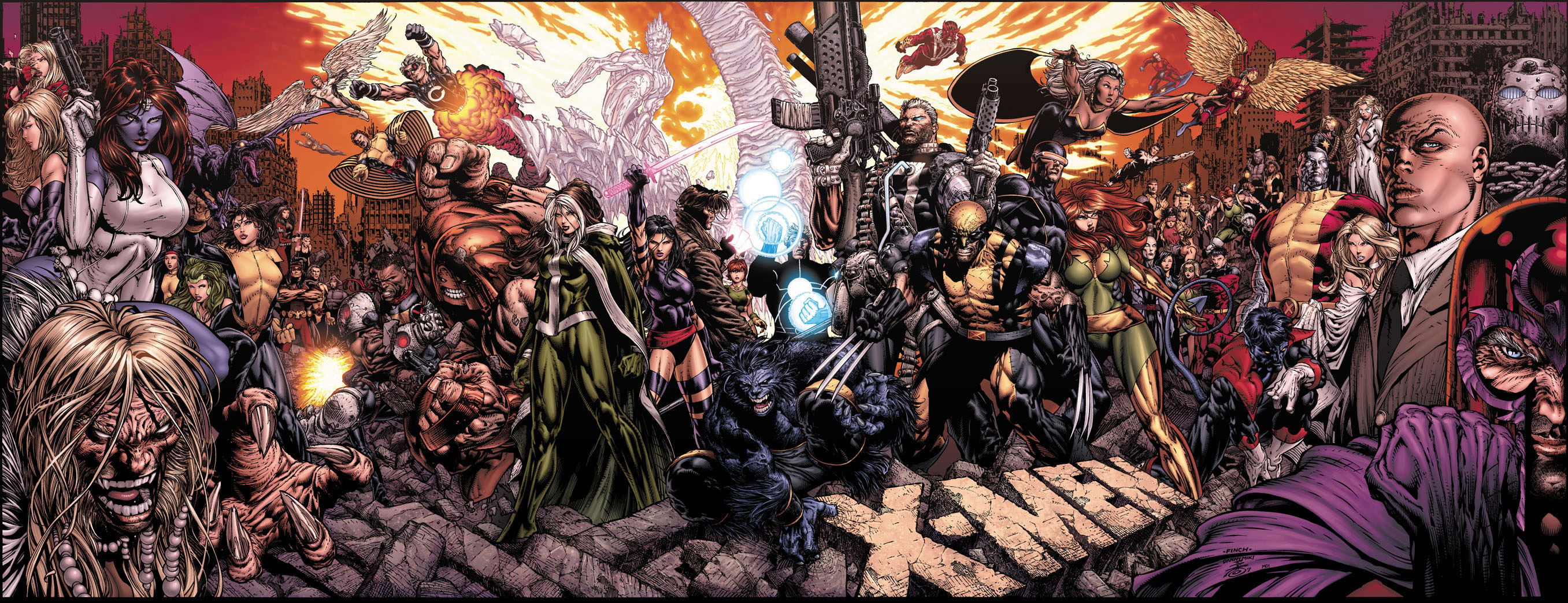
Today's Review: X-Men: Apocalypse
Still behind on all the stuff I wrote, but slowly gaining.
X-Men: Apocalypse - Recensie
'Third one is always the worst' says Jean Grey when leaving the theater after watching Return of the Jedi back in '83. She was right about that one, and conscious or unconscious (I doubt the writer intended for this movie to be the weakest in the second X-trilogy), she's also correct about X-Men: Apocalypse. However, also like Return of the Jedi, Apocalypse still is a whole lot of mutant fun for those who didn't expect the franchise to reach new heights anyway.
Granted, it's not the story that provides the mirth, since it's the stuff of repetition, variations on themes and lack of narrative evolution. Basically, another all-powerful mutant rears his head and threatens to destroy the world for mankind so that its stronger successors can take over. And once again, the X-Men, fighting for peace between man and mutant, must get together to stop this megalomaniacal scheme from becoming reality. This time, it's not Magneto who has hatched the diabolical plan, but rather a 5,000 year old ideological predecessor, an ancient Egyptian once worshiped as a god, with the modern moniker Apocalypse. Magneto, once more masterfully performed by Michael Fassbender, merely provides some muscle to help Oscar Isaac's semi-god with his evil shenanigans. Isaac does a decent job playing an age old villain, but he's no Fassbender and his Apocalypse is nowhere near as intimidating or intriguing as the much more relatable Magneto.
Still, the villain suffices for the cause of bringing together two generations of X-Men, the First Class lot and the new batch of young recruits, including novel takes on classic X-characters Cyclops, Jean Grey and Nightcrawler. Their performances and their chemistry make us hopeful for the future of the franchise, should the studio feel like using them for the next installment Apocalypse seems to be building up to. For although it's meant as a conclusion to a trilogy, the ground work is amply laid for more to come and these young stars succeed in making us curious about what lies ahead. The new additions to the cast are aided by snappy dialogue and light humour, making the shortcomings in the plot not nearly as blatant as they would have been in lesser hands. Nevertheless, it's clear director Bryan Singer, who has made his fourth X-movie with this title, has run out of ideas for the X-universe. Though we appreciate his work on both trilogies, new blood would be equally welcome in the creative room as it proved in the cast.
Labels:
action,
apocalypse,
bryan singer,
comic book,
eighties,
james mcavoy,
Jennifer Lawrence,
Marvel,
Michael Fassbender,
mutants,
Oscar Isaac,
superheroes,
x-men,
x-men: apocalypse
woensdag 30 april 2014
Today's Double News: X-creed
Two bits of movie news I wrote for MS:
http://www.moviescene.nl/p/155455/justin_kurzel_gaat_assassins_creed_verfilmen
http://www.moviescene.nl/p/155407/fox_overweegt_x-men_tv-serie
An X-Men TV-show, why the heck not? In fact, why not try this years ago? There's so many characters, locales, powers and motives in the many decades of X-comics, the movies have barely even scratched the surface. Plus, the film franchise insists on a small ensemble of characters as the core team, while most other mutants presented are relegated to bit parts instead. A TV-show would be able to flesh such underused characters out neatly, while also keeping the franchise from becoming overly convoluted to the general audience, as the film series tends to risk just that in the next few years due to Fox's insistence on copying Marvel proper via excessive crossovering. That said, I agree with Kinberg that a show revolving around superpowered individuals is in danger of breaching budget limitations which always plague the realm of television. But these powers don't have to be so in-your-face as seen in the source material. It's not the first superhuman TV-series after all. Just consider the likes of The 4400, Heroes and Alphas, who in many ways incorporated everything X-Men would have to do, except they were lacking the big X-Men name to draw audiences in initially. Granted, FX on these shows weren't always convincing (Heroes far from it in fact), but the technology keeps pushing the limits and grandiose effects are getting ever more affordable. Of course, at its heart, X-Men isn't at all about the superpowers and the cool visuals, it's about the characters and the social commentary. We are living in the golden age of television, where such ingredients are almost a given, so that also need not be an issue. However, as with Marvel's current series Agents of S.H.I.E.L.D., audience expectations in terms of characters might be an obstacle to overcome. These days, thanks to the X-movies, the term 'X-Men' will immediately bring to mind associations with a very select group of characters, including but not necessarily limited to Wolverine, Professor Xavier, Magneto and Mystique. Considering the high profile actors, if not outright Hollywood stars, playing these parts, it's not likely these hugely popular characters will make an appearance, unless recasting is in order (which won't sit well with many fans no doubt). To me, Xavier is the only true must-have, as he's the guy responsible for all the X-ing about. Other than that, there's plenty of personas, protagonists and antagonists alike, to pick from. You just need to convince the audience quickly of the quality of the show and the characters involved before they start to miss those X-characters they've come to love. Of course, if the TV-show is running alongside the movies, things are different, and probably only more difficult to pull off in terms of making the show stand on its own instead of being a mere appendix of the movies. As you can see, there's many elements to take into consideration in creating this show, which is undoubtedly why Fox hasn't greenlighted anything yet. I think it's harder to make a TV-show based off a film series work than the other way around. But then, if Fox had started the franchise on television instead of on the big screen in 2000, it's unlikely the superhero movie (especially those carrying the Marvel brand) would have been as popular as it is today.
As for Magneto, I highly doubt we'll see either Sir Ian McKellen or Michael Fassbender in that role on telly. We will be seeing Fassbender in other capacities though, most notably as the popular titular assassin from Assassin's Creed, in the upcoming big budget movie adaptation of the video game. The project will reunite him with director Justin Kurzel, with whom he recently worked on an adaptation of that Scottish play, MacBeth. Considering Fassbender is also producing Assassin's Creed, he'll probably have had a hand in hiring his director. Such loyalty is a good sign the relationship between star and director is strong and effective and will likely spawn positive results for Assassin's Creed. Good thing too, as expectations for this video game movie are no doubt high considering its success on the game market and its recognizable name. Even though the "curse" on video game adaptations has softened somewhat over recent years, it sure as hell hasn't been lifted wholly, and any movie based on a game is still met with quite a lot of initial scepticism accordingly. At least the movie will star a solid actor we know can play any part including this one easily.
donderdag 5 december 2013
Today's Mini-Review: The Counselor
The
Counselor: ***/*****, or 6/10
According
to Cormac McCarthy, acclaimed author of novels such as No Country
for Old Men and The Road (and thus indirectly also
responsible for two great cinematic adaptations of said works), hell
hath no fury like a woman hungry. In his screenwriting debut, The
Counselor, we learn a thing or two about women for sure. They can
be the most scheming, conniving, ruthlessly intelligent and sexually
uninhibited creatures imaginable, or they can be loving, charming
wives-to-be instead, though the former eats the latter for lunch if
left to her shady devices. McCarthy also means to inform his audience
on a diverse range of other assorted topics with this film, including
the make-up of diamonds, the dangers of speeding (which can lead to
both incarceration and decapitation), the sexually stimulating nature
of fast cars and the machinations of a deadly device called a bolito
(which we will end up seeing in working order in much more detail
than we would like to have seen before the film is over) but the
exact workings of the film's main topic, a drug deal gone horribly
awry, remain rather elusive by comparison. McCarthy proves he's as
consistent in his job as a screen writer as he is a novelist, as he
keeps dabbling in the cynical realm associated with man's darker,
greedier nature, but coherency unfortunately is not his strong suit
as evidenced here.
The
Counselor features all the ingredients of a strong, effective
film, including an intriguing premise, a top-notch director in the
person of Sir Ridley Scott and a solid cast to match. The counselor
in question is an otherwise nameless man (Michael Fassbender) who
leads a seemingly happy life with his fiancé Laura (Penelope Cruz),
but aspires to gain much more by better playing his card of being in
a position of influence, which leads him to the decision of getting
involved in a lucrative but risky drug deal. His associates, the
flamboyant bon-vivant Reiner (Javier Bardem) and the cautionary
Westray (Brad Pitt) tell him of the dangers of such deals in juicy
details (most of which we will see come to bloody fruition in a grand
case of cinematic parallelism), but the counselor accepts the job
nonetheless. You know this charming man is gonna regret his choice
well before he actually makes it, but you'll find him sympathetic
enough to root for him to be successful in this venture. When the
trafficker loses his head, someone at the top of the game loses a lot
of money, patience and general goodwill towards man, which leads to
everybody's necessity to bail out immediately or face grave,
disturbing consequences. Reiner's girlfriend Malkina (Cameron Diaz),
a woman as gorgeous as she is devious and greedy above all else, soon
seems to be pulling all the strings and relentlessly hunts the money
and those in her way. A killing spree erupts, in which a fair share
of people, decent and not so decent alike, lose it all, during which
the counselor must come to terms with the very bad call he made, one
we always knew from the get-go would come to this conclusion. This
film sounds very much like a thriller, which it wants to be, but the
amount of thrills it offers comes up short. In fact, the first half
of the movie is comprised of endless dialogue, some beautifully
written, some less catchy, but much of it quite digressing and
ultimately redundant. When the shit finally hits the fan, it does so
with a vengeance in a bunch of short, brutal bursts, but by that time
many spectators will have seized to care, or worse, failed to
understand just what is going on and who is connected to who in the
ultimate scheme of things considering the many players and their
complicated and underdeveloped interrelations.
Nevertheless,
what The Counselor lacks in terms of writing, Sir Ridley often
makes up for to some extent in directing, as the film's best moments
are largely cinematic in nature, including the drug dealer
accidentally shot in the head and immediately robbed by local
vagabonds before being devoured by his own cheetahs, as well as the
already infamous scene displaying Malkina's inexplicable drive to
copulate with a nice car (Cameron certainly goes for it!), an
ecstatic moment of absurdity that ruins the ride for its bewildered
owner. The Counselor has all the hallmarks of a flawed
masterpiece, as everything is necessary to craft a grand, suspenseful
film, but none of it is arranged in the correct order and the
dominant overall tone of cynicism, McCarthy's overarching theme,
makes it hard to behold as it schemes its way towards an unsettling
climax.
woensdag 27 november 2013
Today's News: the Days of Future Past go viral in the Sixties
Business is slow of late, but don't blame me, blame business. And blame time for not being available in the quantities one would like to have at his/her disposal. Anyway, here's a bit of news I managed to slip through:
http://www.moviescene.nl/p/151963/viral_video_x-men_days_of_future_past_online
I like alternative timelines, I like viral campaigns for movies that make good use of them to get me excited for a movie and I like X-Men, so this is a winner. It may not be the most detailed video (and a bit short really) and it's more of a teaser for the Bent Bullet website (which it itself is a teaser for next year's X-Men: Days of Future Past movie), but it serves as a decent catalyst for public interest. The article on the website looks fascinating too, but unfortunately, as mentioned above, lack of time prohibits me from reading it (probably until the Holidays have come and gone). I glanced through it and already found a minor spoiler for characters that we saw join Magneto's cause in X-Men: First Class, but won't be featured in the sequel because life (or its exact opposite rather) intervened with their goals. So no Jason Flemyng in DoFP apparently, since he's apparently too busy getting cast for Star Wars Episode VII.
You gotta love the eternal 'what if' question. Marvel certainly does, the House of Ideas even made a long running, delightful comic book series entitled What If on the subject, dealing exclusively with alternative plots to regular series, to explore the possibilities had things turned out otherwise. What if Wolverine was a Thirties' gangster? What if Spider-Man's daughter had survived? This viral video really fits right into that same venue. After all, First Class already handled historic happenstances that we know the conclusion of (at least, students of history do), but shed a different light on the situation because of the superpowered individuals native to the X-Universe, who could have influenced such global events for intriguing dramatic purposes. Occurrences that are shrouded into mystery until this day beg a mutant involvement in fiction, so the JFK assassination is a logical topic for an alternate history revisitation. Magneto bending a bullet so it would hit Kennedy is a wonderful notion, as is the thought of Mystique disguising herself as somebody else (in this instance, Lee Harvey Oswald) and taking the shot itself to add to the public confusion and number of question marks surrounding the case. Upon learning the possibility of mutant influence in the matter, the bleak future we'll see in the next movie, where mutants are hunted and slaughtered by the robotic Sentinels to guard the human public, is not such an unlikely thing to happen. I sure hope the viral campaign for Days of Future Past will contain more similarly themed conspiracy virals. I have heard it from reliable sources that such mutant scum was also responsible for the Watergate scandal and the Chernobyl catastrophe, ya know...
donderdag 5 juli 2012
David Cronenberg's new frame of mind
Yesterday
I worked my first shift as a volunteer running the film projector at
the local arthouse theater Provadja, something I will now do each
Wednesday evening. I had an easy start, playing only one film,
whereas for the next two months it will be three a night. The film in
question was David Cronenberg's second to most recent film, A
Dangerous Method, a movie I had wanted to see in regular theaters
upon its initial release in March, but I never got around to do so.
That's the good thing about this new job, I get another chance to see
arthouse, or generally good quality, films I missed the first time (I
don't think I'll get another shot at Piranha 3DD though, which
has now left movie theaters much to my chagrin), since Provadja gets
a lot of these as their weekly movie a few months down the road.
Projecting the film was a real piece of cake, thanks to the
advantages of digital projection (that same progress got me kicked
out of the operator's booth at Pathé though, so it's not all fun and
laughs), and I had a fair sized audience of no less than fourteen
people (the room the movie played at can hold about 45). If you're
lucky, you can watch the whole film from the projector's booth, but
sadly, I needed to occasionally focus on other chores, so I missed
about 15 minutes, which included a few important scenes here and
there. Having missed those, I can't honestly write a full review of
this film (that would be a rather dangerous method for any critic),
so I'll have to make due with some more general observations: after
all, despite not having seen it in its entirety, I still have an
opinion on the bits I did get to see, which lead me to believe that A
Dangerous Method would be rated by me as about ****/*****, 7or 8
out of 10.
It's
fascinating to see how much David Cronenberg has shifted towards
other genres. He's still best known as the director of usually
extremely graphic horror films, the foremost expert on 'bodily
horror', i.e. playing with, deforming or metamorphizing the human
body to often shocking effects, having created various grotesque body
transformations in films such as The Fly (1986) – Jeff
Goldblum's DNA mixed with that of a fly, thus making him devolve into
a bizarre human/insect hybrid – or the even more disconcerting
Videodrome (1983) – James Woods equipped with a huge
orifice, quite explicitly resembling a female's naughty bits, in his
abdomen so he can insert and “play” videotapes in his body –
which for a long time was really Cronenberg's signature: if you saw
the shit he pulled, you immediately realized beyond doubt you were
watching a Cronenberg flick! However, in recent years he mellowed
quite a bit, increasingly shying away from such gory effects. Though
in his suspense thriller A History of Violence (2005) he still
applied a few brief moments of universal disgust (hence the
'violence'), it otherwise hardly felt like a Cronenberg film. Eastern
Promises (2007), a film in the same genre, even less so. With A
Dangerous Method, a film containing virtually no gore at all,
Cronenberg seems to have definitively broken with his status as a
director once considered an auteur of horror. In fact, the
body no longer seems to interest him, as he sets his sights
completely on the human mind this time: though not exactly new to
this subject matter – for example, Spider (2002) –
compared to the wonders of the body it's still largely terra
incognita for him. And what better place to start than with the
founding fathers of psychoanalysis, Sigmund Freud and Carl Jung?
In
examining these two noted historical characters, Cronenberg not only
treads on different subject matter, but also explores a genre he has
not worked in before, the period drama piece. This is his first
motion picture set in past times, but you would hardly notice his
inexperience since he proves all too capable of compellingly and
accurately portraying the pre-WW I era of Vienna and ZĂĽrich,
including excellent costume work and the occasional temporal
signifiers as beautiful early cars and horse carriages. Of course,
it's not all that impressive, since A Dangerous Method is
hardly a full-on historical epic and focuses on characters much more
than on their settings, but it's a good sign Cronenberg has no
trouble expanding his existing oeuvre to include genres he's as yet
unaccustomed to. A good start, and hopefully he won't be afraid to
turn his scope on the past more often, now that we know he can pull
it off seemingly without effort.
As
mentioned above though, it's the characters that drive A Dangerous
Method, and as such it's the actors portraying them making or
breaking the piece. Cronenberg has often proved to get stellar
performances out of the top actors in their field, and continues this
trend here, reuniting with his present day muse Viggo Mortensen
(their third collaboration in a row), as well as Vincent Cassel
(second time working together), while adding Michael Fassbender and
Keira Knightley to his already outstanding resumé of phenomenal
actors he has directed. The latter pair has the hardest job in
carrying the whole picture, but neither fails in this regard. In the
case of Fassbender, who portrays Jung, this was to be expected,
considering his status as one of the most sought after and popular
actors of today. Knightley surprises much more in her role of his
patient Sabina Spielrein, a young woman suffering from hysteria, who
soon turns into something more than just another case for the good
doctor as the two of them embark on a wild sexual affair. Knightley
maneuvers shrewdly from an out of control and insane girl at one
moment and a calm and perfectly rational woman the next, being both
disturbingly repulsive and sexually intriguing at the same time, and
thus an irresistable mark for Jung from a professional point of view,
and soon after as a secret mistress. Plus, Knightley seems to have
the perfect facial bone structure for this role, as demonstrated by
the way in which she alarmingly protrudes her lower jaw in her many
fits of rage. Fassbender and Knightley show to have ample chemistry
in their roles, initially as doctor and patient, and soon after as
lovers on more or less equal footing. Whereas Fassbender plays Jung
with the necessary decorum and stoic restraint in the former
relationship, he's seen as a more emotional and angry character in
the latter, being able to blow off some steam in her company over his
guilt ridden marriage with his bland wife Emma (Sarah Gadon), who has
an awkward fixation over producing male offspring with him, and his
ultimately tumultuous relation with his one time mentor Freud.
Together, Spielrein and Jung can be themselves, as they don't need to
ignore their sexual fantasies, such as Sabina's desire for spanking
due to a childhood trauma. We root for them because of their genuine
affections for each other, but certainly in Jung's case (he's a
married man with kids after all), abhor them for having taken this
inappropriate route.
No
matter how good Fassbender and Knightley are on screen together, it's
Mortensen who delivers the most impressive performance playing
Sigmund Freud. Mortensen, by now fully versed in Cronenberg's
routine, proves himself a genuine chameleon yet again, hardly
resembling anything we've seen him look like before, older and
fatter, smoking a huge cigar in every scene as if it's an actual body
part. He portrays Freud as an old man emotionally detached from
everyone, including his star student Jung, despite their shared
beliefs concerning the benefits of psychoanalysis, while also
wholesomely inflexible when the latter tries to convince him not
everything can be reduced to subconscious sexual desires. At the same
time we see a Freud who desperately means to cling to his acclaimed
social status and tries to weed out subversive elements among his
circle of (almost exclusively Jewish) associates in fear of all their
work being undone by his many enemies in science and politics who are
just eager for some controversy to take him out. Apart from the cigar
and the talk about sex, Mortensen gives us a whole new Freud,
refusing any relation with the usual cliché ridden versions of the
character we are so often unfairly treated to. Also noteworthy is the
fact Mortensen does not repeat his role from his earlier
collaborations with Cronenberg, not taking center stage this time in
favour of Fassbender. Undoubtedly the director and his favourite
actor realize full well they will work together again many times God
willing, and instead of pulling off a Burton/Depp on us, they know
they should explore different set-ups if their professional
relationship is to continue to prosper, instead of sinking into a
dreary routine of overly repeating their previous work.
Aside
from the acting and the look of A Dangerous Method, as well as
its place in Cronenberg's repertoire, I dare not say anything
conclusively about the movie, especially about its overall story,
considering I missed several sequences that seemed of great
importance plot wise. For instance, at one moment Freud and Jung
arrived in New York in good spirits, but when I returned five minutes
later they were back home and detesting one another vigorously. I
have no idea what went on there, but it was obviously a vital scene.
Overall I can say for sure that A Dangerous Method covers an
intriguing subject from an equally intriguing director who is not
afraid to try and reinvent himself, making the film look gorgeous,
and squeezing top performances out of his main cast. However, I did
get the feeling the film's plot was fairly predictable (and not just
because it's historic subject matter) and delivered in an overly
straightforward way, thus not the most exciting stuff imaginable or
presented to us in a really gripping, thought provoking manner; but
hey, psychoanalysis isn't for everybody. At least the fourteen people
in the room all responded in a mildly enthusiastic mood. Given the
average age of this audience, I'm sure this would not have been the
case if I had projected some of Cronenberg's earlier, more “visually
rebellious” (to put it mildly!) work.
And
watch the trailer here:
Labels:
a dangerous method,
costume piece,
dangerous method,
david cronenberg,
drama,
freud,
historic,
jung,
keira knightley,
Michael Fassbender,
mind,
psychoanalysis,
scientists,
Viggo Mortensen
woensdag 13 juni 2012
How to make a Xenomorph
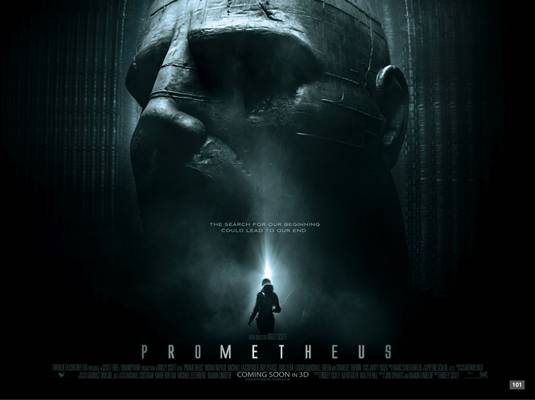
Prometheus: ****/*****, or 8/10
A tall,
pale humanoid stands at the top of a towering waterfall and nearly
ritualistically drinks a black liquid. Within seconds, his body
starts to physically come apart in a most gruesome way, his cells
literally unraveling and his physique disintegrating as he plunges
himself into the roaring chasm and his DNA mixes with the water. And
with this eerie opening the tone is set for Prometheus, the
eagerly awaited latest science fiction blockbuster from Sir Ridley
Scott, who with this film not only returns to his own roots but also
to the roots of the much acclaimed and beloved Alien saga. And
herein could lie a problem, since explaining some of the mysteries of
his own original Alien film (1979) might hurt the franchise as
a whole in terms of narrative continuity. The trick, however, is not
minding that it hurts, especially given the fact Sir Ridley
delivers a whole set of other intriguing questions in the process,
building upon which may very well reinvigorate this franchise which
until recently seemed milked dry completely.
-Warning!
Here be spoilers!- When scientists and lovebirds Elizabeth
Shaw (Noomi Rapace) and Charlie Holloway (Logan Marshall-Green) in
the year 2089 make a connection between the depiction of a tall
figure pointing at a set of ever identically proportioned dots on
cave paintings and murals of various ancient cultures around the
globe and a distant star system, the starship Prometheus is
dispatched by the Weyland Corporation to investigate the pair's
claims that humanity was spawned by a race of alien beings dubbed
'Engineers' which experimented with our DNA and left said dots as a
message to come look for them in space. Upon arrival at the barren
world of LV-223, a large artificial structure is found containing
endless corridors, a decapitated alien corpse and a room containing a
giant stone head and hundreds of odd cylinders containing black
liquid. It seems the gods the Prometheus was send to find have
died, but they left something behind...
So far
the plot seems like a mix between Sir Ridley's own original Alien
film, about a spaceship crew send to a deserted planet and
encountering an age old lifeform, and the often maligned spin-off
Alien VS Predator which revolves around the discovery humanity
was kick-started by the extra-terrestrial Predators for their own
shady purposes. Of course, Sir Ridley does not mean to copy either,
his Prometheus just starts on familiar ground in order to have
the plot turn in a whole different direction when we're settled in,
at which point it quickly gets quite darker than we have known his
work to be for the last few decades. Apparently the black liquid
destroys lifeforms it comes into contact with by turning it into a
different kind of lifeform: humanity was tricked into believing they
would find its creators across the gulf of space and only found its
apparent doom instead. And so the crew of the Prometheus must fight
for their lives or face total destruction of all mankind. Problem is,
the crew is divided into various camps all with their own goals, both
selfless and selfish, and all with their own take as to just what the
hell is going on. Given the somewhat erratic and hard to follow plot,
the audience too must figure out for itself just what to make of
things, since Sir Ridley has no intention to just hand us the answers
on a platter, but wants us to work for them instead.
It has
been a while since a decently philosophical blockbuster sci-fi film
tormented the audience by conjuring up sometimes nigh unfathomable
questions regarding Life, the Universe and Everything, so Sir
Ridley's attempt at provoking the audience to use their brains a bit
is certainly worthy of praise, but the plot makes it challenging to
comprehend Prometheus' intentions. It's quite likely studio
involvement is to blame, as is usually the case with Sir Ridley's
films, since studio executives often feel his movies are too
difficult to understand for general audiences which leads to them
being edited to focus less on the deep issues addressed and more on
the action. Already a Director's Cut has been announced that will
hopefully make for a better structured narrative, but so far we can
only speculate as to the Engineers' actual intentions by creating the
black liquid and their apparent loss of interest for humanity's
wellbeing.
So far,
exploring the background of these Engineers, who we originally came
to know as the Space Jockey from the first Alien film, does
sadly demystify the awesome introduction of this species in Sir
Ridley's breakthrough motion picture, by fleshing them out in more
detail than we might have liked, and eventually even reducing them to
more typical movie monsters as we watch the last of their kind alive
go on a murderous rampage to kill the Prometheus' crew, just
to be destroyed by its own lethal creation that was meant to be
humanity's undoing instead, but not before duking it out with this
monstrosity in a 'monster versus monster' battle of standard
Hollywood procedure feeling (again, there's a touch of Alien VS
Predator here, and not for the better). Which of course leads to
the question that is first and foremost on everybody's mind since
they learned this movie is more or less a prequel to Alien:
just what is the Xenomorph's deal?
It's in
regard to this matter that Prometheus remains the most vague,
as if Ridley never really wanted to provide any actual answers.
Suffice to say, Xenomorphs appear to be a a bio-weapon after all,
which they were always hinted to be used for by the evil Company in
the Alien films proper. It definitely seems open for debate
(an offer I accepted when travelling home with a friend while
returning from watching this film; we spend about an hour trying to
wrap our brains around it, with plenty of questions still unanswered,
mind you), but it seems to me the black liquid is this film's
incarnation of the 'Genesis device', creating life on a barren world
by mixing it with water (as the alien “Prometheus” did at the
opening scene of the film), or replacing already existing life with
such life. It's a complicated process for sure, and apparently it
never works the same in this film: while a worm coming into contact
with the black goo is turned into a Xenomorph like snake, a
Prometheus crewmember that gets a full dose in his face simply
turns into a prowling, deformed madman turning on his shipmates and
viciously killing them, before being shot at, burned and run down by
a truck. Of course the main question foremost on the fans' minds will
be, 'is the traditional Xenomorph we've come to love in Prometheus?'
Having given a nicely red coloured spoiler warning some paragraphs
above, I will simply answer this question positively by stating that
it is... sort of... The problem for me is not its appearance (which
differs from what we've seen before), but its creation. In answer to
the question cleverly hidden in this article's title, here's the
recipe Prometheus gives for creating a genuine chestbursting
Alien (don't
try this at home!):
-Slip a
small dose of black liquid into an unsuspecting male victim's drink
-Let the
male victim have sex with a woman, even though she's sterile
-After
successful (unsafe) love making, the woman will find herself pregnant
within ten hours
-Soon
afterwards, the squid like creature gestating inside her tummy will
burst through her chest (unless she manages to remove it by
performing an caesarean section on herself)
-The
squid will rapidly grow in size from about 1 ft. long to a whopping
10 ft. long overnight
-Have
the now full sized creature penetrate an Engineer's mouth with its
ovipositor
-After
several hours, a small Xenomorph will spring from the Engineer's
chest, killing him in the process (as is Xenomorph tradition)
Say what
you will about Prometheus' dubious and overly convoluted
Xenomorph origins, it makes for some very effective and affective
horror, as the above description makes clear. It's safe to say Sir
Ridley hasn't added such overtly gory scenes to any of his films
since the original Alien in 1979. Where he sticked to an
occasional chestbursting scene and limited the gore to suggestive
imagery in that movie, he certainly went all out here, resulting in a
plethora of scenes featuring the likes of genetically decomposing,
arm snapping, involuntary facial penetration, burning and general
dismemberment, not to mention a certain explicit self-operation scene
that had even me gasping for breath while firmly grasping my seat. To
think the studio ever considered this movie susceptible for a PG-13
rating seems completely unrealistic, since Prometheus is
largely the stuff only a hard R rating can do justice. It's good to
know Sir Ridley still knows how to shock his audience convincingly,
like he did with Alien at the start of his career.
Something
else this accomplished director succeeds in perfectly is eliciting
excellent performances from his cast. In fact, Rapace and
Marshall-Green, though they do an adequate job for sure, are
outclassed at every turn by their colleagues, with Michael Fassbender
delivering the film's standout performance in the role of the android
(wouldn't be an Alien film without one, eh?) David, balancing
carefully and compellingly between the psychotic and the angelic,
between a child asking his parents how and why he came to be and a
slave eager to turn on his oppressors at the first opportunity, so
you never know what his agenda is and whose side he's one (if
anybody's). The film successfully draws parallells between his human
masters searching for their supposed creators and David living amidst
his own creators who he obviously finds flawed, in several all too
short scenes of which we can only hope there's more where those came
from on the expected Director's Cut. At the other end of the spectrum
there's Charlize Theron in the role of Meredith Vickers, the mission
leader whose apparent job it is to make sure the Weyland Corporation
gets its money worth out of this excessively expensive space trip,
though her plight is far more personal considering she's the actual
daughter of Mr. Weyland himself, who preferred David's company over
hers, since the android is the closest thing he ever had to a son.
Theron plays the role on fire, shrewdly maneuvering between appearing
as a coldhearted rich bitch simply out to make money and a wronged
daughter aiming for revenge. And then there's the old man himself,
being played by Guy Pearce in heavy make-up. Weyland was a secret
passenger, like Prometheus was on a secret mission to make
contact with the Engineers and ask them for the secret to immortality
so the dying old man could yet be saved.
As the
movie makes perfectly clear, human immortality is actually far from
the Engineers' minds, which results in some solid action scenes, both
those involving the Engineers and Xenomorphs as well as those
without. Also laudable is the quality of the visual effects, which
help remind the audience of the original Alien atmosphere in
both human and extra-terrestrial sense, but also being uniquely
Prometheus material instead of simply rehashing what was done
before. In fact, this sums up the whole of the film, since as a
supposed Alien prequel, it certainly stands on its own merits,
only hinting at the events in that earlier film without giving the
exact explanations as to what happened prior to the events in Alien,
so there's still some mystery to enjoy in that regard. It does at
time contradict the later entries into the franchise though: the role
of the badass Alien Queen which drove much of the later Alien
films' plots now seems under serious scrutiny. But considering Sir
Ridley's involvement with the franchise ended then right after the
first film, it's understandable he favours his own appraoch here
above building on the work of others who took over his job in the
past.
Overall,
Ridley Scott proves he can still distill a good movie out of the
dried up franchise he created, the result being both spectacular and
thought provoking, but frustratingly feeling incomplete, something he
has even gone so far as to admit it simply is. Prometheus
is a thinking man's Sci-Fi
horror rollercoaster, a rare thing to behold in the post-Avatar
days where science fiction feels dumbed down a bit due to the focus
on visual and 3-D effects and the lack of exploring philosophical
themes as the genre used to do more often. Given the large number of
new unsolved questions, a sequel feels both likely and desireable.
Sir Ridley could leave it in the hands of a capable young director
like he did last time (it was James Cameron then, it shouldn't be
now), or he can save everyone three decades and just do it himself,
instead of having to do some damage control in another 33 years time.
Either way, the Pandora's Box opened by Prometheus
certainly won't be closed just yet.
And
watch the trailer here:
maandag 16 april 2012
Centurion
Rating:
***/*****, or 7/10
Enjoyable
high adrenaline action film set in Roman times. In the Second Century
A.D., a Roman legion sets out on a mission in the unconquered north
of Britain but walks into an ambush and gets viciously decimated,
after which a ragtag group of survivors of various ranks and ethnic
backgrounds led by Quintus Dias (Michael Fassbender, just before his
definite breakthrough roles in X-Men: First Class and Shame
the year after) must run for their lives behind enemy lines to get
back to Hadrian's Wall and safety. Unfortunately for them, they're
hunted by an elite team of killer Picts led by the mute but scary
assassin Etain (Olga Kurylenko). Will any of them make it out alive?
And if they do, could they ever go back to the life of Roman
soldiery? Neil Marshall (The Descent, Doomsday) does
his thing as an accomplished action director and doesn't bother
making anything even resembling a Roman epic, but delivers a simple
chase flick set in ancient times instead. What the film lacks in its
straightforward story it makes up for decently in action and
suspense. Ironically enough, the following year The Eagle was
released (very similar plot wise but more serious in tone), which in
terms of story was almost a direct sequel, though that particular
production had no ties to Centurion.
Starring:
Michael Fassbender, Olga Kurylenko, Dominic West
Directed
by Neil Marshall
UK:
Celador Films, 2010
This awesome animated poster was also attached to the film, setting the tone of the movie more effectively than the regular theatrical poster bothered to do:
Abonneren op:
Posts (Atom)