Posts tonen met het label social drama. Alle posts tonen

vrijdag 9 juni 2017

Today's Review: Howards End


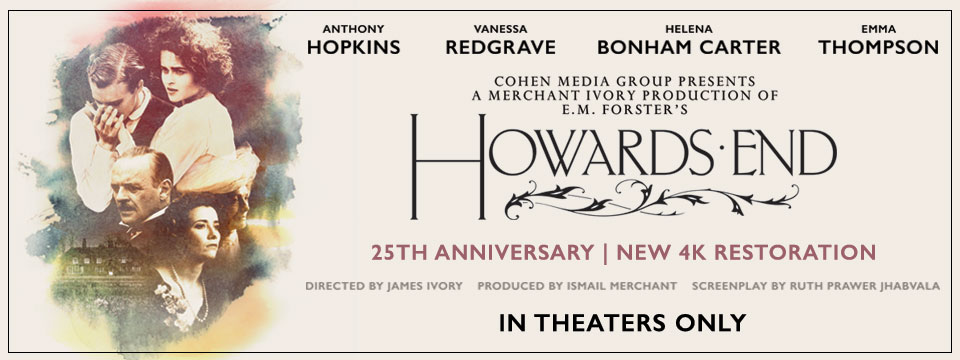
Tussen alle ophef die momenteel heerst in het EYE Filmmuseum rond het Scorsese-retrospectief en het Cinema Erotica-evenement zou je het bijna over het hoofd zien, maar er verschijnt deze maand ook een 'reguliere' klassieker in een glanzend nieuw jasje. Howards End verjaart anno 2017 voor alweer de 25ste keer, wat reden genoeg is voor EYE om een fraai gerestaureerde kopie in roulatie te brengen. Geen slechte keus, want de door James Ivory weelderig geregisseerde registratie van een bikkelharde klassenstrijd die sluimert onder typisch Engelse deftigheid mag zich nog steeds scharen onder de fraaiste Britse kostuumdrama's.

Liefhebbers zullen Ivory herkennen als de man die in de jaren tachtig en negentig van de vorige eeuw een specialisatie voor het kostuumdrama ontwikkelde en de ene na de andere geslaagde toevoeging aan het genre regisseerde. Het werk van schrijver en landgenoot E.M. Forster vormde daarbij een dankbare bron, die met Howards End leidde tot Ivory's beste werk. Het meeslepende romantische drama bleek goed voor negen Oscarnominaties, waarvan er drie verzilverd werden. Desondanks is de algemene kennis over Ivory's klassieker, zo niet zijn hele oeuvre, sterk naar de achtergrond verplaatst. Tijd om Ivory's goede oude tijd weer eens te doen herleven, dachten ze bij EYE ongetwijfeld.

In Howards End neemt Ivory ons mee terug naar het Edwardiaanse tijdperk, zo rond de eeuwwisseling. Een tijdperk vol verandering en sociale onrust, waar de regisseur meermaals dankbaar gebruik van maakte in zijn werk, waarin de standenstrijd een doorlopend thema vormt. Dat geschil wordt in deze film belicht vanuit het standpunt van twee families, de welgestelde Wilcoxes en de ruimdenkende Schlegels uit de middenklasse. Inzet is het Howards End uit de titel, een schitterend landhuis dat toebehoort aan de stervende Ruth Wilcox. De oude vrouw sluit in haar laatste maanden een onwaarschijnlijke vriendschap met de vrijgevochten Margaret Schlegel (de rol waarvoor Emma Thompson terecht haar Oscar verdiende) en schenkt haar op haar doodsbed het huis. Dit tot woede van haar familie, die al het bewijs van de overdracht vernietigt. Maar het lot neemt een frappante wending als de weduwnaar Henry Wilcox Margaret tot ieders verrassing ten huwelijk vraagt. Een onwaarschijnlijk verbond tussen een conservatieve oudere zakenman en een intellectuele jongere dame, goed voor dramatische dynamiek en sociaal vuurwerk tussen de diverse maatschappelijke standen.


EYE heeft puik werk verricht met het oppoetsen van Howards End, want de wereld van de overdadig formele Britse high society spettert als nooit tevoren van het scherm. Toch is de beeldkwaliteit niet zo gladjes scherp als bij sommige digitale verfraaiingsbeurten in 4K. De soms wat merkwaardige scèneovergangen zijn gebleven en de film heeft visueel de onmiskenbare esthetiek van de vroege jaren negentig behouden. Howards End mag gerust zijn leeftijd verraden. Dat was hoe dan ook onvermijdelijk als we de jongere versies van de crème de la crème van de Britse acteerwereld met groot genoegen terugzien. De jeugdige Emma Thompson en Helena Bonham Carter schitteren wederom als de vooruitstrevende zusters Schlegel, die zich in een haat-liefdeverhouding geplaatst zien met de onwrikbare zakenman Henry, waarvoor Anthony Hopkins heerlijk heen en weer schmiert tussen vilein en sympathiek. Dat alles in een onweerstaanbare setting vol bruisende jurken en stijlvolle maatpakken, weelderige sets en de mooiste vroege automobielen ooit op het witte doek. Maar feitelijk slechts allemaal decor in Ivory's vertelling van een conflict tussen de lagere standen en de rijke klasse, die van geen wijken wil weten ondanks de voortschrijdende modernisering. Zelfs niet in een letterlijk verstandshuwelijk.

Zo theatraal als Howards End worden kostuumdrama's vandaag de dag amper nog gemaakt. Of het moet voor de televisie zijn, met vergelijkbare waar als Downton Abbey, dat Ivory's werk meer dan waarschijnlijk als inspiratiebron benutte. Maar in de bioscoop lijken 'period films' die in vrijwel elke zin een 'heavens' of een 'jolly' laten vallen helaas hoe langer hoe meer een uitstervende soort. Dat is jammer in een wereld waarin de verschillen tussen arm en rijk, tussen progressief en conservatief en tussen ruimdenkende en beperkte wereldbeelden met de dag weer meer aan de orde lijken te zijn. Hoewel een zekere mate van oubolligheid Howards End niet ontzegd kan worden, blijkt maar weer dat Ivory's standenstrijd nog lang niet tot een einde is gekomen. Een Ivory-retrospectief is misschien ook niet zo'n slecht idee.


zaterdag 26 november 2016

Today's Review: I, Daniel Blake


Het was even schrikken toen Ken Loach na Jimmy's Hall in 2014 zijn pensioen aankondigde. Welke regisseur moest het nu voor de hardwerkende, uitgebuite 'man in de straat' opnemen? Twee jaar later is de inmiddels tachtigjarige Loach toch weer terug met een aanklacht tegen sociaal onrecht. Gelukkig maar, want hoewel zijn vorige film een fijn luchtig drama was, is het niet de meest wenselijke laatste aria van de grootmeester. I, Daniel Blake, goed voor een Gouden Palm in Cannes, laat een krachtiger indruk achter. De film toont Loach opnieuw in topvorm als voorvechter voor de genegeerde massa, in een sociaal drama dat uitstekend de balans vindt tussen zwaar drama en zwarte komedie. 

De Daniel Blake uit de titel is een timmerman op leeftijd uit Newcastle, die moest stoppen met werken na een hartaanval. Sindsdien is hij aangewezen op een uitkering, maar het verzilveren hiervan gaat hem niet gemakkelijk af. De grootscheepse bureaucratie rond het Britse bijstandssysteem draait tegenwoordig niet meer om het financieel bijstaan van de zwakkeren in de samenleving, maar om het hen met allerlei Kafkaëske regels zo lastig mogelijk maken om hun geld te krijgen. Al snel gaat zelfs een doorzetter als Daniel kopje onder in het bijstandsdrijfzand, dat hem dwingt de hele dag te zoeken naar werk, dat hij van zijn arts niet mag aannemen omdat het zijn dood zou kunnen betekenen. Zelfs dan is hij nog beter af dan de jonge alleenstaande moeder Katie, die met haar twee kinderen gedwongen moest verhuizen vanuit Londen en eveneens slachtoffer dreigt te worden van de harteloze uitkeringsmachinerie. Onder het motto 'gedeelde smart is halve smart' sluit het tweetal vriendschap, om zich met niets dan wederzijdse hoop te handhaven in hun uitzichtloze situatie.

Het aankaarten van dergelijke wanpraktijken is een doorlopend thema in Loach' lange kruistocht voor sociale rechtvaardigheid. De regisseur brak precies vijftig jaar geleden door met de televisiefilm Cathy Come Home waarin hij eveneens een slachtoffer van het barmhartig geachte bijstandssysteem opvoerde. Die uitzending bracht de nodige publieke afschuw en de roep tot hervorming teweeg. Vijf decennia later lijkt het er niet op dat er veel verbetering heeft plaatsgevonden. Integendeel, meer mensen zijn slechter af dan destijds, terwijl de bureaucratie rond het uitkeringssysteem alleen maar omvangrijker vormen heeft aangenomen. Het is dus prijzenswaardig dat Loach zijn jubileum viert door nogmaals zijn kritische blik te werpen op deze mensonterende praktijken. Hoewel de film het niet moet hebben van nuance - het waarom achter het bizarre overheidsapparaat blijft achterwege - is het prettig dat Loach onze ontgoocheling niet slechts zoekt in tergend drama, maar evenzeer humor aandraagt om de absurditeit van dit systeem bloot te leggen. Dat maakt het geheel voor de toeschouwers wel zo dragelijk.


De troef van I, Daniel Blake is de keuze om de titelfiguur niet door een regulier acteur te laten vertolken, maar door een komediant. Hoofdrolspeler Dave Johns heeft een lange staat van dienst als stand-upcomedian, maar maakt hier zijn speelfilmdebuut. Zijn sublieme komische timing, gepaard met zijn innemende voorkomen, staat garant voor een uitstekende vertolking, een herkenbaar alledaagse verschijning en een oase van gezond verstand in een surrealistische wereld vol verwarrende regeltjes. Er kan en mag gerust gelachen worden dankzij de humor die Johns' personage typeert, maar elke lach wordt desondanks succesvol getemperd door het besef dat dit absurdisme op feiten gebaseerd is. De humor is wrang, want de ernst is nooit ver weg. Tegenover de aimabele Daniel plaatst Loach Katie's tragedie, allesbehalve lachwekkend. Ook actrice Hayley Squires blijkt een schot in de roos in de rol van de jonge moeder die ondanks alle tegenwerking van de staat twee koters moet opvoeden en hen probeert te hoeden voor alle leed. Tranentrekkend is haar bezoek aan een voedselbank, waarbij ze gedreven door honger zich stiekem op een blik groente stort, om vervolgens bevangen te worden door immense schaamte. Hoewel een voorspelbaar lot in haar afdaling in de wanhoop ons niet bespaard blijft, compenseert Squires' overtuigende spel die tekortkoming.

Het is die wisselwerking tussen Katies tenenkrommende drama en Daniels zwarte komedie die I, Daniel Blake tot een memorabele film maakt. Loach slaat ons niet murw met overdadig serieus opgediende onmenselijkheden, maar weet ondanks de rijkelijk vertegenwoordigde humor toch onze verontwaardiging op te wekken. Het is een hachelijke balans die alleen een vakman als hij gedegen weet aan te brengen. Cynisme sluit hij bovendien uit, want volgens hem is er altijd ruimte voor hoop zolang gewone mensen anderen in nood bijspringen. I, Daniel Blake maakt duidelijk dat pensioen voor sociale kruisridders als Loach niet weggelegd is. Want zelfs na vijftig jaar strijd blijft er nog genoeg onrecht over om de goede man nog vele films bezig te houden. Het heeft er alle schijn van dat Loach zal sterven in het harnas. Hij zou het niet anders willen.

dinsdag 5 juli 2016

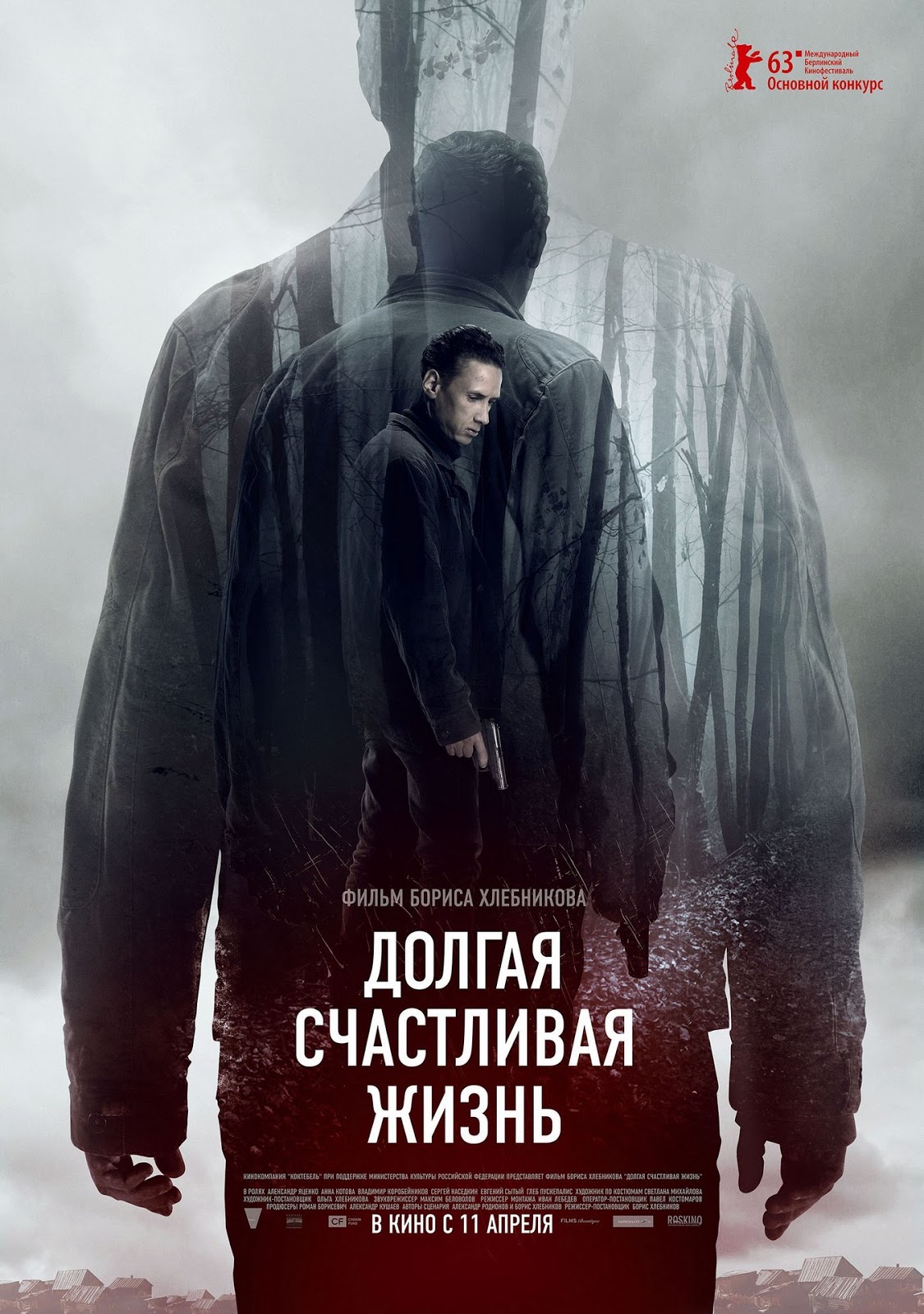
Today's Review: A Long and Happy Life


Another review up:

A Long and Happy Life - recensie

Director Boris Khlebnikov conceived of this film as a modern day Western set in Russia, inspired by the classic High Noon. With that knowledge in mind, you can easily recognize it as such, though for those with less prescience in regards to A Long and Happy Life, most of the ingredients are there for all to see. There's the lone hero, the rough but beautiful landscape, the love affair, the oppressed mob and of course the climactic shootout. All in just 77 minutes.

But the aspirations of an American Western aside, this is first and foremost a contemporary Russian social drama. So naturally, things don't proceed as they usually would. Unless you're versed in Russian arthouse, where the plethora of problems plaguing the nation, despite Putin's claims to the contrary, are placed front and center. Then you know full well what's in store. Corruption and the inevitability of its winning the day are the central themes of A Long and Happy Life, as they are in many similar films from Khlebnikovs peers. Sascha, who manages a small collective farm in the cold north of Russia, is all too eager to be bought by his superiors to split up the farm so the land can be used for something more productive. The dough gives him the opportunity to abandon this God forsaken place and move to the big city with his girlfriend. However, when the farmers under his command refuse to be moved as the state leaves them with next to nothing if it happens, Sascha's conscience gets in the way of the life from the title he envisioned for himself. Moved by their plight and their trust in him, he resists the officials, refuses the money and fights to keep his farm open. A hopeless battle, he knows, but as an honest man he must fight it anyway.


Now, honest men, those are hard to find, so says Khlebnikov in this fatalistic little film. The farmers sure don't turn out to be such men, as they quickly search for ways to get out, each man for himself, with as much money as he can make of it. And so Sascha soon finds himself fighting the good fight all by himself, betrayed by everybody. Tension mounts and it's obvious things cannot end on a happy note, but rather in a violent showdown only. Such is life is Russia these days, according to Khlebnikov. The point is well taken, but would have been better served by a different lead actor. Alexandr Yatsenko is well suited to play a corrupt underling, but makes a feeble impression as a lone hero. He simply lacks the necessary charisma for the part and so we're not sold on his switch from bored city boy wanting to leave the country to rebellious protector of the common folk. Which is also hindered by the small amount of time Khlebnikov puts into things, in obvious pun intended contrast to the title, since this film is naturally far from long and happy. But if you expected it to be, you are likely not familiar with Russian arthouse. Or Westerns for that matter.

zaterdag 16 april 2016

Today's Review: Mammal


Another review up, with more soon to follow:

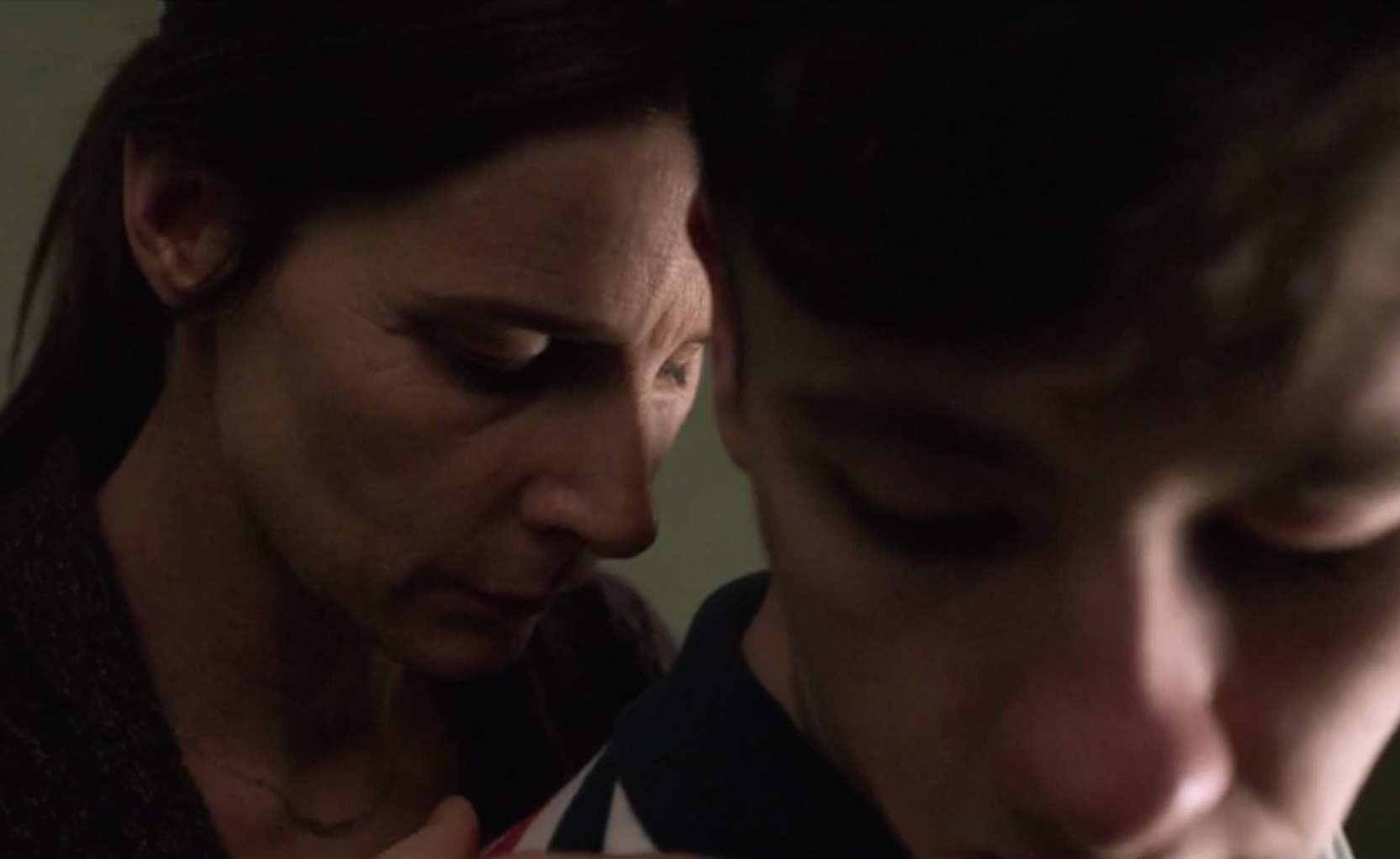
Mammal - recensie

Why would a new mother abandon her child and husband? It's an intriguing question, usually surrounded with heavy social stigma, since any mother denying her maternal instincts is either downright abject or at the least a bad excuse for a person, or so society swiftly judges. Nevertheless, it happens and it begs an answer. Those looking for one will not find it in Mammal. In fact, though at first thought the movie seems to revolve around a mother who accepts a second chance for motherhood, that may be too much of a generalization. But some sort of connection, both emotional and physical, between two vastly different but equally lost souls, is certainly in order in this narrative.

Margaret abandoned her family soon after her son was born, and she now has been out of their lives for 18 years. When news about her son's disappearance reaches her, not much sorrow is demonstrated. Nevertheless, around the same time, she accepts a wild kid from the street, roughly the same age as her own child, to live with her. The big question obviously being why. A simple act of generosity? Or perhaps another shot at maternity, after foregoing that responsibility all those years ago? For a while, the latter option seems to be the case, but when things get overly physical between her and the boy, Joe, that theory doesn't hold up any more. If motherhood is indeed Margaret's objective, she has some odd notions of the concept at least.


Unfortunately, Mammal - the metaphoric title suggests a nurturing nature to their relationship based on maternal instincts, though there's also an undeniable social aspect to it as well, so one can look at it from both angles - is short on motivations. It's not Daly's intention to spoon feed us all the answers, which is fine, but there's simply too few of those concerning the various characters' actions to go around. Things happen as they do, while particular reasons are entirely up to the viewer to come up with. It makes Mammal a rather hollow film. Thankfully, there's strong performances throughout, which do make us care enough to stick with the protagonists rather than lose all interest entirely. We hardly get to know these people to the extent that we should for Mammal to deliver the gripping drama it feels like it wants to, but as fellow mammals we sympathize enough to feel some emotional connection to stick with them for a good hour and a half.

zaterdag 16 januari 2016

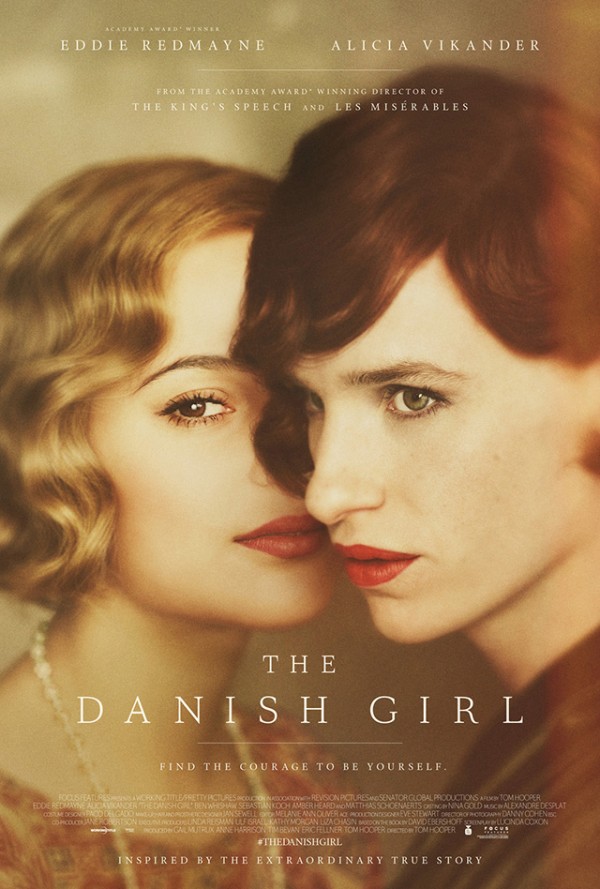
Today's Review: The Danish Girl


Finally another review for FilmTotaal:

The Danish Girl - Recensie

Basically this movie embodies wasted potential. There's a capable director and a number of wonderful actors, some with notable award winning accolades to their name, attached to this film, but it just doesn't manage toengage the audience. It looks great, but it doesn't feel so. If transgenders are looking for a movie that illustrates their long plight and continuing calls for understanding and acceptance for their cause, I fear this is not it.

The strongest reason of its failure as such, is that it's simply too clean, too good looking. Though Eddie Redmayne looks androgynous enough to get away with playing both sexes effectively, his Einar's/Lili's long road from man to woman, though destined to end in tragedy, simply is too easy, certainly for the times we are dealing with. Yes, he's forced to leave his own country in search for a more accepting environment and yes, he's looked upon by medical minds as a freak of nature, sick in spirit and in desperate need of a gruesome cure, but the progresion of the movie doesn't live up to the many decades of violent misunderstanding if not downright cruelty inflicted on transgenders. Lili is surrounded by caring people who all too easily accept her plight and encourage her to do what she feels she should do, despite the danger this will place her in and the hardship it causes those closed to her, especially her loving wife who never signed up for this when they got married and who is finally enjoying some professional success. The scene with the physicians looking to operate on Lili with force to "cure" her woes is played more for laughs, though historically there's nothing funny about this sort of medicine which could be described as blatant torture. The only time Lili is physically confronted with her otherness is when she's beaten up on the street by two random hoodlums. Other than that, as transgender drama goes, this one is surprisingly happy.


But despite these shortcomings, The Danish Girl has all the hallmarks of a solid period piece. It's capably directed, just not memorably so, unlike director Tom Hooper's own The King's Speech. Costume and set design is top notch, nobody will deny. The lead actors are at the top of their game and their Oscar nominations are well deserved (though I doubt they're good enough for a win), while the supporting cast is equally up to its task. But for all intents and purposes, it's not enough. Emotionally, The Danish Girl underwhelms, thanks to a script that plays it safe and doesn't feel like shocking the audience too strongly. Maybe it feels the notion of transgender struggles is risqué enough as it is for audiences? That would be rather offensive to the people it means to represent, who admittedly won't feel very much represented by it anyway.

woensdag 25 november 2015

Today's Review: Virgin Mountain


This week's third and final review:

Virgin Mountain - recensie

Best of the three for sure. A laugh and a tear. A light drama with ample humour. But not a movie with a very innovative or inspired plot. Save for the ending which does break with the traditions of this type of film. Solitary fat man, a disappointment to his mother and the butt of jokes to his coworkers, lightens up when meeting a charming woman. Despite her mental problems, they are obviously made for each other. You get the gist of things.

It's not the plot that makes it a decent watch, it's the acting for one. Icelandic force of nature Gunnar Jonsson is literally made for this movie (or rather, the movie was tailored around him) and it shows. For another thing, it's the fine balance between being a funny piece and being a heavy drama that director Dagur Kari carefully treads, without slipping to one side to such an extent that it hurts the film as a whole. That's a tough call for a film like this, especially considering, again, the ending, which likely isn't what people would want to see, but feels like it fits regardless. And thus, Virgin Mountain gets away with it admirably.

zaterdag 31 januari 2015

Today's News: a lot of stuff to round up January


The second half of the week yielded quite a bit of little news items:

http://www.moviescene.nl/p/158768/eerste_trailer_child_44

Looks like a fairly solid thriller with a cast to match. Too bad it's already been done - Citizen X, remember? - and thus isn't a particularly original project, even though this time it's based on a book about the historical murders rather than the historical murders themselves. Those ridiculously heavy Russian accents also don't help. Do audiences really need such reminders in dialogue to remember the story is set in Russia? You'd think the set-up, names and uniforms alone would do the trick. Other than that, this film looks like a decent thriller flick. Considering the current strained relationship of most Western countries with Putin's Russia, you cannot help but wonder whether this is an appropriate time to release a film about a psychopath running rampant in the Rodina aided by a corrupt system of bureaucrats defending an ideology that doesn't always have the best interest of its subjects at heart. I can imagine there will be some complaints from Russian citizens about the contents of this film, whether the film proves to be of good quality or not (probably more so in the case of the former, since then it will receive more attention). Since The Interview didn't spark WW III, maybe this will, though that's undoubtedly giving it too much credit in advance.


http://www.moviescene.nl/p/158748/fox_maakt_x-men_serie

Once again Marvel leads and the rest follows. Now that the House of Ideas is firmly getting its grasp on the small screen, expanding its Cinematic Universe on telly too, other studios are eager to do the same. And so Fox plans an X-Men series accordingly. I don't mind, as the conventions of television offer a much broader narrative perspective on the vast X-realm with its many hundreds of characters, in a way the movies could only touch upon. Makes you wonder why they haven't tried this before (and I don't mean like the various animated series). Of course, a conservative studio like Fox likely needed someone more innovative to indicate it can be done successfully, which Marvel has now shown with Agents of S.H.I.E.L.D. Since public interest in anything Marvel is at an all-time high, it seems the right time to produce an X-show. In fact, they better hurry before the popularity of the franchise goes into decline, which is an option I don't exclude, now that Channing Tatum is set to take over the reigns from Hugh Jackman as the leading X-protagonist (shifting the focus more from Wolverine to Gambit), a prospect I'm not looking forward to. I do hope there'll be room for a new creative route, rather than copying the style of the movies. The X-universe is a deliciously diverse place (as befits its message of peace and tolerance to those who are different), so it would behoove the series to reflect that fact and explore any X-citing angle imaginable.


http://www.moviescene.nl/p/158769/disney_wil_pratt_als_indiana_jones

Is it me, or is Chris Pratt everywhere these days? There's not a movie project goes by that doesn't at least once features his name attached, or so it seems. Sure, Pratt looks like a really likeable guy and he made a fine Star-Lord. But does that warrant the thought of 'Oh hey, we need a leading man for this project, let's ask Pratt because he's so darn kewl' all the time? Apparently that's the default casting thought going around Hollywood these days. Sure, put Pratt in Jurassic World. Go ahead and stick him in Indiana Jones. Just make sure the rest of those films looks as dashing and charming. As for recasting Harrison Ford, it was only a matter of time. I always imagined Indiana Jones a lot like James Bond. You can have him be played by any number of actors, as long as the movies continue to incite that same level of adventure and excitement as they always do. In Indy's case, I'm not one of those unrealistic and conservative types that sticks to the original ad infinitum, even though he was the most iconic in that role. I'm willing to allow other actors in that persona. But not Shia LaBeouf, please. Better ask Chris Pratt whether he feels up to it. Oh I forgot, they're already doing that...


http://www.moviescene.nl/p/158799/eerste_trailer_ted_2

Okay, so the jokes in this trailer mostly revolve around bodily excrements and random popcultural references, as is usual in Hollywood comedy nowadays. Bear with me (pun, yes). Do I detect a plot that may very well be too intelligent and too philosophical for a film like this? The question of sentience, what makes a human being a human being and the limitations human beings themselves arrogantly set as to what constitutes life that should be allowed to have the same rights as ourselves, that sort of thing. There's some definite 'Measure of a Man' level story opportunities involved here! And of course, none of it will matter much, as it will just prove interspersed between a flatulence joke here and a cameo by the guy who used to be Flash Gordon there. Still, I can't help but give Seth MacFarlane credit for at least trying. I bet 'The Measure of a Man' ranks among his favorite episodes of Trek. And I also bet this movie is gonna be your totally average run-of-the-mill raunchy comedy, the type you've forgotten the day after you watched it.


http://www.moviescene.nl/p/158809/eerste_trailer_madame_bovary

Unlike this film which, too, is mostly about sex but doesn't touch upon it in a comedic fashion. Madame Bovary is one of the most scandalous works of literature to come out of the 19th-Century. However, for a contemporary audience that watches too much HBO, it'll be hard to make it as impactful as once this story was. Sexual shenanigans outside of holy matrimony are an everyday occurrence in the dramatic arts now and are not likely to shock anyone. So what relevant meaning is there for today's audience? Probably not anything novel. Doesn't stop a decent collection of both seasoned and young actors from practizing their craft in a wonderful fashion, complete with rustic landscape shots and lavish period costumes. That sort of thing at least never gets old. And if the characters decide to ditch said costumes while fooling around in said rustic landscapes, if not shocked or flabbergasted at such audacity, we'll still be intrigued some.


http://www.moviescene.nl/p/158812/franco_verfilmt_steinbeck_

James Franco by comparison is one of those actors who effortlessly seems to switch between raunchy comedies and serious drama. Or between acting and directing, for that matter. Hot off starring in The Interview, he's ready to direct a John Steinbeck novel, dazzling us with his versatility, if we hadn't become used to it already by now. I applaud such diversity, as well as Franco's taste in casting. He seems to have caught quite a few talented names for this latest project of his (and Selena Gomez, too). Even though he's been directing all kinds of stuff for a while now, I haven't yet had the pleasure of checking any of it out. Whether this will just add to that pile of unseen (by me) titles, time will tell. It's not like I ever read a John Steinbeck novel. But you can wake me for a performance by Ed Harris or Bryan Cranston any time (though preferably not when I'm asleep).


zaterdag 3 mei 2014

Today's Column: Spoiler is Coming


Wrote another column for MovieScene, read it here:

http://www.moviescene.nl/p/155411/column_spoiler_is_coming

I struggled for a while coming up with a decent topic (as those who are in the business of writing columns are prone to do), but when I had it, it quickly proved to be easy writing. Of course, I made situations appear more poignant and heartwrenching than they actually are in real life, for dramatic effect and poetic license, reflecting the plight of the many unfortunates who are forced into social silence just for knowing more than others. You might read my column as me saying people who cannot take spoilers are a danger to freedom of speech, but that would maybe be reading a little too much into things (then again... perhaps they are!). I don't have as many friends so highly suspectible to spoilers as you would be inclined to believe from this piece, just one or two who make my case for me. And even though I would love to just let it go and throw the truth all out right at them - these characters are all gonna die, yo! - I know better than to jeopardize friendships like that. Just as people who, unlike myself, are not spoiler proof have to learn to live with their disabilities by accepting that in these digital times they are often unavoidable, the rest of us has to learn to accomodate their shortcomings into our everyday lives and simply take such blatant personality flaws for granted. Pity them for their wilful lack of ignorance, I say.


A funny thing concerns the last paragraph of this column, in which I state that I might stumble unto wholly new plot lines not as yet addressed in Martin's novels at some point in the next season. Boy, did the writers of the show prove me wrong! Mere days after penning this column they already seriously digressed from the source material in wholly unpredictable ways which very likely will leave their marks on the act of reading the upcoming novel(s). Not only did the fourth episode of the fourth season change quite a few things on already existing plot lines, the show's ending was either completely made up by the episode's writer, or contained potentially massive book spoilers. Apparently the showrunners deduced that after the shocking events of last season, the majority of the show's fans would have taken to the books already by now, because they could not take 'not knowing' anymore when a written alternative was within their grasp, so they decided to start surprising that, probably fairly considerable, chunk of the audience sooner than anticipated by adding some true 'terra incognita' to the show. Personally I hope they won't continue that process too often over the course of this season: after all, even if only 10% of the next book is covered this way, I still prefer not to know what's coming my way in the pages of Martin's writing, even though I proved less concerned by such thoughts in the case of the TV show. I guess I'm not as spoiler proof as I initially considered myself to be. It's just the question to what medium these spoilers refer to. Televison spoilers? Whatever. Book spoilers? Shut the fuck up and get out of here!

donderdag 3 april 2014

Today's Review: La Jaula de Oro


Here's another review I wrote for MS this week:

http://www.moviescene.nl/p/154754/la_jaula_de_oro_-_recensie

Quite a harrowing movie. And it began in a rather optimistic fashion, with positive teenagers hoping for a better life in the USA and following their dreams, leaving behind their extreme poverty and hopping on a train off into the great unknown through the beautiful jungle. An unknown that keeps being unraveled by revealing nothing but misery which keeps spiralling into ever more degenerative depths of despicable human behavior the closer the protagonists get to the border. What began as a roadmovie ends in a social horror picture. Director Diego Quemada-Díez has made a chilling drama movie that needs to be seen to fully understand the plight of Latin-American illegal immigrants. But he doesn't make it easy on his audience, nor should he if he is to respect his source material, the suffering immigrants themselves.

vrijdag 30 augustus 2013

Today's Mini-review: Elysium


Elysium: ****/*****, or 8/10

A fabulously dystopian science fiction flick in every sense of the term, courtesy of the still fairly inexperienced South-African director Neill Blomkamp, who continues treading the path he started with the smash hit District 9 (2009). No extra-terrestrials this time, as Elysium focuses on our own local troubles on Earth. Overpopulation and pollution have taken their toll on our world by the time the year 2154 arrives, but for those stemming from rich and powerful families, life is a never ending vacation on the space station Elysium, where the wealthy look down on their fellow man below in excessive luxury. Alarmingly protective to make sure the huge masses won't infect the beauty of their private Heaven, the common man is not allowed to visit the station, and most travel between locations is done exclusively by robots. There's no sickness on these Elysian fields made reality, as each residence has its private medical pod which immediately cures all ailments. The ex-con Max (Matt Damon) is not so lucky, as he gets exposed to a lethal dose of radiation at the shuttle factory – you'd think such dangerous but important work was delegated to droids too, but humans are no doubt cheaper and more expendable in this sorry state of affairs – after which he is informed he's only got five days left to live. In an effort to save his sad existence, but soon that of the daughter of the love of his life (Alice Braga) too, he gets involved with a shady criminal organization that seeks to infiltrate Elysium to hack its systems and make illegal human trafficking easier. All Max needs to do is kidnap a visiting station dignitary – the terrific and terrifyingly rude and unsympathetic William Fichtner, who considers his Earthly brethern little more than unhygienic cheap labour – and break into his head via a comlink wedged in his brain to steal the neccesary data. Unfortunately, things go wrong and the target dies during the heist. What's worse, he happened to be involved in a covert operation orchestrated by Elysium's Minister of Defense (Jodie Foster with a funny accent) – who has no moral qualms in shooting down refugee ships from earth to make sure no poor people invade her homeland – to seize government control. Soon Max must run for his life, both to reach Elysium before the countdown ends, and to evade a particularly nasty and amoral band of ruthless mercenaries led by the unstable, maniacal Kruger (Sharlto Copley, who starred in District 9).

Blomkamp develops this disturbingly inhumane world with its outrageous divide between the haves and the have-nots – a not all too inconceivable and unbelievable scenario considering our present day social situation – to a frightfully effective extent, hearkening back to similar dystopian genre classics of the the notoriously gloomy Seventies the likes of Soylent Green and Rollerball, illustrating a future society where all our present day problems continue to exist, except they've grown to seemingly unsolvable proportions. The potential consequences of our everyday indifference and our political inabilites to end such increasing social inequality are amply showcased in Elysium, but not in such a heavy-hearted manner they alienate the audience. Similarly, Blomkamp has put his design team to incredibly good use, creating a visually lavish world which does not seem so farfetched in terms of technological capabilities and is clearly an extension of today's tech, which makes for many a memorable, visually pleasing shot and dynamic action scene. It looks and sounds amazing, yet always serves both the story and this world's credibility.

Still, despite its superior look, solid action and fascinating plot, Elysium as a film is not as perfect and beautiful as the space station that shares its name. The climax is rather a forced one, much more cheerful than expected and warranted, wherein common criminals inexplicably prove to be revolutionaries. Foster's conspiracy plot line ends up underexposed and essentially unused in the last act, while her character remains underdeveloped to be adequately menacing and understandable. Both Foster and Copley are guilty of overacting, the latter going a little bit off the deep end in his portrayal of a bad guy that apparently does not have a shred of recognizable humanity or redeeming qualities at all (though he does know his South-African lullabies). Similarly, Damon proves a flawed casting choice: true, Damon can act, but he's much too big a movie star to convincingly play an everyday down-on-his-luck factory labourer with a checkered past. A less known actor would have been preferable, since all we can see now is Matt Damon looking goofy with a heavy assortment of tattoos and all kinds of mechanical gizmos strapped to his body. Despite these few shortcomings, Elysium is science fiction filmmaking according to the finest traditions of the genre: socially engaged, thematically rooted in the actuality of the day, intricate and intriguing but grounded where reality is concerned in terms of its futurist design, and simply never dull. Delivering a worthy successor to District 9, Blomkamp is sure to become one of the greats in contemporary science fiction cinema, deservedly so.

woensdag 3 juli 2013

Today's Mini-reviews: Hannah and the Call Girl


Hannah Arendt: ***/*****, or 7/10

Biopic about the noted 20th century Jewish-German philosopher Hannah Arendt (1906-1975), played impeccably by Barbara Sukowa. Directed by Margarethe von Trotta, the movie mainly examines Arendt's reports on the trial of Nazi war criminal Adolf Eichmann in Israel for the American magazine The New Yorker, as well as the overwhelming critique, following their publication, on her controversial findings regarding the mentality of the architects of the Holocaust. Arendt's conclusion is that they were not evil inhuman monsters, nor even purely driven by antisemitist motivations, but instead that they were everyday bureaucratic nobodies who viewed their atrocities simply as a job that needed to be carried out as effectively as possible. This new concept of the 'banality of evil' caused widespread criticism of Arendt's philosophical thinking, and caused her to be much maligned by fellow Jews, including people close to her. The movie covers all of this turbulence in Arendt's life, but does so in an overly stiff manner, rendering both Hannah and her intellectual antagonists rather emotionlessm thus sadly underscoring the popular opinion that philosophy is dull. It also makes it uneasy for the audience to really care about Hannah's tribulations as she undergoes them with minimal visible emoting. Nevertheless, from a historical perspective the topics covered remain intriguing, aided by good performances throughout as well as the terrific use of actual footage of the real Eichmann at his trial, indeed showing him to be a single-minded man devoid of critical thinking or even remotely interested in the moral issues while carrying out his former onslaught. The movie does do a botched job of portraying the romantic relationship between Arendt and her mentor – and eventual Nazi philosopher – Heidegger, which is touched upon in a series of short flashbacks which hint at its importance, but eventually fails in being fleshed out in a satisfactory manner that helps us beter understand Arendt. It's a missed opportunity, but ultimately not completely harmful to the overall plot. Warning! Due to heavy smoking by Arendt throughout the whole of this picture, this movie may cause irreversible damage to your lungs.


Call Girl: **/*****, or 5/10

Swedish thriller regarding prostitutes and politicians in the Seventies, which caused quite a stir in its own country due to its suggestion that a popular prime mininster of that era engaged in secret sexual hook-ups with underage girls who were forced into this sleazy business. Though in truth the movie only briefly touches upon that particular subject, it's no surprise many Swedes would take offense at the rather bleak and harsh view Call Girl offers of the political arena of the day and its subversive fascination with young female flesh, as seen through the eyes of a troubled teenage girl, locked away in a juvenile rehabilitation center. As she escapes her confinement she and her friend soon meet up with all the wrong people and are ushered into a world of glitter and power where they can have whatever they want, but for a price. Under the “care” of an unscrupulous older woman, a terrifying role by Pernilla August (once Anakin's warm and caring mum), she finds herself landing the job of underage hooker, being shipped from one dirty old powerful man to the other, seemingly with no hope of escape. Meanwhile, a political news reporter gets wind of the whole affair and means to expose it, but finds himself intimidated by the agents of the powers-that-be at every turn, until there is no way out but death or victory. Call Girl cannot be denied to be a gutsy movie, handling a sensitive topic with nerve and bravery, but there's various elements against either enjoying it as a thriller or taking its contents too seriously. For one thing, there is the excessive running time of 140 minutes, which surely could have been shorter to make for a more compelling film, since several scenes of political corruption and debauchery, heroic investigative journalism and plenty of bare boobs feel redundant. For another, the main girl the movie revolves around is a rather stupid, obnoxious and spoiled young cow, making one stupid decision after the other to predictable effects, making it hard to really care about her fate since she so obviously did everything to deserve it. Though the ice cold, wholesomely disturbing role by August and the shocking, uncompromising climax make up for it quite a bit, it's not enough to make the movie feel like its overstaying its welcome, while appearing to warn teenagers to behave and stay away from strangers a little too overtly.

woensdag 22 mei 2013

Today's Mini-Reviews


Hitchcock: ****/*****, or 8/10

Fascinating take on the production of Alfred Hitchcock's (in)famous masterpiece Psycho (1960). Of course, we all know how well that ended up, so there's little suspense about this particular film on the Master of Suspense, but there is a lot of love for his work and his persona to be found in this terrific 'film about film'. In the late Fifties, director Hitchcock (another grand role on the already hugely impressive resumé of master-actor Anthony Hopkins) is bored with repeating himself as the audience seems to desire. After releasing yet another spy film – North by Northwest, another legendary movie in his oeuvre – Hitch decides to do something else and finds just that in the novel Psycho, based on the heinous crimes committed by serial killer Ed Gein. Ridiculed by friends and colleagues alike for adapting what is considered a trashy, sensationalist pulp novel, Hitch proves undeterred and sets out in making this movie that is bound to shock the nation. However, his stubbornness soon threatens his marriage to his beloved wife and partner Alma Reville (the current 'grand dame' of British actors, Helen Mirren) who feels neglected and starts off on her own search for professional happiness. Director Sacha Gervasi clearly did not mean for this movie to be seen as a true biopic and thanks to the many instances of black humour, sometimes completely over the top, it's hard to consider it as such. Nevertheless, he convincingly captures the sense of pressure and discomfort the real Hitchcock might have experienced during this production, considered his most tasking and laborious shoot. Gervasi brilliantly showcases Hitch's emotional troubles by having him engage in inner dialogue with his darker self in the shape of the murderer Gein (the ever alarming Michael Wincott), at which point all doubt is taken away: Hitchcock is not an attempt at historical accuracy, but a loving fictional reconstruction of the turmoil that might very well have plagued the corpulent director himself during his most trying production. The whole is interspersed with many references to classic film lore for movie buffs to enjoy, as well as a number of fine actors portraying key people involved in making Psycho the shock ride of a thriller it ended up being, including Scarlett Johansson as Janet Leigh, Michael Stuhlbarg (Boardwalk Empire) as Lew Wasserman and James D'Arcy (Cloud Atlas) as Anthony Perkins. For all those who loved Psycho, Hitchcock ought to be required viewing.


Broken: ****/*****, or 7/10

Harrowing and depressing British social drama about a young girl named Skunk (wonderful debutante Eloise Laurence) whose cheerful life is shattered when she witnesses a brutal case of violence in her street. Sadly for her and everyone else in her neighbourhood, it's only just the start of a series of disturbing events that spiral ever more out of control until all hope for a peaceful resolution seems lost. The cause for all the trouble is an increasingly anti-social single parent household run by a father with severe anger issues (you can't really blame him) and his three teenage daughters, one more loathsome and dislikable than the other (great acting but rarely do you encounter characters you wish would die a horrible death so badly!). Despite Skunk's caring father (Tim Roth playing a good guy for a change, succeeding in making him look sympathetic despite failing to contain the situation and protecting his daughter) and her uplifting relationship with a young teacher (Cillian Murphy), things go ever more awry with deadly consequences. Romantic involvements break down, the innocence of youth is destroyed and everyday life soon turns lethal. But hey, if you read the newspapers you'll find this sort of thing happens on a daily basis: this can basically happen to everybody, including children. With Broken, director Rufus Norris has made a gripping and thought provoking drama, but its contents are so disheartening it's hard to sit through it all. To his credit it sticks with you for longer than you would expect, but that's not necessarily a positive thing, considering all the bleakness he serves. Even though it's meant as a serious study into the deterioration of everyday life in an average neighbourhood following a single, at first seemingly isolated, violent event and the distressing repercussions it has on those involved, some notion of hope would have been most welcome. One cannot, and should not, deny that Broken is a thoroughly engaging film experience regarding a relevant social topic, but it would not be a bad idea to let people know in advance what realistic horrors they will need to endure.

donderdag 8 maart 2012

Babel


Rating: ****/*****, or 7/10


Iňárritu's call for tolerance and mutual understanding between everyone, no matter what their ethnic, linguistic or religious background, is an ingeniously woven mosaic following four families around the globe in the aftermath of a boyish prank gone terribly wrong. An American couple (compellingly portrayed by Brad Pitt and and always phenomenal Cate Blanchett) on vacation in Morocco sees a good time turning into a nightmare when the wife accidentally gets shot by two Moroccan boys playing with their father's gun, their family afterwards immediately suspected of terrorist activities by the local authorities. Meanwhile, the couple's Mexican babysitter gets into trouble at the American border with their two children in tow, and a widower in Japan, the former owner of the gun, deals with his deaf teenage daughter's blossoming sexuality. Iňárritu's message is clear: if people tried harder to listen to each other, a lot of trouble could be avoided. Overall, Iňárritu gets a little too preachy near the end of the picture, despite thoughtful writing and solid acting.


Starring: Brad Pitt, Cate Blanchett, Rinko Kikuchi


Directed by Alejandro González Iňárritu


USA/Mexico: Paramount Vantage, 2006

woensdag 1 februari 2012

American History X


Rating ****/*****, or 8/10

Unsettling and disturbing portrait of an ex neo-nazi (Edward Norton in a powerful role) who, after seeing the error of his ways when sentenced to prison, desperately tries to keep his younger brother (Edward Furlong), who worships him and his former convictions, from going down the same destructive path. The story being told about how lower class youths are being corrupted by neo-nazi ideals and the dramatic effects this has on their own family and any neighbours belonging to an ethnic minority is displayed in an extremely gripping narrative which includes downright shocking scenes of violence, most notably a very suggestive sidewalk murder and a grizzly shower rape, which make the movie hit you hard but also certainly succeeds in relaying its anti-radicalisation message. Fantastic debut by Tony Kaye, who since has fallen into almost total obscurity.


Starring: Edward Norton, Edward Furlong, Avery Brooks

Directed by Tony Kaye

USA: New Line Cinema, 1998