Posts tonen met het label Anthony Hopkins. Alle posts tonen
vrijdag 9 juni 2017
Today's Review: Howards End
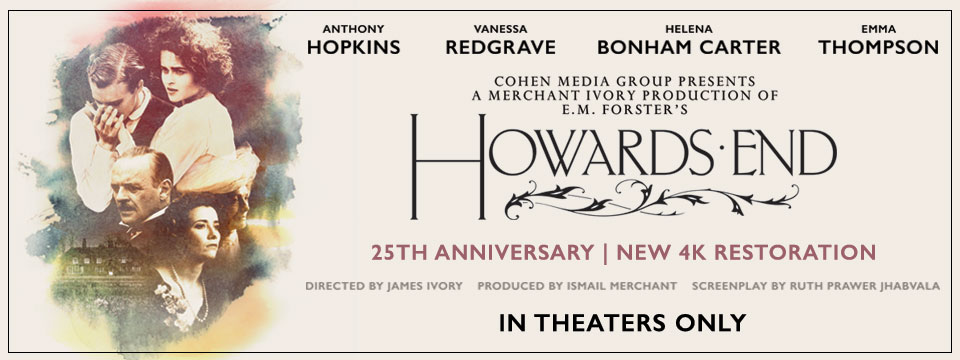
Tussen alle ophef die momenteel heerst in het EYE Filmmuseum rond het Scorsese-retrospectief en het Cinema Erotica-evenement zou je het bijna over het hoofd zien, maar er verschijnt deze maand ook een 'reguliere' klassieker in een glanzend nieuw jasje. Howards End verjaart anno 2017 voor alweer de 25ste keer, wat reden genoeg is voor EYE om een fraai gerestaureerde kopie in roulatie te brengen. Geen slechte keus, want de door James Ivory weelderig geregisseerde registratie van een bikkelharde klassenstrijd die sluimert onder typisch Engelse deftigheid mag zich nog steeds scharen onder de fraaiste Britse kostuumdrama's.
Liefhebbers zullen Ivory herkennen als de man die in de jaren tachtig en negentig van de vorige eeuw een specialisatie voor het kostuumdrama ontwikkelde en de ene na de andere geslaagde toevoeging aan het genre regisseerde. Het werk van schrijver en landgenoot E.M. Forster vormde daarbij een dankbare bron, die met Howards End leidde tot Ivory's beste werk. Het meeslepende romantische drama bleek goed voor negen Oscarnominaties, waarvan er drie verzilverd werden. Desondanks is de algemene kennis over Ivory's klassieker, zo niet zijn hele oeuvre, sterk naar de achtergrond verplaatst. Tijd om Ivory's goede oude tijd weer eens te doen herleven, dachten ze bij EYE ongetwijfeld.
In Howards End neemt Ivory ons mee terug naar het Edwardiaanse tijdperk, zo rond de eeuwwisseling. Een tijdperk vol verandering en sociale onrust, waar de regisseur meermaals dankbaar gebruik van maakte in zijn werk, waarin de standenstrijd een doorlopend thema vormt. Dat geschil wordt in deze film belicht vanuit het standpunt van twee families, de welgestelde Wilcoxes en de ruimdenkende Schlegels uit de middenklasse. Inzet is het Howards End uit de titel, een schitterend landhuis dat toebehoort aan de stervende Ruth Wilcox. De oude vrouw sluit in haar laatste maanden een onwaarschijnlijke vriendschap met de vrijgevochten Margaret Schlegel (de rol waarvoor Emma Thompson terecht haar Oscar verdiende) en schenkt haar op haar doodsbed het huis. Dit tot woede van haar familie, die al het bewijs van de overdracht vernietigt. Maar het lot neemt een frappante wending als de weduwnaar Henry Wilcox Margaret tot ieders verrassing ten huwelijk vraagt. Een onwaarschijnlijk verbond tussen een conservatieve oudere zakenman en een intellectuele jongere dame, goed voor dramatische dynamiek en sociaal vuurwerk tussen de diverse maatschappelijke standen.
EYE heeft puik werk verricht met het oppoetsen van Howards End, want de wereld van de overdadig formele Britse high society spettert als nooit tevoren van het scherm. Toch is de beeldkwaliteit niet zo gladjes scherp als bij sommige digitale verfraaiingsbeurten in 4K. De soms wat merkwaardige scèneovergangen zijn gebleven en de film heeft visueel de onmiskenbare esthetiek van de vroege jaren negentig behouden. Howards End mag gerust zijn leeftijd verraden. Dat was hoe dan ook onvermijdelijk als we de jongere versies van de crème de la crème van de Britse acteerwereld met groot genoegen terugzien. De jeugdige Emma Thompson en Helena Bonham Carter schitteren wederom als de vooruitstrevende zusters Schlegel, die zich in een haat-liefdeverhouding geplaatst zien met de onwrikbare zakenman Henry, waarvoor Anthony Hopkins heerlijk heen en weer schmiert tussen vilein en sympathiek. Dat alles in een onweerstaanbare setting vol bruisende jurken en stijlvolle maatpakken, weelderige sets en de mooiste vroege automobielen ooit op het witte doek. Maar feitelijk slechts allemaal decor in Ivory's vertelling van een conflict tussen de lagere standen en de rijke klasse, die van geen wijken wil weten ondanks de voortschrijdende modernisering. Zelfs niet in een letterlijk verstandshuwelijk.
Zo theatraal als Howards End worden kostuumdrama's vandaag de dag amper nog gemaakt. Of het moet voor de televisie zijn, met vergelijkbare waar als Downton Abbey, dat Ivory's werk meer dan waarschijnlijk als inspiratiebron benutte. Maar in de bioscoop lijken 'period films' die in vrijwel elke zin een 'heavens' of een 'jolly' laten vallen helaas hoe langer hoe meer een uitstervende soort. Dat is jammer in een wereld waarin de verschillen tussen arm en rijk, tussen progressief en conservatief en tussen ruimdenkende en beperkte wereldbeelden met de dag weer meer aan de orde lijken te zijn. Hoewel een zekere mate van oubolligheid Howards End niet ontzegd kan worden, blijkt maar weer dat Ivory's standenstrijd nog lang niet tot een einde is gekomen. Een Ivory-retrospectief is misschien ook niet zo'n slecht idee.
Labels:
Anthony Hopkins,
british,
classic,
costume piece,
drama,
emma thompson,
Helena Bonham Carter,
history,
Howards End. EYE,
james ivory,
re-release,
social drama,
vanessa redgrave
zaterdag 26 juli 2014
Today's Triple News: Comic-Con comes but once a year
With Comic-Con currently in progression, there's bits of news to post online almost every minute. Of course, not everything is breaking news, and I can't post it all by myself. But I post whatever I can whenever I can, like these few bits of news:
http://www.moviescene.nl/p/156653/eerste_fotos_en_poster_derde_hobbit
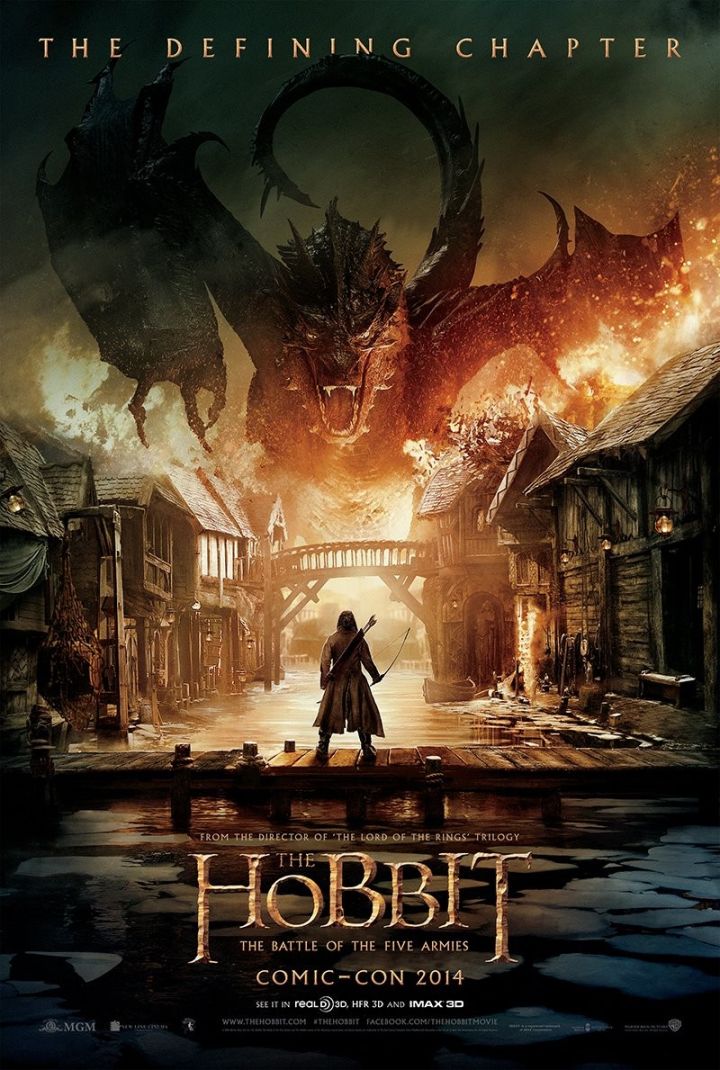
Now that's a damn spectacular teaser poster! While many teaser posters tend to take a rather minimalist (though often inventive) approach to get audiences aware of the impending arrival of the movie in question, this one goes straight for one of the highlights in the movie. It can afford too, since the scene in question, though of major importance and containing some hefty spoilers for those who haven't read the books, takes place early in the movie, with most of the story, including the titular battle, following in its wake. It doesn't give away the outcome of this particular fight - Bard the Bowman versus the humongous dragon Smaug - but makes the inquisitive viewer, especially those who have seen both previous installments, want to see how it ends. Of course, it would seem unlikely Bard stands a chance, but there's been enough small bits of information feeded to audiences in The Desolation of Smaug to let us know even this giant dragon is not wholly invincible. In the meantime, Lake Town burns, just as Smaug promised. That will have consequences, naturally. And that's when the story of this third Hobbit movie really kicks into gear. So expect another three-hour epic fantasy flick in typical Peter Jackson style, laced with neat-o effects and some lovely acting interspersed throughout. As for the first two stills also released here, they aren't nearly as eye catching, but examination of the characters suggests shifting alliances, which might cause them to contain more story information than this poster. It's just not brought in as exciting a manner.
http://www.moviescene.nl/p/156651/anthony_hopkins_in_hbos_westworld
Another major A-list actor has been added to HBO's repertoire. I'm not talking about Evan Rachel Wood, though I don't mean to negatively critique her fine abilities to act. But hey, she already was an HBO alum thanks to her role in True Blood as a spoiled and childish vampire queen. But Hopkins, one of the greatest and most distinguished British actors ever, a 'Sir' nonetheless... you can't get much better than that for any role, be it on TV or on the big screen. Ten years ago, nobody would have believed someone of such stature would ever bother doing TV. It signifies just how much television has changed in respect as a medium. TV is where the best writing and the best acting is found nowadays, few people will disagree. Hopkins sure wouldn't, considering the praise he put into a letter to Bryan Cranston, telling him how thoroughly impressed he was by his performance on Breaking Bad and admiring the series high quality overall. It seems Hopkins himself caught the television bug as well afterwards. Good for us, as grand actors are never a bad thing in any medium, plus it might balance J.J. Abrams' input on HBO's Westworld. Hopkins is playing a bad guy, something he does even better than anything else he plays (cannibal or otherwise). Wood however gets to play a sympathetic character, and an abused artificial one at that. I am hesitant about the love plot written in for her, but at least it adds a dynamic not seen in the original Westworld, a good but dated Sci-Fi movie in itself. The stakes just got raised for HBO. Fortunately there's money to spare soon, now that both True Blood and Boardwalk Empire are coming to an end. All good things must be replaced by other good things after all.
http://www.moviescene.nl/p/156689/comic-con_meer_concept_art_voor_avengers_2
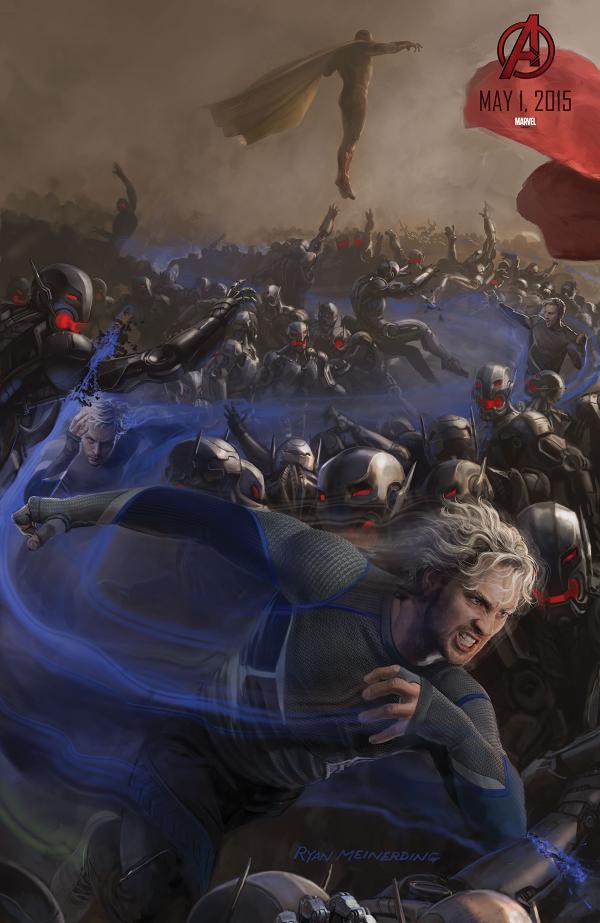
No Comic-Con without a comic book movie, preferably one from Marvel. They call this 'concept art', but from the looks of it, all the concepts found in this poster had already been accepted into the movie as a whole. As we have seen in the various behind-the-scenes stills and official photos for Avengers: Age of Ultron, all the Avengers seen on this eight panel picture look almost exactly as they will in the film. With the possible exception of the Vision, as this is the first glimpse of that character we're offered. They stuck close to his looks in the comics, it would appear, though at this angle it's hard to say for sure. The overall shape and colour scheme sure seem to fit. By comparison, Quicksilver and Scarlet Witch don't look nearly as trite-but-true to their comic book counterparts, though that's done to make them feel a little more realistic. This Quicksilver looks a heck of a lot different from the one seen in X-Men: Days of Future Past so as to minimize confusion between both incarnations. It's gonna be a hard act to outrun the previous take on Quicksilver, though the presence of his sister (and her eventual husband, artificial and all) will surely be helpful in that regard. As is the suggestion this poster gives this Quicksilver will be much more involved into the superhero action, fighting nasty robots and such. The X-Men Quicksilver just bailed out on that one and let his fellow mutants handle those Sentinels all by themselves...
Labels:
Anthony Hopkins,
Avengers,
Avengers: Age of Ultron,
comic-con,
concept art,
HBO,
Marvel,
moviescene,
poster,
the hobbit,
The Hobbit: the battle of the five armies,
westworld
zaterdag 16 november 2013
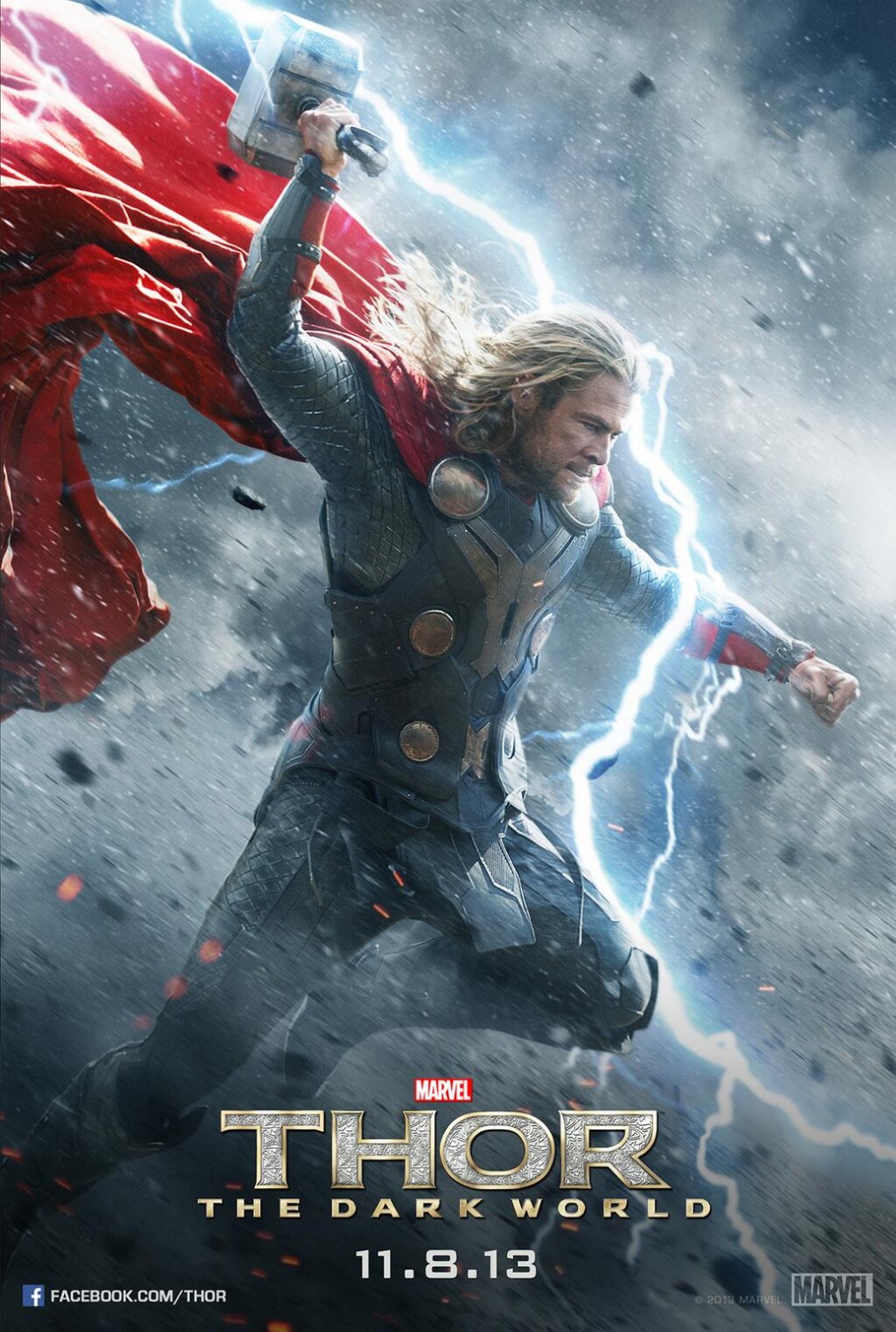
Today's Mini-Review: Thor: The Dark World
The
Odinson returns in his second solo venture, more grandiose than the
last, but still very close in narrative make-up to its predecessor,
despite a change of director. Kenneth Branagh declined the offer to
helm this second installment while female director Patty Jenkins was
fired early on, at which point Game of Thrones director Alan
Taylor took over the reins, and quite successfully so. The
Shakespearean overtones are nevertheless kept in, only enlarged by
his Martinian experience with grand halls, epic battles and conniving
siblings, all too similar in nature to the subject matter so far.
After leaving the Avengers and returning home with his captive
brother Loki, Thor (Chris Hemsworth more beefed up than ever) has
been kept busy for two years fighting rampaging marauders and other
dangers to cosmic stability across the Nine Realms. Meanwhile, his
human love Jane (Natalie Portman) also hasn't taken time off in
search for her divine boytoy by using every scientific means at her
disposal. On investigation in Britain, she stumbles upon a portal to
another place where she is infected by the Aether, a dangerous,
ancient material that is the key energy source of the largely extinct
Dark Elves that once battled the Asgardians for dominance in times
immemorial, and lost. Sensing the Aether has awoken, the few
remaining members of this shadowy race prepare for another shot at
universal power grabbing under the leadership of the wrathful
Malekith (Christopher Eccleston wearing creepy make-up). When they
unexpectedly assault Asgard and kill Thor's mother, the distraught
wielder of the powerful hammer Mjölnir disobeys his heavenly
father's commands and recruits his untrustworthy brother Loki (an
impeccable Tom Hiddleston, again playing the trickster god with the
usual vigour that makes him the most fascinating Marvel villain of
them all) to defeat the Dark Elves before their nefarious plans for
Jane and the universe are brought to their catastrophic conclusion.
The only bond that shares them at this point in their overly
tumultuous relationship is the mutual love for their mother's memory:
otherwise there is no trust or love lost between them. Will Thor
manage to save his girlfriend and everything else, without ending
with a knife in his back at the hands of his seemingly imbalanced
brother, or crushed by the ever stronger Malekith? It will remain to
be seen during a bombastic battle in the British capital (instead of
set in the States, as has been usual in Marvel movies thus far).
The
problem audiences might have with Thor: The Dark World is the
fact it doesn't dare to leave its established comfort zone and
therefore sticks suspiciously close to what we have already seen in
the previous film. Though Thor's cosmic portion of the Marvel
Universe is certainly expanded in terms of scope and story,
thematically speaking there's little to be found that feels new. The
nature of heroism, the love for a mortal woman, the rivalry between
brothers: it has all been done before, but at least The Dark World
doesn't do it badly. In terms of style Asgard has never looked so
glorious to behold: a sharp contrast to the dreadful dead soil of the
barren world of Svartalfheim that had to be conquered and annihilated
for the Norse gods to rise to power – which makes you rethink how
much of 'the good guys' they really claim to be – as we are told in
a fabulous prologue that feels a lot like the opening of a certain
Peter Jackson fantasy blockbuster. Apart from the many predictable
but entertaining scenes of supernatural action The Dark World
provides, also ever present is the level of humour that reminds us we
ought not to take any of this too seriously, as well as keeping us
from forgetting we're watching a comic book adaptation. Key in this
is a reversal of the dynamics between Jane and Thor seen previously,
where he was cast out of his world in order to come to terms with a
“lesser state” of existence for his own good. This time it's
Jane's turn to be a stranger in a strange land as she's swept to
Asgard where her Earthly unsophisticatedness causes many a merry
moment: not because she's overwhelmed by it all, but due to her
impulse to make scientific sense of her new environment, which
startles the Asgardian natives somewhat. Those who hoped for more
Asgardian style dialogue, as present in the comics, will find
themselves disappointed though, as the gods unfortunately speak as
much of a contemporary language as our own. Thor and Jane make a
decent on-screen couple, but it's the supporting cast that succeeds
the most in keeping us engaged, with Hiddleston worthy of most
praise. It is often said a movie is only as good as its bad guy,
which should have made The Dark
World a very good movie, but Loki is forced by the plot to
be submissive in terms of villainy to Malekith, despite the fact Loki
far exceeds this new villain in being interesting (no criticism on
Eccleston's performance it must be stated), mostly thanks to his
almost heartfelt loss of his mother, which for a moment makes you
think he genuinely wants to help Thor in exacting revenge. And by
pulling that off convincingly, Hiddleston again reveals why he was
such a good choice for this loveable rogue. Dark or not, it's Loki's
world, and we would do well never to underestimate him as everyone
else does.
And
be sure to stick with the credits a while longer to witness a largely
unrelated but neverthless hugely intriguing typical Marvel 'bridge'
to next year's Guardians of the Galaxy, which will expand the
cosmic corner of the Marvel Cinematic Universe even further. It stars
Benicio Del Toro with a funny accent and a silly hairdo, so you have
no valid reason to miss out on it, really.
Labels:
action,
Anthony Hopkins,
asgard,
Chris Hemsworth,
comic book,
fantasy,
gods,
Loki,
Marvel,
natalie portman,
odin,
superhero movie,
Thor,
thor: the dark world,
tom hiddleston
zaterdag 17 augustus 2013
Today's Mini-Reviews: oldies packing some punch
The
Lone Ranger: ***/*****, or 6/10
Big
budget remake of the classic radio play and television series
appropriates the success formula formerly applied to the Pirates
of the Caribbean films, which is not surprising considering the
same people and studio that made those swashbucklers are behind this
project. Produced by Jerry Bruckheimer for Disney and directed by
Gore Verbinski, The Lone Ranger once again makes ample use of
Johnny Depp's uncanny talent for playing weird, seemingly mentally
unbalanced outcasts, considered a main audience draw for which Depp
as usual received top billing, even though he does not play the
titular character (in that regard it's Alice in Wonderland all
over again). This time Depp assumes the mantle of the Lone Ranger's
iconic Indian sidekick, Tonto, who recalls his adventures with the
movie's actual hero at extreme old age, stuck in a sideshow tour as a
noble savage. This framing of a tale within a tale is rather annoying
as the movie tends to swivel from one version of Tonto to the other
at moments where such distraction is not at all warranted and takes
the pace out of the piece. Armie Hammer (The Social Network)
plays John Reid, an overly morally righteous lawyer who must cope
with the fact that the rules of law simply don't apply in the Wild
West, especially when those in power make their own law. As a result,
his valiant brother is killed and he himself is left for dead, until
Tonto “resurrects” him and helps him get in shape as a masked
Ranger who fights for justice and protects the weak from those who
would corrupt the law for their own nefarious purposes. Enter an
unscrupulous railroad tycoon and his sinister henchman with a taste
for excessive violence (the ever eerie William Fichtner), who mean to
instigate a war with the Indians in order to move in on their
territory that contains huge silver deposits. Reid and Tonto, who is
also an outcast amongst his own tribe for being a supposed nutcase,
must find a way to expose the plot as well as save Reid's sweet
sister-in-law and her young son.
This
results in the usual action driven plot, moving from setpiece to
setpiece through all the old Western locales, including a whorehouse
run by Helena Bonham Carter (equipped with an ivory faux leg of large
calibre), Native American teepee villages and the indispensable
classic Fordian landscapes of canyons and unusual rock formations no
Western ought to do without. Except from the climactic train chase,
which admittedly is one of the finest and funniest ever put on film,
most action scenes cannot escape a sense of staleness. Depp does his
usual thing on autopilot, playing Tonto as a psychologically
ambiguous character that gets into trouble regularly but always
manages to pull himself out, more with luck than through his wits as
he stumbles into one Keaton-esque gag after the other, while the
naive but handsome Reid follows the predictable path from idealistic
city boy to genuine Western hero. As was the case with the Pirates
movies, there is a distinct supernatural flavor to the story which
both feels confusing and often out of place, though adding to Tonto's
mystique but also to his establishment as a totally silly character.
And what's the deal with having Fichtner cut out and consume the
hearts of his adversaries while he's clearly a stupendously terifying
character already? Despite Depp's presence, The Lone Ranger
couldn't connect with American audiences and ended up a domestic
flop, though at the moment of writing it's too early to tell whether
the same is true from an international perspective. For this failure
producers and actors, in an odd moment of anger made public, blamed
the critics who according to them panned the movie for its numerous
production troubles, but that's a wholly nonsensical notion since due
to the ever growing advent of opinionated online writing about movies
critics just aren't heeded to as they once used to be: also, many
movies critics regard as bad continue to do well regardless
(Transformers, Scary Movie, etc.). Apparently the
people that made this movie just didn't see both the lack of creative
quality in their own project – though it's not as bad as some would
have you believe, it's definitely not a grand and memorable
blockbuster flick either – and the overuse of Disney's formulaic
line of thinking that already started to backfire on the Pirates
movies. Incidentally, those that follow the current TV-series Hell on Wheels, that largely delves into the same historic and thematic material as this film, will find little in here that that show didn't do before (and better). Except for the train chase of course.
Red
2: ***/*****, or 7/10
Sequel
to Red (2010) (Retired: Extremely Dangerous), based on
the graphic novels by Warren Ellis, continues the simple tradition
its predecessor so successfully kicked off, delightfully combining
well respected grand actors with dynamic action sequences and any
number of nifty explosions. Bruce Willis, John Malkovich and Helen
Mirren reunite as a band of retired government agents, all still
extremely accomplished killers nevertheless. Morgan Freeman has been
traded in for Anthony Hopkins and David Thewlis, which is not the
worst deal imaginable though Freeman's charming character is still
sorely missed (but even in an over-the-top action franchise like
this, dead is dead). Living a quiet, everyday life with his new
girlfriend Sarah (Mary-Louise Parker), ex-CIA operative Frank Moses
(Willis) has no intention of getting mixed up with gunfights and
conspiracies again, but such things tend to find him regardless. When
his paranoid, mentally unhinged pal Marvin resorts to faking his own
death, Moses finds himself sucked into another plot revolving around
a portable nuclear bomb hidden in the Kremlin, something he is
rumoured to be involved in. As was the case in the previous film,
it's necessary for him and his friends to travel around the globe in
order to piece together the puzzle, which brings them to exotic (or
close to), luxurious locales including Moscow and Paris, a staple of
spy films but delivered with ample fervour not to get noticed. Thrown
in the mix are Hopkins as an unbalanced inventor of weapons of mass
destruction who has spend 20 years in a looney bin, Thewlis as a
shady information dealer who much prefers the good things in life
(like hideously expensive rare wines) over gunplay and gratuitous
violence, Catherine Zeta-Jones as a foxy agent sharing a history with
Moses and out to seduce him once more, and, as before, Brian Cox as a
former Russian KGB-officer and hopeless romantic who appreciates the
sight of his beloved Helen Mirren offing people over all else. As the
merry band of aging killers shoots and bombs its way through the
plot, Moses must also come to terms with his younger and
inexperienced girlfriend, who now considers this sort of bloody
adventure a neat holiday trip and bonding experience, and takes as
much points as she can in the art of mayhem, much to his chagrin (and
a far cry from the not quite so enthusiastic Sarah from the first
film). Suffice to say, if you're not a fan of guns and other assorted
weaponry, this movie is definitely not recommended to you. However,
like the first Red, this successor is nothing but a highly
entertaining action flick that appropriates the huge talents of the
renowned actors it has brought together to great effect, clearly
enabling the ensemble to have a blast itself. Though the movie is
otherwise devoid of narrative surprises, the high levels of good fun
and a decent number of high paced action scenes make for a decent way
to spend your two hours.
woensdag 22 mei 2013
Today's Mini-Reviews
Hitchcock:
****/*****, or 8/10
Fascinating
take on the production of Alfred Hitchcock's (in)famous masterpiece
Psycho (1960). Of course, we all know how well that ended up,
so there's little suspense about this particular film on the Master
of Suspense, but there is a lot of love for his work and his persona
to be found in this terrific 'film about film'. In the late Fifties,
director Hitchcock (another grand role on the already hugely
impressive resumé of master-actor Anthony Hopkins) is bored with
repeating himself as the audience seems to desire. After releasing
yet another spy film – North by Northwest, another legendary
movie in his oeuvre – Hitch decides to do something else and finds
just that in the novel Psycho, based on the heinous crimes
committed by serial killer Ed Gein. Ridiculed by friends and
colleagues alike for adapting what is considered a trashy,
sensationalist pulp novel, Hitch proves undeterred and sets out in
making this movie that is bound to shock the nation. However, his
stubbornness soon threatens his marriage to his beloved wife and
partner Alma Reville (the current 'grand dame' of British actors,
Helen Mirren) who feels neglected and starts off on her own search
for professional happiness. Director Sacha Gervasi clearly did not
mean for this movie to be seen as a true biopic and thanks to the
many instances of black humour, sometimes completely over the top,
it's hard to consider it as such. Nevertheless, he convincingly
captures the sense of pressure and discomfort the real Hitchcock
might have experienced during this production, considered his most
tasking and laborious shoot. Gervasi brilliantly showcases Hitch's
emotional troubles by having him engage in inner dialogue with his
darker self in the shape of the murderer Gein (the ever alarming
Michael Wincott), at which point all doubt is taken away: Hitchcock
is not an attempt at historical accuracy, but a loving fictional
reconstruction of the turmoil that might very well have plagued the
corpulent director himself during his most trying production. The
whole is interspersed with many references to classic film lore for
movie buffs to enjoy, as well as a number of fine actors portraying
key people involved in making Psycho the shock ride of a
thriller it ended up being, including Scarlett Johansson as Janet
Leigh, Michael Stuhlbarg (Boardwalk Empire) as Lew Wasserman
and James D'Arcy (Cloud Atlas) as Anthony Perkins. For all
those who loved Psycho, Hitchcock ought to be required
viewing.
Broken:
****/*****, or 7/10
Harrowing
and depressing British social drama about a young girl named Skunk
(wonderful debutante Eloise Laurence) whose cheerful life is
shattered when she witnesses a brutal case of violence in her street.
Sadly for her and everyone else in her neighbourhood, it's only just
the start of a series of disturbing events that spiral ever more out
of control until all hope for a peaceful resolution seems lost. The
cause for all the trouble is an increasingly anti-social single
parent household run by a father with severe anger issues (you can't
really blame him) and his three teenage daughters, one more loathsome
and dislikable than the other (great acting but rarely do you
encounter characters you wish would die a horrible death so badly!).
Despite Skunk's caring father (Tim Roth playing a good guy for a
change, succeeding in making him look sympathetic despite failing to
contain the situation and protecting his daughter) and her uplifting
relationship with a young teacher (Cillian Murphy), things go ever
more awry with deadly consequences. Romantic involvements break down,
the innocence of youth is destroyed and everyday life soon turns
lethal. But hey, if you read the newspapers you'll find this sort of
thing happens on a daily basis: this can basically happen to
everybody, including children. With Broken, director Rufus
Norris has made a gripping and thought provoking drama, but its
contents are so disheartening it's hard to sit through it all. To his
credit it sticks with you for longer than you would expect, but
that's not necessarily a positive thing, considering all the
bleakness he serves. Even though it's meant as a serious study into
the deterioration of everyday life in an average neighbourhood
following a single, at first seemingly isolated, violent event and
the distressing repercussions it has on those involved, some notion
of hope would have been most welcome. One cannot, and should not,
deny that Broken is a thoroughly engaging film experience
regarding a relevant social topic, but it would not be a bad idea to
let people know in advance what realistic horrors they will need to
endure.
maandag 19 maart 2012
Beowulf
Rating:
****/*****, or 7/10
Second
foray of Robert Zemeckis into the realm of 'performance capture' (the
first being The Polar Express (2004), allowing digital artists
to record the motions of actors in blue suits on stage, especially
their facial movements for maximum emotional impact, and filling in
everything else via the computer afterwards. This time Zemeckis
appropriated this technique for telling the epic tale of the medieval
hero Beowulf (Ray Winstone), a valiant but arrogant warrior who comes
to the aid of a king (Anthony Hopkins) who is plagued by the hideous
monster Grendel (Crispin Glover). Beowulf fights the monster
successfully, but must than deal with his seductive mother (Angelina
Jolie) who promises him fame and riches in return for him giving her
a new son. Beowulf accepts, but finds he made a deal with the devil:
though he gets what was promised it makes him feel empty and alone.
When his son returns as a dragon and lays waste to his kingdom,
Beowulf gets one last chance to set things right and be a genuine
hero again. Plenty of good action and amazing visuals, but the
digital technique just didn't prove able to convincingly breathe life
into the pixelized cast, making them feel eerily artificial and
soulless. It did prove effective for getting Angelina Jolie stark
naked though. Zemeckis, not one to give up on an evolving means of
effects, applied performance capture a third time to his take on A
Christmas Carol (2009). Beowulf was the first film I ever
watched in (IMAX) 3D, and still one of the very few I feel made
effective use of the 3D process (just before the 3D craze got a hold
of Hollywood and most blockbusters used it to squeeze more bucks out
of the audience without delivering the promised goods): the way those
giant sea serpents alone came at you made the movie quite
spectacular, despite its digital shortcomings. Overall, a good
version of the old English poem, effectively combining the very old
with the very new.
Starring:
Ray Winstone, Anthony Hopkins, Angelina Jolie
Directed
by Robert Zemeckis
USA:
Paramount Pictures, 2007
vrijdag 3 februari 2012
Red Dragon
Rating: ***/*****, or 6/10
Hannibal
op herhaling
Een getraumatiseerde FBI-agent jaagt op
een geslepen seriemoordenaar met de bijnaam 'de Tooth Fairy', die
twee families uitgemoord heeft. Hiervoor heeft hij de hulp nodig van
een andere psychopaat die een levenslange gevangenisstraf uitzit en
zich aan kannibalisme schuldig heeft gemaakt, ondanks zijn briljante
geest. Tussen agent en gevangene ontvouwt zich een mentaal
kat-en-muisspel, met als inzet het stoppen van de moordenaar, voordat
hij opnieuw slachtoffers maakt. Ziehier de premisse van Red
Dragon, de meest recente verfilming van een boek van Thomas
Harris.
Wat zegt U? Dit plot klinkt U bekend
in de oren? Dat kan goed kloppen, want zestien jaar geleden is
Harris' boek al eerder verfilmd, destijds onder de titel Manhunter.
Mooifilmer Michael Mann maakte de eerdere versie en gaf het verhaal
een stilistisch geslaagde vorm zonder de diepgang van het boek tekort
te doen. Voor Red Dragon werd Brett Rattner aangenomen, de man
die ons twee delen Rush Hour gaf, films die het meer van
grappen en grollen moesten hebben dan van een gelaagd plot of
emotionele diepgang. Rattner leek een verkeerde keus, maar gelukkig
blijkt zijn versie niet de gevreesde totale mislukking, hoewel het
niveau van Mann's werk niet gehaald wordt. Ratter laat merken
voldoende in huis te hebben om tenminste een redelijke thriller in
elkaar te zetten, waarbij het leeuwendeel van de prestatie echter
door twee topacteurs geleverd wordt in hun rol van het duo
psychopaten.
Troef
is uiteraard Anthony Hopkins, wiens fantastisch gespeelde Hannibal
Lecter de hele reden van de herverfilming van Harris' roman vormt.
Manhunter was het eerste deel in een reeks films rond de
charmante kannibaal, die toen gespeeld werd door Brian Cox. Diens
Lecter had een betrekkelijk kleine rol, terwijl Hopkins' Lecter in
Red Dragon aanzienlijk vaker in beeld is. Hopkins speelde de
rol het eerst in The Silence of the Lambs van regisseur
Jonathan Demme, een meesterlijke thriller die binnen korte tijd tot
een schoolvoorbeeld in het genre gerekend werd en bovendien vijf
Oscars in de wacht sleepte, waaronder één voor Hopkins zelf. Tien
jaar later volgde Ridley Scott's Hannibal, waarin Hopkins
opnieuw tekeer mocht gaan als de menseneter, in een macabere film
voorzien van een barokke stijl en meer gore dan we tot dan toe
van Lecter gewend waren. Desondanks haalde de film een flinke
opbrengst binnen, waardoor een remake van Manhunter,
nu met Hopkins in plaats van Cox, een logische keuze bleek.
Als zodanig ontstaat er nu een Lecter-trilogie rond Hopkins' rol
waarin het meest recente deel een prequel voor de beide anderen
vormt: Manhunter wordt nu tot een buitenbeentje gereduceerd.
Om het
verband tussen Red Dragon en de beide andere “echte”
Lecter-films te benadrukken is Lecter's rol flink opgeschroefd,
inclusief een introductie van het personage welke ontbrak in
Manhunter, alsmede een opzet voor The Silence of The Lambs
aan het eind van de film. Zodoende krijgt de kijker meer dan genoeg
informatie over de plaats van Rattner's versie in de tijdlijn van de
trilogie, ook al zal dit overbodig zijn voor het merendeel van het
publiek.
Bij
aanvang van de film is Lecter nog op vrije voeten en werkt hij samen
met agent Will Graham (Edward Norton, Fight Club) om een
moordenaar op te sporen, die hij zelf blijkt te zijn. Graham is aan
hem gewaagd en weet Lecter te ontmaskeren, wat echter beide mannen
haast het leven kost. Het resultaat: Lecter krijgt levenslang,
terwijl Graham wegens het ontstane trauma de FBI verlaat. Zodra de
Tooth Fairy echter toeslaat wordt hij te hulp geroepen, maar daarvoor
moet hij opnieuw met Lecter samenwerken en diens hersenspinsels in
zijn geest toelaten. Norton zet een adequate ex-agent neer,
getroebleerd door het trauma rond zijn bijna fatale eerdere aanvaring
met Lecter, geplaagd door schuldgevoel over het gevaar voor zijn
eigen gezin in dit nieuwe conflict met een slachter van families, en
geobsedeerd om de geest van de maniak te begrijpen voordat deze
opnieuw toeslaat.
Echter,
Norton's Graham steekt schril af bij Hopkins' Lecter, die opnieuw een
weergaloze prestatie levert in zijn vertolking van het gekke genie:
alweer is hij charmant, gestoord, en mateloos intrigerend in elke
scène. Vanuit zijn cel lijkt hij de touwtjes stevig in handen te
hebben en te spelen met zowel Graham als de Tooth Fairy, zonder
duidelijk te maken aan wiens kant hij precies staat. Waar Norton een
minder overtuigend spel aflevert dan Hopkins, geldt dat niet voor
Ralph Fiennes (The English Patient), die zich uit mag leven
als de waanzinnige Tooth Fairy. Fiennes zet hem uitstekend neer als
een sobere, schuchtere man geplaagd door een jeugd vol pijn en
misbruik, die wenst te transformeren tot een hogere macht en moord
daarvoor niet schuwt. Hoewel Fiennes en Hopkins het scherm nooit
delen zijn ze aan elkaar gewaagd, ieder in hun eigen variatie op het
thema van de megalomane moordenaar. Bovendien is het goed te zien dat
de film niet per se inzakt als Hopkins niet in beeld is.
Ondanks
het sterke acteerwerk van zowel Hopkins als Fiennes komt Red
Dragon niet helemaal uit de verf. De film voelt teveel als een
herhalingsoefening, niet alleen omdat het om een al eerder verfilmd
werk gaat maar ook omdat het plot wel erg grote overeenkomsten
vertoont met The Silence of the Lambs, waarin ook een agent
een seriemoordenaar moest vangen met Lecter's hulp. Bovendien
ontbeert Red Dragon zowel de finesse van die film als de
geslaagde, macabere stijl van Hannibal. Met zijn rechttoe
rechtaan manier van werken toont Rattner zich geen meesterregisseur
als Demme of Scott. Zoals het geval was met zijn vorige films voert
hij zijn vak capabel genoeg uit en levert hij een onderhoudend
product af, maar van diepgang en stijl heeft hij geen kaas gegeten.
Red
Dragon is redelijk geslaagd als een bij vlagen spannende
thriller, maar deze status is hoofdzakelijk te danken aan de
topacteurs die zich in de rol van psychopaat verdienstelijk maken. In
andere opzichten is het slechts een “Silence light”,
alweer een film met Lecter die volgens het bekende stramien zijn
kwade genie botviert op een gespannen agent in diens zoektocht naar
de zoveelste enge psychopaat.
Labels:
Anthony Hopkins,
Brett Rattner,
cannibal,
cannibalism,
Edward Norton,
Hannibal,
Hannibal Lecter,
psycho,
psychopath,
Ralph Fiennes,
red dragon,
silence of the lambs,
slasher,
Thomas Harris,
thriller,
Tooth Fairy
woensdag 1 februari 2012
Amistad
Rating ***/*****, or 7/10
Spielberg's
testimonial against the nineteenth-century African slavery industry. On the slaver
vessel La Amistad in 1839, a group of slaves revolted, after which
the ship was steered towards the USA, where a lengthy string of
courtroom sessions controlled the mutineers' fate. Spielberg
unfortunately lets the courtroom scenes dominate the film too much,
which makes for a rather static and lengthy view that often fails to
compel its audience, but the flashback scenes that illustrate the
deplorable suffering of Africans aboard slaver ships fully
underscores the horrors they underwent and the issues at stake for
the Amistad slaves, and feels like a fist punch in the face of
viewers who might otherwise have fallen asleep. The various parties
involved, including the Southern and Northern American states, the
British Navy and the Spanish royalty provide for an historically
intriguing but narratively chaotic overall plot line. Spielberg made
this film with the best intentions, but it's obviously not as much
his cup of tea as the Second World War or the Holocaust proved to be.
The movie does include some powerful performances though, both by
veteran actors the likes of Anthony Hopkins and Morgan Freeman, as
well as relative newcomers Matthew McConaughey and Djimon Hounsou.
Starring:
Morgan Freeman, Djimon Hounsou, Anthony Hopkins
Directed
by Steven Spielberg
USA:
Dreamworks SKG, 1997
Abonneren op:
Posts (Atom)