Posts tonen met het label nudity. Alle posts tonen

vrijdag 4 november 2016

Today's Review: Je me tue a le dire


Het is een bekend fenomeen in de filmgeschiedenis: de man die niet op kan groeien en een jongetje lijkt te willen blijven. Het type dat eeuwig bij zijn moeder woont en zijn draai in de maatschappij maar niet kan vinden. Al decennialang is het een dankbaar onderwerp voor drama en komedie, dus probeer met dat gegeven nog maar eens origineel uit de hoek te komen. De Belgische debuterend regisseur Xavier Seron zoekt het in absurdistische toon en stijlvolle vormgeving. Het resultaat Je Me Tue à le Dire steekt ondanks, of vreemd genoeg vooral vanwege die onmiskenbaar eigenzinnige aanpak niet boven thematisch verwante films uit.

De Waalse Michel is zo'n typisch moederskind, een man van in de dertig die nog bij zijn overdadig liefkozende mama inwoont. Hij is blijven steken in een hopeloze bijbaan in een elektronicazaak en houdt zich meer bezig met strips en speelgoed dan met zijn vriendin, die het begrijpelijkerwijs niet bij hem uithoudt. Seron voegt er nog een element met komisch potentieel aan toe door zijn protagonist een onverbeterlijke hypochonder te maken, waardoor Michel voortdurend meent de ene na de andere kwaal te hebben opgelopen. Borstkanker is zijn grootste angst, want nadat die ziekte bij zijn moeder werd geconstateerd en even snel en mysterieus weer verdwenen leek, treft hij een verontrustend knobbeltje aan in eigen borst. Michel heeft toch al een merkwaardige fascinatie met borsten, naar verluidt doordat zijn moeder destijds te lang doorging met borstvoeding. Je Me Tue à le Dire is niet voor niets gevuld met verwijzingen naar borsten, van voedsel tot architectuur, als een koortsdroom van een prepuberaal joch dat maar niet over die puberteitsgrens heen stapt. Die beeldtaal wordt snel onleuk.

Seron vertelt Michels relaas in zijn opvallend gestileerde debuutfilm in vijf hoofdstukken, waarin niet bepaald grappige thema's als angst voor eenzaamheid en de onvermijdelijke dood de hoofdingrediënten vormen voor humoristische situaties. Humoristisch bedoeld althans, want door de ongebruikelijke vormgeving is het moeilijk relateren aan Michels bizarre belevenissen. Aan de acteur achter dit mankind ligt dat niet, want hoofdrolspeler Jean-Jacques Rausin laat zien wel degelijk behept te zijn met het nodige komische talent voor een rol als deze. Zijn Michel is aanvankelijk een sympathieke loser, maar diens waanideeën maken hem hoe langer hoe meer een onvriendelijke verschijning. De kerel en zijn bestaan doen direct denken aan Gijs Naber in het recente, inhoudelijk sterke gelijkenissen vertonende Aanmodderfakker van Michiel ten Horn, die echter juist een omgekeerde omwenteling doormaakte en steeds meer onze sympathie verdiende. De overeenkomsten tussen beide films en filmmakers zijn frappant, want ook Ten Horn bedient zich van een geheel eigen stijl om zowel drama als komedie op te wekken. Bij Seron trekken die stijlmiddelen echter te veel aandacht naar zichzelf toe om daarin te slagen.


Het korrelige zwart-wit waarin de film is geschoten, is vanuit stilistisch oogpunt de meest voor de hand liggende blikvanger. Waar Ten Horn juist gebruikmaakt van overdadig kleurgebruik, kenmerkt Seron zich door een precies tegenovergestelde strategie, met toch hetzelfde doel: het vervormen van de realiteit om het surrealistische gehalte van zijn zwarte komedie te onderstrepen. Het maakt zijn film afstandelijker dan waarschijnlijk de bedoeling was, en het werd ons vanuit dat oogpunt toch al niet makkelijk gemaakt met de statische cameravoering en pretentieuze hoofdstukindeling. Serons voorkeur voor christelijke symboliek zorgt nog even voor een overtreffende trap. Als het beter gaat met zijn moeder denkt Michel haar ziekte te hebben overgenomen en lijdt hij dus voor een ander. Zelfs de aureool blijft hem niet bespaard om de metafoor extra te benadrukken. We mogen echter hopen dat de Christus van weleer niet zo'n rare obsessie met borsten had.

In het dagelijks leven is er niets amusant aan borstkanker en ondanks Serons verwoede pogingen om in Je Me Tue à le Dire een komisch verhaal over een mogelijke kankerpatiënt te vertellen blijft dat beeld gehandhaafd. De irrationeel angstige en steeds onaardigere Michel denkt dat hij spoedig zal sterven. Niet voor niets opent de film met een scène waarin hij een doodskist uitprobeert, om aan het idee te wennen. Niet bijzonder geestig of inventief, geen enkel stijlmiddel verandert die tekortkomingen. Michels botte houding tegenover de vrouw die hem het leven schonk en volgens hem nu ook de dood, is eveneens niet zozeer grappig als wel irritant. Serons neiging om de tekortschietende komedie extra sjoege te geven met een overdaad aan religieuze symboliek en verwijzingen naar de kunstgeschiedenis werkt averechts. Het reduceert de film tot een curiositeit. Jammer, want hij heeft genoeg collega's in eigen land die wel opvallend bedreven zijn in het mengen van zwaarmoedige thema's met gitzwarte, surrealistische en bovenal geslaagde humor. Hopelijk leert hij voor zijn volgende project van hun voorbeeld.

zaterdag 23 november 2013

Today's Mini-Review: La Vie d'Adèle


La Vie d'Adèle: ****/*****, or 8/10

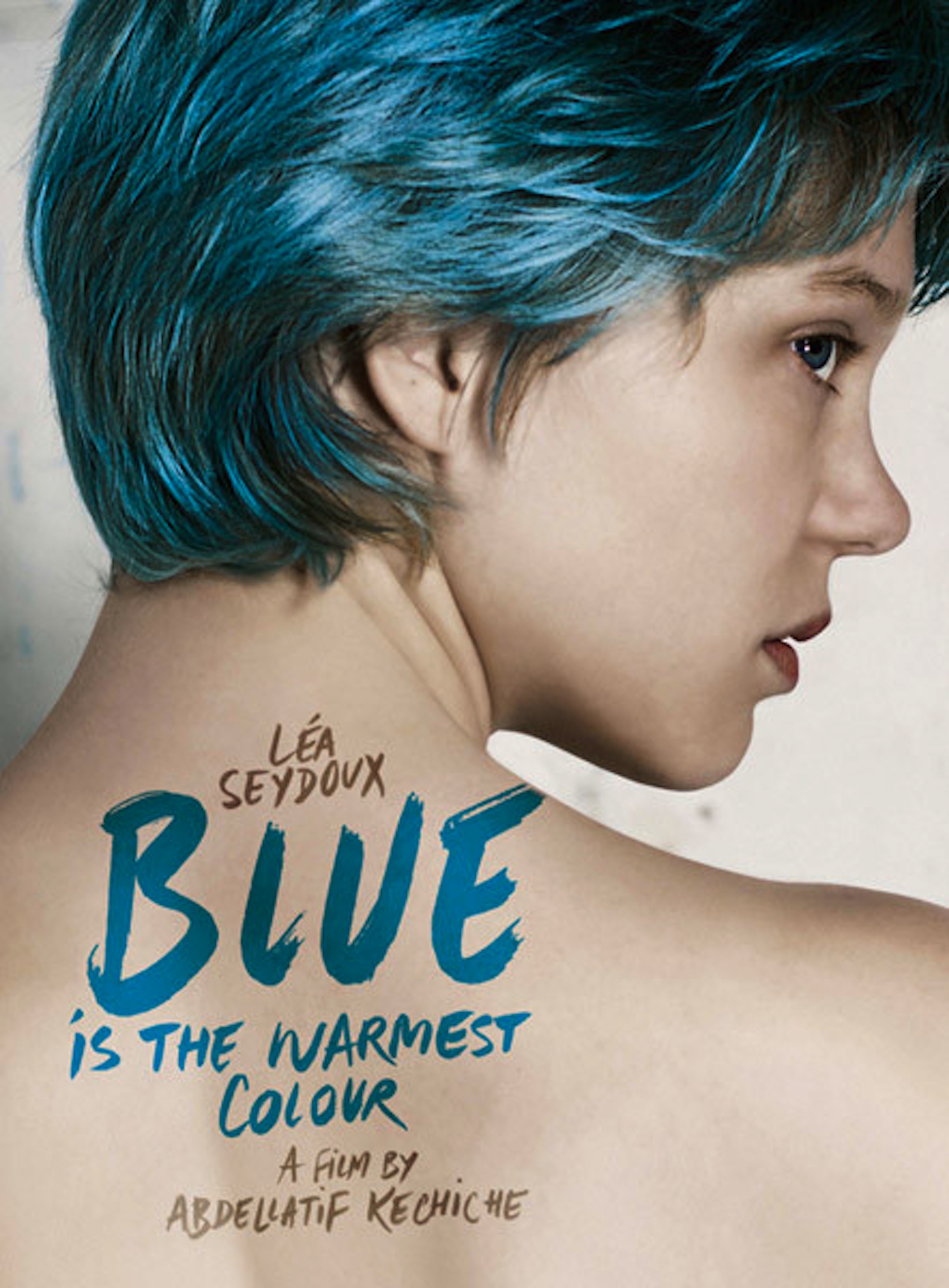
Abdellatif Kechiche's exploration of love, released in some territories under the title Blue is the Warmest Color, packs quite a powerful punch in terms of both emotional and controversial contents. This microcosmic three-hour epic follows the young Adèle (relative newcomer Adèle Exarchopoulos) during the evolution of her first love and sexual awakening, divided into two distinct chapters. In the first, the teenage girl is struggling with societal expectations and personal preferences. Though she physically experiments with boys, she quickly grows confused and disappointed as it doesn't seem to be able to stimulate her as she has been brought up to believe it should. A circumstantial kiss with a girl leads her to suspect she is looking for love in all the wrong places, a hypothesis soon tested out in a gay bar. When she meets the free-spirited Emma (Léa Seydoux), who has a habit of dyeing her hair blue, the two connect almost instantly, which leads them to start the road down a genuine romantic relationship, which includes many a scene of passionate same-sex intercourse. In the second chapter, we find the pair some years down the road, after Adèle has graduated and is aspiring to become a elementary school teacher, while Emma is starting to come into her own as an artist. Despite their love continuing to flourish, the element of novelty has worn of and Adèle considers she might have jumped to conclusions about her sexual nature as she finds herself interested in male partners after all, which causes her to be unfaithful to Emma and attempting to lie about it afterwards to no avail. Emma uncovers her infedelity and in a fit of rage kicks her out of the house. Adèle must come to terms with the sad fact she has lost her first love due to her own faux pas, but it will take her quite some time to recover from this emotional trauma.

La Vie d'Adèle must surely have been an extraordinary ordeal for the two young actresses carrying the piece in terms of filming. Kechiche tells Adèle's story relying on close-ups for most of the film, their every facial nuance laid bare, which makes us feel like we're right on top of them continuously. Correspondingly, the two women also spend a lot of time on top of each other, in a number of quite explicit lesbian sex scenes that leave next to nothing to the imagination, covering the entire range of physical positions you can think of where two women are involved. Though this apparent excess of groping, fingering and tribbing appears titillating at first, these scenes carry on for far longer than feels comfortable for the audience. However, they are yet another natural part of the everyday love life of these girls in the director's mind and as such ought not be censored for the sake of the audience's own inhibitions, nor are they meant to arouse. Accusations of blatant pornography cannot be wholly dismissed, but clearly are not Kechiche's sole intentions, whatever the levels of controversy and thus publicity these scenes might spark. In that regard, he also holds little interest in the homosexual nature of the mutual love he examines. Though at first the concept of a girl falling in love with a girl and the views thereof in society, i.e., Adèle's high school and home environment, relate the usual notions of otherness and awkwardness, the story quickly evolves to the point where that fact simply matters not. Though the two women don't openly flaunt their love for each other at every turn, the gay side of their relation is quite apparent yet never the subject of open criticism: these are just two people in love, it's as simple as that for Kechiche. Whether it is intended as such or not, it's quite a statement to make in contemporary France, where homosexuality is still a matter of heated debate and even violent confrontations. Kechiche doesn't seem to care about current day politics. Realism, and realism only, is key, as he illustrates by making effective use of improvisation throughout the film, the script only used sparingly to help the actresses establish their own natural rhythm of conversing and interacting, instead of merely adhering to the lines written down. It's a monumental task for any actor/actress, no matter how experienced, but both of them succeed to completely convincingly results: Exarchopoulos in particular is to be applauded for the achievement of portraying the inexperienced Adèle to such compelling success, considering her own lack of experience in terms of acting. La Vie d'Adèle deconstructs the theme of love entirely, from its inception to its brutal ending, its joys and its horrors exposed, fully justifying its running time of 187 minutes despite the risk it carries of discouraging the audience. Kechiche is not afraid to end the movie on a note of ambiguity in regard to Adèle's own understanding and weathering of the concept, as she is confronted by the mark it has left on her. Sometimes love is a blessing, but an equal amount of time it's a curse, the director remarks.