Posts tonen met het label homosexual. Alle posts tonen

zaterdag 21 mei 2016

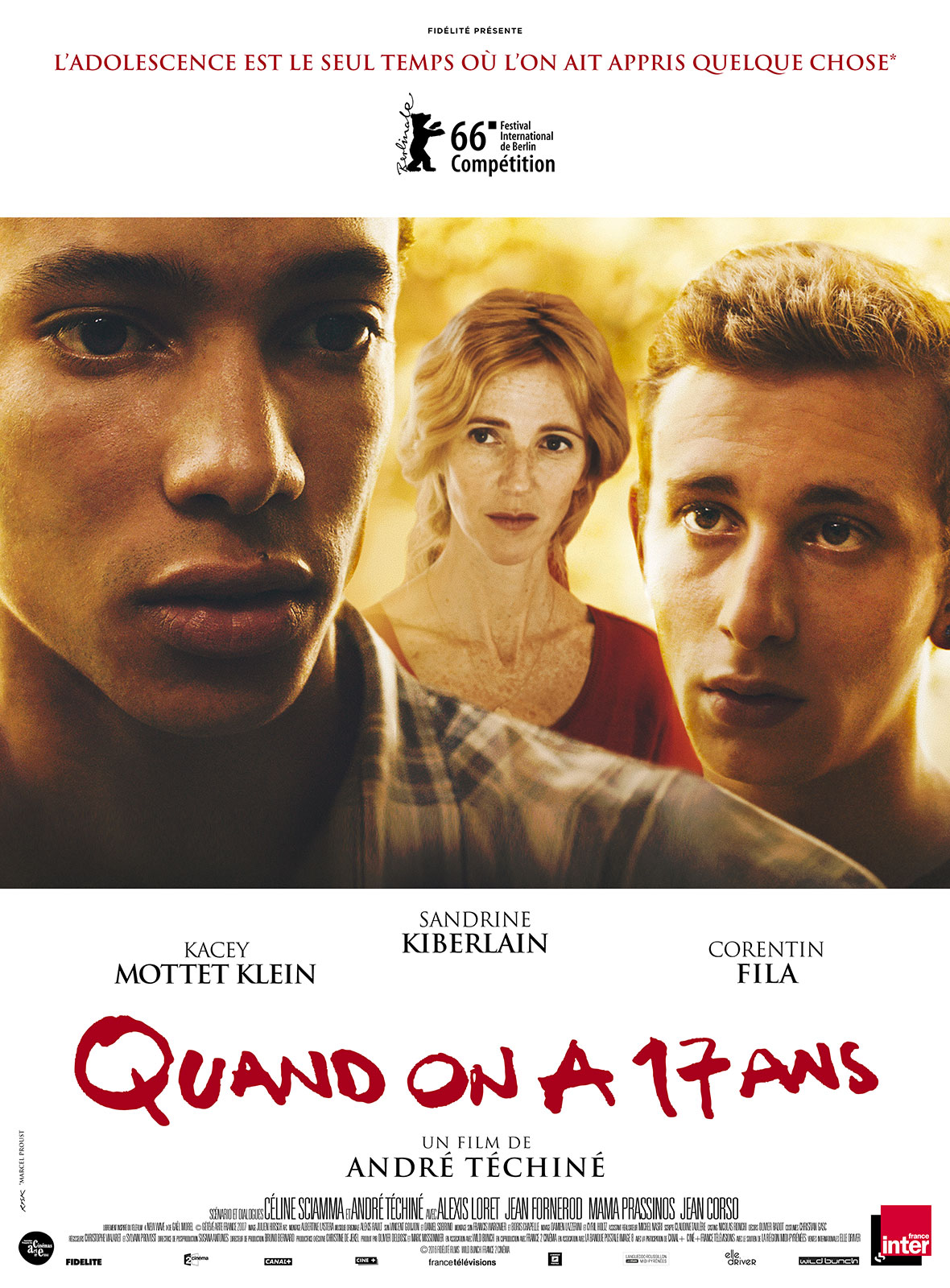
Today's Review: Quand on a 17 Ans


I've fallen a little bit behind on updating my blog with my latest reviews. Let's see whether I can undo some of the damage.

Quand on a 17 ans - recensie

This film, which in English speaking territories is released under the title Being 17, at first has all the hallmarks of your typical teenage drama. There's two seventeen year old boys and a fair bit of animosity between them. However, where usually there's girls or social status involved in explaining said strife, that is not the case here. In fact, there's no particular cause for their mutual dislike at all, it's just there. So we can imagine the horror on the one boy's face when his mother invites the other to come live with them. It's a generous but odd decision, considering their rivalry is there for everybody to see. It's not the oddest choice Quand on a 17 ans makes, since the intention of this film is showing the start of a homosexual relationship. You'll have a tough time believing this film, which takes place over a period of about 18 months, will see the relation between the boys change from mutual hatred and the occasional bit of violence to underscore that feeling, to genuine, physical affection between the pair.



Director André Téchiné - himself a gay man - is no stranger to both gay drama and teen angst. However, he felt the subject material needed the aid of writer Céline Sciamma to flesh the characters out to their best extent. Sciamma recently came off the teen drama Girlhood, which also showed rough relationships between youngsters (though all of them girls in that particular case), but despite the 37 year difference in age between herself and her director, she proves a right addition to make the teen dialogue that much more snappy and convincing. Aided by strong, not to mention daring, performances from both the young actors and their more experienced counterparts, the script goes a long way to make the unlikely transformation from one state of affairs to the other feel that much more real. Cinematography and editing do their bit as the movie moves from a snowy, cold opening to a warm and colourful close in summer, as a perfect (but rather obvious) metaphor for the change in teen moods.

Nevertheless, for the audience it's still a far cry from hate to love (especially a type of love this deeply felt) in just under two hours time. All the ingredients are there to make us convince this is transpiring, but it just moves too fast to make us feel it with the two main characters. It has the pretention, conscious or unconscious, of an emotional epic the likes of La Vie D'Adele (better known as Blue is the Warmest Colour in many regions), but unlike that wonderful film, it just cuts the time necessary to make it equally emotionally compelling for us by a third. We cannot help but feel things are rushed, even though the movie cannot be accused of being fast paced. A change in teen nature of this magnitude simply begs more illustration for full emotional immersion, it seems.


donderdag 5 juni 2014

Today's Review: In the Name Of


I did this review of a Polish movie (original title: W Imie...) for MovieScene last week:

http://www.moviescene.nl/p/155980/in_the_name_of_-_recensie

I found it a fairly decent arthouse flick, which revealed more novel information about the relation between religion and (homo)sexuality in Poland specifically than in general, as this theme has been explored (not to mention parodied) before. The main component in its favour was the strong and thoroughly compelling performance of its main actor, Andrzej Chyra, who delivered a veritable tour-de-force in his role as a talented country priest torn by his devout Roman-Catholic beliefs and his natural, human yearning for love. It wasn't even about him being gay, that was rather secondary to be honest. Of course, if he was interested in female companionship it would have been even less innovative, as that topic has been addressed in cinema hundreds of times before. The homosexual aspect was important mostly for showing just how ordinary gay people are to the general Polish audience, as yet not so convinced of that fact I hear. For a Dutch audience, that element of the film was hardly an eye opening notion. However, the premise of a homosexually frustrated priest working with underage boys in the countryside without deteriorating into sensational stories of sexual abuse in church circles is a refreshing one. Not every homosexual priest is a child molester, ya know. Thanks for informing and comforting us on that front, Malgorzata Szumowska.

zaterdag 23 november 2013

Today's Mini-Review: La Vie d'Adèle


La Vie d'Adèle: ****/*****, or 8/10

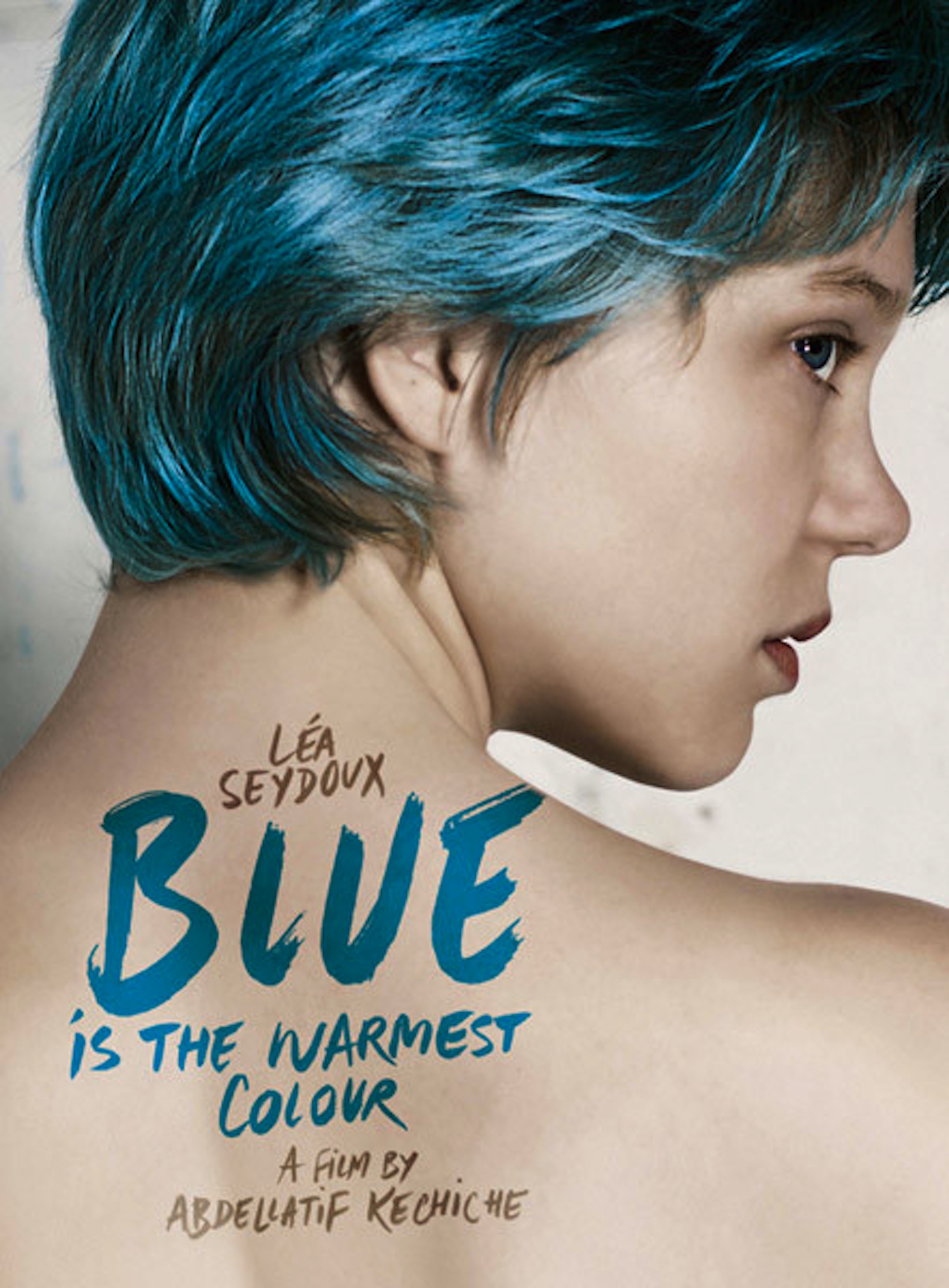
Abdellatif Kechiche's exploration of love, released in some territories under the title Blue is the Warmest Color, packs quite a powerful punch in terms of both emotional and controversial contents. This microcosmic three-hour epic follows the young Adèle (relative newcomer Adèle Exarchopoulos) during the evolution of her first love and sexual awakening, divided into two distinct chapters. In the first, the teenage girl is struggling with societal expectations and personal preferences. Though she physically experiments with boys, she quickly grows confused and disappointed as it doesn't seem to be able to stimulate her as she has been brought up to believe it should. A circumstantial kiss with a girl leads her to suspect she is looking for love in all the wrong places, a hypothesis soon tested out in a gay bar. When she meets the free-spirited Emma (Léa Seydoux), who has a habit of dyeing her hair blue, the two connect almost instantly, which leads them to start the road down a genuine romantic relationship, which includes many a scene of passionate same-sex intercourse. In the second chapter, we find the pair some years down the road, after Adèle has graduated and is aspiring to become a elementary school teacher, while Emma is starting to come into her own as an artist. Despite their love continuing to flourish, the element of novelty has worn of and Adèle considers she might have jumped to conclusions about her sexual nature as she finds herself interested in male partners after all, which causes her to be unfaithful to Emma and attempting to lie about it afterwards to no avail. Emma uncovers her infedelity and in a fit of rage kicks her out of the house. Adèle must come to terms with the sad fact she has lost her first love due to her own faux pas, but it will take her quite some time to recover from this emotional trauma.

La Vie d'Adèle must surely have been an extraordinary ordeal for the two young actresses carrying the piece in terms of filming. Kechiche tells Adèle's story relying on close-ups for most of the film, their every facial nuance laid bare, which makes us feel like we're right on top of them continuously. Correspondingly, the two women also spend a lot of time on top of each other, in a number of quite explicit lesbian sex scenes that leave next to nothing to the imagination, covering the entire range of physical positions you can think of where two women are involved. Though this apparent excess of groping, fingering and tribbing appears titillating at first, these scenes carry on for far longer than feels comfortable for the audience. However, they are yet another natural part of the everyday love life of these girls in the director's mind and as such ought not be censored for the sake of the audience's own inhibitions, nor are they meant to arouse. Accusations of blatant pornography cannot be wholly dismissed, but clearly are not Kechiche's sole intentions, whatever the levels of controversy and thus publicity these scenes might spark. In that regard, he also holds little interest in the homosexual nature of the mutual love he examines. Though at first the concept of a girl falling in love with a girl and the views thereof in society, i.e., Adèle's high school and home environment, relate the usual notions of otherness and awkwardness, the story quickly evolves to the point where that fact simply matters not. Though the two women don't openly flaunt their love for each other at every turn, the gay side of their relation is quite apparent yet never the subject of open criticism: these are just two people in love, it's as simple as that for Kechiche. Whether it is intended as such or not, it's quite a statement to make in contemporary France, where homosexuality is still a matter of heated debate and even violent confrontations. Kechiche doesn't seem to care about current day politics. Realism, and realism only, is key, as he illustrates by making effective use of improvisation throughout the film, the script only used sparingly to help the actresses establish their own natural rhythm of conversing and interacting, instead of merely adhering to the lines written down. It's a monumental task for any actor/actress, no matter how experienced, but both of them succeed to completely convincingly results: Exarchopoulos in particular is to be applauded for the achievement of portraying the inexperienced Adèle to such compelling success, considering her own lack of experience in terms of acting. La Vie d'Adèle deconstructs the theme of love entirely, from its inception to its brutal ending, its joys and its horrors exposed, fully justifying its running time of 187 minutes despite the risk it carries of discouraging the audience. Kechiche is not afraid to end the movie on a note of ambiguity in regard to Adèle's own understanding and weathering of the concept, as she is confronted by the mark it has left on her. Sometimes love is a blessing, but an equal amount of time it's a curse, the director remarks.

maandag 9 april 2012

Brüno


Rating: ***/*****, or 6/10


Sacha Baron Cohen mindlessly repeats his success of Borat by appropriating the same type of narrative set-up to his other infamous character, the excessively explicitly gay German fashion designer Brüno. First introducing Brüno in his natural environment at a fashion show turned awry, he's taken out of his element when banned from the fashion industry, after which his lover leaves him and he travels to America to become famous once more, insulting most conceivable minorities in the process in a series of loosely attached sketches. Whereas this approach led to great results in Borat, in the case of Brüno it leads to a distinct feeling of 'been there, done that'. What's more, the cheap gay jokes simply are not as original or as outrageous as Borat's repertoire and many miss their mark. However, there's still plenty to enjoy for at least one decent watch, including Brüno adopting a coloured baby he names O.J., visiting a swinger club to take advise on how to become straight and interviewing parents all too eager to let their child break through in show business about a role for their kids in a scene involving heavy antiquated machinery and Nazi uniforms. Filled with every thinkable cliché involving homosexuals, a lot of them simply cringy worthy, gay people had best ignore this flick.


Starring: Sacha Baron Cohen, Gustaf Hammarsten, Clifford Baňagale


Directed by Larry Charles


USA: Universal Pictures, 2009