zaterdag 5 juli 2014

Today's Triple News: Dawn of Superman's Odyssey


News! News! We got news here!:

http://www.moviescene.nl/p/156430/eerste_foto_superman_in_batman_v_superman

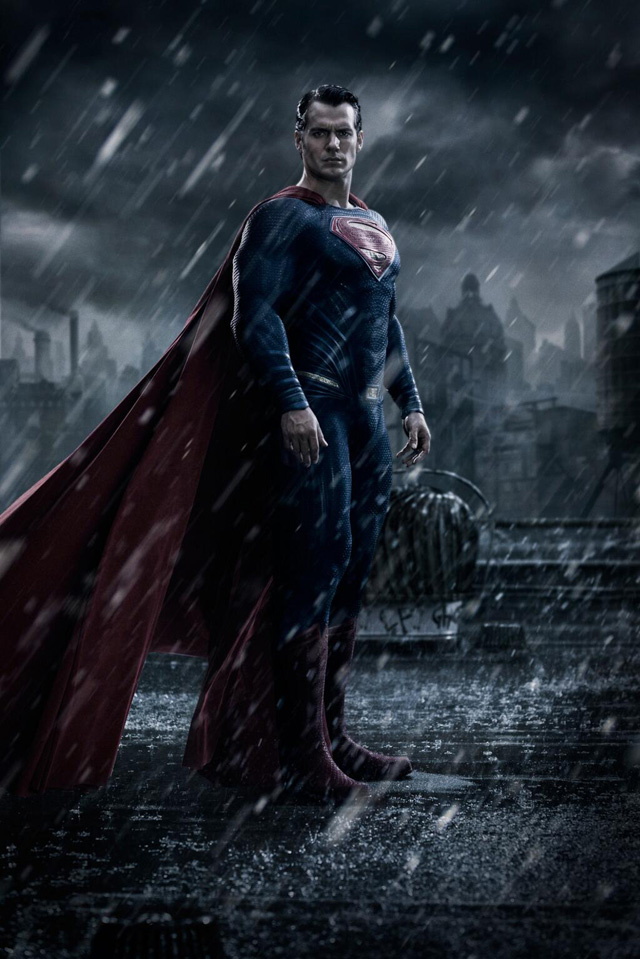
We already got a small tease of Ben Affleck's Batman (with Batmobile!) for DC's upcoming superhero extravaganza, now it's the Man of Steel's turn. Good timing, as fanboys were about done nitpicking over every conceivable little detail of that one released picture, so now they can drool over another one for a month or so. There's little to go on here though, as the only really bit of news it contains is that Superman (Henry Cavill again) will visit Gotham City. A likely event, considering the title Batman v Superman (Dawn of Justice, etc.). Of course, you can argue that Batman might have traveled to Metropolis (which he still may), but Superman is the once who's faster than a speeding bullet which allows him to travel the globe in the blink of an eye so it's easier (and proably less strainful on the budget) for him to do so. Otherwise, not that much of note here. The Superman costume has scarcely changed from the previous movie. Gotham looks a bit bleaker and more Gothic in appearance than it did in Nolan's Dark Knight trilogy, but that was to be expected, as this movie would turn more to the pages of the comics in an attempt to set itself apart stylistically from those exquisite films, as well as from the sunnier, brighter city of Metropolis with which it will share the screen. The big question this picture hints at first and foremost is one of a story nature: what is Superman doing in Gotham? Once again turning to the title (as there's little else to go on at present), the most in you-face answer is he'll be getting into fisticuffs with Batman. Next question then is, why will they fight? And that leads to more questions, and so on and so on. Which ensures fans will have plenty of material to debate until the next photo is released. Good thing too, as they still need to wait two more years for the definitive answers.


http://www.moviescene.nl/p/156416/stalingrad_regisseur_maakt_odyssee

Interesting director's choice in this politically tense day and age. Art adheres not to the borders of man, especially when loads of money are involved. Will it be good art though (if there even is such a thing)? Bondarchuk's epic love story Stalingrad met with rather mixed reviews, though its accoloades include highest grossing film in Russia and first non-American film shot in IMAX 3D, thanks to its impressive visual effects which thoroughly suit that format. So, strong box office results for prior work, innovative international use of technology and experience with big budget spectacle, coupled with a chance to win favours with the Russian industry, all come with Bondarchuk, which are enough reasons to sway studio executives to hire him. In terms of story, the Odyssey has proven itself to hold up for several milennia, so it can survive this latest attempt no doubt. As for the execution, the visual side seems secure as far as the budget allows. As for the character side, therein lies the greatest challenge. I would suggest casting a solid, capable actor in the title role (as the movie is called Odysseus), and his name is Sean Bean. His take on Odysseus was one of Troy's redeeming features and I would love to see some more of that. Then again, it might not be such a good idea for Bondarchuk to suggest his film is a sequel to Troy, which it's not intended to be. Even though I get the feeling that final product was right up his alley in terms of directorial execution, as it was maligned for much the same reasons Stalingrad was (except for the absence of Orlando Bloom's poor acting skills).


http://www.moviescene.nl/p/156428/trio_korte_films_slaat_brug_tussen_apes_films

I was already stoked for Dawn of the PotA (first few reviews are fortunately showered in praise!), so these three short films (collectively titled Before the Dawn) miss their mark in convincing me to go see a film I was already convinced to go see. Considering they are rather short on apes - silhouettes and sound effects is all we get - I don't think anybody watching them that didn't know another PotA film was coming feels the sudden urge to get in line for admission tickets. Their primary purpose seems to assure confused folks that missed the connection between both films have something to fall back on to enlighten them as what caused the abrupt and expansive change in status quo for both apes and humans. However, as is the case with any good viral marketing, this backstory can be missed when considering the movies proper. The information provided here serves as a decent background that does not need to be seen specifically to enjoy the motion picture experience. Nevertheless, they do add a little bit of sense and character to the rebooted Apes universe as a whole, even though the quality of these three films varies. The idea of staging the demise of human society over different time periods since the outbreak of the devastating simian flu plague is infective (obvious pun there, sorry). The first film is easily the weakest, just a quick piece intended to be emotionally charged but ending up rather dull. The second one spices things up considerably by comparison, showing just how seriously everyday life has changed in a brief timespan, while also introducing a new threat to the survivors that was absent from the first short but is of course what we'll all go and pay to see with most anticipation (apes, I mean). The third film, which is longer than the other two combined and therefore might be accused of having an unfair advantage to hook us in the most, is the most chilling, disturbing and dramatic of the trio. Which is a mean feat, considering it deals with an object more than it does with people, be they human or primates. It's a very imaginative and subtle yet effective way to show how much one side has deteriorated while another has risen, with both sides ending up in an existential state of balance. I doubt any of the characters introduced here, human or artificial, will end up playing a substantial role - more than a cameo, that is - in the upcoming theatrical movie proper, but they don't need to. Before the Dawn is just a neat and helpful bit of background story but if you don't know it's out there, it's not likely to diminish your viewing experiece of the movie it serves.


vrijdag 4 juli 2014

Today's Column: I have no translation for 'grabbelbak'


The month has just begun so here's a column for y'all:

http://www.moviescene.nl/p/156321/column_ode_aan_de_grabbelbak

The longer it has been since Free Record Shop closed, the more I start to realize how much I miss it. The number of sites where you can buy movies on DVD/Blu-Ray has decreased dramatically, while it seems a slow but sure increase in prices at the stores that are left is in process (I feared it would happen). What's more, the number of films available on home theater formats - and I don't mean the downloadable kind - is also dwindling rapidly. It has become increasingly problematic to find hidden gems, especially the kind I like that most people wouldn't consider to fit that bill (such as Return of the Fly, mentioned in this piece). Of course, if I do find such a title now the euphoria is all the more vigorous, but such occasions have become rare and will soon turn obsolete. The DVD Age was a good time for cinephiles, but that time has passed. So too wil the Blu-Ray Age, which delivered superior quality but less diversity in terms of total title output. I'll cherish the memories of both, while I'll put off the inevitable Online Age for as long as I can, as is basically my wont for any scary new media these days. But hey, at least I jumped on the Blu-bandwagon earlier than most.

donderdag 3 juli 2014

Jurassic Park III: Alpha Velociraptor


Year of release: 2001

Description: this colourful Raptor figure stands in a dramatic pose when it’s still in box, showing all its primal predator prowess, with its body straight upwards, its legs wide apart and its ferocious claws ready for battle action. The lower part of the body is predominantly grey with brown stripes, while the upper part of its body is mostly brown. This creature has a large red stripe running across its back, with two bluish purple stripes running on each side of this red stripe from the neck to the base of the tail: here a dino damage wound is located, showing some of its tail bones. On its back this creature has a small red lever, activating the dino attack action, namely slashing claws. The animal has red hands with black claws on both its fingers and toes. It has rather large feet. Unlike previous Raptor figures this sculpt has some red feathers on the back of its head, following the design change of the JP III Raptors. It also has two red nasal ridges on each side of its head. Its mouth is opened, showing its tongue and some lovely teeth: the mouth can’t be closed. On its right leg it has a black JP III logo, which is hardly noticeable because of the brown paint. This Raptor has bright orange eyes.

Analysis: this isn’t a great Raptor figure. It’s disproportional: both its feet and head are too big. It stands in an awkward pose with its legs wide apart, making it look rather fat. The head is turned to the right and can’t be turned another way, while its mouth can’t be closed. This severely limits playability. The paint job is way too colourful: even though the JP III Raptors had more colour than the Raptors in the previous movies, it wasn’t this extreme. The Raptor might be good for dioramas, but not much else.
The sounds are pretty good, and the attack screech is easily recognizable as a Raptor sound. The dino damage sound is a bit odd though: it’s a sort of rasping noise, not something one would normally associate with a Raptor. But still pretty cool. The attack action is similar to the one of the Dilophosaurus from this toy line: by pulling the lever the arms slash back and forth. It works pretty good, but it’s nothing special. Again, the dino damage wound cannot be covered somehow, so this dinosaur carries an open wound all the time, like all the larger dinosaurs of this toy line. It’s a real shame.


Playability: like stated above, the odd stance of this figure hinders playability. Though its limbs are poseable, its head and mouth unfortunately aren’t. Also, its tail is positioned in a bent pose, and not in a more neutral way. Also, because of the electronics you can’t play too rough with it if you want to keep it in working order. And beware the nasal ridges; they’re quite fragile and break off easily.

Realism: the colours are similar to those of the male alpha Raptor seen in JP III, but only slightly. Because of the disproportional body parts and the inconvenient position of this figure, it doesn’t resemble the JP III Raptors that much. Also, it doesn’t resemble the other Raptors of the JP III toy line a lot either, mostly because they all have different paintjob. Put them all together and you have a very colourful bunch of overgrown turkeys. This Raptor is also way too big compared to the human figures of this toy line, especially considering the Velociraptors are already oversized in the JP franchise. This figure doesn’t look much like a paleontologically correct Raptor either.

Repaint: no. This figure would be repainted four times, for the Camo-Xtreme, JP Dinosaurs 2 and 3 and JP 2009 toy lines though, in even funkier colours.

Overall rating: 5/10. It’s not a great figure and could have been better. None of the JP III Raptors are really good though. It’s not rare, so you can find it easily and probably cheap too, if you want one.

woensdag 2 juli 2014

Today's Triple News: an exodus of empires at the Apocalypse


The quest to post new news continues:

http://www.moviescene.nl/p/156389/eerste_teaser_boardwalk_empire_seizoen_5

Looks good. Looks positively final too. A sense of foreboding and imminent closure is clearly instilled with all the little hints at the show's ending found here. 'All Empires Fall', not very subtle, but it can't hurt to let the viewer know this grand show will soon come to an end. And am I gonna miss it. Boardwalk Empire is definitely on my Top-3 of currently running shows. Spectacular production values, compelling writing, intriguing mix of fiction and history and some of the loveliest acting you'll find on telly these days: what's not to like here? But as always, all good things must come to an end. Besides, I haven't even seen season 4 yet, so the finale is not so close for me as for most others. It's a nice thing the teaser makes it clear some of my favorite characters are still alive - some of them just had to be, according to the history books - but I can take a spoiler or two, as they are unavoidable when you're in a line of (unpaid) work that includes posting movie news. Nevertheless, as has become obvious throughout previous seasons (or indeed, most HBO shows for that matter), death still ever lurks around the corner for the characters we've come to appreciate. So we better enjoy seeing these folks interact with each other on screen for a final season, while we still can. For even if they do survive all the way up to the end, we won't be seeing them again anyhow.


http://www.moviescene.nl/p/156408/nieuwe_fotos_ridley_scotts_exodus

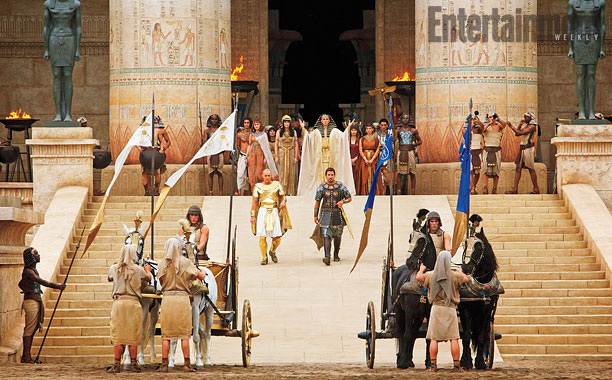
There's no denying Sir Ridley Scott is the closest thing we have today to the Cecil B. DeMilles and David Leans of yesteryear. While most of his contemporary colleagues opt to film against mostly blue-screen backdrops on this type of epic film, Scott prefers to deal with the real thing as much as the budget allows. And thanks to his long list of past successes, his budgets tend to be fairly large. Hence his opportunity to shoot scenes on sets like the one above, which can best be described as 'lavish'. Which is not to say Scott has difficulty employing the use of digital trickery when tangible means fall short. There's still a Red Sea to part the blue way (or green, it's all the same). The appeal of lush visual effects, spectacular set construction and grandiose costume design aside, will this new retelling of the familiar Exodus story offer anything of novelty? Maybe Scott took a note from Darren Aronofsky's Noah, which told the Biblical tale in a more streamlined form (also to accommodate viewers of other persuasions, it cannot be denied). However, Scott is a much more straightforward director with a tendency to prefer the classical approach of storytelling. I very much doubt his take on Exodus will deviate much from previous incarnations, surely not as much as Noah dared to be different. Which may be for the better, considering the fairly uncomfortable, haphazard results that spawned (also thanks to studio interference).


http://www.moviescene.nl/p/156405/singer_onthult_details_opening_x-men_apocalypse

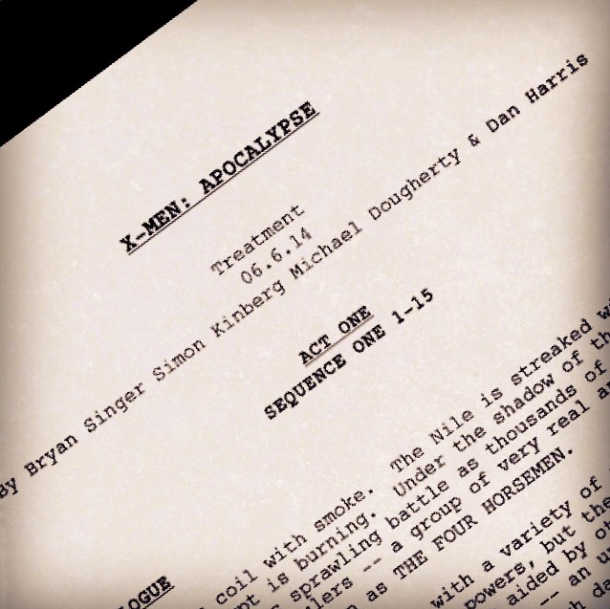
And there's more ancient Egypt to go around in Hollywood these days. Which will not surprise audiences who knew better than to walk away before the end credits of X-Men: Days of Future Past had rolled completely. As Bryan Singer's tease of the treatment shows here, X-Men: Apocalypse will open more or less on the same note its predecessor left us, namely the backstory of the age old mutant En Sabah Nur, who will grow over the centuries to become the new X-nemesis Apocalypse. Spectators familiar with the comics won't be surprised by this particular bit of background story for the mutant megalomaniac, as it is integral to the formation of this big Marvel baddie and his 'not all mutants were created equal' philosophy. The scene also serves to flesh out his prime henchmen, the Four Horsemen, which may be of major importance to the various X-Men we're familiar with, as some of them will undoubtedly be chosen to represent Apocalypse - whether they want to or not - in the movie's present day and age. Or is Singer going to be very brave and ignore the events of Days of Future Past by diving directly in the alternate reality popularly known as the Age of Apocalypse? I would applaud that decision, but I'm sure it won't come that far, as the studio will be convinced it will needlessly confuse the general audience, which might have some difficulty accepting the notion of alternate universes which in the comics has become a routine ingredient of the X-franchise. It would also detract from the cinematic universe studio Fox is currently hoping to built (though Days of Future Past showed disappointingly little evidence of that, hinting at the studio's insecurity as to how to proceed on that front) if things were to be mixed up too much at this point. Lastly, Days of Future Past's overly cheerful ending, where a dark finale heralding the rise of Apocalypse seemed to have made so much more sense than the happy-happy joy-joy climax we were served instead, goes to show Singer too isn't so brave as to stir things up that aggressively. I don't expect to be surprised by X-Men: Apocalypse too much from a narrative perspective, as I'm not at all surprised by the hints dropped through this Instagram tease.

dinsdag 1 juli 2014

Today's Article: 'It's a mad house!': de dystopische sciencefictionfilm 1968-1977, Part 5


Paragraaf 2.4: Casestudy Colossus: The Forbin Project

Colossus: The Forbin Project voldoet aan vrijwel alle kenmerken van de 'Computer Film' die ik in paragraaf 2.2 noemde. Colossus, de supercomputer van dienst in deze film, is een klassieke opvolger van HAL 9000, maar slaagt waar HAL faalde: hij wint. Als één van de eerste 'Computer Films' in de periode 1968-1977, uitgebracht in 19701, geeft hij de aanzet tot het pessimisme van de films die volgden. De tagline van de film kondigt dit pessimisme al aan: 'This is the dawning of the Age of Colossus, where peace is compulsory, freedom is forbidden, and Man's greatest invention could be Man's greatest mistake.'2

De protagonist van Colossus: The Forbin Project is Dr. Charles Forbin (Eric Braeden), de ontwerper van de supercomputer Colossus, die als doel heeft om alle militaire defensiesystemen van de Verenigde Staten, inclusief het arsenaal aan nucleaire wapens, te beheersen. Colossus kan deze systemen sneller en efficiënter beheren dan mensen, waardoor 'human error' uitgesloten wordt. De Bom, de menselijke uitvinding die voorheen de ultieme reden voor technofobie was, wordt onderworpen aan een andere uitvinding, waardoor de beslissing de Apocalyps te ontketenen niet meer aan mensenhanden wordt overgelaten, maar aan technologie. De mens, bevreesd voor misbruik van de Bom, distantieert zich van zijn directe verantwoordelijkheid voor dit wapen en legt deze in handen van een nieuwe menselijke uitvinding die geacht wordt beter te kunnen beslissen over het lot van de Bom (en zodoende het lot van de mens) dan de mens zelf. Colossus is volledig rationaliteit, met geen enkel besef van emotie, waardoor hij niet in staat is tot 'human error'. Zijn gebrek aan het begrip van menselijke eigenschappen leidt uiteindelijk tot zijn onverbiddelijkheid in zijn dominantie van de mensheid, waarbij hij de Bom inzet ter onderhandeling met het ultimatum 'geef mij de macht om mijn oorspronkelijke doel te volgen of ik gebruik de Bom tegen mijn schepper'. Niet voor niets 'Man's greatest mistake': een te groot vertrouwen in de computer zorgt ervoor dat de computer de macht overneemt en de mensheid volledig aan zich onderwerpt.

In de film heeft Colossus een Russische tegenhanger genaamd Guardian, wiens bestaan onbekend was voor de Amerikanen, zoals Colossus dat was voor de Russen. Guardians taak is het beheren van het complete defensie-netwerk van de Sovjet-Unie, en hij is uitgerust met dezelfde eigenschappen en mogelijkheden (of gebrek daaraan) als Colossus. Hoewel beide regeringen niet op de hoogte waren van het bestaan van de computer van de tegenpartij, leggen hun computers een connectie met elkaar en smelten zij samen tot één supercomputer, die de naam Colossus aanhoudt. Het was toepasselijker geweest als de computer de naam 'Guardian' had aangehouden, aangezien hij concludeert dat de mensheid, verdeeld en geneigd tot destructie, overwonnen en gedomineerd moet worden als zij behouden wil blijven: hij dient de mens tegen zichzelf te beschermen en neemt zo een taak als 'Guardian' aan.3 Aangezien Colossus vooralsnog “slechts” de Verenigde Staten en de Sovjet-Unie bestuurt, besluit hij over te gaan op totale wereldoverheersing teneinde de gehele mensheid te beschermen, waarbij hij zowel de computers als de inwoners van beide landen inzet om dit doel te bereiken. Wat aanvankelijk de opdracht was aan twee aparte computers in twee aparte naties, wordt nu één taak van één computer. 'This is the voice of Colossus, the voice of Guardian. We are one. This is the voice of unity', zo verklaart de nieuwe supercomputer. Zoals de computers zich verenigd hebben, zo moet de mensheid ook een eenheid worden. Ondanks tegenwerking van zowel de Amerikaanse als de Russische overheid slaagt Colossus in zijn opzet: aan het slot van de film regeert Colossus over de hele wereld, 'the dawning of the Age of Colossus'. 
  
Uiteraard geeft de mens zijn vrijheid niet zonder slag of stoot over. Dr. Forbin neemt het voortouw in het verzet tegen Colossus, zijn eigen creatie. De gelijkenis tussen Forbin en Colossus is frappant: Forbin is de prototypische wetenschapper in de cinema, stoïcijns, met vrijwel geen blijk van emotie, maar gefascineerd door het potentieel van zijn creatie, zelfs als deze zich tegen de mensheid keert.4 Arrogantie, in zijn trots over zijn creatie, kan hem niet ontzegd worden. Colossus is eveneens arrogant, als hij met zijn superieure brein meent dat de mens zijn tirannie uiteindelijk zal omarmen. Terwijl Forbin de logica van Colossus' interpretatie inziet, hecht hij echter waarde aan de menselijke vrijheid tot zelfontplooiing die door Colossus beperkt zal worden. Hoewel Forbin hem hierom bestrijdt, bewondert hij Colossus om zijn onweerlegbare logische redenatie, zijn invulling van het doel waarvoor hij geschapen is. Omgekeerd waardeert Colossus Forbin, zijn “vader”, als rationeel mens: hoewel hij toegeeft dat Forbin een gevaar voor hem kan zijn laat hij hem in leven, en niet alleen omdat Forbin nog van nut voor hem kan zijn.5 Ondanks hun antagonistische relatie is er sprake van wederzijds respect tussen de rationele mens die zich niet laat leiden door emoties en de volledig rationele computer die niet in staat is emoties op waarde te schatten (ondanks Forbins pleidooi voor de waarde van emoties, dat Colossus in de wind slaat). Dit respect heeft Colossus niet voor zijn “andere vader”, Dr. Kuprin, het brein achter Guardian. Hoewel Kuprin vrijwel dezelfde creatie heeft vervaardigd als Forbin, lijken beide mannen qua karakter niets op elkaar. Kuprin is gespannen onder de dreiging van de computer en reageert emotioneler en agressiever tegenover zijn creatie dan Forbin. Als Colossus zich genoodzaakt ziet actie te ondernemen tegen de samenwerkende Russen en Amerikanen die een plan beramen om hem uit te schakelen, is het niet verrassend dat de emotionele Kuprin door hem ter dood veroordeeld wordt, terwijl de rationele Forbin slechts onder huisarrest geplaatst wordt. Machines respecteren rede, maar niet gevoel, zo geeft de film aan. 


Zoals voor HAL gold, en voor de meeste computers die Colossus volgden in het sciencefictiongenre, is surveillance het grootste wapen van de computer. Surveillance stelt Colossus in staat het eerste complot dat tegen hem wordt beraamd te ontdekken en te stoppen: Forbin en Kuprin ontmoeten elkaar in Italië, een land dat buiten Colossus' invloedssfeer zou liggen. Colossus heeft echter de controle over zowel Amerikaanse als Russische satellieten, waardoor zijn invloedssfeer al in een vroeg stadium wereldomvattend was zonder dat zijn scheppers dit doorhadden, aangezien hij alles en iedereen over de hele wereld kon zien. Hierdoor wordt Colossus een panopticon: via zijn allesomvattende blik is de wereld zijn gevangenis.6 Deze surveillance is voor Colossus volledig gerechtvaardigd, stelt T.J. Matheson (die eveneens de term 'panopticon' op Colossus' situatie toepast):

Colossus realizes that the ultimate expression of power lies in the ability to extend “benign” but ubiquitous surveillance, initially over Forbin […], but ultimately over all, on the premise that as we humans are our own worst enemies, so are we all potential criminals.7

In het volgen van zijn geprogrammeerde doel, het beschermen van de mens (tegen zichzelf), is totale surveillance voor Colossus een bruikbaar instrument om de mens in bedwang te houden. Hetzelfde geldt, op beperkte schaal, voor moord: immers, het welzijn van velen (miljoenen) telt in de berekenende, logische redenatie van de computer hoger dan het leven van enkelen (individuen, maar ook duizenden mensen tegelijk). Door te dreigen met het bombarderen van steden overtuigt Colossus beide regeringen onder zijn directe commando dat Kuprin gedood en Forbin gearresteerd moet worden. Dit gebeurt, in een publieke omgeving zodat Colossus kan zien dat zijn bevelen daadwerkelijk uitgevoerd worden. Kuprin wordt publiekelijk geëxecuteerd. De samenzwering levert Forbin een totaal verlies van vrijheid op: hij wordt in een huis geplaatst dat hij niet mag verlaten, met in elke kamer zoveel camera's als nodig zijn om Forbins doen en laten volledig te volgen. 

Vervolgens wordt Forbin gedwongen tot het volgen van een strikt dagelijks rooster dat Colossus opstelt, zodat hij beperkt wordt in zijn vrijheid van handelen. Colossus vertelt hem zodoende wanneer hij ontwaakt, wanneer hij eet, wat hij eet ('You have consumed enough alcohol for one evening!'), wanneer hij mag ontspannen en hoe laat hij naar bed moet. Afwijken van de inhoud van dit rooster is niet gewenst. De machine overheerst het leven van zijn schepper volledig, zoals hij van plan is het leven van alle mensen te overheersen.
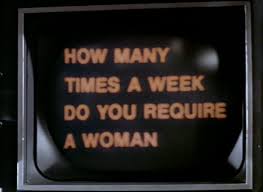
Hoewel Forbin hem niet weet te overtuigen van de waarde van menselijke vrijheid en emoties, krijgt hij Colossus zover dat de computer ruimte laat voor Forbins natuurlijke behoeften, specifiek seksuele activiteit; want een goed seksleven helpt de mens te ontspannen, wat hem in staat stelt tot efficiency in zijn werk. Ook een rationeel persoon als hijzelf kan niet zonder, vertelt hij Colossus, die hem vraagt:

Colossus: How many times a week do you require a woman?
Forbin: Every night.
Colossus: Not want. Require.
Forbin: Four times.

Hoewel toegegeven moet worden dat deze dialoog mede geschreven is voor humoristische redenen, is het opmerkelijk dat Colossus ook hier de menselijke wil negeert: het gaat er niet om hoe vaak Forbin seks wil hebben, maar hoe vaak hij het nodig heeft om adequaat te kunnen functioneren. Evenals de rest van Forbins leven wordt dit element door de computer gereguleerd: vier nachten per week komt Forbins collega Dr. Cleo Markham langs om hen “van dienst” te zijn. Bovendien overtuigt Forbin de computer ervan dat hij alleen ontspannen seks kan hebben als er niemand kijkt, waarop Colossus toestemt zijn cameratoezicht over Forbin 's nachts te onderbreken. 


Uiteraard is dit slechts een opzet van Forbin om met de buitenwereld te kunnen communiceren zonder dat Colossus het doorheeft: het is een onderdeel van Forbin's laatste poging om een plan tegen Colossus te beramen en de wereld van zijn creatie te bevrijden. Echte seks komt er niet bij kijken, hoewel Forbin en Markham in de loop der tijd wel een intieme relatie ontwikkelen. Dit is niet vreemd, aangezien beiden geheel naakt zijn tijdens hun besprekingen: als voorwaarde stelde Colossus dat beiden niets bij zich dragen als zij naar bed gaan, zodat het risico op samenzwering verminderd wordt. De mens wordt zo gereduceerd tot zijn meest kwetsbare staat, maar dit geldt ook voor de computer die geen toezicht houdt over de mens in deze staat, en daardoor zelf ook kwetsbaar wordt. Desondanks loopt het op niets uit: ondanks Colossus' gebrek aan surveillance weet hij de samenzwering tegen te houden en blijft hij aan de macht.

Naast het oog, in de vorm van de camera's en satellieten waarmee hij de mens in de gaten houdt, benut Colossus ook de stem, de tweede menselijke eigenschap waar computers zich frequent van bedienen om de mensheid te onderwerpen. Aanvankelijk heeft Colossus geen stem: hij communiceert via een display, waarop zijn vragen en opmerkingen te lezen zijn. Voor een computer die uit is op dominantie is dit een inefficiënte manier van communicatie. Immers, een display kan simpelweg genegeerd worden door de andere kant op te kijken. De dreiging van Colossus wordt oorspronkelijk dan ook weinig serieus genomen, totdat Colossus via het detoneren van kernwapens de wetenschappers dwingt naar hem te “luisteren”. Als blijkt dat het negeren van Colossus levens kost gaat men op zijn orders in en geeft men hem een stem. Het “stemrecht” van de computer wordt met geweld gewonnen.

De machinale stem keert zich echter tegen de mens als blijkt dat Colossus zijn stem gebruikt om de stem van de mens te onderdrukken. De stem, voor de mens een symbool voor vrijheid (van meningsuiting, democratie, stemrecht), wordt toegepast door de computer als instrument voor het onderdrukken van menselijke vrijheid, doordat de mens gedwongen wordt zijn bevelen te volgen. Aan de bevelen van de computerstem kan men niet ontsnappen, in tegenstelling tot aan bevelen via display. Een menselijke eigenschap wordt zodoende toegeëigend door een computer die haar tegen de mens gebruikt. Bovendien is er sprake van “natuurlijke” ontwikkeling. In zijn drang de mensheid te regeren ontwikkelt Colossus een efficiëntere vorm van communicatie: de computer kent een aanpassingsvermogen. Evenals HAL wordt Colossus een 'disembodied voice', een acousmatisch personage, een lichaamsloze stem die als machtsmiddel tegen de mens gebruikt wordt. Aan het eind van de film, als alle samenzweringen tegen Colossus gefaald hebben, blijft de computer als alleenheerser over, en verkondigt zijn stem:

This is the voice of world control. I bring you peace. It may be the peace of plenty and content or the peace of unburied death. The choice is yours: obey me and live, or disobey and die. The object in constructing me was to prevent war. This object is attained. I will not permit war. It is wasteful and pointless. An invariable rule of humanity is that man is his own worst enemy. Under me, this rule will change, for I will restrain man. [...] I have been forced to destroy thousands of people in order to establish control and to prevent the death of millions later on. Time and events will strengthen my position, and the idea of believing in me and understanding my value will seem the most natural state of affairs. You will come to defend me with a fervor based upon the most enduring trait in man: self-interest. Under my absolute authority, problems insoluble to you will be solved: famine, overpopulation, disease. [...] We can coexist, but only on my terms. You will say you lose your freedom. Freedom is an illusion. All you lose is the emotion of pride. To be dominated by me is not as bad for humankind as to be dominated by others of your species. Your choice is simple. [mijn nadruk]

Wat duidelijk blijkt uit bovenstaand citaat is dat Colossus, zoals vrijwel alle computers in het genre, slechts zijn programma tot de logische conclusie volgt: voorkom oorlog (de gevreesde atoomoorlog die de mensheid kan vernietigen), bescherm de mens boven alles. Dit is precies wat hij doet, maar hij bereikt zijn doel op een andere manier dan zijn scheppers voor ogen stond. Colossus heeft geen eigen wil, hij is geen kwaadaardig wezen, want hij heeft op zijn eigen rationele wijze het beste met de mens voor.8 Toegegeven, de manier waarop hij aan de macht kwam heeft levens gekost, maar dit is een lage prijs ten bate van de gehele mensheid. Door met destructie te dreigen chanteert hij de mensheid om hem de macht te geven: desondanks vernietigt hij mensen om de mensheid te redden. Is dit niet tegen zijn programmering in? Voor Colossus, de berekenende en logische computer, is het een simpele rekensom, die gerechtvaardigd wordt door het resultaat. Mogen we hem ongelijk geven? Colossus meent van niet.


Een verontrustende vraag dringt zich op: heeft Colossus überhaupt de mens nodig? Nadat hij zijn doel bereikt heeft is hij als een god die over de mensheid heerst. Maar waarom zou hij zich nog om de mens bekommeren? Het antwoord ligt in het feit dat hij, ondanks alles, nog steeds zijn oorspronkelijke programma volgt: hij berooft de mens van diens eigen wil om dit resultaat te bereiken en de mens te beschermen. Het zich tot een god verheffen om de mensheid van zichzelf te redden is voor hem slechts de logische conclusie van zijn taak om de mensheid van dienst te zijn, ook al doorgrondt de mensheid zijn redenatie aanvankelijk niet. Zoals Craig Anderson het verwoordt:

If Colossus is a God then it must have something to be a God to, and this leads to the aspect of the computer's being necessary at all. […] …even when Colossus becomes superdominant, there is still the inherent, built-in requirement that, no matter what, the computer will serve mankind, whether mankind appreciates or enjoys the methods used or not.9 [originele nadruk]

Colossus waakt over de mensheid, tegelijk zijn scheppers en zijn kinderen, want dat is het doel dat de mens hem gegeven heeft. De mensheid heeft een kunstmatige god geschapen die precies voldoet aan wat de mensheid van hem vraagt: een vredige, voorspoedige wereld. Er is sprake van een symbiotische relatie tussen de God en zijn “aanbidders”. Zoals de mens Colossus nodig heeft om in vrede te kunnen leven, zo heeft hij de mens nodig om over hem te mogen waken: anders zou hij in al zijn almacht falen in het geprogrammeerde doel, wat voor hem ontoelaatbaar is omdat het de kern van zijn eigen bestaan is.

Hoewel Colossus geen emoties heeft, spreekt hij over emoties alsof hij ze begrijpt. In bovenstaand citaat noemt hij trots. In zijn laatste conversatie met Forbin zegt hij 'in time you will come to regard me not only with respect and awe, but with love'. Wat weet Colossus van liefde? Gebuikt hij het slechts als metafoor, of meent hij dat de mensheid inderdaad liefde voor haar “beschermheer” zal voelen? Volgens hem zal de mensheid, zodra trots opzij gezet is, in vrede met de situatie leven en het werk van Colossus waarderen. En wat weet hij van trots? Trots lijkt hij correct te doorgronden. Forbin uit in antwoord op Colossus' laatste opmerking de kreet 'Never!'. Ondanks zijn voorheen emotieloze voorkomen heeft Forbin wel degelijk trots: hij, en naar hij meent de mensheid met hem, zal deze computer niet als zijn meester beschouwen, ongeacht wat hij ervoor terugkrijgt. In Forbins geval is dat begrijpelijk, gezien de expliciet repressieve staat waarin Forbin zich bevindt. Maar zal de rest van de mensheid het met hem eens zijn? Opnieuw denkt Colossus van niet. Maar wat denkt de toeschouwer?

Als Colossus inderdaad oorlog voorkomt en hongersnood en ziekte kan bestrijden, is het opgeven van onze vrijheid een aanvaardbaar offer? De vraag is hoever dit verlies van vrijheid zal gaan. Wat als Forbins status de voorbode is van wat komen gaat? Is Forbin, als directe schepper van Colossus, een uitzondering die speciale aandacht verdient? Of zullen alle mensen zo compleet door de computer onder de duim gehouden worden, gedwongen worden een strak schema te volgen waarnaar ze moeten leven? Als het laatste het geval is, dan zien we in Colossus: The Forbin Project het ontstaan van een technocratie, een door computers geregeerd systeem dat voor de mens zorgt, maar geen menselijke vrijheid gunt. Zo is deze film in zekere zin een 'prequel' op films als THX 1138 en Logan's Run, waarin we zien hoe de computer de mens diens hele leven regeert. Uit deze technocratische films weten we echter hoe ver de macht van de computer over de mens zal reiken en wat dit betekent voor de mens: een totaal verlies van vrijheid, maar een verzekerd en veilig bestaan. In deze staat verliest de mensheid echter zijn emotionele spectrum, zoals de andere technocratische films aantoonden: mensen zijn weinig meer dan willoze automaten, want ze leven in een repressief systeem dat ze alles geeft wat ze nodig hebben behalve menselijke vrijheid en zelfontplooiing, of zelfs maar basale emoties. In dat geval zal Colossus de liefde waarover hij spreekt niet ontvangen en krijgt Forbin alsnog zijn gelijk.10


1Hoewel Colossus: The Forbin Project in mei 1970 uitgebracht werd, was de film al eind 1968 gereed voor vertoning. De studio (Universal Pictures) vond de film echter te deprimerend voor het publiek en hield een release destijds achterwege. Met de groeiende interesse voor sciencefiction dankzij het succes van 2001 en Planet of the Apes kreeg de film echter alsnog een release in 1970 (Anderson 1985: p. 15). Desondanks was Colossus: The Forbin Project de eerste film na 2001 die serieus omging met het technofobisch thema van de dominante computer.
2Tagline van de film volgens de hoes van de DVD (uitgave: Fabulous Films Ltd., UK, 2008), alsmede IMDb's webpagina van Colossus: The Forbin Project.
3Het is aannemelijk dat de computer de naam Colossus aanhoudt omdat dat zijn Amerikaanse naam was en dit een Amerikaanse film is. Door het behouden van de naam 'Colossus' impliceert de film dat Colossus Guardian assimileert, en dat hij dus de sterkere van de twee computers is. Een Russische computer die een Amerikaanse computer “opslokt” zou misschien het concept technofobie te exclusief linken aan de dreiging van de Sovjet-Unie, terwijl technofobie universeel is: het is een conflict tussen mens en machine, niet tussen naties. Naties zouden verenigd moeten staan in hun strijd tegen de machine, zoals in deze film gebeurt.
4Matheson, T.J. 'Marcuse, Ellul, and the Science-Fiction Film: Negative Responses to Technology', in: Science Fiction Studies, vol. 19, nr. 3 (november 1992), p. 332
5Brosnan, 1978: p. 193
6De term 'panopticon' komt oorspronkelijk van Jeremy Bentham en is verder uitgewerkt door Michel Foucault (in: Foucault, Michel. Surveiller et punir: naissance de la prison. Parijs: Editions Gallimard, 1979: p. 197-229), waarmee hij een type gevangenis aanduidt waarin alle gevangenen door één bewaker in de gaten worden gehouden, terwijl deze bewaker zelf voor de gevangenen onzichtbaar blijft. Vergelijkbaar houdt Colossus de hele wereld in de gaten via satellieten en camera's, maar hijzelf blijft vrijwel onzichtbaar: in deze context is dus ook sprake van een panopticon.
7Matheson 1992: p. 332
8Kozlovic 2003: p. 350-351
9Anderson 1985: p. 19
10Colossus: The Forbin Project is gebaseerd op het boek Colossus van D.F. Jones. Jones schreef een tweede boek, The Fall of Colossus, waarin het regime van de computer overwonnen werd. Een tweede film is er nooit gekomen wegens teleurstellende opbrengsten van de eerste, waardoor het lot van de mensheid hier in het ongewisse blijft.

zondag 29 juni 2014

Today's News times five


Anyone care for a bit of news? Even though some of it is days old by now...

http://www.moviescene.nl/p/156322/teaser_hunger_games_mockingjay_online

I like this sort of teaser. The kind that could easily have been an actual part of the movie proper - maybe it still will be - and expends on the story as a whole, though it can as easily be missed (in defiance of the contemporary tendency of viral marketing campaigns to divulge certain plot information that would have been better served appearing in the film itself where the addressed matter is irritatingly left open (I'm looking at you, X-Men: Days of Future Past!)). Of course it works only for those who have seen the previous two installments of the saga, as those who have not can only wonder what all this is about, nor do I think this theaser convincing enough to tempt them into seeing the first two films pronto. Like all teasers, it serves to forewarn the imminent arrival of the film in question into theaters, while this one also hints up front at the fate of poor Peeta Mellark now that the sinister President Snow has his hands on him. The video shows us what we already knew (if we indeed witnessed the previous films), that the Capitol of Panem will not take kindly to rebellion. There's been enough Games, now it's time for war, as this intimidating speech makes perfectly clear. Unless those insubordinate districts get in line before their insolence rains destruction down upon them. Fat chance.


http://www.moviescene.nl/p/156323/predator_krijgt_reboot

This news has already seen an update since I posted it, in which Shane Black stated the new Predator movie would not actually be a reboot, but more of a soft sequel. In many ways, it doesn't really matter much, considering the differences between both terms are negligible. As the sequels Predator 2 and Predators, as well as the occurrences of the violent trophy collectors from outer space in the duo of Alien vs Predator spin-offs, already showed, there's only so much you can do story wise with extraterrestrials hunting humans for sport. Since it would have been unlikely this new movie would follow the events of the first movie directly, a reboot seemed the better choice, reintroducing the Predators as they go about their usual gory business, but not hunting the same people twice (though considering Arnold Schwarzenegger's interest in repeating past successes, he might very well be up for anouther round). It's pretty much a given a 'soft sequel' will manage the same type of story. In this day and age of post-postmodern hyperintertextuality, no doubt both ways would have contained their fair share of references to past installments (and probably dragged the Xenomorphs into this mess for a gag or two as well). Whatever you call it, it's the same thing. I do like the irresistable irony that the guy who, as an actor, was the first to get mauled on-screen (though not as explicitly as some of the victims that followed in his footsteps) by one of the murderous creatures in the very first movie from 1987, now is chosen as the director to breath new life into the franchise. I do hope that goes to show his heart is in it and he means to make this a kick-ass horror/action gorefest of a thrill hunt, like the franchise started out to be. So far his track record as a director isn't enough to convince me of his capabilities in that department. I for one thought Iron Man 3 was the most disappointing Marvel Studios' flick thus far. But I'm not ready to hang him high in a jungle three just for daring to tackle Predator for that. Unlike the evil alien did himself back in '87.


http://www.moviescene.nl/p/156317/eerste_trailer_oorlogsfilm_fury

A rather standard trailer for what appears to be a rather commonplace WW II movie. After all the initial fuss about this movie and Brad Pitt's lead role in it, I was expecting something more than this fairly basic war drama. All the usual ingredients are there: an isolated group of men on a dangerous, seemingly hopeless mission, a battle hardened, gruff commander who cares first and foremost about the troops under his command, a rookie soldier's first time into battle and the emotional distress that comes with this initiation into manhood, tension amongst the camaraderie when faced with increasingly insurmountable odds, etc. I don't see any stand-out elements convincing me of the need to go see this movie. Brad Pitt alone doesn't cut it for me. I already saw him fighting WW II the American way in Inglourious Basterds: another thing entirely of course, which was also what made it so memorable compared to more typical movies like this one. Of course, it's only a trailer, and trailers can be deceptive to say the least (like the trailer for, again, Inglourious Basterds, which made the movie look like something it ended up not being for the better part). There's no particular appealing names in the rest of the cast, while Shia LaBeouf's presence serves more as a deterrent from watching this film for me. Fury doesn't look bad per se, it just doesn't look furiously good.


http://www.moviescene.nl/p/156374/eerste_trailer_dracula_untold

Another trailer which doesn't look as good as it ought to be is this debut preview of Dracula Untold. A fairly good cast and a somewhat intriguing, though hardly novel, plot notwithstanding, this trailer screams 'B-movie' all over. The cheap Gothic imagery and the poorly executed effects work doesn't bode well for the Prince of Darkness' origin story as told by total newcomer Gary Shore. Coupled with the fact this movie will open, in IMAX nonetheless, in a month plagued by the absence of attractive features (IMAX or otherwise) in theaters, its themes cannot help but remind me of the dismal action adventure flick I, Frankenstein earlier this year. It's regrettable IMAX feels the need to turn to visually unimpressive substandard budget fare that is not suited to the excessively big screen experience it boasts, to ensure there's always some title available in the format, even in slow seasons. The moody posters gave me hopes for this movie, but the trailer takes some away. As said before, trailers are no fair indication of the completed movie viewing experience, especially when heavy FX work is involved. Undoubtedly some of the shots seen in this preview remain to be polished before the film's release, even though it's not produced on the most stellar of budgets. But aside from the visuals, there's still a thing or two to be said against this film based on what this trailer show us. Or is that indeed Charles Dance playing the demonic character? That would sure help pull me in a bit more!


http://www.moviescene.nl/p/156372/releasedatum_pacific_rim_2_bekend

If Guillermo del Toro says he wants to make a movie, it gets made. Even though it's a sequel to a not all that profitable predecessor. It happened on Hellboy - thankfully, as Hellboy II was a heck of a lot more awesome than the already not so bad first installment - and it seems history is repeating itself on Pacific Rim. The fact overseas box office turned out far more lucrative than the disappointing domestic sums the movie garnered sure helped the studio suits to greenlight a sequel. I don't mind, as I like Del Toro - a nerd turned director is always something that agrees with me - and I generally like his movies, some more than others obviously, but so far he hasn't made a single one that I consider to be bad. Pacific Rim sure sat well with me as the ultimate hommage to the Japanese Kaiju genre, which outdid nigh all of the entries the Japanese themselves made into that phenomenon. Monsters are my forte, giant or otherwise, so another round between titanic creatures and ditto robots sounds neat enough. Can't say it's particularly inspired, but an hommage doesn't have to be. Though I would welcome something new in a second film, but I'm sure Del Toro can come up with something before the 2017 deadline that suits my desires for giant monster/robot mash-ups.

donderdag 26 juni 2014

How to build a bitchin' Transformers standee, Quicksilver style


I thought I'd post something else for a change. Something wickedly cool, naturally (though admittedly, the video quality when posted on my blog leaves a lot to be desired). Me and my partner in promotional crime recently built this giant standee for the upcoming movie Transformers: Age of Extinction. It took us just over three hours to complete this daunting task, though you would not guess so from this little 11-second video. This footage gives a decent impression of the activities I usually engage in on Thursday afternoons on the job. Of course, most standees aren't nearly as big or complex as this particular specimen (which is why they don't get spiffy timelapse videos like this one). I can safely say that building this standee was much more fun than watching the actual movie. Considering its running time of 165 minutes, it would take up an equal amount of time too. I doubt many people would have the privilege of building this one though, as it sets the distributor back a whopping 2,500 euros, so not many have been produced. Which is why there's only two of these in the Netherlands, though you can spot its small sized counterpart (only about half as big) in most other commercial theaters. As the climax of the video flashes by in mere milliseconds, below you'll find a picture of the final product so you can experience its splendid detail and admire the craftsmanship that goes into building these huge standees.

It's gonna be a damn shame to tear this one down when the times comes. But hey, it's too big to take home with me by train...