Posts tonen met het label neo-western. Alle posts tonen
zondag 15 januari 2017
Today's Review: Brimstone
Het duurde zeven jaar en bleek een project vol tegenslagen, maar Martin Koolhovens passieproject Brimstone is er eindelijk van gekomen. De moeizame totstandkoming was haast net zo'n hel als het Bijbelse equivalent waarnaar de film veelvuldig verwijst. Het moet gezegd worden, Brimstone is een indrukwekkende film, maar doet slechts sporadisch denken aan het westerngenre waaraan Koolhoven dikwijls zijn liefde verklaarde. De western zoals de meesten die kennen is hier amper aan de orde, maar blijkt verdraaid en zelfs geperverteerd tot een shockerende belevenis die meer wegheeft van een volbloed horrorfilm - met een intrigerend Nederlandse invalshoek - slechts gesitueerd in de 'Old West'. Het is juist die groteske draai aan een overbekend genre dat Brimstone tot een verrassend eindproduct maakt, hoewel niet iedereen Koolhoven die originaliteit in dank zal afnemen.
"Ik zal je vertellen over de hel. Je hebt je vast afgevraagd hoe het er moet zijn. Het is veel erger." Aldus spreekt de sinistere prediker, vers aangekomen in een strenggelovig pioniersgehucht, zijn parochie toe. De jonge moeder Liz zit in de zaal en kent de hel die deze man met zich meebrengt. Want hij is een niet aflatende Geest der Wrake die haar al haar hele leven achtervolgt, vastberaden haar te straffen voor haar zonden. Algauw stort haar vreedzame leven in en dreigt ze al haar familie aan de maniakale man Gods te verliezen. Koolhoven vertelt de strijd tussen de onderdrukte Liz en de onderdrukkende dominee in een viertal hoofdstukken, waarbij hij opent in het heden ('Openbaringen'), vervolgens twee maal in het verleden graaft ('Exodus' en 'Genesis') alvorens het conflict in het laatste hoofdstuk ('Vergelding') tot een grimmig einde komt. Tussendoor trekt hij een beerput van gruweldaden en vrouwenhaat open, die de kijker tweeënhalf uur murw slaat. Het voelt soms exploitatief, maar het is Koolhoven niet te doen om het expliciete (naar!) of suggestieve (nog naarder!) geweld. Brimstone is een strijd om het bestaan, zoals in zoveel westerns, zij het vanuit een vrouwelijk perspectief, in een verstikkende wereld waarin het ene geslacht heer en meester over het andere is. Met dank aan het vanuit Nederland geëxporteerde orthodoxe calvinisme.
Uit het relaas van Liz blijkt dat religie al haar hele leven een vrijbrief is voor haar fysieke en geestelijke onderdrukking. Ze werd geboren in een gemeenschap van naar het westen geëmigreerde Hollanders, die in hun religieuze waanzin meenden Gods uitverkoren gemeenschap te zijn. Dat gold alleen voor de mannen, want de vrouwen mocht al het kwaad aangedaan worden dat de Bijbel opsomt. Liz' moeder was weinig meer dan de slavin van de dominee en werd met een luguber ijzeren gezichtsmasker gestraft voor het verkondigen van een eigen mening. Liz nam op jonge leeftijd de benen om te eindigen in een hoerenkast, waar ze desondanks meer geluk vond dan in haar ouderlijk huis. Een tweede ontsnapping aan de prediker kostte haar haar tong. Nu moet ze opnieuw de strijd met hem aangaan om niet alleen zichzelf maar ook haar dochtertje van diens kwaad te bevrijden. Een jonge vrouw op de vlucht voor een haast onkwetsbare, demonische priester roept bovenal het gevoel van een horrorplot op. Het vele bloedvergieten lijkt dat te onderstrepen, maar voor Koolhoven is dit slechts een uitvloeisel van de bikkelharde worsteling om te overleven in het wilde westen. Geweld is daar altijd een essentieel onderdeel van geweest.
Wie op zoek gaat naar typische westernelementen zal ze zeker vinden. Weidse woestijnlandschappen, joviale hoeren en pistoolduellen zijn alle aanwezig, maar meer op de achtergrond dan verwacht. En bovendien vaak vervormd. De mysterieuze gunslinger is hier bijvoorbeeld geen nobele revolverheld die het onschuldige meisje zal redden. Koolhoven kent zijn westerns, maar citeert opvallend spaarzaam uit het genre. Het is hem niet om een hommage te doen, maar om het aanbrengen van een eigen draai. Die vond hij in dit Nederlands getinte verhaal over Amerika's religieuze wortels. Niet geheel verwonderlijk had het buitenland wat moeite met de overdadige seks- en geweldscènes, waardoor de film maar met moeite financiering kon vinden. Weinig studio's durfden hier hun vingers aan te branden. Het is echter die unieke kruising die de film zijn intrigerende meerwaarde geeft.
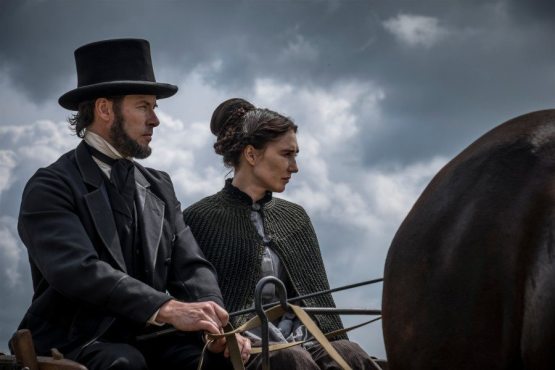
Gelukkig gaan de acteurs helemaal mee in Koolhovens tegendraadsheid. Dakota Fanning schudt effectief haar tienerimago van zich af om volwassen te worden als actrice in de rol van mannetjesputter Liz die weigert zich de mond te laten snoeren. Kit Harington zet zijn vetste Amerikaanse accent op als schimmige outlaw. Het is echter Guy Pearce die de meeste indruk achterlaat als de angstaanjagende fanaat, die mét Nederlands accent onheilspellende Bijbelcitaten prevelt. Koolhovens afdelingshoofden, allen Nederlanders, staan garant voor een stijlvolle aankleding en beeldschone cameravoering, wat het tekort aan westernlandschappen ruimschoots compenseert. Als zelfbenoemde western zal de film desondanks verkeerde verwachtingen scheppen en de gruwelen zullen velen niet kunnen behagen, maar Koolhovens Brimstone is beslist een waardevolle Hollandse toevoeging aan een beproefd Amerikaans filmgenre.
dinsdag 5 juli 2016
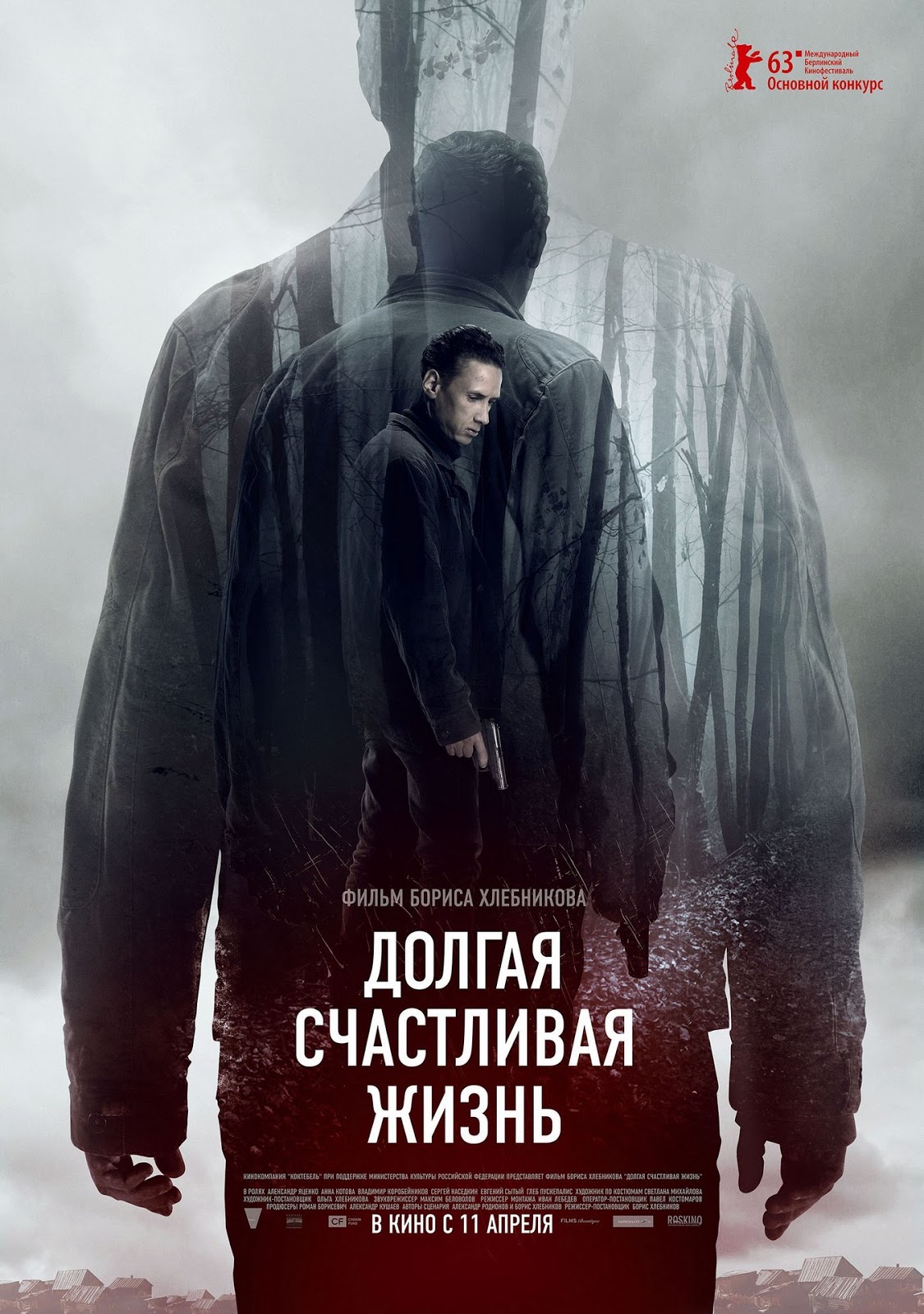
Today's Review: A Long and Happy Life
Another review up:
A Long and Happy Life - recensie
Director Boris Khlebnikov conceived of this film as a modern day Western set in Russia, inspired by the classic High Noon. With that knowledge in mind, you can easily recognize it as such, though for those with less prescience in regards to A Long and Happy Life, most of the ingredients are there for all to see. There's the lone hero, the rough but beautiful landscape, the love affair, the oppressed mob and of course the climactic shootout. All in just 77 minutes.
But the aspirations of an American Western aside, this is first and foremost a contemporary Russian social drama. So naturally, things don't proceed as they usually would. Unless you're versed in Russian arthouse, where the plethora of problems plaguing the nation, despite Putin's claims to the contrary, are placed front and center. Then you know full well what's in store. Corruption and the inevitability of its winning the day are the central themes of A Long and Happy Life, as they are in many similar films from Khlebnikovs peers. Sascha, who manages a small collective farm in the cold north of Russia, is all too eager to be bought by his superiors to split up the farm so the land can be used for something more productive. The dough gives him the opportunity to abandon this God forsaken place and move to the big city with his girlfriend. However, when the farmers under his command refuse to be moved as the state leaves them with next to nothing if it happens, Sascha's conscience gets in the way of the life from the title he envisioned for himself. Moved by their plight and their trust in him, he resists the officials, refuses the money and fights to keep his farm open. A hopeless battle, he knows, but as an honest man he must fight it anyway.
Now, honest men, those are hard to find, so says Khlebnikov in this fatalistic little film. The farmers sure don't turn out to be such men, as they quickly search for ways to get out, each man for himself, with as much money as he can make of it. And so Sascha soon finds himself fighting the good fight all by himself, betrayed by everybody. Tension mounts and it's obvious things cannot end on a happy note, but rather in a violent showdown only. Such is life is Russia these days, according to Khlebnikov. The point is well taken, but would have been better served by a different lead actor. Alexandr Yatsenko is well suited to play a corrupt underling, but makes a feeble impression as a lone hero. He simply lacks the necessary charisma for the part and so we're not sold on his switch from bored city boy wanting to leave the country to rebellious protector of the common folk. Which is also hindered by the small amount of time Khlebnikov puts into things, in obvious pun intended contrast to the title, since this film is naturally far from long and happy. But if you expected it to be, you are likely not familiar with Russian arthouse. Or Westerns for that matter.
zondag 24 maart 2013
Movies gone by: when will it end...
Here's
some more mini-reviews of movies I failed to review before due to
technical difficulties. Meanwhile, I still see more films every week
so it's piling up fast. Hopefully, I can still find time to finish
this catching-up and get back to regular reviewing. Next week will be
busy for me though (regular work, press viewing, dentist appointment,
shipping out many parcels full of sold Jurassic Park figures,
etc.), so that remains to be seen. Fingers crossed, no promises.
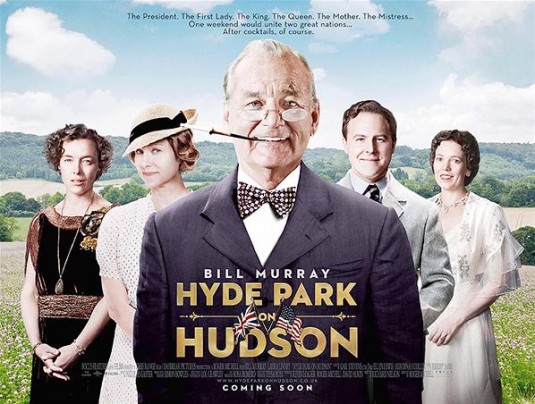
Hyde
Park on Hudson: ***/*****, or 6/10.
The
historic first visit of English royalty to the United States in 1939
immortalized on film, seen through the eyes of President Roosevelt's
distant cousin Margaret (played by Laura Linney), with whom he had an
uneasy semi-secret affair. Equally uneasy is the first meeting
between Mr. President (a formidable Bill Murray) and the King and
Queen of Britain (a sympathetic and convincingly 'just crowned'
Samuel West and Olivia Colman), the latter pair being completely
uncomfortable with the American way of life, but in need of winning
over the American public to support the Brits in the apparently
unavoidable upcoming war with Germany. The ultimate message: they're
all normal human beings with their own failings and strengths so why
not be friends? Putting human faces on historical characters of such
stature is what this film does best, resulting in both hilarious
confrontations – my favorite: the King waving at American farmers
in the distance for lack of other people to wave at, only to be
completely ignored – and genuinely compelling emotional moments,
but it's also a weakness: these people behave all too human, thus
making for a fair share of dull moments that compromise the film's
progress as the characters engage in routine human behavior. The plot
regarding FDR and his hidden mistress also gets in the way as it
gears towards a predictable clash between both personalities over the
exact nature of their affiliation that lacks full audience
engagement. Overall, this is a real 'hit and miss' movie, but the
thrill of seeing historical characters bicker and argue about whether
or not to eat hot dogs due to their political nature demands at least
one watch. My ex-history teacher, who was sitting in the audience
when I was running the film at the local arthouse theatre, seemed to
agree with this assessment: glad to know I learned some things from
him back in my high school days.
Life
of Pi: ****/*****, or 8/10.
Grand
tale of survival, man “versus” beast, the importance of hope and
the personal nature of religious beliefs, which won Ang Lee the 'Best
Director' Academy Award. A man from India named Pi (Irrfan Khan)
tells his life's tale: growing up in a zoo, ultimately moving the
whole animal circus to America as a boy, only to lose everything
(including his family) in a tropical storm at sea. Stranded on a life
boat, the young man (now played by Suraj Sharma) has to contend with
the only other survivor, an adult tiger named Richard Parker (created
by a fabulous mix between CGI and the real deal, the two blending in
so seemlessly that few people can tell the difference: a VFX Oscar
well earned!). Stuck with each other for months on end on the ocean
desert, Pi recalls their various encounters, the good, the bad and
the bizarre, with the message that no matter how bleak things seem,
there's always something to enjoy about the circumstances life has in
store for you. Lee serves this viewpoint from an atypical religious
angle that celebrates the good in religion by allowing Pi to take the
best elements of various religious belief systems and appropriating
it to form his own feel-good personal religion. The surprising result
(for hardcore atheists like myself at least) is that, despite the
fact Pi opens his story with the line 'I will tell you a story that
will make you believe in God', the movie is never to be considered a
pamphlet to convert anyone to any organized faith, but a call for
total individualist religious freedom, to belief in whatever you want
to belief to make the world work better for yourself. And so, despite
having lost his family at sea and having to take care not to be eaten
every day, Pi cannot help but marvel at life's grandeur, as he
witnesses splendid sights seen by few, including a whale feasting on
phosphorescent plankton at night, a carnivorous island populated only
by meercats and eventual mutual survival for Richard and himself
against all odds. As is expected from Ang Lee, such a colourful tale
comes with his typical ingeniously rich visual imagery, leading to
many breathtaking and haunting shots ('Best Cinematography' too),
made all the more effective by its grandiose use of 3D technology:
hence, watching this film in 2D is like listening to music with your
ears closed.
Period
crime flick set in late Fourties' Los Angeles, loosely based on
historical events. When the city suffers under the regime of ruthless
crime boss Mickey Cohen (unusual but effective role for Sean Penn),
who rules through intimidation and corruption, a few clean cops form
an equally uncompromising (i.e., violent) 'gangster squad' to rid the
town of Cohen and his consorts by any means necessary. Under the
command of Josh Brolin, these badgeless law enforcers hit Cohen as
hard as they can in any which way they can think of, showing no mercy
at all. An all-out war between both parties is the predictable
result, while a rather forced love relationship is established
between cop Ryan Gosling and Cohen's mistress Emma Stone, to
complicate matters romantically (and needlessly too). All in all, a
solid action flick devoid of surprises, but delivering everything you
would expect (which is both meant positively and negatively).
Originally scheduled to be released a good six months earlier, a
shootout scene in a movie theater needed to be altered due to the
Aurora 'Dark Knight Rises' incident: some footage of the
original scene can still be found in trailers all over the Internet
though. The most interesting thing about this film is the fact it's a
direct prequel to the far superior period thriller/'film noir' LA
Confidential (1997), which details what happened after Cohen's
historical downfall and outmatches Gangster Squad in almost
every respect (except for the explicit violence).
Django
Unchained: ****/*****, or 8/10.
Hailed
as 'Tarantino's latest masterpiece' well in advance of its actual
release, this movie reaffirms Tarantino excels in taking an
established film genre and dipping it in his usual sauce of violence,
a catching soundtrack and memorable oneliners. Though it's safe to
say the man ought to resort to other tactics soon before it backfires
on him, it cannot be denied Django Unchained is a great,
thoroughly entertaining film. Chronicling the rise to freedom of
former slave Django (a stern Jamie Foxx) by the grace of bounty
hunter Dr. Schultz (Christoph Waltz, who won his second Oscar by
repeating himself for a Tarantino film, except playing a good guy
this time around), the movie witnesses Django, striking a deal with
the man, becoming his sidekick as the two track down his wife
Broomhilda (Kerry Washington), who is now in the service of the
wealthy southern slaver Calvin Candie (Leonardo DiCaprio, both
surprisingly charming and wickedly discomforting). Figuring out an
elaborate scheme to get his wife back, Django soon finds out more
violent solutions are in order to reach his goal. The no-no word
'nigger' can be heard a whopping 107 times, to the acknowledgment of
its historical use but to the predictable shock of conservative
America: accordingly, action figures of characters from this film
were promptly taken off shelves to avoid controversy in stores, but
the ridiculous debate about the use of such sensitivewords rages on.
Apparently quality television shows like Deadwood get away
with it, but a much anticipated flick like this gets marred in
political debate for applying the same tactics. A wonderfully
intertextual neo-western, the film is laced with references to past
westerns, both the undying classics and the more obscure fare, as is
Tarantino's forte. The (this time hidden) movie babbling fortunately
doesn't get in the way of plot and character development, as it did
in Death Proof and tended to do in Inglourious Basterds.
Tarantino gets away with his proven routine again, for now: it would
be nice to see him tackle something wholly new for a change though.
Labels:
ang lee,
bill murray,
django unchained,
gangster squad,
history,
hyde park on hudson,
Josh Brolin,
life of pi,
neo-western,
oscars,
Quentin Tarantino,
religion,
sean penn,
tiger,
violence
dinsdag 6 maart 2012
Appaloosa
Rating:
****/*****, or 7/10
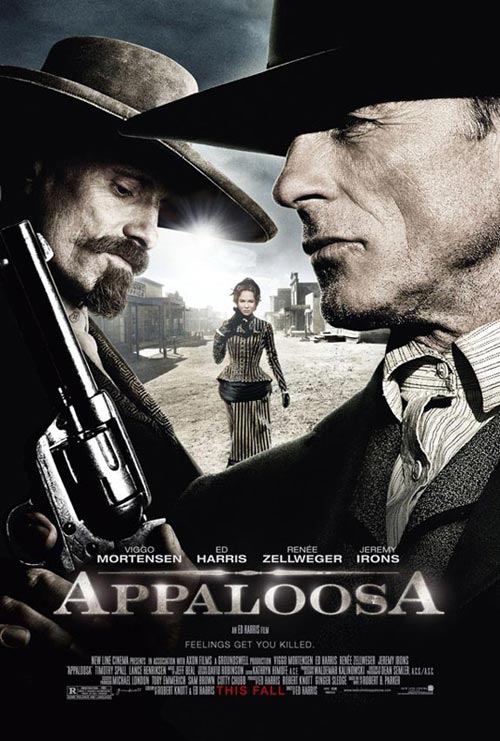
Ed Harris
both stars in and co-wrote this second movie he directed. A ruthless
rancher (Jeremy Irons) terrorizes a small town for his own purposes,
after which the townspeople hire two lawmen (Harris himself and Viggo
Mortensen) for their protection. This Marshall and his deputy capture
the rancher and set out to deliver him into the hands of justice, but
the shrewd ruffian has more tricks up his sleeve complicating their
quest to uphold the law. Further troubles are provided by a young
widow (Renée Zellweger) who
falls in love with the Marshall, but there's more to her than would
appear. A thinking man's neo-western featuring some damn fine acting
and a few solid shoot-outs, but also moments where the story drags on
and a bit of a cumbersome romantic subplot frustratingly getting in
the way of the main story.
Starring:
Ed Harris, Viggo Mortensen, Jeremy Irons
Directed
by Ed Harris
USA: New
Line Cinema, 2008
Abonneren op:
Reacties (Atom)