woensdag 26 september 2012

The Dark Cave: Femininity and Abjection in The Descent, Part 3

Been busy a lot lately, though not too busy watching movies. I did get to see a few, but I didn't get around to review them just yet (because I'm still in the lengthy process of cataloging all species of prehistoric animals having been made into a toy on only a single occasion. I might just post the results here). I saw Ted yesterday (decently funny movie; given the lack of good movies in cinemas at the moment it's no surprise it draws the abundance of crowds it does, since there's simply few alternatives but summer leftovers) and I hope to write a piece on it this weekend. I also might still tell you something about the surreal French flick Holy Motors, if I can wrap my head around it, which is only complicated by the fact I didn't get to hear the dialogue and sounds, I just witnessed the imagery (which was disturbing enough already). That's what you get for sitting right next to the projector. Of course I can give my thoughts on recent movie news, but there's little of real importance, other than saying the new trailer for The Hobbit Part I looks grand (it does, you know) and I'm utterly dismayed and perplexed by the news Universal Pictures means to reboot The Mummy (even though it's only four years since the third Mummy film, and the current franchise is less than 15 years old), but still refuses to finally get Jurassic Park IV going... And the guy the studio hires for the job is Len Wiseman, who just proved reboots are not his thing with the disappointing Total Recall remake. What sad times are these when passing ruffians can just reboot franchises at will for greedy studios! Nothing is sacred!
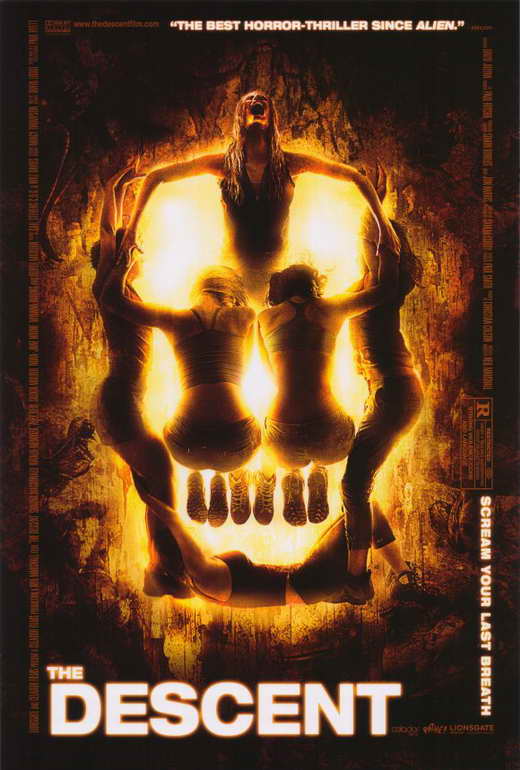
So I'll take this opportunity to post the third and final part of my essay on Neil Marshall's The Descent (did I mention how much I love this nasty horror picture?), if only to get all that talk about sex and kinky stuff over with. If you missed the previous chapters, you can simply look them up in the Article Archives on your right.
Ted, I'll see you in a few days in more detail... and now back to mapping unique plastic extinct critters. Someone's gotta do it, and the folks at the Dinosaur Toy Forum are just thrilled it's not them.


Hoofdstuk 3: de ‘Final Girl’ in The Descent

Zoals gezegd in de inleiding, wat intrigerend is aan The Descent is de volledig vrouwelijke cast. Waar vergelijkbare films uit het horrorgenre, zowel slasherfilms als monsterfilms, gebruik maken van een cast die zowel mannen als vrouwen behelst, is er afgezien van Paul in de openingsscène geen man in een speaking part aan te treffen. De film toont vrouwen zowel lichamelijk als geestelijk competent en geenszins inferieur aan mannen in conventionele horrorfilms. Dat vrouwen ook sterk kunnen zijn en levend uit het conflict met elk denkbaar monsterlijk wezen kunnen komen wisten we al sinds eind jaren zeventig toen Jamie Lee Curtis haar duel met Michael Myers overleefde in Halloween, waarna het beeld van de sterke jonge vrouw die als enige de strooptocht van de moordenaar overleeft dominant werd in het horrorgenre tot aan de dag van vandaag. Carol Clover gebruikt de term ‘Final Girl’ voor dit beeld en analyseert de werking van dit begrip aan de hand van een aantal slasherfilms. Haar definitie van de ‘Final Girl’ luidt:

The one who did not die: the survivor. She is the one who encounters the mutilated bodies of her friends and perceives the full extent of the preceding horror and of her own peril. (…) She is abject terror personified.1
The only character of any stature who does live to tell the tale is in fact the Final Girl. She is introduced in the beginning and is the only character to be developed in any psychological detail. We understand immediately from the attention paid it that hers is the main story line.’2

David Hogan ziet het belangrijkste element van horrorfilms waarin vrouwen de hoofdpersonages zijn in het moederschap. Hij koppelt het direct aan de ‘archaic mother’, het monsterlijke aspect van vrouwen om kinderen te baren: ‘physical repulsion at what the woman has given birth to3 is wat horrorfilms met een vrouwelijke hoofdrol stuurt. De ‘Final Girl’ ziet hij niet als een op zichzelf staand fenomeen, hoewel het dat al wel genoemd kon worden in 1986 toen hij zijn boek schreef. The films acknowledge that women have wombs, but not that they have brains or very much subtlety of emotion4. Een gebrekkige visie, want destijds waren er genoeg slasherfilms die de vrouw als protagonist niet in dit licht stelden. The Descent is een opvolger van zulke films met een vrouwelijk hoofdpersonage, en laat uitstekend zien dat, ondanks het aanwezige beeld van de ‘archaic mother’, vrouwen niet gereduceerd hoeven te worden tot ‘wombs’ maar ook de nodige hersens en hardheid hebben om hun aanvaring met de dood te overleven.
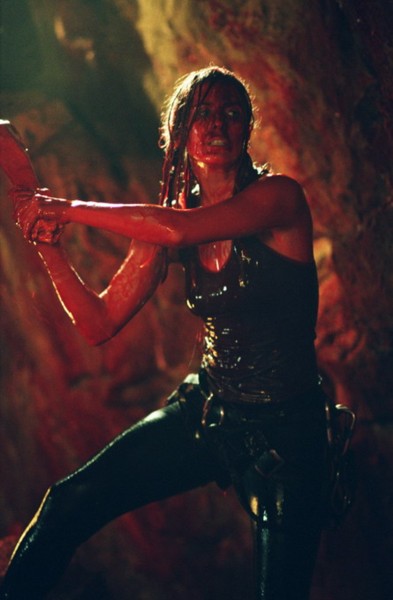

 Vooral de hardheid van de vrouwen in The Descent is opvallend. Het zijn allemaal rouwdouwers, stoere meiden die het lef hebben om het gevaar op te zoeken en een avontuurlijk leven leiden vol actieve extreme sporten als ‘wild water rafting’ en grottenexploratie. Hoewel zulke bezigheden niet atypisch zijn voor vrouwen vandaag de dag geeft het de groep toch een jongensachtig gevoel wat benadrukt wordt door hun bij vlagen platte taalgebruik. Clover geeft aan dat de ‘Final Girl’ een ‘boyish’ persoon is: ‘Her smartness, gravity, competence in mechanical and other practical matters, and sexual reluctance set her apart from the other girls (…). Lest we miss the point, it is spelled out in her name5. In The Descent lijkt eerder het tegenovergestelde te gelden. Alle vrouwen in de film zijn even grofgebekt en hebben verstand van het beklimmen van grotten en het materiaal dat ze daarvoor gebruiken. De enige vrouwen die volgens de film een seksuele relatie hebben zijn Juno en Sarah (beiden met Paul), die juist het dichtst bij de verdere definitie van de ‘Final Girl’ aanzitten. De enige naam die daarentegen jongensachtig overkomt is Sam (Samantha afgekort), maar de andere namen zijn geenszins mannelijk. Clover’s ‘Final Girl’ komt in dit geval niet volledig overeen met het beeld dat The Descent van vrouwen neerzet6.

Marcia England beweert als punt van kritiek op Clover’s concept van de ‘Final Girl’ dat deze door het doden van de moordenaar en het daarop doen hervatten van ‘normaliteit’ het patriarchale systeem waarmee de film opende herintroduceert: ‘It is the Final Girl who restores the patriarchal binaries to regain order at the conclusion of the film7. Voor andere horrorfilms is dit misschien het geval, maar niet voor The Descent; een patriarchaal systeem ontbrak vanaf het begin van de film (na Paul’s dood definitief). In Juno’s personage kan een matriarchaal systeem waargenomen worden, aangezien zij (althans tot blijkt dat ze gelogen heeft over het feit dat de grot onverkend is) fungeert als leider over de groep. Aan het eind van de film sterft haar matriarchale systeem met haar, als Sarah haar overgeeft aan de Crawlers. Als Sarah de ‘Final Girl’ van de film is vindt er wel een transitie plaats naar een nieuw matriarchaal systeem (Sarah als matriarch), maar nooit naar patriarchaal. England’s kritiek is in het geval van The Descent niet steekhoudend.

The Descent lijkt aanvankelijk op duidelijke wijze gebruik te maken van een ‘Final Girl’; Sarah, die uiteindelijke als enige het conflict met de Crawlers overleeft na al haar vriendinnen afgeslacht te zien worden. Maar is er wel sprake van een ‘Final Girl’ zoals Clover haar definieert? Op het eerste gezicht lijkt Sarah aan de eisen van Clover’s ‘Final Girl’ te voldoen. Afgezien van het ‘jongensachtige’ zijn bovenstaande beschrijvingen goed op haar van toepassing. Clover stelt ook dat

She alone looks death in the face, but she alone also finds the strength to stay the killer long enough to be rescued (ending A) or to kill him herself (ending B).’8

Ook dit lijkt op Sarah toe te passen, indien we de Crawlers als ‘the killer’ beschouwen. Sarah doodt elke Crawler die haar overleven bedreigt (‘ending B’), en weet uiteindelijk door haar wraak op Juno de Crawlers lang genoeg af te leiden om te ontsnappen uit de grot (‘ending A’). Het probleem is echter dat de citaten ook grotendeels op Juno toe te passen zijn9. Immers, ook Juno heeft Crawlers gedood uit noodzaak, en zonder Sarah’s wraak zou zij ook de uitgang van de grot bereikt hebben en zou ze het overleefd hebben. Hier ligt het verschil met andere films die gebruik maken van een ‘Final Girl’: The Descent heeft er in zekere zin twee.

Zowel Juno als Sarah worden geconfronteerd met de Crawlers en hun terreur die de dood van hun vriendinnen veroorzaakt. Beiden weten ze een aantal Crawlers te doden in zelfverdediging. Het verschil met Clover’s ‘Final Girl’ ligt in hun eigen moord op een vriendin. Juno doodt Beth (zo goed als, alleen durft ze haar dood niet te bespoedigen). Sarah doodt Juno, niet direct, maar door haar een makkelijke prooi te maken voor de Crawlers die haar vervolgens toch nog afslachten. Beth’s dood was echter onopzettelijk, terwijl Sarah’s actie gericht was. Is Sarah door deze wraakzuchtige actie zelf de ‘killer’, een valse ‘Final Girl’ die de ware ‘Final Girl’ doodt vlak voor haar redding? Of is Juno vanaf het begin al de eigenlijke ‘killer’, zonder dat Sarah het wist? Immers, Juno’s hypocrisie heeft de dood van haar gezin en de dood van haar vriendinnen veroorzaakt, en bijna (mogelijk daadwerkelijk) Sarah’s eigen dood. In deze optie zou Sarah als ‘Final Girl’ uiteindelijk het ene monster aan het andere overgelaten hebben om zichzelf te redden. Zoals Clover stelt: ‘The Final Girl (…) virtually or actually destroys the antagonist and saves herself10.
Maar dan rijst de vraag: heeft Sarah zichzelf wel gered? Werkt het beeld van de ‘Final Girl’ wel in deze film, gezien het multi-interpretabele einde? Als we ervan uitgaan dat Sarah stierf in het ziekenhuis aan het begin van de film en het hele gebeuren in de grot een laatste hersenspinsel was lijkt het moeilijk te kunnen spreken van een ‘Final Girl’. Immers, ze heeft het einde van de film niet levend gehaald (hoewel het dan aannemelijk is dat haar vijf vriendinnen het wel overleefd hebben aangezien de grottentocht nooit plaats heeft gevonden). Het hele concept van de ‘Final Girl’ is dan slechts een metafoor voor het tot een bevredigend einde brengen voor Sarah, in haar metafysische hereniging met haar dochter, niet zozeer het overleven van Sarah zelf. Hoewel Sarah toch ‘abject terror personified’ genoemd kan worden – fictief of niet, we hebben haar een groot gedeelte van de film zien rennen voor haar leven – krijgt Clover’s definitie van de ‘Final Girl’ zo een volledig nieuwe invulling11.


Conclusie

De rol van ‘abjection’ en de ‘femininity’ in The Descent is duaal en niet los te zien van de moederfiguren die in de film aan te treffen zijn. De verschillende manieren waarop de ‘archaic mother’ gerepresenteerd wordt duiden allereerst op het aloude beeld van de vrouw als monsterlijk wezen dat in staat is tot de abjecte daad van het kinderen baren. Tegelijkertijd zien we vrouwen in een positiever licht als sterke personen die vechten tegen de monsters die deze ‘archaic mother’ op ze loslaat. 
 
Maar deze vrouwen zijn zelf ook niet vrij van ‘abjection’, gezien hun conflictueuze gedrag dat zich uit in moord op elkaar. Juno als abjecte hypocriet, een moederfiguur dat haar kinderen de dood indrijft, is allesbehalve positief: hoewel moord niet haar bedoeling was, is het wel het resultaat waartoe haar verraderlijke gedrag tot twee keer toe leidt (de dood van Sarah’s gezin en de dood van haar vriendinnen). Het conflict met Sarah dat ze eigenlijk in de hele film heeft maar voor Sarah pas laat aan het licht komt vormt een rode draad in het plot, eindigend in de straf die, Juno, de valse moeder (ook een typisch bedrieglijke ‘femme fatale’ maar eentje die zich richt op andere vrouwen in plaats van op mannen) het leven kost. Zo doodt de protagonist uiteindelijk een versie van de ‘archaic mother’.
Tegelijkertijd is deze ‘Final Girl’ zelf ook geenszins puur: zij wordt besmet door de echte ‘archaic mother’ die zich overal om haar heen bevindt (de grot, de Crawlers als metaforische vervanging, de poel van bloed). Gekleed in een huid van bloed dient Sarah korte tijd de ‘archaic mother’: ze offert het andere kwade moederfiguur, Juno (een valse ‘archaic mother’), aan de kinderen van de werkelijke ‘archaic mother’, want deze duldt geen concurrentie. De echte ‘archaic mother’ wordt slechts gerepresenteerd in beeld maar krijgt een fetish-object in de vorm van de Crawlers. Na kort de acoliet van de ‘archaic mother’ geweest te zijn en de rol van ‘monstrous feminine’ gespeeld te hebben, keert Sarah terug naar haar eigenlijke zelf.

Sarah, het overwegend positieve moederfiguur, houdt ook na haar dood een connectie met haar dochter. De band met haar man wordt direct bij het ongeluk verbroken, aangezien hij haar bedroog met Juno. Ongeacht hoe je het einde van The Descent interpreteert (Sarah is dood/Sarah leeft) blijft Sarah de goede moeder die in het laatste beeld van de film herenigd wordt met haar dochter als beloning van het trouwe moederschap. Sarah voldoet niet aan alle eisen van de ‘Final Girl’ (haar status als getrouwde moeder maakt haar bovendien meer een ‘woman’ dan een ‘girl’), maar lijkt een moderne postfeministische variant op de ‘Final Girl’ te zijn, die wel de enige overlever is maar niet gevrijwaard blijft van ‘abjection’.
Het feit dat de film gebruik maakt van een volledig vrouwelijke rolbezetting lijkt weinig invloed te hebben op het beeld van vrouwen in de film. De film draait om het conflict tussen Sarah en Juno, en zij zijn de enige personages die karakterontwikkeling ondergaan: de verschillende visies op vrouwelijkheid en het moederschap komen slechts in deze personages naar voren, alsmede in de figuurlijke representatie van de ‘archaic mother’. De andere vrouwelijke personages blijven opvallend oppervlakkig en worden uiteindelijk gereduceerd tot niks dan kanonnenvlees. De in de film genoemde status van Holly als protégee van Juno of van Sam en Rebecca als zussen blijft onderbelicht, hoewel een verdieping in deze relaties aanvullende visies op vrouwelijkheid of moederschap had kunnen bieden. De vraag dient zich aan of het uitgemaakt had als er ook mannen mee de grot in waren gegaan in plaats van enkele van dergelijke vrouwelijke bijrollen. Het contrast tussen de vrouwen en de Crawlers, die in principe bijna allemaal mannelijk zijn, wordt echter symbolischer door het verdere gebrek aan mannelijke personages en wijst op een letterlijke ‘battle of the sexes’, de ‘normal feminine’ versus de ‘monstrous masculine’ (maar in dienst van de ultieme ‘monstrous feminine’, de ‘archaic mother’), waarbij er zich een verrader onder de vrouwen bevindt. Juno verraadt hen echter niet aan de man, maar aan de ‘archaic mother’ (deze domineert de mannelijke figuren in de film), die zij onbewust imiteert door haar abjecte gedrag. De film handelt over vrouwen tegen vrouwen waarbij mannen, voor zover al aanwezig, slechts pionnen zijn.


Bibliografie

Clover, Carol J. Men, women, and chain saw: gender in the modern horror film. Londen: British Film Institute, 1992

Creed, Barbara. ‘Kristeva, Femininity, Abjection’ and ‘Horror and the Archaic Mother: Alien’ in The Monstrous Female: Film, Feminism, Psychoanalysis. London en New York: Routledge, 1993, p. 8-30

England, Marcia. “Breached Bodies and Home Invasions: Horrific representations of the feminized body and home.” Gender, Place and Culture, nr. 13 (augustus 2006): p. 353-363

Hogan, David J. Dark Romance: Sex and Death in the Horror Film. Jefferson NC: McFarland & Company Inc., 1986

Kristeva, Julia. Powers of horror: an essay on abjection. New York: Columbia University Press, 1982


1 Clover 1992: p. 35
2 Clover 1992: p. 44
3 Hogan 1986: p. 19
4 Hogan 1986: p. 19
5 Clover 1992: p. 40
6 Nina K. Marten beschrijft in haar essay “The Descent: Feminism and the Final Girl in Horror Cinema” andere punten waarop Clover’s ‘Final Girl’ in conflict is met het beeld van de ‘Final Girl’ wat The Descent toont. Helaas was haar artikel op het moment van schrijven niet beschikbaar voor publicatie, waardoor ik er geen gebruik van heb kunnen maken. Slechts het abstract van dit artikel was vrijgegeven.
7 England, 2006: p. 354
8 Clover 1992: p. 35
9 Het voornaamste verschil tussen Sarah en Juno wat duidt op wie de ‘Final Girl’ is, is de absolute status van protagonist en karakterontwikkeling die Sarah in grotere mate toegekend krijgt (we zien de film bijna volledig vanuit haar perspectief). Desondanks speelt Juno in Sarah’s ontwikkeling een aanzienlijke rol die het verhaal stuurt.
10 Clover 1992: p. 59
11 Deze invulling is misschien niet steekhoudend als we slechts naar The Descent kijken. Als we het vervolg, The Descent Part 2 (op het moment van schrijven in post-productie), erbij betrekken verdwijnt deze interpretatie. De sequel gaat volgens IMDb over Sarah’s terugkeer naar de grotten met reddingswerkers om aan te tonen dat ze de Crawlers niet verzonnen heeft en niet haar eigen vriendinnen heeft gedood. Deze synopsis stelt expliciet dat Sarah het dus toch overleefd heeft, waardoor haar een conventionele lezing van de ‘Final Girl’ toegedicht kan worden. Hoewel The Descent dan een metafysische lezing van de ‘Final Girl’ bespaard blijft, is het spijtig dat het ambigue einde van de film verloren gaat door een eigenlijk overbodig vervolg.

zondag 16 september 2012

Hollywood didn't remember this one wholesale


Total Recall (2012): ***/*****, or 6/10

Total Recall (1990) is still a high point in Paul Verhoeven's oeuvre. At the time the most expensive movie ever made, it featured Arnold Schwarzenegger at the height of his career, running for his life from government conspirators in a provocative, nightmarish future setting both on Earth and on Mars, all the while messing with the spectator's mind in determining whether his tribulations were for real or just a sign of his brain being screwed up just moments before a lobotomy, in the typical sardonic and satirical Verhoeven style. Of course, nowadays nothing is sacred in Hollywood, and since more than two decades have passed the executive powers that be decided it was time for a fresh adaptation of Philip K. Dick's short story We Can Remember It for You Wholesale (1966). Adaptation, however, is too strong a term: inspiration would be more precise, something underscored by the end credits which state the new movie was only inspired by Dick's original work. In fact, it takes even more poetic license with his story than Verhoeven's version did. Unfortunately, various elements that made the previous film such a joy to watch are wholesomely neglected this time around, while the overall story remained the same. As a result, the new Total Recall is neither more sophisticated nor more fun to watch than its predecessor.


The narrative core of Verhoeven's Total Recall is carried over largely intact into the new movie. Douglas Quaid (Colin Farrell, who portrays a bored laborer more convincingly but less enjoyably than the hulking Schwarzengger did) is an everyday underpaid factory worker tired of his dull dead-end job, living in a lousy apartment with his beautiful wife Lori (Kate Beckinsale). Longing for an escape from the boring routine of his life, he visits Rekall, a company that implants fake memories the customer never experienced but that seem totally real as if the subject lived through them himself. In need of a dramatic change of pace, Quaid orders a set of secret agent memories injected in his mind, after which all hell breaks loose when apparently dormant but true experiences of a life as a spy manifest themselves, after which he finds himself on the run from the authorities, including his wife who proved to be an undercover operative, in their attempt to stop Quaid from exposing an elaborate government conspiracy involving corrupt officials out for personal gain at the expense of the lives of thousands of oppressed workers. Trouble is, are we sure all of Quaid's newfound experiences are real, or are they just what he ordered, with the problem being he can't separate truth from fiction as his mind has trouble processing it all?

Warning! Spoilers ahead! With the overall story of the remake identical to the original motion picture, the differences of the new script mostly involve setting and background history. Still set in the not too distant future, the plot now takes place on a post-apocalyptic Earth where chemical warfare has ravaged most of the planet, leaving only Western Europe and Australia habitable. Dubbed the United Federation of Britain and the Colony respectively, the former is the seat of power ruling what's left of the globe with an iron fist, while the latter houses the huge work force keeping things running, as well as home to the many dispossessed masses whose sole task in life is day-to-day survival. Travel between the UFB and the Colony is only possible via the Fall, a sort of giant subway system through the planet's core, allowing the laborers – Quaid among them – to journey to their work every day, deporting them back to the ass-end of the planet when the day is over just as easily. Of course there is resistance to this near-enslavement, most notably in the shape of a terrorist group run by the enigmatic Matthias (an all too small part for the great Bill Nighy), out to destroy the Fall and wreaking havoc in the process. Naturally, the terrorists are the ones we should feel sympathy for considering the hard exploitative regime that controls the workforce's life under the rule of the sinister Chancellor Cohaagen (Breaking Bad's Bryan Cranston), who is secretly hatching a diabolical scheme to get rid of all the miscreants and malcontents in the slums: his motivations for doing so differ from Total Recall's previous incarnation, where he sought to control alien technology. His venture in the current film involves replacing the human workers with robots, a scheme rather derivative of other science fiction works including the likes of I, Robot (2004): there's a reason Total Recall's mechanical men are so reminiscent to that movie's droids.


Unlike both the short story and Verhoeven's take on that, all the action is Earth bound and Mars is nowhere to be seen, other than being only briefly mentioned – in a post-John Carter Hollywood Mars is not a welcome location – so the script switches locations between the UFB and the Colony. Location wise, this turns out to be a mistake. Whereas the trip to Mars only worked to the predecessor's visual advantage, setting it apart from the action that had gone before and underscoring the eerie, dreamy quality of the piece, the visual look of the UFB and the Colony in this version is totally interchangeable. Both areas are defined by excessive urbanization, as overpopulation has led to ever upward building, with an elaborate maze of mile high towering constructions the result. Though the abundance of CGI thrown at these sets makes it look stunning at first, amazement soon turns to acceptance, and acceptance even faster turns to visual disinterest as the movie spends almost two hours following the protagonist being driven from one skyscraper to the next in a string of dynamic chase scenes that eventually make it hard to tell just where on the planet we are exactly. An all too brief excursion to the terrorists' secret layer in the desolate wastelands outside the habitable zone offers little reprieve from this monotonous setting, which in itself is very obviously inspired by undying science fiction classics like Blade Runner (1982) and Metropolis (1927), but used to much less dramatic effect because of its overexposure.

Equally overused is action. Of course, a big Hollywood blockbuster like Total Recall needs action scenes to draw crowds, but not in numbers this high. From the moment Quaid's unconscious cover is exposed in the Rekall salon, he spends most of the film running for cover as he's hunted by Cohaagen's minions, both robotic and flesh and blood, Lori chief among them. If Quaid's not running, he's fighting his way through scores of bad guys. The plot only allows short intermissions for the audience to catch its breath, at which time a great deal of exposition is delivered in as little time as is deemed necessary to warrant the next thirty minutes of relentless action, until the end credits start rolling. Just as the surroundings where such action takes place, the action scenes themselves are similarly interchangeable. Not even a flying car chase (a little too reminiscent of The Fifth Element (1997)) and a pursuit in a labyrinth of elevators offer enough diversion to keep the action from mentally becoming one big blur when the theater lights go back on. Director Wiseman knows action like few others, as he amply showed with movies like Underworld (2003) and Die Hard 4.0. (2007), but the script just kept him from balancing action and exposition to appropriate levels, while the ever singular looking environments didn't allow him to come up with interesting new ideas to shoot such action other than a bunch of general shoot-them-ups. At least his skill in directing fight scenes makes it easy for Total Recall's to look convincingly brutal, entertaining the viewers for a while before such scenes become too commonplace to really care less about them.


 With the focus a little too much on action, it comes as no surprise that other areas of the film's whole remain underexposed. Chief casualty is the emotional climax provided in Verhoeven's version, which made you guess until the very end just as to what's real and what isn't. The script largely follows the same pattern as the original did, but makes it clear all too soon and all too obvious whether its allegiance lies to fiction or reality, thus disabling the audience's pleasure to debate the exact chain of events since there's no room left for speculation. At times the film appears to turn the table on the audience's expectations, just as eager to switch it back mere moments later so the audience doesn't get to be confused, even though it would undoubtedly expect and like to be confused at least a little considering the picture deals with messing with man's mind. This lack of guts to smarten up the movie where it easily can be done makes it all the harder to accept a short lecture at the Rekall facility about the brain and its inner workings: in light of the lack of plot twists and the loads of dull action scenes to come, the movie at this point pretentiously seems to say 'here's how the brain works, now you can go and shot down yours for a few hours since there's really nothing more to our plot'. Worse even is the absolutely serious tone Total Recall adopts for the next ninety minutes, as it leaves little room for humour to put things in perspective considering the absence of intelligence. Among the car chases, the gun fights and the hand to hand combat there's no place for a laugh or two to remind the audience this isn't all as serious as it appears to be, unlike Paul Verhoeven's tone of witty sarcasm that only enhanced his Total Recall's sense of wonder and adventure. You'll find no Johnny-Cab in this film, though as time goes on you desperately want there to be...

Total Recall (2012) is a perfect example of a Hollywood exercise in futility as far as remakes go. It does not improve on the earlier version, nor does it address elements from the plot of the original short story the 1990 film might have ignored. It regurgitates a well crafted story and spits it out in a slicker and stylistically more modern variation that sadly fails to captivate the audience, taking itself way too seriously while simultaneously explicitly weeding out the plot hints that might have made for a more thought provoking, inconclusive ending. What remains is a generic high voltage chase flick filled with standard fisticuffs and gun fights in a visually impressive but monotonous and uninspired environment, which moderately entertain the viewer for two hours, but ultimately prove to be wholly forgetful. The only thing the producers apparently picked up from Paul Verhoeven's classic is the unforgettable image of a triple breasted prostitute, an all too brief pointless insert that only serves as a nostalgic nod to a superior take on this same story. Clearly it doesn't suffice to take a Verhoeven flick and throw out everything that makes it recognizable as such, since that's what makes it memorable. With remakes of Verhoeven's other excellent Sci-Fi/action films RoboCop (1987) and Starship Troopers (1997) in production, Hollywood executives best recall the many shortcomings of Total Recall (2012), unless they truly aim to make movies the audience will soon forget, so they can simply remake them again in another twenty years time.

And watch the trailer here:

woensdag 12 september 2012

The Dark Cave: Femininity and Abjection in The Descent, Part 2

 I've been back at work for almost two weeks now and I've been busy cleaning up the mess made in my absence (again!). As a consequence, I unfortunately didn't get the chance to see any new films. Worse is the fact all appealing movies I'm interested in disappear out of theaters in rapid succession without having gotten a decent run, because the greedy powers that be decide they don't make enough money on too short notice. So while I really wanted to see oddball movies the likes of God Bless America and Ronal the Barbarian, it just didn't happen. Still, I need to post something on the main page every now and then to make it obvious I haven't forgotten it. So I turned to my stash of college papers again and decided to continue posting my sexually charged paper on Neil Marshall's awesome horror flick The Descent. Today, chapter 2: more talk about monsters, sex, death and gore. All the niceties of life in a nutshell. Plus monsters.


Hoofdstuk 2: representatie van de ‘archaic mother’ en moederfiguren in The Descent

A friend of mine (…) read the script and came back to me, she said: ‘This is disgusting!’, she said, ‘the whole story is about sex, all about sex!’ The whole women-going-into-a-dark-tunnel, a slimy dark tunnel, the bloody caves, all that kind of stuff, it’s all about sex and sexuality. She said I’d written a horror porn movie.’1

Een belangrijk aspect van de horrorfilm, ook The Descent, is de representatie van vrouwelijke seksualiteit en moederfiguren. De mogelijkheid van het vrouwelijk lichaam om moeder te zijn is een belangrijk element voor ‘abjection2: ‘In Kristeva’s view the image of woman’s body, because of its maternal functions, acknowledges its ‘debt to nature’ and consequently is more likely to signify the abject3. De rol van het moederfiguur, al dan niet abject, wordt op verschillende manieren letterlijk en figuurlijk gerepresenteerd in The Descent.
De representatie van de ‘archaic mother’ zoals getypeerd in Kristeva en Creed is hierbij niet onbelangrijk. Een letterlijke representatie van de ‘archaic mother’ is niet te vinden in The Descent, maar op diverse manieren vinden we ‘signifiers’ van haar aanwezigheid.

Een belangrijk element dat Creed bespreekt met betrekking tot de representatie van de ‘archaic mother’ in de horrorfilm is de ‘primal scene’, ‘the scene of birth, in relation to the representation of other forms of copulation and procreation4. De ‘primal scene’ wordt in The Descent twee keer, op verschillende manieren, figuurlijk getoond. In beide gevallen vindt de geboorte plaats zonder ‘agency of the opposite sex5: Sarah is het enige subject van de geboorte, mannen (laat staan andere vrouwen) komen er niet aan te pas. Beide keren vindt er geen letterlijke geboorte plaats, maar wel een belangrijke psychologische omslag in Sarah’s karakter.
De eerste keer vindt plaats in het ziekenhuis als Sarah bijkomt vlak na het auto-ongeluk. Als ze uit bed komt en door de gang van het ziekenhuis loopt gaan de lichten opeens één voor één uit. Het scherm gaat een korte tijd op zwart, waarna het beeld terugkeert en we zien hoe Sarah zich vol verdriet over haar verlies in de armen van Beth stort. Sarah heeft op dit punt alles verloren wat bepalend voor haar eerdere karakter was: ze is niet langer moeder of echtgenote en wordt “herboren” als kinderloze weduwe. Zogezegd is de interpretatie van deze hergeboorte vrij oppervlakkig, maar de scène kan op een tweede, duisterder, wijze geïnterpreteerd worden. Immers, het uitgaan van de lichten in het ziekenhuis is merkwaardig: het werkt als symbool voor Sarah’s emotionele toestand, maar past anderszins niet in de diëgese (in hoeveel ziekenhuizen gaan de lichten immers spontaan uit op een navrant moment als dit?). Gekoppeld aan het open einde waarin Sarah herenigd wordt met haar dochter in de grot ligt dit anders. De interpretatie houdt in dat Sarah gestorven is in het ziekenhuis, lichamelijk maar niet geestelijk. Haar geest blijft actief en verzint het verhaal van de grottentocht en de Crawlers om haar totale verlies te kunnen verwerken en af te kunnen rekenen met haar onderbewuste gevoel van Juno’s verraad, als een droom die voorbij flitst voor het ontwaken. Aan het eind vindt ze haar dochter terug in een metafysische toestand, een soort hemel. Zo gezien is deze ‘primal scene’ geen geboorte, maar juist een sterfgeval: Sarah wordt “geboren” als geest. De ‘archaic mother’, als ‘point of origin and of end6, kan naast de geboorte immers ook gerepresenteerd worden in de dood, zoals in dit geval.

Een tweede ‘primal scene’ in The Descent behelst de geboorte meer letterlijk, vooral visueel. Hier betreft het Sarah’s opduiken uit de poel van bloed in de grot. In haar strijd met de Crawlers belandt ze in deze poel. Ze blijft even onder, en komt vervolgens langzaam tevoorschijn, volledig bedekt met bloed. Het beeld wat deze scène toont correspondeert op een letterlijke manier met het beeld van de geboorte, het ter wereld komen van het nageslacht in een bloedig tafereel. ‘The creature born is primitive rather than civilized, suggesting that a thin line separates the human animal from its ancestors7: Sarah’s karakter verandert hier; ze wordt een vastberaden en berekenende, actieve overlever die volledig op zelfbehoud gericht is, maar ook op wraak. Ze beslecht haar conflict met Juno waarvan ze eerst niet wist dat ze het had, totdat Beth haar Pauls hanger overhandigde, op een manier die zowel te interpreteren valt als een wrede overlevingstactiek als een wraakmethode. Ze steekt Juno door haar been zodat ze niet meer kan lopen en laat haar vervolgens achter voor de Crawlers. Zo wordt Juno gestraft voor haar verraad aan Sarah, maar vormt ze ook een afleidingsmanoeuvre die Sarah zelf de kans geeft de uitgang te bereiken terwijl de Crawlers zich met Juno bezighouden. Het is een primitieve daad en stelt de vraag in hoeverre Sarah humaan handelde: was het moreel gerechtvaardigd of een beestachtige daad ten bate van haar overleven, uit puur zelfbehoud?
In zekere zin lijkt Sarah zelf een ‘monstrous female’ te worden na deze tweede ‘primal scene’. Haar huid wordt volledig bedekt door bloed, een ‘bodily waste’ die een tweede huid vormt, en die haar voorziet van een bloeddorst die ze voorheen ontbeerde. Sarah wordt letterlijk primitiever: ze beweegt zich dierlijker, kruipend op handen en voeten, gejaagder en agressiever, zintuiglijk gedreven en emotieloos. Ze spreekt niet, zelfs nadat ze Juno terugvindt: de twee wisselen geen woord met elkaar, de communicatie via hun blikken zegt genoeg. Haar bloeddorst komt tot een hoogtepunt wanneer ze Juno uitschakelt en zichzelf redt. Pas als ze de grot verlaat via de uitgang (een klein gat in de grond waar ze met moeite uitkruipt, wellicht een derde ‘primal scene’?) verandert haar karakter weer terug. Uiteindelijk weet ze haar auto te bereiken, huilend en overstuur, hetzij door de inspanning, hetzij uit wrok over Juno’s ondergang die zijzelf veroorzaakt heeft. Bijna al het bloed op haar huid is bij haar terugkeer verdwenen, een indicatie dat haar normale karakter hersteld is. Als ze stopt om bij te komen moet ze overgeven als late reactie op alle ‘abjection’ in de grot (en mogelijk ook over haar dubieuze actie jegens Juno): ‘The body’s inside (…) shows up in order to compensate for the collapse of the border between inside and outside. It is as if the skin, a fragile container, no longer guaranteed the integrity of one’s “own and clean self” but (…) gave way before the dejection of its contents8.


Naast de ‘primal scene’ wordt de ‘archaic mother’ in deze film ook gerepresenteerd in de alomtegenwoordige beelden van duisternis, bloed en dood. De duisternis van het grottenstelsel is voor de hand liggend, evenals de psychoanalytische interpretatie van de grotten zelf als de “baarmoeder” van de ‘archaic mother’ waar zij monsters (Crawlers) voortbrengt: ‘the womb-like imagery, the long winding tunnels leading to inner chambers9. De vele liters bloed die in deze grotten te vinden zijn representeren de gewelddadige geboorte van de monsters alsook de dood van de slachtoffers waarvan zij leven. Het beeld van de dood is hier niet los te zien van het beeld van de vernietigende seksualiteit van de ‘archaic mother’ met haar kinderen, de Crawlers. De vergelijking tussen seks en dood is het leitmotif van Hogan in zijn boek ‘Dark Romance: Sex and Death in the Horror Film’: ‘Sexual behavior and its ultimate purpose, children, are quite clearly the antithesis of death. If one is to examine death then, one must examine sex10. In het geval van The Descent is seksualiteit niet de tegenhanger van de dood: het is juist de brenger van de dood, zowel in de metaforen van de grotten en de moordende ‘archaic mother’, als buiten de grot waar de seksuele uitspatting van Juno leidde tot de dood van Sarah’s gezin.
De grot is exemplarisch voor de ‘abject space’ zoals Marcia England deze typeert: ‘Abject spaces are considered dangerous and frightening because they are places of uncertainty. Boundaries dissolve in abject spaces, resulting in confusion of categories and apprehension as comfort levels are breached11. De onbekende grot is een plek vol gevaar en onzekerheid (zowel van buitenaf als binnenin de groep vriendinnen), waar ‘borders’ doorbroken worden (leven/dood, vriend/vijand, mens/dier). De term is vergelijkbaar met Clover’s begrip van de ‘Terrible Place’, de plaats waar de confrontatie tussen de slachtoffers en de monsters in horrorfilms plaatsvindt12. Clover koppelt ‘abjection’ hier niet direct aan, hoewel dat een voor de hand liggend begrip in deze context is.
De Crawlers zijn de fetish-objecten voor de ‘archaic mother’. Afwezig als zij is wordt het beeld van de ‘archaic mother’ als monsterlijke doder op deze wezens geprojecteerd, die haar erfgoed van moord en ‘abjection’ uitdragen. Zo staan de Crawlers symbool voor de ontbrekende fallus van de moeder13, maar met hun dodende scheurtanden nog sterker voor haar vagina dentata, dat wat castreert14. In dit geval kunnen hun slachtoffers echter niet gecastreerd worden, het zijn slechts vrouwen. Deze vrouwen staan in scherp contrast met de Crawlers als fetish-object voor de ‘archaic mother’, want ze representeren de ‘acceptable form and shape of woman15, lichamelijk aantrekkelijk om naar te kijken als ze zijn (‘woman as reassuring and pleasurable sign16).

Naast de ‘archaic mother’ wordt vrouwelijkheid ook op andere manieren getoond in The Descent. De belangrijkste manier waarop dit verschil zich uit ten opzichte van de ‘archaic mother’ is in het moederschap zelf. Het meest voor de hand liggend is Sarah als moeder te zien: hoewel ze ‘ontmoederd’ is door de dood van haar dochter heeft ze de connectie met het kind niet verloren. Deze band is welhaast een katalysator voor de rest van het verhaal in de film te noemen. Haar aanhoudende rouw over de dood van haar dochter leidt Juno ertoe de grottentocht als afleiding te ondernemen. Het helpt niet, want in de grotten hallucineert/droomt Sarah over haar dochter: het ambigue einde herenigt haar met het kind, hoewel het onduidelijk blijft hoe deze situatie opgevat moet worden. Wel kan gesteld worden dat haar houding tegenover haar dode dochter een figuurlijke vorm van Kristeva’s notie van de ‘mother-child’ relatie is: ‘the child struggles to break free but the mother is reluctant to release it17. Hier worstelt het kind niet, maar sterft jong. Desondanks kan de moeder haar niet loslaten, haar dood blijft onverwerkt.
Een ander, meer figuurlijk, moederfiguur is Juno. Zij leidt haar vriendinnen de onderwereld in (als ware een matriarchaal systeem) en probeert ze in leven te houden als haar beoogde doel door het instorten van de grot misloopt. Als moeder faalt zij jammerlijk, met als dieptepunt de (onopzettelijke) dood van een “dochter”, Beth18. Na alle “dochters” verloren te hebben komt het tot een confrontatie tussen haarzelf en een echte moeder, Sarah, die haar rol als dochter van Juno niet meer accepteert na Juno’s bedrog en falen, en haar verslaat.
De namen van zowel Sarah als Juno zijn mogelijke referenties naar mythische moederfiguren. In de Romeinse mythologie was Juno de eega van de oppergod Jupiter, en zodoende de koningin der goden. Ze werd aanbeden als godin van het moederschap en het huwelijk. De status van het personage Juno in de film als hypocriet wordt door deze verwijzing verder uitgediept, aangezien Juno noch moeder noch echtgenote is, maar ze Sarah, die juist beide functies bekleedde, bedrogen heeft met als indirect resultaat de dood van zowel haar man als haar dochter, waardoor Sarah deze functies juist verloor.
De naam ‘Sarah’ kan verwijzen naar Sarah/Sarai, de vrouw van Abraham in het Oude Testament. In het Hebreeuws betekent Sarah zoveel als ‘een vrouw van hoge rang’, ‘prinses’ of ‘godin’. In dit opzicht verschilt het gebruik van de naam ‘Sarah’ niet veel van de naam ‘Juno’ (immers ook een godin). Sarah’s status als echtgenoot van Abraham is voor de hand liggend, maar als moederfiguur is zij ambigue. Het Oude Testament maakt melding van haar onvruchtbaarheid wat Abraham noopte tot het nemen van een concubine (Hagar) om kinderen te verwekken. Toch kreeg ze op hoge leeftijd alsnog een kind, Izaäk. De Sarah in de Bijbel maakt dus een bijna omgekeerde ontwikkeling door als de Sarah in The Descent: haar wordt eerst de mogelijkheid tot het krijgen van een kind ontnomen hoewel ze uiteindelijk toch baart, terwijl Sarah in de film haar kind verliest en vervolgens ook het krijgen van andere kinderen door haar eigen dood (afhankelijk van hoe je de film interpreteert)19. Een andere interpretatie van het gebruik van de naam ‘Sarah’ heeft betrekking tot overspel. De Sarah in de Bijbel werd ertoe genoopt de buitenechtelijke relatie (een vorm van overspel) van Abraham met Hagar goed te keuren door haar eigen onvruchtbaarheid. Paul, de echtgenote van Sarah in de film, pleegt overspel met Juno. Zo zijn de connecties met hun mythische tegenhangers in beide gevallen omgekeerd: Juno is geen getrouwde moeder met kind en Sarah wel: Sarah pleegt geen overspel, Juno wel.


Naast de lichamelijk afwezige ‘archaic mother’ is er een letterlijke monsterlijke moeder aan te treffen in The Descent: de vrouwelijke Crawler. Opvallend genoeg is er maar één vrouwelijke Crawler te zien in de film. Alle andere Crawlers zijn mannelijk20. De film impliceert dat de jonge Crawler die Sarah doodt nageslacht is van dit wijfje. Sarah wordt hierop rechtstreeks geconfronteerd met de vrouwelijke Crawler, zowel lichamelijk als metaforisch. Het vrouwtje valt haar aan maar Sarah weet ook haar te doden. Tegelijk wordt de representatie van beiden als kinderloze moederfiguren weerspiegeld: Sarah verloor haar kind, en nu doodt ze het kind van haar tegenstander. Hierdoor wint de vrouwelijke Crawler sympathie van de toeschouwer: ze handelt met een motief, wraak en verdriet, waar de andere Crawlers slechts moorddadige monsters lijken. Hoewel Sarah handelde uit zelfverdediging is de dood van de moeder affectief voor de kijker, en eens te meer een bewijs dat Sarah en haar vriendinnen de indringers, de ‘abjecten’ zijn in de grot (zie Hoofdstuk 1). De vrouwelijke Crawler kan echter ook gezien worden als de directe ‘archaic mother’. Als enige vrouwelijke Crawler in de film kan zij staan voor de moeder der monsters, die alle andere Crawlers heeft voortgebracht. In dit geval doodt Sarah de ‘archaic mother’ direct, terwijl haar erfgoed van terreur hierop gehandhaafd blijft: zowel het metaforische beeld van duisternis, dood en bloed als de andere Crawlers blijven na haar dood aanwezig. Hierdoor zie ik haar niet als een directe ‘archaic mother’ maar een vervangend fetish-object zoals de andere Crawlers.

1 Uitspraak van regisseur Neil Marshall op het audiocommentaar van de DVD van The Descent.
2 England, 2006: p. 356
3 Creed 1993: p. 11
4 Creed 1993: p. 17
5 Creed 1993: p. 17
6 Creed 1993: p. 17
7 Creed 1993: p. 17
8 Kristeva 1982: p. 53
9 Creed 1993: p. 19
10 Hogan, David J. Dark Romance: Sex and Death in the Horror Film. Jefferson NC: McFarland & Company Inc., 1986: p. xii
11 England, 2006: p. 355-356
12 Clover, Carol J. Men, women, and chain saw: gender in the modern horror film. Londen: British Film Institute, 1992: p. 30-31
13 Creed 1993: p. 21
14 Creed 1993: p. 22
15 Creed 1993: p. 23
16 Creed 1993: p. 24
17 Creed 1993: p. 11 / Kristeva 1982: p. 13
18 Gefocust op het doden van de Crawlers steekt Juno Beth neer omdat ze denkt dat een Crawler haar van achteren probeerde aan te vallen. Ze herkende haar niet als een vriend. Kristeva: ‘abjection is elaborated through a failure to recognize its kin’ (1982: p. 5).
19 De strijd tussen Sarah en Juno is mogelijk een stiekeme verwijzing naar de strijd tussen monotheïsme en polytheïsme. Uiteindelijk werd de religie van meerdere goden die de Romeinen (Juno) aanhingen vervangen door het monotheïstische Christendom (Sarah), voortbordurend op het Hebreeuwse Oude Testament. Als metafoor delft Juno het onderspit in haar strijd met Sarah.
20 Volgens IMDb’s castlist lag de verhouding anders; van de 10 Crawlers in de film werden er 3 gespeeld door vrouwen. Desondanks zien we maar één vrouwelijke Crawler. Of deze werd gespeeld door drie actrices, of twee actrices speelden mannelijke Crawlers.

zondag 9 september 2012

Snake Plissken in space

Lockout: ***/*****, or 7/10

The contemporary major Hollywood studios are not known for their originality. The abundance of sequels, reboots, remakes, reimaginings and the like, all for the purpose of building marketable and easily exploitable franchises, allows little room for any well conceived fresh ideas to swing into full production and hit theaters. New ideas seemingly remain the province of the smaller independent studios circling Hollywood, often praised for their “European” attitude towards intriguing scripts and securing finance for their smaller scaled but emotionally more elaborate set-up. However, in truth the European sensibility isn't much different at all, as proven by the European 'major' Luc Besson, who is well known for producing dynamic motion pictures similar in style and substance to their American counterparts, in typically American genres like action and science fiction. While Besson has skillfully directed a fair amount of superb European genre movies that were also accessible to overseas audiences, like Léon (1994) and The Fifth Element (1997), many of the movie projects he takes under his wing as a producer are less original. So when the credits of Lockout reveal the film was 'based on an original idea by Luc Besson', such a statement has to be taken with a grain of salt, considering the film is a highly derivative product of other movies, chief among them John Carpenter's classic Escape from New York (1981).


'In the not too distant future, a disgraced soldier is charged with a secret mission to retrieve a person of importance from an out-of-control maximum security prison, where utter lawlessness rules as the inmates are in control.' An apt short synopsis for Escape from New York, as easily applicable to Lockout. Main differences being that the prison in the former is located on Manhattan, walled off from the rest of the world, while in the latter it's literally off-world as the prison is located on a giant space station called MS One. The identity of the people in need of rescue from the clutches of the depraved prisoners are also a close match, but not quite identical. In Escape from New York the mission objective is the United States President, who very conveniently ended up in the worst place on Earth, the last place where he would want to find himself in, considering the deplorable prison is ironically the result of his administration. In Lockout, the honor of ending up in the worst place off Earth is reserved for his daughter Emilie (played by Maggie Grace of Lost fame (back when Lost hadn't written itself to death yet in a plethora of extremely convoluted plot twists, which is the exact opposite of Lockout's seemingly lazy writing process)), who chose to go up to MS One on a bleeding heart PR-trip to make sure the inmates are treated nicely. They're not of course, and when all hell breaks loose as they escape their stasis cells, the First Daughter will pay the price for the penitentiary's faults, if the escapees find out her true identity.

The stage is set, the victim is chosen and the battle lines between the angry convicts and the incompetent authorities are drawn. Enter a lone rogue, suckered into saving the government official from certain death with freedom as his reward. In Escape from New York, the rogue dispatched to enter the hell hole was called Snake Plissken (Kurt Russell), a one-eyed ex-special forces agent done with doing government chores, turning to an outlaw life instead so he didn't have to take crap from nobody no more, armed with a general 'fuck you' attitude and whatever guns he can his hands on. It proved to be a singularly badass character, good for a sequel with an all too similar plot, Escape from L.A. (1996). Lockout enters its own anti-hero, recently disgraced CIA operative Snow who is charged with murder and treason, planned to be send to MS One anyway for his alleged crimes (of which he is naturally innocent), until it occurs to his superiors deploying him to save the President's little girl is their best bet, while negotiators try to reason with the unreasonable bad guys for their hostages' lives as a diversion. So off he goes, sneaking into the facility, aiming to get out of the rampaging prisoners' claws himself as he figures out a way to smuggle his objective to safety. Snow, played enthusiastically by Guy Pearce, is a tough and cynical military man with his heart in the right place, despite being framed in an espionage plot. Of course he doesn't give a damn about the mission at first but eventually he establishes a rapport with Emilie, without the situation getting too typically mushy and sentimental (though with a hint of sexual tension due to possible romantic feelings interspersed throughout the whole, without feeling like an in-your-face love relationship, which would have felt contrived and inappropriate). Grace delivers ample witty remarks against Pearce's many rude and sexist comments, often with much needed hilarious effect to keep the film from revolving solely around the ensuing violence. Snow may not look and sound as iconic as Snake (the eye patch is sorely missed), but his relation with Emilie adds a dimension of character levity Snake had to do without. You didn't see him engage in sarcastic dialogue with the President.


Equally entertaining to behold is the ensemble of crazed psychopaths catching the brunt of Snow's wrath as he struggles for his life and Emilie's. Amongst the assorted rapists and serial killers are nightmarish men – the prisoners are all male, unfortunately: it might have been thoroughly entertaining to see what screwed up female convicts Besson and his directors could have concocted – you would only expect in extra-terrestrial prisons, devoid of any humanity, only out to ruthlessly maul people, including their fellow inmates. Most noteworthy is the original escapee, a true psycho named Hydell (Joseph Gilgun), sporting an emaciated physique, a dead eye and a bunch of creepy tattoos to go along with his already freaky stature perfectly. Emilie made the mistake of interviewing Hydell on MS One's living conditions first, resulting in the obsessive criminal spending the rest of the film trying to get his hands on her in order to perform whatever ungodly unspeakable obscenities on her if he gets the chance, while at the same time releasing the rest of the detainees. Equally menacing is his older brother Alex (Vincent Regan), who may lack Hydell's degenerate bodily qualities but makes up for it in full by being the hardest yet the most intelligent man on the station and as such the de facto leader of the villainous gang of thugs, killing everybody who would challenge his merciless rule while managing to keep his monstrous brother in check for a while longer. Alex and Hydell rule their conquered prize with an iron fist, the latter terrorizing the staff and their fellow prisoners while the former conceives a plan to get off the station alive, with poor Emilie at the heart of it, much to her dismay. All the while, Snow has to make his way through scores of similarly fucked up bad guys, one more vile and subhuman than the other, to ensure the pair of them get out in one piece. While Snow and Emilie drive the plot, it's the inhuman prisoners that supply the fun and the actors behind them that are shown to be the most capable performers in the piece. Snake Plissken apparently had it easy: most of the criminals he encountered weren't half as repulsive or unstable as the villains Snow has to face.


The one element Lockout cannot do without as much as Escape from New York couldn't, is action. Though Besson handed over the director's chair to a pair of newcomers to directing, James Mather and Stephen St. Leger, it's clear they studied their producer's flair for adrenaline packed stunts and fireworks intensively, adding yet another high voltage action flick to Besson's already explosive oeuvre, and of course to their own. Where action is concerned, the movie definitely should not had have to rely on visual effects work alone, since in many cases the CGI is of rather poor quality (still an often heard complaint in European films of a bigger budget). Though the establishing shots of the MS One space station look decent enough, the same cannot be said for a highway chase scene in the beginning of the movie, nor in a space battle between the penitentiary's defensive guns and a small fleet of fighter ships later on. The effects of both scenes are painfully reminiscent of any poorly rendered video game of the last few years and only show European effects departments still have a long way to go before they're on par with their American counterparts. On the action front, it's the close quarters fisticuffs that form the film's strength, pitching poor Pearce against an array of angry convicts, resulting in many a gun battle as well as hand to hand fights employing knifes, tools and bare hands as both parties try to viciously take each other out as gruesomely (and for the audience, desirably) as possible. Compared to visual effects in general this may look like crude technique, but it looks a whole lot more realistic than anything the computers contributed to Lockout and is sure an awful lot more fun to watch.

Overall, whatever Lockout's end credits claim, original this movie is not. In fact, a few minor dissimilarities with Escape from New York aside, it's as close to movie plot theft as you can get, apparently driven by the desire to make a few bucks off the story of an established cult classic that just won't get remade instead. However, it is all kinds of fun, both as a guilty pleasure for those aware of John Carpenter's previous addition to the genre and as a decent action flick for those who are not. Though Guy Pearce is no Kurt Russell and his agent Snow would never be a fair match for Snake, he carries the film with enough rude bravura and physical prowess as an action (anti-)hero to make us run along with him, while Maggie Grace adds an enjoyable new element to the mix as the damsel in distress who in the end takes to the fight herself as much as necessary in order to show there has been some progression on the gender front in the action genre in the last thirty years. Rookie directors Mather and Leger accomplish an excellent feat by accepting the thankless job of directing what's basically an Escape from New York rip-off but making it feel slick and adrenaline packed to such an extent the general audience won't notice and the film buffs won't care about their near sacrilegious undertaking all that much. However, Besson had better spend some time developing a truly original story for his future projects, instead of aiming to copy+paste Carpenter's sequel Escape from L.A. next. After all, you can only plagiarize so many movie plots before public opinion turns against you and you're send off to prison yourself.

And watch the trailer here: