zondag 14 september 2014

Today's News: loads of it


The haul of news from the last week:

http://www.moviescene.nl/p/157156/nieuwe_trailer_oorlogsfilm_fury_met_brad_pitt

Last trailer focused on the action, this one's more about the drama. Can't say it looks any better when given more substance. Rookie soldiers faced with the moral burdens of battle has been done since time immemorial. Same goes for small bands of soldiers stuck behind enemy lines on suicide missions (Saving Private Ryan is just the tip of the iceberg there, you know). Heck, even Brad Pitt has dabbled in that before with Inglourious Basterds. Big change here is that particular persona of his didn't seem to mind his hard times as much as this one, even though in terms of character there don't seem to be that many differences between Wardaddy and Lt. Aldo Raine. I really hope there's more to the movie that what the trailers are showing us. Though if we're comparing notes, that certainly was the case with Inglourious Basterds, which turned out to incorporate a whole lot more to the plot than just the bloody retributions exacted on Nazis we were promised (though that element surely was also retained, to a lesser extent). On the other thand, there's the example to the opposite, in which the trailer promised more than the actual film delivered, like on the recent forgetabble The Monuments Men. Let's just say this tank can still roll either way.


http://www.moviescene.nl/p/157184/23_jump_street_aangekondigd

As the end credits for 22 Jump Street revealed, there's at least twenty more scenarios for the franchise's protagonists to get involved in. Of course the studio feels like trying out at least one more considering the success of that sequel. Will it be one of the outrageous possibilities offered by those end titles? Probably not, most of them seem a little too farfetched for any "serious" comedy flick. Doesn't mean there aren't enough possibilities for infiltrations taking zany turns left. Not that I need to see them. I have learned long ago that the number of sequels to successful comedies worth our while is pretty low indeed. Blatant regurgitation is their usual motto, a point the first film, 21 Jump Street (see the numerical pattern here?), already made both hilariously and painfully clear when the angry black police captain gave his poignant and speech about law enforcement officials just recycling old ideas ad nauseam, which was the movie at its most self-aware note. And here we have the prove studio execs do the same. Like we needed any proof...


http://www.moviescene.nl/p/157183/eerste_fotos_batmobile_uit_batman_v_superman

I approve of this Batmobile. Not too realistic, not too unrealistic. Not too tacky, not too slick. Fits right into Zack Snyder's new DC-verse, while containing many a nod to past works, most notable Nolan's Tumbler design from the Dark Knight movies. The bat motif is not too obvious or overt, but definitely there. This basically is exactly the badass type of vehicle an angry billionaire would patrol the streets at night with to punish the guilty and protect the innocent, rather than doing drugs, banging scores of prostitutes and not giving a damn about the rest of the world because he is loaded, like real world billionaires prefer to do instead. Of course, we have yet to see it in action and discover its various funky gadgets - does it, too, feature a built-in escape vehicle and a self-destruct option, for example? - but in terms of looks and style this is right up Gotham's alleys. Good thing Hans Zimmer is still doing the music for the epic DC movies. Just add his stormy, percussive Dark Knight theme and this car is good to go.


http://www.moviescene.nl/p/157209/eerste_trailer_serena

Why change a winning team, the casting director of Serena must have thought? Cooper & Lawrence together have been the stuff of Oscars so far, and this movie clearly shows Academy Award aspirations, if the trailer is any indication. However, this movie is not directed by David O'Russell. Guess we'll find out whether it was the director that got the best out of his actors on Silver Linings Playbook and American Hustle both, or whether it may have been the material after all. Susanne Bier certainly isn't a stranger in terms of character, since her movies often border on character studies, which equally seems to be the case on Serena. The language barrier doesn't seem to be present, as this is hardly her first English spoken film. This trailer definitely reaffirms the third time remains the charm.


http://www.moviescene.nl/p/157208/robert_downey_jr_mogelijk_in_assassins_creed

I'm starting to get a sort of 'Johnny Depp vibe' whenever Robert Downey Jr.'s latest project is mentioned. As Depp revels in playing quirky oddball types, Downey Jr. now seems to stick predominantly to playing witty, scienctifically considerate charmers (e.g. Sherlock Holmes and Tony Stark/Iron Man) when it comes to big budget Hollywood movies. He does that well, so the part of Leonardo da Vinci seems perfectly suited to him. However, as has been the case with Depp for quite a while, it's getting a routine, which may lead to typecasting (though I bet Downey Jr.'s hefty pay grade will halt such thoughts on studio execs' minds). Of course, there's many other types of characters Downey Jr. plays in smaller films in-between blockbusters (the Oscar buzzing The Judge would be a current example), but those are not the ones most audiences will get to see so they'll learn to appreciate the diversity inherent in his talent. Considering he's now the highest paid actor in Hollywood, it is interesting to see him accepting a sidekick part for a change. Unless Da Vinci is actually the assassin, which I have a hard time believing, though there is some logic to that notion. But then, I never played the games so what do I know? Don't have time for games, too busy watching and loving movies. Like those starring Downey Jr., for example.


donderdag 11 september 2014

Jurassic Park III: Ultra Alpha Pteranodon


Year of release: 2001

Description: measuring almost 50 centimetres in wingspan, this flying giant is undoubtedly the largest Pteranodon figure of all the JP toy lines. Because of its size there’s also room for a broader range of actions and sounds, making it a very playable toy.
Qua action features it’s not totally original: there are the usual, somewhat cliché, Pterosaur options. First, there is the biting beak: pressing the crest makes the beak open as if the animal is snapping at some poor piece of prey. Second, there is the wing flapping mechanism. Although this is new for the JP III toy line (the other electronic Pterosaurs have poseable wings too, but they can’t flap them), it has been seen on the JPS1 Pteranodon as well as on the TLWS1 Giant Pteranodon (which was less of a giant than this beast is). Something not featured with earlier larger Pterosaur figures is the foldable wing option: the upper half of each wing can be folded inward (outward too, but that just looks stupid), as if the creature is adjusting its flying pattern. It looks very much like the Pteranodon is diving towards its victim when the wings fold in.
Additionally, there are the sounds, four in total. Though two of them (the attack screech and the wound noise) were also featured on the smaller Pteranodon of this toy line, the other two are new. The attack screech can be heard when activating the biting action by pressing the beast’s crest. The wound noises are produced by pushing the button in the dino damage wound. The other two sounds can be made by pressing the button on the back which makes the wing flap. Pressing it once and releasing it, or pressing it several times over, produces flapping sounds, while pressing it a bit longer activates a swishing noise, as if the Pterosaur is swooping down on its prey.
Compared to the regular JP III Pteranodons, this creature sports a rather dark paint job. It’s primary colour is dark blue, which can be found about anywhere on its body. It also has black spots mixed in the blue, most notable on the wings. A lighter shade of blue is found on the hind part of the wings, as well as on the throat and belly of the beast. The Pterosaur’s back is adorned with metallic brown hues. It has small yellow eyes in scarlet red sockets, and a long pink tongue in its beak. The creature’s crest is yellowish beige, with small dark blue spots and stripes. The claws on the Pteranodon’s hands and feet are not painted in a different colour. A large dino damage wound is located on the giant’s back, showing red muscle tissue and white ribs. Like with other Hasbrosaurs, the wound cannot be covered up. Lastly, a small light blue JP III logo is found on the Pterosaur’s lower left wing.

Analysis: despite Hasbro’s poor jobs on most of their creatures, they totally got it right this time. This is by far the coolest and largest Pteranodon sculpt and makes one wonder why this figure is so great while the other Hasbrosaurs are such horrible abominations. The paint job, though rather gritty and dark, is not bad and provides a small glimpse into the conceptual artwork made for JP III (see the ‘Realism’ section of this review).
Granted, two of the figure’s sounds are recycled (something for which Hasbro is notorious) and none of the action features of this toy is really original, but it’s hard to think of something new when you’ve got five Pterosaurs in one toy line alone (most of them belonging to a species of which toys have been made for decades, the overly famous Pteranodon Ingens). Just be glad all of these features work properly. The biting beak is actually strong enough to hold figures, though Hasbro figures only (not Kenner’s because they are bigger and heavier). The wing flapping system is also a golden oldie and a first for this toy line. It’s great fun, and the sounds only make it more realistic. The folding wings were also featured on the small Pteranodon that came with the Eric Kirby figure, but look much better on this sculpt (and also save room, since this Pteranodon is big enough already). The quality of the sounds is quite good, and they can easily be produced. You don’t have to bash the figure to activate a certain sound, like with the stomping noise of the Ultra T-Rex. This decreases the risk of damaging this wonderful toy.
Unfortunately, even this beautiful sculpt has some downsides. Like with all of Hasbro’s work, it features a nasty wound on its back, which sadly cannot be covered up, so it’s damaged for all eternity. Also, the position of the feet looks a bit odd and due to the space required for the flapping mechanism and electronics, the figure’s body is a bit bulky. But other than that, it’s about as perfect a Pterosaur as you can get.


Playability: high. This is undoubtedly the most poseable and diverse Pteranodon sculpt of all the various JP toy lines. It can flap its wings and fold them in, has moveable legs and neck, it can open its beak and makes no less than four different sounds. It also helps this figure assumes a totally neutral pose. These elements combined make for one of the most playable Pterosaurs ever. However, it’s still an electronic figure, so if you want to keep it in working order you should take some caution handling it.

Realism: this figure is mostly accurate, though it’s quite oversized. Compared to Hasbro’s human figures (or even Kenner’s) this Pteranodon is stupendously huge. It’s not called an ‘Ultra’ Pteranodon for nothing it seems… Its paint job is very different from the Pteranodons featured in the JP III movie. However, concept art of that movie reveals an ‘Alpha’ Pteranodon character was conceived for the film, but was eventually dropped for some reason. The concept art’s colours look very similar to this creature’s paint job, so it seems Hasbro based this figure on the artwork for the Alpha Pteranodon that never made in into the final film. The smaller Pteranodon figure that came with Eric Kirby featured the same paint job, and was labelled an Alpha Pteranodon too, though it’s beyond doubt this large Alpha Pteranodon is the undisputed leader of the Pterosaurs.
Scientifically speaking, this figure is also quite accurate. There are some minor points of criticism though. The creature’s body is a bit large and plump, but this was of course done to accommodate the electronics and flapping mechanism. Also, the animal’s legs are a bit far apart and oversized. Interestingly enough, unlike the Pteranodons seen in the movie, this sculpt has no teeth, increasing accuracy, since Pteranodons did not have teeth in reality either (they’re called Ptera-nodon for a reason, meaning ‘wings and toothless’).

Repaint: no. However, the creature’s attack and wound sounds are reused from the regular electronic Pteranodon of this toy line, and would again be heard on the Tapejara figure of the JP III Wave 2 line. The Ultra Pteranodon itself would be repainted twice for the last two JP Dinosaurs lines.

Overall rating: 9/10. This is one of the coolest and most accurate Pterosaur models made for the JP toy lines, and it’s damn impressive due to its size and plethora of sounds and playability options. Also, it’s one of Hasbro’s finest pieces of work, which actually isn’t saying much since most Hasbro figures are rather disappointing by comparison. It’s highly recommended, though not always easy to get. It was given a wide release in the USA, but it’s sadly less common in other territories. Ebay usually provides a good and often relatively cheap solution.


dinsdag 9 september 2014

Today's Column: True Blood has died the True Death


Overdue by a few days (by no fault of mine, I upheld my deadline as always), but here's my latest online column:

http://www.moviescene.nl/p/157062/column_de_ware_dood_van_true_blood

Boy, am I glad that is over and done with. And not because it was so dismally bad as some would have you believe, though the finale did leave a lot to be desired. But so did the rest of the season, so at least there is some inner consistency. There's a lot to be said against this last season in terms of story, but there were still several plot lines and especially characters I continued to enjoy and appreciate. And in that case, True Blood at least can boast a genuine ending, unlike most other shows that suffer increasing deteriorating ratings and heavy fan critique. The greatest thing about this finale is that it does indeed feel quite final and the show was permitted a decent send-off in that regard, rather than face cancellation and leave us all in the dark as happened to so many shows (and a lot of them deserved better). We can now all close the Sookie Stackhouse chapter of our lives peacefully, as to my mind any show should be ended. Of course, there were a few story threads that didn't feel wholly resolved and more of those that I felt should have been handled entirely different, but there's few shows that even get to this point without screwing a thing or two up. Only two recent examples of shows that were granted a final farewell sprung to mind, Breaking Bad and Spartacus. Admittedly, both of those ended on a superior note, but they were much more coherent in their quality throughout their run, while True Blood from the get-go tended to meander between well executed plot threads and those less so, featuring both wonderfully charismatic characters and their barely watchable counterparts. We'll have to make do without both, from now on. No more Maenad orgies, conniving witch covens and endless droning about who Sookie will jump into bed with this time, but also no more shrewd vampire politics, stupendously supernatural situations and Eric Northman. Not every blood type variety of Tru-Blood proved as delectable, but I still regret having to return to strictly human beverages again after seven years.


zondag 7 september 2014

Today's Triple News: horrible witch terminators


More news posted at MovieScene this here few days:

http://www.moviescene.nl/p/157120/eerste_foto_vin_diesel_in_the_last_witch_hunter

As has been proven before on several occasions, Vin Diesel likes using social media to reach out to his fanbase (and movie news hungry editors like myself) about his current projects. It's good to see a Hollywood star keeping in touch with his followers himself rather than letting the Hollywood propaganda machine do that for him, though of course, we should not tell ourselves that anything Diesel posts isn't done with permission by the studios' promotional think tanks. This is the first we've seen of The Last Witch Hunter (not surprising, as it's still only half way through production). Doesn't show us much, but assures the Diesel fanatics their hero will play yet another gruff, masculine man of action, this time (partially) in a medieval setting. Whether the movie will be any good is hard to tell from just this single teaser image. The story doesn't seem all that inspired, combining ingredients from recent flicks like The Sorcerer's Apprentice (fantasy warfare in present day New York City) and Hansel & Gretel: Witch Hunters (witch hunters teaming up with good female witches to stop evil covens: plus the title of the film) without adding much novelty and seemingly swapping the element of humour for a more serious Gothic tone. The supporting cast seems decent enough, with the likes of Elijah Wood, Michael Caine and Rose Leslie. Especially the latter has her work cut out for her, as this is her first major Hollywood role. She had time for it apparently, now that her character didn't survive the last season of Game of Thrones.


http://www.moviescene.nl/p/157121/nieuwe_trailer_en_poster_horrible_bosses_2

I'm still not convinced of the need for a sequel to Horrible Bosses by watching this trailer. There isn't any really, other than the fact the predecessor made ample money to tell the studio a sequel might do the same. And so we basically get more of the same story, just with situations added and rearranged to some extent to let the audience know they're not looking at exactly the same picture. Again we have the trio of incompetent protagonists screwed over by their employer and plotting a revenge. This time it involves kidnapping rather than murder. Enter Chris Pine as the victim. And re-enter Jennifer Aniston and Kevin Spacey as two of the titular bosses from the original who are somehow woven into the new plot, even though their story lines seemed to have been over and done with at the climax of the first film. How ingenious the ways of Hollywood story telling, just to ensure enough characters return to repeat jokes and make the movie seem repetitive. At least we'll have one new boss, played by Christoph Waltz. There's something new for you, though not enough to make you feel the need to go to theaters to see this film. Seems more like the stuff of illegally downloading on a rainy Sunday afternoon.


http://www.moviescene.nl/p/157130/terminator_sequels_aangekondigd

Another example of a studio getting way ahead of itself by planning multiple sequels based on the hopes the first film, which is what this will be somewhat as it's clear by now we're dealing with a rebooted franchise, will do well with audiences. Reboot or not, it still stars Arnold Schwarzenegger, even though the guy seems way too old to do the stuff he used to do on the first trilogy by now. Rumour has it he will not be a killer cyborg this time though. But as always, it would make much more sense to work off guaranteed success rather than spending millions of dollars pre-producing two sequels that may get scrapped if the box office results of their predecessor disappoint. And isn't this exactly what happened on the last Terminator film, Salvation? That movie, too, was meant to take the franchise into new directions 9without the Austrian Oak, mostly) and spawn a new trilogy, but disappointing financial grossing put a stop to such plans beyond this single project. Down the drain went that second trilogy, leaving a poor standalone film in its wake. It wasn't a total financial failure, but scored last in the list of released Terminator films thus far. The studio (that is, a different one, as the previous owner went bankrupt) appears to feel adamant that by bringing Schwarzenegger back in a prominent role, whatever it may be, that critical element that guaranteed box office success (which it did, in the Eighties) will do so again. It didn't work on The Expendables 3 though, so they ought not get their hopes up too much. But apparently, they do. Hollywood will never learn it seems.


vrijdag 5 september 2014

Today's Triple News: dark equalizer games


It took a while for worthy news to appear online, but after a week of not posting any, I got back in shape:

http://www.moviescene.nl/p/157083/nieuwe_trailer_monsters_dark_continent_

Wow, the scope of this franchise certainly got a lot bigger. In fact, we can finally speak of a franchise now. Not that these are positive developments per se. It's happened countless times before that a cheaply produced movie that connected with an audience got one or more unwanted sequels that failed to do so again. Even though Monsters made its money back (it was hard not to, considering its shoestring budget) and its director, Gareth Edwards, has since gone on to dabble in big budget, heavy FX films like Godzilla and now Star Wars, I doubt many people will be familiar with the original movie when the sequel hits theaters. In fact, I kinda suspect this will be released straight to VOD and the home video market in the Netherlands. It hasn't got much going for it to warrant a theatrical release here. There's no big names in the cast, it's not released by a major studio and the Monsters franchise won't ring a bell to so many people. Apart from the home cinema market, this is really the stuff of film festivals and such (bet we'll be seeing this on Imagine 2015!). Considering Monsters: Dark Continent, too, is done on not that large a budget (though still considerably more than the peanuts its predecessor cost), that doesn't necessarily mean the movie is doomed in tersm of boxoffice. Wouldn't surprise me if this too made enough dough to excuse a third installment. Again without Edwards, who will be slaving away on Godzilla 2 in Hollywood by that time.


http://www.moviescene.nl/p/157093/nieuwe_trailer_en_poster_the_equalizer

Though there's some good people in the cast, this movie doesn't excite me in the least. Man with a shady past and a talent of getting things done the violent way turns vigilante and fights the mob on his own. Nothing new here. Except maybe it's the Russian mob ingredient, as muscle flexing Russians are kind of a thing in the media right now. Denzel Washington seems very capable in the lead role. Also not a surprise, as this character bears similarities to his persona in Training Day, which, under the guidance of the same director, won him an Oscar over a decade ago. Seems like actor and director figured they might find similar success again doing a similar thing. At least Marton Csokas looks positively creepy as the Russian mob boss (which I know perfectly well he's capable of, as he's an underestimated character actor in my mind) and Chloë Grace Moretz sheds her Hit Girl image a bit by playing the victim for once. She makes a cute underage prostitute, enough for any middle-aged man to get sentimental over when she's taking punches in public. Of course, this movie will do well enough because people keep falling for runaway vigilantes effectively fighting a one-man war against crime. That's what we all wished we could do when it came down to it, eh? I bet Washington will succeed in his noble quest in The Equalizer, as there don't seem to be many surprises here otherwise. He'll probably die in the process though, or something like that. Unless they want to keep an opening for a second film. Remind me again, why did this typical action flick take precedence in IMAX over the visually much more intriguing The Maze Runner?


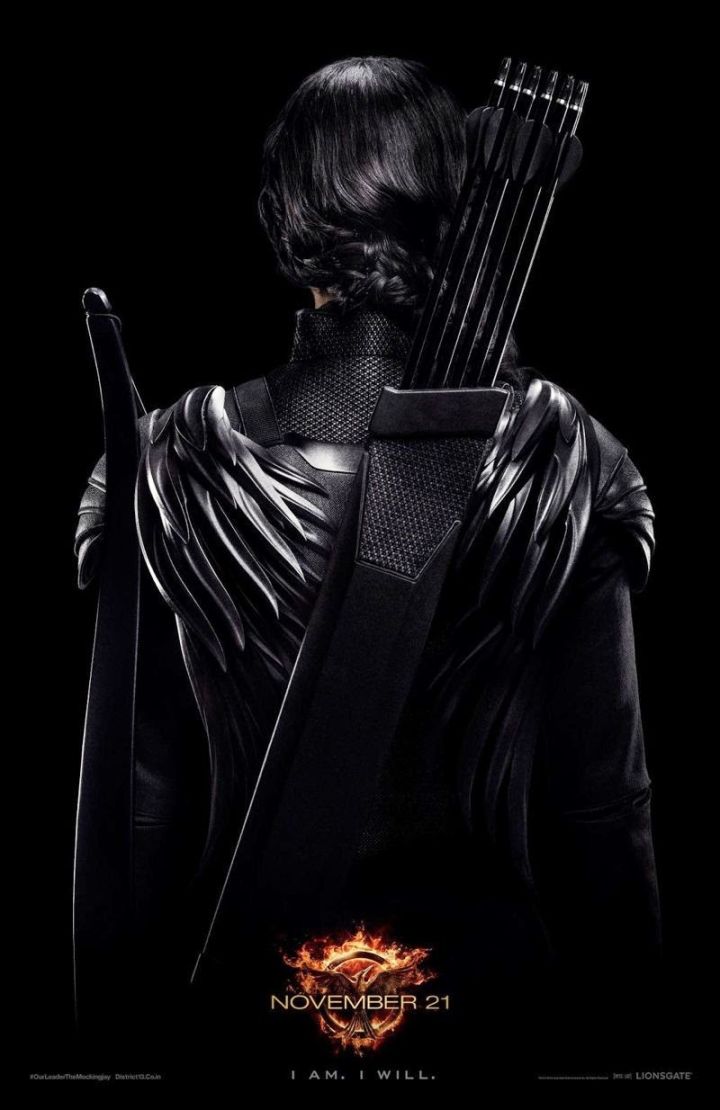
http://www.moviescene.nl/p/157114/eerste_poster_katniss_voor_hunger_games_mockingjay

It took a while, but there's finally a Mockingjay teaser poster for Katniss Everdeen too. Virtually the entire supporting cast had preceded her until now, either in Capitol prisoner gard or full-on revolutionary soldier gear. Now that the main character has been added to the teaser campaign, it's high time the visually more enticing one-sheets were rolled out. If Catching Fire's poster campaign is any indication, it seems like Mockingjay will easily outdo it. Recurring theme of course being the Mockingjay itself, which already made its presence known on virtually all of the earlier ad artwork. It's done more subtly on this latest teaser poster though, but the message is pretty clear as it leaves little to the imagination that once again the nature of Katniss as a symbol for rebellion against tyranny (whether she likes it or not) is emphasized. And Jannifer Lawrence's backside looks good too, as always.


donderdag 4 september 2014

Jurassic Park III: Ultra Tyrannosaurus Rex (T-Rex)


Year of release: 2001

Description: this larger T-Rex figure measures some 25 centimetres in length and stands just over 15 centimetres tall. Its paint job is remarkably similar to that of the regular T-Rex figure from this toy line, giving it some internal consistency. The overall colour is green, with a dark green stripe running from its snout all the way to the end of the tail and numerous smaller stripes on its back, tail and neck springing out of this large stripe. Added to these colours are some soft red stripes on every part of his body. A black JP III logo is located on its right leg. It’s got a pair of small yellow eyes, and his claws are all black.
A very large dino damage would is found on its right flank, showing ribs and muscle tissue. The upper piece of exposed rib is actually a button which activates a shrieking roar, as if the creature is in pain. A second roar, more aggressive and imposing, can be made by pulling its right arm down: when doing so the mouth will also open. A third sound can be made by having the T-Rex stomp on the ground: logically it’s a stomping noise. The sound quality of all three sounds is not very good, some static is heard as well. The two roars are the same sounds the regular T-Rex figure produces.
This Rex sculpts stands in an attack posture, with its tail bent upwards and its head slightly tilted up, as if it were looking at something just above him. Its legs stand far apart from each other. This Rex is pretty skinny and has a tiny body. It’s mostly head, limbs and tail.

Analysis: this is not a great figure. It basically has the same flaws as the regular Rex (and in fact, most dinosaur figures from this toy line). The first problem is the pose it takes on: it’s far from neutral and diminishes playability. Especially the positions of the legs and tail are very irritating, as is the fact this figure has such a small skinny body.
The second negative issue are the sounds. The main problem here is the poor sound quality. The sounds of the smaller dinosaur figures were a lot better. The static indiscernible sounds this model produces hardly do the so called Tyrant King justice: it sounds like he’s got a nasty cold. Another issue is the fact the two roars are the same as the ones from the regular Rex, except weaker. It would have been more original if this figure could make different sounds.
A third problem: apart from the sounds, the other features are also the same as the ones from the smaller Rex. First of all, there’s the (in this case stupendously huge) dino damage wound with the button in it. Because of the size of the wound it really sucks you can’t cover it with a skin patch (like with the old Kenner models). It’s just there for all the world to see, and there’s nothing you can do about it (except for heavily customizing it, which seems very appealing at times…). Of course the paint job is also largely the same: so the designers either had consistency in mind, or ran out of paint job ideas (which seems unlikely given the large number of repaints Hasbro had done over the years). It’s a decent paint job, but nothing special. Then there is the mouth opening mechanism, which is still a very unoriginal feature for Tyrannosaurus models. This time it works better than with the smaller Rex though, because the arm is more accessible so it’s easier to open the jaws. It comes with a downside though: every time you move the arm again, the attack roar starts over again. Lame.
This model does include a new feature though, at least new for this toy line (because the old Red Rex from JPS1 had the same feature). When it comes into contact with the ground (or whatever you put it on) it makes stomping noises. But this too has a downside: producing this sound needs some force, so you have to really smack it onto something (quite violently at times) in order for the sound to be heard. This increases the risk of damaging the electronics of this figure. Again: lame.


Playability: not very great. Because of the stalking pose this figure takes on its playability is limited, though his limbs are all moveable. Fortunately the mouth attack action works fairly well despite the flaws. This figure is electronic so you shouldn’t play too rough with it if you want to keep it intact. Unfortunately it seems the designers didn’t care much for keeping it intact, because activating the stomping noises involves some pretty rough behaviour. But since those noises aren’t very good anyway it’s better to ignore that particular option.

Realism: this figure looks a lot like the smaller T-Rex sculpts for this toy line, so they make a striking family pair. However, this sculpt doesn’t much resemble the T-Rex from the movie, let alone a real life Rex. This is mostly because of the small body and oversized limbs attached to it. However, the T-Rex in JP III did look rather greenish, so the paint job isn’t too far off. The roars are the same as the roars from the smaller model, so that means they’re authentic Rex noises from the movie at least.

Repaint: no. This model would be repainted on several occasions though; once for the JP III CamoXtreme line (the Canyon Rex), and twice for JP Dinosaurs 2 and 3.

Overall rating: 5/10. It’s a disappointing model, though it’s not completely screwed up. It has some nice features, but also a lot of downsides. It’s not rare, so when needed it can be found quite easily, probably at minor cost.

woensdag 3 september 2014

Today's Article: 'It's a mad house!': de dystopische sciencefictionfilm 1968-1977, Part 8


Paragraaf 3.3: Casestudy Soylent Green

It was a bit of a commercial risk to show the future as being grim and depressing, but I don't think you can honestly show how wonderful the future is going to be when you know how terrible it will be. You hope that somebody will learn something when they see the film and that they will say to themselves: 'My God, we can't let this happen', and then do something about it. I think what we showed was a very accurate extrapolation of our time because if we go on as we're going that picture will come true.1

Richard Fleischer overdrijft niet als hij het toekomstbeeld in Soylent Green als 'grim and depressing' omschrijft. Van alle 'environmental science fiction films' uit de jaren zeventig is Soylent Green zonder meer het meest pessimistisch. De film toont een geruïneerde wereld, waar de natuur vrijwel verdwenen is, alle diersoorten uitgestorven, het klimaat verpest, een groot gebrek aan basisbehoeften heerst en het dieet van de mens bestaat uit gekleurde wafels gemaakt van sojabonen en linzen ('Soy' voor 'soybeans', 'lent' voor 'lentils'), behalve voor de rijken die via de zwarte markt de laatste voorraden “echt voedsel” kunnen consumeren. In deze wereld, geportretteerd als een eindeloze stad waar permanent een gele damp (smog) de straten verziekt en een onafgebroken hittegolf regeert, zoekt detective Thorn (Charlton Heston) naar de moordenaar van een rijke man genaamd Simonson, waarbij hij op een complot stuit dat toont hoe diep de mensheid gezonken is als resultaat van de exploitatie van het milieu.

De film laat er geen twijfels over bestaan wat deze wereld gemaakt heeft tot de hel die het geworden is. Soylent Green opent met een montage sequence waarin in vogelvlucht de technologische ontwikkeling vanaf de Industriële Revolutie in de negentiende eeuw tot aan het jaar 2022, waarin het verhaal zich afspeelt, getoond wordt. Aanvankelijk toont de montage hoopvolle beelden van vooruitgang en voorspoed die technologie de mens heeft gegeven, zoals bruggen, de eerste treinen en verhoogde productie in agricultuur (meer voedsel). Ondersteund door aangename muziek verloopt de voortgang van deze positieve beelden aanvankelijk in een kalm tempo, maar geleidelijk aan maakt de hoop plaats voor wanhoop, als het beeldmateriaal zich richt op de negatieve effecten van technologie, zoals voortdurende verstedelijking, ontbossing en vervuiling door de afvalstoffen van de industrie. Het tempo van zowel de muziek als de beelden wordt steeds sneller en agressiever, als beeld na beeld ons de progressie in de verwoesting van het milieu laat zien, wanneer de natuur door overconsumptie moet wijken voor de groeiende mensenmassa. Waar het beeldmateriaal eerst in ordelijk verloop beeld voor beeld wordt getoond, wordt naarmate de montage sequence vordert meer gebruik gemaakt van splitscreen en overlappende beelden, in een steeds sneller tempo zodat de toeschouwer gebombardeerd wordt door een onoverzichtelijke wirwar van negatieve beelden, gekoppeld aan één gedachte: ongecontroleerde overbevolking dankzij technologische ontwikkeling zal onze wereld verwoesten. Dit proces is al in vergevorderde staat maar niet ten einde: het eindigt in de vorm van de wereld die Soylent Green ons voorschotelt, vertelt de montage. Langzaamaan wordt de toon van beeld en muziek weer rustiger, maar de beelden blijven negatief, wat duidt op de impasse die de wereld in deze film bereikt heeft. Dode velden, enorme rokende schoorstenen, uitgestrekte vuilnisbelten, mensen met mondkapjes, en als laatste beeld een foto van de skyline van New York onder dikke wolken rook en smog, met daarover de titel van de film. De boodschap is duidelijk: de voordelen van technologie leidden tot overbevolking, die op zichzelf de verwoesting van de natuur en daarmee ons eigen leefmilieu tot gevolg had, resulterend in een stervende wereld die niet veel verschilt van Paul Ehrlichs deprimerende visie op de menselijke toekomst in The Population Bomb. 'Kan de mens hierin overleven?', vraagt deze opening aan het publiek. De film die volgt zal deze vraag beantwoorden.

Soylent Green speelt zich af in New York, waar in 2022 veertig miljoen mensen wonen. Echter, dit is niet het New York dat wij kennen. De stad lijkt oneindig, en de film speelt zich nooit buiten deze stedelijke omgeving af. In zijn korte bespreking van Soylent Green gebruikt David Ingram de term 'the total city', die hij verder helaas links laat liggen.2 Echter, deze term dekt de lading uitstekend. De stad in deze film is 'total': hij lijkt oneindig, alsof na de vernietiging van de natuur de wereld één grote stad is geworden. Het is echter niet een kleurrijke metropool zoals het New York van onze tijd met haar neonreclame en gele taxi's: deze stad is grijs en grauw, bevolkt door mensen die alle levenslust verloren hebben. De straten worden bevolkt door de arme massa, dakloze mensen – zelfs in een stad zo groot als deze heeft niet iedereen een dak boven zijn hoofd – die doelloos rondzwerven, wachtend op de volgende publieke uitdeling van voedsel, in de hoop dat zij een deel krijgen van de rantsoenen, die onvoldoende zijn om deze massa te voeden.

Is er überhaupt nog een platteland, een rurale omgeving buiten de stad? Er wordt wel melding gemaakt van zulk land, velden waar het voedsel voor het overgrote deel van de populatie, sojabonen en linzen, gekweekt worden. Voor stedelingen (het grootste gedeelte van de mensheid) is dit land verboden terrein, want 'good land has gotta be guarded'. De afwezigheid van dit land in de film, en de inhoud van het complot dat Thorn ontdekt, impliceert dat er niets 'goeds' is aan dit land, maar dat het een onvruchtbare vlakte is geworden (een feit dat de overheid de bevolking onthoudt). Het platteland is geenszins beter af dan de stad.

Toch is er nog een klein beetje natuur overgebleven. Er is een 'tree sanctuary' in New York. Echter, zowel 'tree' als 'sanctuary' is hier een relatief begrip. 'Tree sanctuary' is niet meer dan een schamele hut met enkele dorre boompjes en struiken, een magere reflectie van wat de natuur eens was: het gaat eigenlijk te ver om van daadwerkelijke 'bomen' te spreken. Bovendien bevindt de natuur zich 'indoor' en wordt zij bewaakt: het is niet meer natuurlijk, maar is gereduceerd tot een 'commodity', een 'sanctuary' voor de rijken om zich aan dit zeldzame spektakel te vergapen, niet gehinderd door de arme massa buiten. 'Tree sanctuary' is slechts in één scène te zien, waarin het complot tegen de protagonist door twee leden van de corrupte rijke elite besproken wordt. Zo wordt 'tree sanctuary' in een context met de 'bad guys' gebracht: de overgebleven natuur is gereduceerd tot een schouwspel, een verzamelpunt voor diegenen die de waarheid over de oorsprong van Soylent Green aan de bevolking willen onthouden, een verder misbruik van de kleur groen die ooit symbool stond voor een pure natuurlijke wereld, maar hier de leugen achter voedsel representeert.


Waar draait het complot precies om? De film presenteert het antwoord op deze vraag als een schokkende ontdekking, maar naarmate de film vordert is het antwoord voor de oplettende kijker al gauw duidelijk: Soylent Green, het voedsel waarvan geclaimd wordt dat het van plankton is gemaakt, wordt vervaardigd uit mensen! In een wereld die zo overbevolkt is dat bijna alle voedselbronnen opgemaakt zijn, is het eten van andere mensen een logische conclusie, het afschrikwekkende resultaat van de technologische ontwikkeling die de mensheid aanvankelijk een hoopvolle wereld beloofde. Echter, het ongecontroleerde gebruik van technologie, in de handen van kapitalistische multinationals, heeft tot het tegenovergestelde geleid. De voedselproductie is in handen van één enkel bedrijf, de Soylent Company, waarvan de halve wereld afhankelijk is voor voedsel. Door deze afhankelijkheid, en de corruptie die het systeem domineert, heeft de Soylent Company in feite totale macht. En nadat het bedrijf alle andere bronnen opgemaakt heeft verkoopt het nu dode mensen als voedsel. Zoals David Ingram stelt: 'monopoly capitalism has literally consumed the human race itself'.3

In dit dystopia, waar mensen tot voedsel verwerkt worden, heerst grootschalige commodificatie van mensen. Thorn wordt bijgestaan in zijn speurtocht naar de moordenaar van Simonson door Sol Roth, zijn 'book'. 'Books' zijn onderzoekers die detectives assisteren met hun kennis. Literatuur is een luxe: 'books' hebben de plaats van echte boeken overgenomen in het politieapparaat (zo niet daarbuiten). De term 'book' benadrukt hoe mensen in de wereld van Soylent Green tot objecten gereduceerd worden: boeken zijn vervangen door mensen wiens enige nut hun kennis is, zoals de oude Sol. Een ander geval van 'objectificatie' van mensen is nog treffender: 'furniture', letterlijk vertaald 'meubilair'. In deze dystopische toekomst kunnen aantrekkelijke vrouwen bij rijke mensen inwonen: in ruil voor een dak boven hun hoofd en goed eten worden zij wettelijk gereduceerd tot objecten of handelswaar. Dit is het geval met Shirl, Simonsons maîtresse en de uiteindelijke 'love interest' van Thorn. Deze slavernij eindigt echter niet bij de dood van hun gastheer: na Simonsons dood blijft Shirl in zijn appartement wonen, als de volgende huurder haar wil hebben. Zo niet, dan staat ze op straat. 'Furniture' kan door rijke mensen vervangen worden als elk ander meubilair. Zodoende is de 'objectificatie' van de mens totaal. Toch geeft het contrast tussen het luxe leven van Shirl en het uitzichtloze leven op straat aan dat het leven van 'furniture' niet zo onaantrekkelijk is. Zelfs Thorn, de protagonist die als moreel kompas voor het publiek dient, geeft geen oordeel over deze slavernij, die normaal en geaccepteerd is in zijn wereld.4

Vergeleken met de dakloze massa heeft ook Thorn het vrij goed. Hij deelt zijn woning alleen met Sol terwijl in zijn flat grote groepen mensen in het trappenhuis wonen. 'Wonen' is echter een overdreven term: het enige wat deze mensen nog doen is 'leven'. De massa heeft geen huis, geen inkomen, en is in het voortbestaan afhankelijk van de voedselrantsoenen die de overheid op straat uitdeelt. De massa heeft geen doel, behalve te wachten op wat komen gaat. Vivian Sobchack noemt het New York in deze stad niet voor niets een concentratiekamp: een plaats waar veel mensen dicht op elkaar wonen, zonder eigen toekomst, behalve het lot dat de overheid voor ze bepaalt.5 Gesteld kan worden dat de bevolking alleen gevoerd wordt om gekweekt te worden: hoe meer mensen op straat, hoe meer mensen er later tot Soylent Green verwerkt kunnen worden. Soylent Green wordt vervolgens weer aan deze massa uitgedeeld. Aan het eind van de film merkt Thorn op 'They're making our food out of people. Next thing they'll be breeding us like cattle for food!'. In feite is dit proces al gaande: de doden worden verwerkt tot vleeswaar voor de levenden. Het is een vicieuze cirkel, waarin de massa zichzelf verorbert om zichzelf in leven te houden. De mens is een product geworden.

De film voorspelt deze notie van de mens als vleeswaar al vroeg in de film. Terwijl Simonson wordt vermoord doet Shirl boodschappen, en koopt ze biefstuk op de zwarte markt. Dat ze dit illegaal doet suggereert de schaduwkant van de situatie: er vindt crosscutting plaats tussen deze scène en de moord (ook een illegale activiteit), waardoor de film hint naar het 'foute gevoel' achter deze vleeswaar. Het vlees is, zogezegd, niet koosjer. Als Thorn vervolgens onderzoek verricht wordt de moord omschreven in termen als 'butchered' en 'slaughtered', wat een connectie oproept tussen vleeswaar en moord (op mensen). Dit verband wordt bevestigd als blijkt dat menselijk voedsel van mensenresten is gemaakt. Dit wordt echter geheim gehouden, waardoor de smaak van illegaliteit aanwezig blijft. Het kannibalistische element wordt zodoende voorspeld: de mens is gereduceerd tot vleeswaar en weet het zelf niet. Het is een smerig geheim dat verborgen gehouden moet worden voor het talloze “vee” dat op straat rondloopt, en niet weet wat het boven het hoofd hangt. J.P. Telotte ziet in deze situatie een metaforische representatie van de westerse samenleving destijds (maar nu nog):

The narrative's revelation that our disregard for the planet's fragile ecological balance might produce a kind of secret cannibalism serves as a metaphor for our current condition, one in which we are already unwittingly in the process of destroying ourselves, consuming our fellow humans to maintain some semblance of a status quo.6

Telotte refereert hier waarschijnlijk (hij gaat verder niet in op deze 'metaphor for our current condition' dus hij zegt het niet als zodanig) naar de relatie tussen de Eerste Wereld, waar voedsel in overvloed is, en de Derde Wereld, waar hongersnood en ziekte heerst. De Derde Wereld wordt door de Eerste Wereld uitgeknepen voor bronnen en voedsel, terwijl het Westen vaak een oogje dichtknijpt om haar positie en levensstandaard te behouden, ten koste van veel inwoners van de ontwikkelingslanden. Zodanig is er sprake van 'consuming our fellow humans'. Desondanks kan het verwoesten van de natuur in de Derde Wereld op den duur ook nadelige consequenties voor de Eerste Wereld hebben, iets wat niet voldoende erkend wordt om actie hiertegen te ondernemen: dus, 'the process of destroying ourselves'. Het verborgen kannibalisme in Soylent Green is hiervoor een metafoor, terwijl het dystopia in deze film bovendien het eindresultaat van dit proces kan zijn.


De mise-en-scène ondersteunt de beklemmende atmosfeer van dit overbevolkte dystopia. Zowel in de buitenscènes als in de 'indoor' scènes wordt een claustrofobisch gevoel opgewekt door de focus op drukte en het gebrek aan ruimte. Overdag zijn de straten, en ook het shot, gevuld met mensenmassa's waarin het individu, zelfs de protagonist, niet opvalt en verdwijnt. De atmosfeer van New York, ooit een stad waar de architectonische pracht der wolkenkrabbers aangaf dat het menselijk streven grenzeloos was, wordt nu geregeerd door verstikking en verderf, wat symboliseert dat de onbeperkte groei de natuurlijke grenzen overschreden heeft.7 's Nachts, ondanks de afwezigheid van mensen dankzij de avondklok, is het benauwde gevoel niet minder door het gebrek aan licht in combinatie met de enorme gebouwen die het shot vullen. De lucht ontbreekt, het licht is schamel en de gebouwen lijken eindeloos: lege ruimte is in de stad niet te vinden. Dit geldt ook voor de binnenkant van de huizen: zowel 's nachts als overdag hangen hier grote groepen mensen rond, en ontbreekt privacy. Thorn moet over de mensen heen lopen om bij zijn kamer te komen. Ook Thorns woning is krap en benauwd, door de slechte verlichting en de hoeveelheid spullen die erin staat. Hij deelt zijn kamer met Sol, en als zij het shot delen staan zij centerframe omringd door kleine muren, veel meubilair en weinig licht. Een benauwd gevoel domineert hun leefomgeving, maar toch zijn zij beter af dan de massa buiten.


Een uitzondering op de regel vormt Simonsons appartement, als representatie van het domein van de rijke elite. Deze woning is ruim, luxueus en goed verlicht: het beklemmende gevoel dat Thorns appartement typeert ontbreekt hier, hoofdzakelijk doordat de kleur wit de kamer domineert en zo het gevoel geeft van een onafgebroken ruimte, want muren en andere afbakeningen vallen niet op. Zelfs als Shirl haar vriendinnen in deze kamer uitnodigt blijft het contrast bestaan: het appartement heeft nog steeds een ruim gevoel ook al is de kamer gevuld met mensen, in contrast met Thorns woning, die bewoond door twee mensen al een krap gevoel opwekt. Simonsons woning is gedecoreerd met kunstvoorwerpen in allerlei verschillende kleuren, die op een afstand van elkaar staan waardoor het gevoel van ruimte versterkt wordt, in tegenstelling tot Thorns huis waar diens spullen dicht op elkaar gepakt staan en kleur goeddeels ontbreekt door gebrek aan licht. De nadruk op de kleuren in Simonsons woning vormt een contrast met de rest van deze wereld, waarin kleur grotendeels afwezig is.

Afgezien van de scènes in Simonsons woning is het kleurenpalet van de film haast kleurloos: deze wereld is grijs en grauw door de eindeloze verstedelijking en het gebrek aan natuur. Kleur is echter niet afwezig. Overdag overheerst gele smog de straten: het is echter geen puur geel, maar een troebele, ziekelijke variant die de mensenmassa overdekt en het gevoel geeft van een stervende wereld. De rijke elite heeft wel toegang tot een breed spectrum aan kleur, zoals Simonsons woning aantoont, ook al is dit elitaire palet niet overdadig, want wit domineert in Simonsons kamer. Als detective is Thorn in staat te “plunderen”: na Simonsons dood ontfermt Thorn zich over diens luxe goederen (zolang hij dit met zijn commissaris deelt is het volstrekt legaal, want de maatschappij is volslagen corrupt). Thorn neemt zijn geroofde waar mee naar huis: zeep, biefstuk, een appel. Zelfs deze schamele resten van de rijke elite zorgen voor kleur in Thorns povere huis. De inbreuk van deze nieuwe kleuren op zijn benauwde donkere woning duidt hier Thorns parasitaire verhouding tot de rijke elite aan: door de dood van een rijke man kan Thorn wat kleur in zijn huis introduceren.

Het is ironisch dat in deze grauwe stedelijke wereld de felgroene wafels Soylent Green voor kleur zorgen. De kleur groen is bijna volledig afwezig in de film (afgezien van 'tree sanctuary', waar groen echter niet zo overheerst als in de natuur vandaag de dag): hoe kan het ook anders in een wereld waarin de natuur voor verregaande verstedelijking heeft moeten wijken? Echter, in de context van voedsel houdt groen in de vorm van Soylent Green een associatie met het natuurlijke, als ecologische kleur. De overheid beweert dat het een natuurlijke bron heeft, plankton. Het is echter gemaakt van mensen, maar desondanks een natuurlijk product. In een wereld waarin alle andere levensvormen het veld hebben moeten ruimen zijn mensen de enige overgebleven natuur. Tegelijkertijd is Soylent Green ook cultuur: gemaakt door mensen van mensen voor mensen. Nu de hele natuur opgeofferd is aan de expansie van de menselijke cultuur, moet ook de mens zelf eraan geloven, omdat er geen andere voedingsbron meer bestaat. De mens vervalt tot kannibalisme, een barbaarse maar noodzakelijke overlevingsstrategie. Het is het begin van het einde voor het menselijk systeem, als mensen alleen nog zullen dienen om door andere mensen gegeten te worden. Het verlies van de natuur zal zo het failliet van de menselijke samenleving betekenen.


Sol is het enige personage in de film dat zich herinnert hoe de wereld eruit zag voordat overbevolking de overhand over de natuur kreeg. Zodoende representeert Sol de toeschouwer, die de wereld van voor dit dystopia kent en met lede ogen aanziet hoe slecht de mens er aan toe is. Zowel Sol als de kijker weten wat de mensheid heeft verloren, in tegenstelling tot Thorn die niets anders gewend is dan deze deprimerende levensstijl. Sol probeert hem meerdere malen op de hoogte te brengen van dit verlies, maar Thorn doet zijn verhalen af als het nostalgisch gebazel van een oude man. Wanneer Thorn en Sol bijvoorbeeld genieten van het voedsel dat Thorn in Simonsons appartement heeft gevonden, converseren zij:

Sol: I haven't eaten like this in years.
Thorn: I never ate like this.
Sol: And now you know what you've been missing. There was a world once, you punk.
Thorn: Yes, so you keep telling me.
Sol: I was there, I can prove it.
Thorn: I know, I know. When you were young, people were better.
Sol: Oh, nuts! People were always rotten. But the world was beautiful.

Thorn negeert Sols opmerkingen. De toeschouwer weet echter dat Sol gelijk heeft. In feite wijst Sol met de vinger naar het publiek: de schuld voor de staat van de wereld ligt volgens Sol volledig bij de mens die leefde in een leefbare wereld die bood wat de mens nodig had, zoals in de jaren zeventig. Eerder merkte Sol al op 'You know, when I was a kid, food was food. Before our scientific magicians poisoned the water, polluted the soil, decimated plant and animal life. Why, in my day, you could buy meat anywhere!' Een natuurlijk bestaan was niet genoeg, de mens creëerde voor comfort en gemakzucht een technologische omgeving en offerde hiervoor de natuur op, waarbij hij tegelijkertijd zijn eigen milieu verziekte. De mens was niet tevreden met de gezonde, mooie wereld die hij had; in 2022 is het menselijk leven daarom niet comfortabel zoals technologie beloofde, maar een hard en voor velen zinloos bestaan. Bovendien is dit de norm geworden: overleven is voor niemand makkelijk, behalve voor de rijke elite. In deze toekomst is de afwezigheid van de natuur zo geaccepteerd geworden dat de mens zijn huidige miserabele conditie als natuurlijk is gaan beschouwen. Dit is een schrijnend punt dat de film aankaart en waar de kijker vergelijkingen met zijn eigen leven moet trekken, als waarschuwing. Wat ooit alledaags was, zoals normaal eten en een gezond milieu, is bijzonder geworden, terwijl euthanasie en slavernij nu alledaags en geaccepteerd zijn. Alleen de oudere generatie realiseert zich ten volle hoe diep de mensheid gezonken is, maar deze generatie zal spoedig verdwijnen.

Zo verdwijnt ook Sol, die deze eerdere generatie representeert. Als hij de waarheid over Soylent Green bevat, is hij zo geschokt dat hij naar een euthanasie-kliniek gaat, want, stelt hij, 'he has lived too long'. Euthanasie is in deze pessimistische toekomst normaal: mensen die niet meer willen lijden laten hun leven beëindigen (om vervolgens gerecycled te worden door de Soylent Company). Paradoxaal genoeg is hun leven in hun laatste momenten het meest de moeite waard. Terwijl ze sterven krijgen ze hun favoriete muziek te horen en kamerbreed beeldmateriaal naar eigen keuze te zien. Sol kiest voor beelden van de vergane natuur: eindeloze bloemenvelden, vissen in een koraalrif, een zonsondergang. Deze beelden worden vergezeld door Beethovens Zesde Symfonie, de 'Pastorale'. De keuze voor een muziekstuk met deze titel is uiteraard niet toevallig: het ondersteunt de notie van een wereld zonder natuur waarin schoonheid is verdwenen. Sols sterfscène is een kleurrijk schouwspel, schitterend qua zowel beeld als geluid. Het vormt een scherp contrast met de rest van de film die verstokt blijft van dergelijke pracht, zodat deze scène emotionele meerwaarde krijgt: hij geeft aan hoe hard de wereld erop achteruit is gegaan dankzij het verlies van de natuur.

Voor de hedendaagse toeschouwer is dit beeld niet zo opmerkelijk: het is herkenbaar beeldmateriaal, want in onze tijd is deze schoonheid nog voor handen. Dit is precies de boodschap: de hebzucht van de mens in de huidige tijd kan ervoor zorgen dat deze pracht verloren zal gaan. Het publiek dient zich te realiseren dat deze natuurlijke wonderen voor volgende generaties behouden moeten worden. Anders worden de mensen zoals Thorn, onwetend van en onbekommerd over het verlies van de natuur. Thorn dringt het euthanasiecentrum binnen en ziet de beelden die Sol uitgekozen heeft. In volslagen verbazing over de vroegere schoonheid van de wereld barst hij in tranen uit en stamelt 'How could I know? How could I ever imagine?!'.8 De kennis van de verloren schoonheid van de wereld wordt in deze scène overgedragen op een nieuwe generatie, als Sol sterft en zijn doodsritueel de ogen van Thorn opent.9 Desondanks laat film er geen twijfel over bestaan: volgende generaties moeten niet zo worden als Thorn, zij moeten opgroeien met kennis van en respect voor de natuurlijke wereld. Zoals Richard Fleischer in zijn citaat hierboven aangaf wordt de kijker aangespoord om deze duistere toekomst te voorkomen, en het behoud van de natuur voor volgende generaties is een methode om dit doel te bereiken.


Biedt Soylent Green zodoende hoop voor de toekomst? Zoals in de vorige paragraaf besproken werd is hoop in 'environmental science fiction' zeer betrekkelijk, en deze film is hierop geen uitzondering. Thorn ontdekt weliswaar de waarheid over Soylent Green maar raakt vervolgens gewond in een gevecht met bewakers van de Soylent Company. Als hij wordt afgevoerd door agenten van zijn corrupte overste, commissaris Hatcher, vertelt hij hem de waarheid. Hatcher is echter in dienst van de overheid en bezwoer Thorn eerder Simonsons zaak te laten vallen wegens orders van hogerhand. Hatcher is geen betrouwbaar personage en het lijkt onwaarschijnlijk dat hij de waarheid over Soylent Green zal doorvertellen, want de Soylent Company en de overheid werken samen om de bevolking het schokkende geheim te onthouden. Als hij wordt weggedragen schreeuwt Thorn de waarheid naar omstanders: 'Soylent Green is people!'. Thorn kom echter over als een bezetene, iemand die ijlt onder zijn verwondingen. Het lijkt onwaarschijnlijk dat hij geloofd zal worden.

Soylent Green wekt de indruk dat ondanks het leerproces en de inspanningen van de protagonist de situatie alleen nog maar verder achteruit zal gaan en de wereld op zijn einde loopt, met de ondergang van de mensheid slechts om de hoek, letterlijk maar ook moreel. De montage sequence waarmee de film opende impliceerde al dat het proces van achteruitgang niet gestopt werd, en dat overbevolking en vervuiling ongestoord voort konden duren, wat leidde tot het dystopia in de film. Diegenen met kennis van de wereld zoals zij ooit was, in de persoon van Sol, verdwijnen. Diegenen die beseffen hoe dramatisch de situatie is en er tegen optreden worden tegengewerkt en gedood door de overheid, zoals Simonson en uiteindelijk Thorn zelf. Bovendien, aangezien al het andere voedsel opraakt, is Soylent Green de enige voedselbron. De film impliceert dat er verder niets is dan de oneindige overbevolkte stad waarin de film plaats vindt. Hoe kan Thorn deze wereld überhaupt nog verbeteren?10 Sterker nog, als de bittere waarheid bekend zou worden, zouden mensen weigeren Soylent Green te eten als er geen ander voedsel meer beschikbaar is?

De situatie die Soylent Green ons voorschotelt is uitzichtloos. Evenals andere 'environmental science fiction' toont Soylent Green een 'critical dystopia' waarin de hoop van de mens lang vervlogen is. De mens heeft in het verleden niet hard genoeg opgetreden tegen overbevolking, waardoor de levensstandaard in de toekomst steeds lager is geworden en de menselijke beschaving op haar laatste benen staat. Deze toekomst móeten we proberen te ontwijken, zeggen Soylent Green en soortgelijke films, en daarvoor moeten we in het heden actie ondernemen. Hoewel zulke films zich niet puur en alleen richten op de boodschap maar ook ter vermaak dienen, bieden zij het publiek van de jaren zeventig, dat in de media meer en meer geconfronteerd werd met de staat van het milieu en de roep om actie, op zijn minst stof tot nadenken.


1Richard Fleischer, regisseur van Soylent Green, geciteerd in Brosnan 1978: p. 209
2Ingram 2000: p. 154
3Ingram 2000: p. 154. Vergelijkbaar noemen Ryan en Kellner Soylent Green als voorbeeld in hun bespreking van 'populist fears […] of large corporations', Ryan en Kellner 1988: p. 255
4Brereton 2005: p. 168
5Sobchack, Vivian. ‘Cities of the edge of time: the urban science-fiction film’, in: Kuhn, Annette. Alien Zone II: the spaces of science fiction cinema. Londen: Verso, 1999: p. 134
6Telotte 2001: p. 104
7Sobchack 1999: p. 133
8Een punt van kritiek op deze film is dat, dankzij Charlton Hestons leeftijd, het eigenlijk ongeloofwaardig is dat Thorn niet bekend is met de beelden die hij ziet in Sols sterfscène. Heston was 49 jaar oud toen Soylent Green uitkwam, en de film speelt zich af in 2022: volgens dit schema zou Thorn dus rond 1973 geboren moeten zijn, wat (niet toevallig) het jaar is dat de film uitkwam. Ondanks de vele milieuproblemen die in de jaren zeventig aanwezig waren is het onwaarschijnlijk dat deze problemen en de overbevolking de wereld in zo'n korte tijd zouden verpesten dat Thorn geen benul heeft van de vroegere wereld waar Sol over spreekt. Het zou geloofwaardiger zijn als het doemscenario verder in de toekomst was geplaatst. Desondanks wordt de impact van de boodschap van Soylent Green niet ondermijnd. Immers, de film is (zoals de meeste sciencefictionfilms) een uitvergroting van destijds heersende maatschappelijke angsten over het milieu, en niet per se een accurate weergave van de toekomst.
9Brereton 2005: p. 170
10Ingram 2000: p. 155