woensdag 20 juni 2012

Wes Anderson's kids are allright


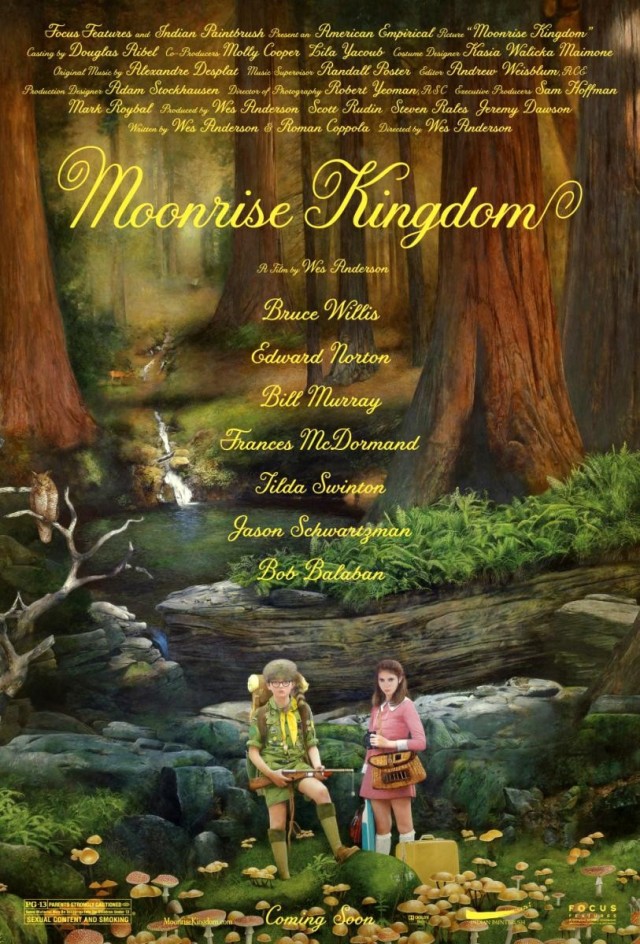
Moonrise Kingdom: ****/*****, or 8/10

And so Wes Anderson, that overly creative director of delightful family comedy drama, returns to live action filming after having taken a short break from it in favour of proving his style is equally charming when applied to stop motion animation, which resulted in The Fantastic Mr. Fox, based on the classic children's novel by Roald Dahl. Anderson apparently picked up a thing or two in a narrative sense from the great author, considering the newest addition to his own oeuvre as a distinguished film auteur (his style always instantly recognizable in every scene) like many of Dahl's stories deals with intelligent kids breaking free from the often abusive world of angry adults that simply refuses to understand them, instead restricting their growth processes by incapsulating them in a repressive regime of habits. Whether inspired by Dahl or simply containing thematic similarities by pure coincidence, Moonrise Kingdom is a wonderful hommage to smart children and their first steps towards true self-reliance despite the obstacle that adults usually prove to be.


The stage for Moonrise Kingdom is provided by New Penzance, a fictional New England island like only Wes Andersonland can provide, complete with Native American cultural leftovers, red-and-white coloured lighthouse, ferry and mail plane, plus the addition of existing Rhode Island (where the movie was shot) natural beauty of stunning quality, the bare facts of all this being relayed to the audience by an odd looking old man in a red coat and a silly hat who simply acts as narrator, not as a relevant character otherwise. The year being 1965, it's the perfect spot for a boy scout camp, which is run by part time math teacher Scout Master Randy Ward (Edward Norton, Fight Club) in a tight and strictly organized manner, which makes it all the harder for the man to accept one of his scouts, the pipe smoking orphan boy Sam Shakusky (Jared Gilman) has gone AWOL. At the same time, the dysfunctional Bishop family is dismayed to discover their little girl Suzy (Kara Hayward) has also made a run for it without their knowledge or permission, upsetting her attorney parents Walt and Laura (Bill Murray, Anderson's go-to-guy – this film marking their sixth collaboration – and newcomer-to-his-work Frances McDormand, of Burn After Reading fame). A search for the pair of runaways is swiftly underway, spearheaded by local police officer Captain Sharp (Bruce Willis, also an Anderson first-timer), a likeable but lonely man who happens to have an affair with Laura. While the search progresses, it becomes blatantly clear the two kids have planned their escape much more effectively than the generally dimwitted adults are seen to conduct their pursuit of them, making for many an hilarious gag in the process as we have come to expect and enjoy from Wes Anderson.

In a flashback we learn Sam and Suzy, both only twelve years of age, met the year before at a local church play, which led to mutual intrigue at first, followed by a pen pal connection and an eventual love relationship, which led them to elope together in order to both escape their incompetent guardians and get married and live in the wilderness. It's a deliciously naive but romantic ploy only the mind of a child could conceive, despite the minds of both kids appearing to be in a better overall condition than those of their grown-up trackers. In fact, it's Scout Master Ward's relentless (and prone to violence) team of boy scouts who locate the runaways first, leading to a surprisingly suggestive moment of aggression and a dead scout mascotte, proving Sam and Suzy are ready to fight for their freedom and their now hard earned right to live alone on a beautiful private beach.


Unfortunately the timing for their escape could have been better, as a devastating hurricane and the resulting flood threatens their island paradise, adding a sense of urgency to the plot. Fortunately for them – or not – the adults find them in time, but by now both Captain Sharp and the boy scouts have come to respect the sensible pair's honest wishes and fully understand their desire to get away from their messed up guardians. Despite the bloody incident earlier between them, in a surprising turn of events the scouts spring both Sam and Suzy from their confinement and relocate them to a church during the now raging storm. Again cornered by the ones they tried to get away from, as well as confronted by a lady from Social Services (Tilda Swinton) – a nameless character simply referred to by everyone, including herself, as 'Social Services', a joke the Dutch subtitling sadly does not pick up – Sam and Suzy again make a now desperate run for it, risking their lives to prove the world their love is real, as is their desire to fight for their independence.

Overall, it's not a complicated plot and a brief synopsis might only make it sound childish, but it's Wes Anderson's approach to things that makes it work as well as it does. As is his usual style, the film is as quirky and colourful as his previous works, making every scene vibrantly appealing and cramped with little details, most of them only visible a brief moment, thus in itself making the film worthy of a second viewing if only to take in all the hidden jokes. Fortunately there's an abundance of not so hard to miss gags as well, both visual and in dialogue, all the actors chipping in to make the jokes as well timed and performed ad they need be. To add to the movie's charm, the film is shot using a 16 mm camera (a first for Anderson), thus enhancing the general 'old movie' feel, making it subconsciously feel more realistically like 1965, which only shows Anderson still isn't afraid to experiment a little bit here and there to discover what works best to convey a style all his own as compellingly as possible. As for experimenting, extra credit is due to him for the fact he dares to explore the blossoming sexual feelings of his two underage main characters, resulting in a 'French kissing' scene in underwear that will undoubtedly make conservative America cringe and whine, but in the context of the scene feels perfectly justified and innocent, as are all the activities he allows this pair, considering the rigid and awkward people they attempt to escape from.


Visual style and experimentation aside, as always it's the actors that make a Wes Anderson movie feel the most like a Wes Anderson movie, utilizing a typical acting style that carefully balances between introvert and emotionally disconnected on the one side and completely over the top on the other. In Moonrise Kingdom's case the greatest accomplishment in this regard comes courtesy of Hayward and Gilman, both completely inexperienced as actors with no previously established acting skills to back them up, yet both delivering a surprisingly successful and engaging performance, making it feel like they've been playing around in Anderson's movies for years. Of course, Bill Murray, who has been doing just that, also succeeds in adding yet another zany character to his repertoire, as does Jason Schwartzmann, whose bit part as an amoral and corrupt Scout leader unfortunately proves all too short. Frances McDormand, Tilda Swinton and Edward Norton fit right in, too, quickly adopting the less emotional and more dysfunctional manner of acting we've grown accustomed too in Anderson's work, despite never having appeared in one of his films before. The weakest link in this star-studded ensemble proves to be Bruce Willis, oddly enough considering his long range of expertise, who, despite portraying Captain Sharp convincingly as a sympathetic but not all too bright character, simply feels both out of place and out of touch in this film, as if not having been able to fully master the acting style required for a Wes Anderson movie. Fortunately this never gets too frustratingly apparent, nor does it ruin any of the scenes he appears in. But no matter how well any of the established actors do in Moonrise Kingdom, its genuine tour-de-force of acting is supplied by the two young main characters who carry the majority of the movie and steal our hearts in the process, making us only hope we'll be hearing more of them in the future.

Moonrise Kingdom could be called a return to form on Wes Anderson's part, a redemption after the wholesomely disappointing The Darjeeling Limited in 2007, were it not that the off-beat Fantastic Mr. Fox, despite being an animated movie, was too blatantly 'Andersonesque' to be deservedly called a deviation from his specific form. As a live action film, his latest release proves a very nice reminder just wat he's capable of, ranking among his best right alongside Rushmore (1998) and The Life Aquatic with Steve Zissou (2004), for being both genuinely funny and admittedly adorable to watch, while also containing enough heart and soul to be raised above average comedy. Be they live action or be they animation, Moonrise Kingdom strongly reaffirms the fact Wes Anderson films are always something to truly look forward to.

And watch the trailer here:


zaterdag 16 juni 2012

Mirror, Mirror on the wall, Charlize Theron is fairer than y'all


Snow White and the Huntsman: ***/*****, or 6/10

Re-imagining fairy tales feminist style seems to be getting all the rage lately. After having young Alice don armour to fight the evil queen in Tim Burton's recent Alice in Wonderland, Snow White now gets to do the exact same thing (courtesy of the same producer, Joe Roth, no doubt). Considering her previous failure as a comedian in Tarsem Singh's Mirror, Mirror only two months ago, applying a more action oriented approach might not have been a bad idea. It obviously sets this Snow White apart from that disappointment. Unfortunately, the resulting Snow White and the Huntsmen still leaves a lot to be desired, and makes it frustratingly clear just how damn subjective the term 'fair' actually is.


Snow White and the Huntsmen does away with the overly feel-good style of both its comedic predecessor and the classic Disney version, instead traveling a grittier, bleaker and definitely gorier road, making it feel more like a Tim Burton or Peter Jackson flick at times. At least first time director Rupert Sanders took hints from his accomplished peers instead of slavishly rehashing the many versions of the Snow White tale that came before. His best card comes in the shape of casting Charlize Theron as the evil queen, in this version named Ravenna instead of just dubbed 'evil queen' as happens more frequently. On the opposite side of the spectrum, Sanders' biggest problem turns out to be Kristen Stewart's performance as Snow White herself, a rather soulless and bland piece of casting that fails to convince the audience to root for her as a brave and inspiring leader of men in their desperate struggle against tyranny. For this is basically what the tale of Snow White has been turned into in this film, a typical fight between good and evil that never leaves the viewer pondering whose side the characters are on since both terms are clearly delineated and leave no room for compromise.

The movie opens with a lengthy but intriguing flashback revealing the series of events that lead to the status quo as it is when the story truly kicks off. For unclear reasons this prologue is narrated by the Huntsman (Chris Hemsworth largely reprising his role as Thor, playing an impulsive and stubborn though often foolish but ultimately likeable strongman, but with a Scottish accent this time), who takes no part in this background history himself, probably to give Hemsworth something to do before entering the movie after it has been running for 40 minutes already. The backstory tells of the birth of Snow White in a beautiful kingdom under the happy reign of her wise and beloved mother and father, before it falls into ruin and despair when the queen dies and her husband is tricked into marrying the beautiful Ravenna, only to be murdered by the treacherous wench on his wedding night. When this pretender usurps the throne, young Snow White is swiftly locked away and all those who oppose the new queen's reign are ruthlessly disposed of. The movie does not hesitate at all to portray Ravenna as a vile witch with no sense of good in her at all, while Snow White simply can do no wrong and is eventually heralded a female Messiah for the otherwise nameless fantasy realm the movie takes place in. It's this overly simplistic way of depicting both sides of the coin without any possibility for overlap to the other side from either character that makes Snow White and the Huntsmen loose touch with the older demographics the movie aims for- the film is rated PG-13 in the USA, while it's '12' in the Netherlands – since few people in the audience would ever swallow good and evil are so easily and strictly defined.


At least Charlize Theron got it easy, since her Ravenna is not just a wholesomely despicable person, but also dabbles in the dark arts, thus allowing the accomplished actress (who can currently be seen delivering another stellar performance in Ridley Scott's Prometheus) to have a ball playing this wicked witch, wearing impressive gowns, surrounded by beautiful eerie castle sets and pointy props, going around viciously intimidating and torturing people and poking into bird guts in her spare time. She has good cause for engaging in such naughty behavior, having been used and abused by men since childhood, turning to black magic to ensure her ongoing beauty so she would never be powerless against men again and instead could use them for her own purposes. Thus, the movie gives the queen some much needed character background most other versions of the fairy tale have lacked, making Ravenna initially sympathetic until she does to Snow White what has been done to her. Theron makes no secret she's enjoying the role immensely, and delivers the movie's standout performance, ranging from subtle manipulation of ill-fated prisoners to boldly going over the top when throwing temper-tantrums at her incompetent inferiors who keep messing up her plans for total domination.

Perhaps it's due to the excessive amount of screen time the poor Snow White spends huddled in dark dungeons, wading through sewers or crawling in mud that Kristen Stewart's portrayal pales so much in comparison. Stewart, of Twilight fame, spends most of the movie running for her life from the forces of the queen, ending up in the so-called Dark Forest, a generally unpleasant place filled with creepy crawlies, damp fog and the like, a place from which only one man has ever returned. And so Ravenna tasks this man, the nameless Huntsman of the title, to track the renegade royalty, since it conveniently occurred she happened to escape on the very day the queen found out she had to consume the girl's heart to gain eternal beauty and immortality, after having locked her away for ten years without ever taking the time to decide what to actually do with her. The Huntsman reluctantly agrees to pursue the runaway in the exchange for the resurrection of his dead wife by the queen, something both parties fully realize isn't gonna happen at all.

Warning! Here be spoilers! When the Huntsman locates Snow White after about a five minute search, Stewart finally gets someone to play off against, but again fails to prove her worth as an actress, instead delivering a fairly uncompelling performance against Hemsworth's more agreeable portrayal of a man who lived a shallow life due to lack of faith in himself, found happiness in life with his wife and lost everything again when she was taken from him, being reduced to a much maligned drunkard. Apparently even a drunkard can find his way through the Dark Forest, so after predictably having switched allegiance, him and Snow White set out in search of the rebel fortress ruled over by an old friend of Snow White's father, whose son, Prince William (Sam Claflin as the less robust looking hunk of the film, for those girls in the audience who like their men less hairy and muddy) once fell in love with the princess but, along with the rest of the outside world has considered her to be dead since Ravenna took control. Apparently, where ever Kristen Stewart goes, love triangles follow, as she has romantic interludes with both the Huntsman and William the moment the latter joins up with her again. Anyone who wants her to hook up with either guy gets cheated in the end as the plot doesn't resolve the issue of which man will be hers, but leaves it open for the sequel. (A sequel already has been announced, despite the fact this movie has an otherwise closed ending that covers most of the original fairy tale. As was the case with Clash of the Titans, when the promise of money is involved, Hollywood will itself decide when a story is done, going so far as to make more of it up if needs be.)


On the way to the rebel stronghold the movie trades in a dark Gothic horror atmosphere for a more typical fantasy feel as Snow White and her friends encounter ever more diverse creatures of various shapes and sizes, including a giant troll, fairies and a forest god, indicating Snow White's power to inspire life and natural growth, as opposed to Ravenna who only deals in death and decay. The generally overtly digital characters only make Stewart's performance more inadequate, but fortunately eight (!) new characters soon enter the story to add some much need acting talent (mostly British) and some humour (since the film has so far taken itself overly serious), and few things in life are a funny as dwarves. These are not your average little people though: in fact, they're not little people at all, but normal sized actors having undergone digital alterations to make them appear smaller. Already an uproar has been created within the little people community over the absence of actual dwarves in favour of talented British actors of normal stature. It's an understandable reaction considering the already limited number of possible movie roles for little people, but the fact remains these eight dwarves add some much needed levity and heart to the film, mostly because of the talent assembled here, which includes Ian McShane, Ray Winstone, Bob Hoskins and Nick Frost. Lamenting the decline of the Dwarves (as a fantasy race, not as a medical condition) since Ravenna seized power, they willingly pledge their lives to Snow White's cause, but don't fret, they also sing and dance.

After having arrived at her allies' base and rallying the noble men to her cause by use of a rather uninspiring and unconvincing battle speech, the company of heroes set out to vanquish Ravenna in her dark tower, which leads to an not all that epic battle, and the pay-off between the two women, one pure, one evil, the movie has spent the last two hours to set up. Snow White dukes it out with Ravenna and her insidious sorcery over the dominion of the realm and the right to be called 'the fairest of them all'. Of course, the movie takes the meaning of the word 'fair' to include mental and spiritual beauty instead of solely referring to physical attractiveness, which is what Ravenna is all about. Though few men (and/or women) would seriously pick Stewart over Theron when it comes to physical looks (or acting skills), Theron's Ravenna obviously is a mean bitch and you wouldn't want her “ruling your country”. However, the movie defeminizes Snow White in the climax, having her confront Ravenna fully battle clad in shining armour and equipped with a particularly sticky sword, and as such completely masculine instead of fighting the queen on feminine terms, thus making her cheat. Even though Ravenna uses men to fight for her while Snow White gets men to love her (mostly in a platonic sense), in the end she feels more like a brother-in-arms to the Huntsman, the Prince and the Dwarves, a feeling which is reinforced at the end of the movie when Snow White refuses to pick one potential love interest over another, having reconquered her throne on their terms by vicious bloodshed in battle. The alternative of course would have been to let either the Huntsman or the Prince save the day and fighting her battle for her, as was the case in the classic Disney movie. But such stereotypical male gallantry is not desired in this day and age, especially when the movie needs to appeal to the modern teenage girls for who Stewart undoubtedly is the main draw of the piece. As for keeping it open who she ends up with, it took her four Twilight films to decide to finally have sex with that vampire instead of the werewolf, so she's just catering to her fanbase's expectations.
So the final score is:
-acting: Theron 1, Stewart 0
-physical appearance: Theron 1, Stewart 0 (too much mud)
-playing a nice girl: Theron 0, Stewart 1
Theron is fairest! Besides, many guys generally prefer bad girls anyway.

Overall, Snow White proves to her own weakest link in Snow White and the Huntsman, as she is outperformed by the evil queen, outcharmed by the Dwarves, outmuddied by the Huntsman and outed as a tomboy by wearing battle armour to kill the witch. In short, Stewart's Snow White has no heart, which makes it hard to compellingly win those of her fellow freedom fighters, and impossible for the queen to rip out of her chest, forcing the latter to steal the audience's hearts instead by doing a better acting job by far. The movie at least delivers great visuals and decent action scenes, plus the most fun Dwarves and grimiest Huntsman so far. A good look, excellent cast of supporting characters, cool evil queen and teen heroine in shining armour: basically the producer of Alice in Wonderland gives us more of the same with Snow White and the Huntsman. There's many other fairy tales left to apply the same tactics too, so maybe we'll see the Little Mermaid or Sleeping Beauty in a similar fashion too in the not too distant future.

And watch the trailer here:


woensdag 13 juni 2012

How to make a Xenomorph


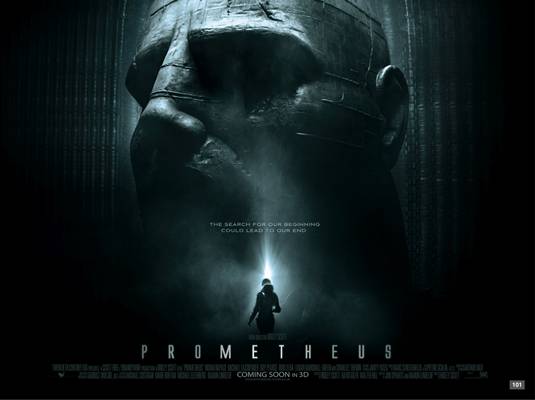
Prometheus: ****/*****, or 8/10

A tall, pale humanoid stands at the top of a towering waterfall and nearly ritualistically drinks a black liquid. Within seconds, his body starts to physically come apart in a most gruesome way, his cells literally unraveling and his physique disintegrating as he plunges himself into the roaring chasm and his DNA mixes with the water. And with this eerie opening the tone is set for Prometheus, the eagerly awaited latest science fiction blockbuster from Sir Ridley Scott, who with this film not only returns to his own roots but also to the roots of the much acclaimed and beloved Alien saga. And herein could lie a problem, since explaining some of the mysteries of his own original Alien film (1979) might hurt the franchise as a whole in terms of narrative continuity. The trick, however, is not minding that it hurts, especially given the fact Sir Ridley delivers a whole set of other intriguing questions in the process, building upon which may very well reinvigorate this franchise which until recently seemed milked dry completely.


-Warning! Here be spoilers!- When scientists and lovebirds Elizabeth Shaw (Noomi Rapace) and Charlie Holloway (Logan Marshall-Green) in the year 2089 make a connection between the depiction of a tall figure pointing at a set of ever identically proportioned dots on cave paintings and murals of various ancient cultures around the globe and a distant star system, the starship Prometheus is dispatched by the Weyland Corporation to investigate the pair's claims that humanity was spawned by a race of alien beings dubbed 'Engineers' which experimented with our DNA and left said dots as a message to come look for them in space. Upon arrival at the barren world of LV-223, a large artificial structure is found containing endless corridors, a decapitated alien corpse and a room containing a giant stone head and hundreds of odd cylinders containing black liquid. It seems the gods the Prometheus was send to find have died, but they left something behind...

So far the plot seems like a mix between Sir Ridley's own original Alien film, about a spaceship crew send to a deserted planet and encountering an age old lifeform, and the often maligned spin-off Alien VS Predator which revolves around the discovery humanity was kick-started by the extra-terrestrial Predators for their own shady purposes. Of course, Sir Ridley does not mean to copy either, his Prometheus just starts on familiar ground in order to have the plot turn in a whole different direction when we're settled in, at which point it quickly gets quite darker than we have known his work to be for the last few decades. Apparently the black liquid destroys lifeforms it comes into contact with by turning it into a different kind of lifeform: humanity was tricked into believing they would find its creators across the gulf of space and only found its apparent doom instead. And so the crew of the Prometheus must fight for their lives or face total destruction of all mankind. Problem is, the crew is divided into various camps all with their own goals, both selfless and selfish, and all with their own take as to just what the hell is going on. Given the somewhat erratic and hard to follow plot, the audience too must figure out for itself just what to make of things, since Sir Ridley has no intention to just hand us the answers on a platter, but wants us to work for them instead.


It has been a while since a decently philosophical blockbuster sci-fi film tormented the audience by conjuring up sometimes nigh unfathomable questions regarding Life, the Universe and Everything, so Sir Ridley's attempt at provoking the audience to use their brains a bit is certainly worthy of praise, but the plot makes it challenging to comprehend Prometheus' intentions. It's quite likely studio involvement is to blame, as is usually the case with Sir Ridley's films, since studio executives often feel his movies are too difficult to understand for general audiences which leads to them being edited to focus less on the deep issues addressed and more on the action. Already a Director's Cut has been announced that will hopefully make for a better structured narrative, but so far we can only speculate as to the Engineers' actual intentions by creating the black liquid and their apparent loss of interest for humanity's wellbeing.

So far, exploring the background of these Engineers, who we originally came to know as the Space Jockey from the first Alien film, does sadly demystify the awesome introduction of this species in Sir Ridley's breakthrough motion picture, by fleshing them out in more detail than we might have liked, and eventually even reducing them to more typical movie monsters as we watch the last of their kind alive go on a murderous rampage to kill the Prometheus' crew, just to be destroyed by its own lethal creation that was meant to be humanity's undoing instead, but not before duking it out with this monstrosity in a 'monster versus monster' battle of standard Hollywood procedure feeling (again, there's a touch of Alien VS Predator here, and not for the better). Which of course leads to the question that is first and foremost on everybody's mind since they learned this movie is more or less a prequel to Alien: just what is the Xenomorph's deal?


It's in regard to this matter that Prometheus remains the most vague, as if Ridley never really wanted to provide any actual answers. Suffice to say, Xenomorphs appear to be a a bio-weapon after all, which they were always hinted to be used for by the evil Company in the Alien films proper. It definitely seems open for debate (an offer I accepted when travelling home with a friend while returning from watching this film; we spend about an hour trying to wrap our brains around it, with plenty of questions still unanswered, mind you), but it seems to me the black liquid is this film's incarnation of the 'Genesis device', creating life on a barren world by mixing it with water (as the alien “Prometheus” did at the opening scene of the film), or replacing already existing life with such life. It's a complicated process for sure, and apparently it never works the same in this film: while a worm coming into contact with the black goo is turned into a Xenomorph like snake, a Prometheus crewmember that gets a full dose in his face simply turns into a prowling, deformed madman turning on his shipmates and viciously killing them, before being shot at, burned and run down by a truck. Of course the main question foremost on the fans' minds will be, 'is the traditional Xenomorph we've come to love in Prometheus?' Having given a nicely red coloured spoiler warning some paragraphs above, I will simply answer this question positively by stating that it is... sort of... The problem for me is not its appearance (which differs from what we've seen before), but its creation. In answer to the question cleverly hidden in this article's title, here's the recipe Prometheus gives for creating a genuine chestbursting Alien (don't try this at home!):

-Slip a small dose of black liquid into an unsuspecting male victim's drink
-Let the male victim have sex with a woman, even though she's sterile
-After successful (unsafe) love making, the woman will find herself pregnant within ten hours
-Soon afterwards, the squid like creature gestating inside her tummy will burst through her chest (unless she manages to remove it by performing an caesarean section on herself)
-The squid will rapidly grow in size from about 1 ft. long to a whopping 10 ft. long overnight
-Have the now full sized creature penetrate an Engineer's mouth with its ovipositor
-After several hours, a small Xenomorph will spring from the Engineer's chest, killing him in the process (as is Xenomorph tradition)

Say what you will about Prometheus' dubious and overly convoluted Xenomorph origins, it makes for some very effective and affective horror, as the above description makes clear. It's safe to say Sir Ridley hasn't added such overtly gory scenes to any of his films since the original Alien in 1979. Where he sticked to an occasional chestbursting scene and limited the gore to suggestive imagery in that movie, he certainly went all out here, resulting in a plethora of scenes featuring the likes of genetically decomposing, arm snapping, involuntary facial penetration, burning and general dismemberment, not to mention a certain explicit self-operation scene that had even me gasping for breath while firmly grasping my seat. To think the studio ever considered this movie susceptible for a PG-13 rating seems completely unrealistic, since Prometheus is largely the stuff only a hard R rating can do justice. It's good to know Sir Ridley still knows how to shock his audience convincingly, like he did with Alien at the start of his career.


Something else this accomplished director succeeds in perfectly is eliciting excellent performances from his cast. In fact, Rapace and Marshall-Green, though they do an adequate job for sure, are outclassed at every turn by their colleagues, with Michael Fassbender delivering the film's standout performance in the role of the android (wouldn't be an Alien film without one, eh?) David, balancing carefully and compellingly between the psychotic and the angelic, between a child asking his parents how and why he came to be and a slave eager to turn on his oppressors at the first opportunity, so you never know what his agenda is and whose side he's one (if anybody's). The film successfully draws parallells between his human masters searching for their supposed creators and David living amidst his own creators who he obviously finds flawed, in several all too short scenes of which we can only hope there's more where those came from on the expected Director's Cut. At the other end of the spectrum there's Charlize Theron in the role of Meredith Vickers, the mission leader whose apparent job it is to make sure the Weyland Corporation gets its money worth out of this excessively expensive space trip, though her plight is far more personal considering she's the actual daughter of Mr. Weyland himself, who preferred David's company over hers, since the android is the closest thing he ever had to a son. Theron plays the role on fire, shrewdly maneuvering between appearing as a coldhearted rich bitch simply out to make money and a wronged daughter aiming for revenge. And then there's the old man himself, being played by Guy Pearce in heavy make-up. Weyland was a secret passenger, like Prometheus was on a secret mission to make contact with the Engineers and ask them for the secret to immortality so the dying old man could yet be saved.

As the movie makes perfectly clear, human immortality is actually far from the Engineers' minds, which results in some solid action scenes, both those involving the Engineers and Xenomorphs as well as those without. Also laudable is the quality of the visual effects, which help remind the audience of the original Alien atmosphere in both human and extra-terrestrial sense, but also being uniquely Prometheus material instead of simply rehashing what was done before. In fact, this sums up the whole of the film, since as a supposed Alien prequel, it certainly stands on its own merits, only hinting at the events in that earlier film without giving the exact explanations as to what happened prior to the events in Alien, so there's still some mystery to enjoy in that regard. It does at time contradict the later entries into the franchise though: the role of the badass Alien Queen which drove much of the later Alien films' plots now seems under serious scrutiny. But considering Sir Ridley's involvement with the franchise ended then right after the first film, it's understandable he favours his own appraoch here above building on the work of others who took over his job in the past.

Overall, Ridley Scott proves he can still distill a good movie out of the dried up franchise he created, the result being both spectacular and thought provoking, but frustratingly feeling incomplete, something he has even gone so far as to admit it simply is. Prometheus is a thinking man's Sci-Fi horror rollercoaster, a rare thing to behold in the post-Avatar days where science fiction feels dumbed down a bit due to the focus on visual and 3-D effects and the lack of exploring philosophical themes as the genre used to do more often. Given the large number of new unsolved questions, a sequel feels both likely and desireable. Sir Ridley could leave it in the hands of a capable young director like he did last time (it was James Cameron then, it shouldn't be now), or he can save everyone three decades and just do it himself, instead of having to do some damage control in another 33 years time. Either way, the Pandora's Box opened by Prometheus certainly won't be closed just yet.

And watch the trailer here:

zaterdag 9 juni 2012

Dream TV Series


I still didn't get to watch any new movies (my vacation isn't over yet), so I got some time to think about any dream projects I'd really like to see get made some time, but this time I focused on television series. This is of course dangerous territory for me, since I only followed a brief course in Television Studies in my early college days and never pursued the topic further, opting instead for Film Studies (like most of my fellow students did). Though I enjoy a good TV show as much as the average bloke, I'm much more of a layman when it comes to the subject, but that doesn't stop me from having an opinion on it, like I have an opinion about... well, everything really. So here's a few ideas for TV shows I really hope get picked up by the right people and like to see realized as epically as they deserve.

Rome 2.0

Remember that fabulously well written, violently gritty and sexy, largely realistic TV series about the last days of the Roman Republic and the rise of the Roman Empire HBO produced a few years back? Well, you should! It's still my favorite TV series, and it got very positive reactions from audiences and critics all over the globe (which is not related to it simply being my favorite TV series, I'm just a fan as basically all its viewers understandably became). Sadly, HBO considered the show so expensive (which really showed!), they pulled the plug prematurely, so while Rome was opted for five seasons, only two of them got made (and the second season, though still of great quality, did indeed feel a bit rushed). This decision was all about money, because regardless of the high production costs involved everybody loved it and kept on watching for all 22 episodes, so it wasn't the audience's fault. HBO exces later stated they regretted cancelling the show, which lead to talk about a Rome theatrical film. That project unfortunately still hasn't gotten to fruition, and I doubt it ever will at this point.


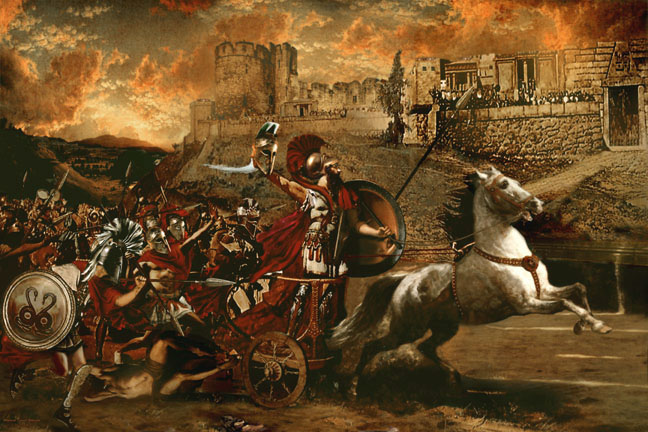
But why not just throw out the movie idea altogether and pick off where the show left us? In fact, why not explore ancient Rome before the start of the series too? What would really make me happy is a show chronicling the whole history of Rome, starting ab urbe condita in 753 B.C., and ending with the downfall of the Western Empire in 476 A.D., showing us all of the city's history, from King to Republic to Empire, all in the style and quality of the first Rome TV series. I hear you thinking, 'that's much too epic a project'. Yup, it is, which is why it's just a dream of mine. But it could be very good television, not to mention a very very very long series. There certainly seems to be an audience for it, judging from the success of films like Gladiator and shows like Spartacus: Blood and Sand (of course, the existence of such works would make certain periods of Roman history already familiar to audiences, but in this time of remakes, reboots and reimaginings, that hardly seems a relevant issue). And indeed, the glory of Rome itself, which went well before its time. Plus, now that Spartacus is coming to an end despite its continuous popularity, there seems to be a vacancy here...

Iliad and Odyssey

Speaking of glory, how come two of the most quintessential works of literature still haven't gotten the audiovisual treatment they deserve? Homer's Iliad, about the Trojan War, and Odyssey, about Odysseus' journey home, have both seen numerous adaptations, and very few of them did the original stories justice. As the movie Troy showed, any movie, even one with a running time of 196 minutes, would just be too short to tell the whole story properly. So why not a TV series instead, and indeed tell the whole story, including all the stuff later authors added to it: granted, some of the additions were uncalled for, while others became iconic, even near synonymous with Homer's work, like the Trojan Horse. 


A TV show could tell it all and wouldn't need to skip a thing, showing us stuff we never got to see in any adaptations so far, like Achilles fighting the Amazons, or the destruction of the Ithacan fleet by the Laistrygonian giants. Of course, this show too would be too long and too epic to ever be realistically produceable. But I'm sure that's what they said about A Song of Ice and Fire before, and look how well that turned out... HBO, I hope you're reading this!

The Life and Times of Scrooge McDuck

This seems like an odd choice, but those who have actually read these particular Uncle Scrooge comics by Keno Don Rosa, – undoubtedly the greatest Duck artist since Carl 'The Duck Man' Barks – will know better. The original twelve part comic book series reveals the full life story of the richest Duck in the world and how he got to be so stupendously wealthy, yet also so pitifully lonely. From his early days as a poor kid on the streets of Glasgow to his financial empire building in the first half of the 20th Century, The Life and Times of Scrooge McDuck offers human drama at its best. In fact, you could even substitute the ducks for humans with no effect to the overall story. But why not stay true to the source material and use real Ducks? That is, animated of course. Computer animation, possibly even motion capture techniques similar to the recent The Adventures of Tintin: The Secret of the Unicorn, seems the best way to go here, bringing life to this particular avian convincingly enough to care for him as he relentlessly seeks riches to escape the utter poverty of his childhood days and restore the name of the once proud Clan McDuck, only to find getting rich comes with a price as he has to abandon the potential love of his life and his relationship with his direct family turns bitter, when he evolves from a once loving and caring boy to a hardened sourdough into a tired, battered old man with no friends or family, just a shitload of money.


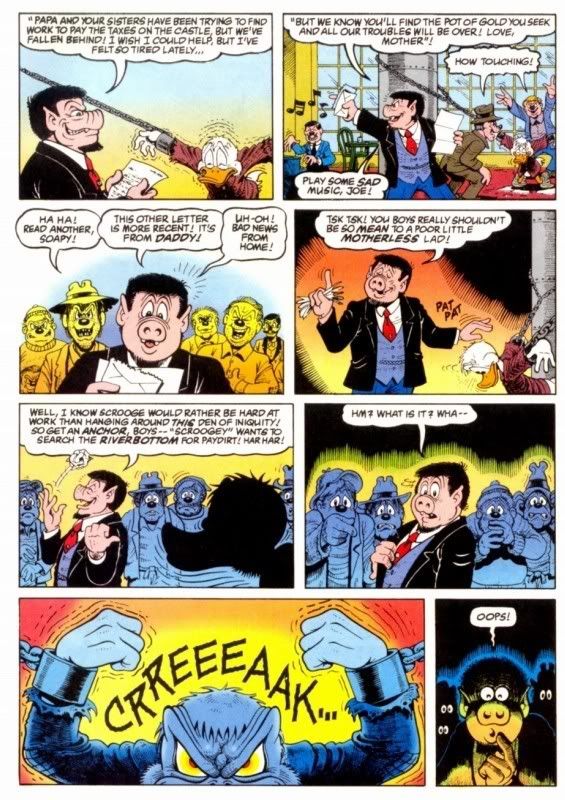
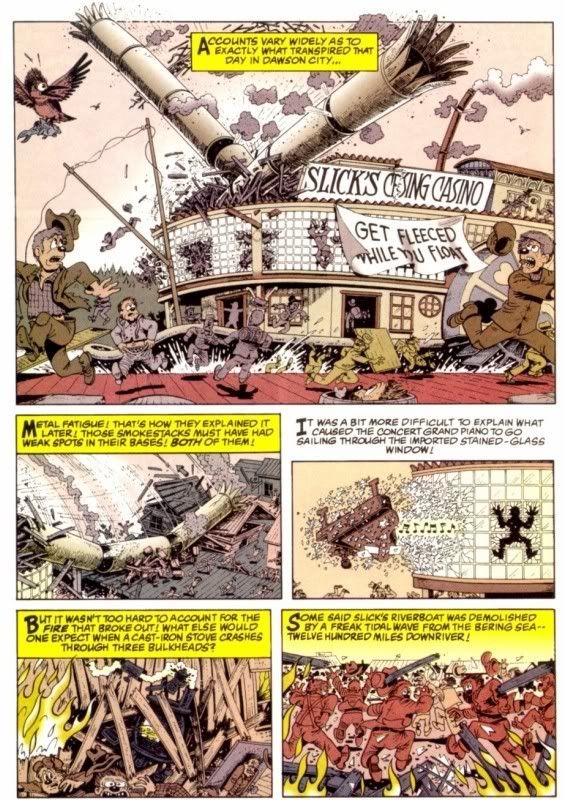
This is not the Scrooge McDuck you think you know from the often embarrasingly childish Disney kiddy magazines, this is hardcore Duck lore filled with tragedy, woe and hard earned life lessons! Certain scenes still get me every time no matter how often I've read them, -Spoilers!-  like the way news of the tragic death of Scrooge's mother reaches him as he's chained to the steam pipes of a river boat by his archnemesis Slick who means to publicly humiliate him, only to witness Scrooge break into utter rage in pain over his loss and destroy the whole ship singlehandedly. As this scene illustrates, there's room for humour thrown in too at times, so it doesn't get too hard to watch. Plus, it's surprisingly historically accurate, as Scrooge meets actual historical characters (except they're 'black nosed' in the obligatory Disney fashion) and lives through some epic historical events, among them the Krakatau eruption in 1883 and the sinking of the Titanic in 1912. A TV miniseries could tell the story chapter by chapter, remaing true to Don Rosa's original art and losing very little in the translation. Remember the Young Indiana Jones TV series? Well, it's very much like that, but with Ducks. And it still beats it easily.


20,000 Leagues Under the Sea

And then there's this much beloved science fiction adventure story, which really ought to be remade properly (despite my love for the 1954 movie) before the recent silly plans to give Will Smith Nemo's captain's chair come true. You'd think a classic tale like this would have been given a decent treatment in the present age of CGI blockbuster remakes, but apparently it's not the case. Or worse, they could do to this Jules Verne story what they did to Journey to the Center of the Earth and Mysterious Island and turn it into some preposterous 3D action flick aimed primarily at kids and making money over their lack of developed taste. Or maybe, just maybe, they could treat it with honors and remain faithful to the original work (minus the rampant animal abuse of the nineteen-hundreds). 


A TV miniseries seems the most appropriate here, some 13 episodes of showcasing Professor Aronnax's adventures sous la mer as he and his friends set out in search of the sea monster which turns out to be a highly advanced submarine constructed and captained by a bitter man who has turned his back on humanity, choosing life under the sea instead. For some reason, I always envisioned Jeremy Irons in the role of Nemo, but I'm open to other (good) options. A miniseries set in the Victorian Era, chronicling the explorations of the deep seas, watching aquanauts battling giant squids and enjoying the occasional trips to cannibal infested tropical island paradises? Bring it on! But at least treat it seriously, and with some shred of decency, unlike the fate which befell some of Verne's other works recently...

woensdag 6 juni 2012

It Came from Cold War America, Chapter 6: Terrestrial creature movies

Been away for a few days and haven't seen any new movies. I almost went to the local sneak preview while on vacation, but my niece asked me to watch In Bruges with her instead and I never turn down an opportunity to watch that movie, because it's so brilliant (if you haven't seen it yet, correct this mistake ASAP!). There's little noteworthy movie news today, so I once again dust off my bachelor paper It Came from Cold War America, since I'm still not done posting that piece yet. Plus, I only posted 5 new main page messages last month (though I did also post like 40 archive messages if you hadn't noticed, so the lack of main page activity wasn't due to laziness on my part), and I'd like to do better in June. ICfCWA opened May, so it might as well do the same this month. It's still not in English, and considering the time it would take to translate it, it may never well be translated. 


Paragraaf 6.1: Definitie subgenre
 
Het terrestrial creature genre is in veel opzichten vergelijkbaar met het alien invasion genre, maar thematisch verschilt het er sterk mee. Beide subgenres onderhouden nauwe banden met horror en tonen wezens die op grote schaal vernietiging veroorzaken, maar waar de monsters in alien invasion films gekenmerkt worden door hun technologie is dit bij terrestrial creature films niet het geval. Integendeel, de monsters worden gekenmerkt door hun band met de natuur, en dus een afwezigheid van technologie.
Het voornaamste thema dat dit subgenre aanspreekt is Man against Nature. De monsters zijn, direct of indirect, producten van de Aardse natuur. Vandaar de specifieke benaming die ik dit subgenre heb toegeschreven: deze link met de Aarde en natuur maakt de creaturen terrestrial. De natuur is een uiting van ‘Otherness’1. De mensheid moet zich in de films uit dit subgenre verdedigen tegen vervormde scheppingen van Moeder Natuur, die hij per ongeluk door zijn eigen hoogmoed en kennisdrift heeft opgeroepen. Biskind duidt het aan als ‘a conflict between culture and nature’2.
Want hoewel de creaturen vaak alledaagse producten van de natuur zijn, is de reden dat zij zich tegen de mens keren vaak door diezelfde mens en zijn technologie afgeroepen. De menselijke cultuur heeft het met haar technologie aangedurfd Moeder Natuur te tergen, en zij slaat terug door natuurlijke wezens, gewekt of vervormd, als resultaat van deze technologie op de mensheid los te laten3. Sobchack beschrijft de monsters als een representatie van ons collectieve schuldgevoel over het ontwikkelen van zulke angstaanjagende technologie4. Niet voor niets zijn veel monsters in dit subgenre geschapen door atoomexperimenten. De mieren in Them! waren slechts normale insecten totdat zij dankzij langdurige atoomproeven in hun leefgebied muteerden en tot monsterlijke afmetingen groeiden. De Rhedosaurus – uiteraard is voor de moderne mens een dinosaurus niet zozeer een alledaagse verschijning (en in het geval van de Rhedosaurus geldt dit nog sterker, aangezien het hier een fictieve soort betreft), maar de natuur zelf discrimineert niet op basis van een dergelijke leeftijd: voor haar is een prehistorisch wezen niet minder haar schepping dan een hedendaags wezen – in The Beast from 20,000 Fathoms werd uit zijn miljoenen jaren durende slaap in het poolijs gewekt door eenzelfde atoomproef. Het gerommel met kernproeven leidde ertoe dat deze wezens dood en verderf zaaien, hoewel zij dit niet bewust doen. Zij gaan slechts door met het uiten van hun natuurlijke gedrag. De mieren verschuiven de schaal van hun standaardgedrag: in plaats van insecten eten zij nu mensen, en zij nestelen nu in rioolbuizen in plaats van normale mierentunnels. De Rhedosaurus trekt na zijn ontwaken naar zijn voormalige nestgronden, waar nu New York staat. De mensen staan deze wezens in de weg, maar hebben dit aan zichzelf te danken.
Ook op dit thema zijn variaties te vinden. Hoewel veruit de meeste monsters in dit subgenre ontstaan als – onbedoeld!5 – gevolg van experimenteren met technologie, zijn ook andere menselijke karaktereigenschappen verantwoordelijk voor hun woede. Zo wordt hebzucht en gebrek aan respect voor de natuur ook bestraft, zoals gebeurd in Creature from the Black Lagoon en de sequels Revenge of the Creature (USA: Jack Arnold, 1955) en The Creature Walks Among Us (USA: John Sherwood, 1956), waarin mensen eerst arrogant binnendringen in het territorium van het creatuur (een prehistorisch aquatisch wezen) om het te onderwerpen, vervolgens het creatuur gevangen nemen en het exploiteren door het als attractie tentoon te stellen, en er tenslotte op experimenteren om het tot een mens om te vormen. Geen wonder dat het creatuur zulk weerzinwekkend gedrag afstraft en vernielingen aanricht.
Want hoewel de vijand in dit subgenre de natuur lijkt, vloeit dit slechts voort uit de reflexiviteit van dit subgenre. De mens is zijn eigen grootste vijand, en het publiek leert hier over na te denken. Menselijke overmoed en hebzucht verwoesten en vervormen de natuur, waardoor de natuur geen optie heeft behalve terug te slaan. Dit subgenre doet mensen inzien dat zij niet de natuur moeten willen overheersen, maar een vreedzame balans moeten vinden. De monsters in dit genre zijn slechts metaforisch. Vernietiging van de natuur leidt tot de vernietiging van de mensen zelf. Deze boodschap is vandaag nog net zo actueel als in de vijftiger jaren. Als een atoombom de Rhedosaurus uit zijn slaap wekt, mogen we wel uitkijken dat het smelten van de ijskappen door klimaatsverandering niet hetzelfde resultaat heeft…

De films uit dit subgenre volgen doorgaans een formule die sterke overeenkomsten vertoont met de typische narratie van het alien invasion subgenre6. Ook hier is de protagonist een intelligente man, meestal een wetenschapper, vergezeld van een aantrekkelijke dame, die als één van de eerste mensen met het monster in aanraking komt. In een aantal gevallen komt dit omdat hij al bekend is met het schepsel of zijn schepper, waardoor hij beter op de hoogte is van manieren om het te bestrijden en daardoor wordt ingelijfd bij het team dat het onschadelijk moet maken. Ook hier bestaat het team uit wetenschappers en militairen die nauw samenwerken. De protagonist bedenkt meestal de oplossing van het probleem, en dus de manier om het monster onschadelijk te maken. Dit lukt, waarna hij en zijn vrouwelijke metgezel een wederzijdse romantiek wacht. Deze formule is een variatie op Lucanio’s 'klassieke tekst'7, maar bevat vaak ook kenmerken van de 'Prometheustekst', waar het draait om het experimenteren en ingrijpen van de mensheid in natuurlijke processen, waarbij zij door haar overmoed verantwoordelijk is voor de rampspoed die erop volgt8. Overigens noemt Lucanio alleen deze twee teksten in zijn boek; hij behandelt hen als onderverdeling van het alien invasion genre en schaart wat ik hier het terrestrial creature genre noem onder dit alien invasion genre. Ik ben het niet eens met deze onderverdeling, aangezien sommige sciencefictionfilms elementen van beide teksten bevatten, terwijl andere onder geen van beide geschaard kunnen worden. Bovendien zijn de meeste indringers in dit subgenre niet ‘alien’, aangezien het grotere versies van alledaagse (en dus herkenbare) wezens zijn (zoals mieren en spinnen). Deze creaturen worden gekoppeld aan de Aarde, in tegenstelling tot de indringers uit het alien invasion genre die van buiten de Aarde komen, en daardoor daadwerkelijk ‘alien’ zijn.

Paragraaf 6.2: Wetenschap in terrestrial creature movies

In tegenstelling tot de indringers in het alien invasion subgenre hebben de indringers in dit subgenre geen eigen wetenschap. De representatie van wetenschap vinden we alleen aan de kant van de mensheid. Wel kunnen we kijken naar de effecten van wetenschap op de monsters, aangezien wetenschap vaak verantwoordelijk is voor hun ontstaan, en altijd voor hun vernietiging. 

 
Ook in dit subgenre slaan wetenschap en leger de handen ineen om de monsters te bestrijden, waarbij wetenschap opnieuw dominant is9, aangezien zij beter weet hoe de monsters te vernietigen met een minimum aan menselijke slachtoffers. Wetenschap en leger zorgen samen voor het bewaken van de sociale orde tegen de monsters10. Ook hier is het inzetten van alle beschikbare wapens tegen de wezens niet per definitie de beste oplossing. Zorgvuldige analyse van de monsters of de normale versies daarvan – de monsters zijn immers vaak uitvergrote versies van normale wezens, zoals de mieren in Them! – leidt tot een beter begrip van de monsters, hun drijfveer, en hun zwakke punten. Als de wetenschappers hun werk gedaan hebben komt het leger pas in actie om ze af te maken, waarna normaliteit hervat kan worden.
De meeste creaturen in dit subgenre ontstaan door atoomproeven. In enkele gevallen bestaan ze al, maar worden ze gewekt door de atoomproef (zoals in The Beast from 20,000 Fathoms). Desondanks kan wetenschap zeer frequent verantwoordelijk worden gehouden voor hun ontstaan, en dus voor de ravage die zij aanrichten. Het ontstaan van de wezens is altijd een onbedoeld zijeffect van wetenschappelijke experimenten. Wetenschap is in dit subgenre een symbool voor de arrogantie en trots die de mensheid koestert ten opzichte van technologische vooruitgang. Via wetenschappelijke macht probeert de mens de natuur te onderwerpen. Wetenschap wordt aanvankelijk gezien als waarheid en autoriteit, en wetenschappers als uitdragers hiervan, die door hun kennis en capaciteit de natuur menen te mogen beheersen11. De natuur zet de mensheid weer op haar plaats door te bewijzen dat deze trots vaak misplaatst is, aangezien de wetenschap ook nadelige effecten met zich meebrengt. Technologische vooruitgang kent een prijs. Zo leert de mensheid weer een les, en kent zij haar plaats in de alles overheersende kracht van de natuur weer12.
Hoewel wetenschap verantwoordelijk is voor de monsters, is zij ook verantwoordelijk voor het vernietigen van de monsters13. Wetenschappers in dit subgenre komen, net als in het alien invasion genre, na gedegen studie van de indringers met een oplossing voor de dag. Vaak zijn het bovendien diezelfde wetenschappers die de oplossing verzinnen als de wetenschappers die de experimenten uitvoerden die hen deden ontstaan. Zo neemt de wetenschapper verantwoordelijkheid voor de puinhoop die hij heeft aangericht. Na afloop van de ultieme confrontatie met de monsters beseft de wetenschap net zo goed als iedereen dat vooruitgang niet alles is, en de natuur gerespecteerd en niet voorbij gestreefd dient te worden. Als dat niet gebeurt, verwoest en vervormt wetenschap de natuur, en daarmee ook de menselijke beschaving14. Wetenschap moet constructief en voorzichtig worden gebruikt.
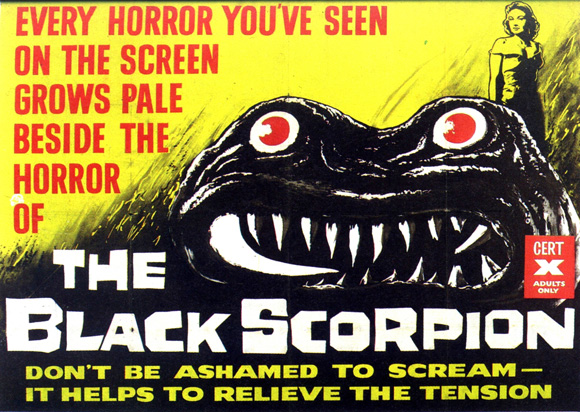
In enkele gevallen is wetenschap niet verantwoordelijk voor het ontstaan van de monsters, maar schept de natuur ze spontaan. Dit is bijvoorbeeld het geval in The Black Scorpion (USA: Edward Ludwig, 1957), waarin reuzenschorpioenen door een vulkaanuitbarsting ontwaken. Een ander voorbeeld is Earth vs. The Spider (USA: Bert I. Gordon, 1958), waarin de oorsprong van het monster niet vermeld wordt. Wetenschap treft in deze gevallen geen blaam, maar het thema Man against Nature overheerst hier ook. In deze gevallen is de natuur de indringer, vergelijkbaar met de vijandige aliens in het alien invasion genre. Dit geldt niet zozeer voor de wel door wetenschap voortgebrachte monsters in het terrestrial creature genre, aangezien de mens in deze gevallen de rampspoed over zichzelf afroept, en de monsters hier geen “indringers” maar “wrekers” zijn. In deze variant op het subgenre is de wetenschap slechts de redder, en niet de verwoester.

Casestudy 2: The Beast from 20,000 Fathoms

The Beast from 20,000 Fathoms houdt zich aan de definities van de klassieke tekst die Lucanio noemt. Het creatuur in deze film, de Rhedosaurus (een fictieve dinosaurus), is in alle opzichten terrestrial. Het wezen heeft miljoenen jaren onder het poolijs in slaap gelegen, maar wordt bruut gewekt door een atoomproef. Ontwaakt uit zijn slaap komt het wezen in een voor hem compleet nieuwe wereld terecht die anders in dan wat hij gewend is, maar zijn instinct is hetzelfde, en hij trekt terug naar zijn oorspronkelijke nestgronden, een grottenstelsel in de buurt van New York. Hierop valt het monster de stad binnen, waar het dood en verderf zaait en grote paniek veroorzaakt. 

 
De precieze reden voor de atoomproef in deze film wordt niet vermeld. Zoals de meeste atoomproeven in films uit de jaren vijftig heeft het iets te maken met het testen van atoombommen, mogelijk het ontwikkelen van een waterstofbom (de narrator maakt gewag van ‘H-hour’, staat 'H' voor hydrogen bomb wellicht?). De geleerden die de proef overzien, waaronder de typische scientist hero professor Nesbitt (Paul Hubschmid), hebben hun twijfels over het gebruik van atoomenergie, maar zien het als een noodzakelijk kwaad voor het opdoen van wetenschappelijke kennis, zoals de volgende conversatie illustreert:

Nesbitt: ‘The world’s been here for millions of years. Man’s been walking upright for a comparatively short time. Mentally, we’re still crawling. This test will add to our knowledge.’
Ritchie: ‘Every time one of these things goes off I feel as if we were helping to write the first chapter of a new Genesis.
Nesbitt: ‘Let’s hope we don’t find ourselves writing the last chapter of the old one.’
Evans: ‘You sound like a man who’s scared, Tom.’
Nesbitt: ‘What makes you think I’m not?’15

Dit gesprek toont aan dat de geleerden op de hoogte zijn van het gevaar dat atoomenergie kan opleveren, maar dat ze het risico durven te nemen omwille van wetenschappelijke vooruitgang. Ze zijn er zich van bewust dat hun test dodelijke straling heeft opgewekt, maar aangezien de proef gedaan werd in het niemandsland van de ijskappen op de Noordpool lijkt dit gerechtvaardigd, aangezien er toch niemand woont. De gevolgen voor de natuur worden niet in ogenschouw genomen. Maar de natuur laat zich niet zo respectloos behandelen. Als gevolg van het menselijk verstoren van de natuur wordt de Rhedosaurus uit zijn slaap gewekt, als wreker van de natuur.
Zijn ontwaken blijft niet onopgemerkt. Twee wetenschappers, waaronder Nesbitt, die de resultaten van de atoomproef controleren, worden met het schepsel geconfronteerd, waarbij één van hen het leven verliest. Nesbitt overleeft het, en vertelt bij terugkomst op de basis over het wezen, maar zijn verhaal wordt niet geloofd. Dit is typisch voor het terrestrial creature genre: de persoon die het eerst met het creatuur in aanraking komt wordt voor gek versleten. Vaak is de persoon in kwestie de scientist hero: hoewel deze de wetenschap, een instituut dat geacht wordt ware kennis op te doen en feiten te checken, representeert, klinkt zijn verhaal in zulke gevallen te onwaarschijnlijk. Desondanks krijgt de wetenschap in het genre altijd alsnog gelijk als de indringer zijn aanwezigheid laat gelden; want de wetenschap(per) liegt niet. Dit geldt ook voor Nesbitt, die na zijn confrontatie op zoek gaat naar bewijs om de waarheid aan te tonen. De mogelijkheid dat hij hallucineerde slaat hij af, want zoals hij het zegt: ‘I’m not inclined to let my imagination run away with me, I’m a scientist’.
Nesbitt is een typische scientist hero, enigszins stijf en emotieloos - normaal voor protagonisten in de klassieke tekst - maar toch sympathiek en met een zekere charme (zie ook casestudy 1, waarin meer verteld werd over de koele uitstraling van scientist heroes in de klassieke tekst). Om een second opinion over zijn monsterverhaal te krijgen probeert hij de steun van vooraanstaand paleontoloog professor Elson (Cecil Kellaway, als archetypische wise old man), te krijgen. In een debat over de mogelijkheid dat een prehistorisch wezen 100 miljoen jaar in het ijs gezeten heeft maar nog leeft, weet Elson alle verklaringen die Nesbitt geeft rationeel te ontkrachten. Desondanks trekt Nesbitt’s gedrevenheid de aandacht van Elsons assistente Lee Hunter (Paula Raymond), die niet alleen in zijn verhaal maar ook in Nesbitt zelf geïnteresseerd is (waarop een welhaast clichématige relatie zich ontvouwt tussen Nesbitt en Hunter). Hunter is een goed voorbeeld van de nieuwe rol voor vrouwen in de wetenschap. Ze heeft klaarblijkelijk verstand van zaken en is niet bang haar mening te uiten in het gezelschap van mannelijke wetenschappers. Haar mentor heeft het volste vertrouwen in haar capaciteiten, wat genoeg reden is voor Nesbitt om ook op haar expertise te vertrouwen. Desondanks is ze nog een assistente: waarschijnlijk heeft men geprobeerd het publiek het ongeloof van een vrouw als belangrijk paleontoloog te besparen. Een oude man die veel weet van uitgestorven dieren lijkt waarschijnlijker dan een knappe jongedame met dezelfde kennis.
In tegenstelling tot haar mentor gelooft Hunter wel in Nesbitts verhaal: ze typeert hem als een briljant wetenschapper, wat voor haar genoeg reden is om hem te vertrouwen. Als Nesbitt vraagt waarom hij haar sympathie heeft, antwoordt ze: ‘I have a deep, abiding faith in the work of scientists. Otherwise I wouldn’t be one myself’. Voor haar is de mogelijkheid dat Nesbitt ongelijk heeft ontkracht domweg omdat hij een medewetenschapper is. Ook Elson gaf in voorgaande scène aan Nesbitt te willen geloven. Kennelijk hebben wetenschappers onder elkaar meer vertrouwen in ongeloofwaardige verhalen dan niet-wetenschappers. Mogelijk haakt dit in op de anti-intellectualistische sfeer die begin jaren vijftig heerste (zie ook paragraaf 4.2): wetenschappers werden beschouwd als een vreemde intellectuele elite die onder andere brabbelde over raketten naar de maan. Maar ook dit ongeloofwaardige verhaal werd een decennium later werkelijkheid. Vreemde verhalen horen bij de wetenschap, en wetenschappers zelf onderstrepen dit feit.

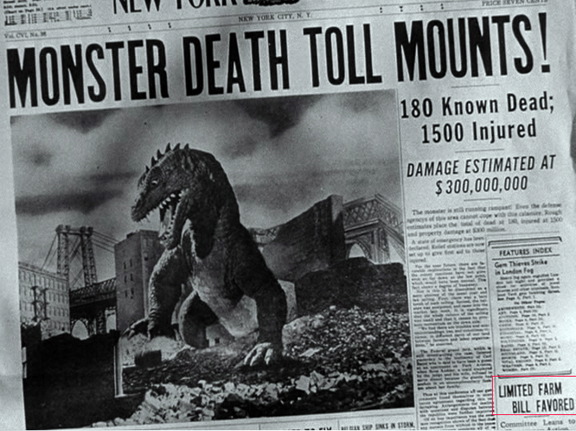
Hunter besluit het onderzoek naar het monster analytisch aan te pakken. Ze geeft Nesbitt een willekeurige stapel illustraties van dinosauriërs, waaruit hij de zijne moet pikken. Vervolgens neemt ze contact op met de overlevende van een scheepsramp, die beweert dat zijn schip aangevallen werd door een zeeslang. Zijn ondervraging wordt op dezelfde onpartijdige manier aangepakt: uit een stapel illustraties van dinosauriërs pikt hij dezelfde dinosauriër, de Rhedosaurus, als schuldige. Zo wordt Nesbitts verhaal een stuk waarschijnlijker, waarop Elson hem ook gelooft. Dit, en de melding van een reeks rampen in de media, is reden genoeg voor het gezelschap een trip te ondernemen naar de nestgronden van de Rhedosaurus, de Hudson-zeegrotten in de buurt van New York, voor verder onderzoek naar het wezen. Elson stelt voor het monster te vangen als het echt bestaat. Als hem gezegd wordt dat het gevaarlijk is, antwoordt hij: ‘the risk would be worth it if one thinks of the benefit to science’. Eens te meer wordt gesteld dat risico’s acceptabel zijn ten bate van de wetenschap. De prijs die in het vooruitzicht wordt gesteld, de accumulatie van wetenschappelijke kennis, is groot genoeg om wetenschappers zulke risico’s te doen nemen. Al snel blijkt dat deze gedachte mogelijk misplaatst is: bij de grotten aangekomen blijkt de Rhedosaurus inderdaad springlevend, waarop Elson verslonden wordt door het wezen. Een interessante observatie: in een shot van een krant, waarin melding wordt gemaakt van Elsons dood, staat naast dit artikel een artikel over wetenschappers die een nieuwe röntgentechniek hebben ontwikkeld. Zo toont dit shot ons de dualiteit van wetenschap: ontdekking gaat gepaard met verlies. Het feit dat het artikel over Elsons dood een stuk groter is afgebeeld dan het andere artikel laat vragen open over wat dominant is: de vergroting van wetenschappelijke kennis, of het verlies dat het vergaren van deze kennis kan opleveren. Hunter vraagt zich ook af of Elsons dood wel zin had, ongeacht de kennis die het opleverde.
Door Elsons dood krijgt Nesbitt echter gelijk, en daarom krijgt hij de leiding over de militaire eenheden die het wezen moeten vernietigen. Het feit dat hij een atoomexpert is, en geen paleontoloog, speelt daarbij geen rol, en blijkt later handig voor de oplossing van het probleem. Het is dus puur een plot device16. Eens te meer werken wetenschap en leger samen om de samenleving te beschermen, waarbij de wetenschap door haar inzicht in de situatie dominant is. Het thema Man against Nature komt hier sterk naar voren. Het creatuur wordt domweg geleid door zijn natuurlijk territoriale instinct, maar zijn nestgrond is vervangen door een menselijk bolwerk. Als hij de stad, gebouwd op wat hij als zijn territorium ziet, binnenvalt, wordt hij gezien als de indringer. Voor hem is geen plaats in deze veranderde wereld, en daarom moet hij verdwijnen. Nesbitt, degene die hem door het experimenteren met atoomenergie gewekt heeft, gaat hem nu ook weer doen inslapen. De wetenschapper neemt zo verantwoordelijkheid voor het door hem aangerichte probleem.
Het blijkt echter moeilijker dan aanvankelijk gedacht om de Rhedosaurus te doden. Bij de eerste confrontatie tussen het leger en het wezen werd hij verwond, en het blijkt dat zijn bloed prehistorische ziektekiemen bevat waartegen mensen geen weerstand hebben (het lijkt een omgekeerde situatie als in The War of the Worlds, waar de microben juist de indringer vernietigden). Zonder de wetenschap zou deze conclusie niet getrokken zijn, wat mogelijk rampzalige gevolgen had gehad zelfs als het schepsel ontschadelijk was gemaakt. Het monster kan niet simpelweg door het leger overhoop geschoten worden, aangezien de ziektekiemen zich dan over een groot gebied verspreiden en meer slachtoffers kunnen maken dan de Rhedosaurus zelf. Nesbitt analyseert monsters van het bloed en weet een radioactieve isotoop te maken - dat is immers zijn terrein van expertise - die het monster kan doden en ook de ziekte beteugelen. In de climax van de film slaagt Nesbitt er samen met een scherpschutter - één wetenschapper en één soldaat, waardoor de relatie tussen wetenschap en leger hier gelijk is (en wetenschap dus niet langer dominant is), aangezien beiden onmisbaar zijn - ternauwernood in om het monster de isotoop toe te dienen, waarna het sterft en de normaliteit hervat kan worden. Interessant is dat hier radioactiviteit als redder optreedt, terwijl het in het genre doorgaans de boosdoener is.
The Beast from 20,000 Fathoms toont een dualiteit in de representatie van wetenschap: wetenschappers zien het vergroten van wetenschappelijke kennis als een nobele zaak, die offers eist. Ze zijn op de hoogte van de risico’s die hun experimenten met zich meebrengen, maar verkiezen de consequenties te ondergaan. In dit geval leiden wetenschappelijke proeven tot grote schade: een monster wordt gewekt, richt enorme ravage aan waarbij honderden mensen omkomen en dreigt met een ziekte nog meer slachtoffers te eisen. Zo lijken wetenschappelijke tests de moeite niet waard. Desondanks wekt het einde van de film de suggestie dat deze conclusie voorbarig is. Want uiteindelijk wordt het monster ook teniet gedaan door wetenschappelijke kennis, in dit geval Nesbitt’s expertise met radioactiviteit. Deze kennis is opgedaan door proeven vergelijkbaar met de tests die het monster deden ontwaken. Zo toont de film het publiek dat zulke proeven mogelijk niet voor niets zijn, en we toch vertrouwen in de wetenschap en haar capaciteit de schade te herstellen kunnen hebben.
Ondanks de gelukkige afloop dwingt de film de kijker zich af te vragen of het vergaren van (potentieel) nuttige kennis de hoge prijs waard is: moeten we wel alles willen weten, ook als het ons gevaar oplevert? Deze gedachte wordt gereflecteerd in de trailer van de film. Hierin worden kreten geslaakt als ‘Are we delving into mysteries we weren’t meant to know?’, ‘Is mankind challenging powers behind the cosmic barriers?’, ‘Who knows what waits for us in nature’s nomansland…’ en ‘Will science unleash the fearsome forces of lost worlds?’. In zulke kreten is al een zekere animositeit jegens wetenschap en haar streven merkbaar: wetenschap gaat te ver in haar zoektocht naar kennis, waarop gevaarlijke consequenties de mensheid treffen (opnieuw een mogelijke metafoor voor de atoombom: deze werd als gevolg van het onderzoek naar atoomenergie ontwikkeld, en heeft veel levens gekost). 
In deze film zijn wetenschappers wel schuldig aan het wekken van het monster, en daardoor aan de ravage die het aanricht, maar komen ze ook met een oplossing die zo min mogelijk levens eist17. Zo neemt wetenschap zijn verantwoordelijkheid en blijft het integer. Het is niet slechts de brenger van dood en verderf, maar kan ook constructief gebruikt worden (waarbij het een element gebruikt dat in deze periode voornamelijk negatieve connotaties had, radioactiviteit). Tegelijkertijd verdient het monster ook enige sympathie, aangezien het zijn schuld niet is: hij volgt slechts zijn instinct. Maar de wereld die hij kende is niet meer, en daardoor moet hij wijken. Als wetenschap niet experimenteerde met atoomenergie, was hij niet gewekt. Zo waarschuwt de film via een metafoor, het monster gewekt door atoomenergie en uitgerust met prehistorische straling, voor de gevaren die echte atoomproeven en de daarmee gepaard gaande radioactiviteit opleveren.

1 Biskind 1983: 111
2 Biskind 1983: 106
3 Brosnan 1978: 95
4 Sobchack 1980: 46-47
5 Tudor, Andrew. Monsters and mad scientists: a cultural history of the horror movie. Oxford: Basil Blackwell Ltd., 1989: p. 147
6 Vieth, 2001: 62-63
7 Lucanio 1987: 25-44
8 Lucanio 1987: 46-52
9 Jancovich 1996: 16
10 Sobchack 1980: 45
11 Vieth 2001: 180
12 Baxter 1970: 138
13 Biskind 1983: 104
14 Vieth 2001: 158
15 Beast from 20,000 Fathoms, The. Reg. Eugène Lourié. Jack Dietz Productions Inc., 1953.
16 Lucanio 1987: 39
17 Jancovich 1996: 52