dinsdag 10 juli 2012

Hardcore violence: Indonesian style


The Raid: Redemption: ****/*****, or 7/10

At the last Dutch Imagine Film Festival (the former Amsterdam Fantastic Film Festival) the Indonesian action film The Raid: Redemption (original title Serbuan Maut) recently won the Silver Scream Award with an audience score of 9.3. Despite not being a “fantastic” film, i.e. not containing any particular horror, fantasy or science fiction scenes, the presence of the film on the festival was well justified: it's utterly fantastic in the way it portrays the human body being able to take continuous extravagant beatings and stomping without the person taking this kind of extreme punishment dying an agonizing death, or in fact dying at all. The situation the protagonists of The Raid find themselves in can easily be classified as 'being in agony' though: they just fucked with the wrong crime lord, and have to fight their way out of a 30-storey apartment building in the slums of Jakarta, which unfortunately for them is swarming with violent, bloodthirsty thugs.


So far the simple premise of Gareth Evans' new action film which took film festivals and movie blogs around the globe by storm. The reason? It's just a damn fine action flick, delivering one excessively dynamic action scene after another, hardly giving the viewer a moment to recover his/her breath. It's an impressive accomplishment by Evans, whose resumé as a director is about as short as the longest pause in-between the abundance of excellently choreographed fights. His best card here is his use of the Indonesian martial art of Pencak Silat, plus the presence of some of the finest practitioners of this fighting style in the world, including Iko Uwais who Evans previously directed in his first Indonesian film (and second overall film of his career), Merantau (2009). Apparently both of them weren't quite done with applying Uwais' skill at martial arts to film and figured there's plenty more where that came from. And judging from the success of The Raid, they were absolutely correct in their assumption.

The Raid: Redemption starts with one of the film's rare moments of peace and quiet, as Rama (Uwais) wakes up early in the morning, works out, prays, works out again and kisses his pregnant wife goodbye to start another day on the job as a fairly inexperienced officer in a SWAT team. Today's mission: enter an apartment building and arrest drug lord Tama Riyadi (an effectively sinister Ray Sahetapy, balancing carefully between being cunning and cruel). The apartment building itself, a grim, grey block of cement subconsciously shouting 'abandon all hope, ye who enter here' from every angle, serves as a safe house for every criminal who is willing to pay Tama big bucks for it, and is virtually impenetrable for normal cops. Consisting of twenty trained men, some rookies like Rama, some with years of experience, the team sets out to do their job under the command of sergeant Jaka (Joe Taslim) and assisted by lieutenant Wahyu (Pierre Gruno). Though they manage to capture the first few floors without much resistance, things take a turn for the worst as a young spotter succeeds in alarming Tama via the building's intercom. The man obviously didn't get so far, or so feared, as he has without being carefully prepared for potential intruders as well as viciously sadistic – a fact adequately demonstrated by a scene early in the film where he executes four tied up men with a gun, asks the fifth to hold it for a while when out of bullets, then returns with a hammer to beat the man to death instead of taking another bullet from his desk – and he immediately locks down the building, using the intercom to send the general message there's free lodgings available for every man who assists in ridding his building of the current “cockroach” infestation. And so the game for simple survival begins, when the team finds itself surrounded by the world's most brutal and nasty criminal scum imaginable.


Relying on a plot driven by pure video game logic, the handful of team members who survive the initial onslaught wrought by the large number of thugs out for their blood, race from floor to floor to get to their goal, which remains capturing Tama, now the 'end boss' of the film, since their colleagues and car parked outside were among the first to be ruthlessly offed, and the surrounding buildings are loaded with more heavily armed bad guys, so even getting near a window is playing with your life. Around each corner, in every corridor and in any of the many rooms, danger awaits, and the remaining characters, of course including Rama, Jaka and Wahyu, have to move carefully to avoid running into their opponents. To make matters worse, Wahyu himself proves to be far from clean, intent on using the planned capture of Tama for his own career. There's no hope for back-up, since Wahyu never informed anyone back at the office of this SWAT raid because many of his corrupt superiors are in Tama's pockets. Rama however turns out to have more noble motives for participating in this assignment, as he means to snatch his brother Andi (Donny Alamsyah), who broke with his family when entering in underworld affairs and has since moved up to the status of Tama's right hand man, away from the other cops and return him to his family: when Andi learns he's going to be an uncle, he's willing to help get his brother out alive no matter what, thus adding some family love to the overall character development, of which there is more than you would expect from a movie that revolves so much about action and so little about scenes of dialogue. The plot between the brothers is a nice reprieve from the otherwise wholly impersonal killing going around, making the film about more than mere survival, though using Rama's upcoming baby is a bit cheesy. The tension between the few good men alive and their less moral than anticipated lieutenant Wahyu also adds welcome plot, though ultimately The Raid has no pretensions than to be anything more than a well crafted string of gripping action scenes. Think of the characters' plights as a bonus.

And those action scenes are truly worth any lack of storytelling. Starting with the usual gun fights in the first half of the picture, The Raid quickly trades in bullets for fisticuffs, considering the team members run out of bullets soon enough and have to resort to using their bare hands and whatever they can find to withstand the hordes of thugs armed mostly with machetes, which is of course more fun for them than just gunning these cops down. Fortunately the surviving team members prove highly skilled in Pencak Silat, while the same can be said for virtually any assassins they run into. The notion this suggests of everybody knowing Pencak Silat in the Jakartan slums seems a bit farfetched, but the movie won't give most people the time to consider this, showcasing too much physical brutality to concentrate on other matters. Though the amount of violence is both over the top and extreme, it's surprising to see how implicit it is for the most part; despite the various quick close-up bullet hits shown, when it comes down to the 'manual bits' the movie often chooses insinuation over exhibition, implying more than it reveals. This makes a lot of the many hardcore fights bearable to watch, though there's still plenty a shocker to be found.


Next to the abundance of action, also noteworthy is the various scenes of suspense: though there are a few quiet moments, you're not in for a moment of mental recuperation since such stillness is on most occasions even more tense. A perfect example is the scene where a few team members find shelter in the room of what seems like the only good man inside (who indeed feels out of place a little bit) and are forced to hide behind a wall to escape detection, but one particularly clever killer's suspicions arise, after which he uses his machete to prick through the walls. A cop's cheek is cut, at which point he needs to bend himself in a very complicated position to use his hand to wipe the blood off the blade as it is retracted to avoid his blood giving their presence away and getting them all slaughtered. It's impressive to see Evans handles suspense as well as he does action, though he doesn't hide his affinity for the latter.

Overall, the action scenes are a blast to watch and are choreographed to maximum effect, but the truth is they tend to get monotonous towards the end of the film. One corridor filled with bad guys follows after another and the Pencak Silat scenes too feel all too similar the more they are used, suggesting The Raid could have been a bit shorter for its own good, though at 101 minutes it's not exactly running long. Point is, the fights are so fast paced and plentiful, they make the movie feel longer than it actually is. It hurts the climactic end battle. Tama's most creepy agent Mad Dog (Yayan Ruhian), an excellent substitute physical 'end boss' considering Tama doesn't bother himself with martial arts and prefers outwitting his opponents, has just dispatched sergeant Jaka in a elaborate showdown, but Evans feels the need to outdo this a mere ten minutes later by further demonstrating his actors' already established prowess at Pencak Silat by having Mad Dog face not one, but two final opponents, thus making this confrontation feel overly repetitive, though still spectacular enough to keep the audience engaged. Evans sadly proves incapable of moderating himself sufficiently, but The Raid's status as one of the finest 'action pour l'action' films remains standing firmly and deservedly. After only three films, it's no surprise to see there's still plenty of room for improvement. And considering Evans plans to make Redemption the first of a trilogy of The Raid flicks, this can't do his directorial qualities any harm at this point.


It's also refreshing to see a good action film set in a non English speaking country that indeed doesn't rely on English dialogue at all. It adds just that much realism to the piece and means the movie doesn't become cluttered with the usual cheesy oneliners one has come to expect from films in this genre (which doesn't mean there's no Indonesian oneliners present: undoubtedly there are some of those, but it's doubtful we'll be seeing those quoted all over the web any time soon). Not surprisingly, the general American tendency to deny the existence of subtitles, coupled with the overall success of this film worldwide, has already resulted in the announcement of an American remake of The Raid going in production soon. It seems unlikely any movie could ever come close to delivering the amount of (physical) impact this film does, particularly because the martial art of Pencak Silat the movie appropriates for most of its fight scenes is itself Indonesian, and it seems unlikely American SWAT teams specialize in this fighting style, let alone the effort it would take for American actors to master it. It's reasonable to assume The Raid's style of fight choreography will be lost in translation, making the original continue to stand out in the action genre as one of the prime examples that, when done well, action films can indeed run exclusively on action.

And watch the trailer here:


donderdag 5 juli 2012

David Cronenberg's new frame of mind


Yesterday I worked my first shift as a volunteer running the film projector at the local arthouse theater Provadja, something I will now do each Wednesday evening. I had an easy start, playing only one film, whereas for the next two months it will be three a night. The film in question was David Cronenberg's second to most recent film, A Dangerous Method, a movie I had wanted to see in regular theaters upon its initial release in March, but I never got around to do so. That's the good thing about this new job, I get another chance to see arthouse, or generally good quality, films I missed the first time (I don't think I'll get another shot at Piranha 3DD though, which has now left movie theaters much to my chagrin), since Provadja gets a lot of these as their weekly movie a few months down the road. Projecting the film was a real piece of cake, thanks to the advantages of digital projection (that same progress got me kicked out of the operator's booth at Pathé though, so it's not all fun and laughs), and I had a fair sized audience of no less than fourteen people (the room the movie played at can hold about 45). If you're lucky, you can watch the whole film from the projector's booth, but sadly, I needed to occasionally focus on other chores, so I missed about 15 minutes, which included a few important scenes here and there. Having missed those, I can't honestly write a full review of this film (that would be a rather dangerous method for any critic), so I'll have to make due with some more general observations: after all, despite not having seen it in its entirety, I still have an opinion on the bits I did get to see, which lead me to believe that A Dangerous Method would be rated by me as about ****/*****, 7or 8 out of 10.


It's fascinating to see how much David Cronenberg has shifted towards other genres. He's still best known as the director of usually extremely graphic horror films, the foremost expert on 'bodily horror', i.e. playing with, deforming or metamorphizing the human body to often shocking effects, having created various grotesque body transformations in films such as The Fly (1986) – Jeff Goldblum's DNA mixed with that of a fly, thus making him devolve into a bizarre human/insect hybrid – or the even more disconcerting Videodrome (1983) – James Woods equipped with a huge orifice, quite explicitly resembling a female's naughty bits, in his abdomen so he can insert and “play” videotapes in his body – which for a long time was really Cronenberg's signature: if you saw the shit he pulled, you immediately realized beyond doubt you were watching a Cronenberg flick! However, in recent years he mellowed quite a bit, increasingly shying away from such gory effects. Though in his suspense thriller A History of Violence (2005) he still applied a few brief moments of universal disgust (hence the 'violence'), it otherwise hardly felt like a Cronenberg film. Eastern Promises (2007), a film in the same genre, even less so. With A Dangerous Method, a film containing virtually no gore at all, Cronenberg seems to have definitively broken with his status as a director once considered an auteur of horror. In fact, the body no longer seems to interest him, as he sets his sights completely on the human mind this time: though not exactly new to this subject matter – for example, Spider (2002) – compared to the wonders of the body it's still largely terra incognita for him. And what better place to start than with the founding fathers of psychoanalysis, Sigmund Freud and Carl Jung?

In examining these two noted historical characters, Cronenberg not only treads on different subject matter, but also explores a genre he has not worked in before, the period drama piece. This is his first motion picture set in past times, but you would hardly notice his inexperience since he proves all too capable of compellingly and accurately portraying the pre-WW I era of Vienna and Zürich, including excellent costume work and the occasional temporal signifiers as beautiful early cars and horse carriages. Of course, it's not all that impressive, since A Dangerous Method is hardly a full-on historical epic and focuses on characters much more than on their settings, but it's a good sign Cronenberg has no trouble expanding his existing oeuvre to include genres he's as yet unaccustomed to. A good start, and hopefully he won't be afraid to turn his scope on the past more often, now that we know he can pull it off seemingly without effort.


As mentioned above though, it's the characters that drive A Dangerous Method, and as such it's the actors portraying them making or breaking the piece. Cronenberg has often proved to get stellar performances out of the top actors in their field, and continues this trend here, reuniting with his present day muse Viggo Mortensen (their third collaboration in a row), as well as Vincent Cassel (second time working together), while adding Michael Fassbender and Keira Knightley to his already outstanding resumé of phenomenal actors he has directed. The latter pair has the hardest job in carrying the whole picture, but neither fails in this regard. In the case of Fassbender, who portrays Jung, this was to be expected, considering his status as one of the most sought after and popular actors of today. Knightley surprises much more in her role of his patient Sabina Spielrein, a young woman suffering from hysteria, who soon turns into something more than just another case for the good doctor as the two of them embark on a wild sexual affair. Knightley maneuvers shrewdly from an out of control and insane girl at one moment and a calm and perfectly rational woman the next, being both disturbingly repulsive and sexually intriguing at the same time, and thus an irresistable mark for Jung from a professional point of view, and soon after as a secret mistress. Plus, Knightley seems to have the perfect facial bone structure for this role, as demonstrated by the way in which she alarmingly protrudes her lower jaw in her many fits of rage. Fassbender and Knightley show to have ample chemistry in their roles, initially as doctor and patient, and soon after as lovers on more or less equal footing. Whereas Fassbender plays Jung with the necessary decorum and stoic restraint in the former relationship, he's seen as a more emotional and angry character in the latter, being able to blow off some steam in her company over his guilt ridden marriage with his bland wife Emma (Sarah Gadon), who has an awkward fixation over producing male offspring with him, and his ultimately tumultuous relation with his one time mentor Freud. Together, Spielrein and Jung can be themselves, as they don't need to ignore their sexual fantasies, such as Sabina's desire for spanking due to a childhood trauma. We root for them because of their genuine affections for each other, but certainly in Jung's case (he's a married man with kids after all), abhor them for having taken this inappropriate route.


No matter how good Fassbender and Knightley are on screen together, it's Mortensen who delivers the most impressive performance playing Sigmund Freud. Mortensen, by now fully versed in Cronenberg's routine, proves himself a genuine chameleon yet again, hardly resembling anything we've seen him look like before, older and fatter, smoking a huge cigar in every scene as if it's an actual body part. He portrays Freud as an old man emotionally detached from everyone, including his star student Jung, despite their shared beliefs concerning the benefits of psychoanalysis, while also wholesomely inflexible when the latter tries to convince him not everything can be reduced to subconscious sexual desires. At the same time we see a Freud who desperately means to cling to his acclaimed social status and tries to weed out subversive elements among his circle of (almost exclusively Jewish) associates in fear of all their work being undone by his many enemies in science and politics who are just eager for some controversy to take him out. Apart from the cigar and the talk about sex, Mortensen gives us a whole new Freud, refusing any relation with the usual cliché ridden versions of the character we are so often unfairly treated to. Also noteworthy is the fact Mortensen does not repeat his role from his earlier collaborations with Cronenberg, not taking center stage this time in favour of Fassbender. Undoubtedly the director and his favourite actor realize full well they will work together again many times God willing, and instead of pulling off a Burton/Depp on us, they know they should explore different set-ups if their professional relationship is to continue to prosper, instead of sinking into a dreary routine of overly repeating their previous work.

Aside from the acting and the look of A Dangerous Method, as well as its place in Cronenberg's repertoire, I dare not say anything conclusively about the movie, especially about its overall story, considering I missed several sequences that seemed of great importance plot wise. For instance, at one moment Freud and Jung arrived in New York in good spirits, but when I returned five minutes later they were back home and detesting one another vigorously. I have no idea what went on there, but it was obviously a vital scene. Overall I can say for sure that A Dangerous Method covers an intriguing subject from an equally intriguing director who is not afraid to try and reinvent himself, making the film look gorgeous, and squeezing top performances out of his main cast. However, I did get the feeling the film's plot was fairly predictable (and not just because it's historic subject matter) and delivered in an overly straightforward way, thus not the most exciting stuff imaginable or presented to us in a really gripping, thought provoking manner; but hey, psychoanalysis isn't for everybody. At least the fourteen people in the room all responded in a mildly enthusiastic mood. Given the average age of this audience, I'm sure this would not have been the case if I had projected some of Cronenberg's earlier, more “visually rebellious” (to put it mildly!) work.

And watch the trailer here:


dinsdag 3 juli 2012

Taking a break from all my worries and updating the archives

I'm officially on vacation now, but I'm not going anywhere, not even to the movies apparently. You might have noticed my lack of new reviews or stuff on the main page. Nevertheless, I'm far from inactive: in fact, I've been making good use of this spare time to update the movie archives, having more or less finished A and started B. Of course, this is all old news of sorts, but I need to make my archives look at least somewhat archival. I don't know when I'll get back to the movie theater for a nice semi-immersive audiovisual interludicum (I better hurry, I still got Piranha 3DD, The Raven, The Raid and even The Amazing Spider-Man to check out), but you'll be sure to notice it when I do. In the meantime, the movie archives is where it all happens right now. At this rate, it's only going to take five years to finish that part of my blog. But hey, patience is a virtue after all.


Okay, so I used that picture before, so what? It's fairly appropriate and since it's not the go-to 3-D news stock picture on nu.nl anymore, I might as well appropriate it for myself. Again.

woensdag 27 juni 2012

It Came from Cold War America, Chapter 7: Altered human movies


Paragraaf 7.1: Definite subgenre

Zoals eerder gezegd wordt het altered human subgenre meestal niet als apart herkend. Vaak wordt het onder andere subgenres geschaard, voornamelijk het terrestrial creature genre. Of het wordt niet als sciencefiction herkend, maar als horror getypeerd. Hoewel dit te rechtvaardigen valt is er naar mijn mening wel degelijk sprake van een apart subgenre, dat thema’s aansnijdt die sporadisch in andere subgenres aan bod komen, maar hier doorslaggevend zijn.
Centraal in dit subgenre staat de transformatie van een gewoon mens in een vervorming van menselijkheid, vaak gemengd met niet menselijke eigenschappen. Hierbij verliest de getransformeerde in kwestie langzaamaan zijn menselijkheid, hetzij omdat zijn niet menselijke eigenschappen hem op een negatieve manier overnemen (‘the eruption of the primitive, the return of the repressed unconsciousness’, stelt Biskind1), hetzij omdat de intolerantie van zijn voormalige medemens hem hiertoe drijft. De getransformeerde houdt de sympathie van het publiek, dat zich door filmische technieken in de narratie met hem/haar identificeert, totdat hij/zij/het door negatieve daden (moord en doodslag) deze sympathie verspeelt, en het gerechtvaardigd is het onschadelijk te maken aangezien het een bedreiging voor de samenleving vormt2.
In dit subgenre komen enkele thema’s prominent naar voren. Ten eerste kijkt het naar de intolerantie en angst voor mensen die zich niet conformeren naar de destijds heersende normen. In de jaren vijftig, toen paranoia dankzij de angst voor het communisme alom heerste, werd er vaak met argwaan gekeken naar (potentiële) andersdenkenden die Amerikaanse normen en waarden zouden kunnen ondermijnen. De heksenjacht op communisten die senator McCarthy voerde is hiervan een goed voorbeeld. De personages die in de films uit dit subgenre getransformeerd worden, werden doorgaans gewantrouwd en beschouwd als een gevaar voor de maatschappij dat uitgeschakeld moet worden, desnoods met geweld.
Een tweede thema wat belangrijk is voor dit subgenre is hoogmoed. Meestal bestaat deze uit wetenschappelijke overmoed, waarbij een wetenschapper een briljante uitvinding doet teneinde de mensheid te helpen, maar door bijkomende consequenties de tol betaalt voor zijn hoogmoed: wat vaak aangeduid wordt als playing God. Dit thema is ook aan te treffen in het terrestrial creature subgenre, waarin wetenschappelijke vooruitgang zich in de vorm van monsters tegen de mensheid keert. Het altered human subgenre pakt het echter kleinschaliger aan: in dit subgenre is hoofdzakelijk het individu (bijna altijd de persoon die voor God speelde zelf) de klos, ongeacht het gevaar dat hij voor zijn directe omgeving vormt, terwijl in het terrestrial creature subgenre de mensheid als geheel gestraft wordt voor haar vertrouwen in de wetenschap en het tarten van de natuur.
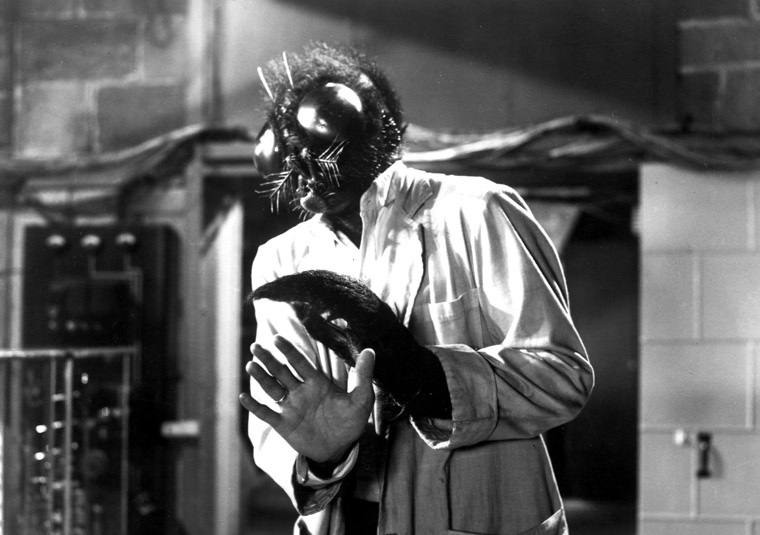
Wat houdt ‘altered human’ precies in? Simpel gezegd komt het erop neer dat mensen veranderen in iets abnormaals of grotesks. Vaak zijn het veranderingen in schaal, waarbij personen heel groot (zoals in The Amazing Colossal Man (USA: Bert I. Gordon, 1957)), of heel klein (zoals in The Incredible Shrinking Man (USA: Jack Arnold, 1957)) worden. Dit zijn bijna altijd de consequenties van mutaties veroorzaakt door atoomproeven. De meeste andere transformaties komen voort uit fictieve wetenschap. De veranderingen die hierbij optreden zijn meestal ernstige verminkingen (zoals in Tarantula3) of kruisingen tussen mensen en dieren. Gedacht kan worden aan The Fly (USA: Kurt Neumann, 1958), waarbij de protagonist gekruist wordt met een vlieg (zie ook casestudy 3).
Dit subgenre heeft een minder vast omlijnde narratieve formule dan de andere subgenres. Het komt er in principe op neer dat mensen (meestal de protagonisten) transformeren door uit de hand gelopen of mislukte wetenschappelijke experimenten, waarna zij een gevaar vormen voor hun naaste omgeving – met name hun vriendinnen of echtgenotes – waarop zij ten onder gaan. De precieze invulling is echter niet perse gebonden aan een vaste narratieve formule. Desondanks kan dit subgenre nog sterker dan het terrestrial creature genre geschaard worden onder Lucanio’s Prometheustekst4. Ook in dit subgenre draait het om de straf die men opgelegd krijgt door in een vlaag van wetenschappelijke hoogmoed in te grijpen in natuurlijke processen, ondanks goede bedoelingen.
De reden dat altered human films vaak geschaard worden onder het terrestrial creature subgenre schuilt in het feit dat de meeste protagonisten na hun transformatie tot monsters of on-menselijke wezens verworden. Zij verliezen hun menselijkheid en vormen een bedreiging voor de samenleving. Op dit punt komt dit subgenre op narratief gebied overeen met films uit het terrestrial creature genre: de plot draait er in beide subgenres om de bedreiging weg te nemen zodat normaliteit hervat kan worden.
Doordat de protagonisten na hun verandering minder menselijke eigenschappen vertonen en monsters worden, wordt dit subgenre vaak gerekend tot het horrorgenre. Op zich is dit niet onlogisch, maar door de sterke rol die wetenschap in dit subgenre speelt is het, toch minstens gedeeltelijk, sciencefiction. Eens te meer zien we hier weer hoe vaag de grenzen tussen beide genres zijn. Praktisch alle films uit dit subgenre zijn overigens gemaakt in de tweede helft van de vijftiger jaren, toen het sciencefictiongenre als geheel richting horror verschoof dankzij het overschot aan goedkoop gemaakte producties die meer gebrand waren op ‘cheap thrills’ dan op serieuze sciencefiction.


 Paragraaf 7.2: Wetenschap in altered human movies

De wetenschap in het altered human subgenre richt zich doorgaans op individuen. Waar het zich in het verwante terrestrial creature subgenre meer concentreerde op wetenschappers in het algemeen, staat in de films uit dit subgenre meestal een enkele wetenschapper centraal. Een narratief thema dat het meest frequent voorkomt in dit subgenre betreft de eenzame wetenschapper die in afzondering werkt aan een uitvinding die van groot nut voor de mensheid zal zijn. Niet voor niets is het altered human subgenre het schoolvoorbeeld voor Lucanio’s Prometheustekst: Prometheus was de Titaan uit de Griekse mythologie die het vuur van de goden stal en aan de mensheid gaf voor hun vooruitgang, en hier gruwelijk voor gestraft werd. Het verhaal van veel altered human films komt sterk overeen met deze mythe: ook zij ‘spelen voor God’ om de mensheid te helpen, en raken hierdoor in ernstige problemen. De wetenschappers gaan te ver met hun experimenten en begeven zich daarbij op verboden terrein5.
Wetenschap wordt hier op twee uiteenlopende manieren gerepresenteerd. Ten eerste is het een altruïstische bezigheid: de wetenschapper probeert de mensheid te helpen, en riskeert hiervoor zijn leven, zowel in letterlijke als sociale zin. Om ongestoord te werken zondert hij zich af van zijn medemens, en worden zijn relaties met zijn familie en vrienden verstoord. Emoties en een sociaal leven staan de wetenschappelijke vooruitgang slechts in de weg6. Een sterk voorbeeld is hier The Fly, waarin de wetenschapper gelukkig getrouwd is, maar door zijn obsessie voor zijn werk zijn gezin verwaarloost. Hij sluit zich op in zijn kelder en vertelt zijn vrouw haast niets van zijn werk. Een solitair leven is een offer voor de wetenschap, evenals de mogelijkheid dat experimenten uit de hand lopen. In een poging contributies te leveren aan menselijke vooruitgang, en daarvoor henzelf als proefkonijnen te gebruiken, hebben de wetenschappers in dit subgenre de pech hun experiment te zien mislukken en hen te doen transformeren7.
Ten tweede is wetenschap vaak ook een trotse aangelegenheid, vervuld van hoogmoed. De wetenschapper gaat zo op in zijn werk dat hij zich onkwetsbaar en superieur waant. Hierop sluit het ‘playing God’ thema aan: de wetenschapper schept technologie die voor zijn medemens meer weg heeft van magie of krachten waarmee alleen God zich bezig mag houden. Vaak wordt de wetenschapper door zijn naasten gewaarschuwd voor de consequenties van zijn obsessie, maar hoont hij het weg in de naam van de oppermachtige vooruitgang waarvoor alles geoorloofd is. Deze hoogmoed komt ernstig voor de val als de uitvinding zich tegen de wetenschapper keert en hij getransformeerd wordt. Uiteindelijk wordt de wetenschapper door zijn transformatie (en dus door zijn eigen werk) vernietigd.
Zoals gezegd kan de transformatie verschillende vormen aannemen. Een frequent thema, opnieuw verwant aan het terrestrial creature subgenre, betreft de versmelting van de mens met het dier, of de versterking van zijn dierlijke kant. In dit thema herkennen we een binaire oppositie die aansluit op het beeld van de wetenschap als rationele, emotieloze zaak. De wetenschapper, die eerst zijn werk boven alles stelde en zich daarvoor de geneugtes van het leven ontbeerde, wordt in zijn transformatie onderworpen aan zijn primitieve, emotionele kant; hij verliest zijn mogelijkheid tot rede of rationaliteit en transformeert terug naar het terrein van de natuur, gekenmerkt door basis-emoties en een dierlijke kant. Ook hier kan The Fly als voorbeeld genoemd worden, samen met onder andere War of the Colossal Beast (USA: Bert I. Gordon, 1958) en Monster on the Campus (USA: Jack Arnold, 1958).
Hoewel bovenstaande narratieve formules en thema’s het meest typerend zijn voor het altered human subgenre, is er een grote diversiteit binnen dit subgenre: veel films wijken af van bovenstaande patronen, en slaan een eigen weg in. Opvallend is hierbij dat deel van het subgenre waarin de transformaties veroorzaakt worden door atoomproeven. Deze films schaar ik onder dit subgenre, maar vertonen op narratief gebied meer overeenkomsten met het terrestrial creature subgenre. Exemplarisch zijn hiervoor The Amazing Colossal Man en The Incredible Shrinking Man. In de eerste wordt een militair door blootstelling aan atoomstraling enorm groot, en daardoor een bedreiging voor zijn omgeving. In dit geval lijkt hij zelf een terrestrial creature. In de tweede film wordt de protagonist enorm klein, waardoor wezens uit zijn omgeving (een kat, een spin) terrestrial creatures lijken: het is een omgekeerde versie van de standaardformule van dat subgenre.
De rol die wetenschap in zulke variaties op het altered human subgenre speelt vertoont sterke overeenkomsten met de rol van wetenschap in het terrestrial creature subgenre. Maar in dit geval valt wetenschap de menselijke natuur aan. De getransformeerde mens wordt hier ‘the Other’: hij wordt de andersdenkende of degene die er anders uitziet dan de rest, waardoor hij geschuwd wordt. Voor hem is in deze conformistische maatschappij geen plaats, en dat laat zij merken. Hij zal moeten verdwijnen, ook al is het niet zijn schuld. De wetenschap kan hem niet helpen zijn voormalige plaats in de samenleving te herwinnen, ook al is zij verantwoordelijk voor zijn transformatie. In deze variatie op het subgenre neemt de wetenschap aanzienlijk minder verantwoordelijkheid.


Casestudy 3: The Fly

The Fly voldoet aan Lucanio’s definitie van de Prometheustekst, en richt zich op een enkele wetenschapper, André (David Hedison), die werkt aan een revolutionaire uitvinding die de wereld kan veranderen. In tegenstelling tot de meer sobere en kalme scientist heroes uit de voorgaande casestudies is André meer emotioneel en gevoelsmatig, en laat hij zich leiden door intuïtie en impulsiviteit in plaats van slechts rationaliteit en analyse. Waar de scientist heroes uit de eerder geanalyseerde films samenwerkten met collegae en getrouwd waren met hun werk, werkt André alleen in de kelder van zijn huis, waar hij woont met zijn vrouw, Helene (Patricia Owens) en zoon Philippe. Zo is hij identificeerbaar voor het publiek, ongeacht zijn merkwaardige experimenten; ondanks zijn intellectuele capaciteiten staat hij niet boven het simpele geluk dat het gezinsleven met zich meebrengt. Hij geeft veel om zijn gezin, en is niet star en emotieloos zoals de wetenschappers in de voorgaande casestudies. Hij droomt van de positieve veranderingen die zijn uitvinding kan veroorzaken, waardoor hij het gevaar niet ziet, of niet wil zien. In plaats van eerst voorzichtig en analytisch zijn apparaat te testen, neemt hij risico’s omdat hij overtuigd is dat zijn werk onfeilbaar is, met noodlottige consequenties. Als hij in een impulsieve roes van tevredenheid over zijn apparaat de kat van zijn zoon opoffert voor zijn experimenten, wordt hij geplaagd door schuld en schaamte. De wetenschappers in de klassieke tekst zouden nooit zo onvoorzichtig te werk zijn gegaan: zij zouden hun machine eerst uitgebreid getest hebben totdat zij zeker waren van de mogelijkheden van het apparaat. Bovendien werken zij niet alleen: zij gebruiken hun collegae voor verificatie, uitwisseling van ideeën en second opinions. André werkt alleen: zijn uitvinding is te bijzonder voor andere wetenschappers. Opnieuw toont hij zo overmoed.
De uitvinding in kwestie is een matter transfer machine, een apparaat dat dingen van de ene naar de andere plaats kan transporteren door hun atomen uit elkaar te plukken en weer te samen te voegen. De uitvinding kan een ware revolutie in transport ontketenen: vliegtuigen, auto’s, treinen zouden allemaal nutteloos worden, reizen is niet meer nodig. André ziet slechts de positieve kanten van zijn apparaat, maar zijn vrouw herinnert hem eraan dat het ook gevaarlijk kan zijn:

Helene: ‘It’s frightening. It’s like playing God.’
André: ‘God gives us intelligence to uncover the wonders of nature. Without that gift nothing is possible.’
Helene: ‘Oh André, I get so scared sometimes. The suddenness of our age; electronics, rockets, earth satellites, supersonic flight. And now this. It’s not so much who invents them, it’s the fact that they exist.’
André: ‘But you’re not frightened of TV, or radio, or X-rays, or electricity, or that the Earth is round.’
Helene: ‘No, but everything’s going so fast, I’m just not ready to take it all in. It’s all so quick!
André: ‘Just do like Philippe does; accept them as part of our normal life. They’re facts, wonderful facts.’ 8

Helene heeft gelijk wanneer ze zegt dat het allemaal zo snel gaat: in de jaren veertig en vijftig deden talloze nieuwe apparaten hun intrede in de samenleving, waar men in korte tijd aan moest wennen. Hoewel veel van deze uitvindingen het leven aangenamer maakten, waren er ook nieuwe apparaten die juist een bedreiging vormden voor het leven zoals men dat kende, waaronder de atoombom. Door deze hoeveelheid aan nieuwe machines werd de maatschappij in korte tijd ingrijpend veranderd, wat bij menigeen, vooral de oudere generaties, een gevoel van onbehagen en taboe teweeg bracht. Niet iedereen kon zo snel wennen aan alle nieuwigheden9.
André negeert Helene’s waarschuwingen en doet ze af als onwetendheid. Dit is typisch voor het altered human subgenre: in praktisch alle films die spelen met het playing God thema wordt de scientist hero door zijn naaste omgeving (familie, vrienden, collegae die minder onorthodox (of minder overmoedig) werken) gewaarschuwd voor zijn praktijken, maar negeert hij ze in naam van de onvermijdelijke vooruitgang: als hij het niet doet, doet iemand anders het wel, maar nu krijgt hij de eer. Pas als hij de tol betaalt voor zijn arrogantie ziet hij zijn hoogmoed in, maar dan is het te laat.
André vormt hierop geen uitzondering. Zijn fixatie met het transporteren van organisch materiaal neemt obsessieve vormen aan, voornamelijk door zijn schuldgevoelens om de dood van de kat, die hij in een opwelling van vreugde over zijn eerste positieve resultaten transporteerde (impulsief gedrag is niet atypisch voor wetenschappers in de Prometheustekst), met rampzalige gevolgen10. Op den duur acht hij zijn machine geschikt voor menselijk transport, maar omdat hij geen andere mensen als proefkonijnen durft te gebruiken test hij het op zichzelf. Evenals in films uit het terrestrial creature subgenre heeft de wetenschapper hier de integriteit verantwoording te nemen voor zijn daden. In dat genre wekten de wetenschappers het monster op, maar deden zij het ook weer teniet. Hier maakt André het apparaat, dus alles wat het aanricht is op zijn rekening te schrijven. Zijn apparaat heeft al een onschuldig wezen het leven gekost. De verantwoordelijkheid en schuld daarvoor drijft hem ertoe niet onzorgvuldig om te gaan met anderen. Het is zijn apparaat, dus hij zal het proefkonijn zijn.
In zijn gespannen toestand merkt hij echter niet dat een vlieg met hem het apparaat is binnengetreden, waardoor zijn materie versmelt met die van de vlieg. Vervolgens wordt hij getransformeerd tot een mens met het hoofd en arm van een vlieg. Zo wordt hij gestraft voor zijn arrogantie. Ook kan gesteld worden dat hij gestraft wordt voor goddeloosheid: niet voor niets zei hij bij de eerste demonstratie voor Helene van zijn apparaat ‘you’re the first to see a miracle’. Aangezien God de enige is die mirakelen kan doen plaatsvinden wordt hij letterlijk berispt voor het spelen van God.


Hoewel hij het hoofd van een vlieg heeft, bezit hij nog wel enigszins het verstand van André. Hier zit geen logica achter, het is zuiver een plot device. In de loop van de film krijgen de dierlijke instincten van de vlieg een steeds grotere controle over hem, en dreigt zijn menselijke kant het onderspit te delven. Praten kan hij niet meer, dus de enige manier om met zijn vrouw te communiceren is te schrijven, maar ook dit gaat hoe langer hoe moeizamer. Hij gedraagt zich steeds wilder en onmenselijker: hij heeft moeite de dierlijke kant van de vlieg onder controle te houden. Met het restant van zijn wetenschappelijke kennis probeert hij koortsachtig een manier te vinden om zijn oorspronkelijke gedaante te herwinnen, maar het mag niet baten. Uiteindelijk beseft hij dat zijn sterker wordende natuurlijke driften een gevaar vormen voor zijn omgeving, en verkiest hij de dood. Hij kan het echter niet meer zelf doen, want zijn dierlijke instinct voor zelfbehoud staat het niet toe. Daarom vraagt hij zijn vrouw hem te vermoorden.
Op dit punt verschilt The Fly van de meeste andere films uit het altered human subgenre: doorgaans nemen de primitieve kanten van de getransformeerde al snel de overhand, waarna hij zijn omgeving terroriseert door dood en verderf te zaaien. Dit geeft de samenleving een reden om haar sympathie voor de getransformeerde opzij te zetten en hem uit te schakelen, om verdere rampspoed te voorkomen. André weet echter dat hij zijn donkere kant niet kan beheersen en verkiest zijn dood zelf te bewerkstelligen in plaats van het onvermijdelijke af te wachten. Mogelijk komt dit door zijn familiebanden die hem doen inzien dat het beter is te sterven dan het leven van zijn gezin te riskeren, hoewel dit speculatie is. Door zijn nobele beslissing behoudt hij tot het bittere einde de sympathie en het medeleven van het publiek11. Hij is niet slechts een gewetenloos primitief creatuur, maar een weldenkend, sympathiek mens gevangen in het lichaam van een primitief creatuur. Ondanks zijn uiterlijk kan de kijker zich zo met hem identificeren en medelijden met hem hebben.
In dit subgenre is wetenschap niet zozeer goed of fout, het draait erom hoe het gebruikt wordt door de wetenschapper. Meestal raakt de wetenschapper overmoedig, wat ertoe leidt dat hij in zijn poging ‘God te spelen’ onoplettend en impulsief wordt, ‘gestraft’ wordt voor zijn gedrag: hierop transformeert hij, waarbij een wezen ontstaat dat voornamelijk gedreven wordt door instinct en emotie: de wetenschappelijke rede die hij (of wetenschap in het algemeen) zo koesterde is dan niet meer. Ook in The Fly is dit het geval. Zoals André in bovenstaande conversatie met zijn vrouw opmerkt kan wetenschappelijke vooruitgang ook tot goede dingen leiden. Hij had goede intenties met zijn uitvinding, maar zijn overmoed zorgde voor ongeluk. Zo illustreert The Fly dat wetenschappers voorzichtig moeten zijn met technologische vooruitgang en niet teveel trots in hun capaciteiten moeten hebben, maar bedachtzaam en nederig te werk moeten gaan. Ze moeten zich niet slechts afvragen of hun dromen van revolutionaire uitvindingen, hoe positief ook, te realiseren zijn; ze moeten ook kijken naar de mogelijke consequenties die hun werk met zich meebrengt.

Conclusie

Het sciencefictiongenre in de vijftiger jaren gaf geenszins een eenzijdig beeld van wetenschap. Wetenschap was niet per definitie iets goeds of iets slechts, maar omvatte beide kanten van de munt. Daarbij werd de weergave van wetenschap in sciencefictionfilms beïnvloed door de tijdsgeest, maar vooral in de eerste helft van de jaren vijftig, aangezien het genre toen een serieuzere toon hanteerde: in de tweede helft van het decennium verschoof het genre richting horror en werd wetenschap voornamelijk een manier om een goedkoop horrorverhaal voort te stuwen, waardoor het genre minder een boodschap leverde en zich meer richtte op amusement.
De representatie van wetenschap was doorgaans afhankelijk van de politieke invalshoek die de makers hanteerden: in de left-wing films werd wetenschap voornamelijk beschouwd als onfeilbaar en een en al rationaliteit en tolerantie. Wetenschappers in deze films werden gezien als een bron van vooruitgang en vrede die technologie ten goede gebruikten. In de right-wing films had wetenschap een schaduwkant: wetenschappers hadden goede bedoelingen, maar wisten niet altijd hoe ze wetenschap correct moesten gebruiken, vaak met nare consequenties. Wetenschappers in right-wing films konden net zo goed als iedereen fouten maken. Maar in geen van beide perspectieven was wetenschap zuiver een bron van kwaad of had het negatieve intenties. In beide perspectieven stonden wetenschappers echter klaar om in harmonie met het militaire apparaat de maatschappij tegen indringers te beschermen.
Belangrijk is de manier waarop wetenschappers zelf geportretteerd werden. Het beeld dat het genre in deze tijd gaf van wetenschappers was overwegend positief. Hoewel wetenschappers soms ernstige inschattingsfouten maakten hadden ze vrijwel altijd goede bedoelingen. Via wetenschap wilden zij het kennispeil en de levensstandaard van de mensheid verhogen, of de mensheid beschermen tegen kwaadwillende elementen. Vaak gingen zij te ver in hun poging de mensheid van dienst te zijn, maar achteraf gezien realiseerden zij zich dit zelf ook. Deze representatie van wetenschappers verschilt niet zoveel per subgenre, hoewel de wetenschappers in het alien invasion genre minder te maken kregen met schuldgevoelens achteraf, aangezien zij nooit verantwoordelijk waren voor de ontstane situatie. De wetenschappers in de terrestrial creature en altered human genres, bij wie de schuld wel gelegd kon worden door hun uit de hand gelopen experimenten, leerden echter een belangrijke les die hen zou weerhouden van verdere fouten: ze dienden meer te letten op ethische en morele kwesties die op hun werk van toepassing waren, en hun werk met nederigheid en zonder overmoed te doen.
De donkere kanten van wetenschap, die meestal representatief waren voor destijds heersende zaken (zoals het gevaar van atoomenergie, de technologische capaciteiten van een mogelijk vijandige natie en het ongebreidelde vertrouwen in onvermijdelijke vooruitgang) kwamen sterk naar voren in de verschillende subgenres. Buitenaardse wezens die een hoog ontwikkelde wetenschap hadden en deze ten goede of ten kwade gebruikten, enorme monsters voortgebracht door atoomenergie, of mensen vervormd door verkeerd ingeschat technologisch potentieel leverden cinema met een boodschap op. Over het algemeen kan geconcludeerd worden dat wetenschap niet goed of slecht is, maar dat het er om gaat hoe het gebruikt wordt. Wetenschap die met zorg en nederigheid bedreven wordt kan veel goeds betekenen voor de mensheid. Wetenschap die zonder ethiek en met overmoed wordt ingezet kan echter fatale consequenties hebben. Het sciencefictiongenre in de vijftiger jaren (en meestal ook nu nog) toonde de kijker beide mogelijkheden, waardoor deze geen eenzijdig beeld van wetenschap voorgeschoteld kreeg.


Bibliografie


Baxter, John. Science fiction in the cinema. New York: A.S. Barnes & Co., 1970: p. 102-144

Biskind, Peter. Seeing is believing: how Hollywood taught us to stop worrying and love the fifties. New York: Pantheon Books, 1983: p. 101-159

Brosnan, John. Future tense: the cinema of science fiction. New York: St. Martin’s Press Inc., 1978: p. 72-105, 118-138

Edelson, Edward. Visions of tomorrow: great science fiction from the movies. New York: Doubleday & Company Inc., 1975: p. 39-52

Jancovich, Mark. Horror. Londen: B.T. Batsford Ltd., 1992: p. 62-70

Jancovich, Mark. Rational fears: American horror in the 1950’s. Manchester: Manchester University Press, 1996: p. 9-79

Katovich, Michael A., Patrick T. Kinkade. ‘The stories told in science fiction and social science: reading The Thing and other remakes from two eras.’ The Sociological Quarterly, nr. 34 (november 1993): p. 619-637

Lucanio, Patrick. Them or us: archetypal interpretations of fifties alien invasion films. Indianapolis: Indiana University Press, 1987: p. 21-131

Noonan, Bonnie. ‘"Science in Skirts": Representations of Women in Science in the "B" Science Fiction Films of the 1950s.’ 14 maart 2007.

Sobchack, Vivian Carol. The limits of infinity: the American science fiction film 1950-75. New Jersey: A.S. Burnes and Co. Inc., 1980: p. 43-55, 120-147

Tudor, Andrew. Monsters and mad scientists: a cultural history of the horror movie. Oxford: Basil Blackwell Ltd., 1989: p. 133-157

Vieth, Errol. Screening science: contexts, texts, and science in fifties science fiction films. Londen: The Scarecrow Press, 2001: p. 55-83, 141-182

Vieira, Mark A. Hollywood horror: from gothic to cosmic. New York: Harry N. Abrams Inc., 2003: p. 139-168
1 Biskind 1983: 119
2 Sobchack 1980: 52
3 Tarantula wordt gerekend tot het terrestrial creature genre vanwege het titelfiguur, de spin die na wetenschappelijke experimenten uitgroeit tot onnatuurlijke proporties. Desondanks kan het ook gedeeltelijk gerekend worden tot het altered human subgenre: de eerste helft van de film concentreert zich op enkele wetenschappers die na op zichzelf geëxperimenteerd te hebben ernstig verminkt raken en hun verstand verliezen, en zo een gevaar voor de samenleving vormen.
4 Lucanio 1987: 46-52
5 Lucanio 1987: 90
6 Vieth 2001: 149
7 Tudor 1989: 145
8 Fly, The. Reg. Kurt Neumann. 20th Century Fox, 1958.
9 Vieth 2001: 158
10 Katovich en Kinkade 1993: 630
11 Tudor 1989: 144

woensdag 20 juni 2012

Wes Anderson's kids are allright


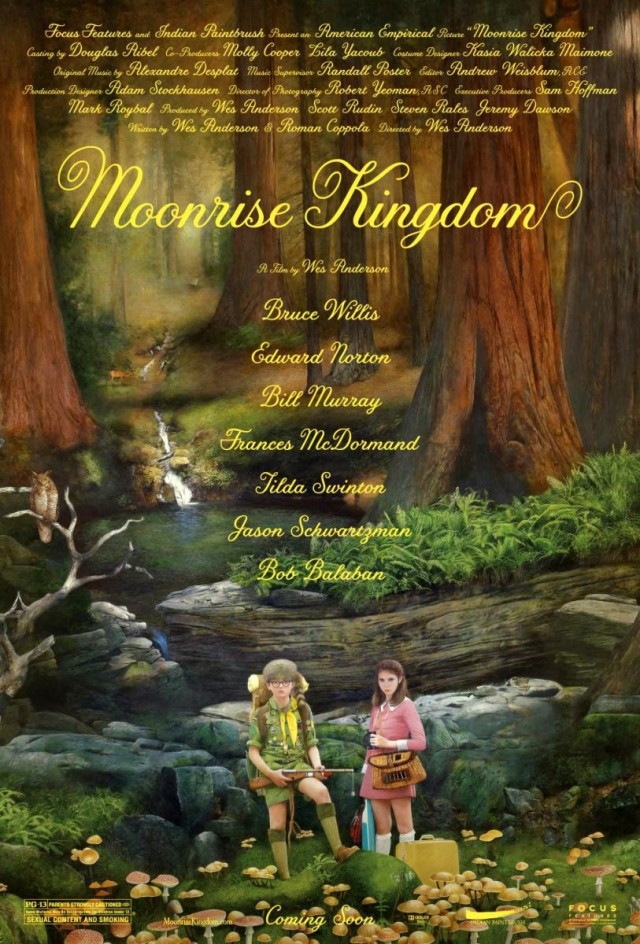
Moonrise Kingdom: ****/*****, or 8/10

And so Wes Anderson, that overly creative director of delightful family comedy drama, returns to live action filming after having taken a short break from it in favour of proving his style is equally charming when applied to stop motion animation, which resulted in The Fantastic Mr. Fox, based on the classic children's novel by Roald Dahl. Anderson apparently picked up a thing or two in a narrative sense from the great author, considering the newest addition to his own oeuvre as a distinguished film auteur (his style always instantly recognizable in every scene) like many of Dahl's stories deals with intelligent kids breaking free from the often abusive world of angry adults that simply refuses to understand them, instead restricting their growth processes by incapsulating them in a repressive regime of habits. Whether inspired by Dahl or simply containing thematic similarities by pure coincidence, Moonrise Kingdom is a wonderful hommage to smart children and their first steps towards true self-reliance despite the obstacle that adults usually prove to be.


The stage for Moonrise Kingdom is provided by New Penzance, a fictional New England island like only Wes Andersonland can provide, complete with Native American cultural leftovers, red-and-white coloured lighthouse, ferry and mail plane, plus the addition of existing Rhode Island (where the movie was shot) natural beauty of stunning quality, the bare facts of all this being relayed to the audience by an odd looking old man in a red coat and a silly hat who simply acts as narrator, not as a relevant character otherwise. The year being 1965, it's the perfect spot for a boy scout camp, which is run by part time math teacher Scout Master Randy Ward (Edward Norton, Fight Club) in a tight and strictly organized manner, which makes it all the harder for the man to accept one of his scouts, the pipe smoking orphan boy Sam Shakusky (Jared Gilman) has gone AWOL. At the same time, the dysfunctional Bishop family is dismayed to discover their little girl Suzy (Kara Hayward) has also made a run for it without their knowledge or permission, upsetting her attorney parents Walt and Laura (Bill Murray, Anderson's go-to-guy – this film marking their sixth collaboration – and newcomer-to-his-work Frances McDormand, of Burn After Reading fame). A search for the pair of runaways is swiftly underway, spearheaded by local police officer Captain Sharp (Bruce Willis, also an Anderson first-timer), a likeable but lonely man who happens to have an affair with Laura. While the search progresses, it becomes blatantly clear the two kids have planned their escape much more effectively than the generally dimwitted adults are seen to conduct their pursuit of them, making for many an hilarious gag in the process as we have come to expect and enjoy from Wes Anderson.

In a flashback we learn Sam and Suzy, both only twelve years of age, met the year before at a local church play, which led to mutual intrigue at first, followed by a pen pal connection and an eventual love relationship, which led them to elope together in order to both escape their incompetent guardians and get married and live in the wilderness. It's a deliciously naive but romantic ploy only the mind of a child could conceive, despite the minds of both kids appearing to be in a better overall condition than those of their grown-up trackers. In fact, it's Scout Master Ward's relentless (and prone to violence) team of boy scouts who locate the runaways first, leading to a surprisingly suggestive moment of aggression and a dead scout mascotte, proving Sam and Suzy are ready to fight for their freedom and their now hard earned right to live alone on a beautiful private beach.


Unfortunately the timing for their escape could have been better, as a devastating hurricane and the resulting flood threatens their island paradise, adding a sense of urgency to the plot. Fortunately for them – or not – the adults find them in time, but by now both Captain Sharp and the boy scouts have come to respect the sensible pair's honest wishes and fully understand their desire to get away from their messed up guardians. Despite the bloody incident earlier between them, in a surprising turn of events the scouts spring both Sam and Suzy from their confinement and relocate them to a church during the now raging storm. Again cornered by the ones they tried to get away from, as well as confronted by a lady from Social Services (Tilda Swinton) – a nameless character simply referred to by everyone, including herself, as 'Social Services', a joke the Dutch subtitling sadly does not pick up – Sam and Suzy again make a now desperate run for it, risking their lives to prove the world their love is real, as is their desire to fight for their independence.

Overall, it's not a complicated plot and a brief synopsis might only make it sound childish, but it's Wes Anderson's approach to things that makes it work as well as it does. As is his usual style, the film is as quirky and colourful as his previous works, making every scene vibrantly appealing and cramped with little details, most of them only visible a brief moment, thus in itself making the film worthy of a second viewing if only to take in all the hidden jokes. Fortunately there's an abundance of not so hard to miss gags as well, both visual and in dialogue, all the actors chipping in to make the jokes as well timed and performed ad they need be. To add to the movie's charm, the film is shot using a 16 mm camera (a first for Anderson), thus enhancing the general 'old movie' feel, making it subconsciously feel more realistically like 1965, which only shows Anderson still isn't afraid to experiment a little bit here and there to discover what works best to convey a style all his own as compellingly as possible. As for experimenting, extra credit is due to him for the fact he dares to explore the blossoming sexual feelings of his two underage main characters, resulting in a 'French kissing' scene in underwear that will undoubtedly make conservative America cringe and whine, but in the context of the scene feels perfectly justified and innocent, as are all the activities he allows this pair, considering the rigid and awkward people they attempt to escape from.


Visual style and experimentation aside, as always it's the actors that make a Wes Anderson movie feel the most like a Wes Anderson movie, utilizing a typical acting style that carefully balances between introvert and emotionally disconnected on the one side and completely over the top on the other. In Moonrise Kingdom's case the greatest accomplishment in this regard comes courtesy of Hayward and Gilman, both completely inexperienced as actors with no previously established acting skills to back them up, yet both delivering a surprisingly successful and engaging performance, making it feel like they've been playing around in Anderson's movies for years. Of course, Bill Murray, who has been doing just that, also succeeds in adding yet another zany character to his repertoire, as does Jason Schwartzmann, whose bit part as an amoral and corrupt Scout leader unfortunately proves all too short. Frances McDormand, Tilda Swinton and Edward Norton fit right in, too, quickly adopting the less emotional and more dysfunctional manner of acting we've grown accustomed too in Anderson's work, despite never having appeared in one of his films before. The weakest link in this star-studded ensemble proves to be Bruce Willis, oddly enough considering his long range of expertise, who, despite portraying Captain Sharp convincingly as a sympathetic but not all too bright character, simply feels both out of place and out of touch in this film, as if not having been able to fully master the acting style required for a Wes Anderson movie. Fortunately this never gets too frustratingly apparent, nor does it ruin any of the scenes he appears in. But no matter how well any of the established actors do in Moonrise Kingdom, its genuine tour-de-force of acting is supplied by the two young main characters who carry the majority of the movie and steal our hearts in the process, making us only hope we'll be hearing more of them in the future.

Moonrise Kingdom could be called a return to form on Wes Anderson's part, a redemption after the wholesomely disappointing The Darjeeling Limited in 2007, were it not that the off-beat Fantastic Mr. Fox, despite being an animated movie, was too blatantly 'Andersonesque' to be deservedly called a deviation from his specific form. As a live action film, his latest release proves a very nice reminder just wat he's capable of, ranking among his best right alongside Rushmore (1998) and The Life Aquatic with Steve Zissou (2004), for being both genuinely funny and admittedly adorable to watch, while also containing enough heart and soul to be raised above average comedy. Be they live action or be they animation, Moonrise Kingdom strongly reaffirms the fact Wes Anderson films are always something to truly look forward to.

And watch the trailer here:


zaterdag 16 juni 2012

Mirror, Mirror on the wall, Charlize Theron is fairer than y'all


Snow White and the Huntsman: ***/*****, or 6/10

Re-imagining fairy tales feminist style seems to be getting all the rage lately. After having young Alice don armour to fight the evil queen in Tim Burton's recent Alice in Wonderland, Snow White now gets to do the exact same thing (courtesy of the same producer, Joe Roth, no doubt). Considering her previous failure as a comedian in Tarsem Singh's Mirror, Mirror only two months ago, applying a more action oriented approach might not have been a bad idea. It obviously sets this Snow White apart from that disappointment. Unfortunately, the resulting Snow White and the Huntsmen still leaves a lot to be desired, and makes it frustratingly clear just how damn subjective the term 'fair' actually is.


Snow White and the Huntsmen does away with the overly feel-good style of both its comedic predecessor and the classic Disney version, instead traveling a grittier, bleaker and definitely gorier road, making it feel more like a Tim Burton or Peter Jackson flick at times. At least first time director Rupert Sanders took hints from his accomplished peers instead of slavishly rehashing the many versions of the Snow White tale that came before. His best card comes in the shape of casting Charlize Theron as the evil queen, in this version named Ravenna instead of just dubbed 'evil queen' as happens more frequently. On the opposite side of the spectrum, Sanders' biggest problem turns out to be Kristen Stewart's performance as Snow White herself, a rather soulless and bland piece of casting that fails to convince the audience to root for her as a brave and inspiring leader of men in their desperate struggle against tyranny. For this is basically what the tale of Snow White has been turned into in this film, a typical fight between good and evil that never leaves the viewer pondering whose side the characters are on since both terms are clearly delineated and leave no room for compromise.

The movie opens with a lengthy but intriguing flashback revealing the series of events that lead to the status quo as it is when the story truly kicks off. For unclear reasons this prologue is narrated by the Huntsman (Chris Hemsworth largely reprising his role as Thor, playing an impulsive and stubborn though often foolish but ultimately likeable strongman, but with a Scottish accent this time), who takes no part in this background history himself, probably to give Hemsworth something to do before entering the movie after it has been running for 40 minutes already. The backstory tells of the birth of Snow White in a beautiful kingdom under the happy reign of her wise and beloved mother and father, before it falls into ruin and despair when the queen dies and her husband is tricked into marrying the beautiful Ravenna, only to be murdered by the treacherous wench on his wedding night. When this pretender usurps the throne, young Snow White is swiftly locked away and all those who oppose the new queen's reign are ruthlessly disposed of. The movie does not hesitate at all to portray Ravenna as a vile witch with no sense of good in her at all, while Snow White simply can do no wrong and is eventually heralded a female Messiah for the otherwise nameless fantasy realm the movie takes place in. It's this overly simplistic way of depicting both sides of the coin without any possibility for overlap to the other side from either character that makes Snow White and the Huntsmen loose touch with the older demographics the movie aims for- the film is rated PG-13 in the USA, while it's '12' in the Netherlands – since few people in the audience would ever swallow good and evil are so easily and strictly defined.


At least Charlize Theron got it easy, since her Ravenna is not just a wholesomely despicable person, but also dabbles in the dark arts, thus allowing the accomplished actress (who can currently be seen delivering another stellar performance in Ridley Scott's Prometheus) to have a ball playing this wicked witch, wearing impressive gowns, surrounded by beautiful eerie castle sets and pointy props, going around viciously intimidating and torturing people and poking into bird guts in her spare time. She has good cause for engaging in such naughty behavior, having been used and abused by men since childhood, turning to black magic to ensure her ongoing beauty so she would never be powerless against men again and instead could use them for her own purposes. Thus, the movie gives the queen some much needed character background most other versions of the fairy tale have lacked, making Ravenna initially sympathetic until she does to Snow White what has been done to her. Theron makes no secret she's enjoying the role immensely, and delivers the movie's standout performance, ranging from subtle manipulation of ill-fated prisoners to boldly going over the top when throwing temper-tantrums at her incompetent inferiors who keep messing up her plans for total domination.

Perhaps it's due to the excessive amount of screen time the poor Snow White spends huddled in dark dungeons, wading through sewers or crawling in mud that Kristen Stewart's portrayal pales so much in comparison. Stewart, of Twilight fame, spends most of the movie running for her life from the forces of the queen, ending up in the so-called Dark Forest, a generally unpleasant place filled with creepy crawlies, damp fog and the like, a place from which only one man has ever returned. And so Ravenna tasks this man, the nameless Huntsman of the title, to track the renegade royalty, since it conveniently occurred she happened to escape on the very day the queen found out she had to consume the girl's heart to gain eternal beauty and immortality, after having locked her away for ten years without ever taking the time to decide what to actually do with her. The Huntsman reluctantly agrees to pursue the runaway in the exchange for the resurrection of his dead wife by the queen, something both parties fully realize isn't gonna happen at all.

Warning! Here be spoilers! When the Huntsman locates Snow White after about a five minute search, Stewart finally gets someone to play off against, but again fails to prove her worth as an actress, instead delivering a fairly uncompelling performance against Hemsworth's more agreeable portrayal of a man who lived a shallow life due to lack of faith in himself, found happiness in life with his wife and lost everything again when she was taken from him, being reduced to a much maligned drunkard. Apparently even a drunkard can find his way through the Dark Forest, so after predictably having switched allegiance, him and Snow White set out in search of the rebel fortress ruled over by an old friend of Snow White's father, whose son, Prince William (Sam Claflin as the less robust looking hunk of the film, for those girls in the audience who like their men less hairy and muddy) once fell in love with the princess but, along with the rest of the outside world has considered her to be dead since Ravenna took control. Apparently, where ever Kristen Stewart goes, love triangles follow, as she has romantic interludes with both the Huntsman and William the moment the latter joins up with her again. Anyone who wants her to hook up with either guy gets cheated in the end as the plot doesn't resolve the issue of which man will be hers, but leaves it open for the sequel. (A sequel already has been announced, despite the fact this movie has an otherwise closed ending that covers most of the original fairy tale. As was the case with Clash of the Titans, when the promise of money is involved, Hollywood will itself decide when a story is done, going so far as to make more of it up if needs be.)


On the way to the rebel stronghold the movie trades in a dark Gothic horror atmosphere for a more typical fantasy feel as Snow White and her friends encounter ever more diverse creatures of various shapes and sizes, including a giant troll, fairies and a forest god, indicating Snow White's power to inspire life and natural growth, as opposed to Ravenna who only deals in death and decay. The generally overtly digital characters only make Stewart's performance more inadequate, but fortunately eight (!) new characters soon enter the story to add some much need acting talent (mostly British) and some humour (since the film has so far taken itself overly serious), and few things in life are a funny as dwarves. These are not your average little people though: in fact, they're not little people at all, but normal sized actors having undergone digital alterations to make them appear smaller. Already an uproar has been created within the little people community over the absence of actual dwarves in favour of talented British actors of normal stature. It's an understandable reaction considering the already limited number of possible movie roles for little people, but the fact remains these eight dwarves add some much needed levity and heart to the film, mostly because of the talent assembled here, which includes Ian McShane, Ray Winstone, Bob Hoskins and Nick Frost. Lamenting the decline of the Dwarves (as a fantasy race, not as a medical condition) since Ravenna seized power, they willingly pledge their lives to Snow White's cause, but don't fret, they also sing and dance.

After having arrived at her allies' base and rallying the noble men to her cause by use of a rather uninspiring and unconvincing battle speech, the company of heroes set out to vanquish Ravenna in her dark tower, which leads to an not all that epic battle, and the pay-off between the two women, one pure, one evil, the movie has spent the last two hours to set up. Snow White dukes it out with Ravenna and her insidious sorcery over the dominion of the realm and the right to be called 'the fairest of them all'. Of course, the movie takes the meaning of the word 'fair' to include mental and spiritual beauty instead of solely referring to physical attractiveness, which is what Ravenna is all about. Though few men (and/or women) would seriously pick Stewart over Theron when it comes to physical looks (or acting skills), Theron's Ravenna obviously is a mean bitch and you wouldn't want her “ruling your country”. However, the movie defeminizes Snow White in the climax, having her confront Ravenna fully battle clad in shining armour and equipped with a particularly sticky sword, and as such completely masculine instead of fighting the queen on feminine terms, thus making her cheat. Even though Ravenna uses men to fight for her while Snow White gets men to love her (mostly in a platonic sense), in the end she feels more like a brother-in-arms to the Huntsman, the Prince and the Dwarves, a feeling which is reinforced at the end of the movie when Snow White refuses to pick one potential love interest over another, having reconquered her throne on their terms by vicious bloodshed in battle. The alternative of course would have been to let either the Huntsman or the Prince save the day and fighting her battle for her, as was the case in the classic Disney movie. But such stereotypical male gallantry is not desired in this day and age, especially when the movie needs to appeal to the modern teenage girls for who Stewart undoubtedly is the main draw of the piece. As for keeping it open who she ends up with, it took her four Twilight films to decide to finally have sex with that vampire instead of the werewolf, so she's just catering to her fanbase's expectations.
So the final score is:
-acting: Theron 1, Stewart 0
-physical appearance: Theron 1, Stewart 0 (too much mud)
-playing a nice girl: Theron 0, Stewart 1
Theron is fairest! Besides, many guys generally prefer bad girls anyway.

Overall, Snow White proves to her own weakest link in Snow White and the Huntsman, as she is outperformed by the evil queen, outcharmed by the Dwarves, outmuddied by the Huntsman and outed as a tomboy by wearing battle armour to kill the witch. In short, Stewart's Snow White has no heart, which makes it hard to compellingly win those of her fellow freedom fighters, and impossible for the queen to rip out of her chest, forcing the latter to steal the audience's hearts instead by doing a better acting job by far. The movie at least delivers great visuals and decent action scenes, plus the most fun Dwarves and grimiest Huntsman so far. A good look, excellent cast of supporting characters, cool evil queen and teen heroine in shining armour: basically the producer of Alice in Wonderland gives us more of the same with Snow White and the Huntsman. There's many other fairy tales left to apply the same tactics too, so maybe we'll see the Little Mermaid or Sleeping Beauty in a similar fashion too in the not too distant future.

And watch the trailer here: